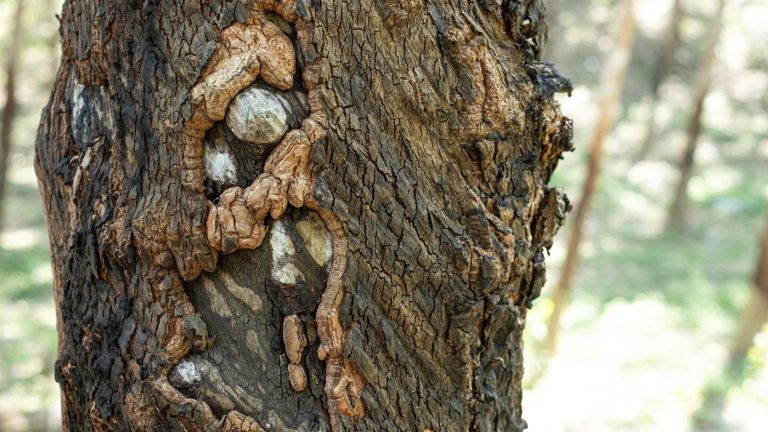
This past week, my good friend Kelly sent me a photo of a stressed red maple. The tree is near her floral shop downtown and was planted less than a year ago. My buddy Todd, who lives just south of Lufkin, noticed his oak was losing leaves and oozing sap from a wound.
Will they make it, or will they just be firewood for this coming winter? I really don’t know.
Trees rarely die overnight. Most spend months trying to tell us they’re in trouble.
The problem is that we often don’t notice the warning signs until late summer, when the heat has been relentless and trees are under tremendous environmental stress.
August is a good month to take a close look at the trees around your home, pasture or property. Some of the problems you see now may have actually started months ago.
One of the most concerning problems I see in stressed East Texas trees is Hypoxylon canker. This disease is particularly common in oaks and is associated with trees that have been weakened by drought, heat, wounds or other stress. The fungus can actually be present in a tree without causing serious problems until the tree’s defenses are compromised.
The first signs may be subtle. Leaves may turn yellow or wilt, branches may die, and eventually the bark can slough off the trunk or limbs. When that happens, you may see gray, black or sometimes fuzzy brown material on the exposed wood. These are important warning signs that should be investigated.
Once Hypoxylon has advanced into the wood, there is no effective treatment to reverse the disease. The best defense is keeping trees healthy and vigorous before they become severely stressed.
August is also a good time to look for evidence of insect attacks on pine trees. Many bark beetle attacks become more likely when trees are already weakened by drought and heat. Look for fading or thinning crowns, dying branches and, depending on the insect involved, pitch tubes or boring dust on the trunk.
Don’t wait until an entire pine turns brown before looking closely. By then, the opportunity to save the tree may already be gone.
Another problem that can become obvious during late summer is lightning damage.
A lightning strike doesn’t always kill a tree immediately. Sometimes the damage is dramatic, with bark stripped from the trunk or large limbs blown apart. Other times the evidence is much less obvious. A tree may survive the initial strike but have damaged tissue that becomes an entry point for decay and other problems later.
Then there are problems that are easy to overlook because they happened months, perhaps years ago.
Did someone build a driveway, house, fence, or put in a pool or patio near a mature tree this spring?
Heavy equipment driving over the root zone can compact soil and damage roots. Cutting roots during excavation can also cause serious stress. The tree may have looked perfectly healthy immediately after construction, but the consequences can become much more apparent during the heat of summer.
And sometimes the warning sign is simply a branch on the ground.
Trees naturally shed some limbs, especially during periods of stress. But repeated limb drop, dead branches beneath the canopy, thinning foliage or sections of the crown that are dying should not simply be dismissed as “summer stress.”
Take a walk around your property this August and look up.
Check the tops of your trees as well as the trunks. Look for dead branches, thinning crowns, unusual leaf discoloration, loose bark, insect activity and signs of storm or construction damage. Pay particular attention to large trees located near houses, driveways, fences, livestock areas and frequently used walkways.
The important thing to remember is that a tree showing symptoms in August may be telling you about something that happened much earlier.
Drought, root damage, lightning, insects and disease can all become part of the same chain of events. Stress weakens the tree, the weakened tree becomes vulnerable to additional problems, and eventually the damage becomes visible.
And who should you call for the best, unbiased help diagnosing tree problems?
The Texas A&M Forest Service is a sister agency to my own Texas A&M AgriLife Extension Service. They have foresters who know trees. From expansive pine plantations to the lone post oak in your front yard, they ought to be your very first call.
In Angelina County, call them at 936-875-4400. To find your own forester in other areas of the state, visit the Texas A&M Forest Service website https://tfsweb.tamu.edu/.
Don’t wait until the tree is dead to start paying attention. August may be the month when the problem becomes obvious, but the tree may have been trying to tell you about it for months.
_______________________________________________________________________________________________________________
Cary Sims is the County Extension Agent for agriculture and natural resources for Angelina County. His email address is cw-sims@tamu.edu
Educational programs of the Texas A&M AgriLife Extension Service are open to all people without regard to race, color, sex, disability, religion, age, national origin, genetic information or veteran status. The Texas A&M University System, U.S. Department of Agriculture, and the County Commissioners Courts of Texas Cooperating.