

I’ve received calls from around the county in the last couple of weeks of mushrooms growing in their landscapes. The most common one was described, by Mrs. Lee, as looking like vanilla wafers on a stem. In fact, I’ve seen them growing in the woods in a deer food plot I’ve planted.
Fungus are a very natural part of our soil and the ecosystem around us. Their benefits in regards to breaking down organic matter in the soil are exceptional. Fungi live on decaying organic matter in the soil and thatch layers in a lawn. This breakdown of organic matter results in at least some of the nutrients contained in that organic matter being released back to the soil.
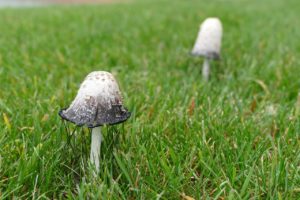
Mushrooms are the ‘fruiting bodies’ of fungi living in the soil and thatch. They are responsible for the production of microscopic spores that in turn help propagate the fungus. The sight of them in your lawn, flower beds or elsewhere in your landscape should not be cause for alarm. It simply means that you have adequate moisture and a good bit of organic matter in your soil.
The vast majority of those fungi are not associated with any lawn disease causing organisms. It’s quite common for them to appear in the fall during periods of moist conditions resulting from either natural rainfall or excessive irrigation.
Again, they are not necessarily indicative of any lawn problem. If you find the mushrooms offensive, simply knock them over with a rake and remove them from the area.
What has been a fungal problem that I’ve seen recently, is brown patch. That fungus can cause patches up to several yards in diameter in the fall when grasses are approaching dormancy. Turfgrass affected by brown patch generally will exhibit circular or irregular patches of light brown, thinned grass. When the blades of grass near the affected edge are pulled up, the blades easily separate from the runners and have a wet, slimy/rotten look to the base of the blades.
To prevent harmful fungal diseases in lawns, water only as needed and early in the day to remove dew and allow the grass to dry quickly. Avoid over fertilization in spring and fall. Improve the turfgrass root system with good drainage and aeration to reduce damage caused by brown patch
So, let’s wrap up. Fungus is an integral part of our landscape, releasing nutrients from organic matter, whether you see them or not. If you see mushrooms that you don’t want, clean them up with a rake. If you see a lawn disease, change your management practices and consider applying a fungicide.
But know that there are countless more fungi living in your soil, unrecognized, unassuming, and breaking down organic matter that can make more nutrients available.