




Texas Crop and Weather Report
The combination of a late freeze and a lack of chill hours will likely lead to reduced fruit yields across the state, according to a Texas A&M AgriLife Extension Service expert.
Tim Hartmann, Ph.D., AgriLife Extension statewide fruit specialist and assistant professor in the Texas A&M College of Agriculture and Life Sciences Department of Horticultural Sciences, has been connecting with fruit producers and tracking reported chill hours. He emphasized the importance of favorable weather conditions for fruit production.
Temperate fruit crops like peaches, apples, blackberries and blueberries require exposure to cool conditions, causing the plants to go dormant and enabling them to survive the winter weather.
Chill hours issues
Chilling refers to the exposure of plants to this cool weather to overcome dormancy requirements. While there are many models to quantify chilling, the simplest is chill hours, defined as the number of hours in which temperatures remain below 45 degrees during winter.
The chill hours required for each fruit and variety vary; peaches in South Texas may require as few as 200 hours, while another peach variety grown along the Red River may need over 1,000 hours for a good fruit set, Hartmann said.
Improper exposure to cooler weather leads to delayed and sporadic bud break, weak vegetative growth, poor fruit set and abnormal fruit development, ultimately resulting in reduced or, in some cases, zero yield.
Hartmann equated the importance of adequate chill hours to waking up after a night of poor rest.
“If you don’t get enough sleep, you’re likely to oversleep and will not function at your highest capacity,” he said. “In the same way, trees that don’t reach the required chill hours will bud late and not be productive.”
Adverse weather reduces output
Across the state, Hartmann said the reported chill hours were well below average. Other adverse weather presented additional challenges for fruit producers.
Other factors like exceptionally warm weather between colder spells, retention of foliage late into the winter, and arid conditions in the fall also likely had a negative impact on fruit crop potential. A late frost that occurred in many regions across the state damaged flowers and young fruit, especially on crops like blueberries and early blooming, low-chill varieties of peaches.
Those issues led Hartmann to expect lower yields for most fruits.
“We will likely see a reduced crop for peaches, blueberries, apples and blackberries,” he said. “Asian persimmons, which require less chilling and tend to bloom later than many other fruit crops, survived the late frost and should have better yields.”
Peaches and apples suffered primarily from a lack of chill hours and frost in March.
Blueberry producers in Southeast Texas saw a hard freeze in late January, but have already begun their harvest and still have a decent crop. However, producers farther north are reporting heavy losses. Some reported 100% crop losses, especially where there was no protection against the frost in March.
Blackberries, a crop that blooms later, did not suffer significant frost damage. However, inadequate chill hours along the Gulf Coast and throughout Central Texas left producers with lighter fruit loads compared to growers in North Texas, reported Jacy Lewis, manager of the AgriLife Extension Viticulture and Fruit Lab in Fredericksburg, and Stephen Janak, AgriLife Extension program specialist, Hallettsville, both in the Department of Horticultural Sciences.
Strategies that support growers
Despite setbacks, Hartmann noted several management strategies producers employed to boost production.
Most fruit producers combat drought with some form of irrigation. Some growers utilize overhead irrigation, which can keep buds and flowers above a given critical temperature through heat generated by the continuous freezing of liquid water to ice, protecting buds from frost damage. Wind machines and other measures can also be employed during frost events associated with calm, clear conditions.
Some peach producers also use a chemical growth regulator to mimic the effect of chill hours.
“Hydrogen cyanamide can have the effect of supplementing some of the chill hours that the buds need to develop fruit and set a good crop,” Hartmann said.
Hartmann, however, said these products are not silver bullets. They can be difficult to obtain and apply during the growing season and are not effective for all crops or even specific varieties. They can also cause trees to bloom early, making them more susceptible to frost injury.
Growers in every region of the state employ different strategies to limit the impacts of adverse weather, but Hartmann said the best way to promote higher yields is to plant fruit varieties best adapted to their location.
“It’s very important to choose varieties that have a chilling requirement as close to what you’d typically expect to receive in your given region,” he said. “Some growers also diversify their varieties based on chill hours in the hopes of avoiding complete losses, but the closer you stay to your average expected chilling accumulation, the better your chances are of making a crop.”
To help growers across the state select the ideal crop and variety, Aggie Horticulture’s Fruit and Nut Fact Sheets provide the required chill hours for crops ranging from peaches to jujubes.
AgriLife Extension district reporters compiled the following summaries:
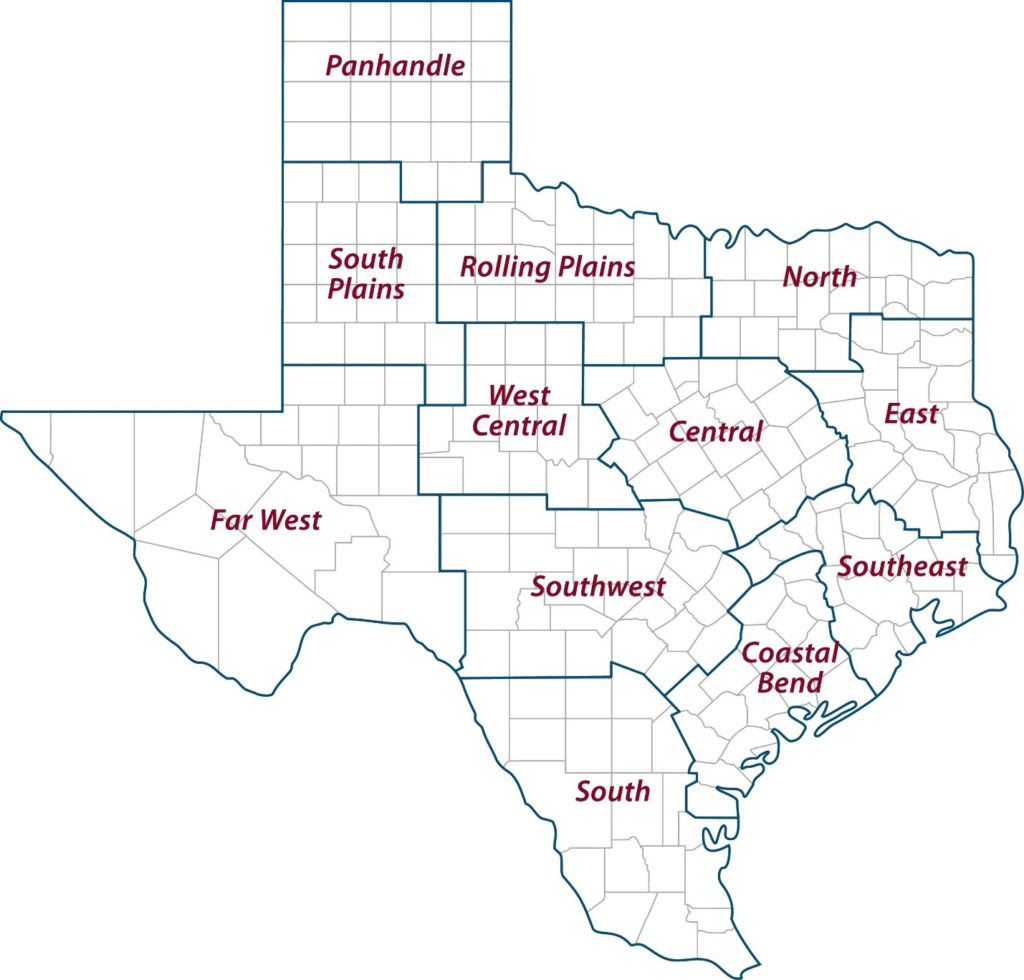
Panhandle
The district continued to experience extreme drought conditions with no rainfall, and overall soil moisture levels were very short to short. Pastures were in bad shape. Winter wheat, range and pasture conditions were very poor to poor. Grazing conditions were strained due to drought. Wheat harvest for silage purposes from irrigated wheat fields continued. Cotton and peanut producers were prewatering to work fields. A few growers planted their first acres of cotton while most waited for soil temperatures to warm. Final preplant tillage was underway in random fields scattered across the district.
South Plains
Subsoil and topsoil moisture levels remained short and conditions were windy. Some areas receive trace amounts of rainfall to 0.75 of an inch. April temperatures were higher than historic averages. Range and pasture conditions reflected drought, and grazing was limited, but cattle were in good condition. Producers were preparing for planting.
Rolling Plains
The district experienced heavy rainfall in southern counties, with hail and tornadoes in several areas. Some areas saw a slight improvement in topsoil moisture. Rainfall failed to materialize across northern counties, leaving conditions critically dry. Strong winds were causing pastures to dry up and early crops were dying off. Range and pasture conditions reflected persistent drought, and many cattle pastures were running low on forage, raising concerns about potential cow culling. Land preparation for warm-season crops continued, but more rain was needed to support crops. Wheat conditions varied across the district, and stock tanks were drying up, impacting livestock and wildlife.
North
Cooler conditions warmed up nicely toward the end of the week, creating prime growing conditions. Topsoil and subsoil moisture levels were short to adequate. Corn was coming along nicely and soybeans looked excellent. Wheat and oats were maturing through the dough stages, with some lodging occurring due to recent storms and wind. Reports of wheat stripe rust, leaf rust, powdery mildew and barley yellow dwarf were noted but only in parts of fields. Pastures and livestock were in good to excellent condition. Rangeland and pasture growth continued to benefit from recent moisture. Ryegrass and some early Bermuda grass hay harvesting was expected to begin soon. Grazing conditions were strong as livestock remained in good condition.
East
The district received a good amount of rain, with some areas reporting up to 4 inches. Despite the rainfall, some counties were still in drought. Topsoil and subsoil moisture levels were adequate. Growing conditions improved, but some producers had to wait for fields to dry before spraying weeds or spreading fertilizer. Pasture and rangeland conditions were fair to good, and pastures were greening up with the added moisture. Livestock were in fair to good condition with some supplementation still taking place. Cattle markets remained strong with overall higher prices. Producers continued to manage weed pressure, and hay cutting started in some areas. Ponds were slowly filling and improving water availability for livestock. Feral hogs and gophers continued to damage pastures and croplands across the district.
Far West
District conditions improved as cooler temperatures, increased cloud cover and periodic rainfall provided short‑term relief to soil moisture and reduced heat stress on crops. Soil moisture ranged from adequate to surplus in some areas, while others remained very short to short. Rainfall supported early crop development and pasture green‑up, though persistent winds of 10-20 mph with stronger gusts continued to elevate fire concerns and limit moisture retention. Field activities progressed as conditions allowed, with early harvesting beginning and planting continuing. Cotton planting was underway, with much of the Pima cotton emerged and some upland cotton planted. Pecan orchards received their second irrigation, and alfalfa fields showed mixed results due to poor‑quality water. Melon planting concluded. Corn was fully planted and emerged in some counties, and sorghum planting and emergence were progressing. Most wheat and oats were cut for hay, and what was left was mostly headed, with conditions ranging from poor to fair. Pasture conditions improved with recent rainfall, though forage remained limited and supplemental feeding continued. Livestock conditions ranged from fair to good. Feral hog activity increased, especially in newly planted fields. Overall, conditions improved slightly but remained dependent on continued rainfall and better water availability.
West Central
Moisture conditions remained good across some areas with additional rainfall reported during the week, but more moisture was needed. Some areas reported 1-3 inches of rainfall while others received trace amounts or nothing. More rainfall was in the forecast. Running water was improving stock tank levels. Pastures continued to grow and looked very good, and hay grazer planted before the rain emerged and was growing. Rangeland conditions improved, though overgrazed areas were slow to recover. Sudan grass fields were nearly ready to cut, Bermuda fields were a few weeks behind. Cattle looked good.
Central
Drought conditions continued to improve as light showers and scattered storms provided much‑needed relief. Benefits were mixed due to scattered rains, storm intensity and localized hail damage. Topsoil and subsoil moisture had improved but were still short to adequate. Cooler temperatures arrived. Pastures were responding well to rainfall and greening up, though cooler temperatures slowed summer grass growth. Producers were working to control weeds. Hay cutting began, and ponds were slowly filling for livestock. Grazing conditions remained good, and livestock were doing well on pasture with reduced supplemental feeding, though some herds experienced mud and storm stress. Corn looked good to excellent. Wheat continued to progress rapidly toward maturity, though yields were expected to be average to below average due to drought, Hessian fly and vernalization issues. Cotton was progressing despite cooler weather and wet soils. Winter oats were mostly grazed off. Producers were working to control early‑season insect pests. The cattle market remained strong with high prices for sellers, though purchasing replacement cattle continued to be challenging.
Southeast
Recent rainfall improved soil moisture and supported pasture and crop conditions, though moisture levels still varied widely from saturated soils to short conditions. Some areas experienced improved forage growth, better grazing and generally positive field conditions, while a few locations continued to report lingering drought conditions. Pasture and rangeland conditions were fair to good across much of the district, and livestock remained in fair to good condition with adequate forage availability. Crop conditions followed similar positive trends, with warm‑season crops and forages performing well and rice planting completed under favorable moisture conditions.
Southwest
A cold front brought more rain, providing topsoil moisture. Some areas received 1-4 inches of rain, and temperatures were in the upper 40’s overnight. Tomato and pepper harvests continued. Pecan nut casebearer presence remained low as pecan trees leafed out. Cool-season pastures were still growing, suggesting an extended growing season, which could interfere with warm-season growth. Overall, corn and sorghum conditions improved, but wheat and oat harvest was expected to be delayed due to recent rains. Corn began to silk. Range and pasture conditions continued to improve, and fertilization and weed control in pastures continued. Livestock was still under supplementation and in mostly fair condition.
Coastal Bend
Soil moisture greatly improved across much of the district following significant rainfall, with amounts ranging from 2-5 inches in most areas and some locations accumulating up to 6 inches. A few areas still reported being behind on rainfall, while fields in some areas remained slow to drain. Field conditions allowed cotton planting and cultivation to resume. All crops, including corn, grain sorghum and cotton, responded positively to the improved moisture, with early planted corn beginning to silk and rice fields flooded as planned. While all crop stands improved, there was still some variation in maturity across fields, and producers were concerned how earlier dry spells might impact final yields. Range and pasture conditions showed marked improvement, especially in well-managed or less-grazed fields. Prospects for a strong first hay harvest were good thanks to rain. Grazing conditions benefited livestock as cattle body condition continued to improve, and supplementation slowed considerably.
South
Seasonable, milder temperatures returned, and conditions improved across the district. Rainfall during April had been spotty, but 1-10 inches were received over the past two weeks in most areas. Some storms brought strong winds and tornado warnings, contributing to localized field damage and short‑term soil saturation. Soil moisture remained very short to short in many areas. More rain was forecast. Improved soil moisture reduced irrigation demand. Row crops were progressing well with recent moisture. Strawberries were still producing, though yields had decreased. Early planted corn with inconsistent stands had fully emerged and ranged from the fifth‑leaf stage to tasseling. Producers continued harvesting leafy greens, and peanut planting should begin soon. Wheat and oats were being harvested; cotton planting was complete with most fields emerged. Hay fields were nearing harvest. The onion harvest was nearly finished, and the citrus harvest had concluded. Some grain sorghum was replanted to take advantage of rainfall, and sesame planting continued. Range and pasture conditions steadily improved as grass yields increased. Grazing availability improved, and cattle producers slightly reduced supplementation. Markets continued to report low volumes with strong prices, and producers were still culling and selling calves. Feed prices remained high.