

Home Blog Page 346

My five cents…

0

The Legislature has ended its first week of session. Due to the ongoing pandemic, the Senate has decided to recess until January 26th. However, we will still be working hard in the meantime on legislation for Senate District 3.

Here are five things happening around your state:

1. The Texas Legislature begins the 87th Legislative Session

This week, the 87th legislature gaveled in for session. Though opening day looked a bit different than usual, with fewer guests in the gallery, on the floor, and throughout the building, we’re excited to start the important work on behalf of Senate District 3.

The Texas Senate also decided on the rules that will govern the chamber for at least the first 60 days. There are several changes due to the ongoing COVID-19 pandemic. COVID-19 precautions include mandatory testing for anyone going onto the floor of the senate or to a committee hearing and twice weekly testing for all staff. The Senate also changed the number of votes required to bring a bill up for a vote on the floor. Instead of requiring 3/5ths of the membership to bring a bill up, the body will now require 5/9ths of the members to vote to bring up a bill.

2. Texas was the top corporate move destination in 2020

Texas ranked number one in corporate relocations last year, according to Allied Van Lines, a major moving firm. Houston and Austin were the top two cities in Texas that businesses were relocating to. The top locations businesses were coming from were California, Chicago, Phoenix, and Washington, DC. Some major companies that recently moved their headquarters to Texas include Oracle, Hewlett Packard, and CBRE. Texas’ business-friendly climate is one reason many companies cited for their moves and I hope to see that continue.

3. Timeline for Session

As the Texas Constitution requires, the legislature has convened for the next 140 days. The reason we meet every other year is because the framers of our state constitution envisioned a citizen legislature that could not infringe too much on citizens’ lives by meeting more frequently. Though many years have passed since our founding, our framers vision lives on.

Several provisions in our state constitution are related to ensuring we value the time we are given to legislate and focus our attention on only the most pressing issues. One such provision is that no legislation can be fully passed in the first 60 days of session. The only exception is if the Governor designates a specific bill as emergency legislation. If there’s a piece of legislation you feel strongly about, please be sure to contact us. Our office phone number is (512) 463-0103.

Here are some important dates to keep in mind as we move through session:

· March 12th – This is the last day bills can be filed in the House and Senate.

· May 31st – This is the last day of regular session, which also happens to be Memorial Day.

· June 20th – This is the last day the Governor can sign or veto bills passed during the regular legislative session.

4. Vaccine Hubs and vaccine rollout

The Department of State Health Services has announced 28 vaccination hubs that are meant to streamline a large-scale vaccination effort currently being undertaken by the state. These vaccination hubs will have the capability to vaccinate 100,000 people. The state is set to receive almost 200,000 doses of the vaccine. A little over 158,000 doses of the vaccine will go to these hubs, the other roughly 38,000 doses will go to providers across the state. Currently, the hubs are prioritizing frontline healthcare workers, people who are 65 and older, and those with certain health conditions. The state of Texas has vaccinated more people than any other state in the nation and will begin receiving a larger allotment of doses starting in February. For more information about the COVID-19 vaccine and vaccine provider information please visit https://tdem.texas.gov/covid-19/.

5. Comptroller announces the Biennial Revenue Estimate

The Comptroller has released his Biennial Revenue Estimate. The BRE projects an estimate of the state’s revenue over the next two years. The BRE projected that the state will have $112.5 billion available for general-purpose spending. That’s down 0.4% from the last biennium. It also outlined the closing balance of the last two-year budget. While the coronavirus pandemic took a toll on our economy, the impact was not as severe as originally thought. The ending balance for the 2020-2021 balance will be close to a negative $1 billion.

Texas First State To Administer 1 Million COVID-19 Vaccines

0

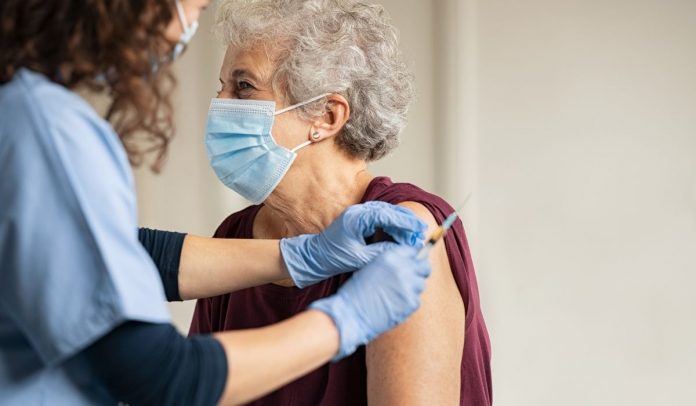
Governor Greg Abbott and the Texas Department of State Health Services (DSHS) today announced that that State of Texas has administered more than 1 million doses of the COVID-19 vaccine—making Texas the national leader in vaccinations. This milestone comes exactly one month to the day after the first doses arrived at vaccine providers in the state on December 14. According to the latest Centers for Disease Control and Prevention (CDC) data, the Lone Star State has administered more doses than any other state. Among the top 20 states for doses distributed, Texas ranks number one for percentage of doses administered. 

“Texas is leading the way for our nation once again,” said Governor Abbott. “This is the biggest vaccination effort we have ever undertaken, and it would not be possible without the dedication and tireless efforts of our healthcare workers. We still have a long road ahead of us, but Texans continue to prove that we are up to this challenge.” 

Voluntary vaccination continues throughout the state for front-line health care workers, residents at nursing homes and assisted living facilities, and Texans over 65 or with a chronic medical condition to aid in reducing hospitalizations and protect the health of those in these vulnerable populations. Texas receives more vaccine from the federal government each week and expects the weekly amount to increase in the future. The State of Texas will continue to swiftly distribute these vaccines to reduce hospitalizations and save lives. 

Make Your Home a Sanctuary – Even If COVID-19 Arrives on Your Doorstep

0

Winter has brought with it a resurgence in COVID-19 cases. And while the rollout of preventive vaccines has begun, the manufacture and delivery of sufficient doses to inoculate all Americans will take months. Because the disease can be unpredictable, everyone should take precautions to mitigate its spread, especially when it makes an appearance at home.

While the U.S. Centers for Disease Control and Prevention (CDC) recommends physical distancing, mask-wearing and other health-related measures, the American Society of Heating, Refrigerating and Air-Conditioning Engineers (ASHRAE) also recommends additional guidance when a household member is known to be infected, to help reduce risk to other household members. Filtrete Brand, a leading air filtration brand of 3M, has also made some of this information available at Filtrete.com/3M.

First, prepare a clean sanctuary within your home, either an isolation space – for someone who has contracted COVID-19 – or a protected space – for someone who may be at high risk of getting the coronavirus.

Location is especially important. When the weather is warmer, the ideal isolation space should be on a low floor; in cooler months, a high floor. However, for protected spaces, the location should be just the opposite: on a high floor in warmer weather, and on a low floor in chilly weather. The reason for this is to prevent having air naturally gravitate towards protected spaces as a result of seasonal temperature differences.

Earmarking space is a good start. To further optimize the space for preventing the spread of infection, you can address these key elements as applicable to your home, understanding there is variation in home construction, HVAC systems, and climate:

• Windows: Keep windows closed as much as possible throughout the home. In an isolation space, use a window-installable product to provide exhaust ventilation. In a protected space, supply filtered, outdoor air.

• Doors: For an isolation or protected space, always keep the door closed. For added safety, install a draft stopper under the door or hang plastic sheets in front of the room’s entrance.

• Vents: If you have a forced-air heating, ventilation, and air conditioning (HVAC) system, seal all vents in the isolated or protected space. By doing so, you’ll prevent its air from entering other rooms. However, if the room you select has the home’s only HVAC return vent, it may be wisest to choose another room.

• Portable heating/cooling: If you’re able to seal off all vents, you may require a portable room heater or air conditioner so that thermal conditions can remain comfortable.

• Private bathroom: If possible, designate a private bathroom for use only by the occupant of the separate room. For a protected space, only run the bathroom exhaust fan when the facilities are in use. For an isolated space, run the bathroom exhaust fan continuously at high speed.

• Air purification: A system such as the Filtrete Air Purifier with HEPA filtration can help capture unwanted air particles, including viruses and bacteria, in a protected space. Be sure to change the filter regularly, per instructions or according to the device’s electronic filter life indicator. While Filtrete Air Purifier Filters don’t stop or prevent the transmission of COVID-19, they do improve indoor air quality.

For more information on preparing a clean sanctuary at home, visit www.Filtrete.com/3M.

To stay up to date, consult the CDC and other health authorities, as well as ASHRAE for the latest guidelines, updates and recommended precautions around COVID-19.

Chick-fila-A Provides Support Through Bowls of Soup

0

The Salvation Army of Lufkin is always in need of support of the community, and Chick-fil-a has stepped up once again. Now, through the end of January, if you purchase a bowl of soup, Chick-fil-a on the loop will donate one bowl to those seeking a warm meal through The Salvation Army Community Kitchen.

The Salvation Army provides year-round practical assistance along with spiritual support to individuals and families right here in Lufkin. With the Christmas season over, The Salvation Army looks to the future on how they will meet the needs of those seeking assistance in Angelina County.

For almost a year now, the COVID-19 pandemic has resulted in heightened need in communities throughout Texas and the nation. Many people who have been able to pay their way prior to this outbreak are now facing extreme difficulties due to mandated business closings, furloughs, and job layoffs.

“We are so fortunate to live and serve in a such a generous and caring community. Throughout the COVID-19 pandemic, generous individuals and businesses, like Chick-fil-A, have come alongside The Salvation Army and made it possible for us to provide food, financial support and encouragement to those who have come to us for help,” said Captain Jenifer Phillips of The Salvation Army. “One of the earliest Salvation Army mottos was Soup, Soap, and Salvation. Please purchase a bowl of soup and help The Salvation Army provide both practical assistance, and hope, to those in need.”

The Salvation Army delivers a wide range of services to individuals and families in need and this is only possible because of the generous support of the community. The most effective way to help is to make a financial donation at www.salvationarmytexas.org/Lufkin/, by calling (936) 634-5132 or mailing a check to 412 S. 3rd St. Financial donations give The Salvation Army the most flexibility to purchase items that are most needed while supporting local businesses at this challenging time.

For more information about the work of The Salvation Army in Angelina County, please contact Captains Cavon and Jenifer Phillips at (936) 634-5132 or visit them at 412 S. Third Street, Lufkin, Texas.

HHSC Encourages Cancer Screenings During Cervical Health Awareness Month

0

In observance of January as National Cervical Health Awareness Month, the Texas Health and Human Services Commission is encouraging women to get screened for cervical cancer.

“It is so important to get screened regularly so that cervical cancer can be detected in its early stages when it’s easier to treat,” said Joe Perez, HHSC interim deputy executive commissioner for Health, Developmental and Independence Services. “HHSC is helping at-risk women receive these vital screenings through our Breast and Cervical Cancer Services program.”

The Breast and Cervical Cancer Services (BCCS) program provides low-cost and free women’s health services for uninsured and underinsured Texas women who meet eligibility requirements. Some of those services include cervical and cancer screenings, clinical breast examinations, mammograms and breast biopsies. BCCS helps fund clinics across the state to provide these life-saving screening and diagnostic services.

Between Sept. 2019 and Sept. 2020, BCCS helped more than 24,800 women including 9,466 women who received cervical cancer screenings and 1,043 women who received treatment for precancerous cervical conditions.

In 2017, which is the most recent year of available data, there were more than 12,000 new cases of cervical cancer for women in Texas. The disease is the third-most common cancer diagnosed among Texas women ages 20-39, and fifth among women ages 40-49.

To find BCCS providers or learn more about women’s health services, visit www.healthytexaswomen.org or call 2-1-1. 

About Breast and Cervical Cancer Services Funding
As an awardee of the National Breast and Cervical Cancer Early Detection Program (NBCCEDP), BCCS is partly funded through the Centers for Disease Control and Prevention. The federal program awards funding to states for early detection of cervical and breast cancers. Between June 2019 and June 2020, the federal program awarded BCCS more than $6 million as part of the effort. The Texas Legislature appropriates more than $2 million annually to supplement NBCCEDP efforts.

About National Cervical Health Awareness Month
National Cervical Health Awareness Month is observed in January in the United States. The month is intended to raise awareness about cervical cancer and provide education about prevention, screening and treatments. More information about cervical cancer is posted on the CDC website.

MLK Day Sanitation and Landfill Schedule – Nacogdoches

0

On Monday, January 18, 2021, there will be no commercial garbage collection. Collections will resume Tuesday, January 19th. All collections will be delayed one day later than normal, beginning Saturday, January 2nd, and ending Saturday, January 23rd.

The landfill will be closed on Monday, January 18th, and will re-open Tuesday, January 19th. 

Texas Holocaust And Genocide Commission Accepting Applications For Outstanding Texas Educator Award

0

The Texas Holocaust and Genocide Commission (THGC) is now accepting applications for the 5th Annual Dr. Anna Steinberger Outstanding Texas Educator Award. The winner of this award will receive a check for $1,000, funded by Dr. Anna Steinberger of Houston who escaped the Holocaust and served as a commissioner on the THGC. 

The Dr. Anna Steinberger Outstanding Texas Educator Award is annually presented to one full-time classroom teacher, curriculum specialist, or librarian. The applicant must hold at least a bachelor’s degree, have three years of experience working with students, and have a record of teaching or actively supporting the teaching of the Holocaust and/or genocides in the Ottoman Empire, Cambodia, Rwanda, the Balkans, Sudan, and the Middle East (Syria/Iraq) to Texas students in grades 6 – 12.

Past recipients of the Dr. Steinberger Outstanding Educator Award have included educators integrating Holocaust and/or genocide instruction in English Language Arts, Fine Arts, English as a Second Language, and Social Studies courses. Winners have taught in various parts of Texas, including Robinson, El Paso, Laredo, and Beaumont.

If you know a Texas teacher who is committed to educating students about the Holocaust and/or genocides, visit THGC’s website for application instructions. All application materials must be received electronically by 4:00 PM CST on Wednesday, March 10, 2021. Visit https://thgc.texas.gov/grants-contests/steinberger for more information as well as the online application.

If you would like more information about the Dr. Anna Steinberger Outstanding Texas Educator Award, please contact Dr. J. E. Wolfson at j.e.wolfson@thgc.texas.gov or Christian Acevedo at christian.acevedo@thgc.texas.gov. Visit https://thgc.texas.gov/ to learn more about the THGC and its mission.

Georgia-Pacific Donates $10,000 Toward New Corrigan Fire Station Capital Campaign

0
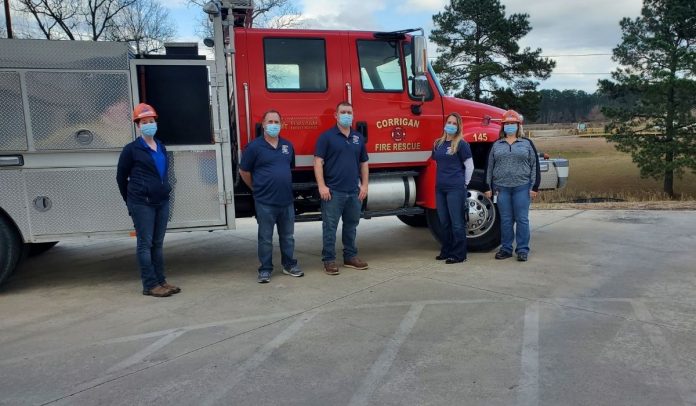
The Corrigan Volunteer Fire Department is $10,000 closer to meeting its capital campaign goal. Recently, Georgia-Pacific donated the funds that will help the department acquire a new fire station. Pictured from l to r are Casey Flores, Georgia-Pacific Camden Process Engineer; Mike Cobb, CVFD Administrative Captain; Jimmy McDonald, CVFD Chief; Zaneta Thompson, CVFD Firefighter; and Christy Suggs, Georgia-Pacific Camden Safety and Health Technician.

They are the first line of defense when it comes to responding to structure fires, grass fires, vehicle fires and chemical spills. The Corrigan Volunteer Fire Department fulfills a critical need in northern Polk County, serving not only the city but also the outlying areas of the rural community. Today the department is asking for the public’s help as it embarks on a capital campaign to replace its current fire station.

“Our station has seen better days. Ongoing roof and structural damages through the years have taken a toll on the building,” said Corrigan Volunteer Fire Chief Jimmy McDonald. “We hope to raise at least $200,000 to purchase a new building.”

The Georgia-Pacific Foundation is helping the volunteer firefighters reach that goal by contributing $10,000 toward the building fund. “With three plants located in Polk County and close to 1000 employees, we appreciate the firefighters who risk their lives to protect our community,” said Chris Bluethman, Corrigan Plant Manager.

Georgia-Pacific is an ongoing supporter of the Corrigan Volunteer Fire Department. Through the years Georgia-Pacific has donated funds for new bunker gear, equipment, maintenance and supplies.

Top Tips for Organized Tax Filing

0

2020 was a particularly stressful year — but filing its taxes doesn’t need to be. With the following tips, you can stay organized and cool-headed throughout the process.

File Early

File early so you check this major to-do off your list and relax. The good news is that the sooner you file, the better. This is true no matter what your circumstances are. If you owe money, you’ll have that much more time to plan your payment. If you’re due for a refund, filing sooner means you’ll have your money sooner, money which can be used to pay bills, be invested or be added to a rainy day fund. To that end, take some time to glance at your overall financial picture so you can make a smart game plan for directing your refund usefully.

Check Your Work

A multi-functional printing calculator with a 12-digit display can help you check your work and track and manage any necessary calculations, while ensuring your figures aren’t truncated. Look for a model that prints in two colors, such as Casio’s HR-170RC, so you can quickly see both positive and negative numbers to avoid reading errors. If you have any international holdings, this is a must-have tax season tool, as its functions include currency exchange. This model also has a built-in tax feature that lets you store a frequently-used rate and pull it up when needed, as well as a check function that allows you to scroll up to 150 steps of previous calculations.

Stay Secure

Your financials and personal data are especially vulnerable during tax season. Be sure to keep all the paperwork associated with your taxes organized securely. As forms arrive by mail, file them neatly in one place that’s locked and secure. Sensitive information can easily be misused if it falls into the wrong hands. If you’re storing information electronically, be sure to use strong passwords and work only on a secure network.

By giving yourself the right tools and plenty of time, you can better ensure timely, accurate tax preparation.

Fighting Flu and Staying Healthy All Year With Medicaid and CHIP

0

Each year, millions of Americans get sick from “seasonal influenza” (“the flu”). According to the Centers for Disease Control and Prevention (CDC), more than 38 million people got sick with the flu during the 2019-2020 flu season. The flu is more dangerous than the common cold and children are at higher risk for developing serious complications. More than 12 million children under the age of 18 were diagnosed with flu last year, and of those children diagnosed, more than 52,000 were hospitalized. However, there are preventive steps parents can take to protect their children and family from the flu.

Flu viruses change each year, so the best way to keep your kids and teens healthy is to make sure they get their yearly flu shot. The flu is a serious illness, but getting the flu shot helps lower the number of hospital visits and deaths. Remember, even healthy kids can get sick from the flu and spread it to family and others.

This year, it’s more important than ever for children 6 months and older, as well as adults, to get a seasonal flu shot. The CDC recommends getting a flu shot early in the season, but getting it at any time during the flu season can help.

Medicaid offers free or low-cost health insurance for eligible kids up to age 21; the Children’s Health Insurance Program (CHIP) covers eligible kids up to age 19. Medicaid and CHIP covers vaccinations for children, like the flu shot, but also other services like preventive care, well-child visits, dental and vision care, and mental and behavioral health care. Eligibility varies by state and depends on your household size and income. On average, a family of four earning up to $50,000 a year or more may qualify for Medicaid or CHIP. Enrollment is open all year, but you have to renew your health coverage yearly.

Catch Up on Missed Care

This is also a good time to catch up on other care and necessary preventive services your child may have missed because of COVID-19, like routine well-child visits and vaccinations. Routine well-child visits help health care providers ensure children are growing and developing normally, including meeting important developmental milestones and provide age-appropriate counseling and immunizations to keep children healthy. With Medicaid and CHIP coverage, parents can schedule preventive visits for their children. Your provider will tell you how to be safe and how to get important care to protect your kids’ health now and for the future.

Preventive care can keep you, your family and community healthy. Get covered with Medicaid and CHIP and catch up on care to prevent disease. Don’t forget to schedule your child’s yearly flu shot and protect your child’s health.

To learn more about Medicaid and CHIP, visit InsureKidsNow.gov or call 1-877-KIDS-NOW (1-877-543-7669) to speak with an enrollment specialist and get covered today.

Information provided by the U.S. Department of Health & Human Services.