


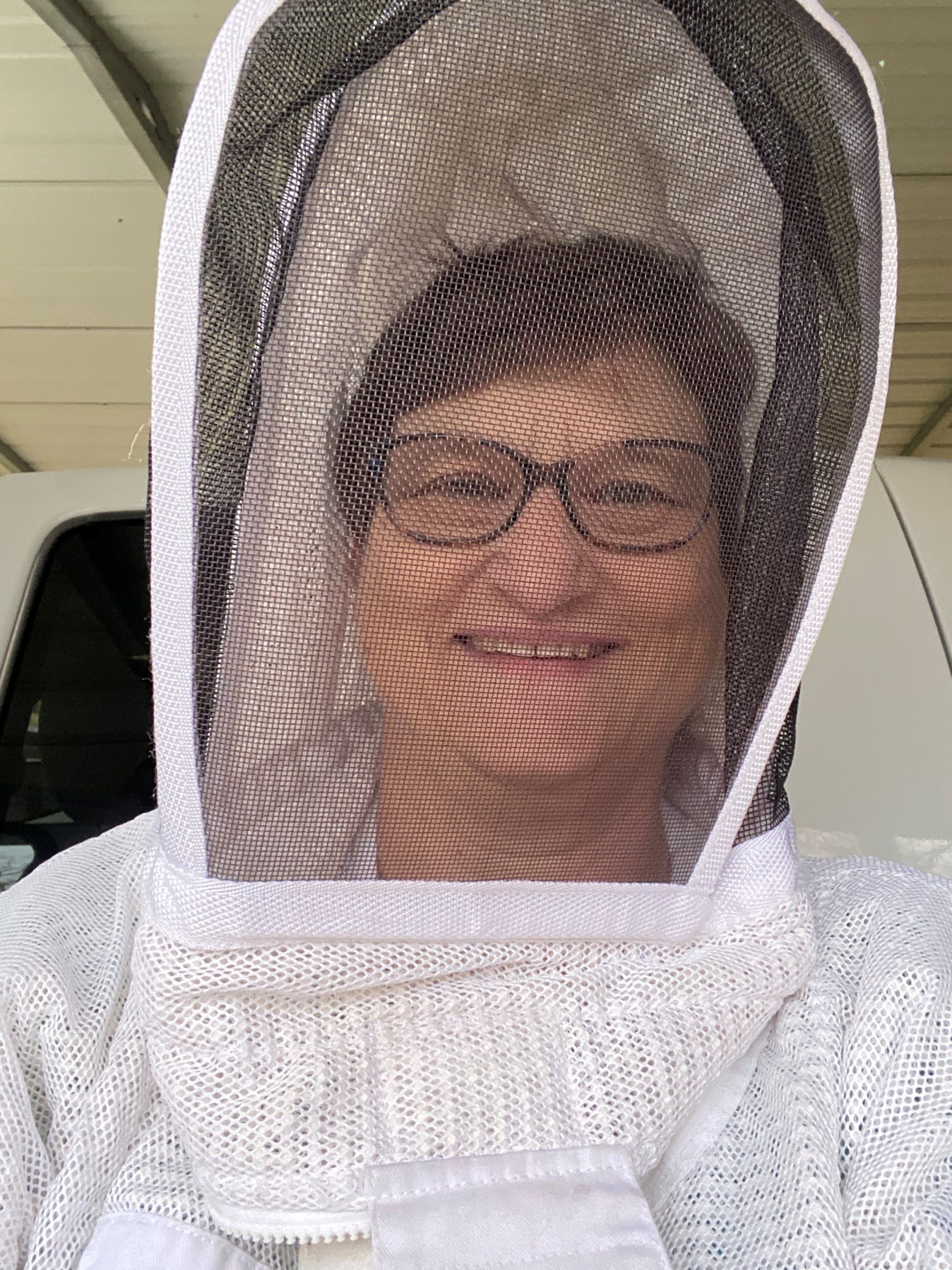
Karen Mitchell says her story is “actually pretty boring.” Anyone who has heard her describe a hive full of worms, or three swarms in one afternoon, might disagree.
It started with her dad’s garden in the early 1980s. The garden didn’t have enough pollinators, and it wasn’t producing the vegetables he expected. His idea: Karen could keep bees at his house, the garden would do better, and the family would get honey out of it.
She bought two hives. There was no local bee club back then, so she learned from books “and through plenty of trial and error.”
Hives in Fuller Springs and Diboll
These days Karen doesn’t work alone. A few years ago she began mentoring a friend, and the two now keep hives at the friend’s home in Fuller Springs, behind Karen’s house, and on the property Karen and her husband own in Diboll.
How many hives? That changes. Early this spring they caught so many swarms they ran out of woodenware — the boxes, frames and other parts that make up a hive — and had to order more. Then small hive beetles got into many of the hives, and they lost a lot of them.
Karen doesn’t use chemicals, and she knows it costs her. “I lose more hives than many other beekeepers,” she said. The treatments other beekeepers use are approved. Skipping them is her personal choice.
A beekeeper’s year
Ask Karen what a normal week looks like and she answers with a calendar.
January is for making sure the bees have enough food, ordering package bees and putting out pollen patties to get the queen laying before the honey flow. “If the weather cooperates, more bees mean more honey.”
Early February is the hardest stretch for a colony, and starvation causes most losses, so feeding comes first. The first pollen and nectar flow starts in February, the bees start swarming, and from late February through harvest the work doesn’t let up. Every inspection checks for a productive queen, a strong population, signs of swarming and the pest load.
March is busier still. Karen grafts queens, placing eggs in special containers with royal jelly so the bees will build queen cells. She also makes splits, dividing crowded hives to make new ones. If no queen is added, the bees raise their own. The splits have to be fed. By the end of March, supers — the boxes where bees store honey — go on the hives that need them, and from mid-March on the job is to add them before the bees run out of room.
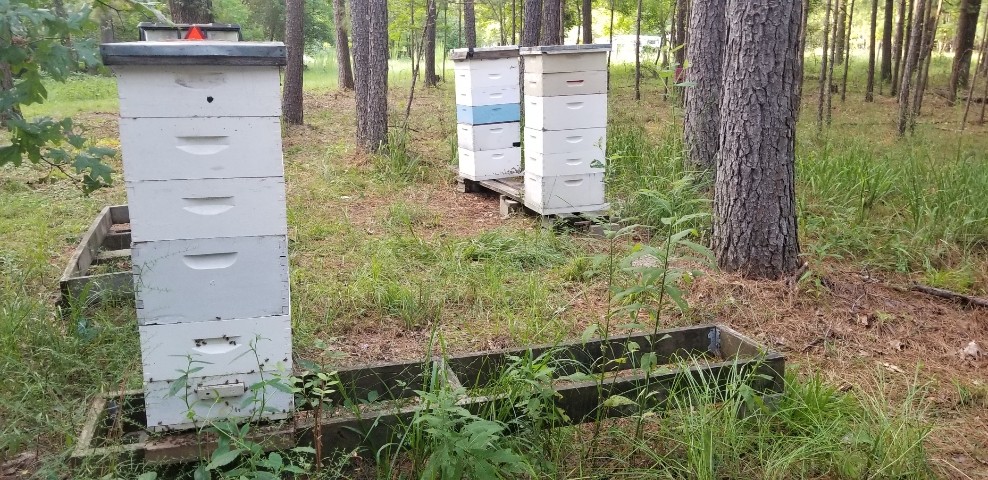
The tallow flow, East Texas’s main honey source, runs from May into June. Harvest can come as early as June, depending on the weather, but July and August are normal. July through September is a dearth, so the bees need a reliable water supply and sometimes extra feed. When goldenrod blooms, they start gathering winter stores, and Karen adds supers again. A hive needs at least 40 to 60 pounds of honey to get through winter.
November and December are for repairing, painting and building woodenware for the next year.
What honey tastes like here
No two harvests taste the same, Karen said. The weather decides what grows, and the bees work whatever is blooming. There’s usually a lot of clover before the tallow blooms, and that honey is lighter in color.
One year the trifoliate oranges were thick around Diboll, and the honey carried a hint of orange. “It was delicious,” she said, “but that has not occurred since then.”
Right now her bees are feasting on goldenrod.
The worst day and the best
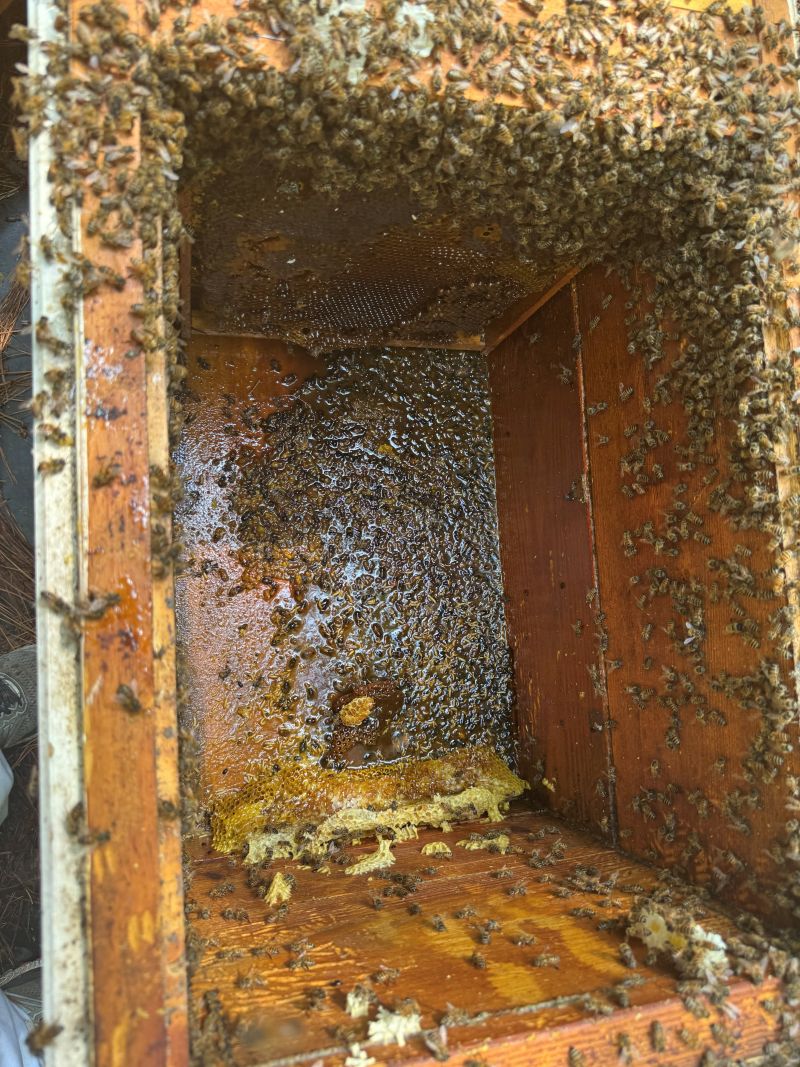
When Karen started, nobody had heard of the small hive beetle. Years later she went to inspect a hive behind her house and noticed “a horrible, putrid odor” coming from it. She didn’t see any bees. The frames looked like melting wax was running down the bottoms, and the bottom of the box held “this writhing mass of worms.”
She called David Jones, a Pineywoods club member at the time and described it. Twenty minutes later he had the problem identified. Karen was the first beekeeper in the club — maybe in Angelina County, she said — to lose a hive to the small hive beetle.
Her best days are harder to pick. “There are so many.” The one she comes back to is working with new beekeepers as they open a hive for the first time. “The awe and amazement as they watch God’s creation in action makes my heart sing.”
Then there was a day at Diboll. They hadn’t checked those hives in a week or so, and several storms had come through. Bees tend to swarm more after rain. That day there were three swarms, the most they’ve ever had at once.
If you want to start
The two most common hives are the Langstroth, the stacking boxes most people picture, and the Layens, a single-story hive that’s longer and has deeper frames. Karen said the Layens is best for people with a physical handicap.
Either one needs a bee suit, gloves, a hive tool and a smoker. A Langstroth also needs a hive cover, boxes, supers, frames with waxed foundation, a bottom board and, if you want one, a queen excluder. A Layens needs the Layens box, frames and wax.
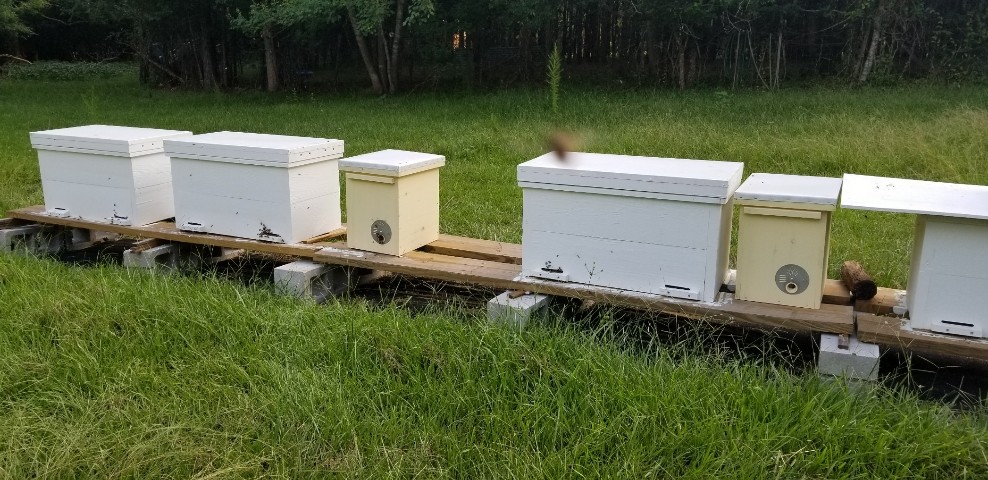
Whichever you choose, she recommends buying at least two established hives of local bees.
What to skip? Buy the basic components and research the rest. Her example is the beetle blaster, an oil-filled trap that sits between the frames to catch hive beetles. It sounds great, she said, but the bees glue its edges to the frames. Pry it loose with a hive tool and there’s a good chance you’ll puncture it and spill oil and dead beetles into the box. Beetles also like to hide under its edges.
Honey, wax and the club
In a good year Karen sells honey by word of mouth, after she saves back enough for family and friends. Her biggest harvest was more than 30 gallons. This wasn’t a good year. A late freeze kept the tallows from producing as usual, and the drought made it worse.
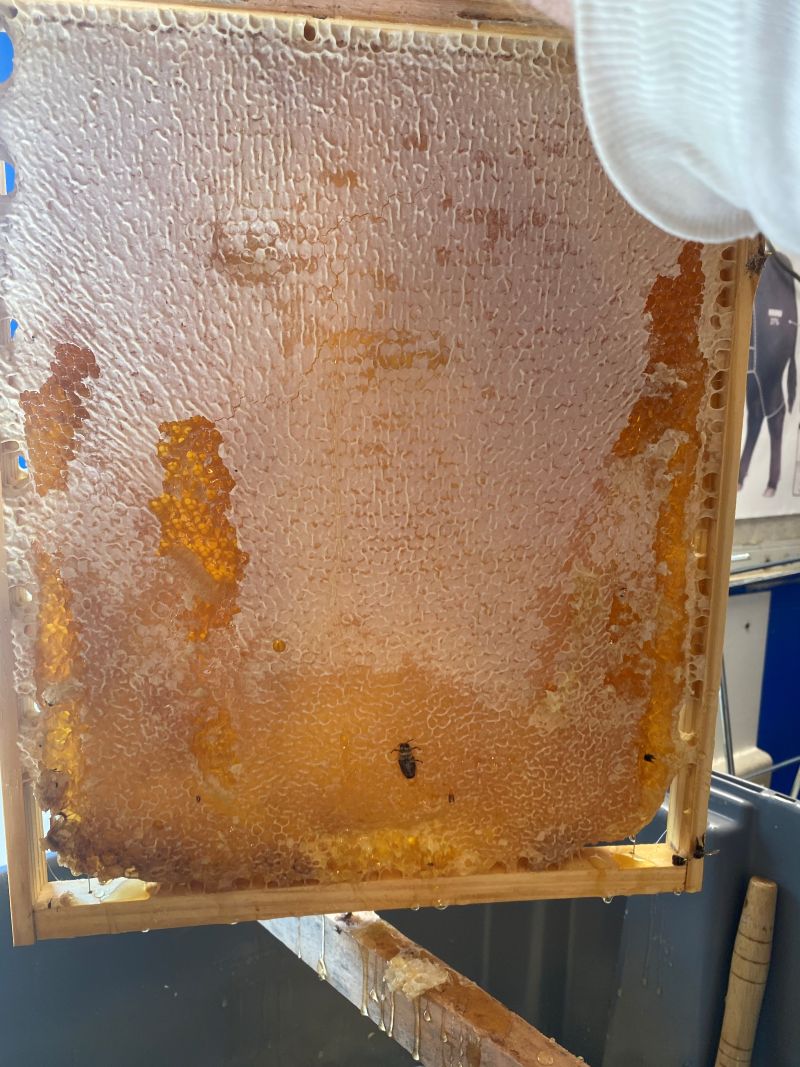
She melts down the wax and has sold it and given it away for all kinds of projects.
Karen has belonged to the Pineywoods Beekeepers Association since it formed in 2001, and she’d tell anyone who keeps bees, or is curious about them, to come to a meeting. The club meets the second Thursday of every month at 6:30 p.m. at the VFW Club, 1800 Ford Chapel Rd. in Lufkin. Every meeting takes up questions from guests and members. “Even seasoned beekeepers are amazed and sometimes confused at what the bees do,” she said. Some members will mentor new beekeepers and come out to their bee yards.
Each year in late February the club holds Bee School: two Saturday classes at the Angelina County Extension Office, 2201 S. Medford Dr., and a third Saturday in a bee yard. The classes cover the parts of a hive, how to inspect one, pests and how to manage them, harvesting and getting hives ready for winter. On the bee-yard day, students inspect a working hive alongside a seasoned beekeeper. Suits and gloves are available to use that day.
For more local information, visit pineywoodsbeekeepers.org.