

Home Blog Page 11

Black hens, loud crows and the hawk overhead: what East Texas flock keepers keep noticing

0
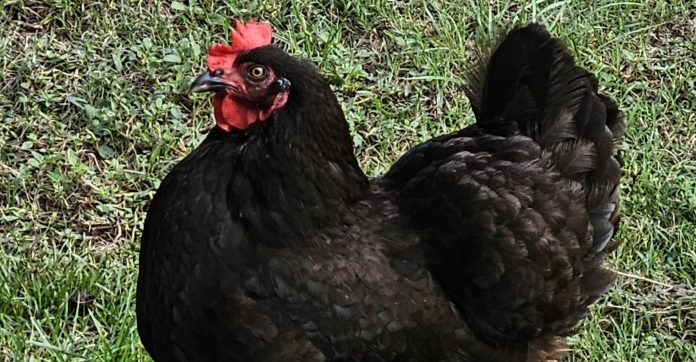
Black Plymouth Rock Chicken
Photo by Lee Miller

Talk chickens long enough at any feed store between Lufkin and Jasper and somebody will tell you two things. Black hens don’t get taken by hawks the way the white ones do. And if you’ve got crows on the place, leave them be — they’re working for you.

I keep Black Plymouth Rock mixes out at Mountainview Ranch, and they do very well. We see hawks around the place. We also have a couple of families of crows in the pines nearby, and we haven’t had a hawk problem. There are owls, too, but the hens are locked behind automatic doors at night.

Maybe that’s the black feathers. Maybe it’s the crows. Maybe it’s luck. I wanted to know how much of it holds up. The short answer: the crow part has real science behind it. The black-chicken part is mostly what keepers have seen with their own eyes, and that counts for something, but it isn’t proof. And neither one replaces a covered run.

Who’s hunting your hens

Out here the daytime threats are the red-tailed hawk, the red-shouldered hawk and the Cooper’s hawk — the same three that extension poultry guides list as the most common hawks on backyard flocks. The red-tail is the big soaring bird you see on fence posts along 69. The red-shoulder likes our creek bottoms and wet woods. The Cooper’s is the one that does the damage. It’s built to fly fast through timber, and it’ll come in low and quick off a tree line before your hens know it’s there.

At night the job passes to the great horned owl.

One thing to settle up front: every one of those birds is protected under the federal Migratory Bird Treaty Act. You can’t shoot, trap or poison a hawk or an owl for taking chickens without a federal permit, and the penalties are real. Everything below is about making your flock a harder target, not about getting rid of the hawk.

The black chicken question

Spend an evening on the big chicken-keeping forums and you’ll find this argument going back years. One keeper who turned game hens loose around his barns said the black birds were the ones still standing at the end of the season. Another wrote that in her flocks the white birds were hit most and the black ones hardly at all. Others say flatly it’s a myth — one woman keeps black Marans and the hawks take them anyway.

I couldn’t find a controlled study that settles it. What there is, is a reasonable idea about why it might happen.

A hawk hunts by sight. A white Leghorn on dark East Texas dirt or green Bermuda stands out from a long way off. A black hen in the shade under a sweetgum is harder to pick out. That’s contrast, not magic, and it only helps while the bird is in shade or on dark ground. A black hen standing in the middle of a sunny pasture is just as easy to see as any other.

So my take: black plumage might tip the odds a little. Nobody should pick a breed counting on it.

Black breeds worth a look

If you like the idea, there are good birds to choose from, and you won’t be giving up much to get one.

  • Black Australorp. The best known of the bunch. In official Australian laying trials back in the 1920s, one hen laid 364 eggs in 365 days, and a team of six averaged better than 309 apiece. Your backyard birds won’t match that, but they’re steady layers of light brown eggs with a calm temper.
  • Jersey Giant. Big, slow to mature, gentle. The black variety is the classic.
  • Black Copper Marans. Known for very dark chocolate-brown eggs.
  • Black Sex Link. A hatchery cross. Practical, productive and easy to find.
  • Ayam Cemani. Black feathers, black skin, black comb. A conversation piece with a price tag to match.

The catch: East Texas heat

Here’s the part the forums don’t talk about enough. Black feathers soak up sun. Poultry guides list dark-feathered and heavy breeds among the birds most at risk of heat stress, and our summers bring the humidity that makes panting less effective.

Texas A&M AgriLife Extension poultry specialist Dr. Craig Coufal has said the three things that keep birds cool are shade from direct sun, access to cool water and plenty of air movement — and that birds should have shade at all times. On triple-digit days, he suggests ice in the water to keep them drinking.

If you go with black birds in Angelina or Polk County, shade isn’t optional. It’s the same shade that hides them from a hawk, so you get both jobs out of one tree line or one stretch of shade cloth. Just don’t use dark cloth, which holds heat over the run.

The crow question

This one has better footing.

Crows mobbing hawks is well documented. The Cornell Lab of Ornithology notes that American crows often mob red-shouldered hawks, and birders see crows harassing red-tails all the time — a gang of them calling, circling and dive-bombing until the hawk gives up and leaves. Crows go after great horned owls even harder when they find one roosting in daylight. Ornithologists think the point is to drive a predator out of the crows’ territory and to warn everything with ears that something dangerous is close by.

That warning is the real benefit for your flock. Keeper after keeper describes the same thing: the crows start that loud, specific racket, and the hens look up and head for cover. Some say their roosters have learned to read the crows and herd the hens under the coop before the hawk is even in sight.

There are some honest limits.

  • Crows work best against red-tails. Several keepers report crows don’t bother much with Cooper’s hawks, the species that takes the most chickens. A few say blue jays do a better job harassing the small, quick hawks.
  • Crows are opportunists. They’re very unlikely to bother an adult hen, but they’ll take eggs, and they’ll take a young chick if it’s easy. Keep chicks in a covered brooder or run until they’re a few months old, and collect eggs often.
  • Feeding them can backfire. Some keepers put out scraps to keep a family of crows around. It can work. It can also teach them where the eggs are, and one keeper warned that a small crow family can draw a big winter roost into nearby trees.
  • They’re protected, too. American crows fall under the Migratory Bird Treaty Act. Texas has a regulated crow hunting season, but if a crow is a problem, check the current Texas Parks and Wildlife rules before you do anything about it.

My advice: if crows already nest in your pines, consider yourself lucky and don’t run them off. Learn what their alarm call sounds like. If you hear thirty crows raising Cain in the tree line, go look.

What actually keeps hens alive

Black feathers and noisy neighbors are a bonus. These are the things that do the heavy lifting:

  1. Cover the run. Extension guides call a covered run the easiest way to protect a flock from a persistent hawk or owl. Orange netting is a smart choice because hawks see orange well. Make sure it’s tight — a hawk will find a sag or a gap.
  2. Give them somewhere to duck. Free-range hens need cover close by: shrubs, a raised coop they can get under, pallets set up on blocks. A hen that can reach cover in two seconds usually lives.
  3. Take away the perches. A hawk likes a lookout. A lone dead tree or a tall post near the run is a hunting stand. Remove what you can.
  4. Keep a good rooster. Not every rooster earns his feed, but a good one watches the sky, sounds the alarm and gathers the hens. Several keepers say a full-size rooster will run off a Cooper’s. None of them claim one can handle a red-tail.
  5. Lock them up at dusk. Owls work at night. Hens on the roost inside a closed coop are out of reach. An automatic coop door takes the forgetting out of it — that’s how we handle the owls at the ranch.
  6. Count them. A hawk often carries a young or small bird off and eats it somewhere else. The only sign is a missing hen. If you count every evening, you’ll know what you’re dealing with before you’ve lost three.

The bottom line

Pick black birds if you like them. They’re handsome, and the Australorp is about as good a layer as you can buy. Treat any hawk protection as a bonus, and give them deep shade come July.

Leave the crows alone. They’re the best free early-warning system in the Piney Woods.

Then build the covered run anyway.

If you keep a flock in Texas Forest Country and you’ve seen any of this firsthand — black birds that outlasted the rest, crows that ran a hawk off, or the reverse — tell us about it at info@texasforestcountryliving.com. We’d like to hear what’s working on your place.
White-Tail Deer Season in Texas Forest Country

0
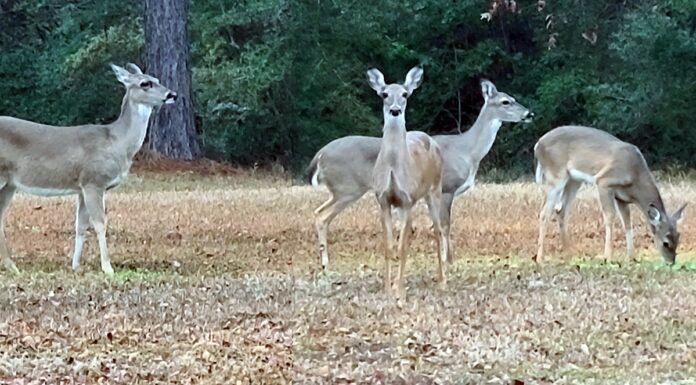
White-tail Deer on Mountainview Ranch in Angelina County

As the crisp autumn air begins to settle over the pine forests and rolling hills of Texas Forest Country, hunters across the region are eagerly preparing for one of the most anticipated events of the year—white-tail deer season. This annual tradition not only provides an opportunity to enjoy the great outdoors but also plays a crucial role in wildlife management and conservation.

The Texas Parks and Wildlife Department (TPWD) manages the state’s hunting regulations, and Texas Forest Country offers some of the best deer hunting opportunities in the state. Whether you’re a seasoned hunter or new to the sport, here’s everything you need to know about white-tail deer hunting in Texas Forest Country.

Overview of White-Tail Deer Season

The white-tail deer season in Texas typically opens in early November and runs through early January, with different dates for archery, muzzleloader, and youth hunting seasons. The exact dates vary depending on the specific region or county within Texas Forest Country, so hunters should refer to the Texas Parks and Wildlife Department website (https://tpwd.texas.gov/) for precise dates and regulations.

Key Dates for the 2026-27 Season

  • Archery Season: Oct. 3 – Nov. 6, 2026.
  • General Season: Nov. 7, 2026 – Jan. 3, 2027. Every Texas Forest Country county falls in the North zone.
  • Youth-Only Season: Oct. 30 – Nov. 1, 2026, and again Jan. 4 – 17, 2027.
  • Muzzleloader Season: Jan. 4 – 17, 2027.

Where to Hunt in Texas Forest Country

Texas Forest Country spans several counties, including Angelina, Nacogdoches, San Augustine, and Polk counties. The region is characterized by dense pine forests, rolling hills, and abundant wildlife, making it ideal for hunting. There are several public hunting lands and private ranches where hunters can pursue white-tail deer.

Public Hunting Lands

The TPWD offers a variety of public hunting lands throughout the region, providing affordable and accessible hunting opportunities. Some of the key areas for public hunting include:

  • Angelina National Forest: A popular spot for deer hunting, this forest covers over 150,000 acres and offers ample opportunities for both experienced and novice hunters.
  • Sabine National Forest: Located along the Texas-Louisiana border, this forest is home to a healthy population of white-tail deer. Hunters can access a variety of terrains, from hardwood bottoms to pine forests.
  • Davy Crockett National Forest: Covering more than 160,000 acres, this forest offers a mix of pine and hardwood forests and is a favorite among local hunters.
  • Sam Houston National Forest: Just south of Texas Forest Country, this forest provides a great opportunity for hunters near Houston and features diverse terrain and habitats for white-tail deer.

Private Ranches and Leases

Many hunters prefer to hunt on private land, either through hunting leases or guided hunts. In Texas Forest Country, there are numerous private ranches offering white-tail deer hunting, some of which provide guided hunts, accommodations, and amenities. Popular ranches in the area include:

  • Crawleys Hunting Club Offers an 1,100-acre bow hunting lease for $1,000–$5,000, or $2,000 per hunter  
  • Moscow Hunting Club Leases 4,596 acres in Polk County and offers a family-friendly environment  
  • Pineywoods Hunting Club Located in Corrigan, Texas, this 1,500-acre club offers a safe and affordable place for families to hunt  
  • Camden Hunting Club This 18,106-acre club is located in Polk and Tyler counties and offers two main camps with electricity  
  • 5C Hunting Club Five thousand acre MLDP-Conservation (Formerly MLD3) family-oriented lease located approx. 7 miles north of Buna in Jasper County Texas
  • Renfro Hunting Club (Angelina County): Offers trophy hunts and a variety of packages for different skill levels.
  • Lost Pine Ranch (Nacogdoches County): A top spot for hunters looking for a more secluded and scenic experience.
  • Bear Creek Club (Sabine): Near Pineland – over 7,000 acres.

What You Need to Know Before Hunting

Before heading out into the woods, hunters must ensure they are fully prepared and informed about hunting regulations, safety guidelines, and necessary equipment.

Licenses and Tags

All hunters in Texas are required to have a valid Texas hunting license and appropriate tags for the game they plan to hunt. Licenses can be purchased online through TPWD or at any licensed retailer. Hunters must carry their license and tags with them at all times while hunting.

  • Resident Hunting License: Required for all Texas residents aged 17 and older.
  • Non-Resident Hunting License: Available for hunters visiting Texas from other states.
  • Archery Endorsement: Required for hunting during the archery-only season.
  • Muzzleloader Endorsement: Required for hunting with a muzzleloader during the special muzzleloader season.

In addition to licenses, hunters must tag their harvest immediately after taking a deer. TPWD provides instructions on how to properly tag and report your harvest.

Hunter Education

Anyone born on or after September 2, 1971, must complete a hunter education course to hunt legally in Texas. Hunters under the age of 17 may hunt without certification if they are under direct supervision of a licensed adult. Courses can be completed online or in-person through TPWD.

Equipment and Preparation

Hunting white-tail deer in Texas Forest Country requires the right gear and preparation. Here’s a checklist of essential items to bring along:

  • Firearms or Bows: Choose a rifle, shotgun, muzzleloader, or bow that you are comfortable and proficient with.
  • Ammunition: Bring the appropriate ammunition for your firearm, or arrows and broadheads for archery.
  • Hunting Knife: A sturdy, sharp knife is essential for field dressing your deer.
  • Clothing: Wear camo or neutral-colored clothing suited for the weather, and don’t forget hunter orange for visibility during the general season.
  • Scent Control Products: Reducing your scent can be crucial to staying undetected by deer.
  • Safety Harness (for tree stands): If you plan to hunt from a tree stand, ensure you have a safety harness for protection.
  • Binoculars: A good pair of binoculars is useful for scouting deer from a distance.
  • Game Bag and Cooler: Necessary for transporting and preserving your harvest.

Ethical Hunting and Conservation

White-tail deer hunting in Texas isn’t just a pastime; it’s an essential part of wildlife management and conservation. By managing deer populations, hunters help maintain a healthy balance in local ecosystems, preventing overpopulation and habitat degradation.

TPWD works closely with hunters to promote sustainable practices, including the enforcement of bag limits, antler restrictions, and specific harvest guidelines. Hunters are encouraged to follow ethical hunting practices, including proper shot placement, quick and humane kills, and the full utilization of harvested animals.

Post-Hunt Activities and Venison Preparation

Once the hunt is over, the work continues. Field dressing and processing the deer is an important skill for any hunter. If you’re not comfortable processing your own venison, there are several meat processors in Texas Forest Country that specialize in preparing deer meat. Popular services include:

  • Choice Cut (Lufkin): Known for quality processing and meats.
  • Pineywoods Processing (Livingston): Specializes in custom cuts and offers venison jerky and sausages.
  • Tallent Sausage & Grocery (Riverside): Processing, BBQ and grocery
  • J&W Meats (Crockett): “Quality meat, good service and good people.”
  • Durham’s Deer Processing (Jasper): “You kill it and bring it to us…we’ll do the rest!”

Venison is a lean and flavorful meat that can be used in a variety of dishes, from steaks and roasts to burgers and chili. Hunting your own venison provides a sustainable, organic source of protein for your family, and many hunters find the experience of preparing and sharing their harvest with loved ones to be deeply rewarding.

Final Thoughts

White-tail deer season in Texas Forest Country is a time-honored tradition that brings people together, celebrates the great outdoors, and helps manage local wildlife populations. Whether you’re hunting for the thrill, the sport, or the meat, the experience of deer hunting in this region is unmatched.

As you prepare for this year’s hunt, make sure to follow all local regulations, practice safe and ethical hunting, and enjoy the beauty that Texas Forest Country has to offer.

For more information, visit the Texas Parks and Wildlife Department at https://tpwd.texas.gov/.

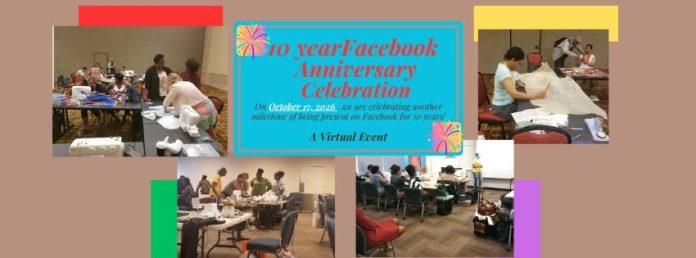
Sew Much Talent’s Virtual 10 Year Facebook Anniversary Sew Day (Shelby County)

0

October 17 @ 8:00 am – 5:00 pm

Sew Much Talent Members are encouraged to host a gathering of sewists and friends to celebrate our 10 year Facebook Anniversary in their respective city/state. You can set up your event however you choose to do so. It’s on the host.
Here are some suggestions:
1. Set up a Meet n’ Greet.
2. Host a Sew Day (B.Y.O.P.- Bring Your Own Project)
3. Host A Sew Day for Charity Sewing. You choose your charity of choice, i.e., Little Dresses for Africa, Cancer Support Services, etc.

You can meet in someone’s home, or a library, or a place like Hobby Lobby, or Michaels. Any place that have meet up rooms.

Get creative for that one day, OCTOBER 17, 2026. This is an entire day event. However you can set your times for your event.

You can recommend a dress code for your group; set up food, hors d’oeuvres, games, and even a mini fashion ( or just where something you made). The options to have fun are unlimited!!!

On that day, you are asked to go LIVE on the day, periodically throughout the day to check-in to show how your group is having fun.

SO, if you would like to host a meet-up on this day, just say in the comments ” I WOULD LIKE TO or I WILL HOST A MEET-UP”
If you are not sure what to do, we will be happy to assist you with ideas.

936-598-3682

View Organizer Website

Christmas Open House (Jasper County)

0

November 5 @ 10:00 am – November 7 @ 10:00 am

MARK YOUR CALENDARS!

Our annual Christmas Open House is coming, and you’re invited!

Join the Boutiques of Jasper for THREE DAYS of holiday shopping, gift hunting, and festive fun!

November 5, 6 & 7, 2026
10AM–5PM each day

Nine participating boutiques in Jasper, Texas!

Grab your girlfriends, bring your Christmas list, and make plans to shop your way around town! Gifts for them, a little something for you… we love a productive shopping trip.

More details are coming soon! Tag your shopping crew below, share this post, and save the dates!

Ready to Print: What To Have Ready Before You Call A Print Shop

0

By Janet Conner, Client Services Director, MSGPR

Somewhere in Forest Country this week, somebody needs something printed. A church needs bulletins for homecoming. A booster club needs a banner before Friday’s game. A new business owner needs cards before the next chamber mixer. A bride-to-be needed invitations yesterday.

I’ve spent 30 years on the other side of the counter, and the difference between a smooth print job and a frustrating one usually comes down to what happens before the order is placed. That’s what “Ready to Print” is about: the practical stuff small businesses, churches, schools and families need to know before they order, so what comes back is what you pictured.

We’ll start with the question I hear more than any other: “How much will this cost?” It’s a fair question. The trouble is it usually comes before I have the information I need to answer it.

A real estimate depends on five things:

  • Quantity. How many do you need?
  • Size. Finished size, not “about like a postcard.”
  • Ink colors. Full color, one color, front only, front and back?
  • Stock. What paper or material? Heavy, light, glossy, matte?
  • Binding or finishing. Folding, stapling, cutting, laminating, die cutting?

If you have those five answers when you call, you’ll get a true number instead of a guess, and you’ll get it faster.

The second most common question is “How long does it take?” That depends on how the piece is printed and finished. A flyer can take a day. A folded brochure can take anywhere from 2 to 7 days. A special die-cut sticker can take up to two weeks. The more steps after the ink hits the paper, the longer it takes.

A useful tip: when you call for an estimate, or to ask about availability and turnaround on a print project, have all of your information ready. The process will go smoother.

If you’re not sure about what you want, ask for an in-person consultation. I always feel I get a better sense of what a client wants and needs when I sit down face to face with them.

Every couple of weeks I’ll take another question I hear over and over and answer it here: getting files ready, why colors change, signs that survive our weather, wedding timelines and more.

If you’ve got a print question you’d like me to cover, send it my way.


Janet Conner is Client Services Director at MSGPR in Lufkin. Have a print question or need an estimate? Email print@msgpr.com.

Sip & Paint (Sabine County)

0

October 20 @ 6:00 pm – 8:00 pm

Grab a friend and get ready — here is the perfect excuse to unwind, laugh, and create something colorful together!

Location: Lost Frontier
Date & Time: October 20, 2026 at 6:00 PM

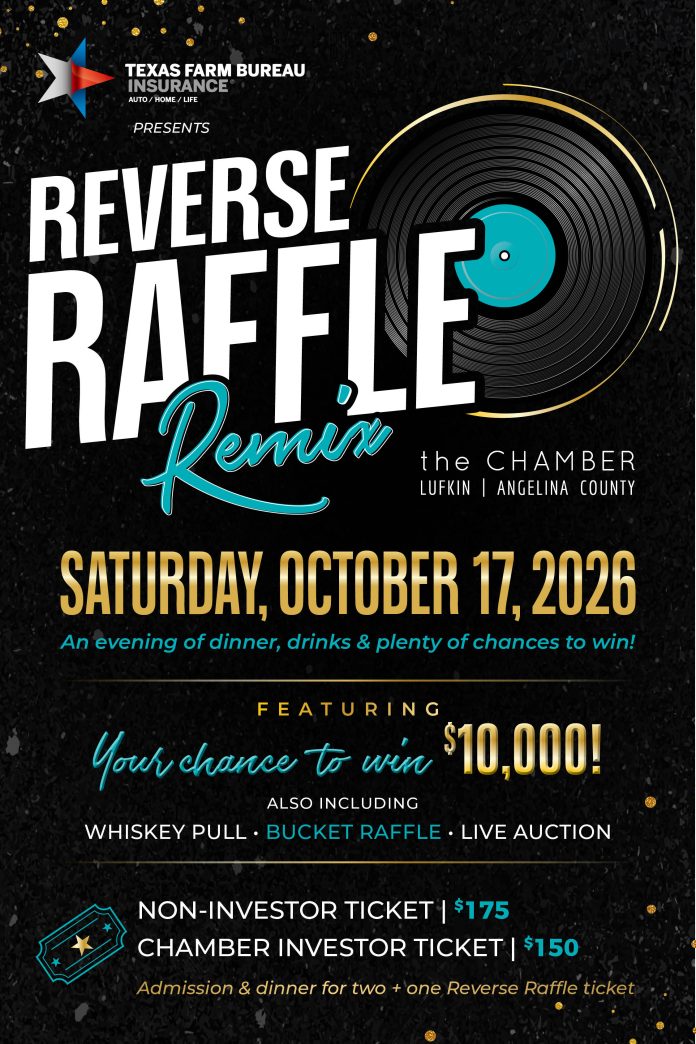
Chamber’s new Reverse Raffle Remix puts $10,000 on the line Oct. 17

0

The Lufkin/Angelina County Chamber of Commerce is trying something it hasn’t done before, and the last ticket left in the drum walks out with $10,000.

Reverse Raffle Remix, presented by Texas Farm Bureau Insurance, is Saturday, Oct. 17 at The Grand on First.

It runs backward

A reverse raffle works the opposite way from the raffles most people have played. “Instead of winning when your number is drawn, you are eliminated,” Chamber President and CEO Tara W. Watkins wrote in announcing the event. Numbers come out of the drum through the night until one ticket is still standing, and that ticket takes the $10,000.

There’s a way back in. The Chamber is selling “insurance” during the evening — buy it and your number goes back into the drawing for a second chance.

Tickets and tables

A ticket covers admission for two, dinner for two and one entry in the reverse raffle. The event flyer lists $175 for a non-investor ticket and $150 for a Chamber investor ticket.

Table options are available for anyone who wants to bring a group of coworkers, clients or friends.

The rest of the night

Along with the raffle there’s music, bucket raffles, a whiskey and wine pull, a live auction and more prizes.

“This is a brand-new event for us, and we would LOVE to have a great crowd there to help us kick it off,” Watkins wrote. “Come eat, visit, laugh, win a few things, and maybe even leave $10,000 richer!”

Tickets and table information are at members.lufkintexas.org or LufkinTexas.org. The Chamber’s number is (936) 634-6644.

Free Oct. 13 Webinar Looks at Cutting Winter Feed Costs with Forage Brassicas

0

Winter feed bills are the part of a cattle operation nobody looks forward to. A free online program on Tuesday, Oct. 13, from 6 to 7 p.m. will look at one way to shave them down — planting cool-season forage brassicas and grazing them instead of hauling hay.

The Texas A&M AgriLife Extension Service is hosting the session as art of its 2026 “Ag in the Evening” Zoom lecture series. There’s no charge. To attend, register at tx.ag/RegisterBrassicasForbsWebinar. Login information goes out to participants after they register.

The speaker is Vanessa Corriher-Olson, Ph.D., AgriLife Extension forage specialist at the Texas A&M AgriLife Extension and Research Center at Overton and a professor in the Department of Soil and Crop Sciences. Overton sits in the middle of East Texas cattle country, and the research center there has spent years on the question of how to keep something green in the pasture when the Bermuda goes dormant.

Brassicas are her answer for part of the year.

“Brassicas fit well into forage-based production systems by extending the grazing season into late fall and early spring,” Corriher-Olson said.

What the hour covers

Corriher-Olson will walk through the different members of the forage brassica family — kale, rape and turnips among them — and what each one does in a grazing system. She’ll also cover planting, fertilization, forage quality and grazing management, which is where most producers trying brassicas for the first time run into trouble.

Anyone who can’t make the date has options. Recordings of earlier “Ag in the Evening” sessions are posted on the East Texas Beef and Forage Extension YouTube page.

For more information, contact Corriher-Olson at vacorriher@ag.tamu.edu.

Handbag Bingo (Sabine County)

0

October 3 @ 5:00 pm – 7:00 pm

A fun night, a good cause, and your chance to snag a gorgeous bag while supporting the fundraiser. Grab your friends, sip something sweet, and let’s bingo for a purpose!

Sunday, October 3rd @5PM

Music Bingo (Tyler County)

0

October 5 @ 6:30 pm – 9:00 pm

Location: Dogwood Diner, 202 W. Bluff Woodville
Date & Time: October 5, 2026 at6:30 PM