

A fun night filled with brunch food, cocktails, music, and bats! All proceeds benefit the Ellen Trout Zoo’s Exhibit Master Plan.
Tickets can be purchased by emailing tickets@friendsofellentroutzoo.com

A fun night filled with brunch food, cocktails, music, and bats! All proceeds benefit the Ellen Trout Zoo’s Exhibit Master Plan.
Tickets can be purchased by emailing tickets@friendsofellentroutzoo.com

Roadrunner Baseball:
The Roadrunners played their season finale on Monday against Temple College, falling 13-8 at Poland Field. AC recognized its 18 sophomores in a post-game Sophomore Day Ceremony.

Lady Roadrunner Softball:
The Lady Roadrunners finished off their regular season with a 5-4, 6-4 sweep at LSU-Eunice on Wednesday. AC’s ladies next will vie for another trip to the upcoming NJCAA Division I Softball National Tournament; the Lady ‘Runners open the regional tournament this Friday at San Jacinto College.
AC will open the tourney against Navarro College at noon on Friday. Here’s the opening-day schedule for Friday, May 13:
Game 1: Navarro College (No. 3 East) vs. Angelina College (No. 2 South), 12 p.m.
Game 2: Blinn College (No. 3 South) vs. Tyler (No. 2 East), 2:30 p.m.
Game 3: Coastal Bend (No. 4 South) vs. Bossier Parish CC (No. 1 East), 5 p.m.
Game 4: Paris College (No. 4 East) vs. San Jacinto College (No. 1 South), 7:30 p.m.
Saturday (Round 2):
Game 5: Loser Game 1 vs. Loser Game 3, noon
Game 6: Loser Game 2 vs. Loser Game 4, 2:30 p.m.
Game 7: Winner Game 1 vs. Winner Game 2. 5 p.m.
Game 8: Winner Game 3 vs. Winner Game 4, 7:30 p.m.
We’ll have a full schedule and bracket on the AC Athletics web site (angelinaathletics.com) within the next day or so.
*NOTE: TSRN will be streaming all the regional tournament games for free at the following link: https://tsrnsports.com/2022-njcaa-region-14-softball…/
Baseball Camps:

Evaluation Camps: In an effort to find more future Roadrunners, the AC baseball team will hold a pair of evaluation camps for prospective players ages 16 and older in May and June. Those sessions will take place on Saturday, May 28 and Thursday, June 9 at Poland Field on the Angelina College campus.
Link for registration and other information: https://angelina.prestosports.com/general/2021-22/releases/acbsbskillsevaluationcamps2022
Baseball Youth Camp:

Angelina College baseball coaches are offering a three-day summer camp for young players ages 6-13 beginning Monday, June 6 and running through Wednesday, June 8 at Poland Field on the Angelina College campus. Camp times will run from 9 a.m. until 12 p.m.
NOTE: Full-time AC employees will receive a 50 percent discount on registration/camp fees.
Link for registration and other information: https://angelina.prestosports.com/general/2021-22/releases/acbsbyouthcampjune2022
THIS WEEK’S GAMES:
Lady Roadrunner Softball: The Region XIV Softball Conference Tournament, scheduled to run May 13-16 at San Jacinto College.

Ongoing work on a Nacogdoches construction project will require a road closure beginning next week and a detour the following week that will cause traffic delays.
CR 609/Old Lufkin Road at SL 224 in Nacogdoches will be closed beginning Tuesday, May 10, and will continue through Friday, May 13, to allow crews to place a concrete drainage box near the southbound US 59 exit ramp.
Additionally, beginning May 16 through May 18, motorists traveling eastbound on SL 224 at US 59 will be detoured onto the exit ramp and through the signalized intersection as construction crews continue extending the drainage pipe across the loop. Motorists should prepare for delays or choose alternate routes. Message boards and detour signs are in place at both locations to alert motorists of the upcoming closures.
“Major delays could be experienced during these traffic configurations,” said Rhonda Oaks, public information officer. “Crews will attempt to allow traffic to enter Old Lufkin Road and close it to all exiting traffic, but if safety issues arise for the traveling public or for our workers, the entrance will also be closed to traffic.”
The $86.1 million construction project includes construction of new US 59 main lanes that will directly connect to SL 224 just south of SH 7. The project is being built to interstate standards and includes the construction of overpasses at Spradley Street, existing US 59 and Old Lufkin Road, and the construction of frontage roads for SL 224 between SH 7 and BU 59.
Motorists are urged to reduce speed and stay alert through the project area from SH 7 west on SL 224 to 1.2 miles south of Spradley Street on US 59. Longview Bridge and Road, Longview TX, is serving as contractor for the project that is on schedule to be completed in spring 2023.
For more information, contact Rhonda.Oaks@txdot.gov or call 9936) 633-4395.

Agricultural producers are taking a hard look at the upcoming production season. Of all the inputs that our hay producers are studying, the cost of fertilizer is a significant factor in the final cost and profitability of this summer’s hay crop.
As we would expect, hay producers are examining the various kinds of fertilizers and trying to come up with the best option for the hay field. Historically, the dry fertilizers made the most sense. And while they still may be the best option, the tremendous hike is prices over the past several months has prompted interest in liquid and organic fertilizer options.
Of course, no discussion about fertilizer cost should be had without a good soil test to lead you to the right ratios and right amount to apply per acre. When asked, “What fertilizer should I use?” I love to respond with “I have no idea!” It’s true. While generalizations may be given, there is no way for even the most educated to estimate the fertility found in a field.
Thus, before making any fertilizer decision, one must first properly collect a sample and send it off to a lab to be analyzed. From there, you’ll know exactly what nutrients are lacking.
Looking at the label, those three numbers represent the nitrogen (N), phosphorous (P), and potassium (K) that the fertilizer contains. True, there are many more nutrients than N, P, & K that plants need, but certainly those are the three nutrients needed in the largest amount. Students of soil science will know them as the macro-nutrients.
All fertilizer products are legally bound to correctly display the nutrients found within the package. The Texas Fertilizer Control Act details this in Chapter 63 of the Texas Agricultural Code. In it, you will find all the definitions and legalities for fertilizers. Also in the Texas Administrative Code, Title 4 -Agriculture, Chapter 65, you can read all about the labeling, permitting, inspection, and more of fertilizers. The agency over this is the Texas Feed and Fertilizer Control Service.
Rest assured, Texas law provides guidance and teeth to enforce the labels and contents of any fertilizers sold. Overkill? I don’t think so. Having this safeguard keeps “snake oils” from being peddled, so long as we know our nutrients, do our diligence, and study the label.
If you buy a bag of the standard garden fertilizer, 13-13-13, then by law, the package must have 13% by weight nitrogen, 13% phosphorus, and 13% potassium. If it’s in a 50-pound bag, 13-13-13 is equal to 6.5lbs of N, 6.5 lbs. of P, and 6.5 lbs. of K. If it is a liquid 13-13-13 fertilizer in a 5-gallon container that has net weight of 40 pounds, then it must contain 5.2 lbs. N, 5.2 lbs. P, and 5.2 lbs. K.
Continuing on, if you buy a 50 lb. bag of 21-0-0, then we know that 21% of that 50 lb. weight is nitrogen. By doing the math we multiply 50 times 0.21. The result is 10.5 pounds of nitrogen is contained in that 50-pound bag. Pound for pound this simple math can be applied to any fertilizer product sold.
Taking this up a notch to commercial bulk ammonia sulfate (21-0-00) fertilizer sold by the ton, one simply multiplies 2,000 times 0.21 and learns that one-ton yields 420 lbs. of N.
Now marketing that fertilizer product is a different story! Shifty folks can claim it’ll double the amount of hay produced or double the amount of fruit that you get out of a garden. But when you dig down and study the label and we can determine the actual contents.
Research from the Texas A&M Research Station at Overton, Texas states that warm-season perennial grasses utilize nitrogen, phosphorus, and potassium at a ratio of approximately 4-1-3. Specifically, if you plan to produce 1 ton of dry hay, that bermudagrass hay must have absorbed approximately 50 pounds of nitrogen, 15 pounds of phosphorus, and 42 pounds of potassium. If these numbers are multiplied by the number of tons of forage desired across your hay meadow, the result you need will equal approximately the pounds of nutrients needed. For example, for 3 tons of production, it will take approximately 150 pounds of nitrogen, 45 pounds of phosphorus, and 82 pounds of potassium.
So, if you see an ad that claims their 5-gallon jug of fertilizer can give you tremendous hay production, just run the numbers. The net weight they say to use multiplied by the percentage by weight on the label will give you the pounds of nutrients. Does it even come close? One cannot imagine how.
The last step to determining the best fertilizer is dividing its cost by the nutrients is says it contains. From there you should be able to make the best decision for what should be used on your operation.
Nutrients are the fuel to grow plants. If I tried to sell you one gallon of super-duper fuel that will make your truck run for 1,000 miles, would you buy it? I’ve got a special going on right now. One gallon of “Super-Fantastic-Go-Fuel” – just a couple hundred dollars. Any takers?
All this brings to mind a song from one of the best country singers of all times, George Strait. He sang that he has some “ocean front property in Arizona”! Probably not.
Cary Sims is the County Extension Agent for agriculture and natural resources for Angelina County. His email address is cw-sims@tamu.edu. To receive a monthly newsletter about local Extension educational events and other offerings, e-mail Angelina-TX@tamu.edu
The members of Texas A&M AgriLife will provide equal opportunities in programs and activities, education, and employment to all persons regardless of race, color, sex, religion, national origin, age, disability, genetic information, veteran status, sexual orientation, or gender identity and will strive to achieve full and equal employment opportunity throughout Texas A&M AgriLife.

Here at tfcl, we firmly believe in shopping local and supporting our community. We also really really love our moms. Even though there’s no gift that can quantify all the things our moms do for us, we have put together a collection of some of our favorite local shops, boutiques, bakeries, and fun places to help you celebrate the incredible moms in your life!
This local husband and wife team create custom home decor inspired by the culture, nature, and joy of living in East Texas.


Buy a sign from their Etsy website and check them out on Instagram and Facebook.
Founded by Nacogdoches native Claire Drewery, Spring and Prince is a fun and classy boutique in downtown Nacogdoches. Specializing in women and children, the shop has everything from on trend clothes to unique accessories and home goods!


Shop online at shopspringandprince.com and visit their social media on Instagram and Facebook.
Among the Pines is in the business of uplifting the small businesses of East Texas. They have created a space for the creatives, just-starting-outs, designers, small business owners, and everything in between to help them make connections and grow!


Visit AmongthePines.com and stay up to date on their upcoming ETX Market events on Facebook.
Market to Market is a downtown Lufkin boutique that seeks to blend vintage inspired pieces with modern fashion.


Start searching for the perfect gift on their website and follow them on Facebook and Instagram, or visit them in-person at 119 S 1st St.
Milk and Honey Baking Co. is a home-based bakery in Nacogdoches. They have some of the most delicious macarons, ‘lunchbox’ cakes, cookies, brownies, and so much more!


Visit Milk and Honey Baking Co. in person this Saturday at Market on Main in Nacogdoches from 10am to 2pm, or order online at milkandhoneybc@gmail.com. Get to know them on Facebook and Instagram.
If you’re not sure what to get the mothers in your life, don’t worry about it! White Cottage Mercantile will curate incredible gift baskets tailored just to your mom’s style. And it doesn’t stop there! They have handcrafted furniture, home decor, snacks, and so so much more!


While you can’t shop online, you can give them a call at (936) 598-7467 or go visit in person at 401 Hurst St Center, TX 75935. Until you can get on the road, get a sneak peek on Facebook and Instagram.
The Abbey Farmstead Bed and Breakfast
If your mom just needs to get away, there’s no better gift than a weekend away at The Abbey Farmstead. Despite being housed in a 1930s farmhouse, the Abbey Farmstead is far from dated. Its classic and simple design elements are a welcome relief from the hustle and bustle of life, and its amenities ensure that your room feels like a home away from home with free breakfast and complementary wifi.


Read The Abby Farmstead story at theabbeyfarmsteadbnb.com. Get to know them on Facebook, and book your mom a couple nights away on Airbnb.

Roadrunner Baseball:
The Roadrunners dropped a pair of one-run losses on Wednesday at Northeast Texas Community College, falling to the Eagles 4-3 and 8-7 at Mount Pleasant.
AC’s guys will close out the 2022 season at home on Monday, taking on Temple College in a single, nine-inning game starting at 2 p.m. at Poland Field on the AC campus. The team will recognize its 18 sophomores in pre-game ceremonies.

Lady Roadrunner Softball:
The Lady Roadrunners capped off their conference portion of the season with a 7-6, 12-10 sweep over Lamar State College-Port Arthur on Wednesday. AC’s ladies will close out the regular seasons with a non-conference road trip at LSU-Eunice on Wednesday, May 4 in a doubleheader scheduled for a 2 p.m. start.
NOTE: AC Softball head coach Joshua Barnes has set an official program record for total wins in a season for a first-year head coach with 34 (and still counting). The previous record was 18 wins.
NOTE 2: The Lady ‘Runners have clinched a spot in the upcoming Region XIV Conference Tournament. More information included below.

Baseball Camps:
Evaluation Camps: In an effort to find more future Roadrunners, the AC baseball team will hold a pair of evaluation camps for prospective players ages 16 and older in May and June. Those sessions will take place on Saturday, May 28 and Thursday, June 9 at Poland Field on the Angelina College campus.
Link for registration and other information: https://angelina.prestosports.com/general/2021-22/releases/acbsbskillsevaluationcamps2022

Baseball Youth Camp:
Angelina College baseball coaches are offering a three-day summer camp for young players ages 6-13 beginning Monday, June 6 and running through Wednesday, June 8 at Poland Field on the Angelina College campus. Camp times will run from 9 a.m. until 12 p.m.
NOTE: Full-time AC employees will receive a 50 percent discount on registration/camp fees.
Link for registration and other information: https://angelina.prestosports.com/general/2021-22/releases/acbsbyouthcampjune2022
THIS WEEK’S GAMES:
Monday, 5/2: Roadrunner Baseball vs. Temple College, single nine-inning game starting at 2 p.m. at Poland Field on the AC campus. The team will hold Sophomore Day festivities prior to the first pitch. This is AC Baseball’s final game of the season.
Wednesday, 5/4: Lady Roadrunner Softball at LSU-Eunice in Eunice, La. The team closes out its regular season with a doubleheader starting at 2 p.m.
REGION XIV SOFTBALL TOURNAMENT INFORMATION:
The Lady Roadrunners have locked down the No. 2 seed in the Region XIV South Zone for the upcoming Region XIV Conference Tournament scheduled to run May 13-16 at the San Jacinto South campus. The tournament hosts will release a full schedule and bracket once this final week of the regular season ends, and we’ll be posting information on the AC Athletics web site at angelinaathletics.com.
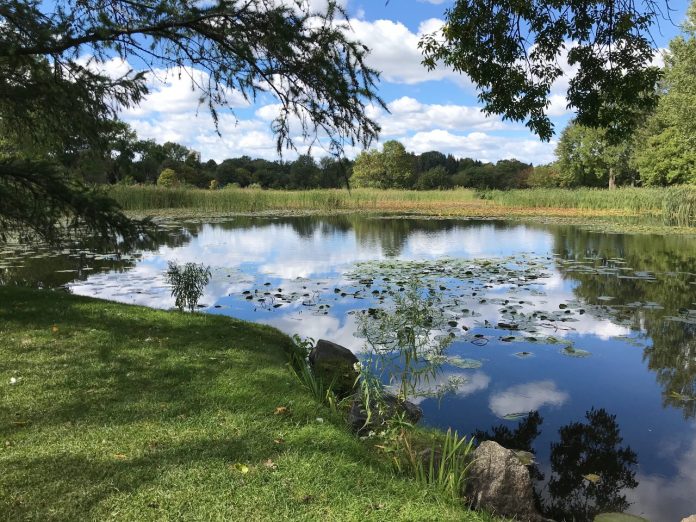
It seems that of all the questions that are received in our local AgriLife Extension office, from cattle to hay meadows, home gardens and landscapes, questions on how to manage a farm pond is the most common. Then when you break up the questions into different management groups, getting rid of excess vegetation is at the top of that list.
Before we start, please understand that some vegetation is good and even needed in most ponds. Vegetation provides cover for fish and helps add oxygen. But as we can imagine, too much vegetation can get in the way and lead to problems.
There are four kinds of aquatic vegetation: submerged (mostly underwater), emergent (having dry vegetative matter existing above the surface), floating (with no roots holding it in place), and algae. In simple terms, these pond weeds are either all below the water, above the water, float around on top, or “pond scum”.
Thankfully, pond owners have more than a few herbicide management options. Let us be very clear, herbicides approved for aquatic weeds, when applied according to the label, are an effective, safe, and environmentally responsible method of eliminating excess vegetation.
Timing is important when applying aquatic herbicides. Pond owners will find a poor response to any treatment that is made in the dead of winter when vegetation is not actively growing. Fall is too late to do much good and summer may find aquatic weeds that are already causing too many problems to get ahead of.
That leaves spring as the ideal time to stay ahead of excessive pond weed growth. True, you can treat for weeds in the summer months, but you will have more total vegetation to contend with and you could run into a low oxygen problem if you try and treat too much of your pond’s weeds at once.
How do we have an oxygen problem that kills fish after killing weeds in the summer? First, warm water holds less oxygen than cold water. There is some exacting science behind this fact. Specifically, “The solubility of oxygen and other gases decreases as the water temperature increases.” This means that colder water can hold more dissolved oxygen available to fish than warmer waters.
Additionally, when something is killed and begins to rot, the decomposition process consumes oxygen. A dead squirrel on the side of the road will not cause any serious lack of oxygen, but the drop in oxygen in a pond full of decomposing vegetation is not easily replenished.
So, if you combine warmer pond water in the summer with a large mass of decomposing vegetation, you certainly can have fish die from lack of oxygen. But do not blame the product used. The blame is all on the timing and actions of the applicator.
One may ask how to avoid any fish die-off in the summer months or during any time of the year. The solution is to treat no more than a third of the pond at a time so that fish have oxygen available.
With the large number of products on the market, there is not enough room in this article to cover them all. Proper identification is a must for any success. The Texas A&M AgriLife Extension Service has a tremendous website that will help with weed identification and treatment. Go to aquaplant.tamu.edu for a world of valuable information.
Let us say it again, herbicides approved for use in ponds will not kill fish. If they did kill fish, then I cannot imagine how they would have ever been approved.
It is also important to state that there are products commonly used in ponds that have no business being used. If the label does not state that it can be used in a pond with specific instructions on how to apply it, then it is not legal to use in a pond. No, I don’t care what your neighbor said, if it is not labeled, then it is out of bounds. If you wish to dive deep into farm pond management, go to the website fisheries.tamu.edu/pond-management/. This site has an abundance of pond and sport fish management resources and links. Also feel free to call your local county Extension agent with the Texas A&M AgriLife Extension Service.
Cary Sims is the County Extension Agent for agriculture and natural resources for Angelina County. His email address is cw-sims@tamu.edu .
Educational programs of the Texas A&M AgriLife Extension Service are open to all people without regard to race, color, sex, disability, religion, age, national origin, genetic information or veteran status. The Texas A&M University System, U.S. Department of Agriculture, and the County Commissioners Courts of Texas Cooperating.
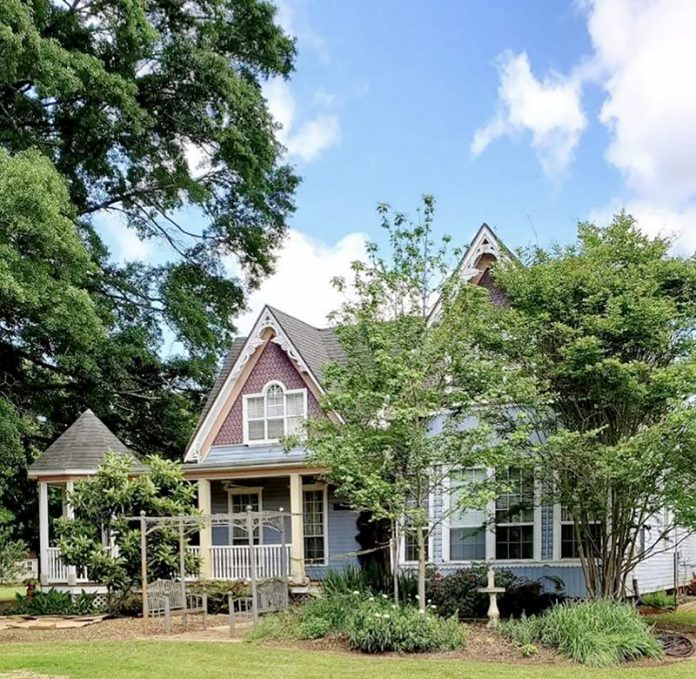
The Garden Capital of Texas will showcase some of its most beautifully landscaped gardens during the Tour of Home Gardens, from 9 a.m. to 3 p.m. Saturday, May 21 and from 1 p.m. to 4 p.m. Sunday, May 22.
Tickets are $25 and can be purchased at participating gardens on the day of the event, or in advance from Garden Club members and at the Charles Bright Visitor Center, 200 E. Main St.; The Hotel Fredonia, 200 N. Fredonia St.; Pemberley’s at The Jones House, 141 N. Church St.; The Plant Shed, 3123 Appleby Sand Rd.; Charles Pool Real Estate, 3505 North St.; The East Texas Garden Center, 2887 Hwy 21 W.; and Laine’s Hallmark, 3205 N. University Dr. Tickets can be purchased with cash or check, and this is a rain-or-shine event.
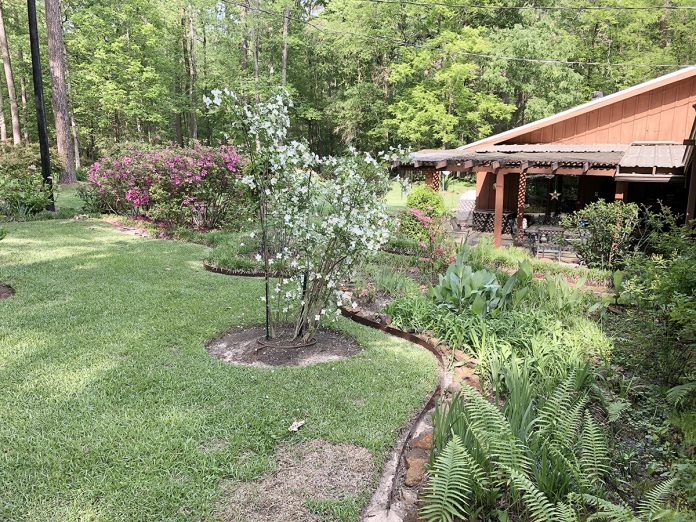
The Garden Capital of Texas will showcase some of its most beautifully landscaped gardens during the Tour of Home Gardens, from 9 a.m. to 3 p.m. Saturday, May 21 and from 1 p.m. to 4 p.m. Sunday, May 22.
Tickets are $25 and can be purchased at participating gardens on the day of the event, or in advance from Garden Club members and at the Charles Bright Visitor Center, 200 E. Main St.; The Hotel Fredonia, 200 N. Fredonia St.; Pemberley’s at The Jones House, 141 N. Church St.; The Plant Shed, 3123 Appleby Sand Rd.; Charles Pool Real Estate, 3505 North St.; The East Texas Garden Center, 2887 Hwy 21 W.; and Laine’s Hallmark, 3205 N. University Dr. Tickets can be purchased with cash or check, and this is a rain-or-shine event.
This exclusive tour is thoughtfully curated by the Garden Capital of Texas Committee and includes stunning private gardens. Details for each garden destination will be on the ticket.
Presenting Sponsors of the Home Garden Tours are Loblolly Properties and Community Title. Gold Sponsor is Citizens 1st Bank, and Silver Sponsors are Commercial Bank of Texas, Charles Pool Real Estate, StretchER, Nacogdoches Heritage Title, Pemberley’s at The Jones House, The Hotel Fredonia and Landworks Landscapes.
The money raised by the tour will help fund the Garden Capital committee’s planting efforts. The Garden Capital Committee has worked with its partners, including the City of Nacogdoches, Nacogdoches Parks and Recreation, the Parks Advocacy League, Keep Nac Beautiful, SFA Gardens and local garden clubs, to plant more than 2,000 trees in recent years.
For more information about the Garden Capital Tour of Home Gardens, contact the Garden Capital of Texas Committee at Keep Nacogdoches Beautiful, 936-560-5624 or by email at info@keepnacbeautiful.org. The mission of the Nacogdoches Garden Capital of Texas Committee is to educate, engage and inspire Nacogdoches area citizens to become involved in beautifying their community green spaces. The Nacogdoches Garden Capital Committee is a part of Keep Nacogdoches Beautiful.
Gardens featured on this year’s tour include:

Penny Payne, 3327 Summer Hill Circle
This romantic garden uses colors and textures to soften and brighten up a small space. There are lots of blue, purple and lavender perennials, with touches of rose and a few Japanese maple and redbud trees. “Blue Daze” serves as a border plant in the front yard, creating a nice complement to the brown brick home. The garden also features a small rock patio to hide unsightly equipment and create a space to place potted plants.

Appleby Community Farm, 11825 US-59
This “garden” is actually a commercial farm that provides food and beauty for member families. The old Victorian home features cottage-style landscaping, and sunflowers and zinnias are the “work horses” of the farm’s cut flowers.

Grace Evans, 4125 Red Oak Drive
This fun, informal garden is the result of years of trial and error. It features azaleas, coral vines, hydrangeas, roses and ferns, as well as several rock beds crafted from Colorado pancake stones. One bed started as a small fish pond, but was repurposed into a flower bed.

Corrine and Charles Jones, 173 CR 2053
The garden at these artists’ home unfolds as a surprise, serving as a place to both soothe and delight the senses. Originally planned as a shady area, this garden has changed over the years as some of the surrounding trees have died. The garden balances natural beauty with design elements, including several sculptures that serve as points of interest. Gardenias and azaleas grow well, and gardener Corinne Jones prefers cooler and quieter colors with spots of brighter hues. “I love what survives,” Jones said. “My gardening friends inspire me, especially with their ‘pass-along’ gifts.”

Brown Family Health Center, 1407 Main Street
Designed by Gary Roberts, this “Serenity Garden” was developed to provide a relaxing environment for patients and family members living with HIV/AIDS and other illnesses. It features 31 raised beds that provide healthy vegetables and fruits, a gazebo, a deck with two water features, a fire pit, a trellis with muscadine grapes and several sitting areas.

Jackie and Jeff Badders, 1974 CR 104
This garden is an eclectic mix of plants. While there are traditional rose gardens, a small orchard and several “cut-out gardens” around the 8 acres closest to the house, the main focus is the collection of perennials and evergreen trees and shrubs closest to the house. The original gardens around the home were professionally designed ten years ago by Kim Wright, who owned Dragon Fly Nursery. Since the original installation, the Badders have had some professional help, including from Christi Wright, but have made most of the design decisions themselves. Because of voracious weeds, they prefer faithful perennials and low maintenance plants. The recent freeze brutalized many smaller sized trees, hawthorns and azaleas, and they are patiently trimming and nursing as many as possible back to life.
Scan the QR code to purchase tickets online:

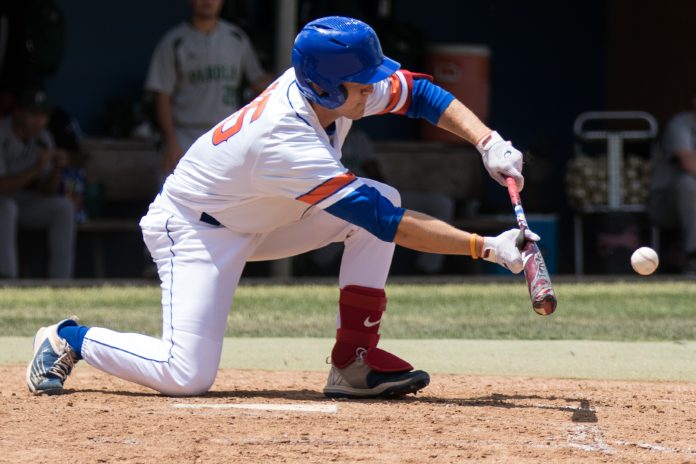

The Angelina College Roadrunner baseball program has established itself as a pipeline for players seeking to advance to the next level, including those at the university levels and the major leagues. With numerous former Roadrunners having earned their way to the next level – including Major League Baseball’s ranks – AC Baseball has long been a proven source of locating and developing young talent who launched their careers from the diamonds at Angelina College.


In an effort to find more future Roadrunners, the AC baseball team will hold a pair of evaluation camps for prospective players ages 16 and older in May and June. Those sessions will take place on Saturday, May 28 and Thursday, June 9 at Poland Field on the Angelina College campus.
Each camp begins at 9 a.m., and the fee for each camp is $40.00 payable at the game. Campers may register at the gate beginning at 8:15 (cash only).
The camps will focus on skill evaluation only; there will be no game. Staff will grade on running, arm strength, fielding, hitting and power. Pitchers will throw brief bullpens in order to grade pitches and velocity.
For further information, contact the AC baseball staff at (936) 633-5367, or e-mail head coach Jeff Livin at jlivin@angelina.edu.
The e-mail address for AC’s Sports Information Director is gstallard@angelina.edu.

Texas Forest Country Living is a digital online magazine featuring the lifestyle and community of the Texas Forest Country region. The Counties include Angelina County, Nacogdoches County, Sabine County, Tyler County, Newton County, San Jacinto County, San Augustine County, Jasper County, Houston County, Shelby County, Trinity County and Polk County
Disclaimer: In compliance with FTC guidelines, we at Texas Forest Country Living want to disclose that some of the links and mentions on our website may be part of an influencer marketing campaign. This means that we may receive compensation, such as commissions or free products, when you make a purchase or engage with the linked content through those specific links or mentions. Please note that we only promote products or services that we genuinely believe in and that align with the values and interests of our audience. Our primary goal is to provide valuable and relevant information to our readers. However, it's important to understand that any purchasing decision you make after clicking on these links is entirely at your own discretion. We always strive to maintain transparency and integrity in our content. Rest assured that our opinions and reviews are based on our own experiences and thorough research, regardless of any potential compensation received. We prioritize delivering accurate and unbiased information to our readers, and any influence marketing partnerships will not compromise the quality or objectivity of our content. It is crucial to remember that individual results may vary, and we encourage you to conduct your own research and consider personal preferences and circumstances before making any purchasing decisions based on the information provided on our website. If you have any questions or concerns regarding our disclosure policy or our affiliation with any brand or product, please feel free to contact us. We are committed to maintaining open communication and ensuring our readers have a positive experience while engaging with our content. © 2026 TFCLiving/MSGPR. All Rights Reserved.