

Home Blog Page 291

As Wildfire Potential Increases, Practice Fire Safety this Holiday Season

0

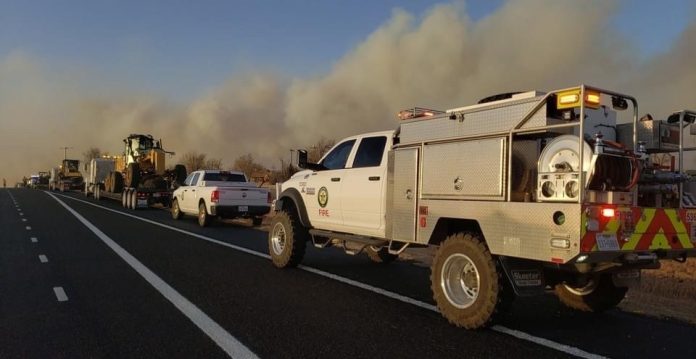
Critical fire weather is forecast through Sunday for portions of North and West Texas with Friday holding the most potential for wildfire activity, particularly in the panhandle.

Texas A&M Forest Service has prepositioned resources across the area including three single engine air tankers and an air attack platform in Childress, and two large airtankers and an aerial supervision module in Abilene to support suppression efforts as requested.

“Wildfire potential increases through the weekend as strong winds, above normal temperatures and low humidity align with dry fuels,” said Brad Smith, Texas A&M Forest Service Predictive Services Department Head. “The footprint of critically dry fuels will continue to expand south and east as we experience above normal temperatures and little rainfall.”

Texas A&M Forest Service urges Texans to be cautious when participating in activities that may cause a spark this holiday season. Ninety percent of wildfires in Texas are human caused, and during the winter holiday season, debris burning and equipment use make up 68 percent of all wildfires.

“These starts include brush pile burning, burning leaves, unsafe burning of household trash, loose trailer chains, welding and more,” said Karen Stafford, Texas A&M Forest Service Prevention Program Coordinator. “We urge Texans to be mindful of any outdoor activity that may cause a spark this holiday.”

Holiday debris burning and recycling

In Texas, careless debris burning causes the largest number of human-caused wildfires. Unsafe burning of wrapping paper, gift boxes and Christmas trees after the holidays could spark outdoor fires.

When debris burning, always check with local officials first. Burn responsibly by keeping your burn pile small, locating the pile at least 150 feet away from buildings, having a water source within reach in case the fire escapes and staying with your fire until it is completely out.

Recycling can serve as an alternative to debris burning.

“For wrapping paper, the “scrunch” test is an easy way to tell if paper is recyclable or not,” said Stafford. “If you scrunch a piece of paper into a ball in your hand and the paper stays in a ball, it can be recycled.”

Only plain wrapping paper can be recycled, meaning no metallic, glitter or textured paper, nor can tape, ribbons or bows.

Real Christmas trees are also recyclable, and renewable. Check with your local waste management company, a nearby garden center or local conservation organization to find out if Christmas tree recycling is available in your area. Trees can also be mulched and even put into ponds to create fish habitats. For more information on sustainable ways to dispose of your Christmas tree, visit https://tfsweb.tamu.edu/content/article.aspx?id=30659.

Travel safety

A significant number of wildfires are started by equipment, including vehicles, each year. If you have plans to travel this holiday season, please take the time to inspect your vehicle before you take to the highways.

Underinflated and failing tires are a large wildfire hazard as wheel rims may produce sparks when contact is made with pavement. Make sure your tires have been checked for air pressure and any holes before traveling.

Avoid driving and parking in tall, dry grass as the underside of your vehicle may start wildfires if exposed to dry vegetation.

Dragging chains may also create a spark. Secure trailer safety chains to ensure they will not come in contact with the road.

Fireworks safety

When using fireworks during the holidays, don’t let your fun turn into flames. Fireworks should always be used outdoors on flat, smooth surfaces and away from dry grass and flammable materials. Check for local restrictions on fireworks and burn bans before use. Always have a water sourced nearby and call 9-1-1 immediately if a fire starts.

Practice fire safety while enjoying the outdoors

Campfires can be a great source of warmth and fuel for cooking but be sure to keep safety in mind when starting one. Locate a safe spot for your campfire, away from anything flammable and far from overhead hazards. Pile up rocks around your fire to help keep the wind out and fire embers in. When you are done with your campfire, fully extinguish it. Drown, stir and feel the area for heat. Hold your hand just above the wet ashes – if you feel any residual heat, continue to add water and stir. Remember, if it’s too hot to touch, it’s too hot to leave.

If a wildfire is spotted, immediately contact local authorities. A quick response can help save lives and property.


To check for local burn bans, visit https://tfsweb.tamu.edu/burnbans/.

For more information on wildfire prevention, please visit  https://tfsweb.tamu.edu/winterwildfireprevention/.

Texas A&M Forest Service Contacts:

Texas A&M Forest Service Communications Office, 979-458-6606, newsmedia@tfs.tamu.edu

Texas A&M Forest Service Public Information Officer, 979-255-0591, information@tfs.tamu.edu

Reflecting on the Nativity Scene

0

I bet we have six nativity scenes set up in our house this Christmas season and I know of other families who have more. These scenes always include Mary, Joseph, and the infant Jesus. You will also probably have shepherds with some sheep. Next is a cow, a donkey, maybe some camels, and perhaps other livestock.

Oddly, I take note of the livestock present at manger scenes. In my role as a County agent, I get the chance to assist all manner of agricultural producers, both farmers and ranchers. And perhaps dealing with livestock as a part of my job is why I take such a keen interest in what animals are there.

As a person of faith, I wonder, as I read the scriptures, about the plants, livestock, and agricultural nuances that are written in both the Old and New Testaments. What were the vineyards like? How big was a typical olive grove? How many sheep were in the flocks that shepherds tended?

And as our family was setting up the nativity scenes, just what animals were truly there? Studying both Gospel accounts from Matthew the tax collector and Luke the physician, there is no mention of any specific livestock. Distinctly, Luke states that Jesus was “laid in a manger because there was no room for them in the inn.”

Now let’s be clear on the matter, a manger is simply a feed trough. The word manger comes from an old French work ‘mangier’ which means a rack for fodder, or a structure or feeder used to hold food for animals – – a feed trough.

It is not a stretch to guess that feed troughs are located where the livestock are kept. But, again, no real mention is made about what was there.

Surely there was a donkey. Everyone knows Mary rode a donkey to Bethlehem, right? I’ve looked and looked and cannot find it. Depending on which source you settle upon, it could have been a 70 to 90 mile trip from Nazareth to Bethlehem. Either way, that’s a fairly good distance for us to imagine walking (or riding a donkey). Of course, we would be sorely disappointed in Joseph if he hadn’t provided her with some type of ride on that journey!

And surely there were cattle. Cattle became firmly associated with modern nativity scenes after the publication of the Christmas carol “Away in a Manger” in the late 19th century and its phrase “the cattle were lowing.” Even Pope Benedict wrote to the Catholic Church that “No nativity scene will give up its ox and donkey.”

Camels are what the wise men are believed to have ridden. I’ll believe that all day long even though I cannot find scripture to back me up.

Looking through the pages of my bible, I can find no direct evidence of livestock that historic night. But is it really that important?

To the heart of the matter, I hope you’ve been inspired to open your bible and read Luke’s account of the birth of Jesus. What I hope you will find is an account of real people, facing real struggles, and trying to wrap their minds around a promise that no one could fully understand at that moment.

Even today, can we wrap our minds around such a promise, such a faith? Let’s you and I keep reading what Luke the physician recorded. Next let’s read what that tax-collector Matthew wrote. Then maybe we will continue to read some more from John or Mark, and, perhaps, as we ponder more than the livestock and crops – we’ll find the real reason for this season that we know as Christmas.


Cary Sims is the County Extension Agent for agriculture and natural resources for Angelina County. His email address is cw-sims@tamu.edu.

Educational programs of the Texas A&M AgriLife Extension Service are open to all people without regard to race, color, sex, disability, religion, age, national origin, genetic information or veteran status. The Texas A&M University System, U.S. Department of Agriculture, and the County Commissioners Courts of Texas Cooperating.

Santa and Georgia-Pacific Deliver Toys to Diboll Boys and Girls Club

0
Boys and Girls Club members (l to r) Zakyah Parks and Bailey White visit with Santa during a toy give away provided by employees at Georgia-Pacific’s Particleboard plant in Diboll.

Christmas came early this week for dozens of youngsters at the Boys and Girls Club in Diboll.  From basketballs and footballs to dolls and scooters, each club member walked away with a special Christmas surprise thanks to the generosity of employees at Georgia-Pacific ‘s Particleboard plant in Diboll.   

“We were able to give each of our 60 plus club members a gift this year,” said Celesse Goeyns, Boys and Girls Club Unit Director. “The children were so surprised when they walked into the club and saw Santa surrounded by a ton of gifts.  Just seeing the smiles and hearing the laughter in the room was the best gift of all—and thanks to the generosity of Georgia-Pacific employees—children are truly experiencing the excitement of the season.”    

This is the first year Diboll Particleboard employees collected Christmas gifts for the Boys and Girls Club of Diboll.  “Our employees whole-heartedly embraced this project and did so generously to make sure children have a gift under the tree,” said Yana Ogletree, Public Affairs Manager, Georgia-Pacific.  “This toy drive is one of several projects that GP employees support each year. From school supplies and shoes for area children in need to food drives and operation clean sweep that repairs homes for elderly or disabled residents,  the Georgia-Pacific Foundation and our 1800 East Texas employees know good business isn’t just about growth or production for our customers; it’s about creating value for our community.”

Cedar Fever Season in Texas

0

Cedar fever season is upon us once again, complete with runny noses, itchy eyes and general misery. But what exactly is cedar fever, and why is it so insufferable this time of year?

For starters, cedar fever isn’t a flu or a virus – it is an allergic reaction to the pollen released by mountain cedar trees. In Texas, the predominant species of mountain cedar is the Ashe juniper.

“Cedar fever is the worst west of I-35, where you have primarily juniper mixed in with oaks and some other species,” said Jonathan Motsinger, Texas A&M Forest Service Central Texas Operations Department Head. “And because all of those junipers are producing pollen at the same time, you’re going to get a higher concentration of pollen in the air.”

This is one of the primary factors contributing to cedar fever – the sheer quantity and density of Ashe junipers in central Texas. According to Karl Flocke, a woodland ecologist for Texas A&M Forest Service, the pollen from Ashe junipers isn’t particularly allergenic or harmful – it’s just so concentrated that, even if you aren’t generally susceptible to allergies, it could still affect you.

“There are millions of junipers out there all releasing pollen at the same time,” said Flocke, “you can’t help but breathe it in, and when you do, your body reacts as it would to any perceived threat – it tries to fight it.”

Since the pollen is spread by the wind, cedar fever can affect individuals far removed from areas with a high concentration of juniper trees. And the source isn’t limited to Ashe junipers: in more eastern parts of the state, there are also eastern redcedars that pollinate around the same time and can induce a similar response from people’s auto-immune systems.

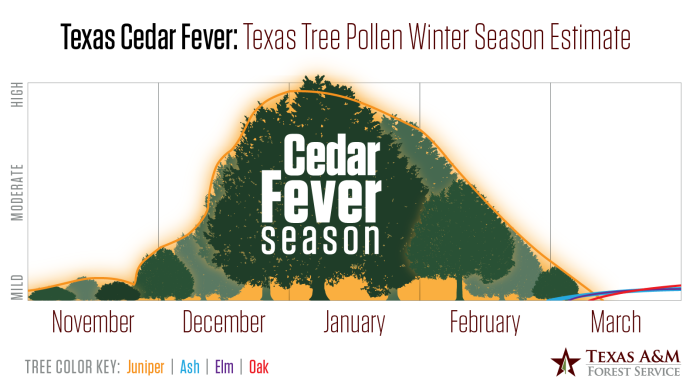
Besides the sheer quantity of pollen released, cedar fever is mostly problematic because of when the pollen is released. Most trees pollinate in the spring when many are expecting to have allergies. Ragweed pollen and mold spores can contribute to allergies in the fall, but very few plants pollinate during the winter. Juniper trees are the exception.

These trees typically begin producing pollen in mid-December, often triggered by colder weather or the passage of a Texas cold front. Pollen production reaches its peak in mid-January, before slowly tapering off toward the beginning of March, just in time for oak pollen and other spring allergens to start up.

“Immediately before and after a cold front it gets very dry and windy and the pressure changes very rapidly,” said Flocke. “This triggers the opening of pollen cones and the release of the pollen grains. When you see the pollen billowing off a tree that has just ‘popped,’ or opened its cones, it looks very similar to smoke coming from a wildfire.”

While this creates for some fascinating imagery, it can also lead to some serious misery. For people new to the central Texas region, or unfamiliar with cedar fever as a whole, it can also lead to confusion since the pollination period of mountain cedar trees is smack dab in the middle of cold and flu season – or a global pandemic. It’s not uncommon for people experiencing cedar fever to mistake their symptoms as a cold or the seasonal flu, especially given the variety of symptoms triggered by cedar fever. These include fatigue, sore throat, runny nose, partial loss of smell and – believe it or not – some people actually do run a slight fever. However, if your fever is higher than 101.5°F, then pollen likely isn’t the cause.

There are a few symptoms of cedar fever that are not linked to coronavirus or the flu though, like itchy, watery eyes, blocked nasal passages and sneezing. But there is one symptom that, according to Flocke, should steer you clear.

“Typically, mucous from allergies is clear and runny while other infections lead to thicker colored mucous,” Flocke said.

You can treat cedar fever by taking allergy medications and antihistamines, but you should consult with your physician or health care professional before taking new medications. You can also try and anticipate the pollen by tuning in to your local news station, many of which will give you the pollen count and can predict when it’s going to be a particular pollen heavy day. On those days, it’s smart to keep windows and doors closed, to limit the amount of time you spend outdoors and to change air conditioning filters in your car and in your home.

Removing juniper trees from your property isn’t recommended primarily because the pollen is airborne and—since they often wait to release their pollen until it’s cold, dry and windy—that pollen can blow for miles. It’s also important to note that only male juniper trees release pollen.

“The male trees have pollen cones, and the female trees have berry-like cones, which are very inconspicuous, but that’s what is pollenated from the male trees,” said Motsinger.

While junipers are notorious for releasing their fever-inducing allergens, they also have immense health benefits. Their berries, for instance, are used to make medicines and oils that can treat a variety of ailments, from an upset stomach to a snake bite. They are also high in nutrition and vitamins, providing a sustainable source of food for wildlife and soil enrichment, and they grow in a terrain that isn’t particularly hospitable to other species of tree. Most importantly, though, they provide the mental, physical and environmental health benefits of trees and forests everywhere.

Ultimately, mountain cedars are really only singled out for the unusual time of year in which they pollinate.

“Many trees rely on airborne pollination,” explained Flocke. “In other parts of the country folks suffer from pine or elm allergies. Here in the springtime, there is so much oak pollen collecting on surfaces that I have to wash my car’s windshield daily just to see out of it.”

While cedar fever might sound and seem particularly hostile, Ashe junipers are really just a species like any other, feeling out the conditions and waiting for the perfect moment to release their pollen in order to set their offspring up for success come springtime.

For more information about how to identify Ashe junipers and/or eastern redcedars in your own backyard, check out the Texas A&M Forest Service’s Texas Tree ID webpage or the My Tree ID mobile app. You can also see the distribution of junipers across the state via our Forest Distribution App, which can identify the distribution of native tree species across the state of Texas.

Texas A&M Forest Service Contacts:

Karl Flocke, Woodland Ecologist, karl.flocke@tfs.tamu.edu, (512) 339-7807

Jonathan Motsinger, Central Texas Operations Department Head, jmotsinger@tfs.tamu.edu, (512) 339-6548

Communications Office, newsmedia@tfs.tamu.edu, (979) 458-6649

Editors’ note: This article was adapted from Cedar Fever Explained written by Stephen O’Shea. Visit https://bit.ly/3cjGHyD for more.

Lopez Named AC Soccer’s First All-American

0

Colombian Freshman Caps Record-Setting Season

The still-young Angelina College soccer program now can boast of its first NJCAA All-American.

Juan Lopez, a freshman forward from Instituto Inte in Palmira, Colombia recently was named to the Third Team All-American list following his record-setting 2021 season.

Lopez’ combination of pitch savvy, a nose for the ball and a perpetual full head of steam led to his establishing a new team single-season scoring record with 13 goals, including hat tricks in matches against Northeast Texas Community College and Trinity Valley Community College. He added four assists and finished with 30 total points, hitting his shot attempts at a .929 shot percentage while adding two game-winning goals. Lopez finished in the nation’s top 20 in both goals and points.

The Roadrunners compiled a 13-4 record with a two-deep run into the postseason, finishing the year ranked No. 12 in the nation.

The email address for AC’s Sports Information Director is gstallard@angelina.edu.

New Year, New You with Project Quit!

0

Project Quit, brought to you by The Coalition, is a FREE program open to any tobacco user, 21 years and older, who would like encouragement, support, and tips for trying to quit, cut back or stay quit. The program offers 4-week or 8-week tobacco cessation classes, ONLINE or IN-PERSON. With support and encouragement, you can double your chances of successfully quitting tobacco. Project Quit can be your start to a new life without tobacco! The program is free for all participants and all materials are included. ONLINE classes begin January 5th at 5:30PM and IN-PERSON classes begin January 4th at 5:30PM. For more information, or to register, visit Project-Quit.org, our private Facebook group “Project Quit,” or call (936) 634-9308.

The Coalition, Inc. focuses on eliminating the use of harmful substances by affecting public policy, laws, attitudes, and behaviors, all in an effort to foster healthy life-long choices for the local community. The Coalition is one of the oldest substance abuse prevention community coalitions in the United States.

Contact: Carolina Lopez (936) 634-9308

Gardeners Have Great Opportunity, and a Few Challenges, with Cole Crops

0

Those who had planted a fall garden are heavy into reaping its rewards. Planted earlier this fall, all kinds of ‘Cole’ crops are vigorously producing as well as fighting a few pests with this mild to warm winter weather.

The group of vegetables called “Cole” crops refers to any of various plants belonging to the Cruciferae or mustard family. Even though you might not be familiar with the impressive scientific name, Cruciferae, or enjoy eating mustard, you are certainly familiar with other members of this family which can furnish Texas gardeners with an abundance of produce during the winter months.

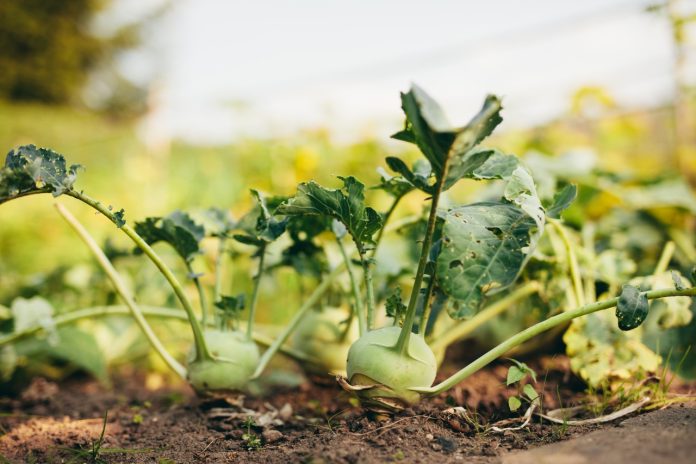
These Cole/cruciferous/mustard family vegetables include cool season crops such as Brussels sprout, cabbage, cauliflower, collards, kale, kohlrabi, mustard, broccoli, turnips, and watercress. My gardening friend Virginia said her turnips are doing incredibly well and another gardener Margie told me her mustard greens are having their best year ever.

This group of crops enjoy cool seasons and are fairly cold tolerant. Cauliflower and chard are more sensitive to cold than broccoli, collards, kale, kohlrabi, or mustard. Cabbage can withstand freezing temperatures down to 20 degrees or even 15 degrees F. However, for these plants to achieve maximum cold tolerance, they need conditioning.

The conditioning of the plants is influenced by weather conditions prior to the onset of extreme cold temperatures. This developed tolerance certainly determines plant survival. Just as much, the maturity of the plant also has much to do with the amount of cold which Cole crops can survive. When broccoli plants have produced buds and are ready to harvest, even a light frost may cause considerable damage since clusters freeze, turn brown and then rot.

Cole crops grow best at a monthly mean temperature of 60 to 70 degrees F. This occurs when temperatures are 80 degrees F. or less during the day and 60 degrees F. or less at night. In most parts of Texas these ranges occur in October- November.

To produce the best quality of the slower maturing Cole crops, Brussels sprouts, cabbage, cauliflower, and broccoli should be planted in gardens in late summer– think late August or September. In those months these crops can be directly seeded or transplanted into the garden area.

Faster maturing Cole crops such as collards, kale, kohlrabi, mustard, and turnips can be directly seeded into the garden as late as September or October.

Pest problems are normally not that extreme, although there are a few insects and several caterpillars that take advantage of mild to warm winter days to feed on these crops. Aphids, some beetles, the Harlequin bug can feed on them. The caterpillars, however, are the more frequent insect that I hear about. Caterpillar types include the Cabbage looper, Cabbage Webworm, Cross-striped cabbageworm, and the Diamondback moth caterpillars.

Control of these pests is no different than how you control warm weather bugs. Follow the label and observe any post-harvest intervals.

Lastly, those who grow Cole crops are investing in a healthy life. Home gardeners are in the business of producing health foods even though they may not know it. Not only are they continuing their outdoor exercise by caring for their garden in the short, colder days of winter, but their fresh harvest of vegetables contain an abundance of top nutrition.

Cary Sims is the County Extension Agent for agriculture and natural resources for Angelina County. His email address is cw-sims@tamu.edu.

Educational programs of the Texas A&M AgriLife Extension Service are open to all people without regard to race, color, sex, disability, religion, age, national origin, genetic information or veteran status. The Texas A&M University System, U.S. Department of Agriculture, and the County Commissioners Courts of Texas Cooperating.

Texas Forest Country Christmas: Breakfast Casserole

0

I love Christmas time! And when it comes to the holiday season, there’s one thing I always look forward to: My mom’s breakfast casserole. Every Christmas morning, my sister and I wake up and head down the hall to open our stockings and presents. As we tear into and examine our gifts, the scent of breakfast comes wafting from the kitchen. Before long, the whole family is seated around the table ready to eat. I have a feeling this tradition started when we were young because it was quick and easy to prepare, but to us the breakfast casserole is sacred, and we look forward to Christmas morning breakfast every year. Here at TFCL, we want to wish you and your family those same magical little moments this Christmas Season, and if you need a new recipe or tradition, here’s my favorite Christmas Morning Breakfast Casserole.

Christmas Morning Breakfast Casserole

Ingredients

1 roll crescent rolls

1 roll sausage; cooked, crumbled, drained

6 eggs

1 cup shredded cheese

Instructions

Preheat oven to 350.

Roll the crescent dough into a rectangle baking dish and press the seams together. In a bowl, crack and beat the eggs. Add the cooked sausage and shredded cheese to the eggs and mix. Then, pour the mixture over the dough. Bake until lightly browned, around 30 to 35 minutes. Finally, eat, enjoy, and make memories around your table.

Drug-Free All Stars Complete Holiday Project Sticker Shock

0

Drug-Free All Stars after they finished their Project Sticker Shock shift at Brookshire Brothers Fresh Market. Front row, from left to right: Mia Sandoval, Aubrey Lindsay, Rosina Camarrillo, Suriyah Beamon, and McKenna Simmons. Second row, from left to right: Peyton Mathis, Allison Shaver, Madison Durant, Mallory Butler, and Madison Morehouse. Last row, from left to right: Dalton Currie, Fabian Cordero, and Angel Carrillo.

The Drug-Free All Stars of Angelina County, funded by a grant from TxDOT, recently completed a holiday-themed Project Sticker Shock. The Drug-Free All Stars are a group of high school seniors that serve as role models for the community by living an alcohol, tobacco, and drug-free life. Every year during the holiday season, the number of alcohol-related car accidents and fatalities rises significantly. According to the Texas Department of Transportation (TxDOT), every nine hours someone dies from drunk driving in Texas. To combat these statistics, The Coalition and Drug-Free All Stars introduced a holiday-themed Project Sticker Shock focused on reducing drinking and driving. The Drug-Free All Stars placed stickers on packages of alcohol at area Brookshire Brothers and Tobacco Barn locations with the slogan “Better Watch Out. Drive Sober or Get Pulled Over.” The All Stars want to make the community aware of the consequences of drinking and driving and encourage responsible decision-making. “The partnership between Brookshire Brothers, The Coalition and the Drug-Free All-Stars has been longstanding, and we hope, beneficial for Angelina County residents. We believe these stickers serve as a great reminder to our customers to drink responsibly while they celebrate the holiday season,” said Melissa Crager, Public Relations and Corporate Responsibility Manager for Brookshire Brothers. Thank you to Brookshire Brothers for participating in this year’s holiday-themed Project Sticker Shock.

Since 1988, The Coalition has focused on eliminating the use of harmful substances by affecting public policy, laws, attitudes and behaviors, all in an effort to foster healthy life-long choices for the local community. For more information about the Drug-Free All Star program, contact Abby Baker at The Coalition at 936-634-9308.

Angelina College Releases Fall 2021 President’s List

0

Angelina College officials and faculty members are pleased to release the names of 72 students named to the President’s Honor List for the Fall 2021 semester.

To qualify, students must have enrolled in at least 12 semester hours of college-level work and have attained a grade point average of 4.0.

The names of students who make the President’s Honor List are posted at the end of each long semester.

Following is the list, divided by town or city of residency, of students named to the President’s Honor List:

Ada, OK

Trenity Miller.

Alto

Jaycie Richardson.

Baytown

Macy Runnells.

Bronson

Chase Smith.

Center

Allison Wilson.

Diboll

Irvin Hurtado and Cy Murphy.

Farmington, MO

Joel Roberts.

Grapeland

Jaycee Graham and Walker Webb.

Hemphill

Tammy Mitchell.

Huntington

Michael Reep.

Jasper

Tianna Morgan and Victor Romero.

Kingwood

Aliyah Bustamante and Coby Schoettlin.

Liberty Hill

Cole Alexander.

Livingston

Erica Baker, Windy Mendoza and Austin Pena.

Longview

Dawson Huffstuttler.

Lufkin

Sarah Ackley, Lisette Aguilar, Ezequiel Alanis, Regina Alexander, Amanda Anderson, Jordan Armstrong, Tara Bocock, Madelyn Boudreaux, Lauren Bowers, Genevieve Carcano, Kayteen Carreon, Daniela Cortes, Mallory Germany, Alex Guerrero, Haley Guillen, Kendall Howatt, Justice Irvine, Kaaliyah Jackson, Marjorie Kelley, Karley LaForge, Allyson Lea, Kaitlyn Lea, Cameron Llewellyn, Adam McFarland, Alex Mendoza, Jennifer Miller, Dalton Morton, Alexandra Nunez Pedraza, Matthew Nunn, Natalie Ovalle, Colby Payne, Reynaldo Perez, Brent Pigg, George Thomas, Stori Thomas, William Towery and Jacquiline Wahleithner.

Nacogdoches

Alyssa Cain, Lorena Macias, Truong Tho Pham and Katerin Sanchez.

Onalaska

John Peavy.

Orange

Bailey Frenzel.

Pineland

Susan Muncrief.

Pollok

Joanna Forman and Olga Luna.

San Augustine

Ka’Myriah Burrell.

Spring

Madson Wetzig.

Sour Lake

Landon McLeod.

Warren

Phillip Thomas.

Woden

Lindsey Mims.