

Home Blog Page 304

Crystal Adams comes full circle as ECHL director

0

Crystal Adams, who joined the Stephen F. Austin State University Early Childhood Laboratory as director in June, is no stranger to Nacogdoches, the university or the ECHL. 

Adams is a lifelong Nacogdoches resident and received her bachelor’s degree from SFA in interdisciplinary studies in 2010. She earned her master’s degree in educational administration from the University of Texas at Tyler in 2012 and a master’s degree in school counseling in 2013.

Adams previously worked at the ECHL as assistant to the director from 2007 through 2010, and she has spent years with Nacogdoches ISD in a number of roles, including teacher, counselor and assistant principal in middle and elementary schools. 

“Crystal is exceptionally prepared to hold the director’s position and to be able to provide appropriate instructional leadership and coordinate professional development for the lab’s professional staff,” said Dr. Judy Abbott, dean of SFA’s Perkins College of Education. “During the past 11 years, Crystal was employed with Nacogdoches ISD at the middle and elementary school levels. That employment allowed her to come to know many families across the community, which has been helpful as she stepped into the director role at the lab,” Abbott said. 

As she takes on the lead position at the ECHL, Adams said she’s excited to get to know the children and play a pivotal part in their lives.

“My absolute favorite part of the job is interacting with children and learning more about them and their families,” Adams said. “Children have a special ability to make you laugh and smile no matter what. I see my role as director as an advocate for them. Everything I do is based on putting their safety, needs, health and learning first.”

The ECHL’s program offers benefits for SFA students, area children ages infant through pre-kindergarten and the community. The facility provides a learning laboratory for SFA educator candidates to observe teacher and student interactions. Area children benefit by receiving an education focused on their total development. Curriculum is intended to develop intellectual and personal competence rather than training children in performing a limited set of academic skills. 

The community also benefits by having a state-of-the-art learning laboratory nearby, where children receive personalized instruction from experienced teachers who also are mentoring SFA education students training to be the next generation of teachers. 

“The university is well-known for its teaching program. It is the foundation SFA was built on,” Adams said. “I’m proud to be associated with an integral part of that legacy. The Early Childhood Laboratory is such a unique facility. It provides the forum for college and young students to come together to learn from each other and our educators.”

Adams has set goals for the laboratory, including expanding to serve more students and families, partnering with local schools, and incorporating a dual language program. She also hopes to be able to resume fundraising activities to help support the lab. 

For more information about the ECHL, visit https://www.sfasu.edu/echl/.
Huntington native serves as a member of U.S. Navy’s “Silent Service”

0
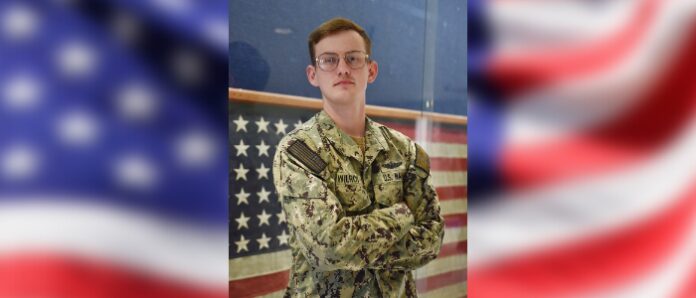
Photo by Mass Communication Specialist 1st Class Amanda Rae Moreno

KINGS BAY, Ga. – A Huntington, Texas, native is serving aboard USS Tennessee, one of the world’s most advanced nuclear-powered submarines.

Petty Officer 3rd Class Richard Wilroy, a 2016 Huntington High School graduate, joined the Navy three and a half years ago.

“I joined the Navy because I wanted a fresh start and a change of pace,” added Wilroy. “I wanted to be a part of something as a team with the goal of protecting something a lot bigger than myself.”

Today, Wilroy serves as a sonar technician submarine whose responsibilities include using soundwaves in the ocean to maneuver the ship and keep it safe.

“We listen to everything in the ocean that puts noise out,” said Wilroy.

According to Wilroy, the values required to succeed in the military are similar to those found in Huntington.

“Huntington taught me that hard work pays off,” said Wilroy. “Therefore, I always keep my nose on the grindstone and keep pushing until the job is done.”

Known as America’s “Silent Service,” the Navy’s submarine force operates a large fleet of technically advanced vessels. These submarines are capable of conducting rapid defensive and offensive operations around the world, in furtherance of U.S. national security.

There are three basic types of submarines: fast-attack submarines (SSN), ballistic-missile submarines (SSBN) and guided-missile submarines (SSGN).

Fast-attack submarines are designed to hunt down and destroy enemy submarines and surface ships; strike targets ashore with cruise missiles; carry and deliver Navy SEALs; conduct intelligence, surveillance, and reconnaissance missions; and engage in mine warfare.

The Navy’s ballistic-missile submarines, often referred to as “boomers,” serve as a strategic deterrent by providing an undetectable platform for submarine-launched ballistic missiles. SSBNs are designed specifically for stealth, extended patrols and the precise delivery of missiles.

Guided-missile submarines provide the Navy with unprecedented strike and special operation mission capabilities from a stealthy, clandestine platform. Each SSGN is capable of carrying 154 Tomahawk cruise missiles, plus a complement of heavyweight torpedoes to be fired through four torpedo tubes. As a member of the submarine force, Wilroy is part of a rich 121-year history of the U.S. Navy’s most versatile weapons platform, capable of taking the fight to the enemy in the defense of America and its allies.

Serving in the Navy means Wilroy is part of a team that is taking on new importance in America’s focus on rebuilding military readiness, strengthening alliances and reforming business practices in support of the National Defense Strategy.

“The Navy contributes to national security by being readily available at all times for any mission,” said Wilroy. “Also, no one knows where we are, so we can strike at any time.”

With more than 90 percent of all trade traveling by sea, and 95 percent of the world’s international phone and internet traffic carried through underwater fiber optic, Navy officials continue to emphasize that the prosperity and security of the United States is directly linked to a strong and ready Navy. A major component of that maritime security is homeported at Naval Submarine Base Kings Bay.

“We do two big things here in King’s Bay: we send SSBNs on Strategic Deterrence Patrols and we forward deploy our guided missile submarines overseas,” said Rear Adm. John Spencer, Commander, Submarine Group Ten. “This work is essential to uphold the number one mission of the Navy: strategic deterrence. And this is the only home port for both of these types of submarines on the East Coast.”

Strategic deterrence is the Nation’s ultimate insurance program, and for decades, Kings Bay has been home to Ohio Class SSBN ballistic-missile submarines. Beginning in 2028, the new Columbia Class ballistic-missile submarines will arrive and provide continuous sea-based strategic deterrence into the 2080s.

As Wilroy and other sailors continue to train and perform the missions they are tasked with, they take pride in serving their country in the United States Navy.

“Serving in the Navy means everything to me,” added Wilroy. “The lessons I’ve learned, as well as the brothers I’ve made, are something I wouldn’t change for anything. I’ve found a second family and a home away from home.”

SFA’s forestry program celebrates 75th anniversary

0

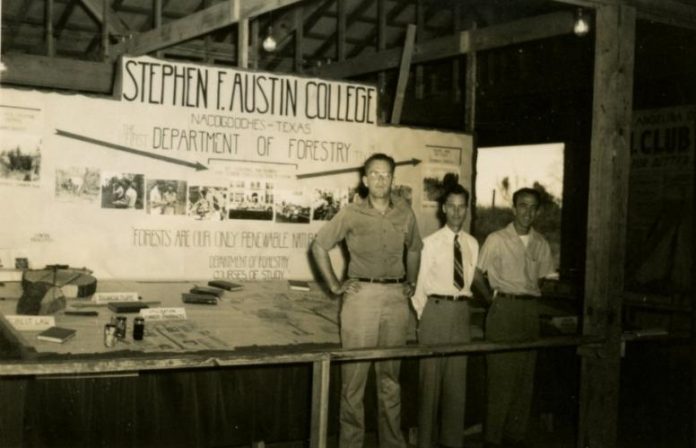
In the spring semester of 1946, Stephen F. Austin State Teachers College welcomed an influx of returning World War II servicemen to the student body. Among the courses offered to these new and returning students was an entirely new academic program — one that is inexorably tied to the heritage, economy and natural history of the region. 

By the mid 20th century, the U.S. had transitioned away from viewing forests and their resources as purely extractive, and the creation of SFA’s Bachelor of Science in Forestry program reflected the growing understanding of the need for responsible, renewable, science-based forest management. 

In 1966, the program received accreditation from the Society of American Foresters, the national organization representing and setting the standard for the forestry profession, making SFA home to the first accredited forestry program in the state.

The new Department of Forestry was initially housed in the basement of the Austin Building, and although campus location, technology and course offerings have changed during the past 75 years, one aspect has remained consistent. 

“I think one of our strengths is that we have held on to the hands-on, learning-based experience model,” said Dr. Hans Williams, dean of SFA’s Arthur Temple College of Forestry and Agriculture. “Our students go to the forest and field every day to work closely with faculty members and learn.” 

The field-based curriculum is perhaps best exemplified by the program’s intensive six-week summer field camp for students entering their junior year. Each week of the course focuses on a different aspect of the forestry profession and challenges students to apply the knowledge they have gained throughout the program to real-world scenarios. 

For most of the program’s history, the camp took place off campus — first at a leased property equipped with dormitories and a dining hall near Milam, and later at the SFA-owned Piney Woods Conservation Center on Lake Sam Rayburn. In 2015, the camp transitioned to a non-residential format with students returning to their respective homes each night. Although locations of the camp have changed, the physical and mental rigor remain. 

“Before I started field station, my friends told me that it’s the most fun you will never want to have again,” said Charlie Jordan, 2015 forestry graduate. “They were 100% correct. I’ve never had more fun during a summer class, but I never want to go through that mental and physical exhaustion again.”

Although tucked away in rural Texas Forest Country, SFA’s forestry program, faculty members and students have gained national recognition for their contributions to the profession.

Currently, the program is home to four faculty member recipients of the Carl Alwin Schenck Award. This national award, presented by the Society of American Foresters, recognizes outstanding performance in the field of forestry education. Additionally, the student chapter of The Wildlife Society and the student chapter of the Society of American Foresters have been recognized as the nation’s top-performing student chapters. Furthermore, the SFA Sylvans, the university’s timbersports team, has won multiple Southern Forestry Conclave championships, excelling in both the academic and physical portions of the competition. 

When contemplating the program’s greatest accomplishments, Williams immediately points to alumni. 

“When you get down to it, the success of any program is based on the success of its graduates, and I think what you see with our graduates is that they have achieved leadership positions in the public and private sectors of forestry all over the country,” Williams said. “Because we’re such a large program and have graduated so many students over the years, we’ve gained a reputation through their success of being a fine forestry program that produces strong graduates.”

Among the program’s notable alumni are a Nobel Prize co-recipient and top scientist for the U.S. Geological Survey, as well as top leaders within the Texas A&M Forest Service, Texas Parks and Wildlife Department and private companies such as Weyerhaeuser and Davey Tree Expert Company. 

“What amazes me is that as we try to select alumni for our Outstanding Alumni Award, we can’t seem to catch up,” Williams said. “We are so far behind in recognizing our outstanding alumni who have made great contributions to the profession.”

In addition to extensive teaching, research and outreach, the program manages 3,449 acres of East Texas forestland through the Lumberjack Legacy Forest Program. Through sustainable forest management, these properties have sequestered more than 600,000 tons of carbon dioxide and generated more than $239,000 for student scholarships and graduate research.

The Lumberjack Legacy Forest Program initially began in 2000 through a relationship with STMicroelectronics, a global electronics and semiconductor manufacturer focused on reducing its carbon footprint. The company purchased and afforested marginal East Texas pastureland and then donated the land to the SFA Real Estate Foundation to be managed in perpetuity by the college.

“This relationship was made possible through the vision and leadership of past deans and faculty members, as well as guidance from the SFA development office,” Williams said. “We have been able to meet STMicroelectronics’ goals, as well as our goals of supporting students and facilitating faculty development.”

While the forest industry and higher education have dramatically changed during the past 75 years and will no doubt continue to evolve, Williams speaks of the future of SFA’s forestry program with enthusiasm and purpose. 

“We will continue to hold on to hands-on, experienced-based learning,” Williams said. “I think that is part of our culture, what we are known for and why employers seek out our graduates. We will continue to seek out ways to improve our academic quality and produce well-rounded professionals.”

Texas Film Commission Announces 2021 Texas Film Round-Up

0

The Texas Film Commission (TFC) today announced that the Texas Archive of the Moving Image (TAMI) is accepting films and videotapes for the 2021 Texas Film Round-Up through the end of October. Individuals, businesses, and institutions are invited to mail their Texas-related films and videotapes to TAMI for free digitization in exchange for contributing a digital copy of their materials for possible inclusion on TexasArchive.org.

The award-winning Texas Film Round-Up discovers, preserves, and shares the stories of Texans by digitizing and providing access to their obsolete media. The program has resulted in the digitization of more than 50,000 films and videotapes dating as far back as 1910 and spanning through the decades of media technology.

“We are so proud of our longstanding partnership with TAMI and the Texas Film Round-Up,” said TFC Director Stephanie Whallon. “The contributions received during the Texas Film Round-Up help preserve Texas’ rich history and vibrant culture for both education as well as entertainment.”

An ever-growing curated collection of videos is available at TexasArchive.org. This online video-sharing platform welcomes the public to watch, explore, and learn about Texas history and culture. It also includes free lesson plans to assist educators in K-12 social studies instruction.

Participants should register at TexasAchive.org/round-up, where they will receive instructions on packing and mailing their media. Packages must be postmarked by October 30. Submissions may also dropped off on Saturday, October 23 from 10 a.m. to 2 p.m. and Wednesday, October 27 from 10 a.m. to 5 p.m. at the TAMI office. Additional details can be viewed at TexasArchive.org/round-up.

About TAMI: The Texas Archive of the Moving Image (TAMI) is an independent non-profit organization founded in 2002 to discover, preserve, make accessible, and serve community interest in Texas’ moving image heritage. More information is available at TexasArchive.org

About TFC: The Texas Film Commission in the Office of the Governor’s Economic Development and Tourism Division helps to grow local jobs and local economies by promoting the Lone Star State as the premier destination for film, television, commercial, animation, visual effects, video game, and extended reality (XR) production. More information is available at gov.texas.gov/film

Governor Abbott Touts Texas Economy

0

Governor Greg Abbott today delivered remarks at the Greater Beaumont Chamber of Commerce Annual Meeting. During remarks, Governor Abbott touted Texas’ strong economy and premier business climate and thanked the Greater Beaumont Chamber of Commerce for their tremendous work as job-creators and growing their local economy. The Governor also congratulated the Greater Beaumont Chamber of Commerce for their distinction as a top 2% chamber in the country by the U.S. Chamber of Commerce, and commended the Port of Beaumont for its significant contributions to the State of Texas by making the state the leader in exports nationally for 19 years. 

The Governor was joined at the meeting by Texas Parks and Wildlife Commissioner Richard Scott, Congressman Randy Weber, State Senator Brandon Creighton, State Representative Joe Deshotel, Jefferson County Judge Jeff Branick, Beaumont Mayor Robin Moutin, and other local leaders. 

“More and more great companies are moving to Texas every day because of our welcoming business climate and our young, growing, skilled, and diverse workforce, but that would not be possible without the help of great organizations like the Greater Beaumont Chamber of Commerce,” said Governor Abbott. “The Greater Beaumont Chamber of Commerce works tirelessly alongside business leaders to create better economic opportunities for the people of Southeast Texas every day, and I want to thank them for their hard work and dedication to keep Texas the best place to live, work, raise a family, and do business.” 

Illuminating Ideas for Hanging String Lights in Your Backyard

0

So, you’ve created the backyard of your dreams and love everything about it — except that seeing your surroundings can sometimes be a challenge once the sun’s gone down. As the days grow shorter and we head into fall, it’s one of the best times of year to enhance your backyard life at night.

While hiring someone to install outdoor lighting can be really expensive and involved, patio string lights are a simple, cost-effective solution. Best of all, you can create a look that reflects your style using any number of patterns.

In a recent episode of “Done-In-A-Weekend Projects” called “Light Up Your Life,” expert landscape designer Doug Scott demonstrated how to hang string lights, as well as discussed what to consider before, and while, doing so. Here are his steps for adding fun, personality and light to your outdoor living and dining spaces:

  1. First determine how long your string lights need to be and how many strands you’ll need. The only other materials you’ll need for this project are appropriate, outdoor-grade hardware (such as cup hooks or a similar fastener) and possibly an extension cord.
  2. Next you’ll want to sketch your design to make sure you capture what you’re going for and second, to ensure you’re purchasing the correct number and lengths of lights and hooks. For a more relaxed look, you may want a crisscross or free-form pattern. For a more uniform look, you can simply hang lights across the center or around the perimeter of the space.

“Regardless, just make sure your design represents you and how you want to live outside,” says Scott.

  1. When measuring your lights, be sure to add a few feet on each pass to allow for slack. One other thing you’ll want to consider is whether you’ll be able to make light connections in discreet places, ideally where they connect to the wall, post or tree.

“Having a connection in the middle of a swag won’t be the end of the world, but you’ll want to minimize this as much as possible,” says Scott.

  1. Install your hooks according to your plan. Then, hang your lights with the bulbs removed to decrease your chances of breaking them. You’ll also want to make sure that your first strand reaches an outlet, or you have an extension cord that will. Once you’re satisfied with your general look, install one bulb in each strand to test that everything is working properly. If all is good, install the rest of the bulbs, light them up, then kick back and enjoy.

Brass Day at SFA slated for Oct. 17

0

The School of Music at Stephen F. Austin State University will host its annual Brass Day on Sunday, Oct. 17, on the university campus.

Brass Day is devoted to high school students of all ages who play a brass instrument, including trumpet, horn, trombone, euphonium and tuba, and who are interested in learning more about how to perform the prescribed audition etudes for all-region and all-state bands, according to Dr. Deb Scott, trombone professor at SFA and one of the faculty organizers of Brass Day.

Information about the School of Music and its audition requirements for prospective music majors will also be presented. Music faculty will also discuss practice tips and audition preparation and strategy.

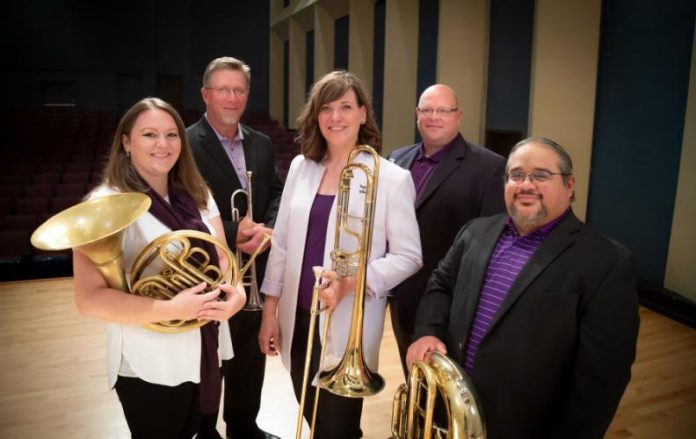
Brass Day features a 4 p.m. performance by the Pineywoods Brass Quintet and the SFA Wind Symphony and Symphonic Band in the Grand Ballroom of the Baker Pattillo Student Center.

For more information and to register, visit www.music.sfasu.edu/brassday, or contact Dr. J.D. Salas, tuba and euphonium associate professor, at salasjd@sfasu.edu or (936) 468-4107. Participation in Brass Day clinics and informational sessions is free of charge. The day’s events begin at 1 p.m. and end at the conclusion of the concert. Activities take place in the Wright Music Building and the student center.

SFA College of Sciences and Mathematics hosting evening of space stories

0

The public is invited to join Stephen F. Austin State University’s College of Sciences and Mathematics and Bruce McCandless III for an evening of space stories about his father, astronaut Bruce McCandless II, at 6 p.m. Oct. 14, in the SFA planetarium.

The book, “Wonders All Around: The Incredible True story of Astronaut Bruce McCandless II and the First Untethered Flight in Space,” was written by McCandless III and details pivotal moments in his father’s career, which spanned the Apollo era and the Skylab and shuttle programs. An Amazon best seller, the book was recently listed by Men’s Journal as a Top 20 Book to Read in 2021.

“You’ve probably seen the photo — that all-but-ubiquitous snapshot of an astronaut with a jet-powered backpack gliding along in the vastness of the cosmos, untethered and unafraid,” McCandless III said. “Other than that fantastic image, though, you may know very little about the man in the jetpack: Captain Bruce McCandless II.”

Some of McCandless II’s accomplishments include serving as a capsule communicator for Neil Armstrong’s Apollo 11 moon walk, repairing the damaged Skylab orbital workshop, performing the first untethered flight in space, and designing and deploying the Hubble Space Telescope.

The presentation is free to the public.

Learn more about the SFA Planetarium at sfasu.edu/planetarium.

Governor Abbott Issues Executive Order Prohibiting Vaccine Mandates By Any Entity, Adds Issue To Special Session Agenda

0

Governor Greg Abbott today issued an executive order stating that no entity in Texas can compel receipt of a COVID-19 vaccination by any individual, including an employee or consumer, who objects to such vaccination for any reason of personal conscience, based on a religious belief, or for medical reasons, including prior recovery from COVID-19. Governor Abbott also sent a message to the the Chief Clerk of the House and Secretary of the Senate adding this issue as an item to the Third Special Session agenda. The executive order will be rescinded upon the passage of such legislation. 

“The COVID-19 vaccine is safe, effective, and our best defense against the virus, but should remain voluntary and never forced,” said Governor Abbott. 

SFA’s Wind Symphony, Symphonic Band to perform works by Joel Love

0

The Wind Symphony and Symphonic Band at Stephen F. Austin State University will perform at 4 p.m. Sunday, Oct. 17, in the Grand Ballroom of the Baker Pattillo Student Center on the SFA campus.

The student ensembles’ performances are part of Brass Day at SFA. Brass Day is devoted to high school students of all ages who play a brass instrument, including trumpet, horn, trombone, euphonium and tuba, and who are interested in learning more about how to perform the prescribed audition etudes for all-region and all-state bands. The concert will open with a performance by the Faculty Brass Quintet.

Additionally, the concert will also feature works by composer Joel Love, who will collaborate with School of Music students in mid-October as part of the SFA bands’ annual composer residency. The Symphonic Band, directed by Assistant Director of Bands Dr. Chris Kaatz, will begin its performance with William Latham’s “Brighton Beach.” Kaatz describes this British-style march as a staple in the repertoire, “likely due to its ominous D minor opening and bold F major finale.” Dana Wilson’s “Sang!” follows and showcases the composer’s eclectic, yet rousing use of jazz harmony and popular music riffs in his writing. This groove-saturated soundscape is succeeded by the sneaky and somewhat sinister “Baron Piquant on Pointe.” Beginning quietly and featuring numerous soloists before employing the full ensemble, this piece was written by University of Texas at Austin Professor of Composition Donald Gratham. Symphonic Band concludes its performance with a work by Gratham’s student, Love. “‘A Cardinal’s Hymn’ embodies Love’s trademark lush, technical lyricism,” according to Kaatz. The work, whose title is a reference to Love’s undergraduate mascot, is an homage to Dr. Wayne Dyess, who was an influential mentor to Love during his studies at Lamar University.

The Wind Symphony, directed by Associate Director of Bands Dr. Dan Haddad, will open the second half with John Mackey’s bombastic tour de force, “Until the Scars.” The colorful orchestration of famed Italian composer Ottorini Respighi is featured next in his sole work for winds, “Huntingtower Ballad.” Love’s “Aurora Borealis” serves as the cornerstone for the Wind Symphony’s program. It is the composer’s first work for wind ensemble and was selected as a finalist in the 3rd International Frank Ticheli Composition Contest. Love’s grand evocation of the northern lights is complimented by Percy Grainger’s raucously energetic “The Gum-Suckers March,” which closes the concert.

Admission to the concert is free. The Wind Ensemble, Wind Symphony, Symphonic Band, Percussion Ensemble, Trombone Choir and the SFA Faculty Brass Quintet will collectively present the Kaleidoscope Concert at 7:30 p.m. Tuesday, Nov. 16, in the Grand Ballroom. For additional information, contact the School of Music at (936) 468-4602.