


Home Blog Page 326

LANE CLOSURES PLANNED ON NACOGDOCHES PROJECT

0

Beginning Tuesday, April 13, the work zone speed limit on US 59 in Nacogdoches will be lowered and lanes will be closed as crews set a concrete barrier wall in the US 59/SL 224 flyover construction project near Spradley Street.

The speed limit will be lowered to 45 miles per hour from CR 524 to Spradley Street in Nacogdoches. Crews are scheduled to set a temporary concrete barrier wall near the Spradley Street intersection. Daily lane closures should be expected as the barrier wall is set and the intersection will be closed to through traffic. Detours will be in place for local traffic on Spradley Street.

“The concrete barrier will protect motorists from the edge drop-off as well as workers in the area. The lane closures will only be necessary as the concrete barrier is placed. Once it is set, traffic on US 59 will function as normal. However, the speed limit through the work zone and detour routes for Spradley east and west will remain in place,” said Rhonda Oaks, public information officer for the Lufkin District.

The $86.1 million construction project includes construction of new US 59 main lanes that will directly connect to SL 224 just south of SH 7 and is being built to interstate standards. The project also includes the construction of overpasses at Spradley Street, existing US 59 and Old Lufkin Road, and the construction of frontage roads for SL 224 between SH 7 and BU 59.

Motorists are urged to reduce speed and stay alert through the project area from SH 7 west on SL 224 to 1.2 miles south of Spradley Street on US 59. Longview Bridge and Road, Longview TX, is serving as contractor for the project that is on schedule to be completed in spring 2023.

For more information, contact Rhonda.Oaks@txdot.gov or call (936) 633-4395. Visit drivetexas.org for road conditions/closures statewide. Follow this and other project alerts on Facebook at Texas Department of Transportation (Lufkin) or on Twitter at TxDOT Lufkin.


My five cents… A weekly column from Sen. Robert Nichols

0

This week the Senate passed Senate Bill 1, the Senate’s version of the budget for this year. The budget includes over $11 billion for children and teacher public education support, $8 billion for mental health support, including an almost $20 million increase for children’s mental health programs, and over $25 billion for highway improvements and new construction. The budget is a reflection of our priorities this session and took over six weeks to put together.

Here are five things happening around your state:

1. Governor issues executive order prohibiting vaccine passports

This week Governor Abbott issued an executive order prohibiting government-mandated vaccine passports, including for the COVID-19 vaccine. This order applies to state agencies and political subdivisions in Texas. It prevents those agencies from requiring proof of vaccination to receive services. It also prohibits entities that receive public funds, including private entities, from requiring documentation of vaccine status to receive any service or enter any place. Texans’ vaccination status is a private health matter, and as such should be protected from any forced disclosure. Currently, the COVID-19 vaccine is not mandatory.

2. Texas Senate passes election security bill

The Texas Senate passed Senate Bill 7 last week, which is aimed at protecting election integrity. It sets the early voting hours to start at 6 am and finish at 9 pm. It requires voting to occur inside a building with certain regulations. Voters would have to enter the building unless unable to because it was a risk to their health. The bill also prevents local officials from sending out mail-in ballot applications to all voters, whether they’re eligible to vote-by-mail or not. Voters have to request a mail-in ballot on their own volition. Elections officials are allowed to post instructions on how to vote by mail on their website. There are several other provisions in the bill that strengthens election security and integrity for all our future elections.

3. Texas receives 2.5 million doses of vaccine this week

The Texas Department of State Health Services announced that Texas received 2.5 million doses of the COVID-19 vaccine this week. That marks the most Texas has received in a single week thus far. Texas has now administered more than 11.8 million doses. Nearly 7.8 million people have received at least one dose, and more than 4.3 million Texans are fully vaccinated. Almost 20 percent of Texans are fully vaccinated. This comes as hospitalization rates for Texans have fallen dramatically. East Texas hospitals are seeing numbers as low as they’ve been since last spring. East Texas hospital leaders credit increasing vaccination rates and lasting immunity for the drop in COVID-19 hospitalizations. With those rates decreasing, the CDC has also released new guidance about travelling within the United States for fully vaccinated people. Those who are fully vaccinated can travel safely within the US and no longer need to get tested or quarantine before or after travel, unless a destination requires it.

4. First day of STAAR cancelled due to disruptions

Texas students were preparing to take the STAAR test starting this week but were hampered by widespread technical glitches that forced many students offline or prevented them from logging in. The Texas Education Agency advised districts to stop online testing for the day while the vendor tried to resolve the problem. At least three tests were effected by the glitch, including the fourth grade writing exam and the seventh grade writing and English I exams. TEA has waived grade promotion requirements for students in fifth and eighth grades, so the assessment is aimed at finding a benchmark for where students are. COVID-19 has led to an extensive disruption in student learning and assessing where students are is the first step to correcting that disruption. However, that becomes difficult when online STAAR testing is interrupted. TEA worked to get the students back online by the next day.

5. East Texas 5th grader raises money for slain DPS Trooper’s family

A Houston County 5th grader donated all of her winnings from showing her hog at the Houston County Youth Fair and Livestock show to the family of fallen DPS Trooper Chad Walker. Last month, Trooper Walker was shot multiple times after stopping to aid a driver near Mexia. He later died of his injuries at an area hospital. Latexo ISD student Aubrey Waits heard about the tragedy and decided to donate her winnings to the family. Other donations began to come in on top of Aubrey’s and the fifth grader ended up raising about $10,000 for the family. I offer my condolences to the family of Trooper Walker.

Governor Abbott Issues Proclamation Recognizing April 2021 As Sexual Assault Awareness Month

0

Governor Greg Abbott today issued a proclamation recognizing April 2021 as Sexual Assault Awareness Month in Texas. This month is a time for Texans to come together to build awareness around the issue of sexual assault and to recognize the courage of survivors throughout our nation and across the Lone Star State.

Texans are encouraged to honor survivors as the State of Texas continues its mission to encourage healing and empowerment for survivors of sexual violence. Texans can also use the hashtag #TXSexualAssaultAwarenessMonth to share their support on social media.

“Texans are not overcome when faced with adversity; together, we can protect the vulnerable, help victims find healing, and bring offenders to justice,” reads the Governor’s proclamation. “Our state is extremely grateful for the courage shown by survivors, who bravely share their stories and lend their voices to this cause, as well as for the many law enforcement officers, prosecutors, judges, and organizations like the Governor’s Sexual Assault Survivors’ Task Force, who continue to fight for the safety of all Texans. At this time, I encourage all Texans to join me in renewing our commitment to ending sexual assault and empowering survivors.” 

The Governor’s Sexual Assault Survivors’ Task Force (SASTF) was established in 2019 to ensure a survivor-centered, trauma-informed, collaborative and coordinated response to sexual violence experienced by adults and children across the state. The SASTF brings together various professionals and survivors who are singularly focused on delivering critical system improvements on behalf of Texas sexual assault survivors.

View the Governor’s proclamation.

Governor Abbott Announces State Investigation Into Allegations Of Abuse, Neglect At Federally Run Unaccompanied Minor Facility

0
(PHOTO: Office Of The Governor, 4/7/21)

Governor Greg Abbott today directed the Texas Department of Public Safety and the Texas Rangers to immediately investigate allegations of child abuse and neglect inside the federally run unaccompanied minor facility in San Antonio. In a press conference outside of the facility today, the Governor announced that the state has received complaints that include allegations of sexual assault, a shortage of staff to properly supervise the children inside the facility, and that the children in the facility are not eating throughout the day. The complaints also allege that children that have tested positive for COVID-19 are not being physically separated from children who have tested negative. 

Governor Abbott stated that these deplorable conditions are a direct result of President Biden’s refusal to secure the border and his administration’s lack of planning for the fallout of his open border policies. During the press conference, the Governor demanded that President Biden shut down the facility to stop any further abuse and move these children to federally run facilities in other states where the federal government has the space, personnel, and resources to ensure their safety. 

“The Biden administration opened the borders and failed to plan for the influx of unaccompanied children crossing the border, and now we are faced with our worst fears—allegations of child abuse and neglect,” said Governor Abbott. “I am calling on the Biden administration to close this facility, and I am directing the DPS and the Texas Rangers to immediately begin investigating these allegations. President Biden’s disastrous decisions caused this crisis, and his administration must act now to protect these children, secure the border, and end this crisis.”

Preventing the Spread of COVID-19 in America’s Classrooms

0

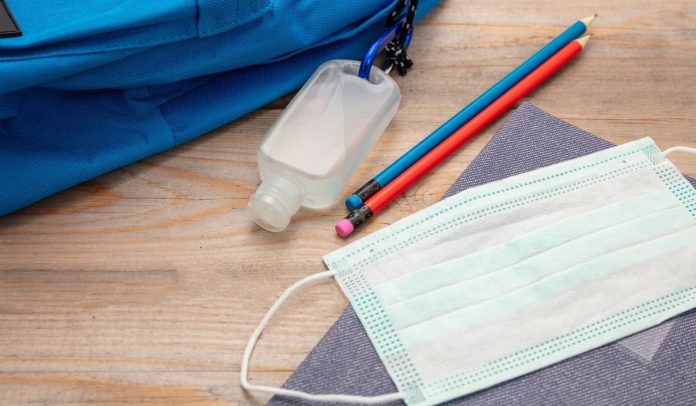
While the rollout of the vaccine has been a relief for the nation’s teachers, many of whom have been working in-person on and off since the start of the pandemic, the reality is that not everyone will get the vaccine. What’s more, being in the school building all day with children who are not yet approved for immunization leaves many educators and school staff vulnerable to COVID-19, no matter how many precautions they take while off the clock.

But there’s good news: new scientific breakthroughs are helping make schools safer by protecting surfaces for far longer than routine cleaning, which does so only momentarily.

The Problem

Human coronaviruses can persist on inanimate surfaces such as plastic, glass, fibers and metals for up to nine days, according to the National Institutes of Health. While routine cleaning and disinfection help, they leave surfaces immediately vulnerable to recontamination, particularly in highly trafficked areas like break rooms, desks, lockers, and especially school and classroom entrances. Traditional disinfectants alone can’t guarantee full coverage, protect for long periods, or even prevent recontamination. On top of that, the burden of constantly reapplying momentary disinfectants throughout the day has largely fallen on teachers, many of whom are paying for cleaning supplies out of their own paychecks.

A New Solution

In keeping America’s teachers safe, standard cleaning methods alone can only do so much. A new EPA-approved product, however, when used as directed, offers continuous protection from COVID-19 with a single application, making school safety more reliable and efficient. The product, SurfaceWise2, was developed by biotechnology company Allied BioScience, which has a mission of reducing the footprint of global infection caused by the transmission of microorganisms encountered in daily life.

“The pandemic has put more responsibilities on schools than ever before, and our teachers are stretched thin,” says Jess Hilton, chief marketing officer, Allied BioScience. “Providing additional safety measures for this sometimes overlooked frontline worker group is critical.”

As leading infectious disease expert Dr. Charles P. Gerba explains, schools have always been a major germ transfer zone, and the pandemic has only elevated this health and safety risk.

“The average child touches their face about 40 to 50 times per hour,” says Dr. Gerba. “Having a reliable way to protect surfaces for long periods of time is essential.”

Independent lab studies conducted by Dr. Gerba found SurfaceWise2 to be effective against Human Coronavirus 229E, the EPA-approved surrogate, demonstrating the ability to successfully protect against COVID-19. Coated surfaces were found to reduce the concentration of these viruses by greater than 99.9% within two hours of contact.

SurfaceWise2 has undergone rigorous reviews and extensive safety testing, carrying the lowest possible EPA toxicity rating making it safe to use in enclosed spaces, which is critical as teachers must work inside the classroom. The coating is non-toxic, non-irritating, and contains no chemicals that produce harmful vapors or gases. To learn more, visit www.surfacewise.com.

“Alongside precautions like mask-wearing and social distancing, effective long-term coatings to protect surfaces can allow schools to better keep their teachers safe, and help make the choice between safety and livelihood a little easier for America’s educators,” says Hilton.

How and Why to Build a Raised Garden Bed This Season

0

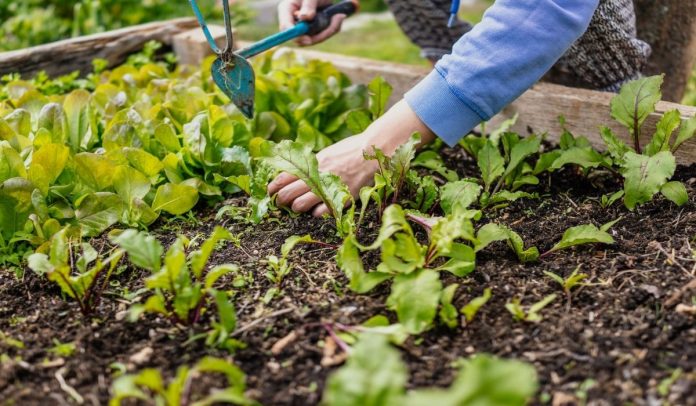
Fairly easy to construct and even easier to maintain, raised garden beds are a great way to raise plants and vegetables in the comfort and convenience of your backyard.

In a recent episode of the Exmark Original Series, “Done-in-A-Weekend-Extreme,” landscape designer and show host, Doug Scott, spoke to organic gardener Joe Lamp’l of “Growing a Greener World” about the ins and outs of raised garden beds.

Here are some of the top insights and tips Lamp’l shared.

• Why use raised garden beds? A raised garden bed can help facilitate the ideal growing environment, as most people don’t have that perfect soil naturally in their yard. Their accessibility makes them easier to work in and maintain. Plus, they’re a nice architectural design element in any landscape.

• What’s the ideal size? The main rule of the thumb applies to width. The bed should be no wider than 4 feet, as you never want to compact the soil when working. Length however, is based on personal preference and needs. As far as height is concerned, you want the roots to be able to grow out and down as much as possible — 6-inches at minimum. While 12-inches is common, anything higher is a bonus.

• What materials work best? Treated lumber is the most readily available and economical material and will likely last the longest, however, being an organic gardener Lamp’l prefers untreated hardwood, as it lasts almost as long and doesn’t contain chemicals. Other materials you have around the home and yard, such as rocks, old tubs, etc., can work too.

• Where’s the best location? Build your raised garden bed on level ground, in full sun exposure near a water supply.

DIY Instructions:

To build a 10-foot x 4-foot x 18-inch raised bed, you’ll need:

• Nine 6-inch x 6-inch x 12-foot cedar timbers

• Tape measure, t-square and marking pencil

• A saw and extension cord

• One box of 10-inch heavy-duty exterior wood screws

• Ten 24-inch x 1/2-inch rebar stakes

• Twenty 10-inch galvanized timber spikes

• Sledgehammer

• Impact drill and long drill bit

• Level

• Hammer

• Shovels

• Hardware cloth, wire cutters and fence staples

• Work gloves, safety glasses and ear plugs

• Wheelbarrow (to transport soil)

  1. Begin by cutting six, 6 x 6 timbers, each measuring 10-feet 6-inches in length. And six, 6 x 6 timbers, each measuring 4-feet 6-inches in length. Drill rebar holes in each timber.
  2. Once the first layer of bed has been placed, leveled and squared in your desired location, fasten the corners using 10-inch wood screws. Secure the entire layer to the ground with 10 pieces of rebar.
  3. Place the second layer of timbers, staggering the corners and fastening them with wood screws. Secure this layer to the first with ten 10-inch galvanized spikes.
  4. Install galvanized cloth to prevent burrowing pests from eating earthworms and destroying plants.
  5. Place the third layer of timbers (following above directions.)
  6. Fill with soil and plants.

For more tips and complete build instructions, check out “How to Build Raised Garden Beds” by visiting Exmark.com/backyard. Exmark’s Backyard Life is part of a unique multimedia destination with a focus on helping homeowners make the most of their backyard. There you can also access other series, including “Prime Cuts” and “Dream Yards.”

For an amazing crop this season, take a cue from the professionals and build a raised garden bed for best results.

Tips to Keep Kids’ Rooms Clean and Organized

0

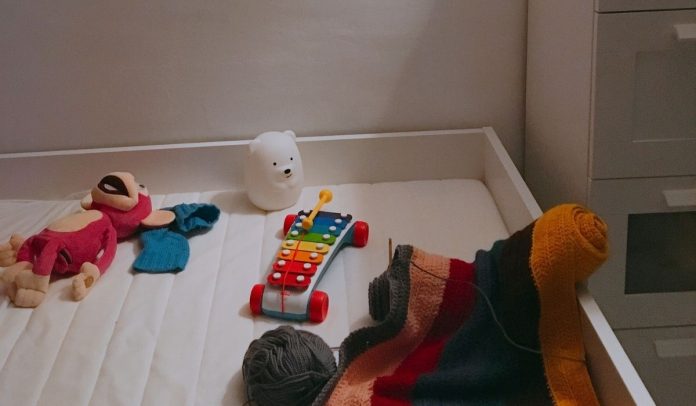
For the past year, many of us have lived, played, worked and gone to school right at home, making clutter inevitable – especially when it comes to kids’ bedrooms and playrooms.

No matter how many times parents tell their children to clean their rooms, the collection of clothes, schoolwork and toys seems to build endlessly. Take charge of the mess with these tips to create a space that’s fun and functional for kids of all ages.

  1. Prioritize Belongings. Start by considering what needs to go, what can stay and how much storage space you have available. Make it a family project by working with your kids to identify which items they love most and which things they could do without. Once you know what will be kept, prioritize space accordingly, keeping beloved items easily accessible.
  2. Organize the Stuff. Find everything a home. Bins and baskets are ideal for small toys and games with tiny pieces, while drawers and shelves are perfect for larger items. For excess items, especially young children’s toys, use clear bins to store them in closets or under beds. Not only does this help tidy the room, but it can also make old things appear new again when they are pulled out of storage.
  3. Create Labels. Getting belongings organized is one thing, but keeping them that way is another. A great way to ensure your hard work doesn’t go to waste is to label the bins or baskets. Labels make things easy to find when you need them and keep items organized when cleaning up. Creating labels with colorful Duck Tape is a kid-friendly DIY project that can help your kids feel in charge of the process.
  4. File Away Papers. For older kids, schoolwork should be separated from games and toys, which can be difficult when learning from home and space is limited. Important assignments and documents should be put in folders and binders to prevent them from getting lost and help keep the room looking neat.

Organizing school supplies and at-home desks doesn’t have to be a boring task. Customize folders for each kid or each subject with unique designs using printed Duck Tape Brand Duct Tape, or make labels with Duck Brand Chalkboard Tape.

  1. Personalize with Décor. Once the room is clean and organized, take some time to add personal touches. Allowing children to pick colors and patterns for their room can really make them feel like it is their own. If you have the space, a table or a lamp can be a fun addition. If you want to keep things simple, showcasing photos of family and friends or displaying kids’ artwork can do the trick, too.

For additional home organization tips and DIY projects, visit duckbrand.com.

By making the cleaning and organizing process a fun activity, the hope is that children will be more likely to take ownership of the space and motivated to keep it in order moving forward. However, it doesn’t hurt to revisit the process regularly to keep things fresh.

Governor Abbott, HHSC Announce Extension Of Emergency SNAP Benefits For April

0

Governor Greg Abbott and the Texas Health and Human Services Commission (HHSC) will provide approximately $254 million in emergency Supplemental Nutrition Assistance Program (SNAP) food benefits for the month of April as the state continues its response to the COVID-19 pandemic.

“This SNAP extension for the month of April will ensure that Texas families can continue to put food on the table,” said Governor Abbott. “Thank you to the USDA for this additional extension and for their ongoing partnership with the State of Texas.” 

“Texans have shown their resilience during the pandemic, and we are proud to help serve our state by providing SNAP recipients with these additional benefits,” said Texas HHS Access and Eligibility Services Deputy Executive Commissioner Wayne Salter.

HHSC received federal approval from the U.S. Department of Agriculture (USDA) to ensure all SNAP households receive a minimum of $95 in emergency allotments. Households not currently receiving an emergency allotment will now receive an additional $95 per month.  Households currently receiving an emergency allotment that is less than $95 will receive an additional allotment for the difference. Households currently receiving an emergency allotment of more than $95 will not see a change in their benefits.

The emergency April allotments are in addition to the more than $2.7 billion in benefits previously provided to Texans since April 2020.

Recipients will also continue to receive a 15 percent increase in their total benefits, which will continue monthly until September 2021. This additional 15 percent increase and the additional emergency allotment amount should appear in recipients’ accounts by April 30.

Administered by HHSC, SNAP is a federal program that provides food assistance to approximately 1.6 million eligible low-income families and individuals in Texas. Texans in need can apply for benefits, including SNAP and Medicaid, at YourTexasBenefits.com or use the Your Texas Benefits mobile app to manage their benefits.

Governor Abbott Announces 46 Participating Counties For Sixth Week Of Save Our Seniors Initiative

0

Governor Greg Abbott today announced that the Texas Division of Emergency (TDEM), the Texas Department of State Health Services (DSHS), and the Texas Military Department (TMD) have announced 46 counties participating in the sixth week of the Save Our Seniors COVID-19 vaccine initiative. The Governor announced the Save Our Seniors program in Corpus Christi last month to provide vaccines to seniors throughout the state. To date, 107 counties have participated in the program.

“The ongoing success of Save Our Seniors is thanks to the incredible collaboration of our local partners who continue to identify and connect these vaccine resources to elderly Texans,” said Governor Abbott. “I look forward to our continued partnership with local officials across the state as we get more shots in arms and keep our communities safe.” 

As part of the Save Our Seniors program, TDEM and TMD work alongside local jurisdictions to set up a central drive-through vaccine clinics in each community or administer directly to homebound seniors — these decisions are driven by local officials as they identify vulnerable residents in their communities to participate in this program.

Counties participating in the sixth round of the program are Aransas, Bowie, Brooks, Calhoun, Cameron, Cass, Coke, Dallas, DeWitt, Duval, Henderson, Hidalgo, Hockley, Hopkins, Karnes, Kinney, Leon, Liberty, Lubbock, Madison, Marion, Matagorda, Mason, Maverick, Orange, Palo Pinto, Rains, Robertson, Sabine, San Augustine, San Jacinto, San Patricio, Shelby, Sherman, Sutton, Terry, Titus, Trinity, Upshur, Val Verde, Van Zandt, Waller, Webb, Willacy, Williamson, and Wood. 

Many of these counties are participating for a second time in order to administer second doses to eligible residents. In coordination with local and state partners, counties and cities have been selected based on recent data provided from DSHS related to the following factors:

  • The state looked at the number of approved providers serving the area;
  • The state took into account total allocations over the previous 12 weeks
  • The state utilized data showing the least vaccinated counties for both 65+ and 75+ administered doses;
  • The state focused on allocating vaccine equitably across the state. 

Last month, Governor Abbott announced a new outreach partnership between the Texas Health and Human Services Commission (HHSC) and several partners to enhance the state’s Save Our Seniors program. The partnership includes the Texas Employee Retirement System, the Texas Teachers Retirement System, AARP, and Medicare health plans. Participating Medicare health plans include UnitedHealthcare, Humana, and Blue Cross Blue Shield of Texas. HHSC will work with these partners to launch a direct outreach effort through email, phone calls, and direct mail to encourage seniors to get vaccinated against COVID-19 and to provide them with the tools and information they need to receive a vaccine.

Tips to Pay for College This Fall

0

What does paying for college during life’s “new normal” and current economic climate look like? A new survey highlights parent plans and concerns regarding the upcoming 2021-2022 school year.

The College Ave Student Loans survey of parents of undergraduate students conducted by Barnes & Noble College Insights found that of those planning to help their child pay for college, 52% said the pandemic will make it more difficult to pay this fall and 45% said it’s changed how they plan to pay, with 51% using more savings, 45% borrowing more in student loans, and 27% taking out a parent loan.

Despite new challenges, the commitment to higher education remains steadfast: 93% of families agree obtaining a college degree is more important than ever.

“The pandemic has presented new obstacles, yet as this survey highlights, families are incredibly resilient and determined to help their child obtain a higher education,” says Angela Colatriano, chief marketing officer of College Ave Student Loans.

If higher education costs are on the horizon for you, the survey results suggest keeping these tips in mind:

• Anticipate spending more. Parents across the board reported college expenses being more than they expected, including college tuition and fees (81%), room and board/rent and food (77%), school activities and fees (61%) and books and supplies (57%). Plan and budget accordingly.

• Plan to use multiple sources. While 78% of parents put money aside for their child’s education, only 17% said savings could cover the full cost. Be prepared to look at a variety of funding sources.

• Maximize financial aid. Complete the FAFSA (Free Application for Federal Student Aid) every year your child attends college. This important form is the gateway to scholarships, grants, work-study and federal student loans. If your financial situation has substantially changed since last year, reach out to your school’s financial aid office for help and resources.

• Search for scholarships. Grants and scholarships were the top method used to pay for college, ahead of parent savings and income. One easy one to consider is the $1,000 monthly scholarship sweepstakes from College Ave.

• Tune up your credit. Of those surveyed, 53% plan to use student loans and 26% plan to use parent loans. Get a copy of your credit report and review your credit score, particularly if you think you may need private student loans in addition to federal. Reach out to the credit reporting agency to address any errors. Credit history and credit score will impact whether you’re approved for a private student loan, as well as the interest rate.

• Encourage your child to contribute. Sixty-nine percent of parents expect their child to help chip in and 52% expect their child to find a job while in college.

• Balance other financial commitments. When it comes to balancing other commitments, you can take comfort that you’re not alone. Fifty-eight percent of parents are stressed about balancing their retirement and paying for college. Look at your balance of retirement savings, obligations, and goals to give you a clearer picture on where you stand and what you can afford to contribute towards college.

A majority of families surveyed wish more planning resources existed. If that describes you, check out the savings strategies and insights from college and personal finance experts available at collegeave.com.

While funding the 2021-2022 school year may be more difficult than you previously anticipated, having a solid plan and knowing all your options can help ensure a college education remains within reach.