

Home Blog Page 340

My five cents…

0

Things are picking up at the Capitol this week. Senate Finance has begun hearing testimony about the budget and Senate Redistricting is continuing to hear testimony from across the state about the redistricting process. We have a few weeks before the bill filing deadline on March 12, but we are certainly busy.

Here are five things happening around your state:

1. Senate Finance Committee hearings begin

This month the Senate Finance committee began meeting to discuss the budget for the next biennium. Though this work is long and takes several weeks, it is one of the most important processes we engage in as a legislative body. The fifteen-member committee hears from every state agency about their budget requests and priorities. The committee has the opportunity to ask questions of the agency and the Legislative Budget Board, or LBB. LBB puts together detailed information about state agencies and their budgets to give members a complete picture of the state’s financial situation. The budget is organized into eleven articles. Each article pertains to a different subject matter, like Business and Economic Development, Education, and Public Safety. Our responsibility is to find greater efficiencies in our state budget, ensuring we get the most out of every state dollar.

2. TDHCA Emergency Rental Assistance fund to start accepting applications Feb. 15

The Texas Department of Housing and Community Affairs has launched the Texas Rent Relief program. This is a statewide rent and utility assistance program for qualifying households. The program can help renters with up to 11 months of past due, current, and up to 3 months of expected rent costs, utility and home energy expenses, and up to 3 months of additional assistance if funds are still available. The state received $1.3 billion from the federal government in the latest COVID-19 relief bill for this program. TDHCA will begin accepting applications for the program on February 15. To qualify, households must be at or below 80% of the area median income as well as meet other qualifications found online. TDHCA will prioritize applications for households at or below 50% of area median income level where one or more members are currently unemployed and have been for at least 90 days. Landlords are encouraged to apply on behalf of tenants, who must co-sign the application. Please go online to TexasRentRelief.com for more information. To apply, starting February 15 you can visit that website or call 1-833-9TX-RENT Monday – Friday, 8am – 6 pm.

3. Texans can use Google Search function to find COVID-19 vaccine information

Texas is one of the first states in the nation to have COVID-19 vaccine sites updated on both Google Search and Google Maps. Last week, Google launched the program. The platform has been populated with validated information from the Texas Department of State Health Services, major national grocery chains, and pharmacies. It is an easy way to find vaccine locations near you along with appointment requirements, hours, locations, and contact information.

4. Texas to receive more than 400k doses of vaccine this week

The state of Texas will receive over 400,000 doses of the COVID-19 vaccine from the federal government this week. Those doses will be shipped to 358 providers in 135 counties across the state. Of those providers, 85 are hub providers that focus on broader community vaccination efforts, including the hardest hit populations and areas. The other 273 providers will receive doses that focus on those that serve older adults, like health departments, pharmacies, health centers, community and rural clinics, and medical practices that specialize in care for older adults. The Department of State Health Services is encouraging providers to prioritize people 75 and older who are at the highest risk of severe disease, hospitalization, and death from COVID-19. Importantly, this does not change or restrict groups already eligible for vaccination.

5. Walmart to start COVID-19 vaccination in Texas, 21 other states

Last week, Walmart announced that Walmart and Sam’s Club pharmacies will start a vaccination program in Texas and 21 other states. More than 1,000 locations across those states will receive vaccine allocations from the federal government. There will be an emphasis on locations that reach customers in underserved communities with limited access to health care. The vaccine supply is still limited and will vary by location. You can schedule a vaccine appointment directly through the Walmart and Sam’s Club websites. A Sam’s Club membership is not required to make an appointment. There are several locations in East Texas. For a list of locations and more information on how to sign up, visit https://corporate.walmart.com/covid-vaccine.


AG Paxton Announces Hiring of Murtaza Sutarwalla as Deputy Attorney General for Legal Counsel

0

Texas Attorney General Ken Paxton today announced the hiring of Murtaza Sutarwalla as Deputy Attorney General for Legal Counsel.

“I am honored that Attorney General Ken Paxton has appointed me to serve the State of Texas,” said Murtaza Sutarwalla. “As the son of immigrants, this is what the American Dream can represent for those that work hard, follow the law and love their land.”

“Throughout his career, Murtaza has demonstrated his dedication to hard-working Texans, his desire to protect small businesses and his focus on the continued emergence of Texas as a leader in the U.S. economy,” said Attorney General Ken Paxton. “I believe his expertise and knowledge will provide an excellent addition to the Office of the Attorney General.” 

Sutarwalla comes to the Office of the Attorney General of Texas with more than 14 years of experience in the private sector. He received his law degree from the University of Chicago and graduated with two undergraduate degrees from the University of Texas. Murtaza brings the perspective of a business owner and job creator to the Office of Attorney General. Sutarwalla started his career with Latham & Watkins and Clifford Chance, two of the world’s largest law firms and has practiced law in Austin, Houston, Washington D.C. and abroad in the Middle East.

A Brief History of Valentine’s Day

0

February is full of mixed emotions for a lot of people, happiness, joy, romance, indifference and even bitterness. There is nothing wrong with the month itself but rather, the associations and ideas that surround it. To be specific, Valentine’s Day.

Every year we dedicate one day to endless amounts of chocolates, flowers and stuffed animals that seem to get bigger as time goes on.

I remember that even just a few years ago when i was in high school, i would be amazed with how many gigantic stuffed teddy bears I would see in the hallways. Of course, we are talking about a different setting than say, what your average joe goes through today, but, back then there seemed to be an undeclared competition on who had the biggest box of chocolates, bouquet of flowers, or stuffed animal. In some instances it was a bit over the top, as if it was all about making a statement instead of a cute gesture of love and affection.

However, when you step out of that high school bubble and into the real world, I believe that the effects of Valentine’s Day are a lot more subdued. Sure, we still see the mass advertising, and the social media posts, which in turn may or may not make others without a significant other feel miserable. Hence, the bitterness and negative feeling surrounding Valentine’s Day that I mentioned before.

But, I wonder, how did Valentine’s Day come to be in the first place and then transition to the day that it is today?

Interestingly, the history of Valentine’s Day is somewhat shrouded in mystery. The holiday is named after its patron, St Valentine but as to who was he, where did our traditions come from?

The Catholic Church recognizes that there are at least three saints named Valentine or Valentinus. One legend recounts that St Valentine was a priest that served during the 3rd century in Rome and when Emperor Claudius II decided that single men made better soldiers than those with wives and families, Valentine acted against this injustice and continued to marry young couples until he was discovered and sentenced to death.

Other stories suggest that Valentine was killed while helping Christians escape harsh Roman prisons. According to legend, an imprisoned Valentine sent out the first “Valentine’s Card” after he fell in love with a young girl, presumably the jailer’s daughter. Before his death, he allegedly wrote her a letter in which he signed “From, your Valentine” a phrase we use today. Additionally, from these retold events we have the idea of romanticism and heroism focused around one person, in this case, Valentine.

Even though these stories have been passed down through generations with no basis of fact, they all emphasize that he was a romantic and heroic figure.

Though some believe that the celebration of Valentine’s day was placed in the middle of February as the anniversary of his death or burial which may have occurred in 270 A.D. Others claim that the Christian church decided to put his feast day in the middle of February in an effort to Christianize the pagan festival, Lupercalia.

Lupercalia was a festival dedicated to Faunus, the Roman God of Agriculture as well as Roman founders, Remus and Romulus.

This festival survived the initial rise of Christianism but was outlawed near the end of the 5th century as it was deemed “un-Christian” by Pope Gelasius. He later declared February 14th as St. Valentine’s Day.

It would not be until much later that the day would definitely be associated with love and romance. During the middle ages, in England and in France it was believed that February 14th was the beginning of the bird mating season and as such it should also be a day for love and romance.

English poet Geoffrey Chaucer was the first to record Valentines day as a romantic celebration in his 1375 poem, “Parliament of Foules” saying, “For this was sent on Seynt Valentyne’s day / Whan every foul cometh ther to choose his mate.”

WORK BEGINNING ON US 59/SL287 UPGRADE AT MOFFETT

0

A virtual pre-construction meeting was held in the Lufkin District Wednesday, signaling the beginning of a new construction project in Lufkin.

Barricades will be placed on Monday, Feb. 15, on US 59/SL 287 near the Moffett overpass with work scheduled to begin Wednesday, Feb. 17, weather permitting. Motorists should be prepared to reduce speed through this work zone and as construction begins, prepare for intermittent lane closures.

The $19.3 construction project was approved by Texas Transportation Commissioners and was funded through the Unified Transportation Program in 2017. The project is designed to convert a non-freeway to meet interstate standards.

Project construction will include reconstructing main lanes and constructing two north and southbound frontage roads. Widening will begin at the US 59/SL 287 overpass at A&NR Railroad and continue from Moffett Road to SH 103 East/Atkinson Drive. The proposed improvements are designed to meet interstate standards for potential future designation as Interstate 69.

The upgrade project received schematic and environmental approval in 2007 and 2008. Right of way acquisitions were completed in the fall 2020. Longview Bridge and Road Ltd., Longview TX, will serve as contractor for the construction that is scheduled to be completed in April 2023, weather permitting.

This project is dedicated to improving safety, enhancing mobility and providing system connectivity on US 59/SL 287 from SH 103 East (Atkinson Drive) to just south of FM 2021.

As this project begins, motorists are urged to be alert to workers and moving equipment through the area. Obey all traffic control. Reduce speed and remember traffic fines double when workers are present.

For more information on road conditions and projects statewide, visit drivetexas.org. For more information on Lufkin District projects, contact Rhonda.Oaks@txdot.gov or call (936) 633-4395.

The Dos and Don’ts of Diabetic Foot Care

0

Diabetes management and foot care go hand in hand.

“Diabetes can cause nerve damage and poor circulation that puts people at risk for a wide range of foot problems,” says Barry I. Rosenblum, DPM, FACFAS, foot and ankle surgeon and Fellow member of the American College of Foot and Ankle Surgeons (ACFAS). “For people with diabetes, small foot problems like minor cuts, corns, calluses, and ingrown toenails can turn into serious complications if not addressed quickly.”

To help you prevent diabetes complications, ACFAS is offering the following dos and don’ts of diabetes foot care.

Do

• Inspect your feet daily — including the bottoms — for cuts, blisters, redness, swelling, or nail problems. You may need a mirror or the assistance of a loved one in order to examine your feet from every angle.

• Regularly moisturize your feet to avoid itching or cracking.

• See a foot and ankle surgeon for regular foot exams to prevent complications. Ongoing preventive care can reduce the risk of toe or foot amputation by 45-85 percent.

• Keep the blood flowing to your feet. Wiggle your toes and move your ankles for five minutes, two or three times a day.

• Shake out your shoes and feel for objects inside your shoes before wearing them. You may not feel a small foreign object when your shoe is on your foot, particularly if you suffer from diabetic peripheral neuropathy also known as nerve damage.

• Maintain healthy blood sugar levels. High blood sugar levels can lead to diabetic peripheral neuropathy and Charcot foot, a condition in which the bones of the foot are weakened enough to fracture.

Don’t

• Don’t use heating pads, hot water bottles or electric blankets. You can easily burn your feet without noticing.

• Don’t put your feet in hot water before testing it with your hand first.

• Don’t try to remove corns or calluses at home. Visit your foot and ankle surgeon for appropriate treatment.

• Don’t wear tight, elastic or thick, bulky socks.

• Don’t let your feet get wet in snow or rain. Wear warm socks and waterproof shoes in the winter.

• Don’t walk barefoot, even at home! You can easily get a scratch or cut.

For more foot care information or to find a foot and ankle surgeon in your area, visit FootHealthFacts.org.

“Taking proper care of feet is extremely important for those suffering from diabetes,” says Dr. Rosenblum. “Following these dos and don’ts and scheduling regular preventive care visits with a foot and ankle surgeon can help keep feet healthy and avoid serious complications.”

Governor Abbott Meets With DPS Director McCraw To Discuss Border Security

0
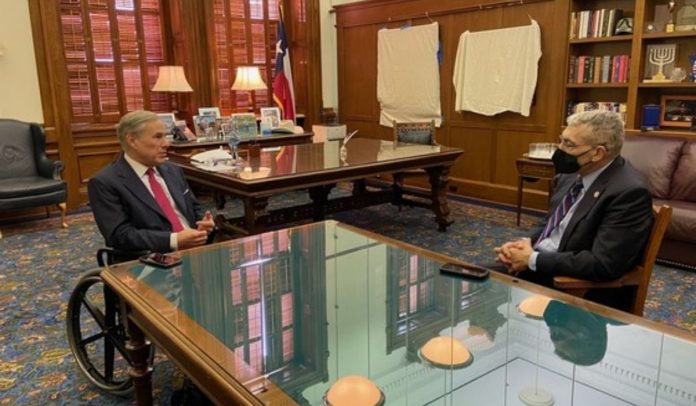
PHOTO: Office Of The Governor, 2/9/21

Governor Greg Abbott today met with Colonel Steve McCraw, Director of the Texas Department of Public Safety (DPS), to discuss safety and security along the Texas border. A readout of the meeting can be found below:

Colonel McCraw provided Governor Abbott with an update on safety and securing threats along Texas’ southern border. The Governor and Colonel McCraw discussed a recent surge of immigrants at Texas’ southern border and noted that this influx is related to the Biden Administration’s reinstatement of the ‘catch and release’ policy. The leaders discussed health and safety concerns related to this policy, including the potential spread of COVID-19 and the evolving threat of drug cartels. Governor Abbott and Colonel McCraw concluded the meeting with a discussion on strategies and solutions to mitigate the influx of immigrants at the border and keep Texas communities safe. 

The Governor’s Committee To Support The Military Releases 2020 Report

0

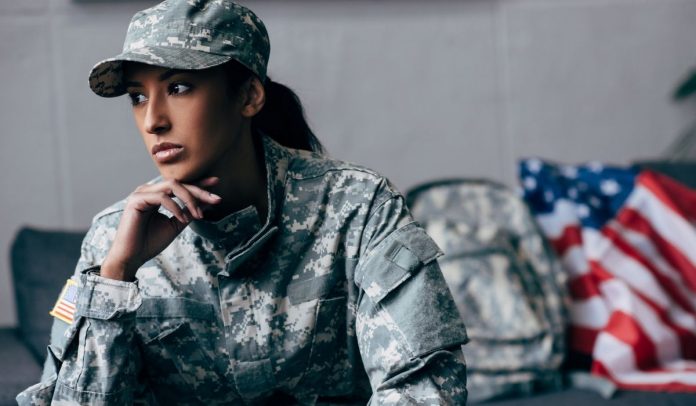
The Governor’s Committee to Support the Military today released their 2020 report with recommendations for policy changes and legislative action to improve education, health care, quality of life, workforce development, encroachment, and infrastructure as they relate to the military community of Texas. 

“I am grateful for the Committee’s hard work in developing meaningful recommendations that will improve the lives of our military members and their families,” said Governor Greg Abbott. “The 15 major military installations and Army Futures Command in Texas are not only critical to our nation’s defense, they also add over $123 billion to the state’s economy and support, directly and indirectly, more than 633,000 jobs in communities across this great state. As we work this Legislative Session to unleash the full might of the Texas economy, we must ensure that the nearly 2 million military service members and veterans, and their families, who call Texas home have the resources they need to prosper. With the guidance of this Committee, we are one step closer to that important goal.”

The recommendations include:

  1. Military Child Education Coalition: Ensure the current $500,000 biennium funding for the Military Child Education Coalition is appropriated by the Legislature to the Texas Education Agency (TEA) budget.
  2. Defense Manpower Data Center (DMDC): Continue working with federal partners to encourage data sharing between DMDC and TEA; establish a reporting process that allows TEA to measure the Military Readiness component of College, Career & Military Readiness.
  3. Interstate Compact on Educational Opportunity for Military Children: Renew efforts to amend Chapter 162 of the Texas Education Code to establish a state council for the Military Compact; incorporate input from military families and best practices from other states in determining membership.
  4. Connecting Veterans and Active-Duty Personnel to Services: Continue to seek a comprehensive information solution to assist military service members and family members that provides navigation through the vast breadth of services available but also tracks actions taken and solutions to identify both successful programs and gaps in services.
  5. Mitigate the Impact of Lost Property Tax Revenue Due to the Disabled Veterans Residence Homestead Exemption: The Legislature should continue to explore options to mitigate the negative resource impact on communities and provide aid to disproportionately impacted communities.
  6. Increase Integration Between Texas Educational Providers and Military Installation/Industry Skill Requirements: Encourage high schools, technical and community colleges, and universities to invest in programs that support advanced manufacturing and technology demands; require TEA to consider the needs of Texas military bases and military industry, and to align educational programs; encourage the Texas Higher Education Coordinating Board to conduct a similar process.
  7. Interagency Contracts between the Texas Department of Transportation (TXDOT) and the Military: Continue to pursue legislative changes that allow for TxDOT to enter into interagency agreements or contracts with military installations for federally funded maintenance, improvement, relocation, or extension of existing roads on the installation.
  8. Defense Economic Adjustment Assistance Grant (DEAAG) Program: Fully fund the DEAAG program to $30 million, leveraging the program’s 247% return on investment to help enhance military installations in Texas while protecting those installations and jobs in surrounding communities from potential negative impacts of any future Base Realignment and Closure (BRAC) or stationing decision.
  9. Encroachment on Military Training: Consider additional protections against deliberate impacts of encroachment on military training areas to include encroachment that may pose a national security threat; protections must balance individual property rights and the need for legislation or policy changes that strengthen the state’s protections against encroachment.
  10. Elimination of Regional Military Sustainability Commission in Texas Code: Eliminate Section 397A from Local Government Code, Title 12 and work with appropriate partners to identify new strategies to replace the Regional Military Sustainability Commissions’ with land/air use limitations or restrictions, regulatory strategies, or other tools to preserve military use areas inside or outside municipal boundaries.

Read the full report.

The Governor’s Committee to Support the Military was established in September 2018. The Committee is comprised of up to 22 individuals including Texas-resident veterans, community leaders, and business leaders. Essential duties of the Committee include:

  • Study and make recommendations on how best to maintain and enhance military value at existing military installations in Texas.
  • Study and make recommendations on how best to make Texas a more attractive destination for additional military missions.
  • Collaborate with local governments and chambers of commerce to explore surrounding civilian infrastructure and identify competing and complementary needs between private development, the rights of private landowners, and military necessities.
  • Examine the 2005 criteria used by the Base Realignment and Closure Commission and identify strategies to avoid future base closures.
  • Coordinate with the Texas Military Preparedness Commission and Texas Military Value Task Force.

DETCOG SPONSORING GRANT WRITING, MANAGEMENT WORKSHOPS

0

The Deep East Texas Council of Governments is teaming up with Grant Writing USA to sponsor workshops on Grant Writing and Administration.  These workshops will be for people that are wanting to learn how to find and write proposals for grants, as well as people that are wanting to manage and stay in compliance with grants that they have already received. Due to COVID-19, both workshops will be held in a virtual, Zoom format.

The Grant Writing workshop focuses on finding grants and writing winning grant proposals. Beginning and experienced grant writers are encouraged to attend. It will take place from 8:30 AM to 3:30 PM on March 9th and 10th.   Grant Writing USA is offering the workshop at a special tuition rate of $425, a $30 discount off full price, when the code “Friends” is entered at registration.   The fee includes two days of instruction, as well as downloadable PDFs of class materials.

The Grant Management workshop focuses on managing grants that have already been received and staying in compliance with pre-COVID and new grant management requirements. It is a class that is suitable for both beginning grant administrators and experienced grant administrators. This workshop will take place from 8:30 AM to 3:30 PM on March 30th and 31st. Grant Writing USA is offering the workshop at a special tuition rate of $565, a $30 discount off full price when the code “Friends” is entered at registration.  As with the Grant Writing course, the fee includes two days of instruction, as well as downloadable PDFs of class materials.

Attend both classes and receive $70 off your combined tuition.  Groups of 5 or more receive a $50 discount per person. 

If, for some reason, registrants can’t attend the Zoom classes on the dates mentioned above, they will still have access to on-demand replays for 30 days after the classes – grant writing through April 9, 2021, grant management through April 30, 2021.

For more information and to get registered for one or both workshops, visit: GrantWritingUSA.com.

Chairman James White Appointed to Chair House Committee on Homeland Security & Public Safety

0

Speaker of the House Dade Phelan named State Representative James White as chairman of the House Committee on Homeland Security and Public Safety. This is a vital committee that has jurisdiction over Texas law enforcement, the prevention of crime and the apprehension of all criminals, the provision of security services by private entities, the defense of the state and nation, terrorism response by the state, and disaster mitigation, preparedness, response, and recovery. The committee also oversees and works with the Texas Commission on Law Enforcement (TCOLE), the Texas Department of Public Safety (TxDPS), the Texas
Division of Disaster Management (TDEM), the Emergency Management Council, the Texas Forensic Science Commission, the Texas Private Security Board, the Commission on State Emergency Communications, and the Texas Crime Stoppers Council.

“I am humbled and honored to serve as chair of this committee that has a tremendous impact on maintaining safe communities,” said Chairman White. “Speaker Dade Phelan and I have firsthand experience with communities that were devastated by hurricanes and floods. We must continue to address the needs of our communities and facilitate a better response when the next
disaster strikes.”

Chairman White will be joined by Vice-Chair Rhetta Bowers of Garland in leading the committee through the various hearings that will be held this legislative session. Also on the committee are the following representatives: Vikki Goodwin (D-Austin), Sam Harless (RSpring), Cole Hefner (R-Mount Pleasant), Eddie Morales (D-Eagle Pass), Jared Patterson (RFrisco), Matt Schaefer (R-Tyler), and Tony Tinderholt (R-Arlington).

Additionally, Chairman White will continue to serve on the House Committee on Corrections and the House Committee on Redistricting. “I have served on the Corrections Committee every session since the People of Southeast Texas elected me in 2010. I am passionate about reforming our criminal justice system in order to achieve community safety and promote constitutionalism. I am eager to see the work that it accomplishes under Chairman Andrew Murr. The State of Texas is the leader in criminal justice reform and we will continue to be the leaders in the field,” stated Chairman White. “Where there is no law, there is disorder. Without order, laws aren’t worth the ink or the paper they are written with and on, respectively. Public safety ensures that we have individual freedom and local prosperity.”

Please do not hesitate to contact Saul Mendoza, Chief of Staff, with questions regarding this release at 512-463-0490 or 409-283-3700.

Chairman James White Applauds Governor Abbott’s Bail Reform Emergency Item

0

State Representative James White previously sent a letter to Governor Greg Abbott asking that he prioritize bail reform as an emergency item. Governor Abbott did just that on Monday night during his State of the State address.

“Texas has been a leader in criminal justice reform through innovative practices that focus on improving safety and reducing recidivism—and bail reform should not be the exception. Texas must take careful consideration when approaching reform so as not to follow other state’s policies that have resulted in unsafe outcomes,” wrote Rep. White on his letter dated January 28th, 2021.

As discussed in Chief Justice Hecht and David Slayton’s most recent op-ed, Texas should provide magistrates the most modern tools available to aid in the unique decision-making process. By introducing a validated-risk assessment tool across the state and providing accurate and timely access to criminal records, magistrates can use their judicial discretion to make more informed decisions when determining bond. Defendants who magistrates deem low-to-no risk should not sit behind bars solely due to financial incapacity. In the case of defendants who are deemed high-risk, magistrates should have a variety of bail and bond options that prioritize public safety, including the denial of bail.

Governor Abbott’s remarks highlighted the concerns Rep. White addressed in his letter. Additionally, the governor mentioned his support for the Damon Allen Act. Damon Allen was a Texas Department of Public Safety trooper who gave the Ultimate Sacrifice while maintaining safe communities. The Act was filed after Damon Allen’s killer was let out of jail on a $15,000 bond despite previous convictions, arrests, and violent assaults against our Law Enforcement Officers on his record. The broken bail system failed Trooper Allen by not upholding public safety and keeping dangerous criminals from our communities. Rep. White plans to file
legislation in line with the Act to ensure that we bring up our bail system to 21st Century standards.

“Solutions to this threat to public safety are available and it is critical we move swiftly and carefully when moving toward a risk-based system,” concluded Rep. White. Please do not hesitate to contact Saul Mendoza, Chief of Staff, with questions regarding this
release at 512-463-0490 or 409-283-3700.