


Home Blog Page 341

Governor Abbott, TDHCA Announce Statewide COVID-19 Rental Relief Program

0

Governor Greg Abbott today announced that the Texas Department of Housing and Community Affairs (TDHCA) has launched the Texas Rent Relief Program — the first statewide rent and utility assistance program for qualifying households throughout Texas. This program has been created to administer the more than $1 billion allocated to Texas through the latest federal COVID-19 stimulus bill. TDHCA will begin accepting applications for the program on Monday, February 15th, but Texans can visit TexasRentRelief.com starting today to learn more about qualifications, required documents, and the application process.

“The COVID-19 pandemic has placed a significant financial strain on many Texans, and the Texas Rent Relief Program will provide an incredible lifeline to households in need of assistance on their rent and utility payments,” said Governor Abbott. “I urge qualifying households to apply for this program once applications open on February 15th. The State of Texas will continue to provide the resources and support for those in need throughout the pandemic.”

“The pandemic has dealt a heavy blow to many Texas families.  The Texas Rent Relief program is for those Texans who need help to pay rent and utility bills and I encourage those who need it to apply.  These resources will provide support for Texas families who need it while our economy continues to recover,” said Lt. Governor Dan Patrick.

“Texans have been resilient in responding to COVID-19, and this program can provide short-term assistance to families in need as they emerge from the financial aftershocks of the pandemic,” said Speaker Dade Phelan.  “This program is a key component of our state’s pandemic recovery effort and will be essential to the rebound of our economy, workforce, and education system. I am thrilled that qualifying Texas families have an avenue for temporary relief on essential items like rent and utility payments when it truly counts the most.”

To qualify, households must be at or below 80% of the area median income as well as meet other criteria. Per federal guidelines, TDHCA will prioritize applications for households at or below 50% of the area median income level and households where one or more members are currently unemployed and have been for at least 90 days. Landlords are encouraged to apply on behalf of tenants, who must co-sign the application.

Beginning February 15th, applicants can submit their application by calling 1-833-9TX-RENT (1-833-989-7368) or submitting it online at TexasRentRelief.com. The call center will be open Monday through Saturday, 8 a.m. – 6 p.m.

State Representative James White Files Bill to Expand Access to Healthcare for More Texans

0

State Representative James White has filed House Bill (HB) 472 which seeks to expand health care options for Texans by allowing Freestanding Emergency Centers (FECs) to offer outpatient acute care services in addition to emergency medical services.

“Texas must utilize every health care resource available as citizens throughout the state face hospital overcrowding and, in some parts, rationing of care,” said Representative White.

HB 472 would expand FEC licensure to include acute care services in addition to emergency care. Acute care services or outpatient care includes radiology, laboratory work, immunizations, and other non-emergency physician services. HB 472 also clarifies the distinct pricing difference between emergency and outpatient care by prohibiting an emergency facility fee for outpatient services.

“Freestanding Emergency Centers are a high-quality, under-utilized resource in our state that could help with critical access to care and ease the burden on our healthcare system during the pandemic and the vaccination process,” said Representative White. “Texans deserve more options when deciding which medical provider to use and the demands of the pandemic have made that clearer than ever.”

HB 472 is similar to a bill Representative White filed during the 86th legislative session that was unanimously voted out of the House Public Health Committee, but which never made it to the House floor. If it had been signed into law, FECs would have been able to offer outpatient services throughout the pandemic, greatly easing the overcrowding faced by hospitals throughout the state and providing access to care in rural areas where hospital closures have diminished Texans’ healthcare resources.

Freestanding ERs have been recognized by the federal government as a valuable resource during the COVID-19 pandemic in 2020. In April, the Centers for Medicare and Medicaid (CMS) provided a temporary waiver that allows Freestanding ERs to receive reimbursement for treating Medicare patients during the public health emergency, providing elderly, disabled and under-served Texans with valuable healthcare options, and in December, the U.S. Congress passed a year-end spending package, which included bipartisan language to protect patients from getting “surprise” medical bills. The landmark legislation added Freestanding ERs into federal statute for the first time.

Please do not hesitate to contact Saul Mendoza, Chief of Staff, with questions regarding this
release at 512-463-0490 or 409-283-3700.

4 Ways to Uplift Small Businesses in Your Community

0

With nearly half of all Americans employed by a small business, these establishments need our support more than ever.

According to the latest Wells Fargo/Gallup Small Business Index, 46 percent of business owners surveyed have seen a drop in revenue over the past 12 months, with some entrepreneurs seeing even more severe impact.

“Small businesses are at the heart of our communities and the key to millions of jobs,” says Steve Troutner, head of Small Business, Wells Fargo. “Keeping spending dollars in local communities is an impactful way to rally around small business owners.”

Wells Fargo is sharing four ways to uplift small businesses near you:

  1. Shop local. While one-stop shopping on leading e-commerce sites can be tempting, the simple act of purchasing something from your favorite local retailer can go a long way in keeping business afloat and money in your community. Returning or exchanging gifts? Ask for store credit instead of cash. It helps keep money with a small business and makes their cash flow more stable.

Many shops have safety measures in place, such as limiting occupancy or offering contactless pick-up.

  1. Eat local. Support your neighbors by dining at locally-owned establishments. Getting takeout or having food delivered? Order directly from the restaurant rather than through third-party sites that take a cut. When it comes to food shopping, opt for neighborhood grocers, which often carry produce from small family-owned farms and other locally-sourced goods. Many offer the same curbside pickup and delivery options as major chains.
  2. Uplift diverse-owned businesses. Keep in mind that minority- and women-owned businesses have been hard hit by COVID-19. Many are counting on your patronage to survive.

To help entrepreneurs stay open and support local jobs, Wells Fargo is deploying approximately $400 million from its Open for Business Fund to nonprofits serving small businesses. The initiative focuses on increasing access to training and flexible capital that businesses can use for rent, utilities, payroll and other business needs. If you are a business owner looking for assistance and resources, visit wellsfargo.com/shoplocal to learn more.

  1. Shine a light on your favorite business. Whether it’s expanding outdoor patios and installing heat lamps or updating tech to facilitate contactless checkout, small businesses have had to get creative to stay relevant. One simple way of supporting businesses as they make these changes is to follow them on social media and give positive reviews on websites like Yelp.

As part of its “Many hearts. One community” campaign, Wells Fargo is highlighting the determination, resilience and creativity that so many small business have shown this past year.

“Community has meant everything to me,” says Kadijatu Ahene, owner of Dija’s Touch Designs, which benefitted from Wells Fargo and Local Initiatives Support Corporation working together. “The challenges we’re dealing with have brought us closer. Whether its friends and neighbors checking on me and my girls, delivering food and more, COVID has reminded us that we need each other to move forward in unity.”

Looking for Love in 2021? 5 Tips for Successful Online Dating

0

Trying out online dating for the first time or frustrated by the experience?

Below are five online dating tips from Andrea McGinty, premier dating expert and founder of 33 Thousand Dates, a coaching platform designed to help millennial and Gen X women and men navigate online dating. In her 20+ years as a matchmaker, McGinty arranged over 33,000 dates, so it’s safe to say she knows a thing or two about dating successfully!

  1. Enlist help. With over 104 million singles in America and over 30 million dating online, your online dating profile needs to stand out. A dating expert can help you craft a profile you’re proud of – and one that isn’t full of clichés like “long walks on the beach.” You hire professionals to help you exercise, clean and shop, so why not hire a dating pro to help reflect your individuality? At 33 Thousand Dates, for example, they take a personalized, proactive approach and handle the heavy lifting so that clients can have all the fun.
  2. Refresh your photos. Time to cull from the thousands of photos saved on your phone for five to 10 terrific shots. If they’re more than a year old or low-resolution, consider scheduling a photoshoot with a friend or a professional. Pose in natural light, ideally outdoors, and show off your smile. Avoid selfies and sunglasses, and include at least one full body shot that conveys your interests, whether you’re hiking, doing a tree pose, or walking along the shore. For men, shirts on unless it’s a great surf shot or you’re spiking a volleyball on the beach. Lastly, most photos should be solo – pets are warm and welcoming, but limit the shots including friends or family.
  3. Be proactive. Start with only one or two dating platforms. You can add more later, but you don’t want to be overwhelmed by all the “likes” you’ll receive! Once live, don’t wait for messages to bombard you. Instead, use the platform’s filters so you see the type of people you’re looking for – don’t be shy about knowing what you want!

“After coaching thousands of people and playing a part in 4,200 marriages, I’ve found that those with the highest level of dating success proactively work the system in person and online,” says McGinty.

  1. Arrange video chats. Set up short virtual dates to determine whether you’re willing to meet in person. Keep conversations to 10 minutes – this is enough time to get a feel for personality, looks and mannerisms. Ask important questions early to ensure your values align, and remember, chemistry only comes in person!
  2. Have fun. Now it’s time for the good stuff! Arrange drinks, coffee or brunch al fresco – these dates are less pressure, more relaxed and don’t drag on. If you’re ready to leave, say you have errands to run or evening plans. A coach can help with this part, too – 33 Thousand Dates offers expert advice on how to communicate and follow up on dates. Keep in mind, you’re seeing if you like the person enough to go on a second date, not marry them! And if it doesn’t go well, those millions of other singles are waiting to meet you.

For more tips and to learn more about enlisting help from pros, visit 33000dates.com.

Don’t continue to tread water. Take proactive steps now to date online with confidence.

Governor Abbott Releases 2022-2023 Budget With Key Priorities

0

Governor Greg Abbott today released his budget for the 2022-2023 biennium. The Governor’s budget ensures that the State of Texas continues to build on the critical progress made in public school finance, property tax reform, disaster preparedness, school safety, and numerous other achievements of previous legislatures. It also ensures that Texas has the ability to look toward the future as our economy moves beyond the pandemic and the state makes critical investments without raising taxes on hardworking Texans.

“I truly believe that Texas will be able to meet its needs and serve the taxpayers and residents of our state during this biennium and beyond,” reads the Governor’s introductory letter. “We must also look toward the future as our economy moves beyond the pandemic. We will take action so the state can remain a model for the rest of the nation by providing for a healthier, safer, freer, and more prosperous Texas.”

Highlights of the Governor’s budget:

  • Ensuring Access to COVID – 19 Vaccines and Monoclonal Antibody Therapeutics
  • Ensuring Healthcare Access for Texans with Preexisting Conditions
  • Increasing the Availability of Teleservices and Expanding Access to Broadband
  • Ensuring Compliance with the Federal Foster Care Lawsuit
  • Providing Law Enforcement Access to Training
  • Providing Additional Body Cameras for Peace Officers
  • Enhancing Capitol Security
  • Reforming our Flawed Bail Program
  • Ensuring Election Integrity
  • Addressing Learning Loss Due to COVID-19
  • Creating a Broad Foundation for Civics Knowledge
  • Attracting Jobs to Texas

View the Governor’s budget. 

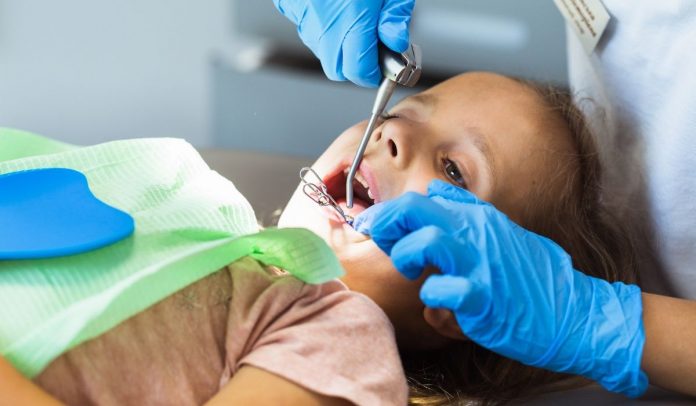
7 Ways to Improve Your Family’s Dental Health

0

Is it time to hit “reset” and start over with fresh dental habits? Doing so can help improve your health.

“Your oral and overall health are connected — and even small improvements in your oral health routine can have big payoffs in your overall well-being,” Dr. Ruchi Sahota, American Dental Association (ADA) spokesperson

To help you get started, the ADA offers seven recommendations for improving your family’s dental health routine:

  1. Brush twice a day for two minutes each time using fluoride toothpaste and a soft-bristled brush. Place the brush at a 45-degree angle to the gums. Gently move the brush back and forth in tooth-wide strokes. Brush the outer, inner and chewing surfaces of the teeth. To clean the inside surfaces of the front teeth, tilt the brush vertically and make up-and-down strokes. Parents should instruct kids to do the same.
  2. Clean between teeth daily using only interdental cleaners, such as floss or water flossers, to reduce the risk of cavities and gum disease.
  3. Eat a nutritious diet. Sugary foods and snacks can lead to tooth decay. On the other hand, calcium- and phosphorous-rich foods protect and strengthen tooth enamel. Fruits and vegetables are also good choices for a healthy smile since they have high water and fiber content, which help clean teeth.
  4. Schedule regular dental visits for prevention and treatment of oral disease. Experts say that your family can have safe dental visits, even during the COVID-19 pandemic.

Early in 2020, the ADA used science to develop guidance for dentists on extra steps they can take to help protect patients and staff, in addition to the infection control procedures they’ve always followed. According to a report published in the “Journal of the American Dental Association” in October, 2020, 99 percent of dentists are using enhanced infection control procedures and disinfection practices when treating patients.

  1. Look for the ADA Seal of Acceptance. Every product carrying the Seal has been evaluated by independent experts to be safe and effective. To earn the Seal, companies are often asked to meet higher standards than what’s required by law. Look for specific Seal bullets on the back of every Seal product package to find out how they can help keep your mouth healthy.
  2. Think twice if you’re considering DIY dental treatments. Some such fads, like oil pulling, are just not effective. Others, such as whitening with charcoal, could even cause damage. Before taking matters into your own hands, talk with your dentist to learn about the potential risks and benefits of each treatment.

“A dentist’s office is a safe place where a doctor is ensuring you’re getting quality care that will actually treat the root of your problem,” says Dr. Sahota.

  1. Ditch bad habits that can harm oral health, like nail-biting, clenching your jaw, chewing ice and using your teeth as a stand-in for tools like scissors.

For more dental health tips and resources, visit MouthHealthy.org. You can find a dentist near you by visiting FindaDentist.ada.org.

Want to improve your family’s overall health? Start with your dental care routine.

2-1-1 Day Is Coming Up – February 11, 202

0

Thursday, February 11, 2021 is 2-1-1 day in Deep East Texas.

No matter where you live in Deep East Texas, you can dial 2-1-1, and find information about resources in Angelina, Houston, Jasper, Nacogdoches, Newton, Polk, Sabine, San Augustine, San Jacinto, Shelby, Trinity, and Tyler counties. 2-1-1 Texas is a free, anonymous social service hotline available 24 hours a day, 7 days a week, 365 days a year. Whether you need help finding food or housing, childcare, crisis counseling or substance abuse treatment, 2-1-1 is all you need to know.

Most recently, 2-1-1 has been used to distribute COVID-19 information and referrals to community services, including testing, community clinics, unemployment benefits, and more. You can also dial 2-1-1 for information such as financial assistance for utilities, rent and food pantries, housing assistance, crisis counseling, and senior services, among other things.

2-1-1 Texas is a program of the Texas Health and Human Services Commission and the Deep East Texas Council of Governments (DETCOG). They are committed to helping Texas citizens connect with the services they need.

For more information, you can visit the 2-1-1 website, 211texas.org.

Pruning Trees and Shrubs

0

The questions started a couple of weeks ago. “Is it time to prune my roses?” “Can I limb up my trees down my driveway?”

This mild winter weather certainly beckons me and many others out in the landscape more. I am itching to get a head start on spring’s arrival, and pruning would be a great task for the next few weeks, with a few exceptions.

Let us begin by saying that the dead of winter is the perfect time to do any major pruning on most trees and shrubs. They are in their dormant stage and can take it quite well. Major pruning can be defined as cutting back more than one third of a plant.

Winter pruning of most shrubs such as roses can be done anytime during the winter according to a regionally known horticulturalist, Felder Rushing. In Rushing’s excellent book, “Tough Plants for Southern Gardens”, he says there are really no rules across the board for pruning roses. He says to forget any specific rules you may have heard over the years and simply cut back all the stems of repeat blooming varieties by half!

Regarding landscape trees, let me first share some wisdom that I heard many years ago from renowned Dallas horticulturalist, Neil Sperry, “no plant absolutely has to be pruned.” A plant will grow naturally so long as it has water, sunlight, and nutrients.

We choose to prune back trees and shrubs because a branch is in the way or because we simply desire a certain shape or perhaps more blooms.

Caretakers of the SFA arboretum taught me that you can typically cut back smaller perennials around the landscape by a third anytime during the growing season so long as you do not do so during time so great duress – such as in the middle of a drought. Many blooming plants will often re-bloom wonderfully with a light topping throughout the summer.

Mid-February is a great time to cut back roses. It is also a time to start pruning pecans and other home fruit trees, expect peaches. Fruit trees certainly will produce larger fruit if pruned later this winter. Fruit bearing trees do have some guidelines that you would do well to follow.

However, let us wait to prune peach trees. Pruning this fruit tree will “wake it up” and may cause it to start blooming early and risk losing a crop to frost. I will never forget the first time a commercial peach producer taught me how he waits as long as possible before pruning a peach tree. He had no qualms about pruning after the peach tree decided on its own, to start blooming.

Do not prune azaleas or other plants that bloom on last year’s growth! We wait to prune azaleas until AFTER the blooms have been enjoyed.

So, what about the crepe myrtle?

I written about this multiple times so let me discuss this carefully. Crepe myrtles are beautiful plants that can be categorized as large shrubs or small trees. Many standard varieties can reach 20 feet, 25 feet or even 30 feet tall. If you desire a smaller variety, there are dwarf types that grow only to four feet and even miniatures that stop at one to two feet in height.

I would not dare cut back the decades old crepe myrtles on our farm. I do keep the lower limbs trimmed up so we can mow under them. Additionally, the Natchez crepe myrtles that I planted seven years ago do need shaping and kept from rubbing the eves of our house.

My five cents…

0

Punxsutawney Phil saw his shadow on Groundhog Day, signaling 6 more weeks of winter. Since 1887, the groundhog in Punxsutawney, Pennsylvania has been central to the legend of Groundhog Day, celebrated every February 2. Let’s hope he’s wrong this year.

Here are five things happening around the state this week:

1. Texas Water Development Board authorized $44.5 million in Flood Mitigation Assistance

Last month, the Texas Water Development Board (TWDB) approved $44.5 million in FEMA grants for their Flood Mitigation Assistance program. The Flood Mitigation Assistance program is a competitive grant program that provides funding to states and local communities for projects that reduce or eliminate the risk of repetitive flood damage. TWDB administers the FEMA grant program for Texas. Eleven grants for Texas projects were approved, including four in Senate District 3. Montgomery County was awarded $10.07 million for acquisition projects, Orange County was awarded $1 million for elevation projects, the City of Pearland was awarded $1.35 million for elevation projects, and the City of Vidor was awarded over $400,000 for acquisition projects. That totals over $12.5 million for Senate District 3 flood mitigation projects, a much needed investment in our more flood-prone areas.

2. Texas economy ranked 9th largest in the world

According to the most recent GDP data from the International Monetary Fund, Texas entered 2021 as the worlds 9th largest economy, overtaking Brazil who was ranked 9th since 2015. This ranking places Texas in front of other large global economies such as Canada, South Korea, and Russia. Texas has a GDP of $1.9 trillion, whereas the US total GDP totals around $21.4 trillion, making it the worlds largest economy. It’s a good time to be in business in Texas and we look forward to continued growth in 2021.

3. Governor Abbott Names Broadband as an Emergency Item in State of the State Address

This week, Governor Abbott delivered his State of the State address in Austin. During the half-hour speech, he touched on topics ranging from the pandemic and the vaccine effort to the Texas

economy and job growth. In the speech, he named five emergency items, a designation that will allow legislators to vote on and pass legislation before the 60-day mark. One of the emergency items was expanding broadband access. Lack of rural broadband has been an issue in the state for a long time and something I’ve been working on for several years. The global pandemic has only shown us just how necessary high-speed internet is for telehealth, education, and business. This session I have filed legislation with Rep. Ashby that would expand broadband access. I’m thrilled the governor has made this subject an emergency item and know that we will be working diligently to pass meaningful reform to get rural Texans the high-speed internet they need.

4. US Military Medical Professionals Treating COVID-19 Patients in Lufkin

Lufkin is one of three cities across the state that military medical personnel are deploying to in response to the ongoing pandemic. They will also be deploying to Abilene and Eagle Pass. The medical personnel will be supporting local hospitals and frontline workers in treating COVID-19 patients. The military medical professionals will be working at St. Luke’s Lufkin. The hospital is also planning to expand by opening a third COVID-19 unit in preparation for another influx of cases. This all comes as two new vaccination hubs opened in East Texas. The newest hubs in Jasper and Palestine join existing hubs in Liberty County and Montgomery County.

5. Big Thicket National Preserve Issuing Free Feral Hog Trapping Permits

The Feral Hog Trapping Program is offering free hog trapping permits in the Big Thicket National Preserve. The feral hog population is becoming a problem in that area, which covers parts of Jasper, Polk, and Tyler counties. Feral hogs can be aggressive and outcompete other native animals for food, water, and resources, throwing the existing ecosystem out of balance. Hunters are allowed to trap and kill as many hogs as they can. Last year, around 250 feral hogs were removed and the preserve is hoping for even more removals this year. The program issues 50 free permits on a first-come, first-serve basis. Hunters are allowed to bring one trap and one feeder and hogs in the trap must be killed with a firearm only. No hunting dogs are allowed while hog trapping in the area. The program runs until the beginning of general hunting season in November. Permits are available at the Big Thicket’s Visitor Center.

Share the Love this National Donor Day

0

National Donor Day, aptly recognized every Valentine’s Day on February 14, is an annual opportunity to share you love and compassion with friends, family and your community. Here are a few ways you can take part:

  1. Register to be an organ donor. Registration is quick and simple and could save lives. To learn more, visit donatelife.net.
  2. Contact a blood center. Communities are in constant need of whole blood, platelets and plasma to keep patients healthy. If you’re eligible to donate, consider making an appointment, particularly if you’ve recovered from COVID-19. Your donation could help those with the virus fight it.
  3. Spread the word. Talk to friends and family about the importance of organ, eye and tissue donation and your decision to become an organ donor, as well as the importance of donating blood.