Home Blog Page 349

Delicious Ideas for Big Game Sunday

0

With just a grill and a bit of smoke, your menu will be the real MVP of the Big Game.

“The key to making snacks and appetizers more flavorful is with hardwood pellets, which can add rich, wood-fired flavor to just about anything. And, with a few modifications, you don’t even need a pellet grill to achieve that delicious wood-smoked flavor,” says Ben Madden, product manager at Bear Mountain BBQ Woods, crafter of gourmet, hardwood pellets.

Below, Madden shares his winning tips and game-day recipes.

Smoked & Roasted Wings

From classic Buffalo hot sauce to sweet teriyaki, chicken wings are always a crowd-pleaser, especially on game day. Take their flavor to the next level with this recipe for Smoked and Roasted Chicken Wings:

Prep time: 5 min

Cook time: ~ 2 hours depending on size and amount of wings

Ingredients:

• Essential BBQ Rub or poultry seasoning

• Chicken wings

• Sauce of choice

• Bear Mountain’s Savory BBQ Craft Blends pellets

Preparation:

  1. Lightly coat wings in seasoning.
  2. Arrange wings on smoker or grill at 225 degrees with at least 2 inches of space between.
  3. Smoke for 1 to 1.5 hours.
  4. Turn up grill to 350 degrees to finish. Start brushing on sauce and turning wings periodically.
  5. Once wings hit an internal temperature of 165, remove from the smoker or grill and toss in a bowl with remaining sauce. Then they’re ready to serve!

No pellet grill or smoker? Try using Smoke ‘Ems wood pellet packets in this recipe in the following way:

• On one side of grill, turn burner to medium-high heat or fire up charcoal and place Smoke ‘Ems packet directly over heat until it starts smoking.

• Place wings on other side of grill over medium heat until Smoke ‘Ems has stopped smoking. Note: For more smoke flavor, use a second packet after first has been used.

• Increase temperature under wings and continue with Step 4 above.

Beer Cheese Dip

Bring your appetizer game to a new level with this delicious recipe for Beer Cheese Dip with Pretzel Ring, from Bear Mountain BBQ ambassador, Jennifer Danella:

Ingredients:

• 1 1/2 cups cheddar cheese grated

• 1/2 cup gruyere cheese grated

• 8 ounces cream cheese softened

• 1 tablespoon Dijon mustard

• 1/2 of a 1-ounce Hidden Valley Ranch Packet

• 2 tablespoons green onions chopped.

• 1/4 cup German lager beer

• 2 tablespoons baking soda

• 1 can biscuits

• 1 large egg, mixed with 1 tablespoon water, for brushing biscuits

• 12-inch cast iron skillet

• Bear Mountain’s Bourbon BBQ or Savory BBQ Craft Blends pellets

Preparation:

  1. Preheat pellet grill to 350 F.
  2. In large bowl, combine 1 cup cheddar, gruyere, cream cheese, Dijon mustard, Hidden Valley Ranch seasoning, beer and 1 tablespoon green onions. Mix evenly.
  3. Cut biscuits in half. Roll each half into a ball, then slice an X across top.
  4. Boil 2 cups water in medium saucepan. Once boiling, add baking soda and mix immediately.
  5. Add biscuits in batches and cook until puffy, approximately 1 minute. Remove and transfer to skillet, forming ring along inside edge.
  6. Brush biscuits with egg wash. Sprinkle with salt.
  7. Transfer dip to center of skillet. Sprinkle with remaining cheddar.
  8. Bake until biscuits are golden and dip is bubbly, 30-35 minutes.
  9. Garnish with remaining green onions. Serve!

For more recipe ideas and grilling tips, visit bearmountainbbq.com.

By adding smoke to your Big Game playbook, you will score big long before kickoff.

Practice Fire Safety this Holiday Season

0

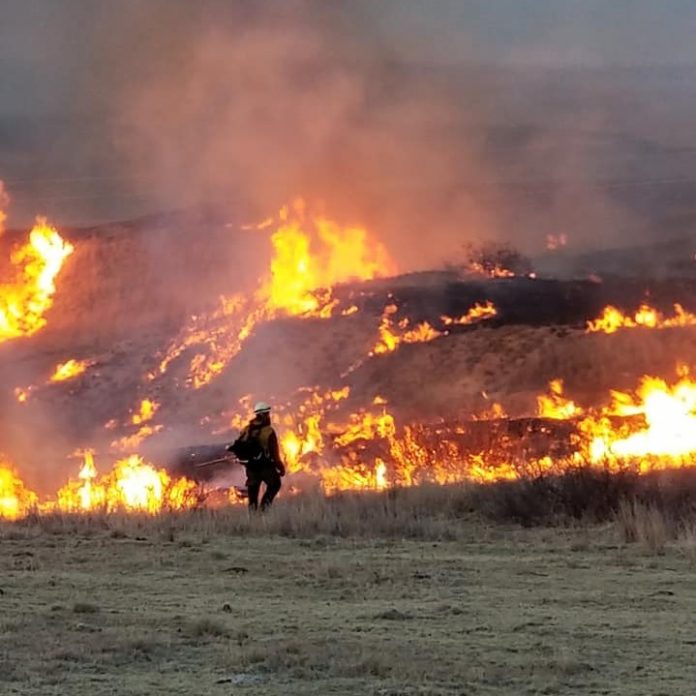
Increased wildfire potential is expected across much of the state early this week due to approaching dry cold fronts and high temperatures. Dry fuel conditions will expand north from the southern Hill Country into the Rolling Plains, southern High Plains, eastern Hill Country and Cross Timbers regions this week, aligning with the pre- and post-frontal winds to create an increase in potential wildfire activity.

“Most wildland fires this time of year occur just before or just after a frontal passage,” said Brad Smith, Texas A&M Forest Service Predictive Services Department Head. “These fronts often pass through with little precipitation, but they do bring increased wind before and after the front passes. These increased winds can help to spread fire in a landscape that is full of freeze-cured grasses.”

Recent precipitation has favored east Texas and the High Plains, leaving widespread rainfall deficits in much of the western two-thirds of the state. Residents should stay current with local fire weather forecasts due to the rapidly changing fire environments this week.

Texas A&M Forest Service urges everyone to be careful when participating in activities that may start a wildfire or house fire and practice fire safety this holiday season. One spark can ruin a holiday.

Wrapping paper and tree recycling

The danger doesn’t end just because the holidays are over. In Texas, careless debris burning causes the largest number of human-caused wildfires. Unsafe burning of wrapping paper, gift boxes and Christmas trees after the holidays could spark outdoor fires. There are several alternatives for safe disposal.

Chip the tree and use the material as mulch in landscaping beds. Cut the trunk of the tree into small pieces to use as pathway edging. Composting is a great way to dispose of your tree and tissue paper. Remove tape, ribbons, and bows and recycle the wrapping paper, or save it to use again. Repurpose other items such as newspaper or pillow cases to wrap presents.

Residents should pay attention to county burn bans and avoid all outdoor burning until conditions improve. Burn ban information can be found by contacting local fire departments or by visiting https://tfsweb.tamu.edu/TexasBurnBans/.

Firewood safety

Another fire hazard during the holidays is firewood stacked too close to buildings. Firewood is often cured, or dried, so it is easier to light in a fireplace. This drying process does not just make it easier to start a fire in the chimney—it makes it easier to light everywhere. When firewood is stacked too close to a home, it can lead a wildfire right up to the structure. Keep firewood stacked at least 30 feet away from all structures.

Fireworks safety

Fireworks are often used to mark special events and holidays. When using fireworks during the holidays, don’t let your fun turn into flames. Check for local restrictions on fireworks and burn bans before use. Fireworks should be used outdoors on flat, smooth surfaces away from dry grass and flammable materials. Always have a water source nearby in case a fire ignites while using fireworks.

Practice fire safety while enjoying the outdoors

Campfires can be a great source of warmth and fuel for cooking, but be sure to keep these safety tips in mind. Locate a safe spot for your campfire, away from anything flammable and far from overhead hazards. Pile up rocks around your fire to help keep the wind out and fire embers in. When you are done with your campfire, fully extinguish it. Drown, stir and feel the area for heat. Hold your hand just above the wet ashes–if you feel any residual heat, continue to add water and stir. Remember, if it’s too hot to touch, it’s too hot to leave.

When hunting, be aware of any action that could cause a wildfire. Hot exhaust systems could ignite dry grass. Park only in designated areas or in areas free of anything that can catch fire. Your ammunition type matters when hunting; steel core and full metal jacket ammunition have the highest potential to start wildfires.

People and their activities cause more than 90% of wildfires in Texas.

The National Weather Service has issued a La Nina Advisory which states there is a 95% chance La Nina conditions will be present through February and a 65% chance La Nina will persist through April. Typically, the La Nina pattern brings warmer and dryer than normal conditions to Texas during the winter and spring. This translates to less rain (increased drought) and warm temperatures leading to dry vegetation for large areas of the state creating an increased risk for wildfires.

“An active winter and spring wildfire season is anticipated across Texas,” said Karen Stafford, Texas A&M Forest Service Prevention Program Coordinator. “Residents can take steps now to protect their homes and loved ones. Texas A&M Forest Service encourages residents to be mindful of any outdoor activity that may cause a spark.”

If a wildfire is spotted, immediately contact local authorities. A quick response can help save lives and property.

For information on wildfire prevention, please visit the Texas A&M Forest Service website at

http://tfsweb.tamu.edu.

Woodland Heights Administers First COVID-19 Vaccines to Frontline Healthcare Workers

0

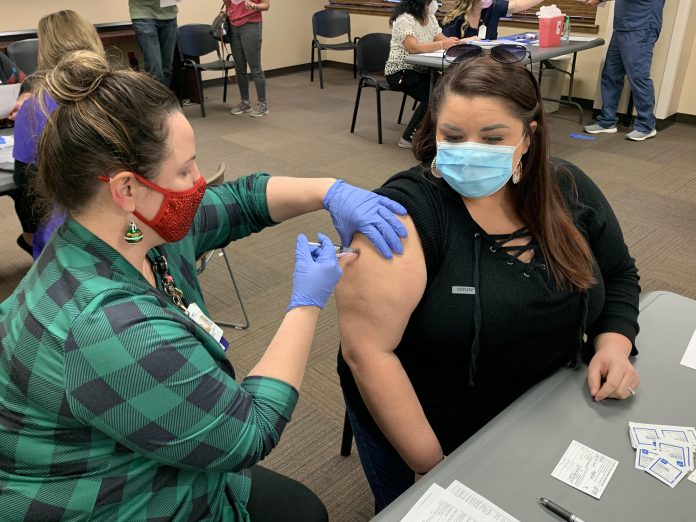
Nearly 100 employees and physicians received the first of the Moderna COVID-19 vaccine this past Monday. The facility received the immunizations Monday morning and wasted no time in getting them to the front line employees and physicians.

“We are happy to have this extra protection to offer to our staff and physicians,” states Drew Emery, CEO of Woodland Heights. “Our team members and medical staff have been fighting this virus for going on a year now and this extra layer of protection is an important step in that fight.”

The Moderna vaccine requires two shots for the appropriate immune response. All who are receiving the vaccine now will receive the booster shot in four weeks.

Data available so far have shown that the Pfizer and Moderna vaccines are around 95% effective. This is a very effective vaccine since the typical influenza vaccine is usually 40-60% effective at preventing the flu.

“Although we do not plan to make the vaccine mandatory, we anticipate many of our healthcare workers will choose to be vaccinated.” States Emery.

An Update from Trent Ashby

0

Over the last year, many Texans have faced tougher challenges than ever before. Many have lost their jobs to an economic downturn and others have lost loved ones to COVID-19. While it can be easy to opine about the loss and struggles of 2020, it is important to remember that we end each December celebrating the greatest gift of all — the birth of our Lord and Savior, Jesus Christ. It’s my sincere hope that during your well-deserved time off with friends and family, you take an extra moment to give thanks for the little moments of joy the Lord has brought us this year, and pray that He will continue to demonstrate His love and grace in 2021.

With that, here’s an update from your State Capitol. . .

Capitol Update

At the time of my last update, the State of Texas had just announced it’s allocation of doses of the COVID-19 vaccine from the Centers for Disease Control (CDC). The first shipment of the 1.4 million doses – which will be delivered in-full by the end of December – arrived on time the week of December 14th. At this point, over 224,000 doses have been delivered to 110 hospitals and medical schools, spanning over 34 counties. This initial vaccine allocation will immediately begin the process of protecting our frontline hospital workers who have been fighting the disease since March.

While this advancement is certainly something worth celebrating, and leaves reason to believe that Texas is fast on it’s way to overcoming what has been a tumultuous year, I want to take a moment to underscore what I think was a mistake in the vaccine’s initial rollout plan: the exclusion of rural hospitals on the initial list of providers receiving the vaccine.

As I detailed in a letter to Department of State Health Services Commissioner John Hellerstedt, many rural Texas counties are experiencing a higher proportional surge in COVID-19 cases than their urban and suburban counterparts. Knowing that our state’s policy pledges geographic diversity as it concerns access to the vaccine, we were expecting our fair share in the initial rollout. That was not the case.

Though we may only represent 15% of the state’s growing population, rural Texans expect equity when it comes to critical access to healthcare. I’ve heard from numerous physicians and other frontline healthcare heroes who are desperately waiting for our vaccines to arrive. Rest assured that my office will continue to strongly advocate on behalf of our region, as well as the 157 rural Texas hospitals who have yet to receive any doses of the COVID-19 vaccine.

As always, please do not hesitate to contact our office if we can help you in any way. Our District office may be reached at (936) 634-2762.

Drug-Free All Star Semester Wrap-Up and Group Photos

0
Diboll High School Drug-Free All Stars are front row, left to right: Natalie Lopez, Alexus Shurley, Halle Rice, and Emma Williams. Back row, from left to right, are Julissa Montoya, Alyssa Garza, Noah Farr, Reagan Toole and Jessica Stephens.

This semester our Angelina County Drug-Free All Stars have committed themselves to volunteer work and raising awareness of underage drug, alcohol, and tobacco use in our communities. Throughout this semester the Drug-Free All Stars have held virtual meetings with Texas Alcohol Beverage Commission agent Thomas Matthews, Judge Paul White and his Drug Court, and the Family Crisis Center of Deep East Texas. All Stars have also participated in school and community activities to raise awareness of the consequences of drug, alcohol and tobacco use. Activities include: creating presentations for middle school students during Red Ribbon Week; designing social media posts for teen drug, alcohol, and tobacco prevention; participating in a cigarette butt pick-up for Great American Smoke Out; and participating in a holiday-themed Project Sticker Shock to combat drinking and driving during the holidays. Recently, All Star Coordinator Abby Baker arranged for group school photos for the Drug-Free All Stars. These students are role-models in their schools and communities, and we look forward to what they are able to accomplish next semester!

Since 1988, The Coalition has focused on eliminating the use of harmful substances by affecting public policy, laws, attitudes and behaviors, all in an effort to foster healthy life-long choices for the local community. For more information about Drug-Free All Stars, contact Abby Baker at The Coalition at 936-634-9308.

Fruit In Your Stocking

0

Do you remember if Santa ever left you oranges, or even an apple, in your stocking? I do. The cool stuff was on top and the remainder of my brother’s and my stockings was, indeed, fruit.

I remember as a child growing up that every Christmas Eve when we were asleep, Santa Claus would pay us a visit and leave behind an assortment of gifts. It’s funny that Santa never wrapped our gifts, but he did for some of my friends down the street. Hmm… At our house, wrapped gifts were from mom and dad, and grandparents.

Almost forgotten, after finding Santa’s gifts each year, were the stuffed stockings. As I got older, the smaller items that can be put into a stocking have become more and more interesting to me as some really nice gifts are smaller in size.

But the fruit! What’s up with that?

Without fail, each of us would find our stockings filled with oranges, tangerines, the occasional apple, assorted nuts, and maybe some chocolates. While I was eager to eat the candy, I never paid much attention to the fruit and nuts.

I remember once asking my parents why Santa would think that giving us ‘groceries’ (fruit and nuts) was such a good idea. Although I do not remember their exact answer, it went something like this: “Santa has been leaving fresh fruit, nuts and candy in children’s stockings for a long time.”

Long ago, these items must have been considered wonderful treats because there was no way to get fresh fruit and nuts all over the world year-round. For all but the very wealthy, this Christmas gift was the only fresh fruit that they would get to enjoy all winter and well into the spring.

If you do some quick research, it appears the custom of oranges actually began in the 1880s with the advent of the cross continental railway system. By the twentieth century, Santa Claus, working with the rail roads and the local seasonal availability of fresh oranges around winter time, made it possible for most children to get a fresh orange, or other fruit, at the bottom of their stocking on Christmas.

So if that explains how we starting getting fruit in stockings, where did the idea of putting fruit in a stocking truly originate? For that answer we need to go back a bit further to St. Nicholas, the precursor of Santa Claus.

Born in a village on the shore of what is now part of Turkey, he inherited a fortune but spent his life helping the poor and the persecuted, and eventually became a bishop in the new Christian church.

As the story goes, Bishop Nicholas learned of a poor man with three daughters who had no dowries and hence could not find suitors to marry them. The next night Nicholas returned and tossed three bags of

gold for the daughters’ dowries through the chimney, which happened to land in the stockings of the three maidens which they had hung to dry in front of the fireplace.

The bags of gold turned into balls of gold which are now symbolized by oranges! Bishop Nicholas is often portrayed in pictures wearing the red ceremonial robes and miter (or headdress) and holding the staff of a bishop, as well as holding three gold balls, gold coins, or pieces of “gold” fruit.

So, you can be assured I’ll be checking my family’s stockings for oranges. Perhaps we may event find the “Cuties” or “Halo” brand of mandarins. Those fruits are quite tasty.

Keep Holiday Laser Lights Out of the Sky

0

The Federal Aviation Administration (FAA) issued a warning today that holiday laser-light displays can be dangerous for flights when aimed into the sky. The agency receives reports from pilots who are distracted or temporarily blinded by residential laser-light displays. This creates a serious safety risk.

The concentrated laser beams reach much farther than homeowners may realize. The FAA will ask homeowners with laser-light displays that affect pilots to adjust or turn off the displays. A refusal to do so could lead to a civil penalty.

Laser incidents from other sources such as laser pointers also pose a serious risk throughout the year. In 2019, the agency recorded 6,136 laser events. From January 1 to November 30, 2020, the FAA recorded 6,079 laser events.

Intentionally aiming a laser at an aircraft is a serious safety risk and violates federal law. The FAA works with federal, state and local law enforcement agencies to pursue civil and criminal penalties against people who purposely aim a laser at an aircraft. The agency may impose civil penalties of up to $11,000 per violation.

‘Tis the Season for Ginger

0

Ginger is not just spicy, sweet and delicious, it’s also tremendously good for you. And the holiday season is the perfect time to pack a punch with it in everything from the cookie tray to the cocktails.

Here’s why and how to include this efficacious superfood in your holiday festivities.

• Be good to yourself: Amid the COVID-19 pandemic and flu season, a nutritious immunity-boosting diet can help you take good care of your health. With its anti-inflammatory and antioxidant properties, ginger boasts a wide range of health benefits, making it a great ingredient to include in your winter culinary repertoire. What’s more, ginger can help counteract some of the effects of an indulgent holiday season, as it promotes digestive health and calms nausea.

• Embrace its versatility: Ginger goes far beyond such holiday classics like gingerbread houses. With a little creativity, it can be incorporated into every course of your holiday meal, adding a rare depth of flavor few other ingredients can match. Reed’s Crystallized Ginger makes it easier than ever to add that burst of spicy sweetness to seasonal recipes with its diced, ready-to-eat baby ginger root.

So, consider wowing your family! Whip up a batch of ginger-carrot soup, prepare a ginger-based salad dressing, top your roast with a ginger-gravy or simply garnish your favorite cocktail.

• Go for the real stuff: To amp up the flavor and health benefits, use only ingredients incorporating real ginger. Just be sure to read the label. If you’re like the one in three ginger ale drinkers who reach for this bubbly beverage because you’re looking for a drink with actual ginger, you may be surprised to learn that most mainstream ginger ales contain almost no real ginger.

For holiday cocktails or enjoyed straight, try Reeds Real Ginger Ale, which is the only ginger ale on the market made with real, fresh ginger. Its original variety is non-GMO, packed with 2000 milligrams of organic pressed ginger and made with no artificial flavors, no artificial colors, no artificial preservatives and no high fructose corn syrup. There’s also a zero sugar variety too. Certified-ketogenic, it uses the same ingredients without the cane sugar. For more information, as well as holiday gift-giving and recipe inspiration, visit drinkreeds.com.

A satisfying spice known worldwide for its wellness benefits, you can give your family the gift of flavor and health by putting ginger front-and-center this holiday season.

DPS Ramping Up Move Over/Slow Down Enforcement

0

The Texas Department of Public Safety (DPS) is reminding motorists the department is continuing its enforcement efforts across Texas focusing specifically on violations of the state’s Move Over/Slow Down law.  These periodic enforcement operations by DPS Troopers are planned throughout the year at various locations in Texas, with several operations planned in November. One of those operations will take place in the Beaumont District area throughout the day on Wednesday, Dec. 16.

The law, originally passed in 2003, requires motorists to move over or slow down when certain vehicles – including police, fire, EMS, Texas Department of Transportation (TxDOT) vehicles and tow trucks – are stopped on the side of the road with emergency lights activated. As a result of the 86th Legislative Session, highway maintenance or construction vehicles under contract with TxDOT, utility service vehicles, and stationary solid waste or recycling vehicles were added to the list of vehicles that require motorists to move over or slow down.

Specifically, Texas law states that a driver must either:

·         Vacate the lane closest to the applicable vehicles stopped on the side of the road (if the road has multiple lanes traveling in the same direction) or

·         Slow down to 20 mph below the speed limit. (If the speed limit is below 25 mph, the driver must slow down to 5 mph)

Drivers should only move over if they can do so safely and legally; otherwise, they should slow down.

Violations of the law can result in a fine of up to $200; the fine increases to $500 if there is property damage.  If violators cause bodily injury, they can be charged with a Class B misdemeanor, resulting in possible jail time and a maximum fine of $2,000.

Data collected from 2019 shows that DPS Troopers issued more than 27,900 warnings and citations to motorists violating the Move Over/Slow Down law. Through November of this year, Troopers issued more than 11,100 warnings and citations for violations of the law. In the Southeast Texas Region, the majority of those violations this year occurred on I-10 and I-45.

From January 2016 through January 2020, Texas DPS Troopers have been in 65 stationary crashes where their vehicle or the Trooper was struck while performing a law enforcement duty on a highway.

Cedar Fever – Explained

0

Cedar fever season is almost upon us, and at a time when having a fever – or even catching a slight cold – is borderline taboo, it’s more important than ever to understand the symptoms and the source of this common, central Texas allergy.

For starters, cedar fever isn’t a flu or a virus – it’s an allergic reaction to the pollen released by mountain cedar trees. In Texas, the predominant species of mountain cedar is the Ashe juniper.

“Cedar fever is the worst west of I-35, where you have primarily juniper mixed in with oaks and some other species,” said Jonathan Motsinger, the Central Texas Operations Department Head for Texas A&M Forest Service. “And because all of those junipers are producing pollen at the same time, you’re going to get a higher concentration of pollen in the air.”

This is one of the primary factors contributing to cedar fever – the sheer quantity and density of Ashe junipers in central Texas. According to Robert Edmonson, a biologist for Texas A&M Forest Service, the pollen from Ashe junipers isn’t particularly allergenic or harmful – it’s just so concentrated that, even if you aren’t generally susceptible to allergies, it could still affect you.

“There’s just so much pollen in the air,” said Edmonson, “it absolutely overwhelms the immune system. It’s like trying to breathe in a dust storm.”

Since that pollen is wind disseminated, cedar fever can affect individuals far removed from areas with a high-concentration of juniper trees. And the source isn’t limited to Ashe junipers: in more eastern parts of the state, there are also eastern redcedars that pollinate around the same time—between December and January—and they can induce a similar response from people’s auto-immune systems.

Besides the sheer quantity of pollen released, cedar fever is mostly problematic because of when that pollen is released. Most trees pollinate in the spring, when we’re expecting to have allergies. Ragweed pollen and mold spores can contribute to allergies in the fall, but very few plants pollinate during the winter. Cedar trees are the exception—they are triggered by colder weather—and in Texas, their favorite time to release pollen is right after a cold front.

“Following a cold front,” said Edmonson, “the air dries out, we get some wind, and the pressure is different. Under those conditions, every single pollen cone on a juniper tree will open at one time, and it looks like the trees are on fire. It looks like there’s smoke coming off of them.”

While this creates for some fascinating, and borderline mesmerizing, imagery, it can also lead to some serious misery. And for people new to the central Texas region, or unfamiliar with cedar fever as a whole, it can lead to genuine confusion since the pollination period of mountain cedar trees is smack dab in the middle of flu season. It’s not uncommon for people experiencing cedar fever to mistake their symptoms as a cold or the seasonal flu, especially given the variety of symptoms triggered by cedar fever. These include fatigue, sore throat, runny nose, partial loss of smell, and – believe it or not – some people actually do run a fever.

This year is going to be particularly problematic, since many of the above symptoms align with the novel, pandemic-inducing coronavirus. But there are a few tell-tales to look out for. First of all, if you are running a fever, cedar pollen will rarely cause your body temperature to surpass 101.5°F. If your fever exceeds that temperature, then pollen likely isn’t the cause.

There are also a few symptoms of cedar fever that aren’t linked to the coronavirus, like itchy, watery eyes, blocked nasal passages, and sneezing. But there is one “dead giveaway” that, according to Edmonson, should always steer you clear. “If your mucus is running clear,” he said, “then it’s an allergy. If it’s got color, then it’s probably a cold or the flu.”

You can treat cedar fever by taking allergy medications and antihistamines, but you should consult with your physician or health care professional before taking new medications. You can also try and anticipate the pollen by tuning in to your local news station: many of which will give you the pollen count and can predict when it’s going to be particularly bad. On those days, it’s smart to keep windows and doors closed, to limit the amount of time you spend outdoors, and to change air conditioning filters in your car and in your home.

Removing cedar trees from your property isn’t recommended primarily because the pollen is airborne and—since they often wait to release their pollen until it’s cold, dry, and windy—that pollen can blow for miles. It’s also important to note that only male juniper trees release pollen.

“The male trees have pollen cones,” said Motsinger, “and the female trees have berry-like cones, which are very inconspicuous, but that’s what’s pollenated from the male trees.”

While junipers are notorious for releasing their fever-inducing allergens, they also have immense health benefits. Their berries, for instance, are used to make medicines and oils that can treat a variety of ailments, from an upset stomach to a snake bite. They are also high in nutrition and vitamins, providing a sustainable source of food for wildlife and soil enrichment, and they grow in a terrain that isn’t particularly hospitable to other species of tree. Most importantly, though, they provide the mental, physical, and environmental health benefits of trees and forests everywhere.

Ultimately, mountain cedars are really only singled out for the unusual time of year in which they pollinate.

“There are plenty of trees that produce copious amounts of airborne pollen,” explained Edmonson. “Coniferous trees do it, and oak trees can be just as bad in the spring. You get this light dusting of green everywhere, and that’s all pollen.”

While cedar fever might sound and seem particularly hostile, Ashe junipers are really just a species like any other, feeling out the conditions, and waiting for the perfect moment to release their pollen in order to set their offspring up for success come springtime.

For more information about how to identify Ashe junipers and/or eastern red cedars in your own backyard, check out the Texas A&M Forest Service’s Texas Tree ID webpage or the My Tree ID mobile app. You can also see the distribution of junipers across the state via our Forest Distribution App, which can identify the distribution of native tree species across the state of Texas.

Contacts:

Robert Edmonson, Biologist, Central / West Texas Operations, Texas A&M Forest Service, redmonson@tfs.tamu.edu, (830) 868-7949

Jonathan Motsinger, Central Texas Operations Department Head, Texas A&M Forest Service | Austin Regional Office, jmotsinger@tfs.tamu.edu, (512) 339-6548

Stephen O’Shea, Communications Specialist, Texas A&M Forest Service, stephen.oshea@tfs.tamu.edu, (979) 458-6649