Home Blog Page 351

5 Tips for a Safer Digital Experience This Holiday Shopping Season

0

Online holiday shopping is booming this year, as more consumers avoid brick-and-mortar stores in an effort to socially distance.

According to a national consumer survey by Experian, 62 percent of shoppers will buy from the comfort of their computers. But with many worried about being a victim of identity theft and fraud, it may not be such a jolly experience.

In fact, 57 percent of those surveyed feel there’s a greater risk this year of identity theft because of COVID-19, while 18 percent of survey respondents have already been affected by a coronavirus-related scam. However, even though consumers are concerned about identity theft, only 49 percent of those surveyed shop on protected internet connections and only 47 percent check if the websites are secure.

“With increased online traffic occurring, the holidays are always a ripe period for cybercriminals. However, this year is even more attractive for hackers,” says Michael Bruemmer, Experian vice president of Consumer Protection. “Consumers need to make sure they’re following good security practices to keep their information and financial accounts safe and retailers should be vigilant so that shoppers have a positive customer experience.”

For a safer digital experience this holiday shopping season, consumers should consider the following tips:

  1. Don’t use public Wi-Fi: Public networks make it easier for hackers to intercept data and steal sensitive information. Consumers should only enter credit card information or other sensitive data on their phones or computers from home or on a private network, or use a secure virtual private network (VPN) connection.
  2. Consider identity theft monitoring: A product like Experian IdentityWorks helps monitor financial accounts and credit reports to identify possible fraud, such as a credit card account being opened in one’s name. Offering fraud resolution support and real-time alerts, comprehensive identity theft monitoring can save consumers valuable time when it matters most.
  3. Change passwords: With a password manager, consumers can create strong passwords for online accounts, and change them regularly.
  4. Use secure websites: Consumers should only shop on websites they are familiar with and that have a URL that starts with “https” rather than “http.” Https indicates the website has a secured connection, making it much harder to hack.
  5. Don’t use a debit card: Credit cards offer much more protection for online purchases than debit cards. If fraud occurs, the money is not gone from an associated checking account and a claim can be filed with their card issuer.

Additional survey data can be found by visiting experian.com/blogs. For more tips to protect against identity theft, visit the Ask Experian blog at experian.com/education.

While scams abound this time of year and this holiday season is presenting additional security threats, being proactive can help put a stop to cybercriminals and hackers.

An Update from Trent Ashby

0

As holiday decorations go up and temperatures come down, we know that the Christmas season is upon us. Though the holidays might seem unusual without the ordinary hustle and bustle, we should find pleasure in carrying out our holiday preparations by remembering what Christmas really is — a celebration! In the coming weeks, I hope you and your family go the extra mile in celebrating the season. Whether putting up an extra wreath or Christmas tree, baking more cookies or treats than normal for the kiddos, or just cranking up the Christmas music a little louder, let’s go out of our way to make the days merry and bright in celebrating the birth of our Lord and Savior, Jesus Christ!

With that, here’s an update from your State Capitol. . .

Capitol Update

Governor Abbott recently announced that the Centers for Disease Control and Prevention (CDC) has made an initial allotment of over 1.4 million doses of the COVID-19 vaccines to the State of Texas for the month of December. These vaccines are scheduled to arrive in Texas the week of December 14th and will be distributed to qualifying providers across the state who will administer the immunizations based on plans developed by the state’s Expert Vaccine Allocation Panel (EVAP), which was created by the Department of State Health Services (DSHS) to identify those who should be vaccinated first to provide the most protection to vulnerable populations and critical state resources.

EVAP has recommended, and DSHS Commissioner of Health John Hellerstedt has approved, health care workers likely to provide direct care for COVID-19 patients and other vulnerable residents to be the first group to receive the vaccine, followed by staff at hospitals and long-term care facilities, emergency medical services personnel and home health care workers. The State will then prioritize frontline workers providing critical services and preserving our economy, as well as vulnerable populations who are at greater risk of severe disease or death if they contract the virus. Importantly, the CDC has indicated that additional vaccine allotments may be made later this month for December and increased allotments are expected in January and the following months.

The announcement of vaccine availability in the very near future provides us with a renewed sense of optimism. While the light at the end of the tunnel continues to brighten, it’s imperative that we remain vigilant in our efforts to stop the spread by practicing healthy habits to protect others and expedite the process of finally getting back to normal.

As always, please do not hesitate to contact our office if we can help you in any way. Our District office may be reached at (936) 634-2762.

Starting Fruit Tree from Seed

0

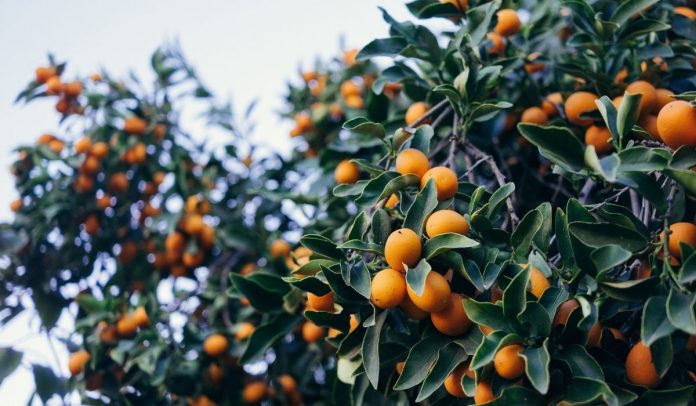
An old friend of mine, Joe Noel, asked me how to germinate a seed from some fruit he had. That is a request that I tend to get frequently. “I had the best peach the other day, and I kept the seed and want to grow a peach tree so I can have my own fruit just like this” the question goes.

Homeowners and amateur fruit growers often like to experiment and grow tree fruit from seed. The first difficulty is germinating a seed and expecting it to produce in our climate. The second challenge is getting it to taste as good you the one you ate.

Many of our fruits come from climates much different than ours. Think of citrus from Florida. While it is true that we can grow some varieties of citrus here, it is highly doubtful that variety that takes Florida’s weather would make it through our winter.

Additionally, the fruit that you so enjoyed was obviously harvested off a tree variety that produces a good type of ‘fruit’. But the seed within the fruit has a genetic combination of the tree variety it grew on the whatever pollen it was that pollinated it. So, the tree grown from seed may certainly not produce fruit exactly like the fruit we saw and ate.

Now, seed from an apple will produce apples, peach seeds will produce peach trees, and so on. But the fruit, however, will have a mixture of the two parent’s characteristics. Although this may be disheartening for the person trying to preserve that favorite fruit, it should be pointed out that many of our current cultivars were discovered as chance seedlings. Several good examples with apples include Delicious, Golden Delicious, Granny Smith, and McIntosh.

If you want to give it a try, please do so and let everyone know if you come up with a better variety.

Another reason for growing plants from seed is to produce seedlings onto which you can vegetatively propagate a desired cultivar. Let’s say the resulting tree does not match expectations. You do still have the option of grafting a known quality pear variety onto the pear tree you grew. Grafting is an excellent and dying horticultural art whereby you can take the genetics from a good tree and change the fruiting wood (or everything above the roots) of a similar species tree.

In either case, tree fruit can be grown from seed if handled properly. There are some basic methods that can be used. Both methods require a period of after ripening of the seed. Tree fruit seeds require a period, after the fruit is ripe, before they will germinate and form new plants. During that period the embryo of the seed develops until it is mature. The ripening is usually accomplished by exposing the seeds to a period of cold.

The first method is to prepare a garden soil plot in the fall as you would for planting any other type of seeds. Make a furrow that is no more than 1 to 2 times deeper than the longest dimension of the seed. Cover the seeds with a light cover soil and add 1 to 2 inches of sand over the row. This will prevent crusting of the soil which inhibits germination.

Some research states that if you have a large squirrel problem, you may need to place a wire screen over the row. Push the edges of the screen several inches into the soil on all four sides. I have never heard of that being a problem, but I’ll go ahead and share it.

The second method is to remove the seeds and/or pits from the fruit of which you wish to grow. Remove all adhering fruit portions and allow the seeds to air dry. Then place them in a glass jar to which a loosely fitted lid or cover may be added. Set the seeds aside in a dark, cool location until mid-January. Mix the seeds (in mid-January) with either moist (but not wet) sphagnum peat moss, sand or shredded paper towels. Return the mixture to the jar and replace the lid.

Place the jar with the seeds in a refrigerator until after the last severe spring frosts have occurred. The seeds should remain in the refrigerator for at least 60 days. In the early spring prepare a seedbed, with furrows as described earlier, and plant the seeds. Germination may be enhanced by soaking the seeds in water for 12 to 24 hours before planting. Keep the soil moist. Do not add fertilizer at planting.

For apples and pears, collect the seeds that had been in cold storage for a month or so; rinse them in a 10% Clorox solution; then dust them with Captan or a similar fungicide. Line the seeds out in a seed tray (or aluminum pan with holes punched in the bottom) with moist peat moss or vermiculite. After they germinate, plant them about 1 inch deep in parallel lines about 2 inches apart.

Stone fruits (such as peaches and plums) have a hard covering over the seed embryo. To facilitate germination, it is helpful to crack the hard covering slightly using a nutcracker just before planting. Be careful not to crush the embryo inside the covering. The new seedlings will develop a tap root. To aid with transplanting, it is necessary to cut the taproot by pushing your shovel deep under each plant. The spade should be pushed into the soil to cut the taproot about 5 to 6 inches below the surface.

Whichever method you try, after the seedlings are 6 to 8 inches tall, carefully band 1 to 2 tablespoons of urea along each 12 inches of row. Keep the fertilizer about 2 inches away from the plants. Water thoroughly every 10 to 12 days.

What you get, may or may not be as good as you wanted. If it’s not what you wanted, grafting a known variety onto your rootstock would be an option. But if this piques your interest, keep trying. We may eventually have a fruit variety named after you!

The Benefits of Having a Real Christmas Tree

0

Christmas trees have been embedded in western holiday culture for hundreds of years, but it was only within the past several decades that artificial Christmas trees entered into the fold. Technological advancements in the plastics industry led the Addis Brush Company, a toilet bowl brush manufacturer, to use the same plastic fibers from their brushes as the needles for a Christmas tree. The artificial Christmas tree industry has been expanding ever since thanks to its convenience and affordability. As we head into a new holiday season, Texas A&M Forest Service is shedding light on the benefits of real Christmas trees.

According to Marsha Gray of the Christmas Tree Promotion Board, an average of 20-25 million Christmas trees are sold in the United States every year: roughly one tree for every five households. The real Christmas tree industry also employs around 100,000 people.

“Christmas trees are grown in all 50 states,” said Gray. “But the top producing regions are centered around Oregon, North Carolina, and Michigan.”

Trees from those areas are the ones you’re likely to find at retail lots, garden centers, and your standard home improvement store. Nevertheless, many Americans prefer going to local Christmas tree farms, picking out their favorite tree, and then carrying it back to their homes. And thanks to the hardiness of Christmas trees, Americans are able to do that almost everywhere.

Artificial Christmas trees, meanwhile, are almost entirely imported. Eighty-five percent of them are made in China, according to the U.S. Department of Commerce. They are made of metals and plastics—typically PVC, which, according to the National Christmas Tree Association, “can be a potential source of hazardous lead”—and they are almost impossible to recycle.

“If you wanted to recycle an artificial tree,” says Gray, “you would have to pull each individual needle off of the entire tree.” Otherwise, you would have to throw it away, where it would remain in a landfill indefinitely.

Real trees are entirely biodegradable (thousands of organizations will actually take the tree off your hands to convert it into mulch or composted soil), and, while it might seem counterintuitive that cutting down a live tree would be beneficial, sustainably managed forests actually have immense environmental benefits. Christmas trees are grown for an average of 8-10 years before they are cut down, and over 350 million trees are currently growing on Christmas tree farms alone, with only a fraction of that number being harvested each year.

Beyond converting CO2 into breathable oxygen, Christmas trees filter water; reduce runoff and the chance of flooding; and provide homes, food, and protection for wildlife. They cool the average temperatures around them by almost 10 degrees Fahrenheit, reduce erosion and pollution, and they produce food for animals and the wood that we use to build homes and businesses (more on the Environmental Benefits).

Christmas trees are also hardier than most trees, and they can grow where other trees might not have grown. Take the Virginia pine, for instance—the Christmas tree of choice for Fred Raley, Tree Improvement Coordinator for Texas A&M Forest Service.

“Virginia pine is native to more rocky or sandier soils,” explained Raley. “It’s very hardy, and it grows very quickly.”

Virginia pine trees were selected by the Texas Christmas Tree Growers Association for their survivability, growth, and form, and they are favored for their ability to grow across the state. This is crucial in Texas, since over 90% of all forested land is privately owned. In order for that land to remain forested (or, in some cases, to become forested), landowners need an incentive to maintain it. The Virginia pine provides that incentive. For one, they can grow to a standard Christmas tree size in half the time—just 3-to-5 years—and, according to Raley, they don’t need much care.

“For long term survivability, they like to be left alone. They don’t like it wet. They don’t even require a bunch in terms of nutrients,” said Raley. “In their native range, they grow in very poor soils, and that’s one of the thoughts behind bringing this species to Texas.”

Texas A&M Forest Service is leading the way in Virginia pine improvement and development. Thanks to a recent grant from the Christmas Tree Promotion Board, they’re currently working to make the Virginia pine even more adaptable, beautiful, and enticing to land owners across the state. But that doesn’t always offset the mentality of consumers, who are often drawn to artificial trees for the very fact that they aren’t real trees. Allergies to pine pollen and tree mold deter many potential buyers, along with the convenience of an artificial tree, including its price and reusability.

Ultimately, though, you can’t put a price tag on the personal and environmental benefits of having a real Christmas tree in your home. From improving mental health, productivity, and happiness, to boosting your immune system and lowering anxiety, research has proven time and again that living plants and trees are invaluable.

“There’s something special about having a live tree in your home,” said Raley. “Especially now, during the pandemic—when families are spending lots of time together and are looking for ways to enjoy that time together—I think going out and finding a live tree is something that really has a lot of value.”

Raley has brought home a live tree with his family every Christmas for 25 years, and his children have carried that tradition on to their families.

“It’s a very unique and very special experience, during a special time of the year.”

The choice is yours: spend money year-to-year buying a real Christmas tree and enjoy endless environmental and health benefits, or invest in an artificial tree, and try to make it last as long as possible. In the end, having a tree central to your celebration—whether real or symbolic—is our favorite way to enjoy the holiday.

Visit www.healthytreeshealthylives.com to learn more about how trees can boost your health, and check out the Texas Christmas Tree Growers Association to find a Christmas tree farm near you.

AC Baseball Holding Winter Evaluation Camp Two Sessions for Prospective Players Taking Place December 18

0

The 2020 pandemic may have forced the Angelina College Roadrunner baseball team to sit out its Spring 2021 season, but as always, the team is still looking to add players ready to hit the field running in the fall of 2021.

On Friday, December 18, the Roadrunner baseball team will hold a winter evaluation camp for prospective players ages 16 and older at Roadrunner Field on the Angelina College campus.

In order to maximize COVID-19 distancing guidelines, coaches will split the camp into two sessions. Session 1 will begin at 10 a.m. for pitchers and catchers only. Session 2 will start at 1 p.m. for infielders and outfielders.

The camps will focus on skill evaluation only; there will be no game. Staff will grade on running, arm strength, fielding, hitting and power. Pitchers will throw brief bullpens in order to grade all pitches and velocity.

The cost of each session is $40.00 to cover administration fees. For players wishing to attend both sessions that day, the total cost will be $60.00. Registration for each session will begin 45 minutes prior to starting (9:15 and 12:15); payments are cash only and payable at the gate when registering.

The Roadrunner baseball program has established itself as a pipeline for players seeking to advance to the next level, including those at the university levels and the major leagues. With several former Roadrunners on current MLB rosters, AC Baseball is a proven source of locating and developing young talent.

For further information, contact the AC baseball staff at (936) 633-5367, or e-mail head coach Jeff Livin at jlivin@angelina.edu.

The e-mail address for AC’s Sports Information Director is gstallard@angelina.edu.

TIMBER CREEK CHURCH PARTNERS WITH CONVOY OF HOPE IN GROCERY GIVEAWAY

0

On Saturday, December 5th, Timber Creek Church is hosting a drive through Grocery Giveaway! Timber Creek Church will be distributing free groceries to our Lufkin and Nacogdoches communities. Distribution will begin at both Lufkin and Nacogdoches locations at 9:00 and continue until 11:00am, or while supplies last. Convoy of Hope has delivered more than 50 million meals in more than 46 states in response to COVID-19. Convoy of Hope’s fleet of semi-trucks continue to roll across the nation delivering food and much needed relief to communities hit hard by the pandemic.

At Timber Creek Church, we want people to Know God, Find Freedom, Discover Purpose and Make a Difference… in their family, at their job, in their neighborhood and in their community. This is just one way we hope to show the tangible love of Christ to our community during this difficult time.
• For more information check out the Timber Creek Church Facebook page,
https://www.facebook.com/timbercreekchurchTX/
Grocery Giveaway Facebook Event
• Follow Convoy of Hope’s COVID-19 response at convoyofhope.org/coronavirus, where you will find
videos, photos and stories from around the world.

3 Ways to Treat Yourself With Self-Care This Holiday Season

0

2020 has thrown us all a lot of curveballs, so it’s no surprise that the concept of self-care is getting a lot of traction in many health and wellness circles. Treating yourself with healthy activities can improve your mental and physical state and help you be more present with friends and family this holiday season.

Here are three ways to treat yourself and indulge in a little TLC, for everyone’s benefit, during the holidays.

  1. Makeover your morning: Rise an hour before everyone else in your household to enjoy a cup of coffee or tea. Use the time to meditate, stretch, write in a gratitude journal or visualize a successful day ahead.
  2. Make a list of your favorite things: Write down ideas that genuinely bring you joy and fill you with a sense of purpose. To ensure you’re finding time to do them, schedule them in your calendar. Activities could be anything from going for a run to buying fresh flowers or tackling an arts and crafts project.
  3. Invest in new gear: Sometimes, the best motivator for getting active is a new piece of clothing or accessory you feel confident wearing.

“Whether updating accessories to reflect the latest trends or choosing something to support daily step goals, new footwear is a great way to treat yourself,” says Alyson Stanley, buyer for national retailer Rack Room Shoes.

For those on-the-go, athletic styles such as Nike Air Max Excee and Brooks Ghost 12 running sneakers offer support to help reach health and wellness initiatives. To enjoy something ultra-comfortable that allows you to transition between activities easily or to wear when you are lounging at home, try a classic Crocs with fun update – a fuzzy inner liner. And, to accessorize a stylish outfit, try a Dr. Martens Zavala combat boot available in various holiday-inspired colors. For all your family’s footwear needs, visit rackroomshoes.com for online shopping or curbside pickup options.

Once you have the plan in place, get into a self-care routine that works for you. Doing so can help you enjoy the holidays while breathing a little easier.

Boosting Holiday Cheer at Home During a Socially Distant Season

0

Unfortunately, many Americans will be unable to celebrate the holidays with their extended family and friends in person this year, making it all the more important to boost holiday cheer at home. Here are few festive ideas for getting into the holiday spirit during this socially distant season.

• Don’t skip out on the decorations: You may not be hosting any houseguests, gatherings or big meals, but this shouldn’t be the year to skip out on the full-scale decorating you typically enjoy. Lights, trees, garlands, stockings and wreaths can evoke favorite memories of past seasons and invite hope for future ones all season long. You can even set up a video conference to enjoy the camaraderie of decorating with far-off loved ones.

• Deck the halls with music. Add a digital piano to your holiday-scape to help elevate the mood with Christmas carols and other seasonal tunes. Consider Casio’s line of PX-S console digital pianos, which have a striking design that fit any room, décor and mood. A glossy top panel and unibody case evoke a luxurious acoustic grand in a sleek case that’s barely larger than the keys themselves. Integrated Bluetooth audio lets you connect your device wirelessly to the musical keyboard, so you can play all your favorite holiday music through its powerful stereo amplification system.

• Add favorite aromas: Now that you have the sights and sounds of the season covered, don’t forget its delicious scents. Your nose will know the holidays have arrived when you bake that first batch of gingerbread cookies or light candles in scents like evergreen and peppermint. You can even try simmering a pot of water and add aromatic ingredients to it such as cloves, cinnamon sticks and rosemary.

• Send season’s greetings: Set aside an afternoon to compose and send holiday cards. This end-of-year tradition allows you to reconnect with the people you care about most and can help lend the season a touch of normalcy.

While you may not be making your usual visit to relatives or throwing your annual bash, there are many creative ways to make the most of the season and create happy memories for years to come.

Nacogdoches US 59/SL 224 Upgrade Progressing

0

A major construction project in Nacogdoches is progressing and work in coming days will require a road closure.

Work on the US 224/US 59 South upgrade in Nacogdoches currently has crews placing continuous reinforced concrete pavement in the new main lane location on the east side of US 59. Minimal impact to traffic is associated with this work, but motorists should stay alert for concrete trucks and equipment entering and exiting near SL 224 and US 59.

Motorists are currently experiencing slight shifts in the traffic patterns on the south end of the project near CR 523 and CR 524. Drivers should reduce speed through this area to the work zone speed limit of 60 mph. Local law enforcement is monitoring throughout the work zone.

On Dec. 21, weather permitting, crews are scheduled to temporarily close Old Lufkin Road on the north end of the project at SL 224 to connect a 16-inch water line. The closure will take up to two days to complete. Motorists should stay alert for detours and obey all signage. West Spradley Street or South Old Lufkin Road at US 59 will be open to local traffic as alternate routes.

Work is continuing south of East Spradley Street as embankment is hauled and vegetation is placed that should minimize any dust flares through the area. Crews are proactive in watering through this area to allow for greater driver visibility and to mitigate possible dust flares.

The $86.1 million project includes construction of new US 59 main lanes that will directly connect to SL 224 just south of SH 7 that is being built to interstate standards. The project also includes the construction of overpasses at Spradley Street, existing US 59 and Old Lufkin Road, and the construction of frontage roads for SL 224 between SH 7 and BU 59.

Motorists are urged to reduce speed and stay alert through the project area from SH 7 west on SL 224 to 1.2 miles south of Spradley Street on US 59. Longview Bridge and Road, Longview TX, is serving as contractor for the project that is on schedule to be completed in spring 2023.

For more information, contact Rhonda.Oaks@txdot.gov or call (936) 633-4395.

TRAFFIC SWITCH PLANNED IN PROJECT SOUTH OF HUNTINGTON

0

A traffic switch is planned on US 69 in the ongoing construction project that is widening the roadway from Huntington to Zavalla, weather permitting.

Beginning Thursday, Dec. 3, traffic will be switched onto newly constructed main lanes on US 69 from FM 844 to just south of BW Horton Road, south of Huntington. Northbound and southbound traffic will begin utilizing the new section of roadway. Traffic will remain two lane/two-way until the next traffic switch occurs in this construction project.

Motorists approaching US 69 on FM 844 should stay alert for the new stop location and two-way traffic on this section of newly constructed roadway. Caution is urged through this area as these changes occur. Motorists should reduce speed through the work zone and obey all traffic control devices. Stay alert for moving equipment and workers near lanes of traffic.

This project includes the widening of US 69 in southern Angelina County from a two-lane roadway to a four-lane divided highway. The projects are being completed in three phases.

  • Phase One: From Huntington to FM 844, Pinto Construction, Nacogdoches, TX, contractor for the $10.1 million project, worked to extend the four-lane section of highway just south of Huntington. This phase is now completed.
  • Phase Two: From FM 844 to FM 1270 in Zavalla, Johnson Brothers, Roanoke, TX, contractor for the $72 million construction project has worked to extend the four-lane section of highway and construct several bridges. Crews continue to work through this phase which is scheduled to be completed in June 2022.
  • Phase Three: From FM 1270 to the Jasper County line, crews continue to widen the roadway to a four-lane divided highway. Drewery Construction Co., Nacogdoches TX, contractor for the $37.5 million project is scheduled to complete the final phase in early 2023, weather permitting.

Once completed, the US 69 South Corridor in the Lufkin District will connect to the US 69 widening project being completed by the Beaumont District. The roadway will be known as the Big Thicket Corridor. The finished projects will enhance safety, improve traffic flow, provide better connectivity between Lufkin and Beaumont and serve as an evacuation route from the Gulf Coast.

For more information, contact Rhonda.Oaks@txdot.gov or call (936) 633-4395.