

Home Blog Page 352

My five cents…

0

Though the Capitol has been closed to the public for most of this year, my staff is hard at work preparing for the upcoming legislative session. Though session will surely look different this year due to the ongoing global pandemic, we are still focused on the needs of the state and our constituents. Please reach out to my office if you have any needs or concerns.

Here are five things happening around your state:

1. Neches High School Volleyball wins state championship for third year

Congratulations to the Neches High School volleyball team on winning back-to-back-to-back UIL Class 1A State Championships! The Lady Tigers scored a 3-0 win over the Blum Lady Cats at the state championship game in Garland. They finished 29-4 on the season. Lexi Rodgers, a senior, was named MVP of the tournament. Though both teams played well, I’m proud of the hard work and dedication the Lady Tigers showed during the tournament and throughout their season. Once again, congratulations, ladies!

2. Texas Association of Rural Schools Champion of Rural Schools Award

Last month, the Texas Association of Rural Schools recognized me as a Champion of Rural Schools. I’ve always believed that education is the most important issue the state legislature works on. I appreciate the hard work of all our teachers and administrators during this challenging time and know that in the upcoming legislative session education will be one of the most important things we discuss. Last session, I was happy to support House Bill 3, a landmark bill overhauling the public school finance system. I am particularly proud to receive the Champion of Rural Schools award. Ensuring a high-quality education that puts our students first is always my top priority.

3. Entergy announces $360,000 in funding for Hurricane Laura, Delta relief

This month, Entergy Texas announced a commitment of $360,000 in Hurricane Laura and Hurricane Delta relief funds. A large portion of that fund, roughly $160,000, will go directly to Southeast Texas relief organizations. In total, eleven local organizations are receiving funds. Entergy partnered with Foundation for Southeast Texas to distribute the funds. Foundation for Southeast Texas is a nonprofit, public charity that accepts funds from donors, manages them, and

distributes them to nonprofits in the community. Hurricanes Laura and Delta ripped through the Gulf Coast and Southeast Texas earlier this year, causing widespread damage and power outages. This year’s storm season was particularly active. We thank Entergy for their hard work to help rebuild after such a difficult year.

4. DSHS announces COVID-19 Vaccination Distribution Plan

In November, the Department of State Health Services (DSHS) and Governor’s Office announced the guiding principles for the state’s COVID-19 Vaccination Distribution Plan. The plan is expected to be implemented as early as December. It outlines the criteria under which the vaccine will be initially available. Those criteria include protecting health care workers, protecting front line workers, protecting vulnerable populations, mitigating health inequities, data-driven allocations, geographic diversity, and transparency. These guidelines were established by the Expert Vaccine Allocation Panel (EVAP), which was created by DSHS and includes 17 members from across the state. The EVAP also recommended that healthcare workers working directly with COVID-19 patients and other vulnerable populations to be the first to receive the vaccine. That would include hospital staff, emergency medical services, staff at long-term care facilities, and home health care workers. This announcement comes on the heels of several vaccine candidates reaching late stages in vaccine trials with high rates of success. Pfizer has applied to the Food and Drug Administration for an Emergency Use Authorization for their vaccine. If approved, the vaccine could start being administered next month.

5. TxDOT emphasizes road safety projects, commits unprecedented $600 million in funding

The Texas Department of Transportation has proposed spending $600 million on projects aimed at decreasing road deaths on Texas roadways. Roughly two-thirds of that money will go toward straightening roads, improving lighting, and adding guardrails. These projects are intended to reduce “departure incidents,” or incidents when a driver veers from the roadway. Texas leads the nation in auto-mobile related deaths. TxDOT has put an emphasis on road safety and hopes this investment will help to cut road deaths in half by 2035 and achieve zero road-related deaths by 2050. This additional investment will particularly benefit East Texas as rural roads can be some of the most dangerous in the state. Officials in each of TxDOT’s 27 districts will submit a four-year safety plan detailing projects that would enhance road safety.

The City of Hemphill and Surrounding Area Now Have Increased Firefighting Defense

0

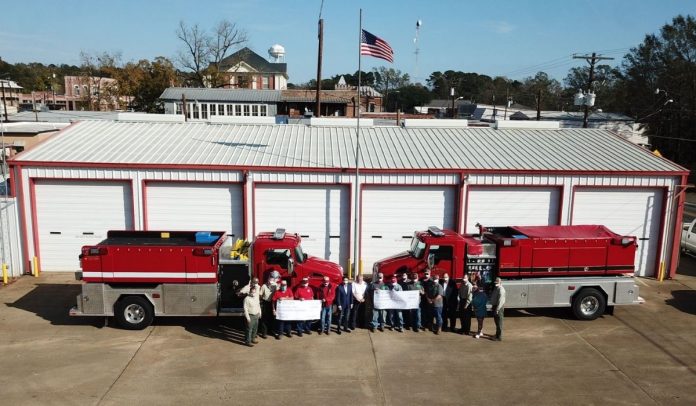
The Hemphill and Six Mile Volunteer Fire Departments each received a $200,000 cost share grant through the Rural Volunteer Fire Department Assistance Program administered by Texas A&M Forest Service.

Texas State Representative Chris Paddie, County Judge Daryl Melton, Mayor Robert Hamilton, both fire chiefs and department members were present for a big check presentation celebrating the new tenders purchased with these grant funds.

“The Texas A&M System and The Texas A&M Forest Service are here to support and thank the volunteer firefighters in rural Texas who make sacrifices every day for their communities,” Texas A&M System Chancellor John Sharp said. “Lawmakers – like Representative Chris Paddie – also deserve praise for understanding the need to protect the people and property of rural Texas.”

Fire Chief Lonnie Johnston of the Six Mile VFD and Fire Chief Glen Chance of the Hemphill VFD felt these new additions would resolve the lack of a water source in their areas.

“The Six Mile VFD tender has a 2,000-gallon water tank and will be our front-line apparatus, increasing our water capacity on arrival at a fire scene and will be especially beneficial in the areas where there aren’t many fire hydrants,” said Johnston.

Enhancing wildfire preparedness in areas likely to experience large, long-duration wildfires that impact human life and property is necessary for efficient and effective response, and having safe, up-to-date vehicles is important.

“The Hemphill VFD tender is replacing a 1994 truck and will serve as a combination apparatus for structural and wildland firefighting and can carry 1,850-gallons of water” said Chance. “It will allow for greater firefighting power since it carries more water and was built with increased firefighting safety as well.”

The National Cohesive Wildland Fire Management Strategy, mandated by Congress in 2009, is a strategic and collaborative process involving all stakeholders across all landscapes to seek meaningful progress towards solutions of wildfire management issues, including safe and effective wildfire response.

“I want to thank all of our volunteer firefighters,” said State Representative Chris Paddie. “They are selfless heroes who work tirelessly to keep East Texans safe.  It was an honor to be here today to thank them for all that they do, as well as to make sure they have the equipment they need to keep us all safe.  I look forward to continuing to work with our local volunteer firefighters and the Texas A&M Forest Service to ensure that our communities are safe, and our firefighters are properly trained and equipped.”

Both fire chiefs expressed the importance of the Texas A&M Forest Service having grant programs available to volunteer fire departments. Approximately seventy percent of the fire service in Texas is filled by volunteer fire departments and having up-to-date equipment helps to make firefighting safer and more proficient. Each fire chief also extended appreciation to their communities for continued monetary support even during the time of COVID-19 when there was not opportunity for fund raising that helps with upkeep and fuel for the departments.

Texas A&M Forest Service is committed to protecting lives and property through the Rural Volunteer Fire Department Assistance Program, a cost share program funded by Texas State Legislature and administered by Texas A&M Forest Service. This program provides funding to rural Volunteer Fire Departments for the acquisition of firefighting vehicles, fire and rescue equipment, protective clothing, dry-hydrants, computer systems and firefighter training. 

For more information on programs offered by Texas A&M Forest Service, please visit http://texasfd.com.

Pilgrims Donates 11 Pallets of Chicken to The Salvation Army

0

This Wednesday, November 24, The Salvation Army of Lufkin will be distributing the amazing donation of chicken provided by Pilgrims. This contribution will immediately help support families and individuals in the community during this challenging time.

The COVID-19 pandemic has resulted in heightened need as schools and businesses have closed and social distancing recommendations are in place. Those in our community, some who have never before needed assistance, are coming to The Salvation Army for help having being furloughed, hours cut, or suffering lay offs. Receiving donations and financial support from individuals, businesses, and community foundations is essential to the success of responding to this growing need.

The Salvation Army continues to provide food, basic social services, and emergency assistance. Essential services have been adjusted in compliance with current social distancing policies. One such program is the Community Feeding Program, where staff and volunteers wear masks and assist those as they walk-up to receive their meal.

“We are so grateful for the generous donation from Pilgrims Pride,” said Captain Cavon Phillips, Commanding Officer of The Salvation Army in Lufkin. “Their support means that The Salvation Army can continue to provide assistance and support to those who come to us for help. The COVID-19 pandemic has presented us with many challenges, like nothing we have experienced before. I am confident that The Salvation Army, with the help of our giving and compassionate community, will rise to the challenge and meet the growing need of the individuals and families we serve.”

The rapid increase in requests received for assistance is daunting, particularly due to the extremely contaminous nature of the virus, which has caused the postponement or cancellation of numerous Salvation Army fundraising events. Public support is essential, maybe moreso now than anytime in recent history.

The Salvation Army delivers a wide range of services to individuals and families in need and this is only possible because of the generous support of the community. The most effective way to help is to make a financial donation at www.salvationarmyLufkin.org, by calling (936) 634-5132 or mailing a check to 412 S. 3rd St. Financial donations give The Salvation Army the most flexibility to purchase items that are most needed while supporting local businesses at this challenging time.

Fall Foliage – Explained

0

Trees are remarkable plants, and at no time is that more apparent than in the fall, when deciduous trees—bracing themselves for the winter—begin their transition into dormancy. The result is a vibrant and magnificent display of colors that, more often than not, feels like the trees are putting on for us. (Everyone loves a good shot of fall foliage reflecting off of a lake, anyway.)

The reality, of course, is that it’s not just an act of visual poetry – it’s chemistry. And while that might not explain the more existential questions we have about life and beauty and the cyclical behavior of nature, it can at least explain a.) why some trees turn the color they do and why some turn more vibrantly than others, b.) why some regions have better displays of foliage, and c.) how that changing of colors benefits the tree itself.

According to Regional Forest Health Coordinator Allen Smith, the answer to all of these questions is: “it depends.” Trees are surprisingly sensitive, and the reasons for a tree’s behavior in the fall could depend on the conditions it faced six or even nine months before. “Trees are entirely weather dependent,” says Smith. A drought in May could lead to a quick, underwhelming ting of foliage in November; a relentless heat wave in August can scorch tree leaves badly enough that they drop early and suddenly come autumn; and an early freeze from a cold front has the potential of sending trees into a panicked, sudden dormancy. In simpler terms, Smith says that “the healthier the leaf is to begin with, the more vibrancy you’re going to see in the fall.”

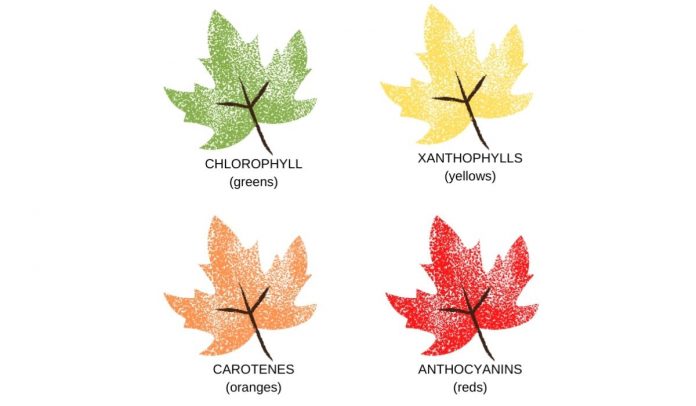
A more literal answer to “why leaves change color” is that they are colored by the same compound that makes up our complexion – pigments. The difference, of course, is that a tree’s pigmentation is predominantly influenced by the act of photosynthesis. Chlorophyll is a molecule used in photosynthesis, and it’s responsible for the green pigment. That is why green is the dominate color of any tree leaf for the majority of its life cycle. What you might not know is that the other pigments—xanthophylls (yellows), carotenes (oranges), and anthocyanins (reds, purples, even blues and blacks)—have also been there all along. It’s only when the tree begins to prepare for dormancy that these other pigments are allowed to shine – mostly because, in preparation for winter, the tree stops producing chlorophyll, the green pigmentation fades, and the other pigments are made visible.

The question of why some trees change certain colors has a more tenuous answer. Asking why one tree turns orange, and another turns orange or red, is the same as asking why some squash are green and others are yellow, or why carrots are orange. The answer is in the question. Carotenes are pigments found in endless amounts of fruits and vegetables, including carrots, oranges, some bell peppers, even pumpkin squash. Xanthophylls meanwhile, the yellow pigment you’ll see in most transitioning trees, is the same pigment that colors egg yolks and, occasionally, parts of the human eye (that ring of gold that sometimes surrounds the iris). It is produced exclusively in plants, though, so it appears in humans and animals only through consumption.

The last of the primary pigments, and the most impressive of the fall colors, comes from anthocyanin. This is the same pigment that can be found in blueberries, blackberries, and red or violet roses. The coloration of the pigment depends on the PH level of the plant. The higher the PH level, the darker the coloration (from red, to purple, to blue, to black). This is the color you’ll see in red maples, black cherry trees, and Shumard oaks, etc.

All of these pigments are attached to chemicals that serve a purpose for the plant. Carotenoids (carotene and xanthophyll) help trees absorb light energy, which is key when transitioning into dormancy because—once the act of photosynthesis shuts down—the tree turns its focus to salvaging the energy in its leaves before they fall. Without photosynthesis to transform that light into sugar, the sunlight hitting the plant can actually become harmful: just as it can be harmful to us when we stay out in the sunlight too long. Carotenoids absorb that light to prevent sun damage, but anthocyanins go the extra mile. Unlike carotenoids, anthocyanins are generated for the sole purpose of shading the chlorophyll, preventing it from producing excess light energy. That’s why trees with anthocyanins are so much more vibrant: because that red pigment is being actively and intentionally produced to block sunlight.

Unfortunately, only 10% of trees in temperate climates produce that red pigmentation, so it’s a rare enough adaptation before you look into subtropical climates (e.g. most of the American south), where that number begins to drop. Very few areas of the country have a higher rate of anthocyanin-producing trees. New England, being the most pronounced, has forests with as much as 70% of its trees producing anthocyanin. The result is an autumnal woodland that mirrors the colors of an extraordinary sunset.

While it’s difficult (if not impossible) to match that level of color in the south, Texas does have its pockets of forest that defy their subtropical climate and produce magical, color-shifting leaves. The Lost Maples State Park, for instance, hosts a whole forest of native Texas Red Maple trees; Bald Cypresses along the Guadalupe and Comal Rivers turn a gorgeous rust in the fall, outlining rivers across the Texas hill country; and pockets of hardwoods in the eastern forests of Texas stand vibrantly yellow, orange and red against the evergreen sea of longleaf pines.

“It just really depends on the tree and the ecosystem,” says Sam Rhodes, a staff forester with the Texas A&M Forest Service. “We do have wonderful fall foliage down here, we just don’t have a lot of forest cover types like they do in the northeast.” Instead, the majority of Texas is occupied by oak and juniper woodlands. You can find pines and other hardwoods in the eastern regions of Texas, where more diverse forests provide to opportunity for fall foliage. The oak-mixed ecosystems of central-to-west Texas, however, tend to not be as showy as their counterparts further east. This can occur for a multitude of reasons: everything from heat scorching to the amount of carotenoids each tree produces. “Every tree is different,” says Rhodes, “so every tree is producing different quantities of those chemicals. If a tree doesn’t produce a whole bunch of it, it might not turn a whole bunch of colors in the fall. It might just turn brown, and then the leaf might fall.” And it almost always depends on their environment –everything from climate and the length of the summer, to the type of soil the trees are growing in.

One perk of living in the south, though, is the delayed and sometimes prolonged period of transition that our trees experience. THIS FOLIAGE MAP will show you how, even while the fast majority of the country has passed its peak display of foliage, Texas trees are still predominantly in the early stages of transition. While the rest of the country is hunkering down for the winter, we still have many trees, and so much color, to look forward to.

Download the TEXAS SCENIC VIEWS app to find a fall foliage hotspot or a road-trip route with gorgeous seasonal scenery near you.

Contacts:

Sam Rhodes, Staff Forester, Texas A&M Forest Service, samuel.rhodes@tfs.tamu.edu, (979) 458-6630

Allen Smith, Regional Forest Health Coordinator, Texas A&M Forest Service, lasmith@tfs.tamu.edu, (903) 297-5094

Stephen O’Shea, Communications Specialist, Texas A&M Forest Service, stephen.oshea@tfs.tamu.edu, (979) 458-6649

LANE CLOSURE PLANNED ON DIBOLL RELIEF ROUTE PROJECT

0

A lane closure is planned beginning Nov. 30 because of work on the Diboll Relief Route construction project in Diboll.

FM 1818 will be confined to one lane of traffic through the work zone beginning Nov. 30 and will continue for three days, weather permitting. Crews will be working to alleviate drainage issues north of FM 1818 where a culvert will be installed. Work to complete the culvert installation and restore the FM 1818 pavement will necessitate the closure. Lanes will be closed during working hours only.

Motorists are urged to prepare for delays and obey all traffic control in place during the lane closure. Reduce speed in the area, prepare to stop and stay alert for signage, flaggers and lighted message boards advising of the closed lane of traffic.

The Diboll Relief Route construction is continuing with excavation and embankment work in various locations through the project. Crews continue to drill shafts on the northbound side of US 59 in the project area. Bridge columns are also being set at Mockingbird Lane in Diboll and will continue in coming weeks.

The Diboll Relief Route, a $140.1 million construction project began in April with Sacyr Engineering and Infrastructures, a global company headquartered in Spain, serving as contractor.

The project consists of construction of a new freeway location on US 59 in Angelina County, from FM 2108 to 1.1 mile south of White Oak Creek. Work will include construction of the new freeway and will include grading, structures, concrete pavement and freeway signage. The 8-mile long project is set for completion in five years.

For more information, contact Rhonda.Oaks@txdot.gov or call (936) 633-4395.

Fall Leaf Management

0

It’s at this time of year that we clearly understand why another term for autumn is “fall”! The slightest breeze brings down a shower of leaves from shade and ornamental trees. Blessed with an abundance of oak trees around my home, I’ve got a thick layer of leaves needing attention.

An old friend of mine, Butch, would tell me how he and his sons would spend the Thanksgiving break raking up leaves, picking up limbs, putting away tools, and wrapping up all gardening chores until it was time to start their vegetable garden again in early spring.

I don’t think that’s a bad idea at all. This Thanksgiving break may keep many of us closer to home, but I hope that we look at several good options of what to do with the abundance of leaves and pine straw that we often find in our landscapes.

One fun thing to do is to rake them into big piles for the kids to jump into and scatter around again. At least it’s the most fun for the kids. The least enjoyable is raking and bagging them.

While bagging for curbside garbage pickup is an option, I’d argue is the worst choice. The problem is that all those bags of leaves from across the community are sent to the landfill, wasting space in it and wasting a landscape asset.

Those leaves are all-natural, organic, weed-free, and using them somewhere in your landscape is the ultimate in recycling!

One choice some folks take is to do nothing and just let the leaves remain on top of your lawn all winter. This is not good for our southern turfgrasses. A dense layer creates a dark, damp, stagnant zone where diseases can proliferate, harming the turf.

Burning is not really the best option either. When younger, I thought it was cool to have a burning leaf pile, but neighbors who suffer from allergies or asthma often find that burning leaves aggravates symptoms and makes breathing difficult. Not too long ago, one of my neighbors came storming over after the ashes from my burning leaves drifted several down the road and settled on his newly waxed and detailed sportscar. I’m not sure that relationship has still mended.

If you leaf accumulation is not too thick, mowing the leaves in place is the easiest and most simple means of disposal. Many folks seem hesitant to recycle leaves back into the lawn, fearing they will create thatch or other problems. But research done in many parts of the country has shown that mowing leaves into the lawn does not cause any problems.

The best results are obtained by using a mulching mower which cuts and recuts leaves several times. The smaller the pieces, the quicker the microbes, which are active all year, can attack and break down the leaves into humus. I’m always amazed that they “disappear” into the turfgrass.

You will need to make two or more passes over larger tree leaves to get a finely shredded product. I

often wait until I think all the leaves are on the ground, but that may not be the easiest method. The deeper the layer, the more difficult it is to get them all shredded.

Sheet composting is an option for vegetable or new flower garden areas where you place a layer of shredded leaves over the surface of the soil and let them decompose in place. A thin layer of cotton seed meal will speed the decomposition. Alternatively, you can also rototill the layer of leaves into the soil.

If you want to go ahead and prepare your vegetable garden rows, place the loose leaves down the middles where your walkways will be. The raised rows will keep them from blowing away. Furthermore, you are building a walkway for next year and a composting trench to use in the following years.

I cannot brag too much on how mulching is a great way to deal with excess leaves. You can place leaves in the pathways of your garden and flower bed. Again, they provide dry footing to walk on, will decompose in place, help reduce weed problems, and enrich the soil, all at the same time.

Another use for shredded leaves is as a layer of mulch in perennial and shrub beds, and around the base of young trees. Just make sure that larger leaves are shredded first. Large leaves when dry are subject to being blown offsite. Large leaves when wet can mat into a nearly impermeable layer, restricting air and water movement.

For those who are blessed with an abundance of pine straw, a truly simple solution exists: rake and use as mulch. While most folks around our part of the world may think it unseemly to use in that manner, the majority of southern states, from Louisiana to the Atlantic, use it all the time.

My friend Clay Alverson has a successful business baling and selling pine straw throughout the south. We have it as a wonderful, natural resource and turn our noses up to it. If you do rake up any pine straw and bag it up, please send me an email and I’d love to come pick it up and take it to my house to use in my landscape!

Bottom line, take some time outside to clean up the leaves and pine needles, but use them in one of the ways that will benefit you and be an environmentally responsible.

ANGELINA ARTS ANNOUNCES ITS 2020-21 SCHOOLTIME SERIES

0
Arts Alliance

Lufkin, TX: In its continued commitment to developing the audiences of tomorrow and enriching the community, Angelina Arts has announced its 2020-21 Schooltime Series “Growing and Learning Through the Arts.” Each season, Angelina Arts provides a diversity of performing arts experiences for students in grades Pre-K through 12. Given the current pandemic, this season looks different with digital offerings that can be streamed directly into classrooms. Each show has connections to school curricula and offers a unique opportunity for teachers to bring their subjects ‘to life’ on stage in a way their students will never forget. Study guides are available for most shows allowing teachers to integrate the arts into their lesson plans. The shows are imaginatively conceived, artistically produced and provide relevant, entertaining and enriching experiences for students.

2020-21 DIGITAL SCHOOLTIME SERIES:

We the People Nov 16-20 (Grades 4-8)

With this year’s presidential election, now is the perfect time to bring American civics lessons to life with We the People, a musical revue that makes social studies exciting and accessible. Students will have a blast learning about the three branches of government, the First Amendment, presidential elections, democracy, the judicial process, and more. Barreling through a variety of musical styles relevant to today’s youth, including rock, rhythm-and-blues, and hip-hop, We the People instills American pride in audiences of all ages—and inspires them to get involved and make a difference.

Charlotte’s Web Dec 14-18 (K-5th)

Charlotte’s Web is based on E.B. White’s loving story of the friendship between a pig named Wilbur and a little gray spider named Charlotte. Wilbur has a problem: how to avoid winding up as pork chops! Charlotte, a fine writer and true friend, hits on a plan to fool

Farmer Zuckerman. She will create a “miracle.” Spinning the words “Some Pig” in her web, Charlotte weaves a solution which not only makes Wilbur a prize pig but also ensures his place on the farm forever. This treasured tale, featuring madcap and endearing farm animals, explores bravery, selfless love and the true meaning of friendship.

Pete The Cat Jan 18-29 (Pre-K-3rd)

For Pete the Cat, life is an adventure no matter where you wind up. So the minute the groovy blue cat meets The Bides, he gets the whole family rocking. That is, except for young Jimmy Biddle, the most organized second grader on planet Earth. But when Jimmy draws a blank in art class during the last week of school, it turns out Pete is the perfect pal to help him out. Together, they set out on a mission to help Jimmy conquer second grade art, and along the way, they both learn a little something new about inspiration. Join Jimmy and Pete on an adventure of friendship, all the way to Paris and back in a VW Bus!

The Snail and the Whale Feb 1-12 (Pre-K-3rd)

Longing to see the world, a tiny sea snail hitches a lift on the tail of a great, grey-blue humpback whale. Together they go on an amazing journey, told through live cello music and singing, storytelling and lots of laughs … but when the whale gets beached, how will the snail save him? Join an adventurous young girl and her sea-faring father as they re-imagine the story of a tiny snail’s incredible trip around the world, inspired by Julia Donaldson and Axel Scheffler’s much-loved picture book.

The Frog Bride – David Gonzalez Feb 15-26 (Pre-K and up)

When a King sends his three sons to find their brides, two return with fair ladies. The last returns with… A FROG?! The Frog Bride is a hip adaptation of a classic Russian tale. Two outstanding musicians weave one of Prokofiev’s classics with an original jazz-funk score, as David performs every role against a backdrop of stunning live video projection and moving images by painter Wassily Kandinsky. Filled with comic sparkle, The Frog Bride with David Gonzalez is a “ribbiting” coming-of-age story. Critically acclaimed and award-winning artist David Gonzalez delivers the magic of storytelling.

Jabari Dreams of Freedom Mar 1-12 (Grades 3 and up)

10-year-old Jabari loves to paint. And through these paintings and in his dreams, he escapes the reality of the turbulent world around him. He meets young people from the Civil Rights Era, including

Ruby Bridges and Claudette Colvin, who teach him to be fearless. He meets his hero, Barack Obama, as a 7-year-old boy on the eve of the assassination of MLK, Jr… Will Jabari learn and take these lessons back into his own life and heal his community? This play explores what it means to have courage in a world not everyone is safe.

The Boy Who Could Sing Pictures – David Gonzalez Mar 15-26 (Grades 1-5)

A new production featuring two stories about empowering the voices of young people. In the first story, The Boy Who Could Sing Pictures, adapted from Seymour Leichman’s book, we meet Luca, son of Bustelo-the-jester, who discovers that when he sings for people, spectacular pictures appear in the sky that reflect the truth of the world and people around him. The adventure follows Luca through a summer-long tour of surprises and wonders, and reaches a climax with the command for a royal performance and a fateful encounter with the evil ministers who fear that Luca’s songs may reveal too much… Luca learns to trust his talents as he saves the day and the kingdom too!

Emil and The Detectives Apr 1-14 (Grades 3 and up)

Never underestimate the determination of a child! Young Emil catches a train to visit family, but something valuable is stolen and Emil ends up alone in the big city, lost and desperate. A group of quick-thinking and resourceful children rallies around. And the thief soon discovers Emil was not such an easy target. Can a bunch of kids work together to uncover and outsmart the criminal? In Slingsby’s signature intimate theatrical style, the story is told by two skilled actors combining the thrilling intrigue of a classic caper with an evocative film noir design, complete with smoke and mirrors, miniature worlds and a cinematic score.

The Girl Who Forgot to Sing Badly Apr 19-30 (Grades 2 and up)

Sometimes it takes a girl-sized human to solve an adult-sized problem. Peggy O’Hegarty and her parents are packers. They squeeze fruit into tins, foxes into boxes, even bikes into brown paper bags. But one day, work stops working, and the jobs stop coming, and Peggy steps outside to find that winter has arrived… and everyone in her city gone! Written by acclaimed playwright Finegan Kruckemeyer and with all the characters performed by the ingenious Louis Lovett, this tour de force performance takes the audience on an untamed adventure that crosses snowy land and wild seas. As Peggy desperately tries to save the day, we learn about love, loss, the reassurance of goats, and the courage to sing gloriously on or off-key.

Angelina Arts is working with local school districts and homeschool parents to deploy the digital access to each program at the appropriate time. Once deployed, teachers and parents will have unlimited access to the programs and related materials during the designated time period.

“We are committed to delivering high quality educational programs each and every year. This year is different because schools are not able to go on field trips to attend live performances. So, we are bringing the arts to them in the safest way possible. These digital programs are full-length productions from the best theatrical companies available. We look forward to having students back at the Temple Theater and the Pines Theater again, once it is safe to do so,” said Jennifer Allen, Executive Director, Angelina Arts Alliance.

The Angelina Arts Alliance is a 501(c)3 nonprofit organization whose mission is to enrich, entertain and educate by presenting and promoting the arts in East Texas.

An Update from Trent Ashby

0

Given the challenging year we’ve had, I’m especially grateful for the Thanksgiving holiday this season because it provides all of us a much-needed opportunity to reflect on our blessings with focused gratitude. While it’s easy to feel overwhelmed by the seemingly endless cycle of negative news, the Thanksgiving holiday serves to re-center our perspective to that of positivity and gratitude. In doing so, we unlock the fullness of life. It turns what we have into enough, and more. Thankfulness makes sense of our past, brings peace for today, and creates hope for tomorrow.

As the late poet, Maya Angelou, once said, “Let gratitude be the pillow upon which you kneel to say your nightly prayer. And let faith be the bridge you build to overcome evil and welcome good.”

With that, here’s an update from your State Capitol. . .

Capitol Update

I recently joined my colleagues in drafting a letter urging the Texas Education Agency (TEA) to cancel or suspend the 2020-2021 STAAR test. Given the massive challenges and disruptions Texas schools have endured due to COVID-19 during the first semester, I firmly believe that this is a prudent step that must be taken to alleviate the burden that high-stakes testing puts on students and teachers. As our educational communities work tirelessly to adapt to circumstances that vary from school district to school district, there is simply no way to ensure consistent, quality instruction for all schoolchildren. Giving teachers the flexibility to administer their own diagnostic exams to address the learning gap that some students have suffered because of school closures and virtual learning challenges just makes good sense.

In coordination with TEA, and the Texas Division of Emergency Management (TDEM), Governor Abbott recently announced a $420 million reimbursement program to cover costs incurred by Texas public schools that purchased eLearning devices (such as laptops, tablets, etc.) so students could learn remotely. This investment, along with the $362 million in federal CARES Act funding that has already been allocated for reimbursement, will help ensure our schools — especially those in rural areas — are made whole for costs incurred in the 2019-2020 school year to help students have access to the devices they need. School systems may apply for these reimbursement funds beginning on Friday, November 20. For more information, please visit the Coronavirus Relief Fund (CRF) Reimbursement Programs page at: www.tea.texas.gov.

As always, please do not hesitate to contact our office if we can help you in any way. Our District office may be reached at (936) 634-2762. Happy Thanksgiving!

MOTORISTS SHOULD STAY ALERT FOR DEER

0

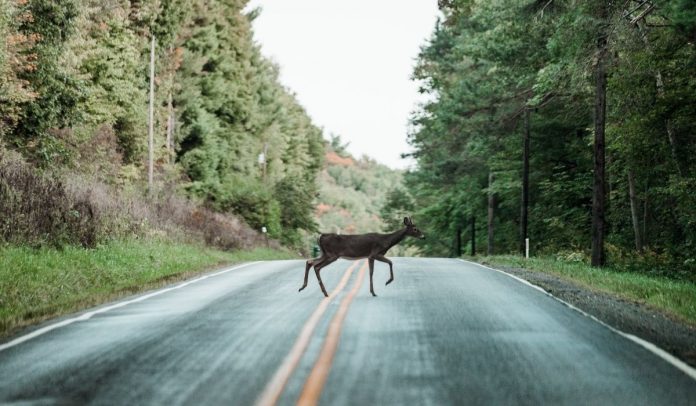
As deer season begins, motorists are urged to stay alert in pre-dawn hours and after dark. Deer are on the move through the nine-county Lufkin District and crashes involving vehicle versus deer have already been reported. TxDOT wants to remind drivers of the dangers of deer hits and the necessity to stay alert.

Motorists are urged to be attentive, especially just after sunset and the hours just before sunrise. These times are when the most deer hits occur. Pay attention to road signs that indicate heavy wildlife population in the area and reduce speed where deer are known to cross the roadway.

“We see vehicle versus deer or other wildlife crashes more this time of year on rural roadways as well as state and US highways,” said Rhonda Oaks, spokesperson for the Lufkin District. “Because deer are more active this time of year, we urge motorists to stay alert. Slow down and pay attention to movement along the wood line and shoulders of the road.”

Safety tips that could help avoid a deer versus vehicle crash include:

  • Reduce speed if you see a deer near the edge of the roadway. Deer seldom run alone. If you see one deer, others could be nearby.
  • When driving at night, use high beam headlights when there is no oncoming traffic. The high beams will better illuminate the eyes of the deer, but be careful not to use high beams in fog.
  • Slow down and blow your horn with one long blast to frighten the deer.
  • Brake firmly when you notice a deer in or near your path, but stay in your lane. Many serious crashes occur when drivers swerve to avoid hitting a deer.
  • Always wear your seatbelt.
  • If your vehicle strikes a deer, do not touch the animal. A frightened and wounded deer can hurt you or further injure itself. Move your car off the road, if possible, and call 911. Remain in your vehicle. It is the safest place. Many secondary crashes occur due to pedestrians in the roadway.

For more information, contact Rhonda.Oaks@txdot.gov or (936) 633-4395.

TxDOT PREPARES AHEAD OF WINTER WEATHER

0

As temperatures in East Texas turn colder, TxDOT crews are already busy preparing for the season’s first taste of winter weather, which could include icy roadways.

Crews have begun to conduct equipment checks and inventory to ensure proper operation. Prior to winter weather including freezing temperatures, ice or snow, equipment will be prepared and ready to treat roadways with a brine mixture to enhance safety on elevated surfaces and major corridors throughout the district. The nine-county Lufkin District has 18 brine tanks that will be utilized should a winter weather event become a threat to driving conditions.

“We stay alert to weather conditions year-round and winter weather here in East Texas is unpredictable,” said Rhonda Oaks, public information officer for the Lufkin District. “Because of that, we want the public to be aware that we will be preparing to treat elevated surfaces and major roadways should the need arise. Also, stay alert and visit drivetexas.org should you plan to travel through the holidays.”

If you encounter crews applying brine mixture, reduce speed and allow them to complete spraying the salt mixture. The salt water mixture will not damage vehicles and is easily removed with soap and water. Should you encounter frozen roadways, reduce speed or prepare to take alternate routes.

Visit drivetexas.org for statewide closures and road conditions. For more information, contact Rhonda.Oaks@txdot.gov or call (936) 633-4395.