Home Blog Page 36

Angelina College Soccer’s Jory Named All-American

0

Freshman Caps Big Season with National Honor

Angelina College men’s soccer Jhosua Jory recently earned NJCAA Division I 2nd Team All-American honors, capping his incredible freshman campaign. 

Jory, a product of Cinco Ranch High School in Houston, becomes the fifth Roadrunner soccer player in the past four years to receive All-American status, joining Kaito Ueki (2024), Omar Mora (2023), Jaheim Brown (2022) and Juan Lopez (2022). 

Angelina College’s Jhosua Jory has been named to the NJCAA’s Division I 2nd Team All-American list. Jory becomes the fifth Roadrunner in four years to earn All-American status. (Gary Stallard photo for AC Athletics)

Earlier this year, Region XIV named Jory its Most Valuable Player while awarding him 1st Team All-Region honors. 

With his dazzling combination of speed and ball skills, Jory finished among league leaders in total points (23), goals (9) and assists (5). Those numbers were impressive, but Jory provided an all-time AC Soccer highlight when he nailed the last-second golden goal in AC’s thrilling 1-0, double-overtime win at Blinn College in the Gulf Coast South District Semifinals. With just five seconds before the teams would have headed to penalty kicks, Jory took a lob pass from teammate Kanta Maruyama and banged home the winner to set off a massive celebration. 

Angelina College’s Jhosua Jory, shown here in a match played earlier this season, has been named to the NJCAA’s Division I 2nd Team All-American list. Jory becomes the fifth Roadrunner in four years to earn All-American status. (Emma Brachet photo for AC Athletics)

Jory also added a hat trick (and six total points) in AC’s 7-2 win at Louisiana State University-Eunice on Oct. 7. 

Jory has committed to play at Tulsa University. 

The email address for AC’s Sports Information Director is gstallard@angelina.edu

Holiday Home Safety Tips

0

By Courtney Klosterman, Home Insights Expert at Hippo home insurance

The holidays are a fun and festive time of rest and celebration. However, risks and hazards become even more pronounced in busy and eventful times. Here are tips to help you prevent small issues from becoming big problems while celebrating the holiday season.

1. Minimize Fire Risk

During the holiday season, it’s common to have lit candle lights decorating our spaces, elaborate meals and decorations in place. However, these activities and flammable items increase the risk of home fires if not handled with care.

Possible risk factors:

  • Overloaded electrical outlets – Plugging in too many devices or electronic decorations into a single outlet can lead to overheating of outlets, wires, and devices and potentially cause a fire.
  • Flammable decorations near open flames – Holiday decorations, such as curtains, dried foliage, or paper decorations, can catch fire easily if they are too close to open flames like candles or fireplaces.
  • Chimney fires – The accumulation of creosote (flammable byproduct of burnt organic material like wood) and other debris in the chimney can lead to chimney fires. These fires can spread downwards into the home in a matter of seconds.

Actions to take:

  • Avoid overloading outlets by spreading out your device usage and utilizing surge protectors when necessary. Double-check the manufacturer’s electric specifications for your devices and the maximum electrical output of your outlets. Most electrical outlets in homes have a maximum 15 or 20 amperage load.
  • Pay attention to where you place decorations, ensuring they’re a safe distance from any flames or heat sources. Candles should be placed in stable holders on nonflammable surfaces, away from curtains, tablecloths, and other combustible materials.
  • Ensure your fire extinguisher is working by inspecting the pressure gauge which is typically next to the handle or lever. Confirm that the pressure needle is in the green zone, meaning the extinguisher is ready for use. If it’s in the red zone, you need to service or replace it.
  • Newly formed creosote, which tend to be light to dark brown, can be removed by liquid creosote remover and a drop cloth. Attach the cloth to an extension rod for better reach to remove creosote along the flue liner, the heat-resistant pipe in the chimney interior. Wear goggles or a dust mask to shield against falling creosote particles. For older creosote buildup, often a tar-like shade, contact a professional chimney sweep to remove with a mechanical chimney brush. This glazed buildup cannot be removed with any over the shelf chemical cleaners or tools.
  • Test your smoke and carbon monoxide detectors using the dedicated test button. If you can’t find a test button for your detectors, contact your detector’s manufacturer to learn how to test it. Changing batteries at the start of the winter season and then again halfway through can help ensure they remain operational year long. Most detectors utilize 9-volt, AA, or AAA batteries. You can figure out what batteries you need by opening the battery compartment and checking for markings, such as “9V,” “AA,” or “AAA.” If your smoke or carbon monoxide detectors are more than 10 years old, replace them with newer models. Modern detectors often come with improved features and better sensitivity, providing added protection during winter when risks are higher.

2. Inspect Lights, Wiring, and Outlets

Decorative lighting is a hallmark of the holiday season, but faulty wiring and damaged lights can lead to electrical fires. Many families reuse holiday lighting fixtures every year, but wear and tear along the wiring can cause electrical sparks. Not all lights are multipurpose, and some for outside usage may not meet indoor safety standards. 

Possible risk factors:

  • Frayed or damaged wiring – Holiday lights are susceptible to damage from storage, handling, or exposure to the elements. Frayed or damaged wiring can create electrical sparks, potentially leading to fires or electrical shocks. Additionally, rodents can chew on any loose and unprotected wiring.
  • Overloading outlets with too many decorations – Plugging too many decorations into a single outlet or daisy-chaining multiple extension cords can overload the circuit and increase the risk of overheating, electrical fires, or tripped circuit breakers.
  • Using outdoor lights inside and inside lights outside – Lights designed for outdoor use are constructed to withstand weather conditions, while indoor lights are not. Using lights in the wrong setting can compromise their safety and performance.

Actions to take:

  • Before hanging your holiday lights, carefully examine them for frayed wires. Make sure the bulbs are intact. Discard damaged lights and replace them with new, safe ones.
  • Keep your outdoor lighting wiring off the ground or encased in a conduit to prevent rodents from chewing on them.
  • Use extension cords for the intended purpose (indoor or outdoor use), and follow the manufacturer’s guidelines for their maximum load capacity. If necessary, distribute your holiday decorations across multiple outlets to prevent overloading.
  • Replace lights when needed. Incandescent lights usually have a shorter life span than LED lights and endure 3-4 holiday seasons on average. LED lights last much longer, with many reaching 10 years or more. Outdoor lights are on a case-by-case basis, as they are exposed to the elements and may wear and tear depending on the harshness of the weather.

3. Regularly Water Your Christmas Tree

The Christmas tree is the highlight of many holiday festivities. Whether you opt for an aromatic evergreen or an artificial substitute, you’ll want to properly prepare and look after your tree throughout the holiday season. Dry trees are a glaring fire hazard, especially when decorated with multiple light fixtures.

Possible risk factors:

  • Dry or improperly watered tree – Natural Christmas trees have a limited life span and can dry out over time, particularly when exposed to indoor heating. A dry tree is highly flammable.
  • Decorations near the tree that generate heat – Some holiday decorations, such as candles especially, can generate heat. Placing them too close to the tree increases the risk of the tree drying out and potentially catching fire.
  • Faulty tree lights – Defective or damaged tree lights can spark electrical fires.

Actions to take:

  • If you opt for a natural tree, ensure it remains properly hydrated throughout the holiday season. Place freshly cut trees in a water-filled stand, and check the water level daily. A well-hydrated tree is less likely to dry out and become a fire risk.
  • Consider using LED lights, which emit less heat than traditional incandescent bulbs. This reduces the risk of the lights drying out the tree and minimizes the chance of fire.
  • To further reduce the risk of overheating, turn off the tree lights when you leave the room or go to bed. 

4. Safely Secure Decorations

During the holiday season, many people adorn their homes with festive decorations. However, decorations can fall and potentially cause injuries or damage to your home. Loose cords are common tripping hazards, and hanging ornaments can cause serious injuries if you don’t secure them properly.

Possible risk factors:

  • Decorations falling and causing injuries – Holiday decorations vary widely in size and weight, from delicate ornaments to larger wreaths and garlands. If not properly secured, these decorations may fall unexpectedly.
  • Tripping hazards from loose cords or decorations – Lights and other electrical decorations often involve cords and cables that can become loose or entangled. These loose cords and decorations can create tripping hazards in your home.

Actions to take:

  • Ensure all decorations are securely fastened and will not easily come loose. Use appropriate hooks, clips, or hangers for different types of decorations. Wire hooks are sturdy enough for most hanging ornaments like wreaths. A fishing line has the strength to hold multiple ornaments at once.
  • Use cable clips, tape, or cord covers to secure cords and prevent them from creating tripping hazards. You can also use cord channels – plastic or rubber covers that conceal and protect cords. They come with adhesive for easy installation.

5. Remove Child and Pet Hazards

Families and their children look forward to holiday festivities, and pets get to join in on the fun when everyone is excited. However, holiday decor poses a threat to children and pets, and both tend to place all kinds of unsafe objects into their mouths. 

Possible risk factors:

  • Swallowing small ornaments – Small ornaments, tinsel, and other decorative items can be tempting for children and pets to pick up and put in their mouths. Swallowing these items can lead to choking hazards or digestive issues.
  • Tipping over decorations or trees – Children and pets may inadvertently knock over decorations, Christmas trees, or fragile ornaments, potentially causing injuries or damage to themselves or your home.
  • Access to toxic plants like poinsettias – Some popular holiday plants, including poinsettias, mistletoe, and holly, can be toxic if ingested. These plants may cause symptoms ranging from mild discomfort to more severe health issues.

Actions to take:

  • When decorating your home, opt for decorations that are less likely to shatter and don’t have small, easily digestible parts. Look for nontoxic and child-safe materials. Wooden and plastic decorations can endure many accidental falls.
  • To prevent your tree from toppling over, use a sturdy tree stand and consider anchoring the tree to a wall or ceiling for added stability. Keep fragile ornaments and decorations higher up on the tree, out of reach of small hands and paws.
  • If you have plants like poinsettias in your home, place them where children and pets can’t access them.

6. Practice Kitchen Safety

During the holidays, the kitchen is often the center of celebrations. Cooks should be aware of their surroundings, and visitors and family members should avoid crowding kitchens for their own safety. 

Possible risk factors:

  • Clogged cooking vents – When you cook, especially when frying or sautéing, grease and cooking oils are released into the air as tiny particles. Over time, these particles can accumulate in the exhaust system, including the vents, ducts, and filters. This buildup is highly flammable.
  • Grease fires from deep frying – When oil reaches its smoke point and begins to break down, it can release flammable vapors into the air. These vapors can catch fire if they come into contact with an open flame, such as the burner on a stove or even a spark from electrical equipment.
  • Burns from hot pots and pans – Heat quickly transfers from hot cookware onto any contact surface. Expect a burn at just one slight touch.
  • Slips and falls – Wet floors from sink and stove top spills can cause injury and start a chain of accidents like falling and crashing kitchen objects, flames, and more. 
  • Gas leaks – If you have a gas cooktop, it’s important to inspect for gas leaks. Gas leaks release carbon monoxide and are a fire and explosion hazard.

Actions to take:

  • Clean your cooking vents, exhaust fans, ducts, and filters every 3 to 6 months for light cooking and 1 to 3 months for heavier cooking. Ensure that all cooking appliances are off. Use dishwashing liquid or a baking soda and vinegar solution with warm water to wipe off grease. 
  • Use an outdoor fryer on a stable, flat surface, and ensure the food you plan to deep fry is completely thawed and dry before immersing it in hot oil. Keep the fryer away from structures, and don’t leave it unattended.
  • When working with hot cookware, use oven mitts and pot holders to protect your hands from burns. Turn pot handles inward on the stove to help prevent accidental tipping.
  • Keep the kitchen floor dry and promptly clean any liquid spills. Place slip-resistant mats and rugs near the sink or stove where spills are likely. Be sure not to overcrowd the kitchen, as accidental bumps can also lead to dangerous falls.
  • Apply a mixture of soapy water to the gas connections and hoses of your stove. If you see bubbles forming, it indicates a gas leak. In such cases, turn off the gas supply and contact a professional for repairs.

7. Make Anti-Burglary Upgrades

While the holiday season is a time of rest and celebration, it is also a prime time for burglars to take advantage of festive distractions. The holiday season often sees a rise in burglary rates as many homes contain valuable gifts and people are away at parties, gatherings, or vacations. Unsecured and inviting homes expectant of guests make an ideal burglary and theft target.

Possible risk factors:

  • Increased burglaries – Many families travel for the holidays, leaving their homes vacant. Others who host holiday events may also become less guarded due to festivities. Valuable gifts are a prize for burglars, and the holidays are filled with them.
  • Package theft – Online shopping during the holidays entails packages with items of value. Package thieves take this opportunity to ramp up their processes.
  • Inside visibility of homes – Homes are even more lit during the holidays, causing better outside visibility of a home’s interior. This gives burglars a clear view of valuables and an incentive to target a home.

Actions to take:

  • Implement a home security system of alarms, cameras, motion sensors, automatic locks, and detectors. Ensure your system is professionally installed and monitored, providing 24/7 protection.
  • Strengthen entry points by upgrading locks and deadbolts and by reinforcing doors and windows. Consider smart locks that allow you to remotely monitor and control access.
  • To deter burglars, automatically set a timer for your lights to activate to convey the image of an occupied home. 

8. Clear Paths and Walkways

Holiday seasons are busy and produce a clutter of gifts, wrappings, decorations, and more. Tripping hazards increase on obstructed walkways, and guests may have potential accessibility issues, especially those in wheelchairs.

Possible risk factors:

  • Slips and falls – Walkways become treacherous due to snow and ice accumulation, and slippery surfaces are common causes of injuries.
  • Obstructed pathways – Holiday decorations, gifts, and seasonal items can obstruct pathways and create tripping hazards, especially in high-traffic areas of your home.
  • Accessibility concerns – Some of your guests, including those with mobility challenges or who use wheelchairs or walkers, may face difficulties navigating through cluttered or narrow walkways.

Actions to take:

  • In regions with winter weather, promptly clear snow and ice from walkways and driveways. Use salt or sand to reduce slipperiness, ensuring safe passage for guests.
  • While holiday decorations add to the festive charm, be mindful of their placement. Ensure they don’t block walkways or create tripping hazards. Secure decorations to prevent them from falling into paths.
  • If you have guests with mobility challenges, consider creating accessible pathways, ensuring that entrances, doorways, and hallways are wide enough for wheelchairs and walkers.

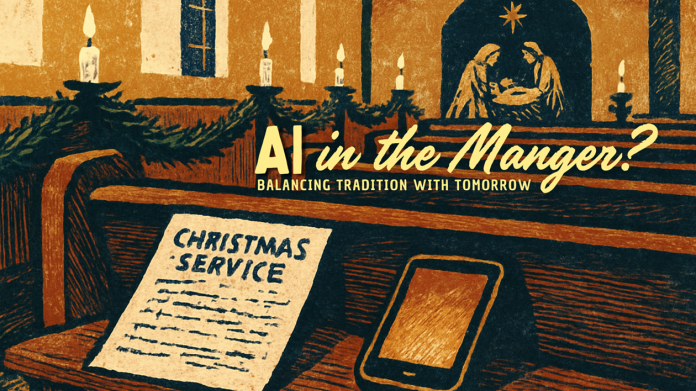
AI in the Manger? Balancing Tradition with Tomorrow

0

By Lee Allen Miller

The sawdust on the floor of the Bethlehem scene is real. The donkey, borrowed from a farm off Highway 69, is certainly real. But if you look closely at the script for this year’s Christmas pageant—or the newsletter announcing it—there is a good chance a non-human hand helped write it.

It’s December in the Piney Woods. The air smells like woodsmoke and damp pine needles, and our calendars are filled with the timeless traditions that anchor us: candlelight services, parades on Main Street, and grandmothers guarding secret pecan pie recipes.

But this year, something else is sitting in the pew beside us. Artificial Intelligence.

Now, before you think I’ve gone and let Silicon Valley take over the sanctuary, hear me out. For the past few months, I’ve been watching a quiet shift in how our local non-profits, small businesses, and yes, even our churches, are operating. The tools have changed, but the mission remains exactly the same.

The New Stewardship

In East Texas, we talk a lot about stewardship. Usually, that means taking care of the land or managing our finances wisely. But in 2025, stewardship also means managing our time.

I spoke recently with a local community leader—someone who runs a charity that feeds hundreds of families across Angelina and Nacogdoches counties. Last year, she spent three days writing grant proposals and donor thank-you letters, pecking away at a keyboard while her own family ate dinner without her.

This year? She used an AI tool to draft those letters in 20 minutes. She spent the rest of that time actually delivering food and shaking hands.

That isn’t “robots taking over.” That is technology giving us our humanity back.

High Tech, High Touch

The fear, of course, is that we lose the personal touch—the warmth that makes Texas Forest Country what it is. We worry that if a computer writes the church bulletin, it won’t have the soul of the church secretary who knows everyone’s birthday.

And that is a valid fear. If we use technology to replace connection, we’ve failed. But if we use it to facilitate connection, we’ve won.

Imagine a small business owner on the loop. Instead of staying up until midnight trying to figure out social media algorithms to sell their Christmas inventory, they use a smart tool to schedule it all in an hour. That owner is now home, reading The Night Before Christmas to their kids.

The “Manger” represents the humble, the human, and the holy. AI represents the fast, the efficient, and the new. They seem like enemies. But let’s remember: even the Three Wise Men used the best astronomical technology available to them at the time to find their way.

Keeping it Real on Main Street

As we head into this final week before Christmas, my challenge to you is this: Don’t fear the future, but don’t surrender to it either.

Use the tools. Let the AI summarize the meeting notes. Let the software track the inventory. But when it comes time to shake a hand, look a neighbor in the eye, or wish someone a “Merry Christmas,” make sure it’s 100% you.

We can have high-tech tools in our pockets, as long as we keep traditional values in our hearts.

Join the Conversation

If you are a business leader, a non-profit director, or just someone who wants to understand how these tools can give you back more time for what matters, you don’t have to figure it out alone. We are launching the AI Collective Mastermind, a group dedicated to demystifying this technology for real-world application right here at home. We aren’t trying to build Silicon Valley in the Piney Woods; we’re trying to build better, more efficient businesses for our neighbors. Come learn with us at msgresources.com.

Merry Christmas, East Texas.

3 Ways to Use Tech for Good this Season

  • The “Thank You” Draft: Use ChatGPT or similar tools to help you get started on thank-you notes, then hand-write the final version to add that personal touch.
  • The Family Archivist: Use scanning apps to digitize those old Polaroids of Christmases past before they fade, ensuring the history of the Piney Woods survives for the next generation.
  • The Smart Giver: Look for local charities that offer app-based recurring giving. It helps them budget better for the new year, turning your one-time gift into sustained support.

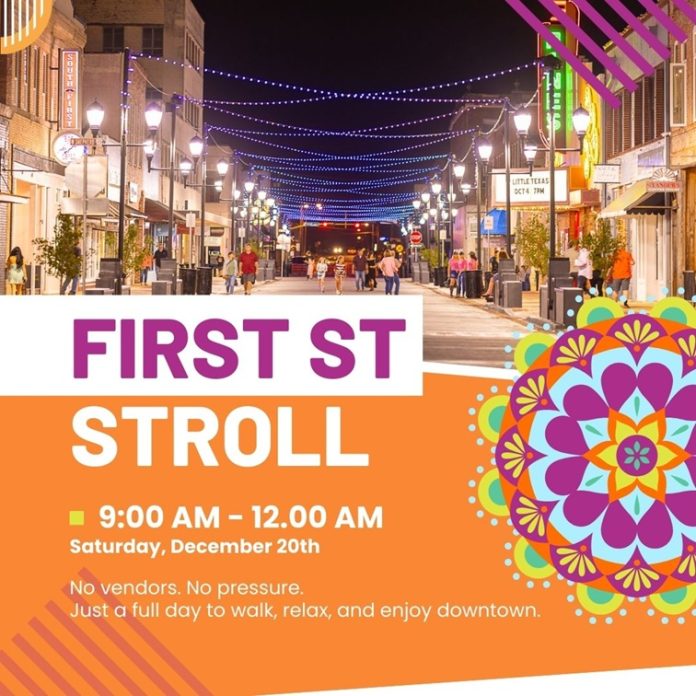
First Street Stroll (Angelina County)

0

December 20, 2025 @ 9:00 am December 21, 2025 @ 12:00 am

Stroll into the holidays!

First Street will be closed this Saturday, so take the opportunity to slow down and soak in the magic of downtown Lufkin.

No vendors. No pressure. Just a full day to walk, relax, and enjoy our beautifully lit streets with family and friends in town for the holidays.

Saturday, December 20th
9:00 AM – 12:00 AM
Don’t forget to snap a festive photo and tag us!

Get weekly updates on free events & family fun in Lufkin

What’s Happening in Lufkin…and don’t forget Visit Lufkin.

Downtown Lufkin
Lufkin, TX United States

Angelina College Radiologic Technology Program Acquires State-of-the-Art Equipment

0

Program Expands Hands-On Training with New Mobile X-Ray System

Lufkin, Texas
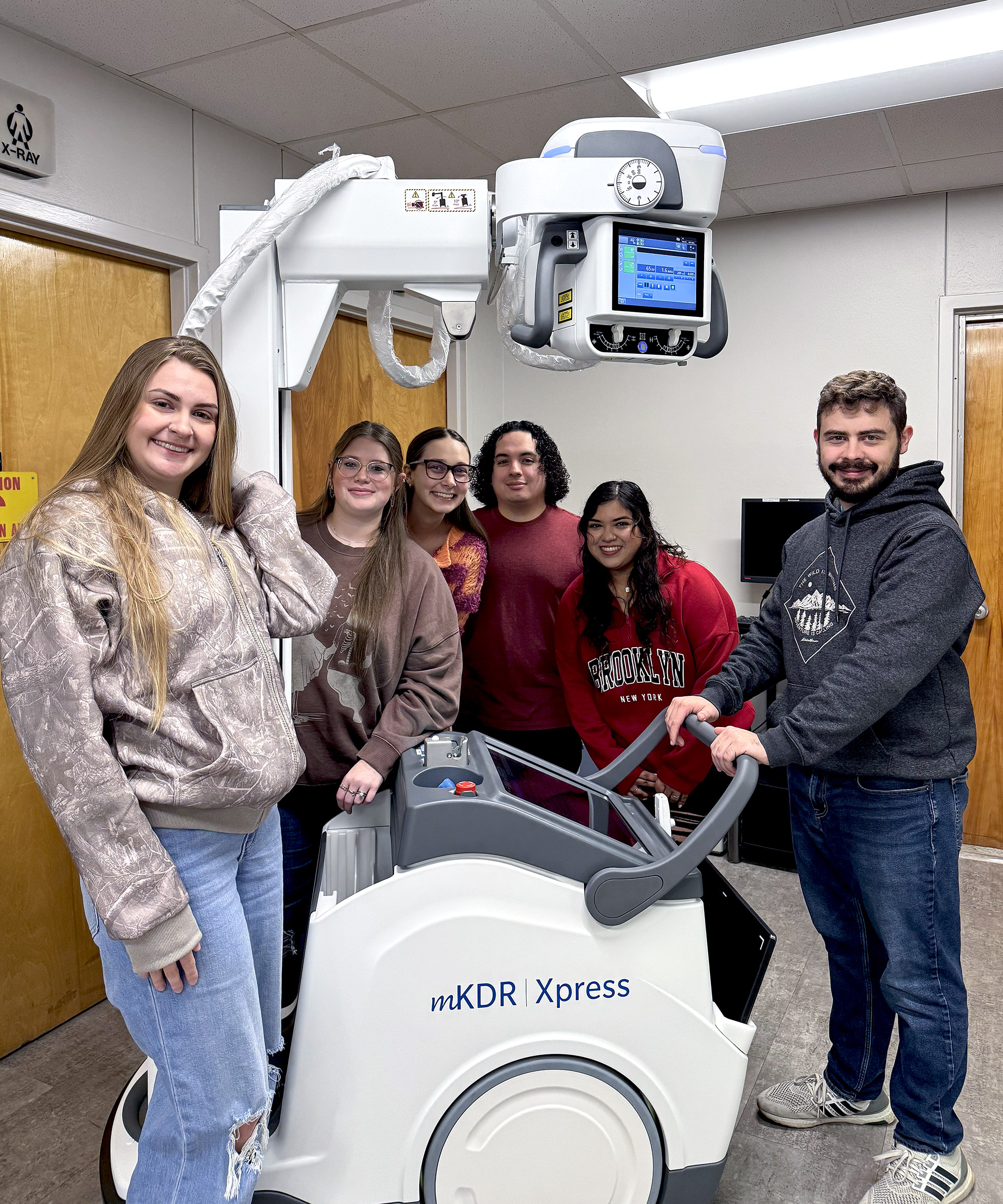
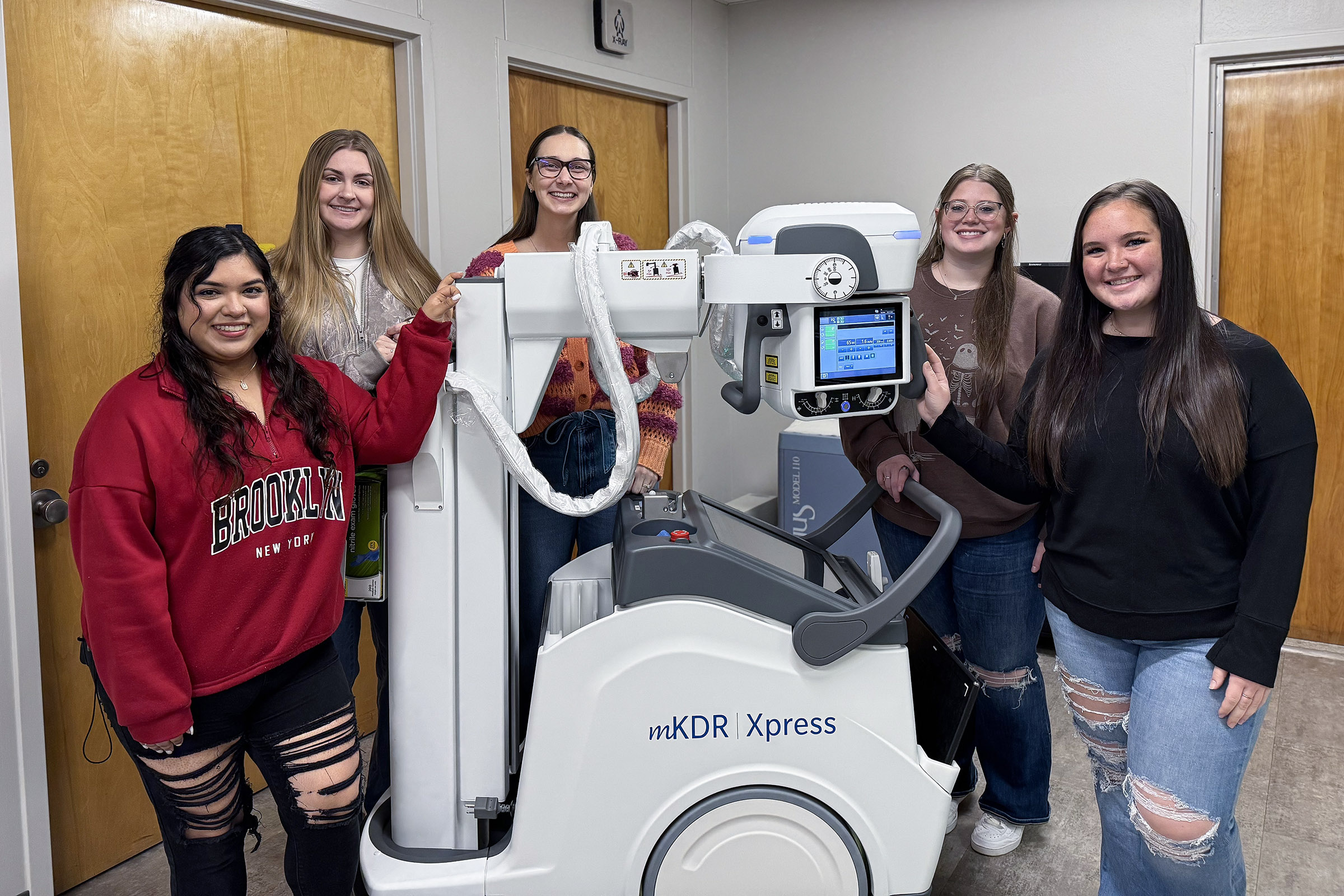
Angelina College has expanded its Radiologic Technology program with the recent acquisition of a Konica MKDR Express Portable X Ray System. This state-of-the-art mobile imaging unit is commonly used in hospitals and critical care environments throughout the nation. The equipment, valued at $136,925, was purchased with funds from the Carl D. Perkins Basic Grant administered by the Texas Higher Education Coordinating Board.

Students will use the mobile X-ray system to produce AP supine radiographs of a patient’s abdomen. This skill is essential for radiologic technologists who regularly perform bedside and critical care imaging procedures. The new unit allows faculty to replicate real clinical scenarios that strengthen technique and confidence.

Angie Hill, Radiologic Technology Program Director, said students are very excited to use this new technology as they prepare for real-world patient care.

Hill emphasized the importance of mobile imaging training in modern healthcare.

“Radiologic Technologists are essential to patient diagnosis and treatment and often perform mobile imaging procedures in critical care areas such as the ICU, NICU, Emergency Department, Surgical Suite, and at the patient’s bedside,” Hill said. “Mobile X-ray equipment will allow radiography faculty to teach students how to adapt imaging techniques for patients who cannot be transported to the Imaging Department. Practicing mobile imaging procedures in the lab provides a controlled environment that strengthens trauma and critical care skills, ensuring a smoother transition to hospital practice and improving student readiness for real-world clinical demands.”

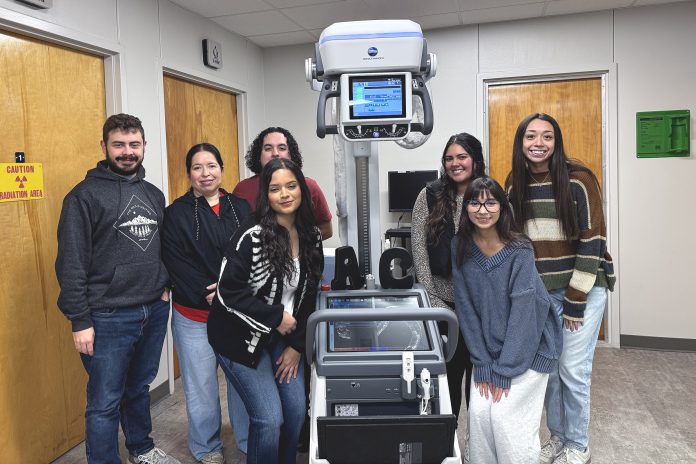
Angelina College Radiologic Technology program students pose with the recently acquired Konica MKDR Express Portable X-Ray System. AC was able to purchase the new equipment thanks to funds from the Carl D. Perkins Basic Grant administered by the Texas Higher Education Coordinating Board. (Contributed photo)

Angelina College President Dr. Michael Simon said the new system represents a significant step forward for student preparation.

“This advanced mobile X-ray technology will give our students hands-on training that mirrors real hospital practice,” Simon said. “We are grateful to our Director of Grants, Janice Huffman, whose support helped make this investment possible. This equipment strengthens our ability to prepare healthcare professionals for the needs of East Texas.”

The addition of the Konica MKDR Express unit reinforces Angelina College’s commitment to expanding access to advanced instructional equipment and supporting the healthcare workforce needs of East Texas.

For more information about the Radiologic Technology program at Angelina College, visit https://www.angelina.edu/radiologic-technology/

The ROI of Generosity: Why East Texas Businesses Give Back

0

By Lee Allen Miller

In business school, they teach you about Return on Investment (ROI). It is a cold, hard calculation: If I put a dollar in here, how many dollars do I get out over there?

But if you walk into the back offices of the legacy businesses that line the streets of Nacogdoches, Lufkin, or Jasper this week, you’ll find a different kind of math being practiced.

You’ll see the owner of a logging supply company writing a check to the local food bank that—on paper—makes zero financial sense. You’ll see a car dealership sponsoring a toy drive that won’t sell a single pickup truck before the end of the quarter.

In the corporate towers of Dallas or Houston, this might be called “Corporate Social Responsibility.” But here in the Piney Woods, we just call it “doing what you’re supposed to do.”

The stewardship model

I sat down recently with a third-generation business owner here in East Texas. His grandfather started the company with a handshake and a prayer, and today, he employs dozens of local families. When I asked him why he pours so much profit back into local charities, he didn’t talk about tax write-offs.

He talked about stewardship.

“I don’t really own this business,” he told me, leaning back in a chair that looked like it had been there since 1975. “I’m just managing it for the One who does. And I have a feeling the real Owner cares more about hungry neighbors than He does about my quarterly margins.”

This is the heartbeat of the East Texas economy. It is built on the belief that we are not reservoirs made to hoard success; we are channels made to let it flow through us.

Community health is business health

There is also a practical side to this generosity, one that savvy leaders understand. You cannot run a healthy business in an unhealthy community.

When a local bank sponsors a scholarship fund, they aren’t just being nice—they are investing in the future workforce. When a construction firm supports the Salvation Army, they are ensuring that families in crisis can get back on their feet and remain vital parts of our town.

Generosity isn’t a drain on the local economy; it is the fuel that keeps the engine running during the lean times. It builds trust. And in a small town, trust is the only currency that matters. If people know you were there for the town when the hurricane hit or when the mill closed, they will be there for you when you open your doors on Monday morning.

The ultimate bottom line

As we close out the books on 2025, many of you are looking at your profit and loss statements. You are calculating your own ROI.

My challenge to the business leaders reading this is to look beyond the spreadsheet. The greatest returns you will ever see won’t be found in your bank account. They will be found in the gratitude of a family who had a Christmas dinner because of your donation. They will be found in the stability of a community that knows its leaders care.

In East Texas, we know that true wealth isn’t measured by what you keep. It’s measured by what you give away.


Action Items: 3 Ways Small Businesses Can Give (Without Breaking the Bank)

  • The Gift of Time: Your employees have skills. Let your accountant help a non-profit with their books, or your maintenance crew fix a widow’s fence.
  • The “Round Up” Approach: Ask customers if they want to round up their purchase to the nearest dollar for a local charity. It costs the business nothing but facilitates thousands in donations.
  • Mentorship: The most valuable asset you have is your experience. Offer to mentor a young entrepreneur or student.

Drug-Free All Star Meeting at Family Crisis Center

0
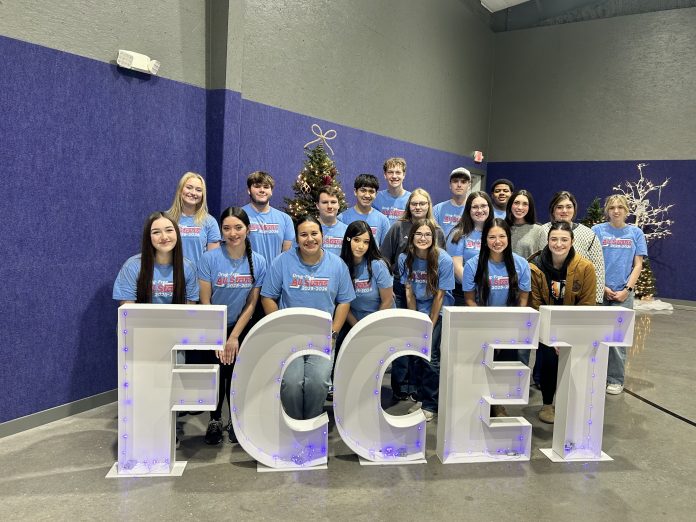
Front row, from left to right: Marlee Jones, Charla Raines, Brooklyn Hernandez, Alondra Cura, Samantha Saulsbury, Alyssa Flores, and Addyson Franklin. Second row, from left to right: Rebekah Sapp, Joey Riccio, Gavin Bowman, Braydon Nava, Marti Allen, Rachel Modisette, Aubrey Mays, Maggie Allen, and Abigail Liddle. Back row, from left to right: Luke Murrell, Carson McDaniel, and John Oliphant.

The Drug-Free All Stars of Angelina County, funded by a grant from TxDOT, are a group of high school seniors that serve as role models for the community by living an alcohol, tobacco, and drug-free life. For their December monthly meeting, the Drug-Free All Stars visited the Family Crisis Center of East Texas. During their visit, the All Stars heard how the Family Crisis Center helps the community through prevention, education, and training about relationships, partner/family violence, and assault. The students also adopted two families through the Family Crisis Center and fulfilled their wish lists for this holiday season. Special thank you to Whitney Burran, Executive Director, and Stuart Burson, Prevention Coordinator, for hosting the Drug-Free All Stars and Mallory Harris, Marketing and Communications Coordinator, for coordinating the Adopt a Family Campaign. 

Since 1988, The Coalition has focused on eliminating the use of harmful substances by affecting public policy, laws, attitudes, and behaviors, all to foster healthy life-long choices for the local community. For more information about the Drug-Free All Stars contact Abby Baker at The Coalition at 936-634-9308.

Texans Eligible for Share of $700 Million Google Settlement

0

By Lee Allen Miller

In the Forest Country, we believe in a fair shake. Whether you’re selling timber, running a small business, or just trying to download an app on your phone, the rules should be the same for everyone. When big corporations try to tilt the playing field, it costs us all.

This week, the State of Texas joined a coalition of 52 other attorneys general to finalize a $700 million settlement with Google. The agreement resolves allegations that the tech giant violated antitrust laws by monopolizing the market for Android app distribution, effectively locking consumers into their ecosystem and driving up costs.

If you made purchases on the Google Play Store between 2016 and 2023, you might have money coming your way.

The Settlement Details

The investigation, led by state regulators across the country, found that Google used anticompetitive contracts to stop folks from downloading apps directly to their devices. This forced consumers to use the Google Play Store and its payment processing, limiting choice and keeping prices artificially high.

The Attorney General’s office released a statement this week confirming the settlement, noting that it penalizes the company for “breaking the law” and aims to restore competition in the marketplace.

How to Claim Your Share

For many of you, the process to get your money back will be automatic.

Affected consumers—specifically those who made purchases on the Google Play Store between August 16, 2016, and September 30, 2023—should keep a close watch on their inboxes. You will receive an email from PayPal or a text from Venmo notifying you of an incoming payment. These notifications will go to the email address or mobile number tied to your Google Play account.

If your Google Play contact info matches your existing PayPal or Venmo account, the funds will land there automatically. If not, or if you don’t use those services, you’ll have the option to create an account or direct the money elsewhere.

Important Deadlines

While the settlement is finalized, there are still a few dates to keep on your calendar:

  • Now: Watch for notifications from PayPal or Venmo.
  • February 19, 2026: This is the deadline to opt-out if you wish to exclude yourself from the settlement (perhaps to file your own lawsuit) or to file a written objection.
  • April 30, 2026: The court will hold a final hearing to approve the settlement.

There will also be a supplemental claims process later for those who miss the automatic payment or don’t use PayPal or Venmo. If you want to stay in the loop on that, you can submit your details on the official settlement website.

A Win for Consumers

In a world where global corporations often seem untouchable, this settlement is a reminder that consumer protection laws still carry weight. $700 million is a hefty penalty, and a significant portion of that is coming back to the people who were overcharged.

So, check your emails, folks. It’s not every day you get a refund from a tech giant.

Kids Talk About God by Carey Kinsolving and Friends

0

What Would You Write in a Christmas Letter to God?

I asked children to write a letter to God about what Christmas means to them as part of the Kids’ Christmas Art Contest. Here are excerpts of their letters:

“Dear God: Every Christmas Day, I always get up first. I look to see if the cookies are gone. One time, I saw a footprint. We also have hot cocoa. Your child, Anthony (age 10).”

“Dear God: I know it’s more than just getting presents, but I’m just a kid right now. So, do you think I should ask for an angel or a game cube? Wait a minute. I’m going a little off the subject. Anyways, thanks for making Christmas. Sincerely yours, Chip (age unknown).”

“Dear God: Christmas is my favorite holiday. It is the one day my family gets together (including Thanksgiving and New Year’s, but Christmas is my favorite). I also like to hang out with my cousins, especially the big ones.

“When I say ‘family,’ God, I include the dogs as well. My family has a lot of dogs including a Labrador, a border collie and a beagle. I love to be with my family so much, I would rather be with them than get a hundred video games and toys. Your child and follower, Ranjit.”

“Dear God: Christmas is my favorite holiday. I am very happy for you because it is your birthday. I also get to be with all of my family on Christmas. Another reason is because I get a long time off from school. I love to tell the world about you being born. Last year, I was Joseph in my church Christmas play. Sincerely, Nick.”

“Dear God: Though I know Christmas is about the birth of Jesus, I still like to get presents. It’s fun to unwrap presents in a surprise. You don’t even know what you’re going to get. I give a lot of my toys away. I get sad sometimes getting rid of things. I’m OK with it later. Love, Leigh Ann.”

“Dear God: I love the smell of the house and the tree on Christmas morning. I love the feeling of Christmas on its way. Your friend, Jon (age 10).”

“Dear God: How are you doing? Is heaven OK? I just wanted you to know what Christmas means to me.
“Christmas means a time of joy, peace on Earth and rejoicing the day your Son, Christ came down to Earth. That one night was the most holy night on Earth. The presents that I get every year are OK, but the greatest present you gave to the world was Jesus. Sincerely, Howard (age 10).”

“Dear God: I know that a lot of people forget about you and think that Christmas is all about gifts. However, it is all about you and Jesus. I am really thankful that you sent down your one and only Son. That was such a great gift from you. Also, I am thankful for Jesus dying for us and our sins to that we could experience your love in heaven. Happy Birthday, Jesus! Love, Lorenzo.”

“Dear God: I am a new person when I get close to you when I pray. I see the lights on homes that represent Christmas. I get happy. I always get presents during Christmas. The Christmas lights inside my house and the tree ornaments are the best thing I like to put up. They are very nice cause they represent you, God. Sincerely your best friend, E.J.”

“Dear God: This time of the year where many give gifts to each other, I want to give my heart to Jesus. For me, this is the real meaning of Christmas, not giving among us, but to give your Son back what should be His. Jezrel.”

“Thanks be to God for His indescribable gift!” (II Corinthians 9:15).

Merry Christmas!

_______________________________________________________________________________________

Kids Talk About God is designed for families to study the Bible together. Research shows that parents who study the Bible with their children give their character, faith and spiritual life a powerful boost. To receive Kids Talk About God three times a week in a free, email subscription, visit www.KidsTalkAboutGod.org/email

Country Christmas Singo (Sabine County)

0

December 20, 2025 @ 5:00 pm 7:00 pm

You’re all set to join us for Country Christmas Singo at Pineywoods Vineyard!

Here are the details:

Location:
Pineywoods Vineyard
101 N Oak St, Hemphill, TX

Date: Saturday, December 20th
Time: 5 PM – 7 PM
Cost: $10 per person, cash only at the door

SINGO combines your favorite music with the classic game of bingo. Mark your card as you recognize the hits and compete for fun prizes.

Parking: Available in front of the tasting room and around the downtown square.

Feel free to bring friends and wear your best Country Christmas attire!

Highlights:

Music bingo with prizes every round
Wine and mocktails are available for purchase
Pizza and charcuterie boards are available for purchase
Please note: This event is located on the second floor, accessible only by stairs.

If you have any questions, reply to this email or call us at (409) 787-1413.

Cheers,

The Pineywoods Vineyard Team
(409)787-1413
www.pineywoodsvineyard.com