With Memorial Day and a long weekend upon us, many of you will take trips to the lake, play a round of golf, or have friends over to enjoy a cookout. And while it’s nice to spend a little extra time with loved ones, we must keep in mind the significance and purpose of this reverent day of remembrance. It is my hope that you’ll join me in honoring those who paid the ultimate price for freedom, and thanking their families for their sacrifice and service to this country. With that, here’s an update from your State Capitol. . .
House Interim Charge: Transportation
The House Committee on Transportation is the next stop on our tour of committee interim charges. This 13-member committee has jurisdiction over all matters relating to commercial motor vehicles, our state’s roads and bridges, traffic control, and many other areas. In fact, while most people associate “transportation” with cars and trucks, this committee also oversees policy pertaining to railroads, airports, and water transportation in Texas.
House Transportation has been charged with reviewing the state’s response to Hurricane Harvey and natural disaster preparedness with respect to transportation systems and infrastructure. This will be a key issue moving forward, as we need to do all we can at the state level to ensure that both citizens and first-responders have the proper infrastructure in place to evacuate or provide emergency services in the wake of a disaster. In a similar vein, the committee will also evaluate the state’s ability to deliver highway construction projects that reduce congestion and improve mobility in a timely and cost-effective manner.
Additionally, this committee will review existing transportation finance mechanisms and identify opportunities to both improve and develop how we fund our new projects. For those projects that are privately funded, such as toll roads, the committee will examine whether current policies governing toll authorities in Texas are sufficient in providing the transparency and accountability that Texans demand. Keenly important to interim transportation studies is identifying what innovations are being utilized in other states and at the federal level.
Reminders
The mobile office is on the road for the month of June and looks forward to seeing you on the following dates, in the following locations: June 6th in Centerville at the Leon County Courthouse from 9:00-11:00am, or in Madisonville at the Madison County Courthouse from 1:30-3:30pm. June 20th in Crockett at the Houston County Courthouse Annex from 9:00-11:00am, or in Groveton at the Trinity County Courthouse from 1:30-3:30pm. Finally, we will be in San Augustine on June 27th at the San Augustine County Courthouse from 9:00-11:00am.
As always, please do not hesitate to contact our office if we can help you in any way. Our district office may be reached at (936) 634-2762, or you can call my Capitol office at (512) 463-0508.
The current crane at Georgia-Pacific’s Diboll Lumber facility unloads a log truck with its two-bite grapple. The new Kone Crane is designed to lifts logs with only one pass.
The original crane at Georgia-Pacific’s Diboll Lumber facility was installed in the 1960s and has been a part of the Diboll skyline for the last 55 years.
DIBOLL, TEXAS (May 25, 2018)….Constructed in the 1960s, the Georgia-Pacific crane that has been a part of the Diboll skyline for the last 55 years, is being dismantled to make way for a new, more efficient, and modern crane with additional safety technology. For the next six months, work crews will remove sections of the current crane while simultaneously replacing it with the new state-of-the-art — Kone Crane.
Originally used as a military shipyard crane, and relocated to Diboll in the 1960’s, the crane’s main purpose at GP’s Diboll Lumber facility is to unload log trucks. With great ease, the massive piece of equipment lifts logs from a truck with only two passes, which are referred to in the industry as “bites.” Over the years, as productivity levels at the facility have increased, the unloading speed of the crane has not kept pace. When the crane was originally installed, the sawmill was unloading about 50 trucks a day. With innovative upgrades and increased efficiency, the crane now unloads over 130 loads of logs per day.
Derek Jones, one of the four crane operators at Diboll Lumber, has been with the company for 20 years but has been operating the machinery for a little over a year. He knows first-hand how vital a crane is to the mill’s daily operations. “This is where it all begins at the mill. The speed and efficiency of the crane helps expedite the process which ultimately has an effect on the mill’s overall production. And time is money for the log truck drivers,” said Jones. “As soon as I can get a truck unloaded they are able to get back to the woods and secure another load of forest products.”
Once the new Kone Crane is completely installed and functioning at full capacity, operators will be able to unload log trucks in just one bite, and with its galvanized structure the crane won’t have to be painted throughout its lifetime. Stretching 80 feet in width, 927 feet in length, and 87 feet in total height, the new crane boasts numerous operational improvements including automatic scales that show the operator the exact weight of a load of logs; cameras that allow the operator to have a 360 degree view of the truck that is being unloaded; state-of-the art safety controls, increased log storage capacity; lightening protection; and LED lighting for complete visibility. There are also maintenance platforms that are easily accessible, and operators will benefit from a heated and cooled cabin.
As the current crane comes down—contingent plans to keep the mill running smoothly are in place. Additional equipment to unload log trucks has been purchased. However, during construction, coordination of log deliveries for the facility will be critical due to limited storage space.
“We’re investing in the future of this community,” said Bill Eckmann, Diboll Lumber Plant Manager. “We are looking forward to the next 50 years of providing substantial jobs to the people of Diboll and the surrounding area that ultimately contribute overall to the East Texas economy. With plants across the United States and Canada, Diboll Lumber is part of one of the largest wood products manufacturers in North America.”
Derek Jones is one of four operators who will have the opportunity to work on the new crane at Georgia-Pacific’s Diboll Lumber facility.
The Kone crane is scheduled to be in full operation by October 26, 2018.
You may not realize it, but there’s a lot of plastics in water — both in the water you drink, as well as in rivers, lakes and oceans.
Know the Problem
According to recent investigations by Orb Media, 90 percent of bottled water and 83 percent of tap water is contaminated with microplastics. These small pieces of plastic can’t always be seen by the naked eye, but they’re harmful to human health.
What’s more, according to the United Nations Environment Program, only one in five single-use plastic water bottles is recycled, meaning 80 percent end up in the environment, contributing to the 46,000 pieces of plastic floating in each square mile of earth’s oceans. Each year, 8 million metric tons of plastics enter oceans, adding to the estimated 150 million metric tons that currently circulate marine environments, according to Ocean Conservancy.
You can take action to protect your health and the environment from harmful plastics. Here’s how:
Filter Your Water
Start by ensuring that the water you and your family drinks is both healthy and safe. Using a water filtration system can help eliminate harmful microplastics present in your drinking water and minimize the need for single-use plastic bottles and pollution. Note: Not all water filters remove microplastics, so knowing which filters address this issue is important as you make a decision.
Water filtration products from LifeStraw, for example, remove chemicals, bacteria, odors, bad taste and 99.999 percent of microplastics from contaminated water, enabling access to safe drinking water on-demand nearly anywhere. This is higher protection than the standard carbon-based filters that are available on the market.
The brand offers several designs, including portable models suitable for travelers, kids, groups, natural disaster victims and anyone seeking an easy way to make their water safer, and are available for purchase at LifeStraw.com, sporting goods stores as well as Walmart, Target and Amazon . The lifespan of most LifeStraw filters is equal to 8,000 single-use plastic water bottles, and for every product purchased, a child in need receives safe drinking water for an entire school year.
Shop Responsibly
Another way to effect change?
Make sure the brands you support are engaging in responsible business practices to reduce waste.
Avoid single use-plastic water bottles when possible and avoid products with high levels of plastic packaging. Try re-usable storage bags or items made of compostable material. Shop with brands that support cleanups, like United by Blue, a sustainable apparel brand that removes one pound of trash from oceans and waterways for every product purchased. Or check out groups that post responsible, plastic-free buying guides like 5 Gyres.
To improve your family’s wellness and protect the planet, think water. Avoid consuming microplastics, invest in filtration, and prevent more plastic from contaminating our oceans and environment by shopping responsibly and supporting brands that share these values.
LUFKIN – Barricades will be set next week signaling the beginning of a construction project on FM 841 in Angelina County.
Work is scheduled to replace the bridge and approaches at Biloxi Creek, located on FM 841/Ford Chapel Road. During the construction phase, the road at the bridge will be closed. Detour signs will be installed to direct motorists.
Stateline Construction, Texarkana, will serve as contractor for the $ 1 million project. No timeline for completion has been set. This will be a closed TxDOT work zone. Motorists are urged to reduce speed and use caution in the area. It is illegal to travel around TxDOT barricades, barrels or cones.
For more information about closures or road construction statewide, visit drivetexas.org. For more information on projects in the Lufkin District, contact Rhonda.Oaks@txdot.gov or (936) 633-4395.
LUFKIN, TEXAS, May 24, 2018 – Beginning in June, Angelina College’s Community Services Division will host several summer camps for children. The camps will be held in Lufkin and Crockett. Parents must register their children in person at one of those locations.
Dozer Camp give children hands-on experience with a bulldozer and even a chance to operate one in a simulator. This camp will stress safety in operating heavy machinery. The camp is planned for June 4-7 and June 11-14, 8:30 a.m. until noon each day. The cost of the camp is $20, and includes supplies and a camp t-shirt. Students should bring a healthy snack. This camp is open to middle school and high school students, ages 11-18. Dozer Camp is offered at reduced cost through a grant from Texas Mutual Insurance Company to teach safety to the general public.
Music, Yoga, Crafts and Reading Camp is open to children ages 6-10, June 9-12, 9 a.m. until noon each day at Angelina College’s Crockett Center. Campers will learn yoga poses, how to draw, and will explore some quality books. The $40 fee includes all supplies and a camp t-shirt. On the final day, campers will show off their artwork and will be invited to attend a kids’ carnival from noon until 2 p.m.
Safe Sitter Camps will prepare young people to be babysitters in unsupervised settings. In a fun, interactive environment, students will learn skills needed to respond appropriately to medical emergencies and will learn beginning employment skills as well. Camps will be offered in Lufkin and Crockett. Students should bring a healthy snack and either a sack lunch or $3 per
day for lunch in the cafeteria. Students in this camp will be escorted to and from lunch and do not need to be registered separately for a supervised lunch. The $30 camp fee includes all supplies and a camp t-shirt. This camp is for students who are 11-18 years old and is offered at AC’s Lufkin campus June 18-21, June 25-28, July 9-12, July 16-19 and July 30-Aug. 2. It will be offered July 23-26 at AC’s Crockett Center. Safe Sitter Camp is offered at reduced cost through a grant from Texas Mutual Insurance Company to teach safety to the general public.
Two sewing camps are planned. The Lufkin sewing camp will be held June 11-21 and July 16-26, 9 a.m. until noon each day. Campers will complete at least one project, such as a top with matching pants or shorts, or a simple dress with a zipper. Students should bring their own sewing machine and a healthy snack. The $60 camp fee includes all other supplies and a camp t-shirt. This camp is for students who are 11-18 years old.
The Crockett sewing camp will be held July 16-19, 9 a.m. until noon each day at AC’s Crockett Center. Students will learn a different craft each day. No sewing machine is required. The $40 fee includes supplies and a camp t-shirt. This camp is for students who are 11-18 years old.
Shooting Skills for Fun and Safety will teach campers ages 13-18 new shooting skills and improve old skills in a safe environment. This one-day camp is taught by an Angelina College Police Academy instructor. Camps will be offered in Lufkin, June 19 or July 17, 9 a.m. until 4 p.m. and in Crockett, June 21 or July 19, 9 a.m. until 4 p.m. Campers should bring their Airsoft guns, safety glasses and a healthy snack and sack lunch. Lufkin campers may bring $3 per day for lunch in the cafeteria instead of a sack lunch. Students in this camp will be escorted to and from the cafeteria and do not need to be registered separately for a supervised lunch. The camp
fee is $10. Shooting Skills for Fun & Safety is offered at reduced cost through a grant from Texas Mutual Insurance Company to teach safety to the general public.
Andrew Reed, theatre instructor, and Reg Reynolds, graphic arts instructor, will host Theatre and Film Camp, June 13-19. Students will learn acting for camera and film production as well as voice, movement, and other acting techniques. The camp will be held Wednesday, Thursday, Friday, Monday, and Tuesday, 1-5 p.m., and the cost is $100. The camp is open to middle school and high school students, ages 14-19.
For more information about any of the camps, call the Angelina College Community Services Division at (936) 633-5206.
Hudson High School Say What! participants, from left, Garrett Greene, Patrick Harvey and Warren Greene pose in front of their World No Tobacco Day display.
Hudson High School SAY WHAT! students celebrated World No Tobacco Day and encouraged their fellow students to be tobacco free. World No Tobacco Day is intended to encourage abstinence from tobacco for 24-hours on May 31st. Say What Students provided tobacco information from across the world to emphasize the harmful effects tobacco has on our population. By quitting – even for 1 day – smokers will be taking an important step toward a healthier life and reducing their cancer risk.
For more information, contact Kayla Garris, Grant Coordinator for the Tobacco Prevention & Control Coalition at 936-634-9308 or kgarris@angelinacoalition.org
Hosting friends and family for backyard barbecues, picnics and garden parties during summer carries its own challenges. Here are a few tips guaranteed to keep your guests cool, comfortable and happy when you entertain.
• Create Shade: Entertaining outdoors? Remember, not all guests are going to want direct sunlight for too long. Take into consideration the sun’s position in the sky during the hours you will be hosting, ensuring your seating offers guests the option to sit in the shade. Create DIY shades by hanging curtains or fabric around or above your party location.
• Protect Guests: Protect your guests from getting bitten and burned in your garden or yard. Be sure the space is clear of standing water in advance of the party. Also, create a small station with bug spray and sunscreen (kids’ varieties, too, if you’re hosting families). Keep it away from the areas where the food and drinks are being served. Consider adding citronella candles or tiki posts as an additional strategy for warding off mosquitoes and other insects.
• Be Creative with Cold Drinks: Nothing is more evocative of summer than a cold glass of iced tea. Indeed, Iced Tea Month, celebrated in June, is a great time to create an iced tea bar that includes several varieties to suit your guests’ different tastes. Serve varieties like sweet tea, no calorie tea, tea mixed with lemonade, and peach tea. Label each clearly with small chalk boards or calligraphy name cards. Offer guests ready to drink teas made with high-quality, fresh, natural ingredients, such as Milo’s. They fresh brew all of their teas and do not add any extra “stuff” like colors, acids or preservatives.
A handy trick to keep beverages undiluted and impress your guests as things heat up? Create ice cubes out of Milo’s Tea in advance, then use those to cool down drinks. For recipe ideas, visit drinkmilos.com.
• Serve Cool Snacks: You may have the grill going, but you can keep things otherwise cool and light with snacks and sides like crudité, dips, pasta salad, fresh fruit skewers and cold finger foods, like tea sandwiches.
• Play Games: Take full advantage of your yard this outdoor entertaining season with a few simple, fun lawn games like cornhole, horseshoes and ladder toss. Want to make things more interesting? Create an elimination bracket and tournament for each game.
From refreshing drinks to fun and games, you can make the most of the summer with a few cool strategies.
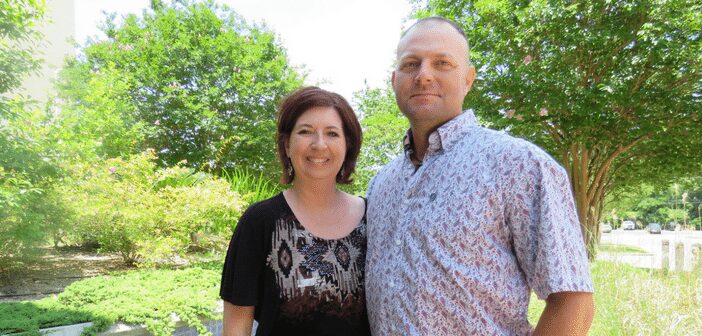
Bridget and Jason Tobias say they’ve grown closer over the past several months, as Bridget has recovered from her stroke.
LUFKIN, TEXAS (May 21, 2018)… “I watched him day after day study and become a paramedic. Little did I know what he was doing would save my life one day.”
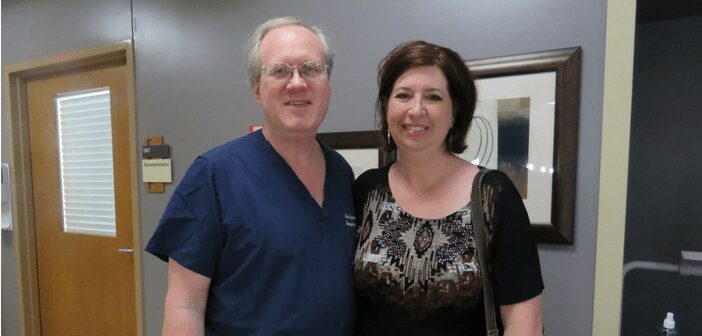
John Sanders, M.D. (left) was the Emergency Medicine physician on-call the day Bridget Tobias (right) was rushed to CHI St. Luke’s Health-Memorial Emergency Department. He and his team of highly trained ER nurses got Bridget the help she needed as quickly as possible.
Tired and weak from an intense bout of food poisoning, Bridget Tobias, 43, of Lufkin was resting on the couch at home around 2:30 in the afternoon on January 31, 2018. Her husband Jason had just cleaned up from lunch.
“I had taken her plate back into the kitchen and she told me ‘My body’s cramping up,’ and she rolled over. I sat her up, and when I looked at her, she was drooling. I said ‘Grin for me real big,’ and when she did there was nothing on her left side.”
Jason’s professional instincts kicked in immediately. A Fire Rescue Captain and Paramedic for the Nacogdoches Fire Department for the past 20-plus years, Jason had seen hundreds of stroke victims riding in the back of his ambulance. He never expected, however, to see one in his own living room. After performing the Cincinnati Pre-Hospital Stroke Scale, which assesses a person for facial drooping, speech abnormalities and arms that drift when raised, he recognized that his wife was experiencing the telltale signs of a stroke, including total paralysis of her left side.
“The last thing I really remember was him telling me he had called an ambulance,” Bridget said.
Bridget Tobias, a relatively young and healthy horse rancher and former barrel racer, was brought to CHI St. Luke’s Health-Memorial Lufkin – a Certified Primary Stroke Care Center – only a half-hour from the beginning of her symptoms. The hospital’s dedicated stroke team was ready and waiting for her. Bridget had a CT scan done within the first minute of arrival, and then immediately received tPA (Tissue Plasminogen Activator), a medication that dissolves blood clots and the gold standard in medical treatment of ischemic strokes. Two specific CT scans confirmed the diagnosis of the Emergency Department physician John Sanders, M.D. and the need to send Bridget for more advanced, interventional neurological treatment, called a Mechanical Thrombectomy. The procedure would be done at CHI Baylor St. Luke’s Medical Center, the sister facility of CHI St. Luke’s Health-Memorial and a
Comprehensive Stroke Center in the Texas Medical District known for its NeuroScience Center. Interventional Neuroradiology at the NeuroScience Center has garnered international recognition for cutting-edge technology in the prevention and treatment of neurovascular diseases, according to the center’s website.
“By the time I got [to Houston] she was coming out of recovery. We were still in the tPA window by the time she was getting the Thrombectomy done,” Jason said.
For optimal results, tPA must be administered within four hours of symptom onset. Because of Jason’s keen awareness of his wife’s situation and quick response, Bridget has made a near full recovery.
It was at the beginning of their marriage that Jason received his certification to become a paramedic and then participated in the Fire Academy at Angelina College to become a fulltime firefighter and paramedic.
Twenty years later, “those late nights of studying paid off,” Bridget laughed.
“You train and you go through the hours and hours of studying and you get on an ambulance and you make calls to Joe Public’s house. You don’t know who they are. It’s your job,” Jason said. “It’s what you’re supposed to be a professional at and an expert at, and then when it’s your own family member, it’s a completely different deal. I’m thankful I was sitting there. I could have been on-duty, she could have been there alone with just our daughter. My daughter and I could have been out taking care of the horses.”
“If I had gone and lay down, I would have fallen asleep and probably never woken up,” Bridget agrees.
After nearly two weeks at CHI Baylor St. Luke’s and two interventional surgical procedures, Bridget was admitted to TIRR Rehabilitation, an intensive, inpatient rehabilitation program in Houston.
“At that time, she could move her toes and lift her foot off the bed about an inch,” Jason remembers. “I asked her before we left CHI, ‘What is your goal?’ and she said, ‘I want to be me again.’ I told her when we go to rehab that this was, hands down, going to be the hardest thing she would ever do in her life, but if you work hard, you’ll get there.”
The days were long and painful, but during those next three weeks, Bridget learned to walk again. Bridget said it was the most humbling experience of her life. After an especially exhausting physical therapy session, Bridget and Jason were riding the elevator back to her room. She questioned whether or not she would ever return to the life she loved.
“I saw myself in the mirror and thought, ‘You’re not going anywhere. You can’t even move.’ A man in a wheelchair came in and zoomed past me. When I looked back at him, he was controlling everything with his mouth, and I said, ‘Ok, I can do this.’”
Now, three-and-a-half months later, Bridget has zero deficiencies in walking, talking or cognitive function.
“They tell me, ‘you’re 99% over this,’ but this last mile is hard,” she said. “I give God all the glory, but I’m also quick to say that if you don’t believe in yourself and work your butt off, then forget it. It’s a lot of hard work.”
She continues physical therapy two days a week to gain strength and mobility in her left arm in hopes that one day she will get back into the saddle to ride alongside her husband and daughter. As a family who has participated for years in the rodeo circuit, the Tobias’ no doubt understand the value of hard work – up each morning to feed their 19 horses and the hours, upon hours of practice that’s required of young barrel racers, like their 15-year-old daughter Lucchesse. Bridget said she never imagined after all those years in the arena training her daughter to continue her barrel racing legacy that the coach would become the student.
“Bridget spent 15 years coaching Luc to ride horses and excel, and now’s she getting to be Bridget’s coach,” Jason said. “She’s been so strong through all of this.”
There are numerous reasons a stroke can happen. Non-modifiable risk factors include advanced age, gender, heredity and race. Other modifiable risk factors like diabetes, hypertension, blood cholesterol levels, smoking, obesity and physical inactivity can also raise a person’s likelihood of having a stroke. But Bridget didn’t fall into any of these categories. She’s young, physically active and eats a gluten-free diet, proof that a stroke can happen to anyone at any time.
“The one thing I try to tell people is you can’t say it’s not going to happen to you. You have to be prepared, because I never imagined this would happen to me. Never,” Bridget said.
And she encourages everyone to learn how to recognize the signs and symptoms and what to do if you see someone who may be suffering from a stroke – always call 9-1-1 first and seek help as soon as possible. Common symptoms include a new or sudden onset of weakness or paralysis, especially on one side of the body, including the face; impaired balance and coordination; speech and language deficits; impaired judgment and thought processes; confusion; and visual changes.
As a the area’s first Certified Primary Stroke Care Center, CHI St. Luke’s Health-Memorial’s stroke-focused program meets a higher set of standards to help provide better outcomes for stroke care, according to CHI St. Luke’s Health-Memorial’s Stroke Program Clinical Coordinator Amanda Allen, RN, SCRN. The program includes a dedicated stroke team – including uniquely trained nurses, neurosurgical physicians and neurologists on staff – designated CT technology and 24-hour radiologist services, a dedicated stroke unit within the hospital for optimal recovery, and full service rehabilitation capabilities, both inpatient and outpatient.
While the Tobias’ don’t know the root cause of her stroke, they say the doctors identified abnormalities in three of her four main blood vessels that lead to the brain. These abnormalities can contribute to blood clot formation. Doctors theorize that because she had spent the several days before vomiting from food poisoning, a clot may have broken lose causing her stroke. Whatever the reason, Bridget says she attributes the quick thinking of her husband and the efficiency and expertise of the staff at CHI St. Luke’s Health-Memorial for her amazing recovery.
“I would have never made it, if it hadn’t been for [Jason]. My heart knew that he saved me. I felt like if he was there, I was going to be okay,” Bridget said. “And everything the ER staff did paid off; all their hard work paid off. They gave me my life back; it’s as simple as that, because everybody did their job.”
Please let this serve as a reminder to you about the TxDOT Click It Or Ticket event coming up on Wednesday, May 23, at 10:30 am at the Lufkin Municipal Court Building on Shepherd Street in Lufkin. Please send a representative from your law enforcement agency or media outlet to attend. The Press Conference will last about 30 minutes and the media will have the opportunity to conduct one-on-one interviews with the speakers at the close of the event.
Our line-up of speakers will be Lufkin Municipal Court Judge April Earley; Sgt. David Hendry, Texas Department of Public Safety Texas Highway patrol education spokesperson; Cpl. Brad Davis, Lufkin Police Department traffic safety division specialist; and Cheryl Flood, TxDOT Lufkin District Engineer.
State statistics for 2017 regarding seat belts will be released and our speakers will be informative about their roles in this important safety campaign that affects us all. We look forward to seeing you or your representative there!
Have you been applying for jobs and sending your resume out at every opportunity only to be met with total silence? The jobs are out there and you know you are capable, so, what’s the problem?
“Remember, your resume is an advertisement of yourself, and if it is flawed, you are seen as flawed.” says Michael McAuliffe, president of Family Credit Management. “The objective is to make you look as good as you can on paper while being honest.”
Perfecting Your Resume
Sixty-one percent of recruiters will automatically dismiss a resume because it contains typos, according to CareerBuilder. Start by combing over every line, eliminating typos, inconsistencies, spacing issues and other errors. At some point, put your resume aside and return to it a bit later with a fresh pair of eyes or even ask a trusted friend or family member to take a look at it as well.
Be sure your resume is in the right format for your industry. Some industries favor a straightforward listing of previous positions, others favor highlighting accomplishments and skills attained. If you aren’t sure about your industry’s resume preferences, you can easily Google this information.
The Hiring Process
Beyond typos and formatting, there may be another factor killing your prospects. More than half of job candidates are eliminated from the online job search by an applicant tracking system, which filters out resumes that don’t match the job description. This means if you don’t use the right words and put them in the right order, your resume will never be seen by human eyes.
Here is a typical hiring process for a medium-sized company which gets around 100 to 200 applications per position, according to Dr. John Sullivan, an internationally known HR thought-leader in Silicon Valley:
1. The 100 to 200 will get filtered down to around 25 applications and given a 20-30 second view.
2. Of the 25, they will get a second look and filtered down to about five to 10 applications.
3. These five to 10 are assessed and maybe tested to narrow it down to three to five.
4. Those three to five candidates will get an interview.
5. Only one person will be hired.
Cracking the Code
Want to crack the code that will get your resume viewed and short-listed, and land you an interview? Consider leveraging free resources designed to help. For example, Family Credit Management, the non-profit credit counseling agency, has expanded their services to include a free resume review service. By emailing your resume to resumereview@familycredit.org, along with which position you are applying for or what type of job you’re seeking, you can get free feedback and pointers on your resume from financial experts. To learn more, visit familycredit.org.
“Navigating the job market is never simple, however, smart strategies can help you become more effective in your hunt,” says McAuliffe.