Join the Family Crisis Center of East Texas on Tuesday, October 7, 2025, for an afternoon of hope, healing, and powerful purpose to support survivors of domestic violence across East Texas.
This year’s keynote speakers are Nichole & Jim Schmidt, who turned the tragic loss of their daughter, Gabby Petito, into a mission, advocating for missing persons and survivors of domestic violence through the Gabby Petito Foundation.
Tickets are $50 for individuals and $500 for reserved tables (seats 8, with the option to add 2).
Texas pumpkin producers are experiencing a strong harvest thanks to consistent rainfall and a dry July. While quantity is on par with last season’s harvest, producers say overall pumpkin quality is better compared to last year, according to Texas A&M AgriLife Extension Service experts.
Mark Carroll, AgriLife Extension agriculture and natural resources agent for Floyd County, said consumers can expect a significant improvement when purchasing their Texas-grown pumpkins this year.
Floyd County, east of Lubbock in the Texas High Plains, is where the bulk of Texas pumpkins are grown.
“Overall, producers in Floyd County saw early, consistent rainfall early in the growing season, which is needed for pumpkin producers,” Carroll said. “This was followed by a dry period during the second week of July, providing the ideal dry climate for pumpkin growers.”
Pumpkin prices are expected to remain consistent, with some variability as Halloween approaches. For the best prices, consumers are encouraged to purchase their pumpkins early.
Carroll said consumers can prolong the life of fresh, Texas pumpkins by keeping the bottom dry to prevent wet rot and decay. He also recommends carving your jack-o-lanterns no earlier than Oct. 20 to prolong the quality of a pumpkin for Halloween decor.
In 2021, the U.S. Department of Agriculture, USDA, Economic Research Service reported Texas as the national leader in pumpkin revenue. While states like Illinois. Indiana and Michigan lead in production quantity; most of their product is used for pie filling and processed foods, receiving a lower price per pound than Texas’ ornamental jack-o-lantern-style pumpkin.
Favorable conditions for Texas pumpkin growers
Juan Anciso, Ph.D., AgriLife Extension horticulture program leader and associate head of the Texas A&M Department of Horticultural Sciences, said that Floyd County poses an ideal location for Texas pumpkin production.
“Pumpkin production can be tricky,” Anciso said. “Fresh market pumpkins grown for Halloween have to be planted between two of the hottest months in Texas, June and July.”
Anciso said cooler nights in the Panhandle help to provide the temperatures required to produce a heat-sensitive crop like pumpkins.
Pumpkins thrive in mild, frost-free climates with plenty of water. Unlike midwestern states, Texas producers battle warmer temperatures and windier conditions that slow the growing rate for pumpkins and affect fruit set. Producers in Floyd County utilize drip irrigation to ensure their pumpkin crops remain cool and receive adequate and timely water.
Anciso acknowledged a history of success for pumpkin production within the state. Data shows Texas led the nation in 2020 for pumpkin crop value at $25.9 million, according to USDA While dry weather reduces yields, it helps to produce a higher quality pumpkin, contributing to the increase in pumpkin prices compared to other states.
Both Carroll and Anciso encouraged consumers to purchase pumpkins from bins containing a Texas pumpkin logo to ensure support of Texas producers.
AgriLife Extension district reporters compiled the following summaries:
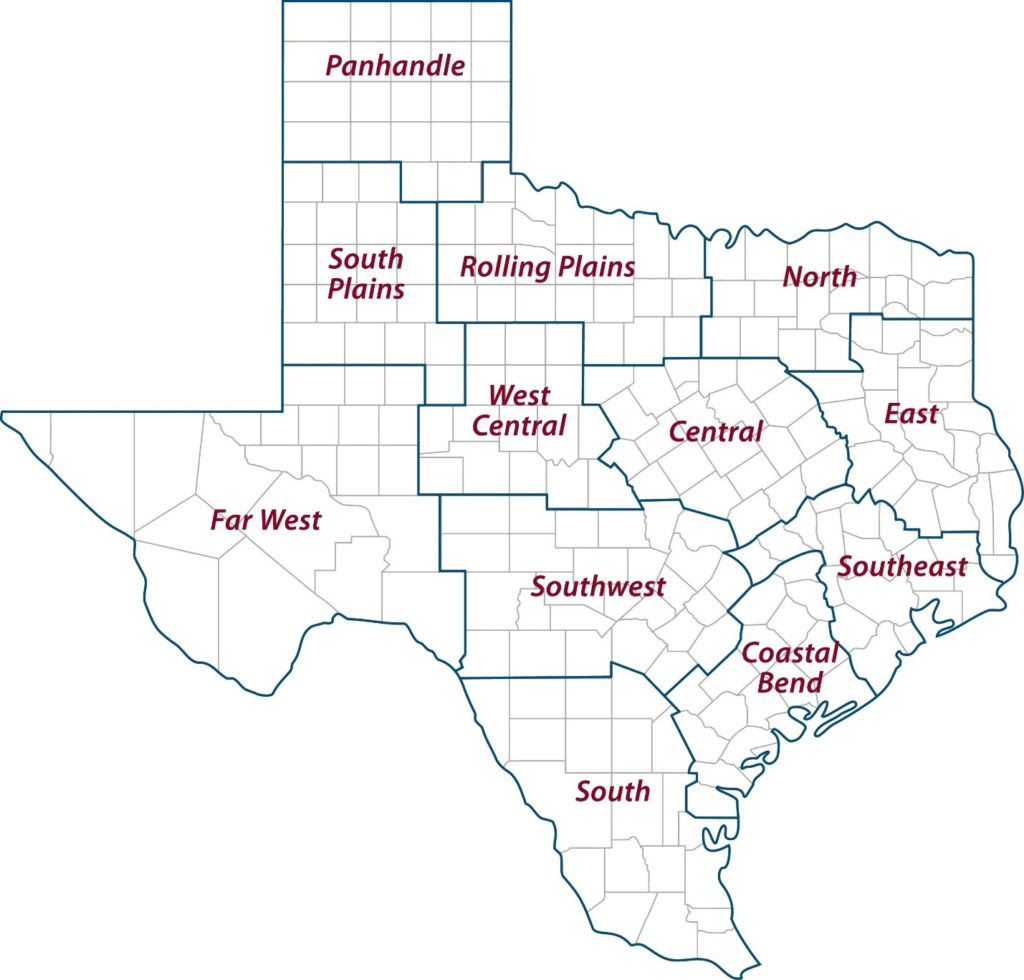
A map of the 12 Texas A&M AgriLife Extension Service districts.
Panhandle
Overall, soil moisture was reported as short to adequate. Pasture and rangeland conditions were reported fair to good. Crops were reported fair to good. More rain was needed to maintain soil moisture profiles going into late fall and winter. The district saw cooler, dry conditions. Silage harvest continued. Corn harvest progressed. Cotton acres were limited in some areas due to early season hail-out. Wheat planting continued. Fall armyworm activity was reported as high.
South Plains
Subsoil and topsoil moisture levels were low in the district due to lack of recent moisture. Pastures were in good condition. Producers started to dig peanuts and prepare for the remainder of the harvest season. Grain sorghum and corn harvests continued. Bolls began to open in the cotton fields for the past couple of weeks, and in some areas, producers were starting to defoliate. Cattle were in good condition.
North
Weather was suitable for fieldwork with areas receiving some rain. A cool front provided lower temperatures. Pasture and rangeland conditions were fair to good, with subsoil and topsoil being adequate and short. Some pond levels dropped. Most corn was mature, and cotton bolls were opening. Peanuts were in fair to good condition, with a small percentage in the mature stage. Soybeans were in fair to good condition, and many fields showed dropped leaves. Winter wheat and oats were planted, and some winter wheat was emerging. The harvesting of corn, hay, cotton, peanuts, sorghum, soybeans and sunflowers continued. Livestock were mainly in fair to good condition. Fall armyworms were spotted in pastures and hay fields. Mosquitoes and biting gnats increased in number.
East
Subsoil and topsoil conditions remained adequate. In some parts of the district, rainfall improved soil moisture and gave producers confidence to move forward with winter pasture planting. However, most of the district needed rain. Pasture and rangeland conditions were fair to good. Hay production started to wind down. Livestock were in fair to good condition, and producers were providing protein and energy supplements. Cattle markets remained strong. Wild pig activity increased in some areas.
Far West
Temperatures held steady, with a slight dip toward more seasonal temperatures at week’s end. Rain ranging from trace amounts up to 2 inches fell across much of the district. Responding green-up helped livestock pastures going into fall. The rain was too late for the cotton crop but was good for the wheat crop. Most cotton bolls were open, and harvest was expected to start soon. Pima and upland cotton fields in western parts of the district were in the final stage of development, and most farmers irrigated for the last time of the season. Pest pressure was minimal, with some whitefly seen, but nothing alarming to date. The pecan crop looked good overall, with pecans filling well, as weather and low pest pressures cooperated thus far. Alfalfa growers experienced decent production, and, weather permitting, fields in western parts of the district were expected to see two more cuts this season.
West Central
The district received scattered showers and storms during a midweek cold front and low-pressure system. The rainfall improved soil moisture and created optimal conditions for planting small grains, though additional rain is needed to maintain progress toward crop germination. Cotton remained in poor to fair condition, though slight improvements were noted. Sorghum harvest continued. Some pecan orchards experienced a 50%-75% crop loss due to flooding, though pecan prices remained good. Weed germination was spurred by rainfall, increasing pressure in pastures. Rangeland conditions slightly improved, but wildfire risk remained high due to standing forage. Some grass fires were reported. Cattle conditions were good overall, with supplemental feeding still ongoing in dry areas. Stocker and feeder markets remained steady, with some higher prices in feeder steers.
Central
Rainfall ranged from trace amounts to 3.5 inches, with no more in the 10-day forecast. Milder temperatures followed the rain. Rangeland and pasture conditions remained good. Some winter forage for grazing started to emerge. Producers were baling the last cutting of hay. Farm stock ponds and creek flows dropped but were still adequate. Cotton harvest continued. Some wheat planting started, and early planted wheat was starting to emerge. Oat planting continued, but some producers were waiting for bigger rains. Livestock were in fair to good condition with supplemental feeding occurring.
Southeast
The district experienced particularly hot and dry weather, with areas being monitored for potentially rapid development of drought conditions. Rainfall the past week remained below average, with only 2.5 inches recorded for the month. Corn, sunflower and sorghum harvests finished while cotton harvest ranged from 20% to 90% complete. There were a few isolated reports of armyworms. Cotton harvest began. Dry conditions led to early cattle culling and concerns over hay availability, as late-season yields were down significantly, and future cuttings were unlikely. Hay producers finished operations for the summer and were allowing pastures to return to natural states amid a complete absence of rainfall in the upcoming forecast. Pasture and rangeland ratings were fair to excellent. Livestock conditions ranged from poor to excellent.
Southwest
Temperatures were hotter than normal before a cool front brought slightly cooler conditions and spotty rainfall, though no measurable accumulations were reported. Dry conditions persisted across the area. Cotton harvest was expected to wrap up soon, with good yields reported. Field preparation for winter pastures was underway, and planting of small grains and food plots was progressing. Livestock markets remained steady to strong. Pasture conditions continued to decline, and supplemental feeding of livestock was increasingly evident. Stomach worms affected sheep, but overall, livestock were in good shape. Wildlife benefited from the acorn drop, and turkeys found an abundance of seeds from mature grasses and plentiful grasshoppers. Some very late-hatched turkey poults were observed in recent weeks and remained small for this time of year. Rangeland grasses were at or near maturity as the breeding season began. Bucks shed most of their velvet.
Coastal Bend
Hot, dry conditions persisted with little measurable rain since July, leaving soil moisture very dry and pastures stressed. Scattered showers brought slight improvements, but subsoil moisture remained poor, and drought conditions were critical. All major crops were harvested. Cotton yields were excellent, and ginning continued at full pace. Rangeland and pasture conditions varied from poor to good, forcing many producers to start hay feeding earlier than usual. Livestock remained in good condition, though supplemental feeding was increasing and concerns about hay inventories were growing. Pecan producers were preparing orchards for harvest, and crop potential looked fair to good.
Yet another big week for our soccer teams – both of which currently are ranked nationally – and our Lady Roadrunner softball team opened its Fall Ball season on Sunday.
We also saw two of our Roadrunner baseball players shine at the annual Texas-New Mexico JUCO All-Star game in Dallas.
Finally, both our basketball teams held their respective Media Days, following up the event with an appearance at the Lufkin High School football game, where they participated in the big scholarship presentations. The men’s team also helped with a local food drive as part of their commitment to community service.
All this, and basketball season is right around the corner.
We are AC, and we’re ready to Run ‘Em.
Here’s a quick rundown of the past week’s events, along with what’s coming up next:
No. 17 Lady Roadrunners Continue Roll with Win over No. 20 Blinn
Another couple of steps up the Top 20 rankings, and another week proving they belonged there.
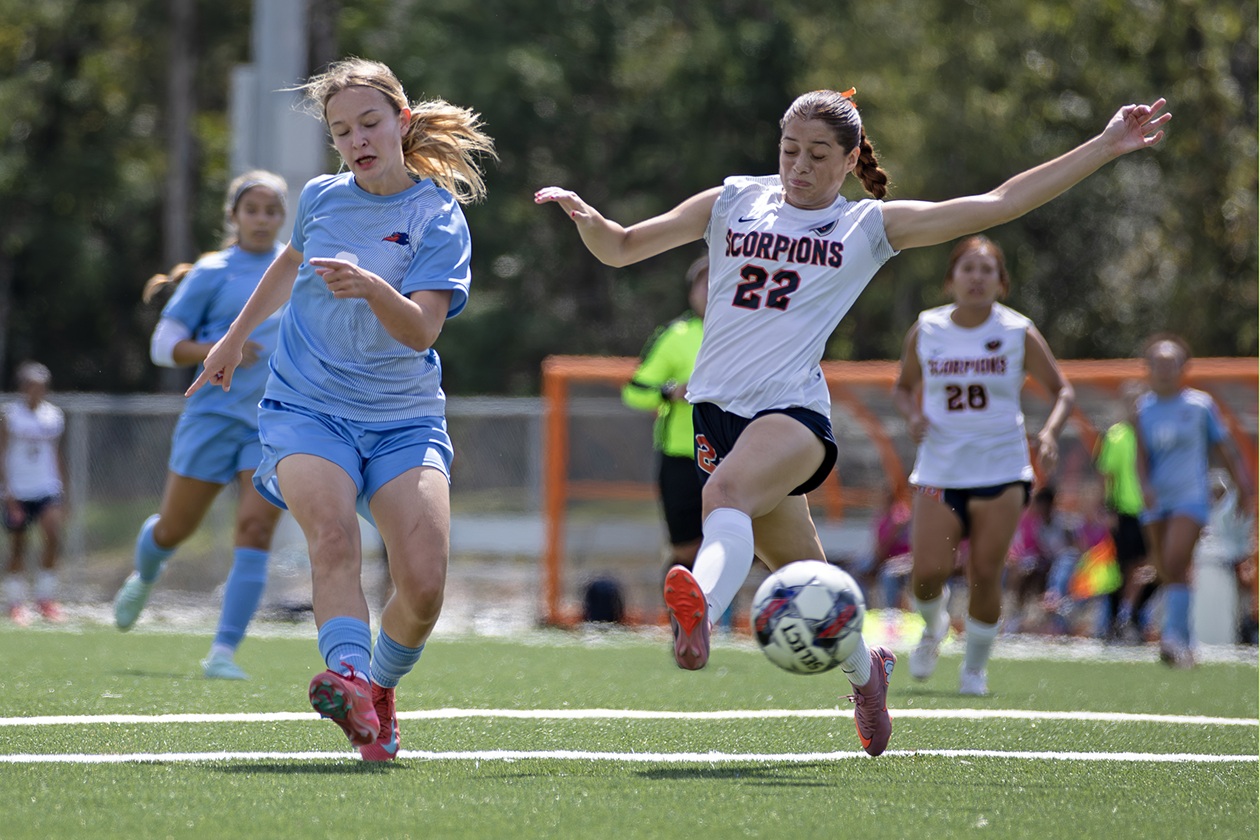
Now ranked No. 15 in the nation, AC’s Lady Roadrunners proceeded to rout Texas Southmost College Friday at the Larry Phillips Family Sports Complex on the AC campus. Anne Vandaele and Beatriz Almeida each scored a hat trick, accounting for all six goals in AC’s 6-0 win over the Lady Scorpions.
Almeida also accounted for one assist, while Paula Suarez added two assists. Michelle Naderman and Madi Heubel each finished with an assist as well. Goalkeepers Sara Gonzalez and Callie LaChance-Herman kept the Scorpions off the scoreboard, with Gonzalez saving three shots and La’Chance-Herman saving another.
With the win, the Lady Roadrunners (6-1-1) tightened their grip on the top spot in the Region XIV South Zone. AC leads second-place Louisiana State University-Eunice (4-2-2) by two full matches.
The Lady ‘Runners will have some time off this week as the Hill College match originally scheduled for this Tuesday, Sept. 30, has been canceled with no makeup date in the plans.
AC’s ladies next will travel to Eunice, Louisiana to face Louisiana State University-Eunice in a women’s/men’s doubleheader scheduled to kick off at 5 p.m.
No. 18 Roadrunners Take Down Ranger, Texas Southmost
The Roadrunners climbed their way back into the national rankings, hitting No. 18 in this past Monday’s polls.
AC then went out and won both their matches this week.
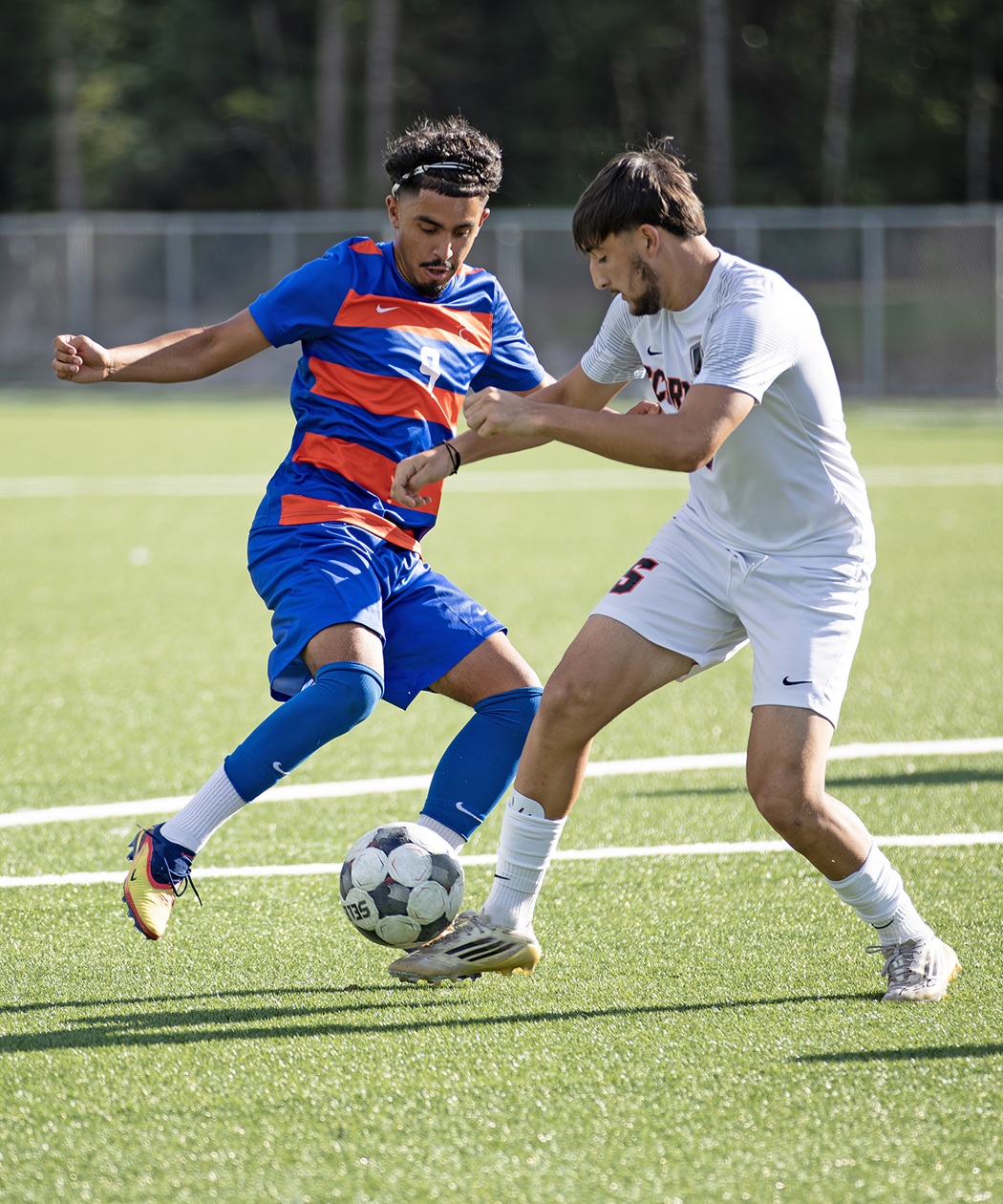
On Tuesday, the Roadrunners broke open a tight match with two second-half goals. Christian Castaneda converted a pass from Jhosua Jory in the 72nd minute for the match’s first score, and Diego Ramirez followed in the 88th minute with a goal on another feed from Jory.
Keeper Iori Tanaka was spectacular in the net, saving seven Ranger shots on goal.
On Friday, the ‘Runners blanked Texas Southmost College by a 3-0 final. Ramirez scored just four minutes into the match thanks to an assist from Albi Zyla, then Jory found the nets after a Shuto Ishikawa feed in the 22nd minute. Castaneda converted a Jory assist for the final goal in the 64th minute. Tanka again finished with a shutout in goal.
The Roadrunners (6-1-1, 4-1-1) maintained their first-place position in the Region XIV South Zone. AC travels to Beeville to face Coastal Bend Community College at 1 p.m. on Tuesday, Sept. 30. The ‘Runners then play at Louisiana State University-Eunice at 7 p.m. on Tuesday, Oct. 6.
Ficarra, Standley Shine at TX-NM JUCO All-Star Game
AC Baseball’s Connor Ficarra and Cole Standley showed up and showed out at the annual Texas-New Mexico JUCO Baseball All-Star Classic held last weekend in Dallas.
Ficarra, a sophomore from Katy, went 3-4 with one walk at the plate, then added a pair of stolen bases to his stats. Standley, a sophomore from Woodville, was 1-3 with a walk in his four at-bats.
The Roadrunners will host their first home game of the “Fall Ball” season on Sunday, Oct. 5 at Poland Stadium on the AC campus. The doubleheader is scheduled for a 1 p.m. start.
Lady ‘Runner Softball Kicks off Fall Season
AC’s Lady ‘Runner softball team kicked off its Fall Ball season on Sunday, facing the Lady Patriots-Babbs in doubleheader. Because the games are considered “exhibition” games, there were no stats or scores recorded; however, AC’s ladies showed they’ve been preparing for some live action, with some big hits throughout the lineup to go along with some solid pitching and defensive plays.
The Lady Roadrunners will travel to Waxahachie on Saturday to face Nelson University in a doubleheader scheduled for a 12 p.m. start.
Lady Roadrunners, Roadrunners Assist at Dinner at the Diamond
This year’s Dinner at the Diamond proved another big success, in large part because of the efforts of Angelina College athletes.
Players from every sport assisted with everything from setup and takedown to manning all the games to delivering auction items to the highest bidders.
Some of the players even showed the crowd how to dance to the “Y.M.C.A” while also handling the “Bah, Bah, Bah” part of “Sweet Caroline” during the seventh-inning stretch.
The event raised funds for all Angelina College students, providing numerous resources to those individuals trying to navigate their way through college.
Basketball Teams Assist with Scholarship Presentations at Local Football Games
The Lady Roadrunner and Roadrunner basketball teams are still a few weeks away from the start of their season openers, but that hasn’t stopped the players from making an impact.
This past week, both teams showed up to assist AC recruiters with some big scholarship presentations.
The men’s team also performed community service at the Christian Information Center’s recent food drive.
AC’s Roadrunners open their pre-season schedule this week at the Oklahoma Jamboree in Norman, Oklahoma. On Friday, Oct. 3, the Roadrunners play three one-hour scrimmages: vs. Eastern Oklahoma State at 11 a.m.; vs. Coffeyville Community College at 3 p.m.; and vs. Colby Community College at 5 p.m.
Baseball Adds “Kids Camp” in October
AC’s baseball team will offer a “Kids Camp” on Monday, Oct. 13 at Poland Stadium on the AC campus. Ages 6-10 will hit the field from 9-11 a.m. (with 8:45 check-in), while ages 11-14 will be on the diamond from 12-2 p.m. (with an 11:45 check-in).
For further questions, contact Roadrunner head baseball coach Jon Phillips at jphillips@angelina.edu or assistant coach Cody Crowder at ccrowder@angelina.edu.
All AC Teams Have Schedules Up and Running Online
Lady Roadrunner and Roadrunner fans can now find their favorite teams’ schedules on the Angelina College Athletics website (www.angelinaathletics.com). For now, only the fall schedules for baseball and softball are in place (with the potential to add more events later), but all other teams, including both women’s and men’s basketball, are ready for viewing and planning.
We’ll update any changes as we receive them.
We can’t wait to see you at the games.
Live Streaming Reminder:
All AC Athletics regular-season home games are live streamed on TSBN Sports (a free streaming service for fans), with most of the conference road games also available for streaming. (This does not include baseball and softball fall games, as those are not considered official games.)
Once TSBN posts its schedules, AC fans simply need to visit the AC Athletics web site, look at the scrolling schedule in the middle of the page and click the blue “Video” link.
TSBN also offers an app great for smart phones, devices and smart TVs. (You’ve GOT to see those matches and games on the big screen.)
If there’s one thing East Texans understand, it’s resilience. We’ve seen storms, floods, fires, and economic downturns – yet our communities always find a way to rebuild. The same is true in leadership: challenges will come, but the ability to stand strong when pressure mounts makes all the difference.
Pressure Reveals Character
Difficult seasons don’t just test leaders – they reveal them. When the heat rises, people see what’s really inside us. James 1:2-4 reminds us, “Consider it pure joy… whenever you face trials of many kinds, because you know that the testing of your faith produces perseverance.”
Resilient leaders don’t crumble under pressure. They lean on faith and let trials refine their character.
You Can’t Be Resilient Alone
There’s a myth that strong leaders don’t need help. The truth? Leaders who isolate themselves eventually break. Even Moses needed Aaron and Hur to hold up his arms when the battle grew long (Exodus 17:12).
Here in Texas Forest Country, we know the strength of community. Neighbors show up, churches rally, and friends lend a hand. Leaders must do the same – lean on others, ask for prayer, and build support circles. Resilience grows in community.
God Uses Trials to Shape Leaders
Looking back, some of my hardest seasons became my most important classrooms. As Paul wrote in 2 Corinthians 4:8–9, “We are hard pressed on every side, but not crushed… struck down, but not destroyed.”
Every challenge is an opportunity for growth. God wastes nothing. Even the setbacks become stepping stones when placed in His hands.
Three Ways to Build Resilience This Week
Find Your Rhythm. Schedule time for prayer, rest, and family. Don’t run on empty.
Lean on Your Circle. Ask a friend, mentor, or church leader to walk with you.
Look for the Lesson. Instead of asking “Why me?” ask, “What is God teaching me through this?”
That’s a Wrap
Resilient leadership isn’t about pretending life is easy. It’s about standing steady when life is hard – trusting God for strength, leaning on community, and letting challenges make you stronger instead of bitter.
Here in East Texas, we know what it means to be tough, but as leaders, we’re called to more than toughness – we’re called to resilience anchored in faith.
So this week, no matter what storm you’re facing, stand firm. Your family, your workplace, and your community need leaders who won’t quit when it gets hard — leaders who rise stronger through the trial.
Scholarship Provides Resources for Qualified Students
A total of 41 Angelina College students received recognition at the Smith-Hutson Scholarship Banquet held this past week at Crown Colony Country Club in Lufkin.
Those students included both first-year and second-year recipients.
This group of second-year recipients was recognized at the recent Angelina College Smith-Hutson Scholarship Banquet held at Crown Colony Country Club in Lufkin. The scholarship provides valuable resources to students who demonstrate both financial need and academic promise as they pursue an associate’s degree or certifications at AC. (Gary Stallard photo for AC News Service) This group of first-year recipients was recognized at the recent Angelina College Smith-Hutson Scholarship Banquet held at Crown Colony Country Club in Lufkin. The scholarship provides valuable resources to students who demonstrate both financial need and academic promise as they pursue an associate’s degree or certifications at AC. (Gary Stallard photo for AC News Service)
The Smith-Hutson Scholarship was established at AC in 2003 and was created to assist incoming students – as well as those students with at least a year remaining – who “demonstrate both financial need and academic promise as they pursue an associate’s degree or certifications” in their chosen fields of study, according to the AC website.
The scholarship targets assistance with “tuition, books, fees and reasonable living expenses.”
Following is the list of recipients, along with hometowns of record and chosen majors:
Esmerelda Almaguer (Lufkin), Business Administration and Management; Nicole Boyett (Nacogdoches), Applied Science/Radiology; Trista Britt (Center), Applied Science/Radiology; Even Cantu (Lufkin), Music; Mia Carcamo (San Augustine), Pharmacy Tech; Maryjoy Cariaga (Livingston), Nursing; Amy Cordero (Lufkin), Applied Science/Radiology; Martha Cuc (Lufkin), Applied Science/Radiology; Mario De La Cruz (Lufkin), Welding Technology; Fatima DeJesus (Diboll), Education: Yadira Diera (Lufkin), Pharmacy; Landon Elliott (Pineland), Engineering/Aviation; Sariette Flores (Pollok), Emergency Medical Services; Christian Gamboa (Lufkin), General Studies; Jonathan Garcia (Pollok), General Studies; Jolie Garcia (Pollok), Surgical Technology; Taylor Garcia (Pollok), Sports Medicine/Kinesiology; Summer Goins (Wells), Sonography; Julia Gonzalez (Diboll), Psychology; Kristina Guardado (Lufkin), Health Science; Emmerson Jackson (Lufkin), Sonography; Elizabeth Jacobo (Pollok), Nursing; Nickolas Jiminez (Lufkin), Undeclared; Lauren Low (Alto), Agricultural Systems Management; Sidney Moore (Lufkin), Nursing; Hailey Morgan (Reklaw), General Studies/Surgical Technology; Bryan Munoz (Groveton), Applied Science/Welding Technology; Destiny Ordaz (Lufkin), Business Administration and Management; Giselle Perez (Lufkin), Applied Science/Radiology; Kaitlyn Pineda (Nacogdoches), Applied Science/Sonography; Makayla Price (Lufkin), Applied Science/Nursing; Samara Reagan (Pollok), General Studies; Alyssa Redd (Pollok), General Studies; Angel Rios (Diboll), Engineering; Consuelo Rivera (Fredericksburg), Sonography; Angelique Rodriguez (Lufkin), Nursing; Reina Rodriguez (Lufkin), Respiratory Technology; Rylea Terrazas (Diboll), Business Administration and Management; Kelrick Thomas (Hemphill), Applied Science/Welding Technology; Lindsey Tobias (Pollok), Applied Science/Surgical Technology; and Rosa Torres (Lufkin), Pharmacy.
For further information regarding the Smith-Hutson Scholarship at Angelina College, contact Irma Montoya (imontoya@angelina.edu) or Annette Sandoval (asandoval@angelina.edu.)
“It’s okay to get mad when someone is not following God’s rules,” says Talon, 6. “Like if someone steals a toy from another person, it’s okay to get mad. The angry feeling can help you do something to make things better.”
At six years old, Talon has given us a nugget. Righteous anger will motivate us to do something to make things better. Sinful anger will always make things worse.
“Jesus was angry when he drove moneychangers out of the temple,” says Madalyne, 11. “This was righteous anger. It is okay to get angry if we know something is wrong, and the people who are doing it know it is wrong, too.
“If someone lies, for example, we have the right to be angry at him or her. But we should also remember that we have lied in the past and not be harder on them than we are on ourselves.
“You should not correct someone for doing a wrong thing if you have done the same thing or something else wrong and not resolved it. If you have done so, then first resolve it before correcting your friend.
“Yes, it’s okay to be angry, but only when you yourself have resolved your own problems, which could cause others to be angry at you! Otherwise, let someone who has resolved his problems handle it, and (you) handle your own problem.”
Jesus spoke of removing the plank from your own eye before you try to remove a speck from someone else’s eye. Don’t be a hypocrite (Luke 6:41-42).
Fear of appearing self-righteous or being called a hypocrite shouldn’t make us passive in the face of obvious injustice.
“When Martin Luther King Jr. fought for civil rights, he was angry because blacks were not treated equally back then,” says Nathaniel, 8. “But sadly, he was shot. That is one of the times that it is good to get angry.”
The Apostle Paul put it this way: “Let love be without hypocrisy. Abhor what is evil. Cling to what is good” (Romans 12:9). He also wrote: “Bless those who persecute you; bless and do not curse. Rejoice with those who rejoice, and weep with those who weep” (Romans 12:14-15).
Every Christian lives in a world full of injustice. Our call is to love and bless those who persecute us unjustly. At the same time, we are to be people of compassion in rejoicing with those who rejoice when justice is served and weeping with those who weep when people suffer from injustice. We should be first to speak up for those who suffer unjustly, and at the same time be willing to bless those who unjustly persecute us for Christ’s sake.
“When we get angry for a good reason, we must be sure that our anger only targets sinful behavior and true injustice, is properly controlled and does not last for a long time or turn into bitterness,” says Alice, 12.
The Apostle Paul wrote: “Be angry, and do not sin’: do not let the sun go down on your wrath, nor give place to the devil” (Ephesians 4:26-27).
Think about this: Jesus got angry when he encountered those who used his father’s house for personal gain (John 2:12-17). He also got angry at the hardness of heart that religious leaders showed when they tried to trap him (Mark 3:4-6).
Memorize this truth: Ephesians 4:26-27 quoted above.
Ask this question: Do you get angry at the things that made Jesus angry?
Kids Talk About God is designed for families to study the Bible together. Research shows that parents who study the Bible with their children give their character, faith and spiritual life a powerful boost. To receive Kids Talk About God three times a week in a free, email subscription, visit www.KidsTalkAboutGod.org/email.
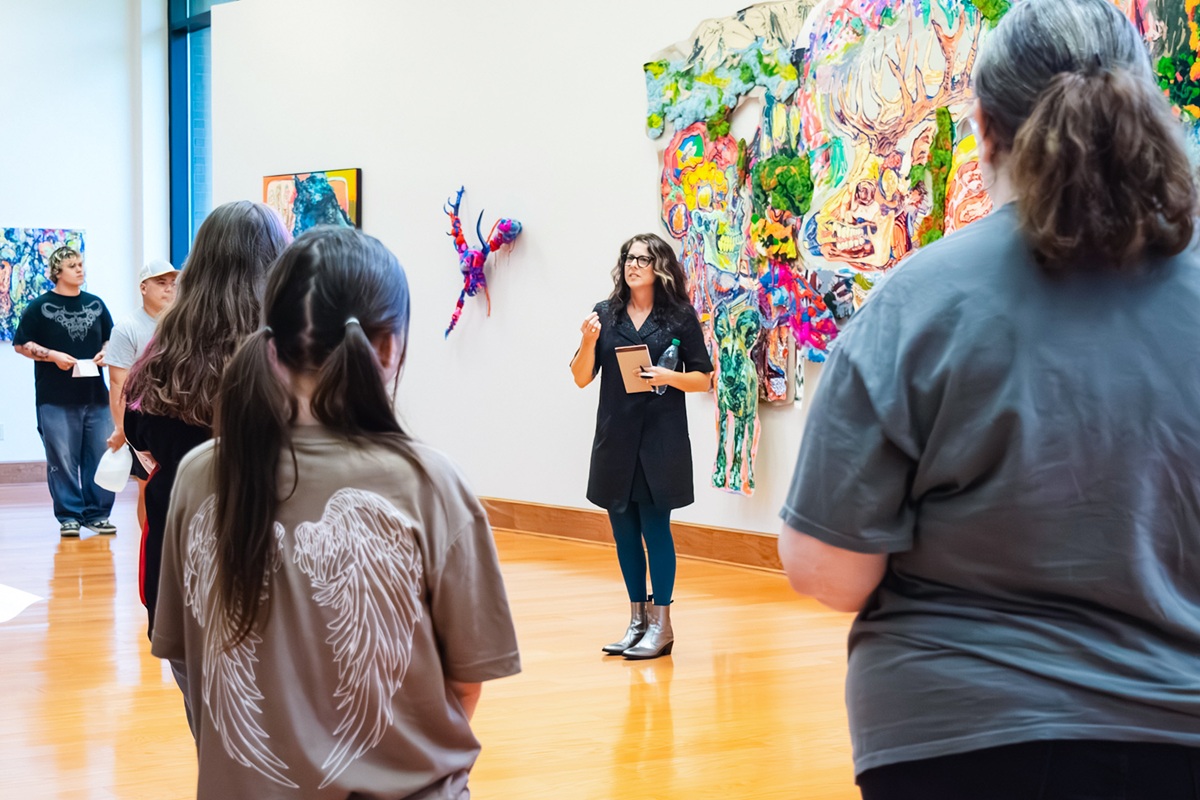
Angelina College’s School of Visual and Performing Arts welcomed renowned artist Toni Ardizzone in a reception held this past Tuesday at the Angelina Center for the Arts Gallery.
Artist Toni Ardizzone poses in front of one of her works during Tuesday’s artist’s reception held at the Angelina Center for the Arts Gallery. Ardizzone’s exhibition “Unruly Altars” will be on display in the ACA through Oct. 28. (Jessica Deel photo for AC News Service)
Ardizzone, whose solo exhibitions and mural work has shown across the United States and in Argentina, among other locations, will offer several pieces in an exhibition titled “Unruly Altars” scheduled to run through Oct. 28 in the ACA Gallery.
According to ACA curator and AC Art instructor Le’Anne Alexander, Ardizzone in her art employs “colorful, yet confrontational imagery enhanced by aggressive brushstrokes, outlining themes of survival, life, and death. Personal experiences with mortality and chronic illness inform its use of living anatomy, vintage materials, models, bones, and antique fabrics. The artist’s employment of color is purposeful yet urgent, and the powerful, layered textures explore the complex exchange of both the joy and sorrow of existence, creating a balance between life and oblivion, an overall aim to communicate the universal human experience.”
Artist Toni Ardizzone (right) poses with Angelina College curator and Art instructor Le’Anne Alexander during Tuesday’s artist’s reception held at the Angelina Center for the Arts Gallery. Ardizzone’s exhibition “Unruly Altars” will be on display in the ACA through Oct. 28. (Jessica Deel photo for AC News Service)
From the artist’s statement:
“Through a visceral blend of collage, painting, textiles and mirrors, this exhibition constructs a sacred space, dedicated to the raw, untamed energies that pulse through the natural world and our own inner landscapes.”
Artist Toni Ardizzone (center) address the crowd during Tuesday’s artist’s reception held at the Angelina Center for the Arts Gallery. Ardizzone’s exhibition “Unruly Altars” will be on display in the ACA through Oct. 28. (Jessica Deel photo for AC News Service)
Admission to the exhibition is free and open to the public.
Music Instructors Perform for Crowd in ACA Gallery
Angelina College music instructors on Thursday conducted a “Faculty Music Forum” for a large crowd in the Angelina Center for the Arts Gallery on the AC campus.
From soaring vocals to instrumental solos, those instructors displayed the very talents they hope to instill in their students.
Performers and their chosen pieces included the following:
Chance Moore (guitar), “The Place I’ll Return to Someday” (from “Final Fantasy IX”) by composer Nobuo Uematsu; Sarah Jackson (soprano, with pianist Beckie Compton accompanying), “In Uomini” (from “Cosi fan tutte) by composer W.A. Mozart; Donna Dear (piano), “Romance in D Major” by composer Florence Price; Charlotte Davis (soprano, with pianist Beckie Compton accompanying), “Io son L’umile ancella” by composer Francesco Cilea; Paul Berler (alto saxophone, with pianist Beckie Compton accompanying), “Sonata, movement II” by composer Phil Woods; and Tate Ashby (piano), Tico-Tico no fuba” by composer Zequinha de Abreu.
The Fall season has officially arrived and with it brings the promise of cooler temperatures, campfires, and trips to the deer blind. This Fall also brings a new election, and I wanted to start this column by reminding you and your family to be sure to register for the upcoming constitutional amendment election before the October 6 deadline. The November 4 election is quickly approaching, and it is our duty to ensure that our voices are heard. To register or view your local polling locations, simply visit: www.votetexas.gov
With that, here’s an update from your State Capitol…
Capitol Update
This week, we will continue our examination of constitutional amendments on the ballot for the upcoming November election. Specifically, this column will focus on Propositions 3, 12, 15, 16, and 17, which make reforms to public safety, the justice system, and your rights as Texans.
Proposition 3 will amend the Constitution to require the denial of bail pending trial to a person charged with certain serious felony offenses, including murder, aggravated assault, aggravated sexual assault, indecency with a child, and human trafficking.
Texas has seen a rise in violent crime across the state from offenders who were unreasonably released from custody. Our own community has witnessed the tragic murder on Audrii Cunningham by a violent predator who managed to slip through the cracks of the justice system. I was proud to support the legislation that enabled Proposition 3, and I look forward to finally reforming our broken bail system.
Proposition 12 will amend the Constitution to modify the composition of the State Commission on Judicial Conduct to ensure that commissioners reflect the values of the Texans they serve. The Governor will now appoint members to the Commission, and the Commission will now deliver final rulings on rogue and corrupt judges. I was proud to support the legislation that enabled this proposition to protect Texans from judges who chose to follow their own beliefs rather than the law.
Proposition 15 will affirm that a parent has the responsibility to nurture and protect their child and has the right to exercise care, custody, and control of the child, including the right to make decisions concerning the child’s upbringing. I was proud to support the legislation that enabled this proposition to ensure that parents are the only ones in the driver’s seat when it comes to decisions about their children’s education, health, and well-being.
Proposition 16 will expressly provide that persons who are not citizens of the United States are prohibited from voting in Texas. I was proud to support the legislation that enabled this proposition to ensure that only Texans vote in our elections and that the safety and security of our democratic process is not threatened.
Finally, Proposition 17 will allow the legislature to exempt property located in a county that borders Mexico that houses border security infrastructure, such as a border wall, from property taxes. I was proud to support the vital piece of legislation that enables this proposition and ensures that our private land owners along the border are properly compensated for having infrastructure on their property that protects all Texans from crime, human trafficking, and deadly drugs.
The mobile office is on the road again in October, and our District Director looks forward to seeing you on the following dates, in the following locations: October 1 at the San Augustine County Courthouse from 9:30-11:30am; October 8 at the Polk County Commissioner’s Court Room in Livingston from 9:30-11:30am, or at the Tyler County Courthouse in Woodville from 1:30-3:30 pm; October 15 at the Houston County Courthouse Annex in Crockett from 9:30-11:30am, or at the Trinity County Courthouse in Groveton from 1:30-3:30pm.
As always, please do not hesitate to contact my office if we can help you in any way. My district office may be reached at (936) 634-2762 and our Capitol office at (512) 463-0508. Additionally, I welcome you to follow along on my Official Facebook Page, where I will post regular updates on what’s happening in your State Capitol and share information that could be useful to you and your family: https://www.facebook.com/RepTrentAshby/.
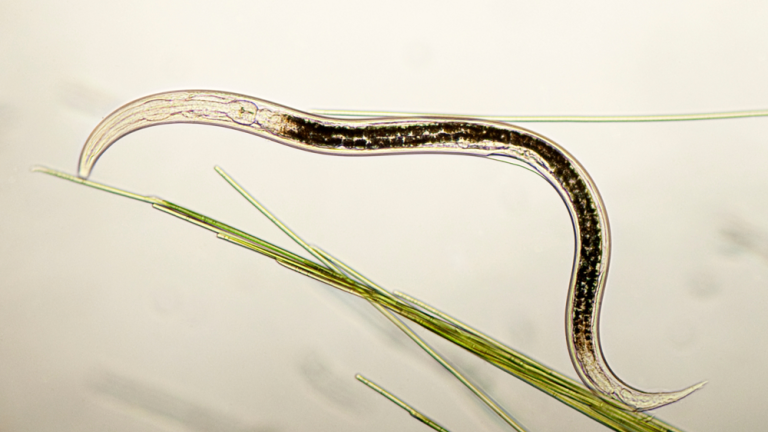
We are no strangers are to challenges in East Texas agriculture. Floods to drought and insects to diseases – all effect gardens, landscapes, and forage production alike. One of the most frustrating is caused by microscopic roundworms in the soil called root-knot nematodes.
Nematodes are not insects, so sprays or dusts won’t touch them. They attack plant roots, plugging them up and causing swelling and ‘knots’. The knots reduce water and nutrient uptake and the result is weak, stunted plants that never seem to thrive—no matter how much fertilizer or water you apply.
Now to be clear, there are numerous kinds of nematodes and only a few are harmful. It is the ‘root-knot’ nematodes that adversely affect plants by stunting their growth. The others that seem to go unnoticed can be quite beneficial.
According to Texas A&M AgriLife Extension, root-knot nematodes are widespread in our region and especially damaging in vegetable gardens and lawns. Crops such as tomatoes, okra, beans, squash, and cucumbers are common victims. Turfgrasses can also show thinning and yellowing when nematodes are present.
But these “invisible”, microscopic roundworms are not readily evident and are frequently blamed for poor plant performance. In many a garden, I’ve asked if I could pull up a plant and study the roots. Sacrificing a tomato plant, I’ll gently tug them out of the soil and study the roots, looking closely for the swollen ‘knots’. Study some pictures of infected plants and you will learn to easily identify them too.
So, what’s a gardener to do if you do find them? Experts recommend several cultural strategies. First, rotate crops when possible, avoiding planting susceptible vegetables in the same spot year after year. Next, choose resistant varieties where available. For example, some tomato varieties are labeled with “N” for nematode resistance. Lastly, improve soil health by incorporating organic matter to encourage beneficial microbes that naturally suppress nematodes.
Now unfortunately, once nematodes are in your soil, there is no quick, one-time fix. That’s where a unique method—called a trap crop—comes in. One of my favorite trap crops is Elbon rye.
This fall, purchase some cereal grain rye (making sure it is the Elbon rye variety) and sow it thick across your affected garden soil. Rye grain is a winter annual that germinates in the fall and, if left to fully mature, would make rye grain in the spring. (Please do not confuse this with ryegrass that is so common in some pastures and your local bar-ditch!)
Here’s how the trap works: Root-knot nematodes enter Elbon rye roots looking to do their work within their roots, but unlike with your tomatoes or squash, they cannot successfully reproduce. This interrupts their life cycle, the adults cannot leave, and reduces their overall population.
Not only is this variety of cereal rye a trap crop for nematodes, it also helps reduce erosion and adds organic matter when it is incorporated into the soil.
Timing is critical. Plant rye in the fall, allow it to grow through winter, and then shred and turn it under at least two to three weeks before spring planting. Allowing time for decomposition prevents rye residue from interfering with vegetables that follow.
Plant now till mid-October for the best stands, but know that it can be started as late as early November. Seed Elbon rye at a rate of 3–4 pounds per 1,000 square feet.
About one month before you plant in your garden, you must mow down your rye and incorporate the plant material into the soil. That may be mid-January for your potatoes or as late as mid-March for purple-hull peas.
Is this a silver bullet? No. But planting Elbon rye thick will certainly eliminate a large percentage of the nematodes present. Repeat plantings of Elbon rye over the years will continue to diminish their numbers.
Root-knot nematodes may be invisible, but their damage is easy to spot. While there’s no silver bullet, planting Elbon rye in the fall is a science-backed, sustainable way to chip away at populations and give your garden crops a healthier start in spring.
For more information on nematodes and recommended control practices, visit Texas A&M AgriLife Extension at aggie-horticulture.tamu.edu.