On October 2, 1835, fighting began between Mexican soldiers and the Texas militia at Gonzales, officially starting the Texas Revolution. American colonist at Gonzales had refused a request by the Mexican government to surrender a small cannon that had been given to the settlement years earlier to defend against Indian raids. When the settlers declined the request, Mexican soldiers were dispatched to retrieve it. The iconic “Come and Take it” flag was raised above the cannon during the battle, and the moniker was adopted by the Texian rebels.
Here are five things happening around your state:
Nederland teacher honored by National Geographic contest
Nederland High School physics teacher Wendy Lapeyrolerie was recognized as a national runner up in a National Geographic essay contest, one of seven teachers recognized nationwide. The “Meet a National Geographic Explorer” contest required participants to submit a 500 word essay describing the importance of bringing the world into the classroom and how it impacts students and connects them to real world content. Because of her great work, her students will have the opportunity to receive a virtual presentation from National Geographic Explorer Malaika Vaz. Vaz is a filmmaker, conservationist, and the CEO of Untamed Planet, a production company that’s made films for National Geographic, BBC, and PBS. She was named to Forbes 30 Under 30, among other honors. Congratulations on a job well done to Wendy Lapeyrolerie!
Second special session ends
Early this month, both chambers of the Legislature adjourned the second called special session this year. By the end of the session, the Legislature passed a number of measures, including new camp safety measures and flood funding, new congressional maps, a bill to reform standardized testing in schools, among other measures. There were 20 bills in total that passed both chambers and were signed by the governor, making the second special session very productive given the limited number of days.
DETCOG begins broadband assessment with public meetings
The Deep East Texas Council of Governments (DETCOG) is hosting public meetings to initiate an action plan to bring broadband access to the region. This stems from a US Department of Agriculture Rural Development Broadband Technical Assistance Program award received by DETCOG. The study will begin with an online survey, followed by three in-person public meetings and an additional virtual public meeting. To take the survey, follow this link: https://www.detcog.gov/broadband. The virtual meeting will take place Monday, September 29 from 1:30 pm to 3pm. The meeting will be available over Zoom and information on how to access the meeting is available on DETCOG’s website.
Governor Abbott issues executive order regarding THC
This month, Governor Abbott issued an executive order directing various state agencies to further restrict access to hemp-derived products after the Legislature failed to come to an agreement on further regulation during the special sessions. The order directs the Texas Alcoholic Beverage Commission (TABC) and Department of State Health Services (DSHS) to initiate rulemaking to prohibit the sale of hemp-derived products to minors and require age verification at the point of sale. It also directs DSHS to revise testing requirements to ensure tests measure the total THC content of products to get an accurate reflection of how much THC is actually in a product and ensure it is below the legal threshold. The order also requires TABC, DSHS, and other relevant state agencies to conduct a study on further regulatory action and how it could be implemented.
Changes for hunting season 2025-2026
Texas Parks and Wildlife Department (TPWD) wants hunters to be aware of changes made before heading into the field this hunting season. Starting this season, TPWD is offering fully digital license options for all recreational hunting, fishing, and combination license and tag types. Additionally, legislation passed during the 89th regular session streamlines the process for non-resident hunter licenses. Now there are only two options: Non-resident General Hunting license, for hunting any legal bird or game animal, and Non-resident Special 5-Day Small Game/Exotic Hunting license, for non-residents looking to harvest exotic animals, small game birds, non-game animals, fur-bearing animals, squirrels, or javelinas. TPWD is also initiating changes for season date changes for mule deer season, quail season, and migratory game bird season. For more information, visit https://tpwd.texas.gov/.
Bryson DeChambeau on the range at Bethpage on Tuesday. Photo by David McElveen.
When the Ryder Cup rolls into Bethpage Black (New York) this week (Sept. 23–28, 2025), you might think it’s a long way from East Texas. In truth, Texas—and Texans—are woven all through the fabric of this event. From a landmark edition hosted in Houston, to captains and players who call Texas home, to behind-the-scenes frequency coordination led by an East Texas team (including me), the Lone Star footprint is unmistakable.
A Ryder Cup that Truly Was “Texas”: Houston, 1967
Only once has the official Ryder Cup been played in Texas: 1967 at Champions Golf Club in Houston. That week delivered a record-setting American win, 23½–8½, captained by Fort Worth legend Ben Hogan. Champions—co-founded by Houston icons Jackie Burke Jr. and Jimmy Demaret—cemented itself as major-championship turf and later hosted the 1969 U.S. Open, among other crown-jewel events.
The Texas Captaincy Tree: An Outsized Legacy
Texas has produced a remarkable share of U.S. Ryder Cup captains—many enshrined in the Texas Golf Hall of Fame—including:
Ben Hogan (1947, 1949, 1967) – Fort Worth’s ball-striking benchmark.
Byron Nelson (1965) – The gentleman from the Dallas area whose name graces a PGA Tour staple.
Jackie Burke Jr. (1957 playing captain, 1973 captain) – The Houston maestro and Champions GC co-founder.
Dave Marr Jr. (1981) – Houston-born major champion who captained what many consider the greatest U.S. side ever.
Lee Trevino (1985) – Dallas’ own, six-time Ryder Cup player and later captain.
Tom Kite (1997) – Austin product who led the U.S. in Valderrama.
Ben Crenshaw (1999) – Austin’s two-time Masters champ who steered the U.S. to the famous Brookline comeback.
Scottie Scheffler hitting on the range on Tuesday at Bethpage. Photo by David McElveen.
Modern Texas Stars on Team USA
In recent Cups, Texas continues to matter between the ropes. Scottie Scheffler and Bryson DeChambeau (both from Dallas area) anchors the U.S. side again this year; Jordan Spieth (Dallas) has been a past team-room constant; and Patrick Reed (born in San Antonio) stamped his mark on past editions. Texas golf keeps supplying elite talent to America’s roster.
East Texas on the Airwaves: Keeping the Event Talking (and Safe)
Major events like the Ryder Cup only work when broadcast, media, operations, and public safety communications play nicely together. That’s where frequency coordination comes in – planning and actively managing the radio spectrum so wireless mics, intercoms, two-way radios, ENG links, Wi-Fi, and critical public-safety systems don’t step on one another.
This year marks my third Ryder Cup as a frequency coordinator, and I’m proud that part of the team comes right from East Texas: Bryan Compton and David McElveen are alongside me helping keep the spectrum clean so the world can see (and hear) the action – and so first responders and security can operate without interference.
Why it matters: Special events are especially prone to RF interference because so many different systems are packed into a small footprint. U.S. homeland security guidance specifically calls out special events as hot spots for interference and lays out best practices to prevent it—things like pre-event surveys, on-site monitoring, rapid re-channel plans, and playbooks for accidental or illegal transmissions. That’s the work we do—quietly, constantly, and sometimes under real pressure.
A Presidential Visit Raises the Stakes
Security and spectrum complexity escalate when a protectee is on site. Organizers have publicly indicated that President Donald Trump is expected to attend at Bethpage, which adds a layer of protective operations and communications hardening. In those scenarios, our coordination team supports spectrum deconfliction alongside federal, state, and local partners; for protectee visits, that can include integration with U.S. Secret Service protective communications and incident-response frameworks. (Think encrypted land-mobile radio, RoIP bridges, and tight, pre-planned channel maps.)
Plainly put: great golf makes the headlines, but safe, interference-free communications make the headlines possible.
The Texas Spirit, Everywhere You Look
Even though this edition is in New York, you can feel Texas throughout the week—
in the history (Houston’s 1967 rout at Champions),
in the leadership legacy (Hogan, Nelson, Burke, Marr, Trevino, Kite, Crenshaw), and
in the present tense, where Texas players lead the charge and an East Texas crew helps keep the whole show humming.
For fans back home, that’s something to cheer. From tee boxes to truck bays, from TV trucks to the command post, Texas is part of how the Ryder Cup gets done.
1967 USA Ryder Cup Team – Champions Golf Course Houston Texas Photo: Facebook – Ben HoganFrequency Coordination Team for 2025 Ryder Cup. Louis Libin, David McElveen, Bryan Compton, Steve Cowart, and Lee Miller
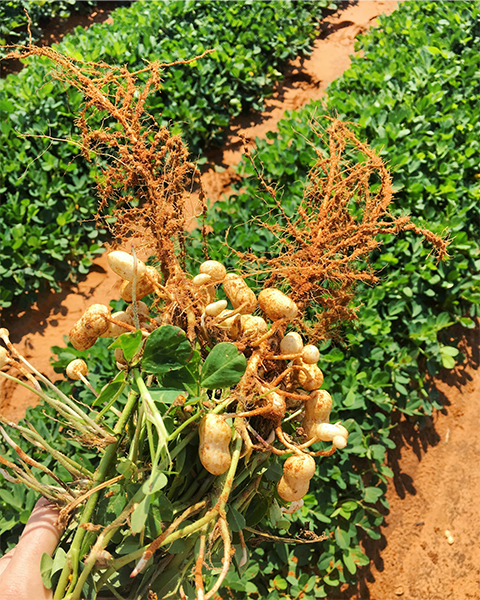
Summer rains and a competitive market that outpaced other commodities could result in record-breaking Texas peanut production, according to Texas A&M AgriLife Extension Service specialists.
“Starting in May through the end of planting, we had good rainfall across much of Texas,” said Emi Kimura, Ph.D., AgriLife Extension statewide peanut specialist, agronomist and associate professor in the Texas A&M Department of Soil and Crop Sciences, Vernon. “Then the growing season in June and July saw more beneficial moisture – something that hasn’t happened the past few years.”
Pancho Abello, Ph.D., AgriLife Extension agricultural economist and assistant professor in the Department of Agricultural Economics, said in addition to good growing conditions, prices for other commodities were lower, and peanuts offered higher profitability potential for some producers.
“Every other option in terms of commodities was not as competitive as peanuts, so we have seen more producers shifting acreage this year,” Abello said. “We are expecting a record-breaking production.”
Building a record-breaking year
Texas’ planted acreage for peanuts is up 45,000 acres this year over last year, for a total of 285,000 acres, according to the U.S. Department of Agriculture’sSept. 12 crop production report. Texas ranks second to Georgia in peanut production, followed by Alabama, Florida and North Carolina. The bulk of Texas peanut production is in Gaines, Yoakum, Terry and Cochran counties.
The report predicts average production will be 3,100 pounds per acre this year, compared to 2,600 pounds per acre harvested in 2024. The projected production is 822 million pounds compared to the 572 million pounds harvested in 2024.
Texas’ acreage increased 4%. Overall, the U.S. saw a 5.5% increase in acres despite lower peanut prices. USDA is forecasting about $500 per ton, which is in line with what Texas farmers are reporting they contracted for this year, Abello said.
“Given the predicted yield with the increase of acreage, we are now expecting record-high production,” he said.
The record production is expected to push ending stocks about 34% higher than last year, which could mean lower prices next year, Abello said.
Challenges: Drought, weeds and diseases
Not all regions of Texas received rain. While this year is better than previous years in the Rolling Plains and West Texas, Kimura said the peanut-growing region in South Texas – specifically Frio and Atascosa counties – remains under drought conditions.
Those receiving good rain also had to battle higher weed pressure, Kimura said. Growers without a solid weed control program could experience quality and yield losses. Weeds can also cause reductions in peanut grade during harvest.
“That was a challenge this year, to stay ahead of the weed issue,” she said.
Disease pressure has been average this season – peanut growers have their own fungicide program to stay on top of the issue, although some leaf spot and pod rot were noted through the season, but nothing major, Kimura said.
No early freeze, please
Ultimately, harvested acreage and yields will depend on weather conditions through the final stage of the crop.
“If it keeps raining during the normal harvest period, it can cause problems,” Kimura said. “We don’t want to see an early freeze, also, of course.”
She said producers will start digging peanuts in West Texas and in the Rolling Plains in October. Producers in South Texas typically begin digging in November. After peanuts are dug, they are windrowed to dry for several days and then combined to harvest the pods. If it rains on the dug peanuts, the quality goes down.
“We need open windows of sunny days to dig and get the harvest in,” Kimura said.
AgriLife Extension district reporters compiled the following summaries:
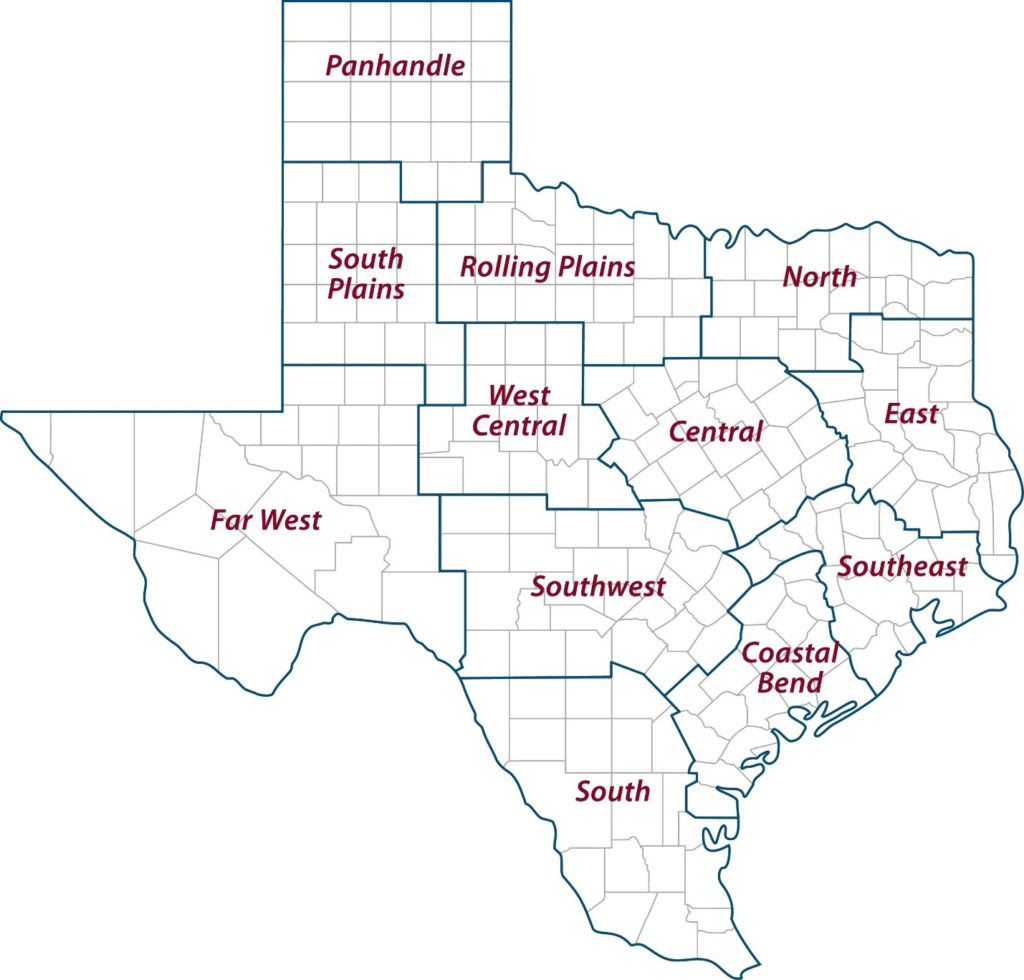
A map of the 12 Texas A&M AgriLife Extension Service districts.
Panhandle
Overall, soil moisture was short to adequate with scattered showers in some areas, while other counties experienced drought conditions. Pasture and rangeland conditions were fair to good. Corn and sorghum silage harvests continued. Wheat was being planted in some counties, while others were waiting for moisture. Some cotton producers were anticipating applications of harvest aids to begin an early harvest in October. Crop conditions were fair to good.
South Plains
Some areas received sporadic rain showers, with trace amounts of rain up to 2 inches. Cotton was beginning to open bolls, and grain sorghum harvest was complete. Fields were being prepped for winter crops. Wheat was being planted, and some was already emerging. Late-planted corn was expected to need another irrigation if the heat and lack of rain continued. Corn for grain was harvested. Sorghum silage was cut. Pastureland and cattle were in good condition.
Rolling Plains
Winter wheat planting was underway across the district, with many producers dry sowing due to limited soil moisture. Recent light rains provided slight relief, though overall conditions remained hot and dry. Topsoil moisture improved, allowing for quick wheat emergence. Despite the challenging weather, livestock conditions remained strong, and calves were being weaned or sold early amid favorable market prices. This strategy helped cows regain weight ahead of the fall calving season. Wildlife food plots began to recover from the recent heat. Cotton across the district was looking good, and harvest was expected to begin in a month. While the hot, dry conditions continued to challenge crops, timely rains earlier in the season helped maintain overall crop health, with many fields outperforming previous years. Producers remain hopeful that more substantial rainfall will arrive soon to support the establishment of winter wheat and ensure successful fall operations.
North
Topsoil and subsoil levels were short to adequate across the district. Pasture and rangeland conditions were fair to excellent. Mild weather conditions allowed forage to maintain its quality, and pastures looked incredibly good for this time of year. Hay harvest continued for some counties. Corn and grain sorghum harvests continued in some areas. Fields were prepped for wheat and oats, with grain-only planting expected to begin in October. Cotton was almost ready for harvest. The fig harvest was ongoing, and planting of winter vegetables continued as summer crops came to an end. Livestock conditions were good. Heavy infestations of fall armyworms were reported in parts of the district.
East
The district began to dry out in most areas, with many counties receiving little to no rainfall. Subsoil and topsoil conditions were adequate to short. Pasture and rangeland conditions were fair to good. Hay production continued, and producers put away record amounts of hay. Cattle markets remained strong, while feeder calves and slaughter cattle prices were reported to be lower. Livestock were in fair to good condition. Armyworm sightings continued.
Far West
The district experienced hotter-than-normal conditions, with daily highs frequently reaching into the 90s. Rainfall was limited, with little to no measurable precipitation reported on most days. Local forecasts indicated mostly sunny skies, with only isolated showers possible, but no significant rainfall developed. Soil and vegetation were still recovering from sustained dryness in many areas. Irrigated cotton was holding and looking good, while dryland cotton was nearing completion. Planting dates and water availability determined cotton yields. Wheat planting began, but seeds were being dusted in. Most producers were holding off to plant more acres when temperatures trended downward or chances for precipitation increased. Given the hot, dry conditions, stress on forage availability and pasture productivity persisted, with livestock grazing conditions trending toward fair rather than good.
West Central
Temperatures began to shift toward fall with daytime highs in the upper 80s to low 90s. Topsoil and subsoil were drying out. Fields were being prepped for small grain planting, and while preplant moisture was needed, some wheat was put in the ground where rainfall occurred. Cotton suffered but matured quickly, with bolls opening and harvest aid applications to begin soon. Nearly all sorghum was harvested. Early maturing pecans began to split hulls. Pastures dried up, grasses were dormant, and the fire danger increased as fields turned brown. Farmers and ranchers began supplemental feeding of cattle with protein and hay as rangeland conditions deteriorated, but livestock remained in good to excellent condition. Grass growth slowed with cooler nights. Stock tanks were running low on water, and livestock were in fair condition overall. However, cattle numbers risked declining further without rainfall.
Central
Dry and hot conditions persisted with no rainfall, though humidity levels remained high. Some producers were planting wheat into dry ground, hoping for rain in the coming days. Almost all corn was harvested. Corn and sorghum stalks were baled, and cotton harvest operations continued. Reports indicated above-average cotton yields, but prices were very low. Pecan producers were set to start harvesting Pawnee varieties soon, but the crop looked very thin. Land was being prepared for winter grazing grasses. Plenty of hay was available as hay cutting was still underway. Stock tank water levels began dropping considerably. Pasture and range conditions were good despite dry conditions and high temperatures. Livestock were in good to fair condition on pasture, with supplemental feeding still occurring. The cattle market softened slightly but not significantly, while sheep and goat markets remained strong.
Southeast
Parts of the district missed rainfall, and there were growing concerns about drought. Corn, rice and sorghum were all harvested. Cotton conditions were fair to good, with most bolls opened. Good weather allowed for significant hay cutting and field preparation for upcoming cool-season forage planting in some areas. High cattle prices were influencing producers to sell animals and lower their stocking rates. Pasture conditions became increasingly dry, though livestock remained in fair condition.
Southwest
Seasonal temperatures and dry conditions further stressed the plants. Moisture conditions continued to decline. Bacterial and fungal infections became more prevalent in trees, and insect pressure weighed on the limited forage availability. Field preparation for winter crop planting was underway. Corn harvest was complete, and small grains were being planted. Cotton harvest was nearing completion. Producers were taking advantage of the abundant hay supply and lower prices. Armyworms were present. Rangeland and pasture conditions remained good overall. Supplemental feeding of livestock was evident in some areas. Livestock were in good condition as the breeding season began. Sheep and goat producers were still worming livestock to prepare them for winter. Early scouting reports indicated deer were in good condition with an average fawn count.
Coastal Bend
Hot, dry conditions persisted, with scattered showers providing limited relief. Harvests of major crops were complete with mixed results. Cotton was the strongest performer, producing some of the best yields in years at more than 4 bales per acre in the southeast. Cotton gins continued to run at full capacity. Corn and sorghum yields were average to above average in the southeast and east but below average in drier northern and western areas. Fall fieldwork was ongoing in grain fields, including mowing, disking and row preparation. Fall armyworms were reported in Bermuda grass stands, further stressing forage supplies. Rangeland and pasture conditions continued to decline due to drought and mealybug infestations, although scattered showers provided localized improvement. In most areas, forage quality remained poor. Livestock remained in fair to good condition, though supplemental feeding was increasing. Some producers reported hay inventories, while others were beginning to rely on supplemental feed. Cattle prices remained strong. Pecan orchards were being prepared for harvest, with the crop looking promising.
South
Temperatures were moderate, with a few days under 100 degrees and early mornings dropping to 76. Small, random showers brought up to 2 inches of rain in some areas, but most areas still needed significant rainfall to replenish deeper soil moisture. Cotton was defoliated, and harvest was underway, while peanut and sesame growers continued watering. Forage and turf producers harvested grass, though production was slowing, with one more hay cutting expected. Vegetable producers were harvesting okra, and soil preparation for strawberries was underway. The row crop harvest was complete, and fields were being prepared for fall and winter, while awaiting moisture. Limited irrigation was observed on citrus and vegetable crops. Pastures and rangelands had withered during the drought, though some areas were beginning to green again. Beef cattle were in good condition despite limited forage, prompting increased supplementation with hay and protein. In ungrazed areas, standing forage posed a wildfire threat. Ranchers were culling harder and selling lighter-weight calves due to poor range conditions. Hay and feed were in high demand, with elevated prices. Deer were being supplemented. Wildlife thrived, with operations preparing for hunting season. Dove season started strong, turkey and deer seasons looked promising, and ranchers noted large deer populations. Wildlife were on the move.
Our soccer teams picked up some huge wins this week over ranked teams, some of our student athletes worked the East Texas Forest Festival (with Rowdy the Roadrunner on-hand for the “Mascot Dance-off” contest), and the baseball and softball teams have a busy week ahead with their respective “Fall Ball” schedules. In fact, the Lady Roadrunner softball team will host its first fall game of the season on Sunday. (See schedule below.)
We also had some pretty awesome halftime entertainment during Tuesday’s men’s soccer match, with the City of Lufkin Cheer Team (with Lufkin Parks and Recreation) on-hand to add some pizzaz to an already rowdy environment.
Don’t forget, we’re getting closer to our annual “Dinner at the Diamond” event taking place on Saturday, Sept. 27. If you haven’t reserved your spot, you may need to insert yourself into the lineup pretty quickly. The tables tend to fill up in a hurry.
We are AC, and we’re ready to Run ‘Em.
Here’s a quick rundown of the past week’s events, along with what’s coming up next:
No. 17 Lady Roadrunners Continue Roll with Win over No. 20 Blinn
The Lady Roadrunners on Monday moved up a slot in the NJCAA national rankings, going from No. 18 to No. 17 after some big wins last week.
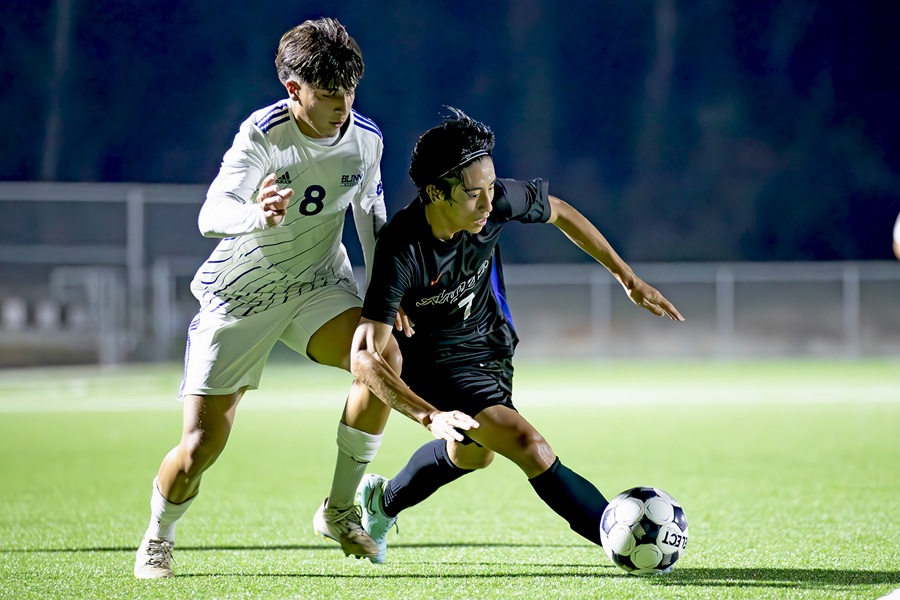
On Friday, AC’s ladies kept their momentum rolling with a huge win over No. 19 Blinn College, beating the Lady Bucs 1-0 at the Larry Phillips Family Sports Complex on the AC campus.
Beatriz Almeida broke open a fierce defensive battle with her goal in the 50th minute. Teammate Olivia Sanchez took control of a ricocheted shot and flipped it over to Almeida, who then drilled the back of the net for the match’s only score.
The AC defense, with Sara Gonzalez in the nets, held Blinn to just five shots on goal the entire match, with Gonzalez snuffing out each attempt.
With the win, Lady Roadrunners (5-1-1) took a two-match lead in the Region XIV South Zone standings. AC currently leads LSU-Eunice and Blinn College, who are tied for second place in the zone.
The Lady ‘Runners will host Texas Southmost College at 2 p.m. on Friday.
Roadrunner Soccer Beats No. 16 Blinn College at Home
After receiving votes in the NJCAA’s Division I national polls on Monday, the Angelina College Roadrunners may have gotten the boost they needed for a ranking after Friday’s 2-0 win over No. 16 Blinn College.
AC’s Christian Castaneda tallied the brace for the Roadrunners, scoring both goals. His first came in the 44th minute on a feed from Sebastian Pacheco, and he followed up with a converted penalty kick in the 65th minute.
Iori Tanaka posted the clean sheet in goal, knocking away all seven Buccaneer shots on goal.
The Roadrunners (4-1-1, 3-1-1) host Ranger College at 4 p.m. on Tuesday in a non-conference match; AC then will host Texas Southmost College at 4:30 p.m. on Friday.
Both matches this week take place at the Larry Phillips Family Sports Complex on the AC campus.
Baseball Add Camps for the Fall
AC’s baseball team will host some fall camps for both instructional and evaluation purposes.
On Sunday, Sept. 28, Roadrunner Baseball will host a “Prospect Camp” to evaluate future Roadrunners. The cam starts at 2 p.m. at Poland Stadium on the AC campus and is open to all high school players and college transfers.
AC’s baseball team then will offer a “Kids Camp” on Monday, Oct. 13 at Poland Stadium on the AC campus. Ages 6-10 will hit the field from 9-11 a.m. (with 8:45 check-in), while ages 11-14 will be on the diamond from 12-2 p.m. (with an 11:45 check-in).
For further questions, contact Roadrunner head baseball coach Jon Phillips at jphillips@angelina.edu or assistant coach Cody Crowder at ccrowder@angelina.edu.
Coming Soon: Dinner at the Diamond
AC’s Sixth annual “Dinner at the Diamond” event will take place on Saturday, Sept. 27 down on the baseball field at Poland Stadium on the AC campus.
Dinner at the Diamond is a major fund-raiser for Angelina College and its students – not to mention just a lot of fun for everyone involved.
We’ll have a registration link and other information for the event to send out in the coming weeks. We just wanted to give you enough time to mark those calendars.
All AC Teams Have Schedules Up and Running Online
Lady Roadrunner and Roadrunner fans can now find their favorite teams’ schedules on the Angelina College Athletics website (www.angelinaathletics.com). For now, only the fall schedules for baseball and softball are in place (with the potential to add more events later), but all other teams, including both women’s and men’s basketball, are ready for viewing and planning.
We’ll update any changes as we receive them.
We can’t wait to see you at the games.
Live Streaming Reminder:
All AC Athletics regular-season home games are live streamed on TSBN Sports (a free streaming service for fans), with most of the conference road games also available for streaming. (This does not include baseball and softball fall games, as those are not considered official games.)
Once TSBN posts its schedules, AC fans simply need to visit the AC Athletics web site, look at the scrolling schedule in the middle of the page and click the blue “Video” link.
TSBN also offers an app great for smart phones, devices and smart TVs. (You’ve GOT to see those matches and games on the big screen.)
Reminder II: Admission to ALL Angelina College Athletics sporting events is free, as is the TSBN live streaming. Any other links offering streaming are scams.
Reminder III: For the most current schedule updates (especially for potential weather issues) visit the official Angelina College Athletics website (angelinaathletics.com). Fans can also receive updates on the AC Athletics Facebook, X/Twitter, and Instagram pages.
Upcoming schedules:
Tuesday, Sept. 23:
Roadrunner Soccer vs. Ranger College, 4 p.m. at the Larry Phillips Family Sports Complex on the AC campus.
Roadrunner Baseball vs. North Central Texas College (1:30 p.m.) and Grayson College (4:30 p.m.) at the Melissa ZPlex in Melissa, Texas.
Friday, Sept. 26:
No. 17 Lady Roadrunner Soccer vs. Texas Southmost College, 2 p.m. at the Larry Phillips Family Sports Complex on the AC campus.
Roadrunner Soccer vs. Texas Southmost College, 4:30 p.m. at the Larry Phillips Family Sports Complex on the AC campus. (No live streaming for fall game.)
Sunday, Sept. 28:
Lady Roadrunner Softball doubleheader vs. Lady Patriots-Babbs, 2 and 4 p.m. at the Larry Phillips Family Sports Complex on the AC campus. (No live stream for fall games.)
For any other information, contact Sports Information Director Gary Stallard at gstallard@angelina.edu.
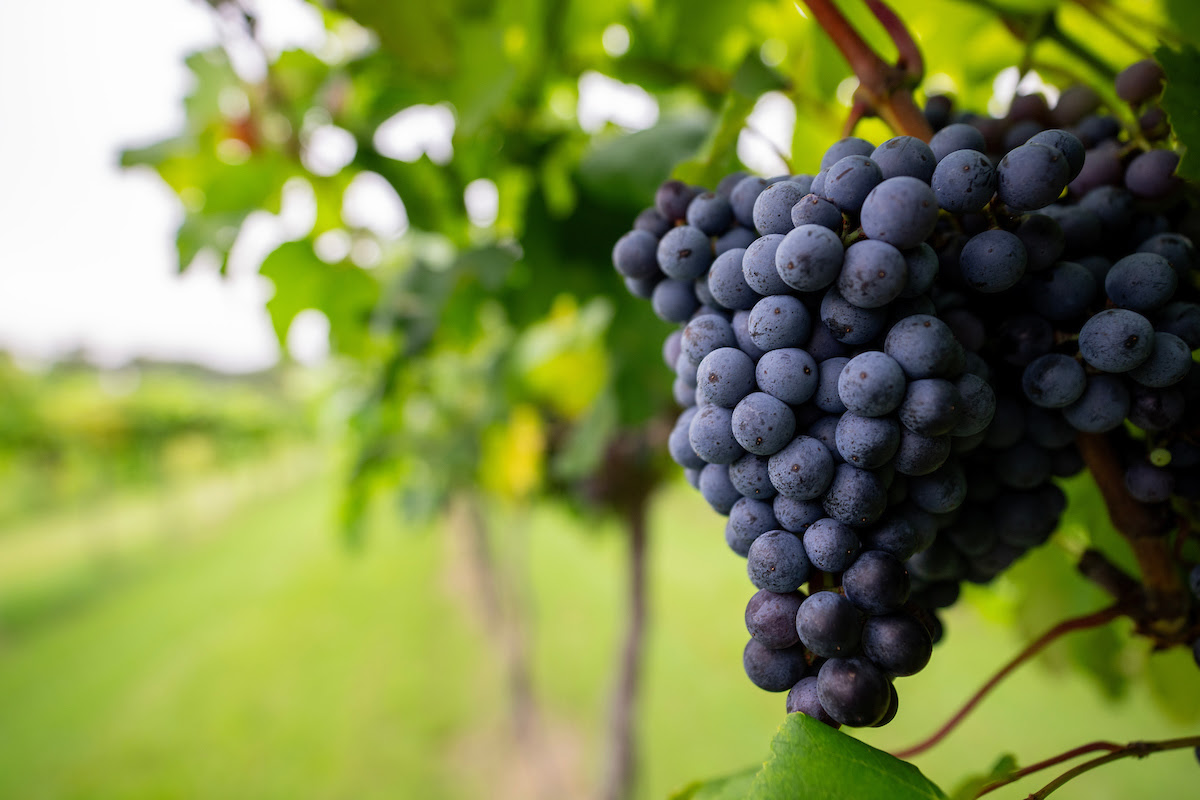
Texas wine grape growers are reporting high-quality fruit this season despite scattered weather-related challenges and ongoing uncertainty in wine markets, according to a Texas A&M AgriLife Extension Service specialist.
Justin Scheiner, Ph.D., associate professor and AgriLife Extension statewide viticulture specialist in the Texas A&M Department of Horticultural Sciences, Bryan-College Station, said harvest is still underway in parts of West Texas and the High Plains, while Gulf Coast, North Texas and Hill Country vineyards have mostly wrapped up picking.
Overall, yields have been average while quality has been very good to excellent where growers managed disease pressure.
“This has been a relatively mild summer by Texas standards, which was really good for fruit quality,” Scheiner said. “There were some fungal disease issues early because of heavy spring and summer rains, but vineyards that were able to keep those in check have harvested excellent fruit.”
Weather, disease influence yields and quality
Unlike recent years, Texas vineyards avoided widespread catastrophic events like late spring freezes or major hailstorms, though localized hail and flooding still caused damage in some areas.
Rains created challenges across multiple regions, particularly with fungal diseases that threatened production and vine health in the Gulf Coast, Hill Country and North Texas vineyards. Hill Country growers also dealt with localized flooding. However, once conditions dried out heading into ripening, vineyards that maintained control of diseases produced high-quality grapes, Scheiner said.
“Blanc du bois, black Spanish and newer Pierce’s disease-resistant varieties like Camminare Noir performed well,” he said. “Yields were moderate, but the quality has been excellent.”
Vineyards in the Texas High Plains, which account for most of the state’s wine grape acreage, will continue harvesting into October. So far, Scheiner said reports from the region also indicate high-quality fruit.
Wine grape demand dips
Despite the high-quality crop, Scheiner said some vineyards continue struggling to find buyers. National wine sales have slowed in recent years, and that trend has impacted Texas wineries and growers.
“The largest wineries in Texas buy most of their fruit, but they don’t grow much of it themselves,” Scheiner said. “Meanwhile, the largest growers often don’t have wine labels. So, when demand slows, it creates challenges linking vineyards and wineries.”
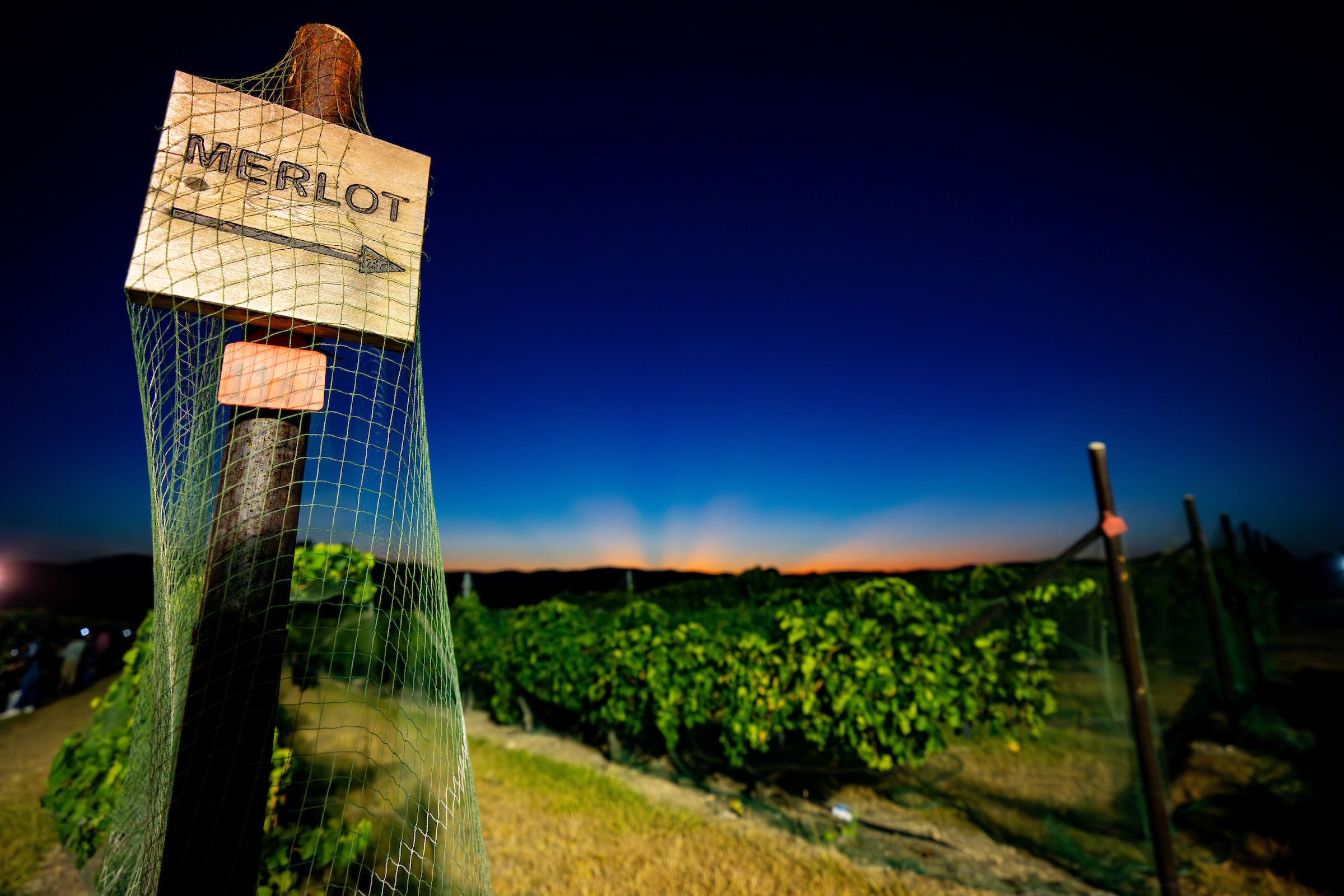
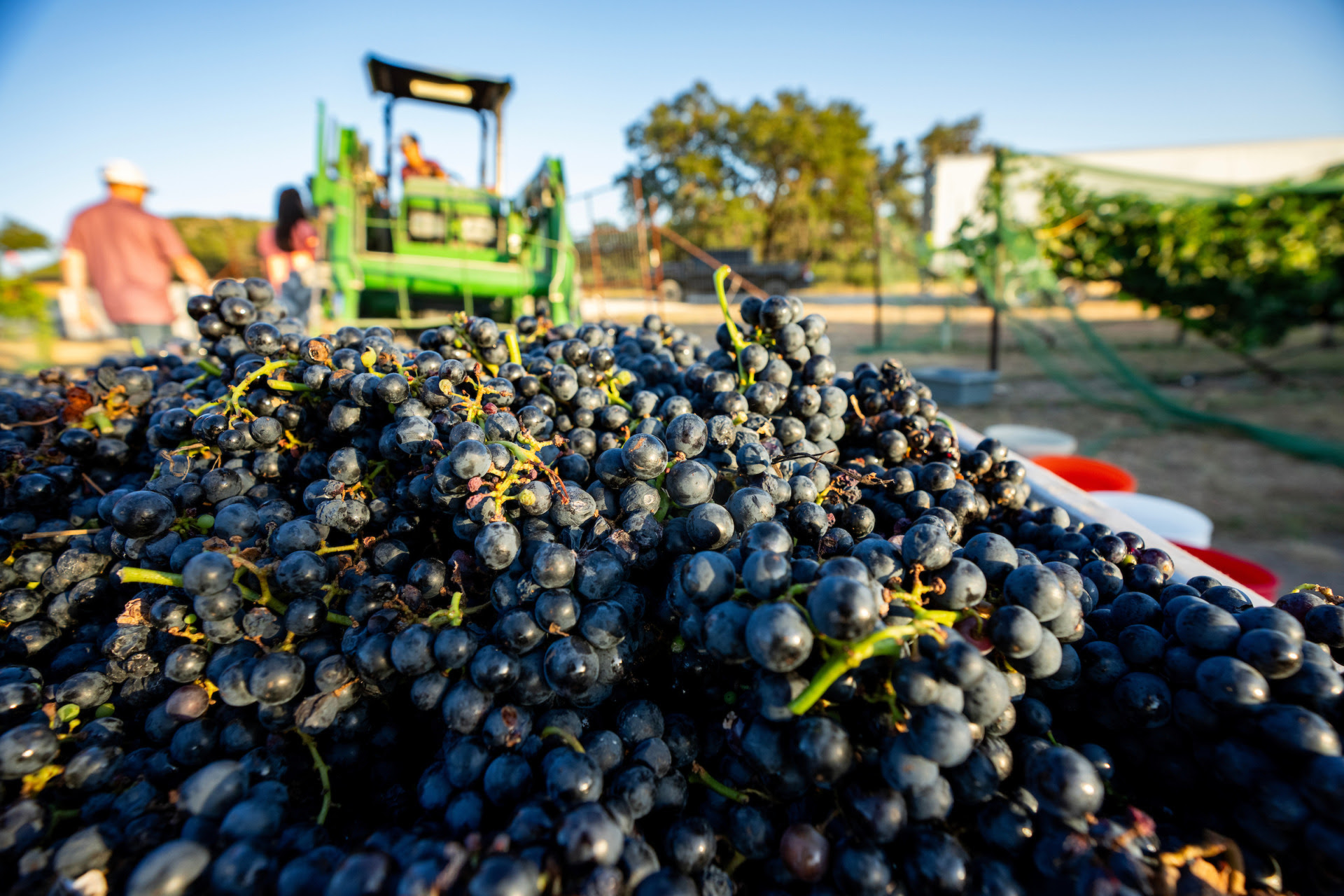
Wine grape harvest at the Thomas Ranch vineyard on Monday, Jul 10, 2023 in Anderson, Texas. (Sam Craft/Texas A&M AgriLife Marketing and Communications)A sign that reads “Merlot” marks the starting point of grapes in a certain section on vines in a vineyard on Friday, Aug 04, 2023 in Leakey, Texas. (Sam Craft/Texas A&M AgriLife Marketing and Communications)
Despite declines in wine grape demand, the number of Texas vineyard acres and winery permits continues to grow. (Sam Craft/Texas A&M AgriLife)
Growth has slowed in the Texas wine industry, but it continues to add acreage and wineries, he said.
Texas added around 50 new wine permits annually over the last decade, but that number has slowed to around 20 this past year. Vineyard acreage surpassed 14,000 acres this year, compared to 11,000 in 2022.
“We’re still seeing growth, but it has definitely slowed compared to the last several years,” he said.
Growth in regions, new varieties
Texas remains one of the most diverse grape-growing states in the U.S., with vineyards stretching from the Gulf Coast to the High Plains and into North and East Texas. The Hill Country is still home to the highest number of wineries, led by Gillespie County with more than 100 active permits.
Most vineyard acreage growth continues to be concentrated in the High Plains, but Scheiner said North Texas has seen significant growth in vineyards and wineries.
Scheiner said adoption of newer Pierce’s disease-tolerant varieties has expanded opportunity in areas that receive more annual rainfall like North and East Texas. The new Pierce’s disease-resistant varieties are now planted in more than 20 Texas counties.
Scheiner said AgriLife Extension, along with industry partners, continues to research how these varieties perform under Texas conditions, including vineyard growth habits, fruit characteristics and winemaking potential.
“These are still relatively new, but we’re starting to see the first wines produced from them,” Scheiner said. “They represent a lot of potential for growers in areas where Pierce’s disease has been a limiting factor.”
AgriLife Extension district reporters compiled the following summaries:
A map of the 12 Texas A&M AgriLife Extension Service districts.
Panhandle
Scattered showers occurred in parts of the district, while others continued with dry conditions. Soil moisture was short to adequate. Corn and sorghum silage harvests continued. Wheat was planted in some counties while producers in drier areas waited for moisture. Cotton producers were preparing for harvest aid applications to begin an early cotton harvest. Pasture and rangeland conditions were adequate, while some areas experienced drought conditions. Crop, pasture and rangeland conditions were fair to good.
South Plains
Grain harvest was in full swing over the past few weeks. Cotton farmers were planning to end irrigation and prepare to defoliate in the coming weeks, with harvest about a month away. Grazing and cover crop wheat was planted, with recent rains giving it a great start. The black-eyed pea harvest was slow to start. Some areas were finishing up the cucumber harvest. The pumpkin crop continued to be harvested. Hay was being cut, baled and moved. Livestock and rangeland conditions were good across the district.
Rolling Plains
Winter wheat planting began in areas that received rainfall the previous week, though progress was expected to slow as soil moisture continued to decline. Farmers were preparing fields and plowing ground, but many were waiting for additional rain before planting more wheat and fall crops. Cotton remained in very good condition and benefited from recent heat. Producers stressed that at least one more timely rain would be needed to finish the boll fill. Producers were choosing to reduce late-season inputs, opting instead to let nature take its course. Hay harvest was ongoing, but dry topsoil and persistent heat limited production. Pastures were also stressed, reducing grazing for livestock. Despite the warm days, livestock condition remained good with cooler nights helping ease stress. Farmers and ranchers agreed that moisture was critical moving forward, but forecasts showed little chance of rain in the near future.
North
Topsoil and subsoil were adequate or short across the district. Summer crops were finished, and farmers began preparing fields and making plans to transition into the cooler months. Pastures looked good due to the rainfall throughout the season. Cattle and other livestock were in excellent condition. Fall calving was officially underway. Corn harvest continued, and sorghum harvest was near completion, while soybean fields were awaiting harvest. There were reports of disease in oak trees. Fall armyworm populations were reported.
East
No rain was received in the last week. Counties were drying out and needed more rain. Subsoil and topsoil conditions were adequate. Pasture and rangeland conditions were fair to good. Ponds and creeks remained full. Fall gardens were growing well. Producers were preparing to plant winter pastures. Cattle markets dropped slightly, but livestock conditions were fair to good.
West Central
Warm and very dry conditions persisted across the district, with fire danger becoming a concern for many. Cooler temperatures arrived, but more rain was needed. Conditions remained decent, with cooler, cloudy mornings and clear days, lower nighttime temperatures, and an occasional sprinkle of rain. Wheat fields were plowed and ready for planting, but in some cases, it was too dry to plant. Topsoil moisture was better than expected in some areas, and several producers began planting wheat. The pecan crop was inconsistent depending on location. Cotton was maturing quickly, and sorghum harvest neared completion. Cotton was in poor shape in some areas due to the lack of moisture. Rangeland and pasture conditions declined due to a lack of moisture. Most forages had matured and gone to seed, and there was still plenty of grazing available for livestock. Livestock were in fair condition, but many producers were feeding hay. Cattle were still in good shape, but pastures were starting to turn brown. The cattle market remained active, with stocker steers selling steadily. Lighter-weight stocker steers were $4 to $5 higher per hundredweight, while some were $1 to $2 lower per hundredweight. Stocker heifers were steady to $2 higher. Feeder steers were $2 to $4 lower per hundredweight. Feeder heifers were steady to $4 lower per hundredweight. Packer cows were $2 higher per hundredweight. Prices for bulls, pairs and bred cows were steady.
Central
Hot and dry conditions persisted, with some cooler temperatures at night. The wildland fire threat increased daily. Warm-season forages showed visible drought stress. Pasture growth slowed significantly, and some producers reported early signs of dormancy in Bermuda grass stands. Weed pressure increased where the forage canopy was thin. Stock tanks were at favorable levels all summer. Hay was still being cut, and plenty of feed should be available this winter. Corn and sorghum harvests were expected to wrap up soon. Cotton bolls were opening and nearing harvest. Several small grain farmers started to prepare fields and seedbeds for planting, and some ranchers were planting winter forage for grazing. Second-crop corn silage looked good with little evidence of red stunt disease. Armyworms were present in some locations. Fly pressure remained moderate. Livestock were in good condition. The cattle market softened slightly over the past week.
Southeast
Conditions were dry, but soil moisture levels throughout the district were adequate. Producers were cutting hay with reported yields of 2.5-3 bales per acre. The lack of recent rainfall allowed for the final cuttings of hay, while some producers expressed the need for additional rain despite fair pasture conditions and forage growth. Rice harvest began, with some areas near completion, while other areas reported significant delays due to muddy conditions. Sorghum was mature; corn harvest was nearly finished, and cotton bolls were approximately 80% opened, signaling harvest was near. Cotton fields were in fair to good condition. Cattle were in good condition, supported by a healthy supply of forage. Pasture and rangeland ratings were good to excellent. Livestock conditions ranged from very poor to excellent.
Southwest
Hot and dry conditions persisted, but recent rains improved rangeland conditions. Daytime high temperatures averaged in the mid-90s, with mornings in the mid-60s. Soil moisture levels were declining. Cotton harvest was expected to begin soon, while other row crop harvests were finishing. Pasture and rangeland conditions remained good. Farmers were preparing for fall and winter crops. Winter wheat planting was likely to be delayed until November. Hay production was winding down, and producers were preparing for the fall season. Livestock prices remained steady to strong. The cool morning temperatures provided relief to heat and drought-stressed plants and livestock; however, grazing was still limited due to drought. Rams and bucks were being turned in for breeding season. Livestock and wildlife were in good condition. Supplemental feeding resumed in many locations due to limited available forage. Pecans continued to flesh out, and less desirable nuts were dropped. Walnut caterpillar activity was noted on pecans.
Coastal Bend
Dry, hot weather continued with temperatures in the upper 90s and no significant rainfall. Soil moisture was declining, though some areas saw forage growth from the previous week’s rain. Cotton harvest was nearly complete with good yields reported, though low commodity prices remained a concern. Some field preparation was underway for winter pastures. Rangeland and pasture conditions were mixed — there was some improvement where rain had fallen, but an overall decline with continued dryness. Supplemental hay feeding began in dry areas, and livestock water levels were becoming a concern. Livestock remained in good condition, with calves hitting the ground and doing well. Cattle prices remained strong, helping offset higher input costs.
South
Conditions the past week included seasonal and above-average temperatures, with some light to moderate rainfall and rain in the forecast. Topsoil and subsoil conditions remained very short in some areas. Falcon Lake levels remained extremely low. Cotton bolls opened, and harvest was underway. Bermuda grass hay fields were cut and baled. Vegetable growers continued to harvest okra and squash, and soil was being prepped for strawberries. The fall corn crop was progressing well, especially in areas where moisture was received. Citrus fruit continued to mature as producers monitored for potential pest and disease issues. A few late-planted sesame fields remained. Grain sorghum and corn yields were below average. Peanut crops continued to mature under irrigation, and digging was scheduled to begin in the coming weeks. Vegetable farmers were planting cabbage, parsley, and leafy greens, and preparing for carrots and onions. High temperatures impacted pasture and rangeland conditions, but conditions improved in areas that received rain. Rain was needed for fall forage planting and a possible final cutting of hay. Ranchers were culling cattle herds and selling calves at lighter weights, but prices remained high. Producers supplemented feed to help maintain animal health and performance. Local feed stores reported increased supplemental feed sales. Deer producers were supplementing with protein, corn and cottonseed. The hunting season began, with a strong presence of both white-wing and mourning doves reported in some areas. Turkeys and quail were notably abundant.
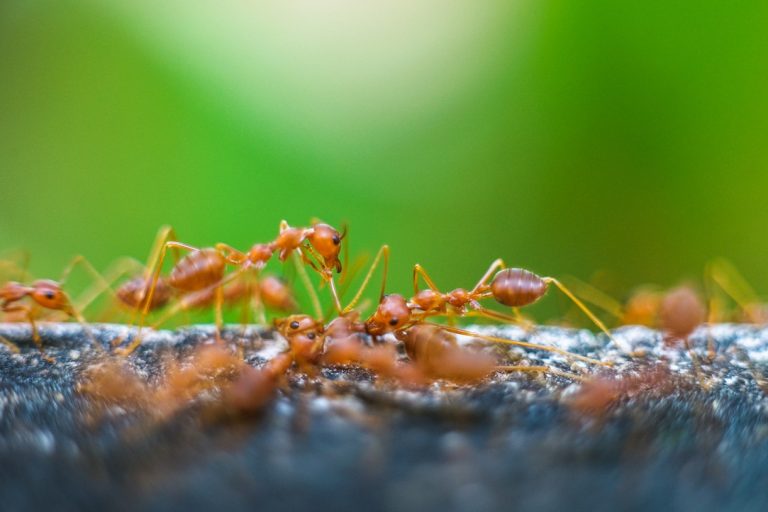
Anyone who has spent much time outdoors in East Texas knows the frustration of fire ants. Whether you’re mowing the yard, walking through a hay meadow, or checking fences, those mounds seem to pop up overnight. The good news is that fall is one of the very best times to make a dent in their populations.
Texas A&M AgriLife Extension research has consistently shown that fall and spring are the two peak seasons when fire ants are actively foraging for food. When temperatures are moderate—between 70 and 85 degrees—worker ants are busy collecting food to support their colonies. This makes bait applications most effective because foraging ants will quickly pick up bait granules and carry them back to the queen and brood
AgriLife specialists recommend what’s called the “Two-Step Method” for fire ant control. Step one is a broadcast bait treatment across your yard, pasture, or other infested area. The key here is to use a fire ant–specific bait product labeled for your site, and to apply it when the ground is dry and no rain is expected for at least 24 hours. Even more important—apply when ants are foraging. A simple test is to drop a potato chip or hot dog slice near a mound; if ants find it within 20–30 minutes, conditions are right to spread bait.
Step two is to follow up with mound treatments only where needed. Some mounds may persist after baiting, and in high-traffic areas like gardens, play yards, or near barns, a direct mound drench, dust, or granule treatment can provide quick relief. But remember: treating individual mounds without the broadcast step is only a temporary fix. It does nothing to address colonies you haven’t spotted yet.
For pastures and hay meadows, there are several bait products labeled for use around grazing animals. AgriLife recommends closely reading the label for restrictions and application timing, as some products may have limits related to hay harvest or animal consumption.
Another advantage of treating in the fall is the long-term benefit. When you reduce fire ant numbers before winter, colonies have less chance of rebounding in early spring. That translates to fewer mounds, less damage, and fewer stings next year. In fact, studies show that consistent fall treatments can suppress fire ants for much longer than spring treatments alone.
A final reminder—fire ant control is never “one and done.” They are invasive pests, and reinfestation from surrounding areas is inevitable. But using the Two-Step Method in the fall and repeating as needed in the spring is the most reliable, research-proven strategy to keep numbers down.
If you’d like more information, Texas A&M AgriLife Extension maintains an excellent online resource at https://fireant.tamu.edu. There you’ll find fact sheets, management guides, and specific recommendations for homeowners, ranchers, and land managers.
So this fall, when the weather cools and ants are on the move storing up food for the winter, take advantage of the season. A well-timed fire ant control program now can mean a much calmer spring—and fewer painful surprises underfoot.
East Texas plays a central role in powering the nation, and a major development this week underscores just how vital our region has become in the energy sector. Tenaska, one of the largest privately held energy companies in the United States, has expanded its ownership in the Tenaska Gateway Generating Station located just outside of Mt. Enterprise.
The Gateway facility, an 845-megawatt (MW) natural gas–fueled power plant, is unique in that it serves both the Texas power grid (ERCOT) and the Southwest Power Pool (SPP), providing critical flexibility and reliability. With growing electricity demand in Texas due to population growth, industrial development, and the surge of new technology-driven businesses like data centers and artificial intelligence, facilities like Gateway are becoming even more essential.
The ownership expansion comes as part of a broader transaction involving three major power plants across the country, with Tenaska and its partner Tyr Energy increasing their shares in the facilities. For East Texas residents, the news highlights both the stability of the local energy infrastructure and the confidence large national energy players have in our region’s role in America’s energy future.
What This Means for East Texas
For Mt. Enterprise and the surrounding communities, the Tenaska Gateway Generating Station is not only a significant employer but also a major contributor to the local tax base. These revenues support schools, infrastructure, and county services, directly benefiting families and businesses in the area.
Gateway’s dual-grid connection is particularly noteworthy. While most Texas plants are tied solely to ERCOT, Gateway can also export power to SPP, enhancing reliability during peak demand or emergency conditions. This unique position helps shield Texans from some of the vulnerabilities exposed during recent grid challenges and ensures that East Texas continues to be part of the solution to statewide energy concerns.
A Commitment to Growth
Energy companies expanding their stakes in East Texas facilities is more than just a financial move—it’s a statement of long-term confidence. As Dave Kirkwood, Tenaska’s senior vice president, explained in announcing the transaction, the company is focused on investing in “well-positioned generating assets.” Mt. Enterprise fits that description perfectly, with its proximity to key transmission lines, access to natural gas, and location in one of the fastest-growing states in the nation.
Meanwhile, JERA Americas, which transferred its ownership share, has emphasized that the move is part of a larger strategy to reposition its portfolio for future growth. That means while JERA steps back from this particular facility, it is reinvesting in other projects aligned with renewable energy and next-generation technologies.
Powering Tomorrow from the Pineywoods
For local residents, the most important takeaway is that East Texas continues to shine as a vital hub in the national energy landscape. Whether you drive past the towering stacks on Highway 259 or simply flip on a light switch at home, the Tenaska Gateway Generating Station is helping keep homes comfortable, businesses running, and communities thriving.
As electricity demand grows and conversations about grid reliability dominate headlines, Mt. Enterprise is quietly at the center of it all—providing power not just to Texans but also to neighboring states when the need arises. With Tenaska doubling down on its investment here, it’s a clear signal that the Pineywoods will remain an energy powerhouse for decades to come.
Why Did John The Baptist Call Jesus The Lamb Of God?
“John the Baptist called Jesus the Lamb of God because Jesus is too holy and wonderful for him to even untie his shoes,” says Mitchell, 8.
Before John the Baptist proclaimed Jesus as the Lamb of God, he talked about his sandals. By saying he was not worthy to untie Jesus’ sandals, John put himself in the position of the lowest slave. Anything to do with feet was usually reserved for the lowest slave in a household. That’s why Jesus shocked his disciples when he cleaned their feet before they ate the Passover meal on the night before his crucifixion.
Jesus wasn’t joking when he said the way up in his kingdom is the way down. After his disciples debated among themselves about who would be the greatest in God’s kingdom, Jesus said, “If anyone desires to be first, he shall be last of all and servant of all” (Mark 9:35).
God’s ways are usually contrary to the way we’re trained to think. Leaders usually come from prominent families and go to the best schools. Who would think that the Messiah would be born into a poor family supported by a father who did manual labor in a backwater place like Nazareth? The whole scenario is so contrary to the way we think about power.
“In Bible times when a person sinned, they would take a lamb to the temple to sacrifice,” says Sandra, 9. “To be called a Lamb of God means that God gave Jesus to be killed like a lamb for our sins so we could live forever.”
The majority of Old Testament passages that mention “lamb” refer to a sacrifice (85 out of 96). As a nation, Israel began its history by putting lamb’s blood on the doorposts and lintels of each house. The death angel took the lives of all Egypt’s firstborn, but passed over the houses that had lamb’s blood on the door. To this day, Jews all over the world celebrate Passover.
The entire Old Testament can be summed up with one question, “Where is the lamb?” A pivotal point in Jewish history came when father Abraham took Isaac up the mountain to offer a sacrifice. Abraham knew God had promised to make him the father of many nations, yet God had commanded him to sacrifice his only son by Sarah. When Isaac asked about the lamb, Abraham assured him that God would provide the lamb (Genesis 22:6-8).
The priests in the temple at Jerusalem sacrificed a lamb in the morning and evening every day (Exodus 29:38). For hundreds of years, Jews brought lambs to the temple as sacrifices for their sins. They kept coming back year after year because no lamb could take away all their sin.
For Christians, the Passover points to a greater reality. In the person of the Lord Jesus Christ, God brought the perfect sacrifice that John proclaimed: “Behold! The Lamb of God who takes away the sin of the world!” (John 1:29).
The prophet Isaiah foresaw the Messiah’s sacrifice when he wrote: “He was oppressed and he was afflicted, yet he opened not his mouth; He was led as a lamb to the slaughter, and as a sheep before its shearers is silent, so he opened not his mouth” (Isaiah 53:7).
Think about this: All the sacrificial lambs offered in the Old Testament point to Jesus Christ.
Memorize this truth: John 1:29 quoted above.
Ask this question: Have you beheld and believed in the Lamb of God as the one who took away your sin?
Kids Talk About God is designed for families to study the Bible together. Research shows that parents who study the Bible with their children give their character, faith and spiritual life a powerful boost. To receive Kids Talk About God three times a week in a free, email subscription, visit www.KidsTalkAboutGod.org/email.
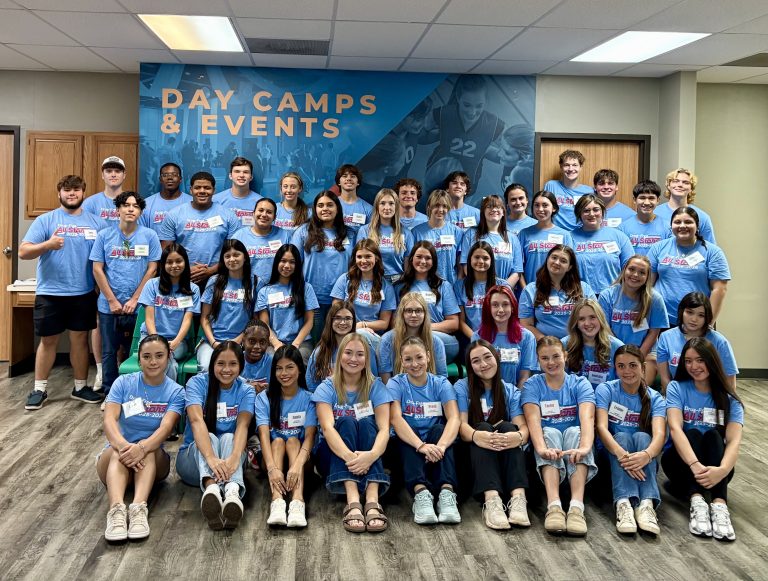
The Drug-Free All Stars of Angelina County, funded by a grant from TxDOT, recently held their September meeting at Lufkin Parks and Recreation. The Drug-Free All Stars are a group of high school seniors from Angelina County schools that serve as role models for the community by living tobacco, drug, and alcohol-free lives. During the meeting, the Drug-Free All Stars planned campus activities for the year, focusing on substance use prevention campaigns and awareness. Special thanks to Rudy Flores, Deputy Director of Recreation, for allowing the Drug-Free All Stars to meet at the Lufkin Parks and Recreation Center. To find out more about the Drug-Free All Stars, contact Abby Baker at (936) 634-9308 or by email at abaker@angelinacoalition.org. Visit our website at www.angelinacoalition.org or follow @TheCoalition936 on Facebook and Instagram for more information.
Since 1988, The Coalition has focused on eliminating the use of harmful substances by affecting public policy, laws, attitudes, and behaviors, all in an effort to foster healthy life-long choices for the local community.
On Saturday October 25, at the County Courthouse in Lufkin, the direct descendant of Davey Crockett will dedicate the Col Travis Alamo Letter Plaque
“Having Served in the White House for President Reagan and VP Bush, I know great leaders. Mike Johnson of Lufkin is that kind of quality Leader and the Oct. 25 dedication in Lufkin will be terrific” — Doug Cannon, Alamo Letter Society Congressional Liaison
DALLAS, TX, UNITED STATES, August 19, 2025 /EINPresswire.com/ — The Alamo Letter Society Announces Mr. Michael Jackson: Angelina, Texas County Chair
The Alamo Letter Society is honored to announce Mr. Mike Jackson of Lufkin, Texas as the Alamo Letter Chair for Angelina County, Texas. A 1977 graduate of Lufkin High School and a 1981 Engineering Graduate of Texas A&M, he had an impressive 35 year career in the offshore drilling industry
On Veterans Day 2023, the Alamo Letter Society launched with the following Mission Statement: “To educate current and future Texans about their forefathers’ armed struggle for Freedom and Liberty through the placement of a large bronze plaque containing Col. William Barrett Travis’s Alamo “Victory or Death” letter, in all 254 Texas Courthouses.”
2025 marks 190 years since General Antonio Lopez de Santa Anna started marching his army to Texas from Mexico. Three Mexican states, including Texas, were in rebellion. The General soon learned that Texans who value liberty and freedom would defend their family, their land, their property, and their sacred honor, with their lives.
The Statewide Chairman of the Alamo Letter effort is Lt Governor Dan Patrick. He is writing to the counties that have not organized their efforts and challenging them to get their plaques dedicated by Independence Day 2026.
The dedication of the Alamo Plaque at the Angelina Courthouse will take place on Saturday October 25, 2025. The direct descendant of Davey Crocket, Errol Flannery will read the most famous letter in the history of the English language.
The Alamo letter was written on February 24, 1836, and heroically dispatched through the Mexican Army to General Sam Houston by Captain Albert Martin. Only 220 words long, many Texans and other Freedom-loving people around the world hold it in the same high esteem as the U.S. Constitution and the Magna Carta. The Alamo Letter Society is dedicated to the two leading Tejanos of the Texas Revolution, Jose Antonio Navarro and Juan Seguín.
The originator of this idea is 13-year-old Texas school girl, Slone McNutt, who was studying Texas history at the Hockaday School of Dallas. In January of 2023, she visited the Alamo with her family. They were looking at the historic 220-word William Barrett Travis’s “Victory or Death” letter on a bronze plaque on the lawn in front of the Alamo chapel. 7th-grade daughter Slone said to her father, Lee William “Bill” McNutt, “Daddy, why aren’t these plaques with the famous letter all over Texas? Her question was the reason for the start of this effort. An idea and an organization were born.
McNutt recruited his longtime University Park neighbor and fellow Vanderbilt University graduate, Rosser Newton, Sr., and US Army SGM (Ret) John Vick from Rockwall, who currently serves as the District Director for Texas Senator Bob Hall, to aid in the birth of the organization.
County Chair Mike Jackson said “I am proud to have the opportunity to honor Col Travis and the Texians who sacrificed everything for Texas Independence at the Alamo. “
“Travis Alamo letter shows us today the essential qualities of being Texan: duty, honor and self-sacrifice. Travis’ sacrifice at the Alamo is the bedrock of Texas values.” said Founding board member Rosser Newton.
Each County Chair will work with the local County Judge and County Commissioners to secure a site for the plaque either inside the Courthouse or on the Courthouse grounds.
Many Counties in. the Lone Star State have already dedicate their plaques, including
– Ellis County: County Judge Todd Little, Chair – Van Zandt County: Dwayne “Doc” Collins, Chair – Nueces County, Mr. Harry Chester, Chair – Hood County Dedication, County Judge Ron Massingill, Chair – Navarro County, Thomas McNutt, Chair
“To have leaders like Mr. Mike Jackson as our County Chair is outstanding.” said Slone McNutt, the originator of the Alamo Letter Idea.
“The spirit of the Alamo letter has been carried by all subsequent generations of Texas fighting men to every battlefield from Gettysburg, to Omaha Beach, from the Battle of the Somme to Iwo Jima. The Texas solider always finds a way forward.“ John Vick, President, Alamo Letter Society 501 C 3.
ALAMO LETTER SOCIETY The Alamo Letter Society exists to educate school children, new Texans and future generations, of their forefathers’ fight for Liberty, and Freedom, through the placement of a large 110 pound bronze plaque containing the Alamo letter at each of the 254 courthouses in the Lone Star State. www.alamoletter.com