These days, many consumers are taking steps to select brands that are socially responsible and environmentally sustainable. Unfortunately, not all companies are upfront about where their products come from and how they were produced — and this is particularly troubling where seafood, and especially tuna, are concerned.
A new report by Greenpeace, “Sea of Distress,” could serve as a helpful guide in pointing seafood lovers to those foodservice companies that are acting responsibly.
“While some brands are taking strides towards becoming ethical and sustainable operations, there is a pervasive problem in seafood supply chains,” said David Pinsky, Greenpeace oceans campaigner. “Foodservice companies feed millions of people in university cafeterias, corporate dining halls, restaurants and hospitals and often keep consumers in the dark about whether their seafood is sustainable and ethical.”
Greenpeace, which is calling for reform, said that foodservice companies should be able to ensure the seafood they sell is fully traceable from sea or farm to plate, and does not involve destructive fishing and farming methods or labor violations. Unfortunately, the industry too often incentivizes bad behaviors, the organization says, by offering discount programs for bulk purchasing of seafood, without regard for environmental or social impacts.
There is good news, though. Three major foodservice companies, Sodexo USA, Compass Group USA and Aramark, passed Greenpeace’s rigorous assessment due to their transparency, sustainable sourcing requirements and advocacy efforts.
Unfortunately, several of the largest food distributors failed the assessment. This is particularly concerning because these companies buy and sell billions of dollars of seafood that is consumed in restaurants, schools, and corporate dining halls every year. Grocery retailers are already providing an example for the foodservice industry to follow. “Carting Away the Oceans,” a separate assessment by Greenpeace of the nation’s largest supermarkets, has shown vast improvement over the past eight years, with the majority of grocery stores across the country now receiving passing scores.
“The foodservice industry, which accounts for nearly half of all food-dollar spending outside the home every day, must follow the lead of several grocery retailers and work to provide sustainable, ethical seafood,” says Pinsky.
To access the full report and learn more about ethical seafood, visit Greenpeace.org.
When dining outside your home, you may give the food on your plate less consideration than you do at home. But these meals count, too. As a consumer, you can make a considerable impact by choosing companies that are doing the right thing.
As Americans, we are a naturally stubborn group. We are a mash-up of determination and procrastination. We hope for change, but struggle to find attention span to see it through. Each year, we vow to lose weight and get healthy…but maybe next Monday?
Here is a photo of my husband, Clay Hall, and I, center, during a Tough Mudder.
So, how do we escape this dizzying cycle? And when we do, how do we know which door the prize is hiding behind? Here’s where I come into the picture.
Flashback to my childhood. There’s not much to see. From the moment I could string letters together, I was a reader and, in smaller increments, a writer. After school, during holidays, and on summer break, I was to be found curled up on my bed, reading. Translation: I did not play outside, sports bored me, and my small group of friends were equally nerdy and inactive. (Sorry, friends. It’s the truth.). The most activity I got was trips to the library or climbing the bleachers at my sister’s basketball games.
Flash forward to 2006 when I married my high school sweetheart. He was active, really active. He loved to run and was a martial arts teacher. I was a professional couch potato book worm at this point. The tipping point came at my wedding when I heard an endless litany of “Oh, I was your size when I got married!” I realized somewhere in the friendly banter that I was meant to fall in line, to become like those before me. I was an unfit 97lbs, surrounded by family and friends suffering from chronic conditions like heart disease and diabetes. Some were in such poor condition that their independence was only a shadow of what it could be. It was an unnerving realization.
So, when my husband asked me to go to the gym with him, reluctantly I agreed. As a natural introvert, the gym scared the living daylights out of me. Surely people were staring. Gym rats could smell fear, couldn’t they? Running was out of the question. I would only run if something chased me. The stationary bicycle looked innocent enough that I gave it a whirl. After 20 minutes, I thought dying might be an appealing, alternative option. But with gym-induced death near, I had an epiphany. My mood soared, and I had energy to boot. I slept like a baby that night. I was hooked.
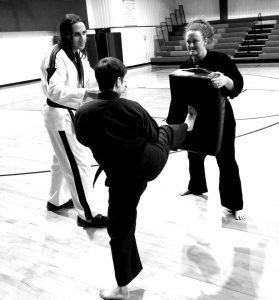
I became an American Council on Exercise Certified Personal Trainer in 2013 and a Health Coach in 2015. Somewhere in the middle, I became a martial artist, eventually earning my black belt before transitioning to Krav Maga.
Since then, my fit life has progressed. I became an American Council on Exercise Certified Personal Trainer in 2013 and a Health Coach in 2015. Somewhere in the middle, I became a martial artist, eventually earning my black belt before transitioning to Krav Maga. I work for a very forward-thinking doctor, Dr. Evans, at The Institute of Family, Preventative, and Lifestyle Medicine and am a co-owner of Lionheart Krav Maga and Fitness. I did roller derby for a time. My introvert-self has even gotten on stage in an itty bitty bikini for a bodybuilding competition. Now, I’m a Lifestyle Ambassador for Texas Forest Country Living. And I’m not done yet.
More important than any of those amazing things is my health. I am healthier than I have ever been, and each year it is my goal to become even more so. Getting fit gave me the confidence to be who I am today. I live the fit life passionately.
In the end, this is not about me. This is about you, the reader.Toss aside resolutions and adopt a healthy lifestyle. Living the fit life is a sustainable lifestyle, a conscious decision to love yourself no matter what.
Let me help.
Be on the lookout for further articles containing tips and tricks for the living the fit life: exercise and nutrition such as workout plans, recipes, and meal prepping, etc. The sky’s the limit.
With a shovel in hand, Chef Britany Vinson broke ground on the new location for her business Tomé Catering and a new venue called The Silo Monday afternoon on Groesbeck Ave. near downtown Lufkin.
Chef Britany Vinson, left, and Tomé Catering Marketing Director Ashley Berry break ground on Tome’s new location and new venue The Silos Monday afternoon.
“I remember this started seven years ago, and many times I wanted to quit and say, ‘Why this, why now?’ Now I see why,” Vinson said. “We have an opportunity to feed people, bless people with the food; I feel like God has blessed me with the talent to be able to do so. I thank my team, I couldn’t do it by myself; I’m truly blessed.”
With an opening day set in July, Vinson said The Silo “will be different than anything else we have in town.” The venue will be a modern-meets-industrial style of venue, the chef described. It will be connected to the commercial kitchen that is being built to host the on-goings of Tomé.
In a year from now, Vinson said she wants to see business “booming.”
“I want to see business going on; I want to see growth in job opportunities, that I’ll be able to hire more people and also equip them to be better people,” she said. “I want to see more people in Lufkin eating healthier. …Also, I want to see the venue packed and booked all year long.”
Mark Hicks, President of Hicks Operating Company, participated in Monday’s ground breaking, He said he was “excited to have the opportunity to work with Britany” in constructing the commercial kitchen and new venue.
“It’s so great to see so many out here supporting small business,” Hicks said. “She has a fine business and a growing business, and that is important to Lufkin. …I admire you; someone that has slowly built their business. You’ve got a great business. We’re excited to be a part of this.”
For more information on Tomé Catering, visit its website at tomecatering.com.
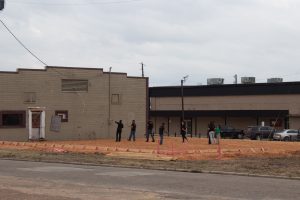
The red dirt is laid out where the new commercial kitchen for Tome Catering will sit and the building next door will be The Silo.
Do you excel in the Performing Arts and plan to pursue advanced studies in that field?
The Angelina Arts Alliance wants to hear from you! The Arts Alliance is accepting applications for the Jane D. Ainsworth Scholarship now through April 14.
The annual scholarship was named in honor of Jane D. Ainsworth, who is a founding member of the Angelina Arts Alliance and instrumental in bringing the professional performing arts to Lufkin. The Arts Alliance will award two $500 scholarships.
Applicants must be an Angelina County senior in high school and excel in the performing arts such as drama, music, or dance. Applicants must have the desire and potential to pursue a career in the performing arts and be pursuing enrollment in a two- or four-year college, university, or performing arts academy. Scholarship winners will be presented to the community during the performance of Ernie Haase & Signature Sound on Saturday, May 20, 2017 at 7:30 p.m.
Once again, Angelina College will match the Arts Alliance scholarship for high school students planning to attend Angelina College to pursue an Associate’s Degree in Applied Science in the Fine Arts, or existing students within this program. Applications are reviewed by a credentialed screening committee selected by the Arts Alliance Board of Directors. Applications may be picked up at the Temple Theater box office Monday – Friday 11 a.m. – 5 p.m. and can be faxed or e-mailed.
For applications or more information about the scholarship, please call Ginger Trotter at (936) 633-3220.
The school year can seem long for students and educators alike. However, a mid-year infusion of new technology and tools can provide just the motivation needed to ace the rest of the year.
Here are several tools and technologies that can pave the way to better, more enthusiastic learning at home and in the classroom.
Social Media
Teachers are increasingly communicating with students and parents over social media, whether it is tweeting updates about today’s lesson or field trip or using Pinterest to share ideas and student work.
Seventy-one percent of teens use more than one social media site already, according to recent Pew research. However getting comfortable using these tools in a more formal capacity can have real world implications for students, as more industries and professions require social media proficiency.
Making Music
Students and teachers of music know the varied benefits of a high-quality arts education. Learning music can help develop math and pattern recognition skills, increase coordination and foster left brain development, according to the National Association for Music Education. Be sure your tools of the trade are up to the task.
For students learning to play a keyboard, be sure their instrument features the same sound quality as a traditional piano, but with the additional benefits a higher-tech option brings.
For example, the Privia PX-160 from Casio, an 88-key digital piano that boasts the sound of a 9-foot concert grand, features left and right audio outputs, making it easy to connect to other devices for external amplification or recording purposes. Additional features include dual headphone jacks, 18 authentic piano tones, duet mode, a USB port and a two-track recorder. Whether you are outfitting a home or a classroom with musical instruments, additional information can be found at CasioMusicGear.com.
Noise Canceling Headphones
Peace and quiet are not always available during crunch time, particularly for students with many siblings, or college students living in a dorm room. Help scholars achieve greater serenity with a good set of noise canceling headphones that don’t compromise the quality of the audio.
Classroom Revamp
Many schools are looking to go green and save some money while upgrading technology. By combining a laser and LED light source, Casio’s LampFree projectors are a unique, high-brightness, mercury-free tool that uses half the amount of power per unit than its traditional lamp-based counterparts. They save educators time and money because they require minimal maintenance and eliminate the cost of replacement lamps, as they have a 20,000 hour lifespan.
The XJ-F210WN model features Intelligent Light Control, which senses ambient light in the room and automatically adjusts the projection brightness accordingly. This can be particularly beneficial to teachers, who may be using their projectors in classrooms with a lot of natural sunlight.
You can help make the school year feel new again with educational tools that revamp learning.
As medical science advances, we are learning more about the links between different individual diseases. In recognition of American Heart Month in February, I’d like to draw attention to some largely unknown facts about heart disease and its indirect link to autoimmune disease. In spite of pharmaceutical and technological medical advances, heart disease has continued to rank as the leading cause of death in the United States for several decades. Although we associate high cholesterol, obesity, high blood pressure and smoking as some of the most common factors leading to cardiovascular complications, there are actually hundreds of varying risk factors that can lead to heart disease, including an entirely different disease: diabetes.
Let’s first look at a brief but noteworthy chronological history of diabetes and its classification as an immune-mediated disease:
The term diabete was first recorded in an English medical text written around 1425.
It wasn’t until over 300 years later, in 1776, that it was confirmed diabetes was an issue of an excess amount of a certain kind of sugar (in the urine).
Just over 100 years later, in 1889, the role of the pancreas in diabetes was discovered.
Shortly after, in 1910, it was found that diabetes resulted from a lack of insulin.
In 1922, the first person received an insulin injection for the treatment of diabetes.
Types 1 and 2 diabetes were differentiated in 1936.
Autoimmunity was discovered in the 1950s.
Not until the mid 1970s was it recognized that diabetes can have an autoimmune basis.
Medical research has linked several diseases as being immune-mediated years after the original discovery of such diseases. Although this discovery was made almost 40 years ago, many people are still unaware that all types of diabetes can have an autoimmune component.
Now let’s look at how diabetes is linked to heart disease. Caused by a hardening of the arteries or a blocking of the blood vessels that go to your heart, people with diabetes are more than twice as likely to suffer a heart attack than those without (American Diabetes Association). In fact, two out of three people with diabetes die from heart disease or stroke, also classified as cardiovascular disease. Perhaps even more alarming is the threat that diabetes can cause nerve damage, sometimes making heart attacks painless or silent.
Prevention of heart attacks for diabetics is parallel to that of non-diabetics, but with one very important additional measure – monitoring and regulating your blood sugar and insulin levels.
Autoimmune diabetes is caused when the body’s immune system begins attacking the beta cells that produce insulin in the pancreas. When insulin levels are down, the amount of glucose in the blood increases over time. High blood glucose levels can damage nerves and lead to increased deposits of fatty materials on the insides of the blood vessels. Complications such as poor blood flow, decreased oxygen in the blood stream, and the clogging and hardening of blood vessels can ultimately lead to two types of cardiovascular disease: coronary artery disease, responsible for heart attacks or failure, and cerebral vascular disease, leading to strokes.
And there you have it – a three-way link between Diabetes, Autoimmune Disease and Heart Disease. So, are there preventative measures that diabetics can take to prevent heart attacks and control autoimmune reactivity? Prevention of heart attacks for diabetics is parallel to that of non-diabetics, but with one very important additional measure – monitoring and regulating your blood sugar and insulin levels. Cyrex Laboratories, a clinical lab that specializes in functional immunology and autoimmunity, offers the “Array 6” – Diabetes Autoimmune Reactivity Screen. Array 6 assists in the early detection of autoimmune processes of Type 1 Diabetes, impaired blood sugar metabolism and Metabolic Syndrome, and also monitors the effectiveness of related treatment protocols.
As is always the case, it is recommended to schedule regular visits with your medical practitioner and specialists. Proper administration of medications can be vital to prevention of heart disease. In addition to insulin injections for diabetics, there are medications to aid in regulating blood glucose, blood pressure and cholesterol, which could all be vital to prevention of heart disease.
Dr. Chad Larson, NMD, DC, CCN, CSCS, Advisor and Consultant on Clinical Consulting Team for Cyrex Laboratories. Dr. Larson holds a Doctor of Naturopathic Medicine degree from Southwest College of Naturopathic Medicine and a Doctor of Chiropractic degree from Southern California University of Health Sciences. He is a Certified Clinical Nutritionist and a Certified Strength and Conditioning Specialist. He particularly pursues advanced developments in thefields of endocrinology, orthopedics, sports medicine, and environmentally-induced chronic disease.
Lufkin will host the East Texas Fruit and Vegetable Conference in just a couple of weeks on Friday, Feb. 17. Held annually across East Texas, theLufkin’s Pitser Garrison Convention Center in Lufkin is the site for this year’s event.
The program offers some new, advanced topics as well as plenty for the home gardener. Registration before Feb. 10 is $30 and $50 per couple. Fees at the door are $40 and $60 per couple. Lunch, snacks and materials are all included in the fee. The day starts off at 8 am for registration and 8:30 begins the day’s program.
Three general sessions at the beginning include: Wild Pigs Conflict Resolution, Pest Management in Raised Beds/ High Tunnels, and Bees & Pollinators. The session on bees and pollinators will discuss the importance and protection of not only the honeybees but our wonderful native pollinators as well. Our guest speaker for this topic is Mark Dykes, Chief Apiary Inspector for the Texas Apiary Inspection Service. The European honeybees have been in the news for their health issues, but not many folks are aware of the other hard-working native pollinators that can do a great job as well.
Wild pigs (also commonly referred to as feral hogs) have and will continue to be an issue. We’ll look at best management strategies of what works at keeping them at bay. Dr. Billy Higginbotham, wildlife specialist out of the Texas A&M AgriLife Extension Service will cover that topic.
After the first three topics, attendees will have the opportunity to choose from three concurrent sessions. The first session will cover the following topics: Are Golden Kiwis Coming to Texas, Tomato Production, and lastly Blueberries, Figs & Muscadines for the Home Fruit Orchard.
Yes, kiwis are looking like they will be on the horizon for East Texas. Following trials at Stephen F. Austin State University, Dr. David Creech will discuss the work they’ve been conducting on kiwis.
Tomatoes as well as figs, muscadines and blueberries are pretty much a staple of many East Texas gardens. Getting them to maximum production will be the goal of Dr. Joe Masabni’s presentation. Dr. Masabni is a professor/vegetable specialist with the AgriLife Extension Service.
In the second session, topics include Home Remedies: Do They Work?, The Case For Farmers Markets, and Aquaponics on a Budget.
We read about treatments and remedies on the internet and social media, but how well do they really work, if at all? Home brews will be discussed and evaluation according to systematic, replicated trials.
Aquaponics has seen a resurgence of interest locally with the desire for sustainable food production. There are lots of kits and products on the market, but how can we replicate the results without the costs of the newest equipment? Again, Dr. Masabni will bring his years of experience and trials to those attending.
The final session will offer two sessions on home food preservation and then information on the Texas Cottage Food Law. It should be obvious that the successful gardener will have an abundance of fresh produce and often it is coming out of the garden at a rate no family can keep up with consuming! Preserving it for later use is worth pursuing. Family and Consumer Science Extension Agents will teach canning principles in a two-hour session.
Lastly, Texas’ Cottage Food Law offers a tremendous opportunity for gardeners and homeowners to sell certain food items for sale to the public without the need for a commercial kitchen. Professors from Texas A&M University will talk about those guidelines and the opportunities that exist.
To pre-register at the lower price, drop by the Angelina County Extension Office by this Friday, Feb. 10 on the south loop in Lufkin or mail the fees (postmarked Feb 10!) to 2201 S. Medford Dr., Lufkin, Tx, 75901. Cost is $10.00 more per person at the door. Handouts and materials will be provided. The Angelina County Extension office is located on south loop 287 at 2201 S. Medford Drive, next to the Farmers Market.
For more Information please call (936) 634-6414 ext. 2 or e-mail cw-sims@tamu.edu.
February is the month of love, and TFCL is bringing local singles to you every Saturday. Our first bachelorette is the beautiful Bethany Craft; she currently resides in Nacogdoches. Bethany is full of happiness and energy, and is searching for the man of her dreams!
Keep reading to learn more about Bethany!
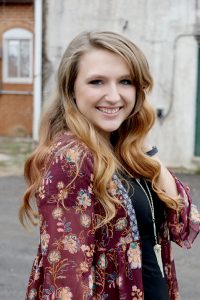
Bethany Craft, 22, is a student at Stephen F. Austin State University.
Name:
Bethany Craft
Age:
22
Hometown:
Spring, TX
Job:
Student at Stephen F. Austin State University studying food and nutrition dietetics.
Hobbies:
I love to sing, play guitar, basically anything to do outside, and play with my dog.
Three words to describe yourself:
Fun, outgoing, and loud.
Do you prefer a night-in or a night-out on the town?
Night-out on the town, hands down.
What is your opinion going to the movies on a first date?
Bad idea. How can you get to know someone just sitting there watching a movie? It honestly is just awkward.
Do you believe in love at first sight?
Yes!
What does a successful relationship look like to you?
Two people who love themselves, loving each other and creating something more.
The way to Bethany Craft’s heart is to make her laugh.
What do you love/hate most about the dating process?
I hate that you can’t force it with the wrong person. I love the thrill of falling in love when it’s the right person.
Do you have any pet peeves?
Changing the radio in the middle of a song, even if it only has three seconds left.
What is your favorite way to spend a Saturday?
Anything outside, and then hanging out with friends playing games in the evening.
What dating advice would you give to your next boyfriend on dating you?
The way to my heart is to make me laugh.
What have you learned from previous heartbreaks?
Love yourself if you want to have a successful relationship. No matter how much a man loves you, it can’t replace a personal sense of self-worth. When you love yourself, you don’t settle,. and you have the confidence to be alone while you’re waiting for the right person.
What’s your ideal date?
Dinner at a nice restaurant just talking and getting to know someone.
Bethany Craft prefers flowers over chocolates.
What do you look most for in a relationship?
Someone I can feel comfortable with and just be myself. He needs to be fun and able to make me laugh. Also, he needs to be committed to giving the relationship everything he has or it won’t work long-term.
What is your biggest deal breaker?
Laziness and apathy.
Do you prefer chocolates or flowers?
Flowers! Tulips and sunflowers are my favorites.
What is your favorite romantic movie?
“He’s Just Not That Into You”
To nominate a bachelor or bachelorette, send a photograph and a small biography to info@texasforestcountryliving.com.
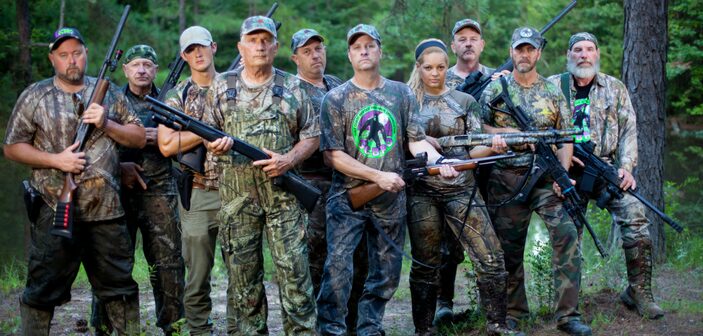
A group photo of the Gulf Coast Bigfoot Research Organization team.
Deep in the heart of Texas, Bobby Hamilton has been on the hunt for Bigfoot ever since encountering the monster as a child. Decades later, the world still doesn’t have definitive proof of Bigfoot’s existence. That’s where Bobby, his friend Jim Lansdale, and their team of monster hunters, known as the Gulf Coast Bigfoot Research Organization, have decided to take matters into their own hands.
Down south, the hunters believe a sleeker, faster and more aggressive type of Bigfoot is attacking people’s homes, farm animals and pets. In the all-new series “Killing Bigfoot,” GCBRO is on a mission to help families terrorized by Bigfoot and prove once and for all that the fabled creature exists by killing one specimen – and providing a body of definitive scientific proof. The six-episode first season of “Killing Bigfoot”premieres today at 9 p.m.on Destination America.
Managing Editor Megan Whitworth chatted with Bobby about GCBFO, his personal experience with Bigfoot, and the search for the creature. Keep reading to learn more about Bobby and the hunt for Bigfoot.
TFCL: Tell me about Gulf Coast Bigfoot Research Organization.
Bobby: It was formed to get answers and find out more about the creature because the information that is currently available in books doesn’t answer any questions.
A photo of Bobby Hamilton.
TFCL: Tell me about what you do.
Bobby: I am the founder and director of GCBRO. We investigate reports from people who have had Bigfoot encounters and sightings, and from families who have nuisance creatures around their homes. We get involved on a case by case basis and conduct a field investigation. Depending on what the witness wants done, we proceed to investigate. Do they want it gone or are they just curious? Answering these questions help us determine how we handle reports. Some people want answers and to learn more about what it is, but don’t necessarily want it gone. Some people want to be through with being terrorized and want it gone. We hunt and investigate depending to the reports that we get from landowners.
TFCL: What is Bigfoot?
Bobby: An unknown, unclassified, undocumented, primate
TFCL: What interested you in Bigfoot from the very beginning?
Bobby: I had an encounter as a child in East Texas (came up to window as child, beckoning me to come to the window in the middle of the night, found out later it did the same thing to my older brother three different times), and decided I needed answers as to what it was as no one could give definitive answer. There was a mysterious element about it that drew me in and inspired me to create the GCBRO. I needed to know what it was.
TFCL: What is myth versus what Bigfoot is really like?
Bobby: The myth everyone tends to believe is that they are a shy elusive creature, because people have encounters where they see one and it turns and leaves area with no aggressive behavior. However, not all encounters happen this way, there are many aggressive encounters. Everyone expects a shy, peaceful creature, and that’s simply not always the case.
TFCL: Where is Bigfoot’s habitat?/Where does he roam?
Bobby: They’re typically found in dense forest and heavily wooded areas, but (specifically in Texas) they’re found a lot more on the eastern side of Texas and along the rivers and larger creeks. The Sabine River Basin is a notorious area for sightings.
TFCL: Are they scared of people?
Bobby: I don’t think they’re scared of people, but it also depends on the individual creature that’s encountered. Some encounters end with creatures leaving area quickly and quietly, but other creatures display aggressive behavior towards people. Depends on individual creature. They don’t have televisions like we have, we are their entertainment. They sit there for hours and watch the things that we do.
Bobby Hamilton with his daughter and GCBRO member, Brandi.
TFCL: Have you had any personal experiences with Big Foot? Tell me about that.
Bobby: I have had many encounters. Recently, we had one come outside our tent in Polk County, Texas. It was growling at us and making noises. When we felt safe to exit the tent, we found foot prints right outside tent that measured 18 inches. In the tent were three grown men, not children with imaginations running wild. people in the tent – three grown men – no kids with overactive imaginations.
TFCL: What do you want the viewers to learn from your new show? What do you hope they take away?
Bobby: They should know that out of all these creatures, not all of them are going to be peaceful. There is a real danger upon encountering these animals, and it should be taken seriously. If you encounter them near your home or are terrorized by one, they should feel free to report it to us.
TFCL: Why bring the search to TV?
Bobby: We want to get our message out – because there is so much misinformation out there. People are under the impression that he’s a big lovable teddy bear that you can bring into your home, make friends with him, watch TV. This is undoubtedly a wild and unpredictable animal. There are too many misinformed people, and our goal is to promote safety and awareness for all.
TFCL: What have you learned over the years about Bigfoot?
Bobby: Number one is that they’re not all peaceful and friendly. There’s also an assumption that all bigfoot have five toes, which isn’t the case. We’ve found tracks with five, four, and three toes. Most down in the south have three toes. Regardless the number of toes, they all express different forms of aggression. We do believe the one with three toes has a tendency to be more aggressive and hostile than the others, perhaps due to inbreeding.
TFCL: Why has it been so hard to track Bigfoot over the years?
Bobby: We are dealing with the ultimate predator, not a normal woods animal that man has hunted before. We know how to hunt deer, bear, turkey, but there’s no field guide on how to hunt Bigfoot. You’re dealing with a creature that doesn’t want to be found. Only reason we are having any luck is because the aggressive ones let their guard down and come around people’s home and are terrorizing people, giving us an opportunity to hunt them.
TFCL: Do you believe they are closely related to humans?
Bobby: They are definitely not related to humans. Back in 2003 we shot one in the shoulder, the animal lived and has been seen several times since. However, we sent the blood in for testing and it was definitely not human. We also cross tested across all animal species and it still came back unknown.
TFCL: How many species of Bigfoot are there? Are there hundreds of them in the wild? Do they colonize? Bobby: Can’t say for sure in terms of number of types/species. We’ve noted variations in several different ones we’ve come across (height, number of digits), but anyone who says they know for sure are just guessing and theorizing. There are thousands across the country. A lot of people question how there can be thousands, but when you look at the country as a whole and look at how many sightings are reported on a daily basis, it adds up to thousands of creatures. They do travel and hunt in groups and or pairs. When you see one there is likely another one close by.
Target practice.
TFCL: What should people do if they have come face to face with Big Foot?
Bobby: If you can think fast enough to take a photo, take one, and leave the area as quickly as possible. There’s a reason we don’t hunt them alone, and go in groups upwards of 10. If we shoot one, there’s always another one close by and they can get extremely hostile. They’re dangerous and aggressive creatures.
TFCL: What advice would you have for someone who interacts with Bigfoot? Bobby: A Bigfoot’s temperament depends on individual creature itself. Nonetheless, you can never predict how a creature will react or what its intentions are, so you should always stay away and get out of the area if you do come across one. People need to understand they’re dealing with a wild animal. You wouldn’t go up and interact with a bear. It’s a massive, and even worse, unknown creature. It would make no sense to try to interact with something like that.
TFCL: What is your hope for the future for GCBRO?
Bobby: I hope the show goes over well and people enjoy it and that we become successful in our quest in hunting a Bigfoot, because in doing so, scientists can then study the creature, and we can get some answers. They can set up protection for these creatures, as their habitats are currently being destroyed by deforestation.
TFCL: What happens if you do find Bigfoot?
Bobby: It’s anybody’s guess, as it’s never been done before. We’ll present it to the scientific community, and it will undoubtedly be a life-changing event. It will open eyes around the world.
TFCL: What is the argument on Kill vs. No-kill?/What do you think should happen? Bobby: Personally – people have a right to their opinions. What is frustrating for us is when we have people arguing on the side of No-Kill, yet, they don’t believe Bigfoot exists. If you don’t believe it exists why do you have a problem with us killing it? The No-Kill side doesn’t understand bigger picture. It is a matter of time until someone ends up killed by one of these creatures. This creature is being depleted of its habitat, and it needs a place to eat, live and survive. However, if it’s never proven to exist, safety and a protection can’t be set up for them, and they will go extinct. The biggest people opposing what we do are people who haven’t even been in the forest or the woods with the creatures, and they’re also not a part of the families who are dealing with these creatures terrorizing their homes. If they were in that position, they would have a different opinion about it. We’re not out to kill any Bigfoot we find. We have had many opportunities and encounters but are only out to hunt the aggressive male. There are undoubtedly more pro’s to killing than no-kill. The No-Kill side tries to bring to light evidence and photos, but in today’s Photoshop world, photos can’t serve as definitive proof. DNA samples are often contaminated. We need to have a specimen to document and classify, officially.
TFCL: Is there anything you would like to add?
Bobby: Watch the show! Saturday, Feb. 4 at 10/9 central on Destination America. You’ve seen the rest, come see the best. This is how it has to be done.
For more information on Gulf Coast Bigfoot Research Organization, visit gcbro.com.
Pictured from left to right Ilyas Khan, M.D., ACHA Medical Director; Phillip La Corte, ACHA Vice President; Jared Grumbles, ACHA President; Kasey McClelland, CHI St. Luke’s Health-Memorial cardiovascular service line representative; Stacy Garcia, ACHA Board Member and CHI St. Luke’s Health-Memorial Market Administrator of Cardiovascular Service Line; and Monte Bostwick, CHI St. Luke’s Health-Memorial Market CEO.
To kick off National Heart Month, CHI St. Luke’s Health-Memorial Lufkin employees presented a check for $2,500 to the Angelina County Heart Alliance for their efforts in providing automated external defibrillators (AEDs) to area schools and civic groups.
CHI St. Luke’s Health-Memorial Lufkin employees dressed in red in honor of the annual day Friday.
“One of our main goals is to educate our county; all the proceeds we collect goes back to Angelina County,” ACHA Vice President Jarrad Grumbles said. “…I would love for all of the people of Angelina County know CPR and know where an AED is, to know when to call 911, and get the patient to the hospital to get the care they need.”
With the money donated, Grumbles said the Heart Alliance will give an AED to the Boys and Girls Club in Diboll.
“Cardiac arrest can happen to anyone; we actually see it a lot in our younger people. That’s why we attempt to put an AED in all of our schools in Angelina County,” Grumbles said. “There have been national reports of younger people suddenly, a lot of them are doing activities for the first time, and they didn’t realize they had a heart problem when they collapse. An AED, if used very quickly, can really change the chances of someone surviving. We’re very excited about that.”
CHI St. Luke’s Health’s staff also wore red Friday to bring awareness to heart health on National Wear Red Day.
“I think it is awesome that we’re able to give back to our community,” Grumbles said. “A lot of times when you make donations they go to bigger organizations; we’re happy all of our money stays in Angelina County.”