


Home Blog Page 625

And So We’ve Had Lots Of Rain

0

Listening to home gardeners and agricultural producers alike, I’ve heard a range of rainfall that has been recorded locally since this cooler, series of rain events started a couple of weeks ago. At the time I’m writing this, the low was just over 4.5 inches cumulatively and the cumulative high was just over 12 inches. At my farm in Clawson, I’ve poured out just shy of 8 inches from my rain gauge.

And more rain is yet to come!

Who would have guessed that our predictably hot & dry summer would be broken up by so much rain, let alone some very, very pleasant temperatures?

What does this weather pattern tell foretell? Here’s what I’ve heard.

First of all, my yard is way out of hand. If I don’t get it mowed soon, I can go ahead and bale it up. Rain has given water-starved landscapes a much needed drink. Homeowners that have been seeing some huge water bills will get a big break.

We can expect to see more Fall Armyworms. Armyworms can devastate a hay meadow, some pastures and even lawns as they rapidly consume the tender, high quality grasses. Be sure to remember its name is “Fall” armyworm as we can expect these night flying grey moths to continue their, egg-laying, caterpillar growing, grass devouring cycle well into the fall.

A renewed flush of vegetative growth everywhere. Not only will livestock benefit from re-invigorated pastures, but wildlife could benefit, and beekeepers may see more wild blooming plants for their stock as hives set aside food for the winter.

A better fall showing of colorful leaves? I’ve heard many an old-timer and forester say that this weather could give an excellent fall showing with more colorful leaves. This is the one benefit that I know the least about, but surely am hopeful for.

Fall gardens should get off to a great start. With all but the okra (and a few other survivors) from the spring planted garden still producing, the rain soaked soil is ideal to work and prepare for the fall home vegetable production season. Since our historical average first frost is in mid-November, that could leave us almost 80 days to grow more warm season vegetables that can’t take a frost. I’m plotting to get a crop of pole beans and cucumbers in addition to more traditional cool season vegetables such as mustard greens.

I will expect to see an abundance of fungal problems. Fungus disease loves moisture. If you’ve seen any disease problems in your lawn or landscape earlier in the year, brace for impact. One would be wise to use a preventative fungicide (according to directions on the label) as soon as we start to dry up.  Left unchecked, turf disease can ruin the best looking yard and it chooses to do most of it’s damage in the fall.

Lastly, if you are a wildlife enthusiast and planning on planting a food plot for later this fall, the abundance of moisture in the soil should get your planting off to a great. Food plots can benefit deer, turkey, dove, waterfowl, and even quail.

This abundant rain has certainly been a blessing. Across so many facets of our outdoor efforts, we are benefitting. Not that I’m complaining, but I’d rather it stop now and save some for later!
Know the Signs and Symptoms, September is AFib Awareness Month

0

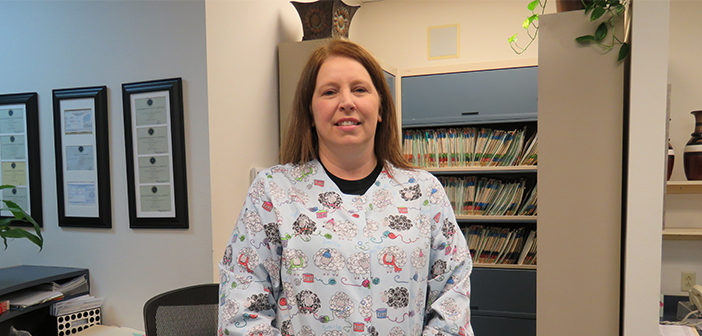
LUFKIN, TEXAS (August 25, 2016)… In 2001, Dana Cox and her husband received the surprise of a lifetime. Twelve years after the birth of their first son, Dana was pregnant with twins. However, this pregnancy was nothing like her first. Something didn’t feel right. Her heart fluttered and raced. She was short of breath. Despite thinking it was nothing more than the stress and strain of carrying two babies, she sought the expertise of a local cardiologist. At 21 weeks pregnant, Dana was diagnosed with Atrial fibrillation, or AFib.

“After I delivered the twins, the cardiologist tried to take me off of my medications, but I couldn’t handle it on my own,” Dana said. “I have dealt with this now for 15 years.”

A normal heart keeps a steady beat. However, in AFib, the upper chambers of the heart beat irregularly. Many patients describe it as a “fluttering” in the heart. Symptoms include shortness of breath, anxiety, rapid or irregular heartbeat, weakness, difficult exercising, debilitating pain, sweating, lightheadedness or dizziness, and chronic fatigue.

If left untreated, AFib can lead to congestive heart failure or stroke. In fact, AFib increases a person’s risk for stroke five-fold and is the leading cause of strokes in the U.S. It can also lead to congestive heart failure, blood clots, and other heart-related complications.

In 2013, Dana had a surgical procedure on the right side of her heart – hoping to resolve the issue – but, by the beginning of this year, it was difficult for her to function on a daily basis.

“I would wake up in the middle of the night and my heart would be racing 90-to- nothing,” Dana said.

Electrophysiologist and Interventional Cardiologist Rohit Kedia, M.D., with the Heart Institute of East Texas, suggested a procedure offered at CHI St. Luke’s Health-Memorial which utilizes the latest in medical technology.

During a minimally invasive procedure specifically designed for AFib cases, the THERMOCOOL® SMARTTOUCH® Catheter delivers radiofrequency energy to the walls of the heart in order to restore a normal rhythm. The device gives physicians the ability to apply stable contact force which has shown to improve patient outcomes.

“This is the best mapping system available. It helps minimize radiation delivery and gives us more control for a more successful outcome,” Dr. Kedia said. “Before you depended on the tactile feel of the physician, but this device tells you exactly how much force you are applying to the heart tissue at any given time. Our success rate has increased dramatically.”

After a lot of praying and talking with her husband, Dana’s procedure was set for March 4, 2016. “I knew this was something I needed to do,” Dana said. “I had to outweigh the risks in order to live a little longer. I knew it was in God’s hands.”

After spending just two nights in the hospital, Dana was back at work on Monday morning. Five months later, she said she’s not experiencing any side effects from AFib and hopes to completely be off her medications one day.

“I’ve come a long way,” Dana said. “I’m so appreciative of everything my cardiologists have done for me over the years. I was blessed to have this procedure in Lufkin so that my family could be with me and comfort me.”

Typically found only in metropolitan-area hospitals, Memorial cardiologists have used the state-of- the- art technology for nearly a year.

“I am excited to bring amazing technology to this area,” Dr. Kedia said. “One of the reasons I came to Lufkin four years ago was to help minimize our patients’ need to travel out of town for any medical reasons. I want to provide them excellent care closer to home.”

Despite the risks, many patients are unaware that AFib is a serious condition.

“A lot of patients don’t take the matter seriously, and they think it’s all in their head,” Dr. Kedia said. “But if you suspect you have AFib you should be evaluated by a cardiologist as soon as possible so you don’t have to suffer. We have found real arrhythmias in patients and were able to treat them effectively so they could go on to lead healthy lives.”

The month of September is recognized as Atrial Fibrillation Awareness Month. It’s important to be aware of all potential risks and always consult a physician when experiencing unusual side effects.

No. 12 Navarro Bests Lady Roadrunners in Conference Opener

0

CORSICANA – It was a good game plan – the right game plan for an opponent known for its speed and ability to mount a pressing attack.

For much of the first half, the Angelina College Lady Roadrunners played the plan to near perfection. But a single call changed everything, and Navarro’s Lady Bulldogs, ranked 12 th in the nation, capitalized in taking a 3-0 win over AC in the conference opener for both teams.

Navarro’s Shantell Thompson converted a penalty kick in the 30 th minute of the first half, forcing AC head coach Freddy Drago to change from his defensive-minded approach. Navarro added another PK from Thompson in the second half, and sandwiched between those scores was a goal off a header from Lady Bulldog Aaliyah Nolan.

Things could have been worse: Lady ‘Runner keeper Nanci Juarez-Sedano finished the match with seven saves, with several of those on-target off Lady Bulldog feet.

AC head coach Freddy Drago said the game plan was one of necessity, considering a skilled opponent featuring numerous players with international ties.

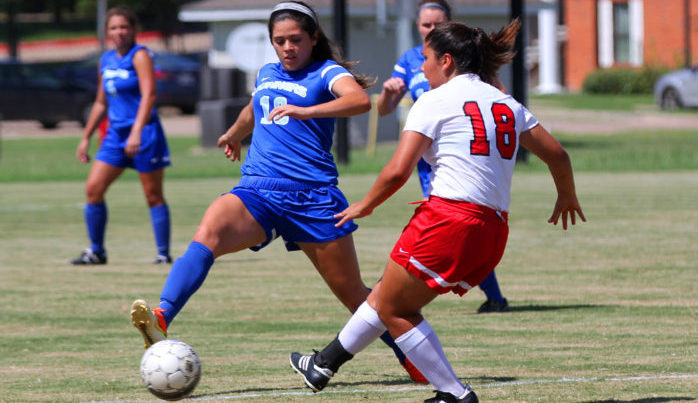
Angelina College’s Alexis Barrientez (6) kicks the ball away from Navarro’s Deneisha Blackwood Angelina College goalkeeper Nanci Juarez-Sedano slide kicks the ball away from Navarro’s Deneisha Blackwood during Thursday’s game in Corsicana. Juarez-Sedano would finish with seven saves, but the No. 12 Lady Bulldogs handed the Lady Roadrunners a 3-0 loss in the conference opener for both teams. (AC Press photo by Gary Stallard)

“We were playing defensive soccer,” Drago said. “We know they have great speed, and we were trying not to give them those through balls with their fastest players. We were trying to take up space, so we backed up and played the way we wanted.

“The way we set up the game today is a little different than what we’d like to play, but you have to modify your system according to the team you’re playing. We knew we were going to play a very talented Navarro group, and we did what we thought we’d have to do to make things tough on them.”

Juarez-Sedano proved a pleasant surprise, especially considering she wasn’t on the team two weeks ago.

“Nanci was a great pickup for us,” Drago said. “We lost both our goalkeepers before the first game, and Nanci’s a local girl from Nacogdoches that some of the girls and boys on our teams knew. She was already enrolling at AC, so we were able to get her set up to play this week. She came up huge several times today.”

Because of the focus on defending, the Lady Roadrunners didn’t push their own attack the way they plan to do in most games. AC’s best scoring opportunities came in transition, with Kennedy Sessions and Leslie Saenz each taking shots that just missed.

Despite the loss, Drago said his team performed well against one of the best teams in the conference.

“The girls played tough,” Drago said. “We had a couple of calls that didn’t go our way, and when you’re talking about two of those goals coming on PKs, that’s hard to overcome. I thought the first one was a little questionable, but that sort of dictated the way the rest of the game would go for us. Up to that point, we were playing great and keeping them out of the net.

“The girls didn’t give up playing against a very good team.”

The Lady Roadrunners (0-2, 0-1) will next play at home on Tuesday in a non-conference match against Ranger College. The game is part of an AC doubleheader, with the women kicking off at 6 p.m. and the Roadrunner men following at 8 p.m. The games will take place at Lufkin High School’s Jase Magers Soccer Complex.

What You Need To Know About The Zika Virus

0

The Zika virus is a virus being spread by mosquitoes of the Aedes aegypti strain. This virus is spreading rapidly through South American countries like Brazil and through the state of Florida. There are recorded cases of Zika in people across the nation who have traveled to countries infected with the virus. However, the only state in which people have been infected locally is Florida, so far.

In addition, a Texas Department of State Health Services news release revealed that an El Paso resident who recently traveled to Miami, where the virus is being spread locally, has tested positively for Zika. This is the first case to be linked to travel within the continental United States. That case is being monitored closely to ensure Zika does not spread beyond the El Paso resident, but I, and local health officials, believe it is important for East Texans to be prepared in case Zika comes knocking on our door.

To get the most relevant and important information about Zika for East Texans, I met with Public Health Preparedness Program Planner Kristina Childress. I came with my own questions for her, but she, much like her job description, was prepared for even more than I had to ask.

“We don’t want to spread fear,” Childress told me. “People just need to know what to do to protect themselves and their families.”

Here is the information Childress provided me.

How does Zika spread?

She explained that Zika spreads through bites from the Aedes strain of mosquitoes, from a pregnant woman to her fetus, from sex with an infected individual, and through a blood transfusion, organ and tissue transplant, fertility treatment, and breastfeeding. The Aedes mosquito is more vicious than other strains of mosquitoes because it is not full from one blood meal. Instead, it likes to hop from one person to the next and so on.

Who does Zika affect the most?

Childress expressed the dangers of a pregnant woman infecting her fetus. The Zika virus causes infants to be born with microcephaly, a condition in which the infant’s head and brain are smaller than normal. Symptoms of microcephaly vary and include intellectual disability and speech delay. It is highly important that pregnant women work to prevent getting bitten by mosquitoes and contracting Zika. Eligible Texas women on Medicaid can go straight to their pharmacist to pick up mosquito repellent. Texas is the first state in the nation to implement such an order to slow the spread of the Zika virus.

People who have traveled to a Zika infected country are also likely to catch the virus, Childress said. Those who have traveled to another country need to avoid getting bitten by mosquitoes in Texas at all costs, so our mosquitoes do not become Zika carriers.

What are the best ways to prevent the spread of mosquitoes and Zika?

To do what we can now, Childress recommends that individuals do their part in repelling mosquitoes alongside community leaders. She explained how each zone in each city are currently deciding how best to combat mosquitoes in each area. The prevention office met with fire departments, police departments, city leaders, and more people from several cities last week to discuss their methods. Here are some suggestions and resources for repelling mosquitoes.

  1. Wear EPA approved insect repellent. When you know you will have to be outside for a decent amount of time, wear EPA approved insect repellent such as DEET and Picaridin.
  2. Keep mosquitoes outside of your home. The Aedes strain of mosquitoes love to live right near humans and their homes. Prevent them from entering your home by using screens and mosquito nets.
  3. Cover up when outdoors. Wear long sleeves and long pants when you know you will be outside for a long period of time.
  4. Eliminate standing water on your property. This is an important step. Take a walk around your yard and make sure you get rid of old tires, turn over buckets full of old water, and wash out old barrels. If you have standing water you can’t get rid of, buy mosquito dunks from a store. They are safe around pets and effective against mosquitoes.
  5. Stay indoors at dusk and dawn. Aedes mosquitoes are known to be aggressive daytime biters. Their most active times are around dusk and dawn.
  6. Do your homework before traveling. If you know you will be traveling to a Zika infected area, make sure to study up on ways to avoid getting bitten by mosquitoes both in the foreign country and back home. The side effects of Zika are not quickly recognizable, and you could be infected without realizing it. Stay aware, and avoid mosquitoes. Also, avoid traveling to Zika infected areas if you are pregnant.

What are the side effects of Zika?

The side effects of Zika are not easily recognizable, Childress warned. The most common symptoms of Zika are fever, rash, joint pain, conjunctivitis (red eyes), muscle soreness, and headaches. There is no vaccine or treatment for Zika itself, but you can treat the symptoms with rest, drinking fluids, taking acetaminophen to reduce fever and pain, and avoiding aspirin or other non-steroidal anti-inflammatory drugs.

Fortunately, once a person has had the Zika virus, they are not likely to ever get the virus again. The chances are slim to none. Also, having the Zika virus will not affect future pregnancies.

Where can I get more information on Zika?

Center for Diseas Control and Prevention: This website will keep you up to date on Zika cases around the U.S.

World Health Organization Media Centre: This webpage includes a fact sheet about Zika. It will have other information that was not in this article.

World Health Organization Emergencies: This webpage will give you a history of Zika.

Texas Department of State Health Services: Keep up to date on Zika in Texas at this website.

The key to controlling Zika right now is for each of us to take steps to individually repel mosquitoes. Stay vigilant. Keep up to date on the latest information. Continue to keep your home and body mosquito free.

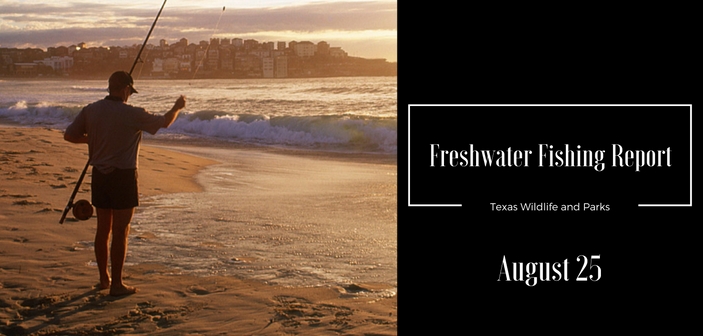
Your Freshwater Fishing Report

0

Week of August 24, 2016

ALAN HENRY
Water clear; 84–88 degrees; 3.6’ low. Black bass are fair early on buzzbaits, later switching to Texas rigs, jigs and deep diving crankbaits. Crappie are fair at night under lights. Catfish are fair on juglines.
AMISTAD
Water murky; 88–92 degrees; 24.28’ low. Black bass are good on topwaters, crankbaits, soft plastics, and jigs in hydrilla. Striped bass are fair on jerkbaits and topwaters. White bass are fair on crankbaits and minnows. Channel and blue catfish are good on cheesebait, shrimp, and nightcrawlers over baited holes in 15–40 feet. Yellow catfish are fair on trotlines and throwlines baited with live perch. Everyone in a boat must have a Mexico fishing license (if fishing the Mexico side) whether fishing or not.
ARROWHEAD
Water fairly clear; 85–89 degrees; 1.26’ low. Black bass are fair on Texas rigs. Crappie are slow on jigs and minnows in the shallows. Catfish are good on worms and stinkbait.
ATHENS
Water lightly stained; 82–85 degrees; 0.48’ low. Black bass are good on spinnerbaits, hollow body frogs and topwaters. Crappie are good on white jigs and minnows. Catfish are fair on trotlines and cut shad.
BASTROP
Water murky; 86–90 degrees. Black bass are good on chartreuse spinnerbaits and Rat–L–Traps. Crappie are slow. Channel and blue catfish are fair on cut bait and nightcrawlers. Yellow catfish are slow.
BELTON
Water murky; 84–88 degrees; 3.18’ high. Black bass are good on topwaters. Hybrid striper are fair on slabs on the bottom. White bass are good trolling Rat–L–Traps. Crappie are excellent on minnows. Channel and blue catfish are fair on Vienna sausages. Yellow catfish are fair on trotlines baited with perch and goldfish.
BOB SANDLIN
Water lightly stained; 83–86 degrees; 0.44’ low. Black bass are good on hollow body frogs, Texas rigged creature baits, topwaters and swim jigs. Crappie are fair on minnows. White bass are good on slabs. Catfish are good on trotlines.
BONHAM
Water lightly stained; 81–84 degrees; 1.62’ low. Black bass are good on Texas rig soft plastics and jigs on docks. Topwaters effective early. Crappie are slow on brush piles near points. Catfish are excellent on cut bait.
BRAUNIG
Water murky. Black bass are good on crankbaits and Rat–L–Traps near the dam. Striped bass are fair down rigging silver and gold spoons near the jetty. Redfish are fair on perch and shad near the jetty. Channel catfish are good on shrimp and cut bait. Blue catfish are fair on cut bait.
BRIDGEPORT
Water lightly stained, 81–85 degrees: 1.10’ high. Black bass are good on white buzzbaits, spinnerbaits and shallow crankbaits. Crappie are fair on jigs. White bass are good on slabs and topwaters. Hybrid striper are good on slabs. Catfish are fair on prepared bait.
BROWNWOOD
Water stained; 85–89 degrees; 0.79’ low. Black bass are excellent on topwaters, shad colored crankbaits, and watermelon, green pumpkin, and black/blue soft plastics in bushes in 8–12 feet. Hybrid striper are slow. White bass are good on Li’l Fishies and trolling crankbaits in 12–16 feet, and on minnows and jigs under lights at night. Crappie are good on minnows and on shad or white tube jigs. Channel catfish are slow. Blue catfish are good on juglines baited with cut perch or shad. Yellow catfish are good on trotlines baited with perch and goldfish.
BUCHANAN
Water murky; 83–87 degrees; 0.24’ low. Black bass are fair on watermelon Rat–L–Traps, perch colored topwaters, and watermelon red soft plastic worms early. Striped bass are good on green striper jigs and live bait at first light. White bass are fair on pet spoons and slabs. Crappie are fair on live minnows and chartreuse Curb’s crappie jigs. Channel catfish are good on liver and minnows. Yellow and blue catfish are fair on goldfish and perch upriver.
CADDO
Water stained to muddy; 83–86 degrees; 0.90’ high. Black bass are fair on Texas rigged creature baits, weightless Senkos and hollow body frogs. Crappie are fair on minnows and jigs. Catfish are good on trotlines and prepared bait.
CALAVERAS
Water murky. Black bass are good on chartreuse spinnerbaits and crankbaits over reed beds. Striped bass are fair on silver striper jigs near the dam. Redfish are fair on crawfish and tilapia along the shoreline. Channel and blue catfish are good on cheesebait, shrimp, and shad. Yellow catfish are slow.
CANYON LAKE
Water murky; 83–87 degrees; 0.86’ high. Black bass are fair to good on chartreuse crankbaits, watermelon JDC Skip–N–Pop topwaters, and Texas rigged red flake worms along break lines and ledges early and late. Striped bass are fair trolling watermelon crankbaits off main points. White bass are slow. Smallmouth bass are fair on white JDC grubs early. Crappie are slow. Channel catfish are slow. Yellow and blue catfish are fair on live bait.
CEDAR CREEK
Water lightly stained; 81–85 degrees; 0.69’ low. Black bass are good on topwaters, buzzbaits and Texas rigged worms near docks and shallow cover. White bass are good on slabs. Hybrid striper are good on slabs and minnows. Crappie are good on minnows. Catfish are fair on trotlines.
CHOKE CANYON
Water murky; 85–89 degrees; 22.16’ low. Black bass are fair on watermelon spinnerbaits and soft plastic worms. White bass are slow. Crappie are fair on minnows. Channel and blue catfish are good on nightcrawlers punchbait. Yellow catfish are slow.
COLEMAN
Water murky; 84–88 degrees; 1.17’ low. Black bass are good on watermelon spinnerbaits and Carolina rigged soft plastics. Hybrid striper are slow. Crappie are fair on minnows and white tube jigs. Channel catfish are fair on stinkbait and shrimp. Yellow catfish are slow.
COLETO CREEK
Water stained; 99 degrees at the hot water discharge, 87 degrees in main lake; 1.23’ low. Black bass to 5 pounds are good on crankbaits and soft plastics in 8–10 feet. White bass are slow. Crappie are fair on minnows and tube jigs in 8–10 feet. Talapia to 6 pounds are good bow fishing in the shallows. Channel and blue catfish to 15 pounds are good on droplines baited with live perch and cut bait in 8–10 feet. Yellow catfish are slow.
COLORADO CITY
21.81’ low. No report available.
CONROE
Water murky; 85–89 degrees; 0.40’ low. Black bass are slow. Striped bass are fair on chartreuse crankbaits. Crappie are fair on minnows. Catfish are good on nightcrawlers, liver, and shrimp.
COOPER
Water stained to muddy; 1.22’ low. No report available.
FAIRFIELD
Black bass fishing reported as significantly improved. TPWD discontinued stocking the lake after the fish kill in September 2011. Redfish survived the kill in limited numbers.
FALCON
Water murky; 88–92 degrees; 33.81’ low. Black bass are good on white spinnerbaits. Striped bass are slow. Crappie are slow. Channel and blue catfish are excellent on cut bait and stinkbait. Yellow catfish are slow. Everyone in a boat must have a Mexico fishing license (if fishing the Mexico side) whether fishing or not.
FAYETTE
Water murky. Black bass are fair on chartreuse Carolina rigged soft plastics and small spinnerbaits. Channel and blue catfish are good on cut shad.
FORK
Water stained; 82–85 degrees; 1.27’ low. Black bass are good on shallow crankbaits, white buzzbaits and Texas rigged craws flipped around bushes. Some schooling action noted. White and yellow bass are good on minnows. Crappie are good on minnows. Catfish are good on trotlines and stinkbait.
FT. PHANTOM HILL
Water murky; 84–88 degrees; 0.99’ low. Black bass are fair on topwaters early, later switching to Texas rigs, Carolina rigs and medium diving crankbaits. Crappie are fair on jigs and minnows. Catfish are fair to good on cut bait.
GIBBONS CREEK
Water murky. Black bass are fair on chartreuse soft plastics, crankbaits, and spinnerbaits. Crappie are fair on minnows. Catfish are fair on nightcrawlers and live bait.
GRANBURY
Water murky; 88–92 degrees; 0.53’ low. Black bass are fair on watermelon spinnerbaits and crankbaits. Striped bass are slow. White bass are slow. Crappie are fair on minnows and chartreuse tube jigs. Catfish are fair on stinkbait and live bait.
GRANGER
Water murky; 87–91 degrees; 4.40’ high. Black bass are slow. White bass are slow. Crappie are slow. Blue catfish are slow. Yellow catfish are slow.
GRAPEVINE
Water lightly stained; 81–84 degrees; 2.62’ high. Black bass are good on Megabass V4 buzzbaits in shad pattern as well as Megabass S Crank 1.2 in MB Sexy Shad. White bass and hybrid bass are good on slabs. Crappie are fair on minnows. Catfish are slow on trotlines.
GREENBELT
33.08’ low. No report available.
HOUSTON COUNTY
Water stained; 84–88 degrees; 0.07’ high. Black bass to 5 pounds are fair on green/black soft plastics in 3–6 feet. Crappie are fair on live minnows over brush. Bream are fair on live worms. Channel and blue catfish to 3 pounds are good on trotlines baited with cut shad.
HUBBARD CREEK
Water off color; 85–90 degrees; 1.32’ low. Black bass are fair to good on Yellow Magics, Texas rigs and jigs. Crappie are fair to good on jigs and minnows. Catfish are good on nightcrawlers and live shad.
JOE POOL
Water lightly stained; 82–85 degrees; 0.47’ low. Black bass are fair on Texas rigged craws, topwaters and swim jigs. White bass are good on slabs and topwaters. Crappie are good on minnows. Catfish are fair on rod and reel.
LAKE O’ THE PINES
Water stained; 83–86 degrees: 3.07’ high. Black bass are good on hollow body frogs, topwaters and spinnerbaits. White bass are good on slabs and minnows. Crappie are good on minnows and jigs. Catfish are fair on trotlines.
LAVON
Water stained; 82–85 degrees: 1.71’ low. Black bass are fair on buzzbaits, flipping jigs and bladed jigs. White bass are good on slabs and minnows. Crappie are fair on minnows. Catfish are good on trotlines and cut shad.
LBJ
Water stained; 85–89 degrees; 0.88’ low. Black bass are fair on perch colored spinnerbaits and crankbaits, and on pumpkinseed soft plastics early and late. Striped bass are fair on live bait and Li’l Fishies early. White bass are fair on live minnows. Crappie are good on white Curb’s crappie jigs and live minnows over brush piles. Channel catfish are fair on shrimp and dipbait. Yellow and blue catfish are fair on trotlines baited with goldfish and perch.
LEWISVILLE
Water lightly stained; 81–85 degrees; 0.20’ high. Black bass are good on Texas rigged craws, Yellow Magics and small plastic swimbaits. White bass are good on slabs. Crappie are good on minnows and jigs. Catfish are good on trotlines.
LIVINGSTON
Water stained; 86–90 degrees. Black bass are good on spinnerbaits and crankbaits. Striped bass are slow. White bass are good on troll tubes, pet spoons, and Charlie slabs. Crappie are good on minnows. Blue catfish are good on shad. Yellow catfish are slow.
MACKENZIE
73.67’ low. No report available.
MARTIN CREEK
Water lightly stained; 85–88 degrees; 0.85’ low. Black bass are fair on hollow body frogs and white buzzbaits. Crappie are fair on minnows. White bass are fair on minnows. Catfish are good on trotlines and cut shad.
MEREDITH
59.8’ low. No report available.
MONTICELLO
Water stained; 85–88 degrees; 0.95’ high. Black bass are fair on deep crankbaits and drop shot worms. Crappie are fair on minnows and jigs. Catfish are fair on trotlines and prepared bait.
NASWORTHY
84–89 degrees; 0.91’ low. Black bass are fair to good on topwaters early, later switching to Texas rigs, medium running shad pattern crankbaits and watermelon seed jigs. No reports on crappie. Catfish are fair to good on nightcrawlers and cut bait.
NAVARRO MILLS
Water murky; 86–90 degrees; 3.80’ high. Black bass are slow. White bass are slow. Crappie are slow. Channel catfish are slow. Blue catfish are slow. Yellow catfish are slow.
O.H. IVIE
Water stained; 86–90 degrees; 35.61’ low. Black bass are fair to good on Zara Spooks early, later switching to Texas rigs, squarebill crankbaits and jigs. Crappie are fair to good on minnows and jigs. Catfish are fair to good on live bait.
OAK CREEK
Water stained; 84–88 degrees; 10.91’ low. Black bass are fair on topwaters early, later switching to drop shot rigs, jigs, Texas rigs and chatterbaits. Crappie are fair to good on minnows and jigs in the shallows. Catfish are fair on chartreuse (use Worn–Glo) nightcrawlers.
PALESTINE
Water lightly stained; 81–84 degrees; 0.86’ low. Black bass are good on Texas rigged craws and spinnerbaits. Topwaters working early. Crappie are good on minnows and jigs. Hybrid striper are fair on slabs. White bass are fair on slabs. Catfish are good on trotlines and cut shad.
PALO DURO
55.24’ low. No report available.
POSSUM KINGDOM
Water off color; 84–90 degrees; 0.12’ low. Black bass are fair to good on topwaters early, later switching to Texas rigs, DT 10s, jigs and drop shot rigs. Crappie are fair to good on split shot weighted live minnows. White bass are fair to good on Road Rooster Tails. Striped bass are fair on live shad. Catfish are fair to good on nightcrawlers and cur bait.
PROCTOR
Water murky; 85–89 degrees; 0.57’ low. Black bass are good on watermelon spinnerbaits and some topwaters. Striped bass are slow. White bass are fair on minnows. Crappie are slow. Channel and blue catfish are good on shad. Yellow catfish are fair on live bait.
RAY HUBBARD
Water lightly stained; 82–85 degrees; 0.69’ low. Black bass are fair on shallow crankbaits, topwaters and wakebaits. Crappie are good on minnows. White bass are good on slabs. Hybrid striper are good on slabs. Catfish are fair on trotlines and prepared bait.
RAY ROBERTS
Water stained; 81–85 degrees; 0.05’ high. Black bass are good on Carolina rigged Flukes, swimjigs and buzzbaits. White bass are good on slabs. Crappie are fair on minnows. Catfish are good on trotlines.
RICHLAND CHAMBERS
Water lightly stained; 81–84 degrees; 0.35’ high. Black bass are slow on Texas rigged craws, spinnerbaits and topwaters. White bass are good on slabs and topwaters. Hybrid striper are good on slabs. Crappie are good on minnows. Catfish are fair on trotlines.
SAM RAYBURN
Water murky; 85–89 degrees; 1.03’ low. Black bass are good on chartreuse crankbaits and soft plastic worms. White bass are slow. Crappie are good on minnows over brush piles. Bream are good on nightcrawlers. Catfish are good on trotlines baited with live bait and cut bait.
SOMERVILLE
Water murky; 87–91 degrees; 5.93’ high. Black bass are good on watermelon soft plastic worms with chartreuse tails. Hybrid striper are fair on white striper jigs. White bass are fair on minnows. Crappie are slow. Channel and blue catfish are fair on trotlines and juglines baited with perch. Yellow catfish are slow.
SPENCE
55.27’ low. No report available.
STAMFORD
1.1’ low. No report available.
STEINHAGEN
1.65’ high. No report available.
STILLHOUSE
Water murky; 85–89 degrees; 2.92’ high. Black bass are slow. White bass are slow. Crappie are slow. Channel and blue catfish are slow. Yellow catfish are slow.
SWEETWATER
Water off color; 83–89 degrees; 22.94’ low. No report available.
TAWAKONI
Water stained; 82–86 degrees; 0.99’ low. Black bass are fair on hollow body frogs, bladed jigs and Texas rigged creature baits. White bass are good on slabs. Hybrid bass are good on slabs. Crappie are fair on minnows and jigs. Catfish are good on trotlines and rod and reel.
TEXOMA
Water stained to muddy; 81–84 degrees; 1.10’ low. Black bass are fair on topwaters, small plastic swimbaits on jigheads and shakyhead worms. Crappie are fair on minnows. Striped bass are good on slabs. Catfish are good on trotlines.
TOLEDO BEND
Water murky; 85–89 degrees; 1.56’ low. Black bass are fair on watermelon/blue flake soft plastic worms early and late. Striped bass are slow. White bass are fair on minnows. Crappie are good on minnows and blue tube jigs. Bream are good on crickets and nightcrawlers off docks. Channel and blue catfish are good on trotlines baited with live bait. Yellow catfish are slow.
TRAVIS
Water murky; 86–90 degrees; 1.22’ low. Black bass are slow. Striped bass are slow. White bass are slow. Crappie are slow. Channel and blue catfish are slow. Yellow catfish are slow.
WALTER E. LONG
Water murky. Black bass are fair on watermelon soft plastics. Hybrid striper are slow. White bass are fair on minnows. Crappie are fair on minnows. Channel and blue catfish are fair on shrimp and nightcrawlers. Yellow catfish are slow.
WEATHERFORD
Water lightly stained; 0.14’ high. No report available.
WHITE RIVER
Water stained; 84–89 degrees; 18.82’ low. No report available.
WHITNEY
Water murky; 86–90 degrees; 2.74’ low. Black bass are slow. Striped bass are fair on white striper jigs. White bass are good on minnows. Crappie are fair on minnows. Catfish are good on bloodbait and shrimp.
WRIGHT PATMAN
Water stained; 7.70’ high. No report available.

Your Regional Fishing Report

0

Week of August 24, 2016

Bob Sandlin
Water lightly stained; 83–86 degrees; 0.44′ low. Black bass are good on hollow body frogs, Texas rigged creature baits, topwaters and swim jigs. Crappie are fair on minnows. White bass are good on slabs. Catfish are good on trotlines.
Caddo
Water stained to muddy; 83–86 degrees; 0.90′ high. Black bass are fair on Texas rigged creature baits, weightless Senkos and hollow body frogs. Crappie are fair on minnows and jigs. Catfish are good on trotlines and prepared bait.
Conroe
Water murky; 85–89 degrees; 0.40′ low. Black bass are slow. Striped bass are fair on chartreuse crankbaits. Crappie are fair on minnows. Catfish are good on nightcrawlers, liver, and shrimp.
Fork
Water stained; 82–85 degrees; 1.27′ low. Black bass are good on shallow crankbaits, white buzzbaits and Texas rigged craws flipped around bushes. Some schooling action noted. White and yellow bass are good on minnows. Crappie are good on minnows. Catfish are good on trotlines and stinkbait.
Houston County
Water stained; 84–88 degrees; 0.07′ high. Black bass to 5 pounds are fair on green/black soft plastics in 3–6 feet. Crappie are fair on live minnows over brush. Bream are fair on live worms. Channel and blue catfish to 3 pounds are good on trotlines baited with cut shad.
Water stained; 83–86 degrees: 3.07′ high. Black bass are good on hollow body frogs, topwaters and spinnerbaits. White bass are good on slabs and minnows. Crappie are good on minnows and jigs. Catfish are fair on trotlines.
Livingston
Water stained; 86–90 degrees. Black bass are good on spinnerbaits and crankbaits. Striped bass are slow. White bass are good on troll tubes, pet spoons, and Charlie slabs. Crappie are good on minnows. Blue catfish are good on shad. Yellow catfish are slow.
Martin Creek
Water lightly stained; 85–88 degrees; 0.85′ low. Black bass are fair on hollow body frogs and white buzzbaits. Crappie are fair on minnows. White bass are fair on minnows. Catfish are good on trotlines and cut shad.
Monticello
Water stained; 85–88 degrees; 0.95′ high. Black bass are fair on deep crankbaits and drop shot worms. Crappie are fair on minnows and jigs. Catfish are fair on trotlines and prepared bait.
Sam Rayburn
Water murky; 85–89 degrees; 1.03′ low. Black bass are good on chartreuse crankbaits and soft plastic worms. White bass are slow. Crappie are good on minnows over brush piles. Bream are good on nightcrawlers. Catfish are good on trotlines baited with live bait and cut bait.
Steinhagen
1.65′ high. No report available.
Toledo Bend
Water murky; 85–89 degrees; 1.56′ low. Black bass are fair on watermelon/blue flake soft plastic worms early and late. Striped bass are slow. White bass are fair on minnows. Crappie are good on minnows and blue tube jigs. Bream are good on crickets and nightcrawlers off docks. Channel and blue catfish are good on trotlines baited with live bait. Yellow catfish are slow.
Wright Patman
Water stained; 7.70′ high. No report available.

Transportation Commission Approves Construction, Maintenance Contracts

0

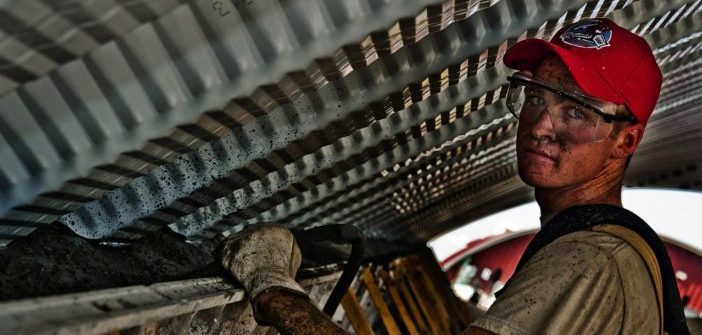
The Texas Transportation Commission on Thursday approved more than $395.4 million for new construction and facilities contracts and an additional $30 million for maintenance contracts statewide. The Lufkin District was allocated $774,722 for two new construction projects and $852,421 for a highway maintenance contract.

A construction project and a maintenance contract were approved for Polk County. The construction project for $89,789 will consist of the installation of three advance warning signals and signs. Warning signs and signals will be placed near the intersection of US 59 and FM 350 at a cost $26,792, on FM 3126 near the intersection of FM 3277 at a cost of $19,699, and on SH 150 at the intersection of FM 1725 at a cost of $43,299. Striping Technology, of Tyler, will serve as contractor.

The state highway one-year maintenance contract for $852,421 was awarded to N-Line Traffic Maintenance which will provide on-call traffic control services on US 59 and various other roadways as needed in Polk and San Jacinto counties. Duties will include performing temporary traffic control and flagging operations to assist maintenance crews in maintenance activities on various state-maintained roadways within the designated counties.

A $684,933 construction project was also approved for various counties in the Lufkin District that will consist of the placement of centerline markings, the addition of centerline rumble strips, and milling and profiling roadway edge line markings in Nacogdoches, Sabine, Angelina, San Augustine and Shelby counties. The project will enhance the safety of the various roadways in the contract.

As these projects begin and progress, motorists are urged to be alert and reduce speed in all work zones. Remember, traffic fines double when workers are present. Work schedules are subject to change in inclement weather.

For a complete list of projects, driving conditions or road closures, visit drivetexas.org. For more information, email Rhonda.Oaks@txdot.gov or (936) 633-4395.

Woodsy Wonders At The Texas Forestry Museum

0

The Texas Forestry Museum invites Kids’ Club members to their next event, Woodsy Wonders. The Kids’ Club-Only event will be held on Thursday, September 8th from 4:30 p.m. until 6:30 p.m. Children will learn about why leaves change color, go on a nature scavenger hunt, and make a fun woodsy craft! Also, there will be plenty of pizza and drinks for everyone.

If you are not a Kids’ Club member, come out and join the fun for just $5.00. Please RSVP by Tuesday, September 6th by calling 936-632-9535 or stopping by the museum. Woodsy Wonders is being brought to you by our wonderful sponsor East Texas Asphalt Co., Ltd.

The Texas Forestry Museum, a private non-profit organization, is located at 1905 Atkinson Dr. in Lufkin. We are open from 10 a.m. to 5:00 p.m., Monday through Saturday, except major holidays. For more information on the Texas Forestry Museum and its scheduled events, please call 936-632-9535.

For more information and a map of the location, click here.

Keep Nacogdoches Beautiful To Host Free Technology Recycling Day

0

Keep Nacogdoches Beautiful (KNB), in conjunction with the City of Nacogdoches, will host a free technology recycling event on September 10, 2016, from 9 a.m. – 12 p.m. The event will be held at the lot on the corner of Hospital St. and Pearl St., next to the Appraisal District office.

Acceptable items include computer towers and servers, laptops, monitors, routers, printers, copiers and fax machines, power backup supplies, wires, cables, ink cartridges, cameras, cell phones and phone systems, radios and stereos.

“Monthly e-cycle events will provide an opportunity for Keep Nacogdoches Beautiful, the City of Nacogdoches, and other community organizations to offer special donation and recycling events to the Nacogdoches community,” Katie Blevins, KNB executive coordinator, said. “Our new location is adjacent to the Nacogdoches Farmer’s Market; it will bring greater visibility and easier access to technology recycling in Nacogdoches and an opportunity to provide information to the community about recycling and other environmental issues.”

Keep Nacogdoches Beautiful is a 501(c)3 nonprofit organization that promotes waste reduction, litter management and beautification throughout Nacogdoches County. If you or your organization would like to partner with KNB, email info@keepnacbeautiful.org or visit this website.

“This e-cycle event will be the first of many,” said Jamie Bouldin, KNB chair person. “We hope to make this a regular event, hosted on second Saturdays of each month.”

The new, monthly e-cycle events will replace the existing electronics recycling shed behind the Nacogdoches Rec Center. While citywide recycling of clean and separated cardboard, plastics #1 and #2, paper, and glass will still be available behind the Nacogdoches Recreation Center, electronics recycling will no longer be available at this location.

One factor that led to the e-cycle program update is the illegal dumping of electronics and TVs outside the e-cycle shed. “It’s easy for people to leave unwanted items at the shed. It’s a location with low visibility. They did the work to load the items in their car; they want to be done with it,” Katie Blevins, KNB executive coordinator, said. “What people may not realize is that leaving electronics and TVs outside of the recycling shed is considered illegal dumping.”

For location information, click here.

Make Your Spare Change Make A Difference

0

Today I counted the change I’d been saving for about two months. The change I’d discounted as annoying and trivial added up to $35. Crazy, right?

Yet, it isn’t so crazy when I think about how 90 percent of my transactions result in change. For the past two months instead of letting that loose change stay loose, I saved it, and I ended up with a substantial amount of my money back. Saving or giving the change of our transactions can really make a difference, either in the world or in personal lives.

Coin Up is a mobile app that provides a platform for donors to give to their favorite charitable causes effortlessly. Once downloaded and registered, the app will round up purchases made on your credit card or debit card and give the spare change to the person’s chosen charities. The app is free to use and has been designed to help people give monthly to charities they are passionate about, making it easy for their spare change to have a big impact.

“We all have spare change, and most of us see it as trivial, ” Leena Patidar, chief executive officer and co-founder of Coin Up, explained. “What people don’t realize is that the aggregation of this spare change is actually quite powerful. It adds up quickly, allowing for major effect, depending on how you want to use it.”

According to the Transportation Security Administration, there was over $531,000 worth of spare change left behind in the country’s airports just during 2012. Imagine what that much money could have done to help a charity, fund a personal venture, buy school supplies, and more. Spare change is not useless. Here are five things to keep in mind as the change begins to pile up:

  1. Save for a family vacation. Many families find it challenging to pay for a vacation. Yet if they saved spare change throughout the year, putting it into a big bank in the closet, they may have $600 or more at the end of the year. I ended up with around $35 in two months with only myself contributing. With change from the whole family or even just a significant other, funding a modest vacation or staycation is perfectly plausible!
  2. Keep saving it. If you put all of your spare change into a bank in the closet, and then once per year, half year, or month you cash it out and add it to a savings account at the bank (or invest it), you will be building a nice fund for retirement. Even saving a few hundred dollars per year, this will add up to a nice payday once retirement hits and the money has all been compounded in the bank.
  3. Pay it forward. Use your spare change to bless someone else. Use the change in your car’s change tray to buy someone else’s coffee. Use the change you and your family hoard to buy a coat for the homeless man you pass on the road. Doing something kind like this will benefit many people, including you.
  4. Eliminate debt. In our society, most people carry around some debt, whether from credit cards, automobile payments, or student loans. Save up the spare change, and every time it adds up to $25-50, pay off a little bit more debt. Over time, those extra payments add up and help eliminate debt quicker.
  5. Give to your favorite charity. Everyone has a cause they are passionate about. Giving spare change to a favorite cause or charity helps lift our hearts and leads to a better world. Apps such as Coin Up have helped make giving spare change to one’s chosen charity effortless. By downloading the app and choosing a charity to donate to, your purchases are rounded up to the nearest dollar, with the change going to your chosen charity each month.

“We know the impact and power that spare change can have on society,” added Coin Up co-founder and chief technology officer, Scott Graham. “That’s why Coin Up is revolutionary, because we are creating a society that can easily engage in charitable giving through the convenience of every day transactions by taking incremental spare change from your daily credit/debit card transactions and donating it to the charity of your choice.”

The Coin Up app is free to download. All users do is download the app to register, choose a cause they are passionate about, put in their payment source, and set a monthly limit. The spare change from their transactions (at stores, restaurants, or that daily coffee) will automatically be given to their chosen charities. The app provides a secure way for people to control their monthly charity donation amount, and provides for a tax-deductible donation. For more information on the Coin Up app, visit this website or download it today on the Apple App Store.

YOUR CHANGE. YOUR IMPACT. Download the @CoinUpApp today.