Home Blog Page 641

CHI St. Luke’s Health-Memorial Earns Silver Award For STEMI Treatment

Every year, more than 250,000 people experience the most deadly type of heart attack which is caused by a blockage of blood flow to the heart. These STEMI (ST elevation myocardial infarction) heart attacks require timely treatment as it is critical to restore blood flow as quickly as possible.

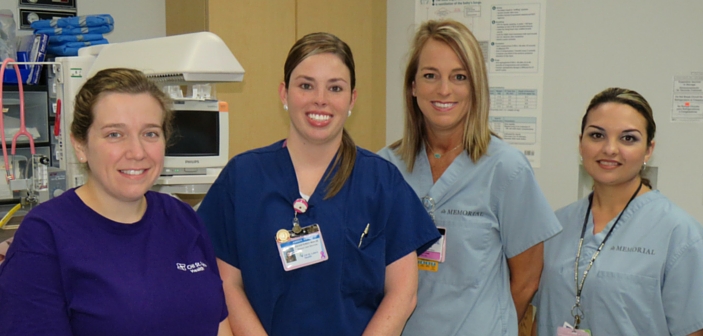
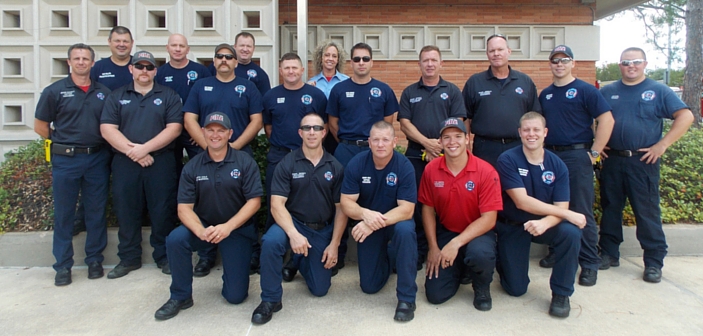
CHI St. Luke’s Health-Memorial works to reduce all barriers that would prevent someone from receiving prompt treatment. Due to a lot of hard work and dedication from the physicians, nurses, technicians and hospital staff, as well as the Lufkin Fire Department, Memorial received the American Heart Association’s Mission: Lifeline STEMI Receiving Center – Silver Quality Achievement Award. The award is presented to a select few throughout the country that have implemented specific quality improvement measures to make sure patients get the treatment they need, faster.

“CHI St. Luke’s Health-Memorial Lufkin is constantly striving to enhance the quality of care our heart attack patients receive, and the American Heart Association’s Mission: Lifeline program is helping us accomplish that goal through nationally respected clinical guidelines,” said Shawn Barnett, CHI St. Luke’s Health Memorial COO & Lufkin President. “We are very proud to be recognized for our achievements in cardiac care.”

“We commend CHI St. Luke’s Health Memorial for this achievement which reflects a significant institutional commitment to the highest quality of care for their heart attack patients,” said James G. Jollis, MD, Chair of the Mission: Lifeline Advisory Working Group. “We applaud them for their commitment to quality and timely care.”

CHI St. Luke’s Health Memorial Lufkin earned the award by meeting specific criteria and standards of performance for the quick and appropriate treatment of STEMI patients by providing emergency procedures to re-establish blood flow to blocked arteries when needed. Eligible hospitals must adhere to these measures at a set level for 12 consecutive months to receive this award.

Your Regional Fishing Report

Week of June 22, 2016

Bob Sandlin
Water stained; 82–87 degrees; 0.42′ high. Black bass are fair on topwaters, hollow body frogs and Texas rigged soft plastics. Crappie are fair on minnows and jigs. White bass are fair on slabs and minnows. Catfish are good on trotlines.
Caddo
Water stained to muddy; 85–89 degrees; 1.50′ high. Black bass are fair on hollow body frogs and Texas rigged creature baits near stumps. Crappie are fair on minnows. Catfish are slow on trotlines and stink bait.
Conroe
Water murky; 76–80 degrees; 0.01′ high. Black bass are fair on Carolina rigged watermelon soft plastics, crankbaits, and spinnerbaits. Striped bass are good on white striper jigs. Crappie are good on minnows and pink tube jigs over brush piles. Catfish are good on stinkbait and nightcrawlers.
Fork
Water stained; 84–89 degrees; 0.07′ low. Black bass are fair on Carolina rigged Flukes and deep diving crankbaits. Some fishing being caught early on black buzzbaits. White and yellow bass are good on minnows. Crappie are good on minnows and jigs. Catfish are fair on trotlines.
Houston County
Water stained; 77–81 degrees; 0.13′ high. Black bass are fair on black/red flake worms. Crappie are slow. Bream are good on live worms over grass beds and off piers. Channel and blue catfish are fair on shad.
Water stained; 5.96′ high. No report available.
Livingston
Water stained; 78–82 degrees; 1.25′ high. Black bass are good on white spinnerbaits and Rat–L–Traps. Striped bass are fair on striper jigs, hellbenders, and silver slabs. White bass are fair on minnows, troll tubes, and Charlie slabs. Crappie are fair on minnows and blue tube jigs. Blue catfish are fair on shad. Yellow catfish are fair on live bait.
Martin Creek
Water lightly stained; 86–91 degrees; 0.05′ low. Black bass are fair on Texas rigged craws, weightless Senkos and hollow body frogs. Crappie are good on minnows. White bass are fair on minnows. Catfish are slow on trotlines and prepared bait.
Monticello
Water stained; 85–90 degrees; 0.02′ high. Black bass are slow on hollow body frogs, buzz frogs, and weightless Senkos. Crappie are slow on minnows. Catfish are fair on trotlines and prepared bait.
Sam Rayburn
Water murky; 79–83 degrees; 4.79′ high. Black bass are slow. White bass are slow. Crappie are slow. Bream are slow. Catfish are slow.
Steinhagen
1.41′ high. No report available.
Toledo Bend
Water murky; 78–82 degrees; 0.27′ high. Black bass are fair on watermelon spinnerbaits, crankbaits, and black/blue soft plastics. Striped bass are good on white striper jigs. White bass are good on minnows and pet spoons. Crappie are good on minnows and white tube jigs. Bream are good on crickets and nightcrawlers. Channel and blue catfish are good on trotlines baited with live bait and liver. Yellow catfish are slow.
Wright Patman
Water muddy; 28.72′ high. No report available.

Your Freshwater Fishing Report

Week of June 22, 2016

ALAN HENRY
Water clear; 74 degrees; 1.43’ low. Black bass are fair to good early on Yellow Magics, later switching to wacky worms and Texas rigs on points. Crappie are fair. Catfish are fair on perch and goldfish.
AMISTAD
Water murky; 79–83 degrees; 24.40’ low. Black bass are good on topwaters, crankbaits, spinnerbaits, and soft plastic frogs. Striped bass are fair on topwaters and large jerkbaits. White bass are fair on crankbaits and minnows. Channel and blue catfish are good on cheesebait, shrimp, and nightcrawlers over baited holes. Yellow catfish are fair on trotlines and throwlines baited with live perch. Everyone in a boat must have a Mexico fishing license (if fishing the Mexico side) whether fishing or not.
ARROWHEAD
Water fairly clear; 73–79 degrees; 0.19’ low. No reports on black bass. Crappie are slow on jigs and minnows in the shallows. Catfish are good on worms and stinkbait.
ATHENS
Water lightly stained; 83–87 degrees; 0.31’ high. Black bass are good on weightless Flukes and Senkos. Some fish being caught on hollow body frogs. Crappie are good on minnows. Catfish are fair on trotlines and prepared bait.
BASTROP
Water murky; 79–83 degrees. Black bass are slow. Crappie are slow. Channel and blue catfish are slow. Yellow catfish are slow.
BELTON
Water murky; 76–80 degrees; 23.40’ high. Black bass are slow. Hybrid striper are slow. White bass are slow. Crappie are slow. Channel and blue catfish are slow. Yellow catfish are slow.
BOB SANDLIN
Water stained; 82–87 degrees; 0.42’ high. Black bass are fair on topwaters, hollow body frogs and Texas rigged soft plastics. Crappie are fair on minnows and jigs. White bass are fair on slabs and minnows. Catfish are good on trotlines.
BONHAM
Water stained to lightly stained; 83–88 degrees; 0.19’ low. Black bass are good on topwaters, Texas rigged worms and deep diving crankbaits. Crappie are good on brush piles in 10–12’. Catfish are good on cut shad and prepared bait.
BRAUNIG
Water murky. Black bass are slow. Striped bass are slow. Redfish are slow. Channel and blue catfish are slow.
BRIDGEPORT
Water stained to lightly stained, 84–88 degrees: 0.79’ high. Black bass are very good on white buzzbaits, Megabass Hazendong Shad swimbaits on jigheads and Megabass S Crank 1.5 in E2 Craw. Crappie are fair on minnows and jigs. White bass are good on slabs and crankbaits. Hybrid striper are good on minnows. Catfish are good on trotlines.
BROWNWOOD
Water murky; 76–80 degrees; 0.42’ high. Black bass are good on soft plastics, buzzbaits, and spinnerbaits over grass. Hybrid striper are fair on shad. White bass are good on minnows and Li’l Fishies off lighted docks at night. Crappie are fair on minnows and white tube jigs. Channel catfish are good on trotlines baited with live bait. Yellow catfish are fair on trotlines baited with live bait.
BUCHANAN
Water murky; 77–81 degrees; 0.10’ low. Black bass are good on watermelon red Scoundrel worms and Senkos, and on cotton candy JDC Skip–N–Pop topwaters on secondary points early. Striped bass are good on chartreuse soft plastics, Zara spooks, and black/blue crankbaits at daylight. White bass are slow. Crappie are fair on minnows and Curb’s crappie jigs over brush piles. Channel catfish are good on shrimp and dipbait. Yellow and blue catfish are fair on juglines and trotlines baited with perch and nightcrawlers.
CADDO
Water stained to muddy; 85–89 degrees; 1.50’ high. Black bass are fair on hollow body frogs and Texas rigged creature baits near stumps. Crappie are fair on minnows. Catfish are slow on trotlines and stink bait.
CALAVERAS
Water murky. Black bass are slow. Striped bass are slow. Redfish are slow. Channel catfish are slow. Blue catfish are slow. Yellow catfish are slow.
CANYON LAKE
Water murky; 76–80 degrees; 2.75’ high. Black bass are slow. Striped bass are slow. White bass are slow. Smallmouth bass are slow. Crappie are slow. Channel catfish are slow. Yellow and blue catfish are slow.
CEDAR CREEK
Water lightly stained; 83–87 degrees; 0.04’ low. Black bass are good on Texas rigged worms, topwater poppers and buzzbaits. White bass are good on slabs and minnows. Hybrid striper are good on slabs. Crappie are good on minnows. Catfish are fair on trotlines and rod and reel.
CHOKE CANYON
Water murky; 78–82 degrees; 21.16’ low. Black bass are good on chartreuse spinnerbaits, crankbaits, and large soft plastic worms. Crappie are fair on minnows and white tube jigs. Channel and blue catfish are fair on stinkbait and minnows. Yellow catfish are slow.
COLEMAN
Water murky; 78–82 degrees; 0.05’ high. Black bass are slow. Hybrid striper are slow. Crappie are slow. Channel catfish are slow. Yellow catfish are slow.
COLETO CREEK
Water murky; 94 degrees at the hot water discharge, 88 degrees in main lake; 0.27’ high. Black bass to 5 pounds are good on chartreuse spinnerbaits and crankbaits in 8–10 feet. White bass are slow. Crappie are slow. Channel and blue catfish to 7 pounds are fair on live perch and cut bait in 8–10 feet. Yellow catfish are slow.
COLORADO CITY
20.49’ low. No report available.
CONROE
Water murky; 76–80 degrees; 0.01’ high. Black bass are fair on Carolina rigged watermelon soft plastics, crankbaits, and spinnerbaits. Striped bass are good on white striper jigs. Crappie are good on minnows and pink tube jigs over brush piles. Catfish are good on stinkbait and nightcrawlers.
COOPER
Water stained to muddy; 0.17’ high. No report available.
FAIRFIELD
Black bass fishing reported as significantly improved. TPWD discontinued stocking the lake after the fish kill in September 2011. Redfish survived the kill in limited numbers.
FALCON
Water murky; 80–84 degrees; 27.04’ low. Black bass are good on watermelon spinnerbaits and shallow running crankbaits in the north end of the lake. Striped bass are slow. Crappie are slow. Channel and blue catfish are good on shrimp and stinkbait. Everyone in a boat must have a Mexico fishing license (if fishing the Mexico side) whether fishing or not.
FAYETTE
Water murky. Black bass are slow. Channel and blue catfish are slow.
FORK
Water stained; 84–89 degrees; 0.07’ low. Black bass are fair on Carolina rigged Flukes and deep diving crankbaits. Some fishing being caught early on black buzzbaits. White and yellow bass are good on minnows. Crappie are good on minnows and jigs. Catfish are fair on trotlines.
FT. PHANTOM HILL
Water murky; 72–78 degrees; 0.29’ high. Black bass are fair on topwaters, chatterbaits and Texas rigs. Crappie are fair on jigs and minnows. Catfish are fair to good on cut bait.
GIBBONS CREEK
Water murky. Black bass are fair on watermelon soft plastic worms and blue/green crankbaits. Crappie are fair on minnows and white tube jigs. Catfish are good on nightcrawlers, cut bait, and hot dogs.
GRANBURY
Water murky; 75–79 degrees; 0.03’ low. Black bass are fair on watermelon soft plastic worms and Rat–L–Traps. Striped bass are slow. White bass are good on minnows and pet spoons. Crappie are fair on minnows. Catfish are good on nightcrawlers, chicken livers, and stinkbait.
GRANGER
Water murky; 76–80 degrees; 6.76’ high. Black bass are slow. White bass are slow. Crappie are slow. Blue catfish are slow. Yellow catfish are slow.
GRAPEVINE
Water stained to muddy; 83–87 degrees; 12.49’ high. Black bass slow on Texas rigged soft plastics and jigs near flooded cover. White bass and hybrid bass are fair on slabs and minnows. Crappie are slow on minnows and jigs. Catfish are fair on shad.
GREENBELT
31.79’ low. No report available.
HOUSTON COUNTY
Water stained; 77–81 degrees; 0.13’ high. Black bass are fair on black/red flake worms. Crappie are slow. Bream are good on live worms over grass beds and off piers. Channel and blue catfish are fair on shad.
HUBBARD CREEK
Water off color; 74–80 degrees; 0.37’ low. Black bass are fair to good on buzzbaits and Pop–Rs early, later switching to Texas rigs, Carolina rigs and jigs. Crappie are fair to good on jigs and minnows. Catfish are good on nightcrawlers and live shad.
JOE POOL
Water stained to muddy; 84–89 degrees; 3.10’ high. Black bass are fair on Texas rigged creature baits and craws. Yellow Magic topwaters early working as well. White bass are fair on slabs. Crappie are good on minnows. Catfish are good on prepared bait and rod and reel.
LAKE O’ THE PINES
Water stained; 5.96’ high. No report available.
LAVON
Water stained to muddy; 85–89 degrees: 4.40’ high. Black bass are slow on buzzbaits, squarebill crankbaits and Texas rigged creature baits near shallow cover. White bass are fair on slabs and minnows. Crappie are fair on minnows. Catfish are fair on trotlines.
LBJ
Water stained; 77–81 degrees; 0.73’ low. Black bass are good on white Pop–Rs, pumpkinseed Curb’s jigs, and chartreuse Whacky Sticks in 10–20 feet at daylight. White bass are slow. Crappie are good on minnows and pink Curb’s crappie jigs over brush piles. Channel catfish are fair on minnows and stinkbait. Yellow and blue catfish are good on trotlines baited with live perch.
LEWISVILLE
Water stained to muddy; 84–89 degrees; 4.89’ high. Black bass are fair on Texas rigged creature baits and topwater walking baits. White bass are fair on slabs. Crappie are fair on minnows and jigs. Catfish are good on trotlines and stink bait.
LIVINGSTON
Water stained; 78–82 degrees; 1.25’ high. Black bass are good on white spinnerbaits and Rat–L–Traps. Striped bass are fair on striper jigs, hellbenders, and silver slabs. White bass are fair on minnows, troll tubes, and Charlie slabs. Crappie are fair on minnows and blue tube jigs. Blue catfish are fair on shad. Yellow catfish are fair on live bait.
MACKENZIE
72.61’ low. No report available.
MARTIN CREEK
Water lightly stained; 86–91 degrees; 0.05’ low. Black bass are fair on Texas rigged craws, weightless Senkos and hollow body frogs. Crappie are good on minnows. White bass are fair on minnows. Catfish are slow on trotlines and prepared bait.
MEREDITH
57.76’ low. No report available.
MONTICELLO
Water stained; 85–90 degrees; 0.02’ high. Black bass are slow on hollow body frogs, buzz frogs, and weightless Senkos. Crappie are slow on minnows. Catfish are fair on trotlines and prepared bait.
NASWORTHY
73–79 degrees; 1.22’ low. Black bass are fair to good on Zara Spooks early, later switching to Texas rigs, jigs and wacky rigs. No reports on crappie. Catfish are fair to good on nightcrawlers and cut bait.
NAVARRO MILLS
Water murky; 76–80 degrees; 11.13’ high. Black bass are slow. White bass are slow. Crappie are slow. Channel catfish are slow. Blue catfish are slow. Yellow catfish are slow.
O.H. IVIE
Water stained; 73–80 degrees; 33.48’ low. Black bass are fair to good on weightless flukes, jigs, medium running shad pattern crankbaits and Texas rigs. Crappie are fair to good on minnows and jigs. Catfish are fair to good on live bait.
OAK CREEK
Water stained; 72–78 degrees; 10.52’ low. Black bass are fair on topwaters early, later switching to Texas rigs, crankbaits and jigs. Crappie are fair to good on minnows and jigs in the shallows. Catfish are fair on chartreuse (use Worn–Glo) nightcrawlers.
PALESTINE
Water stained; 83–87 degrees; 0.19’ high. Black bass are good on Texas rigged craws, finesse jigs and bladed jigs. Crappie are fair on minnows. Hybrid striper are fair on slabs. White bass are fair on slabs. Catfish are fair on trotlines and prepared bait.
PALO DURO
53.37’ low. No report available.
POSSUM KINGDOM
Water off color; 74–80 degrees; 0.12’ high. Black bass are fair on wacky rigs, Texas rigs, jigs and drop shot rigs. Crappie are fair to good on split shot weighted live minnows. White bass are fair to good on Road Rooster Tails. Striped bass are fair on live shad. Catfish are fair to good on nightcrawlers and cur bait.
PROCTOR
Water murky; 74–78 degrees; 22.18’ high. Black bass are slow. Striped bass are slow. White bass are slow. Crappie are slow. Channel and blue catfish are slow. Yellow catfish are slow.
RAY HUBBARD
Water stained; 84–89 degrees; 0.03’ high. Black bass are fair on Yellow Magic poppers, small plastic swimbaits and football jigs. Crappie are fair on minnows and jigs. White bass are good on slabs. Hybrid striper are good on slabs. Catfish are fair on trotlines.
RAY ROBERTS
Water stained to muddy; 84–88 degrees; 4.37’ high. Black bass are good on deep diving crankbaits, football jigs and Carolina rigged Flukes. White bass are good on slabs and minnows. Crappie are fair on minnows. Catfish are good on trotlines and cut shad.
RICHLAND CHAMBERS
Water stained; 83–88 degrees; 0.39’ high. Black bass are fair on bladed jigs, black buzzbaits and hollow body frogs. White bass are fair on slabs. Hybrid striper are fair on slabs. Crappie are fair on minnows. Catfish are fair on trotlines.
SAM RAYBURN
Water murky; 79–83 degrees; 4.79’ high. Black bass are slow. White bass are slow. Crappie are slow. Bream are slow. Catfish are slow.
SOMERVILLE
Water murky; 76–80 degrees; 18.87’ high. Black bass are slow. Hybrid striper are slow. White bass are slow. Crappie are slow. Channel and blue catfish are slow. Yellow catfish are slow.
SPENCE
53.98’ low. No report available.
STAMFORD
0.1’ high. No report available.
STEINHAGEN
1.41’ high. No report available.
STILLHOUSE
Water murky; 77–81 degrees; 15.97’ high. Black bass are slow. White bass are slow. Crappie are slow. Channel and blue catfish are slow. Yellow catfish are slow.
SWEETWATER
Water off color; 73–79 degrees; 22.28’ low. No report available.
TAWAKONI
Water stained to muddy; 85–90 degrees; 1.07’ high. Black bass are good on hollow body frogs, and flipping jigs in flooded bushes. White bass are good on slabs. Hybrid bass are good on slabs. Crappie are fair on minnows. Catfish are good on trotlines and prepared bait.
TEXOMA
Water stained to muddy; 82–87 degrees; 4.03’ high. Black bass are fair on shallow crankbaits, Texas rigged creature baits and flipping jigs in and around shallow flooded cover. Crappie are good on minnows and white jigs near brush piles. Striped bass are good on slabs and topwaters. Catfish are fair on trotlines.
TOLEDO BEND
Water murky; 78–82 degrees; 0.27’ high. Black bass are fair on watermelon spinnerbaits, crankbaits, and black/blue soft plastics. Striped bass are good on white striper jigs. White bass are good on minnows and pet spoons. Crappie are good on minnows and white tube jigs. Bream are good on crickets and nightcrawlers. Channel and blue catfish are good on trotlines baited with live bait and liver. Yellow catfish are slow.
TRAVIS
Water murky; 78–82 degrees; 1.66’ high. Black bass are slow. Striped bass are slow. White bass are slow. Crappie are slow. Channel and blue catfish are slow. Yellow catfish are slow.
WALTER E. LONG
Water murky. Black bass are slow. Hybrid striper are slow. White bass are slow. Crappie are slow. Channel and blue catfish are slow. Yellow catfish are slow.
WEATHERFORD
Water stained; 0.16’ low. No report available.
WHITE RIVER
Water stained; 72–78 degrees; 17.18’ low. No report available.
WHITNEY
Water murky; 75–79 degrees; 27.60’ high. Black bass are slow. Striped bass are slow. White bass are slow. Crappie are slow. Catfish are slow.
WRIGHT PATMAN
Water muddy; 28.72’ high. No report available.

CHI St. Luke’s Health Recognized For Protecting Infants Against Hepatitis B

CHI St. Luke’s Health-Memorial Lufkin is one of ten hospitals to be accepted into the Immunization Action Coalition’s (IAC) Hepatitis B Birth Dose Honor Roll this year.

The Honor Roll now includes 262 birthing institutions across the nation and in Puerto Rico that are recognized for attaining high coverage rates for administering hepatitis B vaccine at birth and meeting specific additional criteria. CHI St. Luke’s Health-Memorial Lufkin has a reported hepatitis B birth dose coverage rate at 97%.

“We want every child to leave our nursery with the protection they need against Hepatitis B,” said Henderson Women’s and Children’s Center Director Misti Lowe, RNC-OB, BSN. “We are proud to be recognized along with an elite group of birthing institutions for protecting America’s smallest citizens.”

An infant can acquire the Hepatitis B virus (HBV) from an infected mother (transmitted at birth) or a chronically infected member of his/her household.

The Honor Roll is a key part of IAC’s major initiative urging the nation’s hospitals to “Give birth to the end of Hep B.” To be included, a birthing institution must have

  • reported a coverage rate of 90 percent or greater, over a 12-month period, for administering hepatitis B vaccine before hospital discharge to all newborns, including those whose parents refuse vaccination, and
  • implemented specific written policies, procedures, and protocols to protect all newborns from hepatitis B virus infection prior to hospital discharge.

How To Become Generous In A Me-First World

Americans like to think of themselves as generous people.

And often, the numbers back that up, such as a recent reporthttp://givingusa.org/giving-usa-2016/ that revealed they gave a record $373.3 billion to charity in 2015.

But as impressive as that sum seems, most people still struggle with the stingier side of human nature, putting their own material wants first and considering charitable giving only as an afterthought, say John Cortines and Greg Baumer, co-authors of the book “God and Money: How We Discovered True Riches at Harvard Business School” (www.godandmoney.nethttp://www.godandmoney.net/).

“We don’t need to point fingers at ‘those greedy people over there on Wall Street’ or wherever,” Cortines says. “Greed lurks in all of us. The question is: What are we going to do about it?”

The good news, Cortines and Baumer say, is that while greed is a widespread human characteristic, so is generosity. Reflecting on their lifelong journey, they took a hard look at biblical passages while at Harvard and became convinced that their own hearts were full of greed and needed to change.

“Take your pick of a worldview and it encourages sharing with others,” Baumer says. “Eastern faiths, Abrahamic faiths, atheism – it doesn’t seem to matter when it comes to this topic. Virtually all of humanity values generosity.”

But valuing generosity is one thing. Making it a significant part of your lifestyle is something else. Cortines and Baumer say mindsets about money can be broken down into three groups: spenders, who pursue the greatest amount of consumption right now without much thought of tomorrow; savers, who limit their consumption to accumulate wealth; and servants, who limit both consumption and wealth building so they can give the most money possible to help others.

“That last group, unfortunately, is the rarest,” Cortines says.

There are steps people can take to become more generous, Cortines and Baumer say. Those include:

• Make giving a priority. In any endeavor, how well you do depends on how much of a priority you make the goal. It’s tough to be generous if the amount you give is based on what’s left over after you’ve satisfied your own wants. Cortines and Baumer give right off the top, before setting the rest of their monthly budgets. (They give away 12-18 percent of their gross incomes, currently.)

• Talk about your finances. In our culture we talk about almost everything, but are strangely silent about personal finances. Sharing your financial life with a trusted friend can help you gain perspective, Cortines and Baumer claim. They each fully divulge their finances to close friends, soliciting advice and encouragement.

• Set “financial finish lines.” While it’s important to take care of yourself and your family, Cortines and Baumer say it helps to come up with a cutoff point where there is no further need for more spending or more wealth accumulation. Both authors have publicly committed to live a middle class life, regardless of their earnings. Getting more money should increase our standard of giving, not our standard of living, they say.

“You can always find ways to justify more spending and more accumulation of wealth,” Baumer says. “But at some point you should ask yourself, ‘How much is enough?’ ”

Texas A&M Researcher Uses Revolutionary Technique To Reduce Orofacial Pain

Despite decades of research, migraines are often not well controlled with medication. For those prone to this type of debilitating headache, it sometimes seems nothing can stop the pain and the sensitivity to light. But what if light itself was key to their relief? Texas A&M College of Dentistry researchers are using a revolutionary technique to reduce orofacial pain.

Feng Tao, M.D., Ph.D., associate professor in the Department of Biomedical Sciences at the Texas A&M University College of Dentistry, uses a technique called optogenetic manipulation to attempt to do just that.

Optogenetics, the use of light to control neuronal activity in the nervous system, is a technique that can produce gain or loss of function in specific signaling, and recently has shown promise in restoring vision and possibly even fighting psychiatric disorders. As the name implies, it combines the stimulation of light of certain wavelengths with gene encoding for light-sensitive proteins to specifically regulate neuronal function. In this case, it allows for very precise control of activities of neural circuits in the central nervous system.

“If we can use optogenetic stimulation to manipulate neuronal activities in the neural circuits that contribute to the development of migraines, we could possibly reduce migraine headaches,” Tao said.

Of course, neurons don’t generally have light-sensitive proteins, so the scientists use a specially engineered virus to express certain specific genes that code for these proteins that can then be activated with a laser implanted in the brain. After laser fiber implantation in an animal, the researchers can activate the laser at different wavelengths to either excite or inhibit neurons in different brain areas while the animal is awake and moving around.

“A certain light-sensitive protein will only be activated with blue light and will then excite a neuron in the brain, while another type of light-sensitive proteins will only be activated with yellow light, and will then inhibit a neuron in the brain,” Tao said.

“This way, we can regulate—either excite or inhibit—the neuronal function.” Such a system allows for very precise control, neuron by neuron, that can be turned off and on at will.

Although at the moment, the laser still has to be controlled manually, Tao and his team hope to collaborate with electrical engineers to eventually be able to put a sensor into the brain and then control it wirelessly.

“This technology won’t just be used for biomedical research,” Tao said. “We hope we will be able to move it into clinical trials to treat intractable pain.”

Nacogdoches Mission Guadalupe To Be Rededicated

We hear the phrase, “Oldest town in Texas” quite a lot here in Nacogdoches, and now we get to truly celebrate our age. Domingo Ramon set off on his journey on April 22, 1716 and on July 9, 1716 came to Nacogdoches and established Mission Nuestra Senora de Guadalupe to serve the Caddo Indian tribe. This date marks the establishment of Nacogdoches as we know it today. This year, in celebration of Nacogdoches’ Tricentenial anniversary, the Nacogdoches Tricentenial Committee invites everyone to witness the rededication of the Mission Nuestra Senora de Guadalupe. The rededication ceremony will take place on Saturday, July 9, 2016 in Festival Park with blessings and bells.

The festivities will begin at 9 a.m. with a Mass conducted in English and Spanish by the Sacred Heart Catholic Church. The Rededication Ceremony will follow at 10 a.m., with a salute from Spanish soldado reenactors who will be firing flintlock rifles. After a word from the City’s elected officials, there will be a tolling of the Mission Bells, much like there was 300 years ago.

Festivities will be held outside under a recreated brush arbor. Guests are encouraged to dress accordingly and bring water. For more information about the event, please email nacogdoches300@yahoo.com, or call 844-622-2479. You can also follow along on Ramon’s journey to Nacogdoches by following our Nacogdoches Tricentennial Facebook page. We look forward to seeing everyone there and celebrating the founding of Nacogdoches!

CITY OF NACOGDOCHES | 202 E. Pilar St. Nacogdoches, TX 75961
Hours: Monday – Friday 8 a.m. – 5 p.m.

Ice Cream Making, Family Movie Night At The Public Library

The Judy B. McDonald Public Library invites the community to two special events on Friday, June 24th starting at 5:30 p.m.

The fun will kick off with an informal workshop on how to churn out homemade ice cream, followed by a tasting.

Then, at 6:30 p.m. Family Movie Night will begin.

Registration for this program is required.  Please call 559-2970 to sign up.

Programs for all ages are offered every week, so check out the library’s website, www.ci.nacogdoches.tx.us/library, for more information.  Or follow the library on Twitter and Instagram as @friendsofnacpl.

Angelina College Fine Arts Division Hosting Jazz Camp

Early Registration Taking Place Now

The Angelina College Fine Arts Division and instructor Larry Greer will host his annual Jazz Band Camp from July 11-13 on the AC campus.

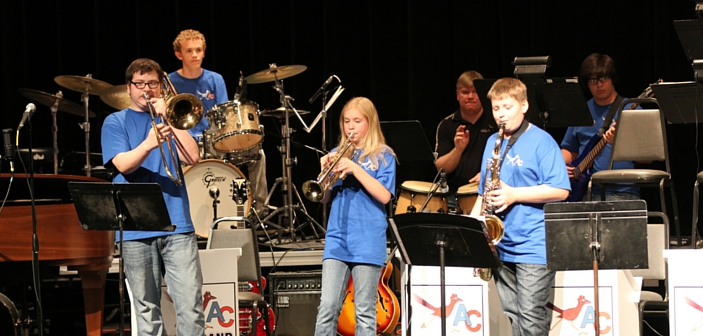
The camp will feature the ACC Big Band, Shades of Blue Clinician Jazz Combo and student ensembles. Guest clinicians include the following (full clinician bios are listed at the end of this release):

Phil Rumbley, a music educator in East Texas and Dallas/Ft. Worth area for the past 20 years. Rumbley currently serves as adjunct bass professor at The University of Texas at Tyler as well as Tyler Junior College where he has also taught Jazz improvisation.

Jeff Shelton, a graduate of Tyler Junior College and Stephen F. Austin State University, has been playing and performing as a drummer/percussionist in the East Texas area since his early teens.

Mike McGowan, who received a Bachelor of Music Education from Arkansas State University and a Master of Music from the University of Arkansas. After teaching in Texas public schools for 13 years, he became the Director of Instrumental Music at Panola College in 1998.

Larry Greer holds Bachelor and Master of Music degrees from Stephen F. Austin State University in composition and theory with additional guitar studies at University of Texas Tyler. In addition to teaching at Angelina College since 1992, he has taught at Stephen F. Austin State University, Sam Houston State University and University of New Mexico.

The camp is for all junior and senior high school and junior college band students. No previous jazz experience is necessary, and all wind, brass, rhythm and percussion instruments are welcome. Topics to be covered will be jazz history, basic jazz theory, jazz improvisation, jazz styles and combo/big band performance.  The camp will close on Wednesday evening, July 13 in AC’s Hudgins Hall with student combo and big band performances in addition to performances by the ACC Big Band and Shades of Blue Clinician Jazz Combo.

The discounted early-bird registration ($150) will take place through July 7 through AC’s Community Services (936-633-5206). Late registration ($175) will take place on July 11.

Further information, including an application and camp details, is listed on the AC web site under the Fine Arts page.  Contact Larry Greer at lgreer@angelina.edu or at 936-633-5236 for further information.

East Texas Farmers, Chefs Take Spotlight At Farm Feast

While the memory of a successful Farm Feast is fresh in the minds of East Texas foodies, the Lufkin Convention and Visitors Bureau is focusing on the next culinary adventure, Pour & Explore.

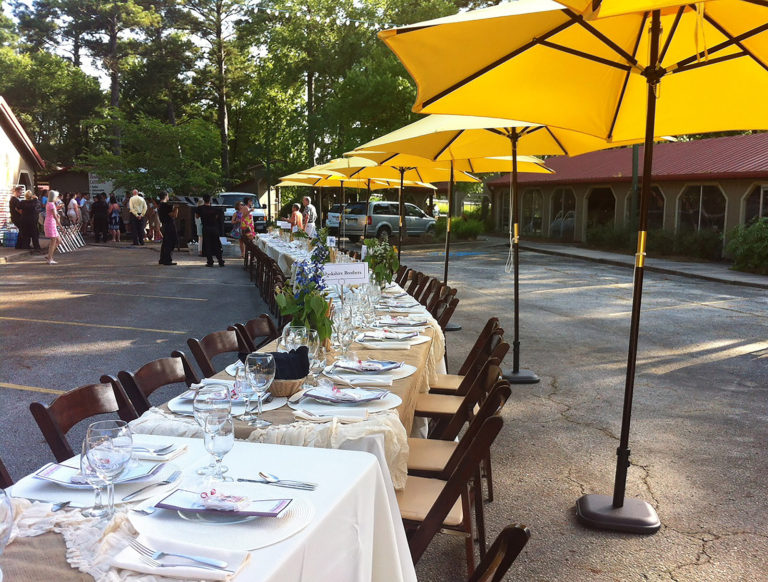
“Farm Feast was absolutely wonderful. From the food and wine to the service, everything went better than I hoped,” said Tara Watson-Watkins, executive director of the Lufkin Convention and Visitors Bureau. “Chefs Kate Rudasill with Brookshire Brothers, Britany Vinson with Tomé Catering and Justin Kezar with Grandough Baking Company outdid themselves. The wines Brookshire Brothers provided were the perfect pairings. Our local FFA and 4H students did a fantastic job as servers. The Coleman Brothers provided the perfect atmosphere with some great bluegrass. It was a great event, and I want to thank everyone who helped make it possible, especially our sponsors, Brookshire Brothers, Lufkin EDC and the Angelina County Farmers Market.”

Farm Feast, a farm-to-table dinner featuring fresh ingredients from farms within a 60-mile radius of Lufkin, included a wine-and-cheese hour and a four-course meal. Guests received a menu with a complete list of ingredients and details on the farms and vendors that provided them.

The Lufkin CVB is now gearing up for its next perfect pairing with Brookshire Brothers. Pour & Explore begins at 6:30 p.m., Thursday, July 14, at Shelton’s Place, 3603 FM 2108, with a guided tasting tour through the famous wine-producing regions of Washington State. Wines from àMaurice Cellars, Novelty Hill and Andrew Januik will be paired with a five-course dinner by Chef Kate Rudasill. These renowned winemakers will walk guests through the menu and the wines they’ve selected to accompany each course. Seating for Pour & Explore is limited, and tickets are available through the Lufkin CVB, (936) 633-0359, for $65 a person.

The Pour & Explore educational experience continues Friday, July 15, as Brookshire Brothers hosts in-store wine-tastings at its Chestnut and W. Frank Street locations.