Home Blog Page 650

The Bombers To Host Memorial Day Roller Derby Tournament

Local roller derby team, the East Texas Bombers, will be hosting Memorial Day Mahem Saturday, May 28, at 3 p.m. in the Nacogdoches Expo Center.

Memorial Day Mahem will be a roller derby tournament with two competing teams: Stars vs. Stripes, creating a mash up between players from the East Texas Bombers and the Conroe Cutthroats.

Tickets are $10 for adults, $5 for adults with military ID, and free for kids ages 10 and under. Tickets can be purchased at the door or at the website brownpapertickets.com. All proceeds benefit the Lufkin American Legion Auxilary and Wreaths Across America.

The East Texas Bombers Roller Derby Team was founded in 2003 and has moved through several different cities in East Texas. The league moved to Lufkin in 2015 and currently has players from Lufkin, Nacogdoches, and Moscow, Texas.

The Bomber motto is to “strive to promote the athletic and competitive value of women’s roller derby through community service, good sportsmanship, and dedication to women’s empowerment.”

Women ages 18 and older who may be interested in joining or learning more about roller derby are encouraged to contact the team through their Facebook page at East Texas Bombers or by visiting their website easttexasbombers.com. The practices are on Tuesdays and Thursdays from 6-9 p.m. at the  Lufkin Armed Forces Reserve Center located at 4201 N. Medford Drive.

The league follows the rules and guidelines of the Women’s Flat Track Derby Association. Take a look at this graphic to get a peek at how flat track roller derby is played:

derby


How Foods Can Help Heal Common Ailments

When you’re not feeling well, conventional wisdom says you should reach for over-the-counter or prescription remedies. But many experts point out that foods have healing properties that can be complementary in helping to treat common ailments and prevent illness.

“The concept of using food as medicine isn’t a new one; however, the evolution of society and science has moved us further from this concept,” says Grand Master Nan Lu, OMD, one of the country’s foremost teachers and practitioners of traditional Chinese medicine (TCM) and author of the new book “Digesting the Universe: A Revolutionary Framework for Healthy Metabolism Function.” “In my view, we are missing some of the most powerful and supportive steps we can take to remain well and prevent disease and illness.”

Lu says the teachings of TCM can help patients deal with the root cause of their problems, rather than just eliminate the symptoms. While complex, he is offering a few quick insights into the subject of food as medicine.

• Nutritionists today base their work on the physical and chemical properties of food alone, but this is just half the picture. “There are many immaterial things contained within food as well,” says Lu, who cites Qi, or vital energy, as a key aspect of food you can’t see.

• The “right” foods won’t necessarily protect your health by virtue of their properties alone. Good organ function is also necessary for your body to process and digest what you eat. However, foods can help restore balance to an ailing organ system.

• Listen to your body, not cultural beliefs about what is good or bad for you. Lu offers the example of a woman craving sugar or salt during her menstrual cycle. “Assuming she listens to the wisdom of her body and satisfies her craving, she’ll have some chocolate or eat some potato chips. This woman is doing something natural.”

• You may have heard of the adage, “you are what you eat.” Lu says to also consider the phrase, “you are what you think,” and avoid a steady diet of negative emotions, which you then must digest and process. Your thoughts impact your body and health, he says.

• The next time your stomach is upset, consider reaching for something natural. Ginger can be eaten or used topically to deal with stomach discomfort, reduce inflammation and even lower pain from arthritis.

More information about TCM and “Digesting the Universe” can be found at tcmworld.org.

While modern science has offered us groundbreaking medications and treatments, traditional healing systems can help patients recognize the root cause of physical conditions for a healthier, more balanced life.


Area Businesses Donate Engines To AC Diesel Tech Program

An area business has made a donation to the Angelina College Diesel Technology program, a gift that will, according to AC’s Technology and Workforce Division director Dr. Gary Friery, “bring us into the 21st century.”

Mustang Cat of Lufkin recently gifted the Diesel Tech program with six new, state-of-the art diesel engines as part of a partnership with Angelina College. The electronically and computer-controlled versions are a big upgrade to the models currently in place.

“This is the current technology used in today’s work force,” Friery said. “These are Tier 4 engines, the only ones the college has. It’s a 3.3 category diesel engine, and it’s used mostly in skidsteers. This is going to allow us to teach modern-day technology – the same technology our students will be using when they move out into the work force.”

Ed Glover, Product Support/Branch Manager with Mustang Cat, works with Diesel Tech instructor Gary White in developing strategies beneficial to both organizations. He said the donation will assist future employees looking for an immediate impact in the job market.

“There are six of these engines we’re donating, and this is just one of them,” Glover said. “The engines certainly benefit the college and its students, but they also help benefit the local industry. When these students graduate, they’ll have a place to go to work, and we’ll end up getting good employees. I have three or four employees right now who came from this program.”

“I work on the Diesel Advisory Board with Gary White here at the college, and this is just a need we’ve seen. They’re going to expand the program, and they need more engines to do it for the guys to work on. We had the opportunity to supply those engines, and we’re happy to do it.”

AC president Michael Simon noted the gift is another example of the importance of the community and the college working together.

“I want to emphasize how great a partnership it is,” Simon said. “The college is committed to being relevant to the regional needs of the community, and working with business partners and with the advisory committee and through this sort of donation helps us ensure our students are getting the best training possible in order to enter the work force.”

White said the new engine additions will allow his program to keep pace with industry needs without creating an overhaul of the existing curriculum.

“About 12 years ago, everything with this technology went computerized,” White said. “These new engines are a big step toward helping our students leave here prepared to be better employees from the start.

“We won’t really need many changes to the curriculum,” White added. “We’ll just be able to have more hands-on time with the actual engines instead of using the trainers. They’ll be able to work on the real thing now, and we know it’s going to have them ready to work in this field.”

CHI St. Luke’s Health Memorial Volunteers Helping Patients With Back Pain

According to the American Association of Neurological Surgeons, an estimated 75 to 85 percent of all Americans will experience some form of back pain during their lifetime.

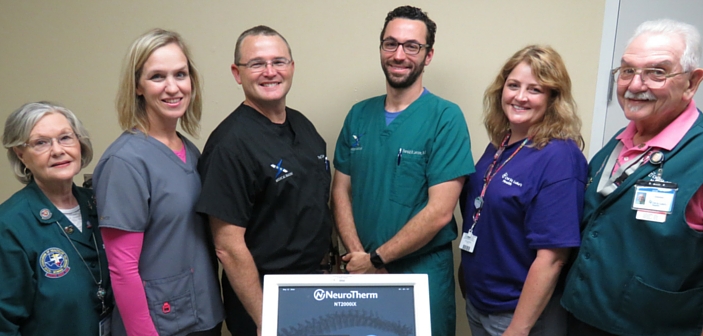
The Volunteer Auxiliary at CHI St. Luke’s Health Memorial Lufkin are helping to relieve the aches and pains of some patients with the recent purchase of new technology in the hospital radiology department.

The Volunteer Auxiliary purchased a NeuroTherm RF Ablation Machine that will be used by local radiologist Harold Lavine, M.D. to perform rhizotomy procedures.

This is a neurosurgical procedure that selectively destroys problematic nerve roots in the spinal cord. The procedure can provide long-term pain relief for some patients suffering from back pain. CHI St. Luke’s Health Memorial Lufkin is the first facility in the area providing the rhizotomy procedure. The machine cost $14,000.

Your Freshwater Fishing Report

Week of May 18, 2016

Bob Sandlin
Water stained; 68–74 degrees; 0.14′ high. Black bass are good on bladed jigs, squarebill crankbaits and spinnerbaits. Crappie are good on minnows. White bass are fair on slabs. Catfish are fair on trotlines.
Caddo
Water muddy; 2.30′ high. No report available. Please call ahead as some ramps may be closed due to flooding in the area.
Conroe
Water murky; 65–69 degrees; 0.26′ high. Black bass are fair on pumpkinseed soft plastics and watermelon spinnerbaits. Striped bass are good on Rat–L–Traps and white striper jigs. Crappie are fair on minnows and Li’l Fishies. Catfish are good on stinkbait and shrimp.
Fork
Water stained to muddy; 69–74 degrees; 0.11′ low. Black bass are fair on shallow crankbaits, topwaters and Texas rigged soft plastics near timber in 2–8 feet. White and yellow bass are good on minnows. Crappie are fair on minnows. Catfish are good on trotlines and prepared bait.
Houston County
Water stained; 67–71 degrees; 0.16′ high. Black bass are good on June bug multi–flake, black/blue, and pumpkinseed soft plastic worms at mid–lake early and late. Crappie are good on white Rooster Tails and live minnows at night. Bream are good on live worms off piers and over grass beds. Channel and blue catfish are good on shad.
Water muddy; 12.03′ high. No report available.
Livingston
Water stained; 66–70 degrees; 0.05′ high. Black bass are good on topwaters, spinnerbaits, and soft plastics. Striped bass are fair on Rat–L–Traps. White bass are good on slabs, pet spoons, and troll tubes. Crappie are good on minnows. Blue catfish are very good on shad. Yellow catfish are good on live bait.
Martin Creek
Water lightly stained; 77–83 degrees; 0.05′ high. Black bass are good on Texas rigged craws, buzzbaits and hollow body frogs. Crappie are good on minnows and jigs. White bass are fair on minnows. Catfish are fair on trotlines and cut shad.
Monticello
Water stained; 72–76 degrees; 0.34′ high. Black bass are good on hollow body frogs, bladed jigs and Texas rigged creature baits. Crappie are good on minnows. Catfish are fair on trotlines.
Sam Rayburn
Water murky; 67–72 degrees; 4.2′ high. Black bass are fair to good on chatterbaits, Texas rigged Baby Brush Hogs, shad pattern crankbaits and topwaters early. White bass are good on tail spinners. Crappie are fair to good on split shot rigged minnows. Bream are good on catalpa worms. Catfish are good on shad and prepared bait.
Steinhagen
1.14′ high. No report available.
Toledo Bend
Water murky; 66–70 degrees; 0.60′ high. Black bass are good on watermelon and chartreuse soft plastics and Rat–L–Traps. Striped bass are good on green striper jigs. White bass are fair on slabs and minnows in the river. Crappie are fair on minnows and chartreuse tube jigs with yellow tails. Channel and blue catfish are fair on trotlines baited with minnows, cut bait, and shrimp. Yellow catfish are slow.
Wright Patman
Water muddy; 33.51′ high. No report available.

Pecan Insect Causes Galls On Trees

No other tree holds such promise and so frequently underperforms for residents in Angelina County as the pecan. Truthfully, we live in a harsh area for the growth of pecans.  Much of our soils drain too poorly.  Our moisture and humidity increase the likelihood of fungal disease.  And our naturally high insect levels can also make it difficult.

This year, the insect call the pecan phylloxera is making its presence known in the form of several knots. Beginning in mid-April, galls or knots appear on the leaf veins, leaf rachises, catkins; current seasons shoot growth and nuts of affected pecan trees.  These galls are caused by the feeding of small aphid-like insects known as the pecan phylloxera, Phylloxera devastatrix.

Already this year, some galls may be extremely numerous, covering the entire tree and giving the limbs a knotty appearance.  This unsightly mess is truly more of an eyesore for homeowners than it is a health concern for the tree.  That said, below is the life cycle of the this insect.

Galls can remain on the twigs for several years. High infestation levels of this insect cause the current season’s shoots or twigs to become deformed, reducing their rate of growth. In some cases, severe infestations can lead to dieback of the current season’s shoots. Galls also can form on the nuts, causing nut deformity and premature nut loss.

Pecan phylloxera overwinters as a single egg within the body of a dead female insect. Prior to dying, the female seeks shelter on the tree under dead bark, within old galls or even under the carapaces (shells) of dead scale insects.

The overwintering eggs begin hatching in early spring at about the time the pecan buds are beginning to open. In eastern Texas, this can begin as early as mid-March. Upon hatching, the nymphs move from the overwintering sites to the opening buds.

Once on the buds, the insects begin feeding.  As they feed, a gall begins to form around the insect, eventually enclosing it within the gall (Figure 4). It is only this generation that forms a gall. Once the stem mother reaches maturity, she begins to lay eggs within the gall.  The number of eggs laid ranges from 300 to 1,300 per gall.

The young that hatch from these eggs feed and develop within the gall.  As they mature, they develop into wingless and winged females.  The winged variants often are referred to as winged migrants.

The winged migrants emerge as the galls begin to split open in May.  They disperse within the tree or, with the aid of the wind, are carried to other trees within the orchard. Soon after emergence, egg laying takes place.

The small, light-yellow eggs are deposited on the upper and lower leaf surfaces.  When infestation levels are high, the leaves often take on a yellowish tint because of the high numbers of eggs deposited on the leaves.  The eggs deposited by the winged migrants hatch into sexual males and females.

Almost immediately after hatching, the male and female phylloxera mate, and a single egg forms within the body of the female. Prior to dying, the female seeks shelter in a protected area on the tree, usually under the bark, in old galls or under dead scale insects.  The egg will remain dormant within the body of the dead female until the egg hatches the following spring and begins another cycle.

Infestations of pecan phylloxera do not occur on a regular basis, nor are all pecan cultivars susceptible to attack. Before an insecticide application is made, it is important to determine if phylloxera are present and on what cultivars.

If phylloxera are present, insecticide applications should be made after the tree has budded out, where the leaves have begun to unfurl, and early leaf expansion has started. It is suggested that one insecticide application be made per year. Insecticide applications need to be made prior to gall formation, because once the insects are enclosed in the galls, control is no longer possible.

Cary Sims is the County Extension Agent for agriculture and natural resources for Angelina County. His email address is cw-sims@tamu.edu

Roadrunner Baseball Coaches To Conduct Youth Camp

Angelina College Roadrunner baseball coaches will conduct a four-day youth camp in June, focusing on fundamentals and individual skills necessary for every young player to experience success in the game.

The camp will run from June 6-9 at Roadrunner Field on the Angelina College campus. AC assistant coach Adam Massiatte said the camp “is designed to teach ambitious youth the fundamentals, drills, and skills to bring out the best in each individual.”

The camp is open to all players ages 7-14.

There will be two sessions available: The morning session from 9 a.m. to 12 p.m.; or the all-day session from 9 a.m. until 2:30 p.m. Cost for the morning session is $100, while the cost for the all-day session is $200.

Scheduled events include the following:

Day One (Defensive Day) – General fielding and throwing; specific instructions for each position; breakdown of individual positions; and pitching, along with learning the idea of a bullpen routine.

Day Two (Offensive Day) – Fundamentals of hitting; a cage routine; bunting; and the fundamentals of base running.

Day Three (Competition Day) – Hitting/Fielding/Throwing/Base running; introduction to Rag Ball.

Day Four (Water Day) – Rag Ball tournament and sliding practice (participants are encouraged to bring a swim suit with a BSB bag.


All campers must provide proof of insurance coverage for any injury or sickness incurred while attending the Angelina College Summer Baseball Camp.

Campers are instructed to bring a glove, spikes, shoes (for cages and locker room), pants, bat, helmet, shorts, and whatever the player would bring to a regular baseball game.

Coach Massiatte just completed his first season with Angelina College after spending nine years as a head coach in the high school ranks. As the head coach at St. Pius X High School, Massiatte helped mold a powerhouse: His teams won two state champion-ships (2009 and 2012) and finished as state finalists in 2013. In addition, St. Pius won district championships in 2011 and 2012, earning Massiatte the 2012 Private School Coach of the Year award. Massiatte’s teams were nationally ranked for two straight years with the highest ranking of 12th in the country.

Before his stint at St. Pius, Massiatte served as the head coach for Lutheran High North. Massiatte’s playing career included two years at Blinn College and two years at the University of Louisiana-Lafayette. He earned his associate’s degree in Liberal Arts from Blinn College and his bachelor’s degree in General Studies from UL-L. Massiatte received his teacher certification (K-12) in physical education and health from Houston Community College.

For further information, contact Adam Massiatte at amassiatte@angelina.edu.

Angelina College Holds Press Conference For New Basketball, Soccer Coaches

Angelina College held a press conference to introduce the new men’s basketball and men and women’s soccer coaches to the community Thursday in Shands Gymnasium.

Kyle Manary is the new men’s basketball coach for AC and Freddy Drago is the new men and women’s soccer coach. Drago will be creating an entirely new soccer program for AC as the decision to create the program was made earlier this year.

Kyle Manary headshot
Kyle Manary introduces himself as the new men’s basketball coach for Angelina College at a press conference held in Shands Gymnasium. (Photo by Bethany Baldwin)

Manary grew up in Livingston and played basketball until suffering a career ending injury. He then graduated from Stephen F. Austin State University and became a coach there for a number of years.

“We have already signed six guys already,” Manary said. “Try outs will be coming up, and I want as many local kids as possible.”

He has coaching experience at Frank Phillips College in the Panhandle and St. Mary’s College of California and with the Dallas Mavericks. Manary also worked with 120 NBA players in player development as well as working with Nike.

Freddy Drago
Freddy Drago introduces himself as the new men and women’s soccer coach for Angelina College at the press conference. (Photo by Bethany Baldwin)

Drago grew up in Mexico and played soccer at McMurry University and professionally in Mexico. He coached men and women’s soccer at Cisco College in West Texas for the last nine seasons, and he started the men’s soccer team at Cisco.

Drago said he feels prepared to create the new soccer program at AC. “I did it at Cisco on the boys side,” Cisco said. “It’s a great challenge and it doesn’t scare me.”

Both Manary and Drago have plans to get as much of the community involved in AC Athletics as possible.

“So far what we have encountered in the community is awesome,” Drago said. He explained how taking the job was a “no brainer” because of how much community support there is for the creation of the new teams.

Drago speaks with a reporter from a local Spanish newspaper before the press conference. (Photo by Bethany Baldwin)

Drago plans to instill discipline, respect, hard work, and most importantly, love in his new players. He wants his teams to think of themselves as brothers and sisters.

Manary plans to elevate and build on what the men’s basketball program has done before in all facets: academics, on the floor, and in the community. He recalled a time when he was younger and the old gym at AC was “full of people. Everyone came out to support the team.” He wants to bring that enthusiasm back to AC and teach his players to build people up and put a smile on the faces of everyone they meet.

Both Manary and Drago continually spoke about how their wives and families are very supportive and excited for their new positions.

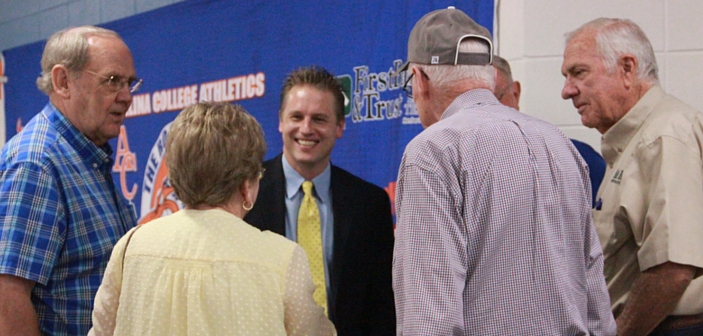
Manary mingling
Manary speaks with a group of people before the press conference.

Manary is married to Heather and they have three children, Avery, 6, Ava, 3, and Patrick Kade, 3 months. Heather Manary is a second grade teacher at Kurth Elementary. Drago’s wife Stephanie played soccer for Southeastern Louisianna University.


Being Fit May Slow Lung Function Decline as We Age

Being fit may reduce the decline in lung function that occurs as we grow older, according to research presented at the ATS 2016 International Conference.

“While everyone’s lung function declines with age, the actual trajectory of this decline varies among individuals, “ said Lillian Benck, MD, a medical resident at Northwestern University Feinberg School of Medicine, Chicago, Illinois, and study lead investigator. “What is less known is, beyond smoking, what factors affect this rate of decline.”

Dr. Benck added that even though the majority of people will not develop lung disease in their lifetime, “declining lung function is known to increase overall morbidity and mortality even in the absence of overt pulmonary disease.”

Dr. Benck and her colleagues analyzed data from the National Heart, Lung, and Blood Institute’s CARDIA (Coronary Risk Development in Young Adults Study), which began in 1985-86 with 5,115 healthy black and white men and women, aged 18-30. The study has measured participant’s cardiopulmonary fitness periodically over 20 years using a graded treadmill test. At the beginning of the study and at each follow-up assessment, pulmonary function (PF) was also assessed by measuring forced expiratory volume in one second (FEV1) and forced vital capacity (FVC).

After adjusting for age, smoking, body mass index and change in BMI, the association between fitness and lung function remained statistically significant.

Researchers found that participants:
• in the top quartile of baseline fitness experienced the least annual decline in PF.

• with the greatest decline in fitness experienced the greatest decline in FEV1and PF over 20 years.

• with sustained or improved fitness experienced the least decline in PF over 20 years.

Dr. Benck said that the last finding is noteworthy because it indicates that fitness matters, not just at a single point in time but over many years. “Fitness early in life and at middle age appears to attenuate this natural decline,” she said, noting that the benefit of fitness was even seen among smokers.

Because it is an observational study, researchers cannot claim cause and effect. However, they noted several important strengths, including a large study population and long-term follow-up and objective measurements of fitness and lung health.

Dr. Benck said that CARDIA will continue to follow participants and may eventually provide insights into whether fitness not only preserves lung function, but also reduces the risk of developing lung disease.

Nurses Honored with DAISY Award at CHI St. Luke’s Health Memorial Lufkin

Compassionate, caring, dedicated, committed, kind – the list goes on and on in an effort to describe nurses.  These hardworking men and women oftentimes do not receive the thanks they deserve for the vital role they play in a patient’s experience.  CHI St. Luke’s Health Memorial Lufkin recently partnered with The DAISY Award for Extraordinary Nurses to honor an employee who consistently demonstrates excellence through clinical expertise and extraordinary compassionate care.  The first nurse to receive the DAISY Award at Memorial Lufkin was Jane Newland, RN.


Jane Newland was among 15 nurses that were nominated for the award.

“The DAISY Award is a great way for us to recognize the important work that our nurses do every day,” said Michael Plankers, Chief Nursing Officer for CHI St. Luke’s Health Memorial Lufkin. “I heard a lot about Jane Newland before I ever met her, so when I heard that she was the honoree for this award I was not surprised!  She truly exemplifies the meaning of the DAISY Award.”


One of the nominations Newland received described how she treats all of her patients like family.  “Patients always remember her by name and they come to the hospital purposefully to see Jane.  She treats all of her patients like family.  She jokes with them and gives them hugs.  Customer service from Jane is always excellent!”


“The committee had a tough time choosing one nurse from the nominations that we received to honor with this award,” said Jana Raines, RN, DAISY Award Committee Chair.  “Although all of the nurses nominated were deserving of recognition, we felt that Jane personifies everything that the DAISY Award represents in the nursing field.”


Nominations are received from patients, visitors, other nurses, physicians and hospital staff.  The DAISY Award nominee must meet certain criteria that includes exemplifying the following characteristics:

·         Reverence: establishes a special connection with patients and families through trust and emotional support

·         Integrity: maintains the trust and confidence of all with whom he/she engages

·         Compassion: is thoughtful, compassionate and caring in all situations

·         Excellence: strives for the highest quality and continuous improvement

·         Goes above and beyond to care for the needs of patients and families and takes time to educate and include the patient and family during the care process.

Nomination forms are available throughout the CHI St. Luke’s Health Memorial Lufkin facility and online at www.chistlukeshealthmemorial.org.

The not-for-profit DAISY Foundation is based in Glen Ellen, CA, and was established by family members in memory of J. Patrick Barnes.  Patrick died at the age of 33 in late 1999 from complications of Idiopathic Thrombocytopenic Purpura (ITP), a little known but not uncommon auto-immune disease.  The care Patrick and his family received from nurses while he was ill inspired this unique means of thanking nurses for making a profound difference in the lives of their patients and patient families.

Recognition is one initiative of The DAISY Foundation in service to the nursing profession.  Additionally, DAISY offers J. Patrick Barnes Grants for Nursing Research and Evidence-Based Practice Projects, The DAISY Faculty Award to honor inspiring faculty members in schools and colleges of nursing, and The DAISY in Training Award for nursing students. More information is available at http://DAISYfoundation.org.       


About CHI St. Luke’s Health Memorial

Memorial provides more than a quarter of a million patient services each year and has a longstanding history of providing quality, innovative health care in East Texas.


With hospitals in Lufkin, Livingston, San Augustine and Memorial Specialty – the area’s only long-term acute care hospital – CHI St. Luke’s Health Memorial provides millions of dollars in charity care and community support each year.  Our mission is to nurture the healing ministry of the Church, supported by education and research.  Fidelity to the Gospel urges us to emphasize human dignity and social justice as we create healthier communities.


Memorial offers a wide array of services, including the area’s first dedicated heart and stroke care facility and radiation oncology at the Temple Cancer Center. It is also known for the area’s only comprehensive diabetes, heart and stroke education center. Other specialty areas include imaging, orthopedic care, women’s services, inpatient and outpatient rehabilitation, homecare, wound care and hyperbaric oxygen therapy, kidney & diabetes treatment, sleep disorders treatment and express lab.


Memorial Clinics, a division of the health system, employs more than 30 providers in 17 locations across East Texas. Specialties include Family Practice, Obstetrics & Gynecology, Cardiology, Cardiovascular and Thoracic Surgery, Internal Medicine, Physical Medicine & Rehabilitation, Allergy/Otolaryngology (Ear, Nose & Throat), and Chiropractic Care.


About CHI St. Luke’s Health
CHI St. Luke’s Health, a member of Catholic Health Initiatives (CHI), is comprised of three markets―CHI St. Luke’s Health is home of the Texas Heart Institute (THI),  eight hospitals, eight emergency centers, Diagnostic & Treatment Center, Radiation & CyberKnife Center, and several St. Luke’s Medical Group locations throughout Greater Houston; CHI St. Luke’s Health Memorial (three hospitals and a long-term acute care facility in East Texas); and CHI St. Joseph Health (five hospitals and several St. Joseph Medical Group locations across Brazos Valley). In addition, CHI St. Luke’s is a part of a joint venture agreement with Baylor College of Medicine, which encompasses Baylor St. Luke’s Medical Center in the Texas Medical Center.  Together, CHI St. Luke’s Health, THI, and Baylor College of Medicine are transforming healthcare delivery with a mission to usher in a new era of healthcare to create healthier communities. For more information, visit CHIStLukesHealth.org.

CHI St. Luke’s Health is a part of Catholic Health Initiatives (CHI), one of the nation’s largest health systems. Headquartered in Englewood, Colorado, CHI operates in 19 states and comprises 105 hospitals, including four academic medical centers and teaching hospitals; 30 critical-access facilities; community health services organizations; accredited nursing colleges; home health agencies; and other services that span the inpatient and outpatient continuum of care. Learn more atcatholichealthinitiatives.com.