



Home Blog Page 688

How To Properly Grow Asparagus

0

My friend Will Cook likes to grow asparagus. In fact he has planted several new varieties and asked me what I knew about it.

I didn’t know much.

The old farm place my family purchased and moved into a few years back has some asparagus growing in what was an old fence row. I don’t know the variety, but I know it has survived tremendous abuse and neglect and is deserving of attention.

Grown for its stems or spears, asparagus yields 8 to 10 pounds or more per 100 square feet of bed if tended well. For most home gardeners, a 20-foot row or 100 square feet of bed is adequate for a family of four. That’s equivalent to 20 planted crowns or 10 pounds of harvested asparagus per season.

Because asparagus remains in the same place several years, it is important to select the right spot and prepare the seedbed well. Asparagus does best in full sunlight and deep, well-drained, sandy or light-textured soils. Asparagus plants make a good border around the edge of a garden or along a fence.

To begin preparations for planting, spread a 3-inch layer of organic matter such as manure, rotted sawdust, or compost over the beds in late fall. Till or spade them to a depth of 10 to 12 inches, and turn the soil to cover all organic matter.

Asparagus grows well in high-pH soils and poorly if the soil pH is below 6.0. Test the soil before planting the beds and add lime if needed to adjust the pH to 6.5 to 7.5.

The hybrid asparagus cultivars ‘Martha Washington’, ‘UC 157’, ‘Jersey Giant’, and ‘Mary Washington’ produce better than the standard cultivars. Male asparagus cultivars such as Jersey types (‘Jersey Giant’, ‘Jersey Knight’, and ‘Jersey Supreme’) are more productive and resist disease better than the female cultivars (‘Washington’ types). Also, female cultivars are less vigorous and produce many red, berrylike fruits that become volunteer weeds in the garden.

Asparagus is grown from 1- or 2-yearold crowns planted in January or February, or as soon as the round can be worked. Crowns can also be grown from seeds planted in flats or peat cups. It takes at least a year to grow a good crown. To shorten the period from planting to harvest, buy and plant healthy, vigorous, 1- or 2- year-old crowns from a nursery, garden center, or seed catalog.

After the asparagus beds are tilled, mark rows 5 feet apart. Dig a furrow 4 inches wide and 4 to 12 inches deep. Separate the crowns by size, and plant those of similar size together for best uniformity in spear size at harvest.

Spread super phosphate fertilizer (0-46-0) as a band in the furrow at a rate of 2.0 pounds per 1,000 square feet or 0.75 ounce per 20-foot row. Place the crowns 12 to 14 inches apart in the furrow. Planting too closely can cause small spears. Wider planting results in larger spears but lower total yield. In loose soils, plant the crowns 6 to 12 inches deep; in heavier soils, plant them 4 to 6 inches deep.

The simple planting method is to plant the crowns at the suggested depth and immediately fill in the furrow with soil to its original level. Using this method, you do not need to gradually cover the crowns with soil, as long as the soil is not compacted over the newly planted crowns.

It takes 2 to 3 years from the time the crown is planted until the bed is in full production. When conditions are favorable, buds arise from the crown and develop into edible spears. If not harvested, the spears will develop into fern-like stalks.

From these stalks, the mature plant manufactures food and stores it in the underground crown. This reserve supplies the energy necessary to produce spears the following year.

Local Update From Rep. Trent Ashby

0

Like you, I am very grateful for the much-needed recent rainfall across our region of the state. Further west in Austin, folks remain alert waiting for the Speaker of the House to issue the interim charges, which will direct the various House Committees to study important issues leading into the next session. I submitted a number of requests based on feedback from several constituents about areas we need to be studying changes to current state law, and we should find out soon which, if any, made the final list.  The interim charges, combined with the constitutional amendments election, have commanded the bulk of the attention of the people in Austin. With that in mind, here is a report from your Texas Capitol…

A Bill and Some Change

Like many of you, I am a big fan of spending time with my family in the outdoors and our state park system is one of the best ways to do that. Years ago, the Legislature instituted a sales tax on sporting goods, the bulk of which was supposed to go to supporting our state parks. However, during various budget shortfalls, the Legislature diverted that money to other important state programs and this left many of our parks underfunded and in need of repairs and refurbishing.  In our backyard, Fort Boggy State Park and Mission Tejas State Park saw the effects of this diversion.  Fortunately, during the last legislative session earlier this year, the Legislature passed House Bill 158, which requires that these tax dollars raised from sporting good sales taxes strictly to be appropriated to Texas Parks and Wildlife to support our state parks. This bill was a major win for our state parks, as well as for budget transparency and accountability. I am proud to have helped champion it through the House.

Constitutional Amendments: Part 7  of 7

Continuing our seven part series, we will be taking an in-depth look at the seventh and final proposed constitutional amendment leading up to the constitutional amendments election on November 3rd, 2015.

Proposition 7 is designed to address our transportation funding woes that the state of Texas has experienced in recent years. Both the rural and urban parts of our state have felt the effects of rapid growth, with approximately 1,000 people moving to Texas per day on average. Prop 7 dedicates a certain amount of future tax revenue growth to transportation projects. This results in a system which provides a significant amount of transportation funding, without raising our taxes, registration fees, or tolls. Overall, Prop 7 is projected to bring $4 billion for road construction and maintenance per year. This represents a major step forward for meeting our state’s transportation needs, and I was proud to support this provision in the House.

Early voting will be from October 19th through October 30th. If you have any questions regarding any of the proposed amendments, or on how to register to vote, please call my office at (512) 463-0508. We will be glad to help you navigate the process.

Reminders

The last mobile office of the month will be in San Augustine on October 28th from 8:30 to 11:00 at the San Augustine County Courthouse. We hope to see you there!

Please do not hesitate to contact us at (936) 634-2762 or (512) 463-0508 if we can ever be of assistance, and remember that our door is always open.

Lady ‘Runners Shine In Wiley College Scrimmage Win

0
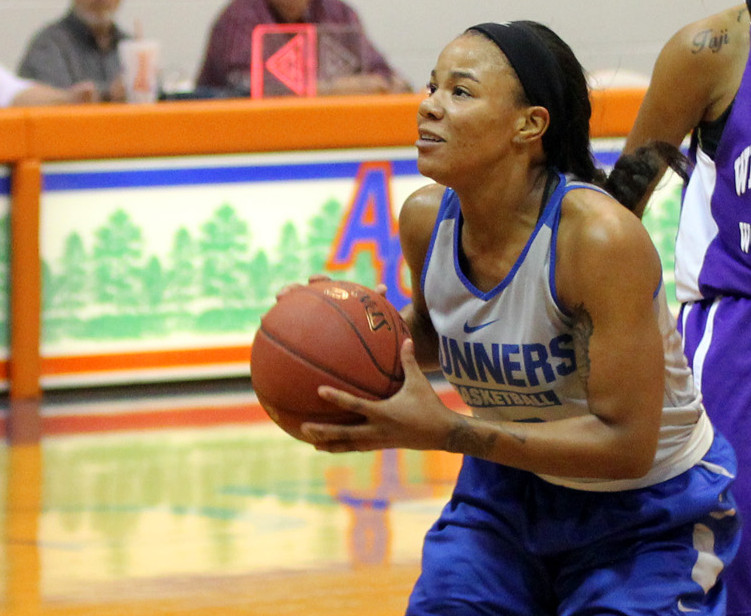
Photo: AC News Service Angelina College’s Ebony Story (13) collides with a Wiley College player during Monday’s scrimmage at Shands Gymnasium. Story drew the foul, and the Lady Roadrunners went on to a 68-52 win over the Wildcats in AC’s final pre-season game before opening the regular season on Friday.
Tyanna Barlow Drive 1_Wiley Scrimmage
Angelina College’s Tyanna Barlow glides for a fourth-quarter layup during Monday’s scrimmage with Wiley College at Shands Gymnasium. The Lady Roadrunners rolled to a 68-52 win over the Wildcats in AC’s final pre-season game before opening the regular season on Friday. (Photo: AC News Service)

Byron Coleman was feeling pretty good about having 10 sophomores – with six of those returning from last year – on his squad heading into the 2015-2016 season. After Monday, the Angelina College Lady Roadrunner head coach is pretty high on his new faces, too.

Freshman Mikayla Crockett knocked down five three pointers on her way to a game-high 19 points, and fellow freshmen Tyanna Barlow and LaNeique Nealey added 10 points each to lead AC to a 68-52 win over Wiley College Monday night at Shands Gymnasium.

Guards Crockett and Barlow gave AC a perimeter game, while post players and sophomores Caitlyn Lambert (seven points) and Ashley Cherry (six points) held down the middle. Wiley’s Alexis Bernstine led the Wildcats with 11 points; Anika Nottingham added eight more.

Playing under the NCAA’s new rules for women’s college basketball, the teams played four 10-minute quarters rather than the previous two 20-minute halves. AC led 11-3 after the first quarter behind threes from Crockett and Briana Caro, pushed the margin to 27-18 before the half and kept the lead at double digits at 43-33 at the end of the third. In each period, Wiley was able to put together scoring runs, only to have the Lady ‘Runners answer with big defensive plays leading to big shots.

The Lady Roadrunners open the regular season Friday at the McLennan Classic in Waco. AC will play McLennan College at 2 p.m. on Friday and Temple College at 6 p.m. on Saturday.

The e-mail address for Angelina College’s Sports Information Director is gstallard@angelina.edu

3 Simple Steps for Saving for College

0

(StatePoint) The overwhelming majority of families agree that college is an important and worthwhile investment, yet fewer than half are saving for it, according to “How America Saves for College 2015,” a recent study by Sallie Mae and Ipsos.

Why the reluctance to put aside money for something deemed so important by so many?

“One of the greatest obstacles for families to overcome is simply getting started,” says Charlie Rocha, executive vice president, Sallie Mae. “We know those who have a plan and save are more likely to attend college, more likely to graduate, and will do so with less debt.”

With a focus on saving, planning and paying for college, the experts at Sallie Mae recommend a 1-2-3 approach. First, open a savings account; second, set a goal and regularly contribute money; and third, explore tax-advantaged savings options.

Getting Started

College can be expensive these days, so it is never too early to get started — no matter the age of the college-bound student. Open a savings account as soon as possible, earmarked for education.

The ideal savings account should have no fees, and be FDIC-insured, offering perks that help you stay motivated, such as no minimum balance, cash back rewards and tools to track goals and share progress.

An account specifically designed for college savings, such as the new Upromise GoalSaver, can get families on the right track. It offers a competitive APY and a rewards program that includes cash bonuses, matching rewards and other cash back rewards from more than 850 retail partners. For more information, visit www.UpromiseGoalSaver.com.

Goals and Contributions

Check out rates of tuition, room and board, and other expenses at the schools of your choice, so you can set realistic goals and target dates for reaching them. Motivation can be derived from progress, so within your savings account consider itemizing smaller benchmarks that are more easily achieved than one lump sum — such as textbooks, an emergency fund and a living expenses goal or specific savings goals for each child.

Applying the old adage, “Set it and forget it,” to your college savings can make saving a habit you don’t have to think about often. You can do so by linking a bank account to your savings fund, like Upromise GoalSaver, to make recurring direct deposits on a monthly or biweekly basis.

Some people keep themselves focused on savings by sharing goals over social media. Like losing weight or training for a marathon, research shows that making a goal public is associated with a higher chance of achievement. Some savings accounts even make sharing goals easy.

Tax Advantaged Savings Plans

After getting started with a simple savings account like Upromise GoalSaver, supplement your savings plan with a tax advantaged savings account, such as Coverdell Education Savings Accounts, prepaid state plans or 529 college savings plans. Such plans can offer such benefits as annual non-deductible contributions so that your account can grow without being subject to federal income taxes.

A college education continues to be overwhelmingly important to American families. Don’t limit future possibilities with inaction today.

CHI St. Luke’s Health Memorial Celebrates National Hospital and Health System Pharmacy Week

0
Photo: CHI St. Luke's Health Memorial

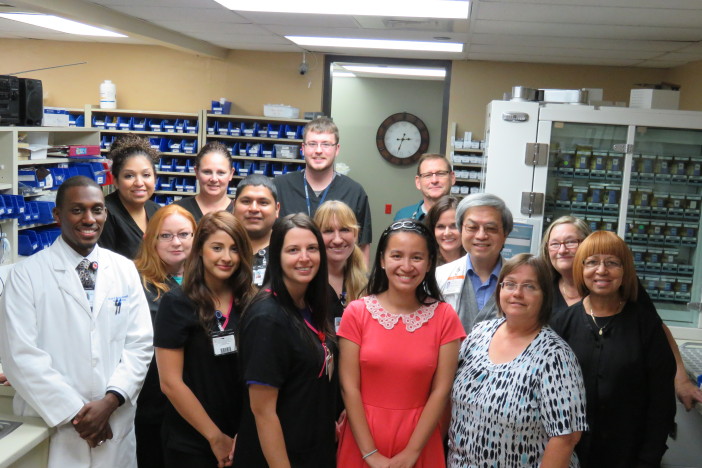
Ensuring the appropriate acquisition, storage, selection, preparation and dispensing of medications, pharmacists and pharmacy technicians play a vital role in health care delivery.  CHI St. Luke’s Health Memorial Lufkin recently celebrated National Hospital and Health-System Pharmacy Week by recognizing the pharmacy team including (back, l to r) Claudia Ramos, CPhT; Jennifer Phelps, CPhT; Michael Munroe, CPhT; Tom Brose, RPh; (middle, l to r) Carrie Naron, CPhT; Manuel Flores, CPhT; Sarah Naron, CPhT; Robin Flournoy, PharmD; Eric Ip, RPh; Lydia McCarty, CPhT; (front, l to r) Christopher Murray, PharmD, MS, Director of Pharmacy; Samantha Lara, CPhT; Abra Toole, CPhT; Mindy Deng, PharmD; Louann Chesser, RPh and Dorothy Davis, CPhT (not pictured:Sanyude y Sanyude, RPh; Susie Ikner, CPhT; Mary Moore, CPhT; Aubrie Johnson, CPhT; Deborah Mark, CPhT; David Wilkerson, CPhT; Henry Tobar, CPhT; Denise Dixon, CPhT).  Pharmacists, technicians and other support staff help patients and providers understand the appropriate use and intended outcome of medications as well as ensure medications reach the patient in a safe and timely manner.

About CHI St. Luke’s Health Memorial

CHI St. Luke’s Health Memorial paves the way for quality, innovative health care in East Texas and provides more than a quarter of a million patient services each year.

Our mission is to provide quality health care to the communities it serves. With hospitals in Lufkin, Livingston, San Augustine and Memorial Specialty – the area’s only long-term acute care hospital – CHI St. Luke’s Health Memorial provides millions of dollars in charity care and community support each year.

CHI St. Luke’s Health Memorial offers a wide array of services, including the area’s first dedicated heart and stroke care facility and radiation oncology at the Temple Cancer Center. It is also known for the area’s only comprehensive diabetes, heart and stroke education center. Other specialty areas include imaging, orthopedic care, women’s services, inpatient and outpatient rehabilitation, homecare, wound care and hyperbaric oxygen therapy, kidney & diabetes treatment, sleep disorders treatment and express lab.

About Catholic Health Initiatives

Catholic Health Initiatives, a nonprofit, faith-based health system formed in 1996 through the consolidation of four Catholic health systems, expresses its mission each day by creating and nurturing healthy communities in the hundreds of sites across the nation where it provides care. One of the nation’s largest health systems, Englewood, Colo.-based CHI operates in 19 states and comprises 105 hospitals, including four academic health centers and major teaching hospitals and 30 critical-access facilities; community health-services organizations; accredited nursing colleges; home-health agencies; and other facilities that span the inpatient and outpatient continuum of care.

In fiscal year 2014, CHI provided $910 million in charity care and community benefit – a nearly 20% increase over the previous year – for programs and services for the poor, free clinics, education and research. Charity care and community benefit totaled more than $1.7 billion with the inclusion of the unpaid costs of Medicare. The health system, which generated revenues of almost $13.9 billion in fiscal year 2014, has total assets of $21.8 billion. Learn more at www.catholichealthinitiatives.com

CHI St. Luke’s Health Memorial’s Stroke Center Earns National Re-Certification

0
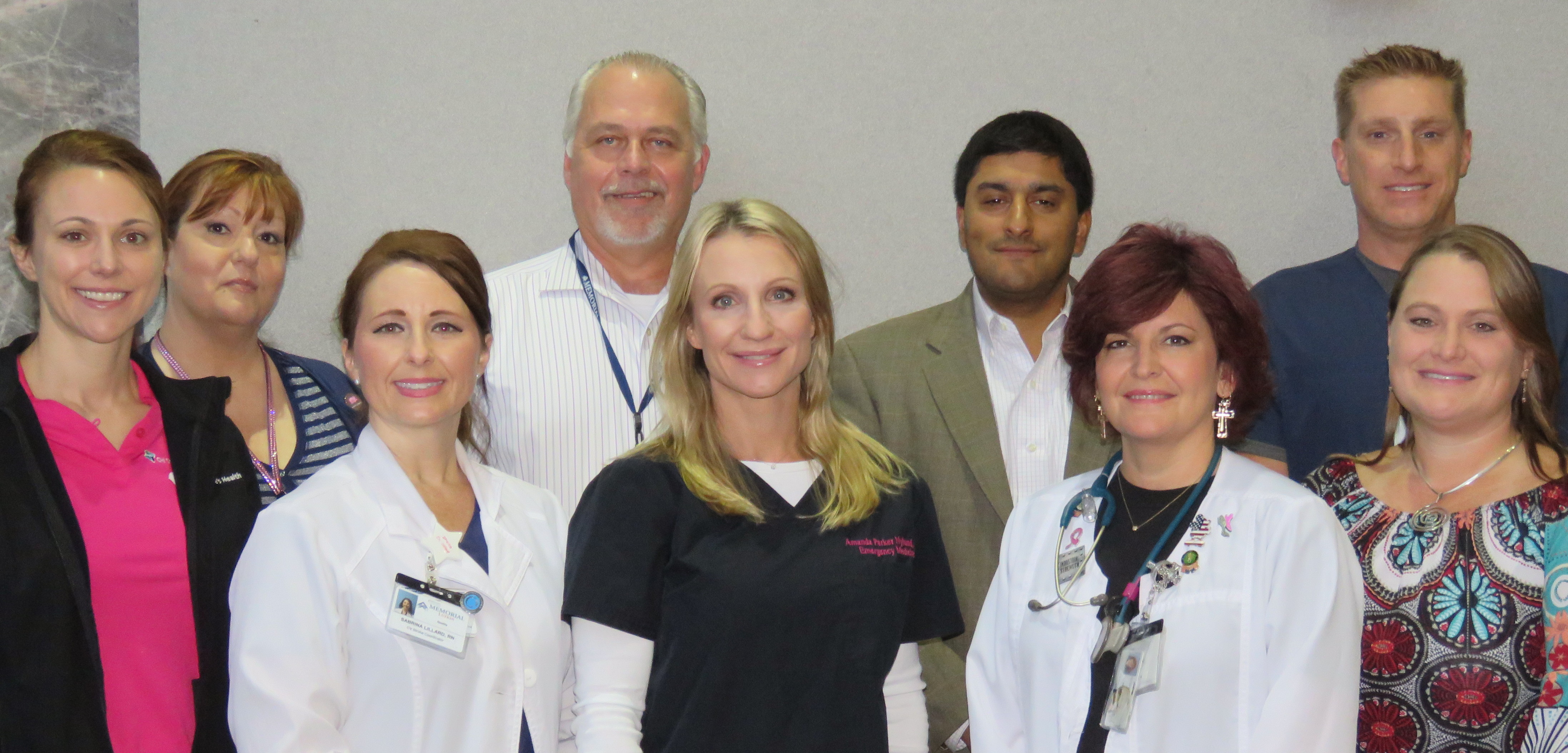
(From left to right, back row): Jana Rains, RN, K5 Director; Michael Plankers, RN, MSN, Chief Nursing Officer; Dr. Sunil Cherry, Stroke Program Medical Director; Robert Thompson, RN, MSN, Cath Lab Director. (Front row) Julie Warren, RN, BSN, SCRN; Sabrina Lillard, RN, CCCC, CV/Stroke Coordinator; Dr. Amanda Nylund, Emergency Department Medical Director; Debby Davis, RN, Emergency Department Charge Nurse; and Stacy Garcia, RT (R), BSN, MBA-MHA, Service Line Administrator – Cardiology, Emergency Department & Hospitalist. (Photo CHI St. Luke's Health Memorial)

CHI St. Luke’s Health Memorial in Lufkin continues to recognize the dire need for high level stroke care, and as the first and only Joint Commission Certified Primary Care Stroke Center in East Texas, the hospital once again earned the National Gold Seal of Approval for Stroke Care, highlighting Memorial’s commitment to outstanding, quality care.

Memorial’s Primary Care Stroke Center program was originally certified in 2010 through the success of the East Texas Stroke Initiative. The initiative was funded through the T.L.L. Temple Foundation and aimed to decrease the number of strokes in East Texas through a widespread community education program and advanced treatment modalities, while helping to restore quality of life for those who have suffered a stroke.

CHI St. Luke’s Health Memorial underwent a rigorous onsite review for the voluntary re-certification process.  Joint Commission experts evaluated compliance with stroke-related standards and requirements, including program management, the delivery of clinical care and performance improvement.  It was determined Memorial continued to achieve the strict criteria maintained by the national organizations specifically earning the Joint Commission’s Gold Seal of Approval® and the American Heart Association/American Stroke Association’s Heart-Check mark for Advanced Certification for Primary Stroke Centers. The Gold Seal of Approval® and the Heart-Check mark represent symbols of quality from their respective organizations.

“CHI St. Luke’s Health Memorial has thoroughly demonstrated the greatest level of commitment to the care of stroke patients through its Advanced Certification for Primary Stroke Centers,” said Michele Sacco, M.S., interim executive director, Certification Programs. “We commend Memorial for becoming a leader in stroke care providing a higher standard of service for stroke patients in its community.”

The certification, which occurs every two years, demonstrates that Memorial’s stroke program meets critical elements of performance to achieve long-term success in improving outcomes for stroke patients.

“We congratulate CHI St. Luke’s Health for achieving this designation,” said Nancy Brown, chief executive officer, the American Heart Association/American Stroke Association. “By adhering to this very specific set of treatment guidelines Memorial has clearly made it a priority to deliver high quality care to all patients affected by stroke.”

Located in what is known as the “Stroke Belt” of the United States, residents in Lufkin and the surrounding deep East Texas region suffer from an elevated number of strokes each year. Stroke prevalence, incidence and mortality rates are currently higher than the national average.

“The certification provides us with the opportunity to highlight the exceptional stroke care we provide as well as to continually strive to advance our care even further,” said Shawn Barnett, CHI St. Luke’s Health Memorial Chief Operating Officer and Lufkin President.

Stroke is the number five cause of death and a leading cause of adult disability in the United States, according to the American Heart Association/American Stroke Association. On average, someone suffers a stroke every 40 seconds; someone dies of a stroke every four minutes; and 795,000 people suffer a new or recurrent stroke each year.

About CHI St. Luke’s Health Memorial

Memorial provides more than a quarter of a million patient services each year and has a longstanding history of providing quality, innovative health care in East Texas.

With hospitals in Lufkin, Livingston, San Augustine and Memorial Specialty – the area’s only long-term acute care hospital – CHI St. Luke’s Health Memorial provides millions of dollars in charity care and community support each year.  Our mission is to nurture the healing ministry of the Church, supported by education and research.  Fidelity to the Gospel urges us to emphasize human dignity and social justice as we create healthier communities.

Memorial offers a wide array of services, including the area’s first dedicated heart and stroke care facility and radiation oncology at the Temple Cancer Center. It is also known for the area’s only comprehensive diabetes, heart and stroke education center. Other specialty areas include imaging, orthopedic care, women’s services, inpatient and outpatient rehabilitation, homecare, wound care and hyperbaric oxygen therapy, kidney & diabetes treatment, sleep disorders treatment and express lab.

About Catholic Health Initiatives

Catholic Health Initiatives, a nonprofit, faith-based health system formed in 1996 through the consolidation of four Catholic health systems, expresses its mission each day by creating and nurturing healthy communities in the hundreds of sites across the nation where it provides care. One of the nation’s largest health systems, Englewood, Colo.-based CHI operates in 19 states and comprises 105 hospitals, including four academic health centers and major teaching hospitals and 30 critical-access facilities; community health-services organizations; accredited nursing colleges; home-health agencies; and other facilities that span the inpatient and outpatient continuum of care.

In fiscal year 2014, CHI provided $910 million in charity care and community benefit – a nearly 20% increase over the previous year – for programs and services for the poor, free clinics, education and research. Charity care and community benefit totaled more than $1.7 billion with the inclusion of the unpaid costs of Medicare. The health system, which generated revenues of almost $13.9 billion in fiscal year 2014, has total assets of $21.8 billion. Learn more at www.catholichealthinitiatives.com.

Melissa Crager

Senior Marketing Coordinator

Marketing

(936) 676-7555

mcrager@memorialhealth.org

chistlukeshealthmemorial.org

Easy Time-Saving Holiday Survival Tips

0

(StatePoint) With the holidays comes stress. The shopping, cooking, preparing and cleaning before and after guests are all part of the “joy” of the season. But there are a number of easy ways to save time during the holidays and better enjoy the company of friends and family.

Home Prep and Cleaning

With all the cooking and guests visiting, the holidays can get quite messy. These tips can help you keep the mess under control:

• Scrub. Cooking, stovetops and ovens are bound to get dirty. Make a simple scouring solution using baking soda and water to help scrub off any baked-on grime.

• Get extra laundry done quickly. Large capacity appliances, like the new GE topload washer, make it more convenient to do extra laundry from your guests. With the largest agitator capacity on the market at 4.2 cu. ft., these new ENERGY STAR washers allow you to do fewer loads of laundry with less time and hassle.

• Pack things up. Do some pre-holiday cleaning to store away or get rid of extra clutter in your home. Less clutter means less to clean up after your visitors leave.

Gift Planning and Purchasing

Whether you’re a shopping mall veteran or an online shopping maven, gift-buying can be time consuming either way. Streamline with these strategies:

• Make gift lists. List who you need to buy gifts for, your gift ideas for each person and a back-up idea in case you can’t find what you were originally looking for.

• Shop online. Stores can get hectic during the holidays, even if it’s not Black Friday. Oftentimes you’ll find that online stores have the same or similar offers as their brick-and-mortar alternative.

• Prepare for an emergency. Plan ahead and buy some extra cards and small gifts for when you’re in need of a last-minute gift.

Food Preparation

For tasty and easy holiday meals, remember these three guidelines:

• The freezer is your friend. Any foods that will withstand freezing and thawing can be made weeks in advance, allowing you to spend holiday time mingling with guests and preparing dishes that can’t be made ahead of time.

• Stick to the tried and true. If you want to introduce a new dish during the holidays, make sure you have a few test runs of it under your belt before its big debut. Otherwise, use recipes you know will turn out great.

• Say “yes” to guests. If your guests offer to bring something, don’t turn them away. Even something simple, like a bottle of wine, is one less thing worry for you.

The holiday season is one of the busiest times of the year, but you can make sure that preparation is less time-consuming and less stressful so you can spend more time with friends and family.

Watch for Fraud During Medicare Open Enrollment Period

0

It is that time of the year again. October 15 to December 7 is when all people with Medicare can change their Medicare health plan and prescription drug coverage for 2016. This period of time is often referred to as “Open Enrollment” or “Annual Election”.

The Medicare open enrollment period is a time when there is a higher risk of fraudulent activity. The activity could be a knock on your door, a phone call, someone offering you free services, or telling you that you need a new Medicare card, or that you can enroll in a new plan by just letting them take money out of your bank account. DON”T DO IT!!!

Medicare will never call you at home, except if you’ve already reported a problem. Medicare will never ask for your Social Security number, because they already have it! Also, Medicare will never ask you for your bank account information, unless you have called them, requesting your premiums be paid automatically.

If you suspect fraudulent activity please call the Texas Senior Medicare Patrol at 1-888-341-6187 or your local 211.  The Area Agency on Aging (AAA) of Deep East Texas can help you understand the changes you can make to your Medicare plans and how they would affect you.  It does not represent any insurance plan and its services are free.  To learn more about open enrollment or to get assistance enrolling, call 211 or 800-256-6848 and ask for a benefits counselor.

Tips for Successful Outdoor Adventures this Season

0

(StatePoint) The great outdoors do not hibernate in the cooler months, and neither should you. To be well-equipped for safe and fun outdoor adventures, consider the following.

Stay Warm

Don’t ignore your comfort or health when hitting the trail or pushing off from shore. Your regular weight clothing may not provide sufficient thermal protection, depending on your surroundings. Look for outerwear designed for the temperatures and wind-chill you will be encountering.

Keep in mind that it can be chillier on the water. If you are pitching a camp, check the tag of your sleeping bag for its specifications. A sports retailer will offer high-quality gear for proper protection against wind and low temperatures.

Keep Time

Whether you are hiking, fishing or rappelling, stay one step ahead of Mother Nature with information.

“Your cell phone may not be working well enough to give you the hour or your location — which is important to know when you are wondering whether it’s time to head back home,” says Landon R. Mayer, a fly fishing guide and author. “However, a tough solar powered timepiece that’s both rugged and resistant to low temperatures will keep you up-to-date.”

If you will be spending time getting your hands wet, consider a 200 meter water resistant device like the Casio PRO TREK PRW3500 or the slim, 100 meter water resistant PRG300. Both watches are equipped with Triple Sensor Version 3 technology which delivers altitude, barometric pressure and direction readings, in addition to tough solar power. More information can be found at www.PROTREK.Casio.com.

Stay Hydrated

It may be cool, but that doesn’t mean your risk for dehydration disappears. When you are active, you need to replenish your body with fluids to stay healthy.

Pack more than enough water for the length of your journey. Likewise, stock up on nutritionally dense snacks to fuel your efforts.

Tell Someone

Always let someone know where you are going and when you expect to return home. If you are visiting a park, talk to a ranger upon arrival for advice on the best vantage points for fishing and the best things to see and do. It’s never a bad idea to have a ranger know your location.

Even if you are a novice to the outdoor lifestyle, there’s no better time of year to go on an adventure than now.

Spotting the Earliest Signs of Type 1 Diabetic Kidney Disease

0

In an effort to pinpoint the earliest signs of diabetic kidney disease, researchers at University of California, San Diego School of Medicine are leading a multi-institutional international effort dedicated to finding a new breed of disease indicators.

The study, funded by a $2.5 million JDRF (formerly known as the Juvenile Diabetes Research Foundation) grant, will tap the potential of three emerging “omics” sciences to discover new ways to determine which patients are most likely to develop diabetic kidney disease. Samples from more than 2,000 type 1 diabetes patients, collected over a period of years by several medical centers around the world, will be used in the analyses.

“We want to identify the best markers of kidney disease progression and validate them across different patient cohorts,” said principal investigator Kumar Sharma, MD, professor of medicine and director of the Center for Renal Translational Medicine and the Institute of Metabolomic Medicine at UC San Diego School of Medicine.

Diabetic kidney disease is the leading cause of end-stage kidney disease, the eighth leading cause of death in the United States and a major risk factor for cardiovascular disease. An estimated 26 million American adults have chronic kidney disease, often requiring dialysis or a kidney transplant.

Sharma, who said the study is one of the largest of its kind, noted that new biomarkers could enable earlier and more accurate identification of patients at risk for diabetic kidney disease. “The current test, measuring albumin protein levels, is not an ideal biomarker in that some patients may still have progressive kidney disease with low levels of albumin in their urine,” he said.

Researchers from three universities will participate in the study – each analyzing type 1 diabetes patient samples of blood and urine – in hopes of finding new “omics” biomarkers for kidney disease.

At UC San Diego School of Medicine, researchers will conduct metabolomics analysis to look for metabolites that may serve as chemical signatures of kidney disease. Metabolites are small molecules involved in or produced through metabolic processes in cells. More than 10,000 distinct metabolites are estimated to reside in the human body. In addition to researchers from Sharma’s group, Loki Natarajan, PhD, a professor in the Division of Biostatistics & Bioinformatics, Moores Cancer Center and the Institute of Metabolomic Medicine, will coordinate the biostatistical efforts for the network.

At University of Washington at Seattle, which has special expertise in proteomics – the large-scale study of proteins – researchers will look for proteins that may be predictive of diabetic kidney disease, while at University of Michigan, scientists will analyze lipids (fats) in the patient samples, a field known as lipidomics.

Sharma said the patient samples, in which patients with type 1 diabetes were followed for five, 10 and even up to 20 years at Helsinki University (Finland), Steno Institute (Denmark), University of Pittsburgh and University of Colorado, will allow the research groups to identify and validate biomarkers at different diabetes stages, thereby enabling them to track the presence of biomarkers with disease progression. The project will also coordinate data with the Joslin Medical Center in Boston and the University of Dundee in Scotland.

University of California, San Diego Health Sciences