Home Blog Page 690

AC Phlebotomy Students On Hand for Hudson Health Fair

0

Students from Angelina College’s Phlebotomy program will be on-hand for the Hudson Health Fair scheduled for 5:30-7:30 p.m. on Thursday, Oct. 1 at Hornet Gymnasium in Hudson.

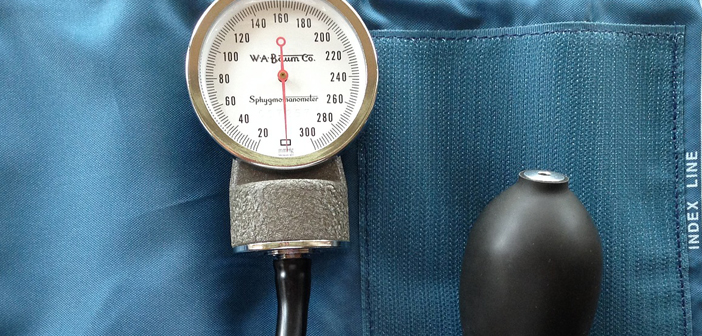
The students will perform checks for blood pressure and glucose levels while also giving flu shots.

There will be door prizes available for those in attendance.

AC’s Phlebotomy program is under the direction of Kim Meshell. For more information, contact her at kmeshell@angelina.edu.

New Research Sheds Light on the Underlying Causes of Obesity and Overeating

0

Two American researchers have just released the results of an innovative study that provides some refreshing insights into how to deal with overeating and obesity.

Deborah Kesten and her husband Larry Scherwitz newest research article, Whole-Person Integrative Eating: A Program for Treating Overeating, Overweight, and Obesity,” is being published in the peer-reviewed medical journal, Integrative Medicine: A Clinicians Journal (IMCJ) on October 1, 2015.

A wide range of guidelines on food and eating from ancient food wisdom from Eastern healing systems, world religions, and cultural traditions, as well as Western nutritional science, were distilled into 6 principles of integrative eating:

(1) eat fresh, whole foods; (2) eat with positive feelings; (3) eat with mindfulness; (4) eat with gratitude; (5) eat with loving regard; and (6) eat while dining with others.

To assess how well individuals follow these guidelines, an 80-item questionnaire was developed and administered to a large sample of 5256 Americans who participated in a 6-wk, 18-lesson online e-course on integrative eating.

A quantitative factor analysis revealed 7 distinct overeating styles emerged that are the opposite of the perennial principles of integrative eating:

(1)   emotional eating, (2) fast foodism, (3) food fretting, (4) task snacking, (5) sensory disregard, (6) unappetizing atmosphere, and (7) solo dining.

All 7 overeating styles were significantly and independently related to overeating frequency, and 5 of the 7 were significantly related to being overweight or obese. The more a persons dietary lifestyle veers toward the overeating styles and away from the 6 perennial principles of optimal eating, the more likely she or he is to overeat and be overweight or obese.

Based on the results of this study, they are able to offer up some of the most refreshing advice to people about how to deal with obesity and overeating:

Choose Chocolate

Dont write off chocolate as a (heavenly) food that could help you lose weight. Research published in Archives of Internal Medicine, indicates that its possible to eat chocolate and weigh less if you choose the right kinda cocoa content thats 70% or higher, and the right amountan ounce a day, about the size of a credit card. Sorry, but more isnt better `cause if you overeat chocolate, the calorie-count can climb too high to reap the rewards. The secret to chocolates metabolic mystery? The antioxidant epicatechin, which revs up your metabolism.

Feed Your Senses (or Stop and Smell the…)

Heres your excuse to buy that favorite gourmet olive oil youve sniffed in one of those fancy olive-oil boutiques. Scientists in Germany have linked an aromaspecifically, the scent of olive oilto both eating less and weighing less. Somehow, the scent of olive oil helped research participants to feel satiated sooner than those in the canola-oil scented group. And it gets better: those in the olive-oil group lost weight, while the canola-oil folks gained weight. Can sense-filled dining really up your odds of eating less? To find out if aroma is a stay-slim tool that works for you, try your own experiment with scent-sory olive oil both before and while youre eating.

Nix Night Eating

Call it nighttime hunger, nocturnal eating, or night eating syndrome (NES). Regardless of what its called, if you do a lot of overeating after youve had dinner or well into the wee small hours, its a triple weight-gain whammy! Researchers at the University of Pennsylvania reveal why: 1) your metabolic rate and digestion slow down at night; 2) consuming a lot of food at night wreaks havoc with hormones that control appetite, and; 3) eating when your body is meant to relax and restore itself busts your bodys built-in biological clock. The take-away: Simply put, human beings arent meant to eat a lot in the evening hours. So nix night eating. Its a formula for gaining weight and making it hard to lose weight.

Dine by Design

When you eat in emotionally (think eating while surrounded by angry people) and aesthetically (visualize eating in your car in a traffic jam) unpleasant surroundings, researchers Deborah Kesten and Larry Scherwitz have discovered youre more likely to overeat. So think about the atmosphere in which youll be eating ahead of time. As often as possible, each time you eat, design a pleasing dining experience by creating an emotional and physical atmosphere thats as pleasant as possible.

Pay Attention to How You Feel

Emotional eatingturning to food to soothe negative emotions or out-of-control food cravingsis the #1 predictor of overeating and weight gain. To get control, try this: First, commit to getting in touch with your feelings before, during, and after eating. Next, make a conscious choice to eat when your emotions are balancednot negative. Then recognize that one of the best reasons for eating is a healthy appetite, meaning, dont let yourself get too hungry. The bottom line: Commit to eating for pleasure, with a healthy desire for food, while youre feeling feel-good emotions. Then enjoy your meal.

Eat with Others

A famous study that began in the early 1960s in the small town of Roseto, Pennsylvania, explores the influence of human relationships and social support on the metabolism of high-fat, high-cholesterol, calorie-dense foods. Amazingly, this study suggests that when social support is present in our lives, especially when we eat, what we eat is somehow metabolized differentlyso much so that it can keep you from getting sick. More recent research reveals that eating alone more often than notwhat researchers Deborah Kesten and Larry Scherwitz call Solo Diningis yet another new normal eating style that strongly increases the odds of overeating.

The researchers concluded that eating with others in a pleasant atmosphere might be a useful way to overcome overeating. When its time to eat a meal, invite others to join you. Share mealtimes with friends, family, or coworkers as often as possible. Or if you have a pet, consider eating at the same time as your furry friend!

Dont Diet

Although dieting, judging food as good or bad, and thinking a lot about the best way to eat may not seem to have much in common, they are all characteristics of what researchers Deborah Kesten and Larry Scherwitz describe as a food fretter. If you see yourself in the food-fretter scenario, youre at increased odds of overeating and weight gain. To get off the food-fretting treadmill, first and foremost, stop dieting. Instead, perceive food and eating as one of lifes greatest pleasures. Choose wisely (see Get Fresh, below) and enjoy.

Get Fresh

If your most-of-the-time way of eating is, say, a donut and coffee for breakfast; a burger, fries, and coke for lunch; pizza for dinner; and chips as a snack, researchers Deborah Kesten and Larry Scherwitz might say that fast foodism is your main overeating style. If a diet of mostly fast and processed foods is typical for you, consider getting in touch with your inner fresh-food fairy. You can do this by replacing sugar-, fat-, and salt-laden foodish foodsingredients that can amp up your overeating enginewith more fresh fruits, veggies, whole grains, beans, and nuts and seeds, and lean, free-range, chemical-free animal foods. Worth a try, dont you think?

When You Eat, Eat

Do you ever eat while watching TV? Or while working at your computer? Or when youre driving? If you eat while doing other things, youre doing task snacking, an overeating style researchers Deborah Kesten and Larry Scherwitz have linked with overeating and increased odds of weight gain. The antidote? Give up eating while doing other activities. Instead, stay mindful, keep focused on your food, and do one thing at a time. In other words, eat when you eat!

Quit Chemical Cuisine

Obesogens are the manmade chemicals, plastics and pesticides which have found their way into our food supply and beverages. They wreak their havoc on both appetite and weight by mimicking estrogen, a hormone that can make you fat. The solution? One quick tip for avoiding chemical cuisine is to stay away from bisphenol A (BPA) found in canned foods, bottled beverages, meat packed in plastic, and more.

About the Authors

Deborah Kesten, MPH, is an international nutrition researcher and educator, with specialties in preventing and reversing obesity and heart disease, Lifestyle Medicine, and epigenetics. She is the Principal Investigator on the overeating styles research and the Whole-Person Integrative Eating Program (WPIE) for treating overeating, overweight, and obesity. Deborah was the nutritionist on Dr. Dean Ornishs first clinical trial for reversing heart disease through lifestyle changes, and Director of Nutrition on similar studies at cardiovascular clinics in Europe. With more than three hundred published nutrition and health articles and five books, she is also the award-winning author of Feeding the Body, Nourishing the Soul, plus Make Weight Loss Last, her book about the authors overeating research.

Larry Scherwitz, PhD, is an international research scientist who has specialized in mind-body research and lifestyle medicine and their link to preventing and reversing heart disease and obesity. Having directed seven Lifestyle programs (four in the United States, three in Europe), he has extensive experience initiating and directing comprehensive, sustainable, lifestyle-change programs with heart patients and their families. Dr. Scherwitzs researchincluding his groundbreaking discovery linking self-involvement to risk of heart attack and death from heart attackhas been published in a numerous medical journals, including the Journal of the American Medical Association, The Lancet, and Psychosomatic Medicine. He has also been director of research and co-principal investigator with Dean Ornish, MD, on his heart-disease reversal research.

Their book Make Weight Loss Last was published in September 2012. For more information visitwww.MakeWeightLossLast.com.


Can The US Stock Market Benefit From World Economic Turmoil?

0

By William Meisel, Ph.D

A year ago, I wrote a blog entry that raised this question: “Is the U.S. stock market the new gold standard?”

In brief, I argued that the value of the dollar, the world’s reserve currency, is defined by the collective value of U.S. stocks. The U.S. stock market, despite its volatility, defines the value of a dollar by relating it to the value of U.S. companies. 

So, might investing in the U.S. stock market be today’s equivalent of a “retreat to gold,” which in the past served as a haven in times of uncertainty?

Here’s what I said in that August 2014 blog entry:  “The stock market has many advantages over gold. It represents real assets that generate returns, unlike gold, most of which simply sits in vaults.

“It can grow in value to match the growth of the economy, so that it can grow as the economy legitimately needs a larger money supply. The stock market is not a perfect representation of the U.S. economy in that it is largely driven by corporate profits rather than the growth in Gross Domestic Product (GDP).

“However, stock valuations may reflect the overall economy indirectly, as investors try to factor in the prospects for the future growth or decline in profits, reflected in a changing average price-to-earnings (P/E) ratio.”

I reiterated my position in a December 2014 entry headlined, “The U.S. stock market: Good as gold?” I wrote: “The U.S. stock market is benefiting from bad news worldwide as a refuge for money that wants a relatively safe haven. And, despite the occasional chaos of a democratic political system, the rule of law in the U.S. seems intact, at least to the extent that arbitrary government actions outside of those rules are difficult.

“That critical factor, combined with regulations requiring uniform financial disclosure for companies listed on the U.S. stock market, has made that institution one where values of companies are based on relatively reliable information.”

Does this mean that the U.S. stock market, as a relatively safe haven, should go up when there is economic turmoil worldwide? It’s obvious that the stock market is volatile, and in part reflects emotional responses to the day’s news. But it has an intrinsic value that indirectly reflects the dependable rule of law in the U.S. compared to many developing countries.

About William Meisel

William Meisel is an industry analyst covering the commercial uses of speech and language-understanding technology. Meisel’s latest book, “Technically Dead,” is a novel that takes place in a near future, as predicted by his 2013 non-fiction book, “The Software Society: Cultural and Economic Impact.” Meisel blogs on related topics at www.thesoftwaresociety.com. He writes a monthly paid-subscription industry newsletter, Speech Strategy News, and organizes the annual Mobile Voice Conference in his role as executive director of the Applied Voice Input Output Society. Meisel has a Bachelor of Science degree in engineering from Caltech and a Ph.D. in electrical engineering from the University of Southern California. He began his career as a professor of electrical engineering and computer science at USC and published the first technical book on “machine learning” (“Computer-Oriented Approaches to Pattern Recognition,” Academic Press). He has 10 patents, ran the computer science division of a defense company, and founded and ran a company developing speech-recognition technology for a decade.

Seeking Fresh Perspectives to Shape the Future of Food

0

No matter if you live in a suburban, urban or rural area, new farming innovations are putting food on your plate, clothes on your back and fuel in your tanks. And whether or not you’re a foodie, a gardener or a large scale grower, you’re benefiting from visionary leaders across the country who are changing the way we grow our food, fuel and fiber.

In a constantly evolving economy, America’s farmers, ranchers and rural leaders face what experts call a daunting task: growing the food an expanding urban population needs and making sure that they’re able to continue doing so.

“The future success of the agricultural industry relies on innovative leadership,” says Leigh Picchetti, senior vice president of national communications for the Farm Credit Council, which represents the nationwide network of Farm Credit lenders that provide financial services and loans to rural communities and agriculture.

To recognize those in the industry who are changing the future of rural enterprise and agriculture, and to celebrate its 100th Anniversary, Farm Credit has launched Farm Credit 100 Fresh Perspectives, a nationwide initiative to honor 100 leaders and innovators from across the country whose insights and influence are ensuring thriving rural communities for years to come.

“This is a national search, and we’ve already received nominations from 40 states representing both urban leaders like chefs and academicians and rural producers farming the land,” says Picchetti. “We know there are additional worthy leaders out there and we’re hoping to receive many more nominations.”

Individuals, couples and groups are eligible for nomination in 10 categories. Ten of the 100 honorees will receive a $10,000 award to help further their leadership contributions, along with a trip for themselves and a guest to Washington, D.C., in 2016 to participate in a special recognition event.

A panel of experts will evaluate the nominations, which can be submitted by anyone and are being accepted now through December 18, 2015. Winners will be announced in March 2016 in conjunction with National Ag Day.

Farm Credit 100 Fresh Perspectives categories include:

• Rural and Urban Connection

• Mentoring and Volunteerism

• Agriculture Education and Community Impact

• Rural Policy Influence

• Leadership (over 21)

• Youth Leadership (21 and younger)

• Beginning Farmer or Rancher Achievement

• Entrepreneurship and Innovation

• Sustainability and Natural Resource Conservation

• Financial Stewardship

To learn more or make a nomination, visit www.FarmCredit100.com.

The agricultural industry, perhaps more than any other, must constantly evolve in order to keep pace with a changing world. Consumers can thank top agricultural movers and shakers who are helping the industry stay up-to-date.

(StatePoint)

Planet Watch at the Public Library

0

The Judy B. McDonald Public Library invites children ages 7 to 11 to Planet Watch on Monday, September 28th at 6:00 p.m.  Kids will learn fun facts about planets and stars and get to make and take home sparkly galaxy slime.   “As it gets darkerearlier, there will be more opportunities for families to stargaze together,” says Crystal Hicks, assistant library director.  “Our program will give kids some background to furthertheir exploration of the galaxy.”  Participation is free, but registration for this program is requested to ensure that there are supplies for all participants.  Please call 559-2970 to sign up.  More programs for all ages are planned throughout the fall, so check out the library’s website, www.ci.nacogdoches.tx.us/library or follow Judy B. McDonald Public Library on Facebook.

You’ve Got The Job Interview, Now What?

0

When it comes to landing the job of your dreams, there are so many ways to go wrong in your efforts – including deciding on the right career path, says career coach Lisa Quast.

“A few years ago, many professionals were happy simply to have a job as we slowly recovered from the economic meltdown of 2008-2009, which signified years of an ‘employer’s market,’ ” she says. “But in 2015, employees have more options, including more jobs in their field, and many are considering other fields, too.”

Whether you’re just out of college or looking for a better deal with another company, landing an interview takes work. Once you’ve earned that interview, you don’t want to mess it up.

Quast, author of the book “Secrets of a Hiring Manager Turned Career Coach: A Foolproof Guide to Getting the Job You Want Every Time” (www.careerwomaninc.com), briefly reviews eight ways to make the interview a success.

• Anticipate interview questions and prepare answers. There are five groups of questions you should consider for the interview: your background; familiarity with the field/industry; your functionality and competency for key aspects of the job; your style and personality; and how you see your future. It’s helpful to think about questions the hiring manager might ask and prepare how you could respond.

• Prepare questions for the employer. Good questions indicate to hiring managers that you know what you’re talking about. Consider questions about the character of the company; the history, nature and future prospect of the open position; and the department.

• Conduct practice interviews. The more you do something, the easier it gets, and practice runs will not only help your interview performance but also help you consider further the content or substance of the discussion. Conduct mock interviews with someone you trust. And when you get to the interview, remember to be yourself and don’t be afraid to show your personality. Companies hire real people, not robots.

• Prepare to answer the toughest interview questions. One of the hardest questions to answer is “What’s your biggest weakness?” For interviewers, how you answer this offers insight into your level of self-awareness; how you handle obstacles; and how much you know about the position.

• Practice watching the hiring manager’s nonverbal cues for important clues. People say plenty while not verbally saying anything. Facial expression, eye contact, posture and gestures tend to work together for an overall impression. What are these cues telling you? The answer could help you overcome challenging moments in the interview.

• Learn to close the interview with class. You can do just about everything right and miss a key point: Don’t forget to ask the hiring manager about the next step in the interview process! When friends ask whether or not you got the job, how would you know what to say if an interviewer doesn’t tell you what’s next and you never ask?

• Ensure all documents are ready for the interview. Preparedness says so much in an interview. It’s better to have documents and not need them than vice versa. Have multiple copies of your resume and reference list. Recommendation letters may not be required, Quast says, but they’re good “leave behind” documents. Other items that will either be necessary or useful include the job description, portfolio of your work, paper and pen.

• Dress for positive impact. The dot-com era ushered in a more casual approach, but the recession brought back a more “dress for success” style. Dress appropriately for the position and also the geography. For example, a jet-black pantsuit in Florida during August will make you uncomfortable and make you look out of place. Match your attire with the image of the company.

About Lisa Quast

Lisa Quast is a career coach, a business consultant and author of the book “Secrets of a Hiring Manager Turned Career Coach: A Foolproof Guide to Getting the Job You Want Every Time” (www.careerwomaninc.com). Quast spent more than 20 years climbing the career ladder in corporate America with career success in traditionally male-dominated companies/industries. She has completed projects around the world in the areas of strategic planning, marketing & communications, sales, service, operations, pricing, business development, pre-acquisition analysis and acquisition integration and HR/talent development.

ASHBY: State Must Remain Vigilant On Water Issues

0

Fall is officially here, many communities have festivals around the corner, and it seems most of us have completely settled into our autumn routines. Further west, the Capitol crowd is anxiously awaiting the release of the House and Senate interim charges in the next couple of months, as these determine what issues each committee will be studying as we prepare for the next legislative session. As we look towards this, here is an update from your Texas Capitol…

A Bill and Some Change
The State of Texas has faced a drought for the majority of the past 5 years, which in turn has strained the water supplies of large metropolitan areas like Dallas and San Antonio. During this past legislative session, we saw a number of bills filed which were aimed at addressing this urban water shortage.  Unfortunately, several of these bills would have had dire consequences for East Texas and other rural areas of the state.  For example, one bill would have undermined our regional water planning process by having a statewide water grid developed in Austin, and another would have completely eliminated the main protection in the law that East Texas has for protecting our existing water rights. These bills would have laid the ground work for large, urban areas coming to rural Texas and taking water from our river basins, without ensuring the communities along that basin and region are adequately compensated and treated fairly.  I am proud to say our efforts to kill these bills were successful, but we must remain vigilant on these type issues as water is absolutely critical to our future growth, economic development, and success in this region.


Constitutional Amendments: Part 5 of 7
Continuing our seven part series, we will be taking an in-depth look at the fifth proposed constitutional amendment leading up to the constitutional amendments election on November 3rd, 2015.

Proposition 5 on this November’s ballot authorizes counties with populations of 7,500 or less to construct and maintain private roads if the counties impose reasonable charges for the work. This money received from private road work would then be used for construction and maintenance of public roads within the county. This added flexibility will help some of the most rural counties in Texas overcome their funding challenges and meet their transportation needs.

Additionally, it is important to note that if you have moved, or are not registered to vote, the deadline for voter registration is in less than two weeks on Monday, October 5, 2015. Early voting will be from October 19th through October 30th. If you have any questions regarding any of the proposed amendments, or on how to register to vote, please call my office at (512) 463-0508. We will be glad to help you navigate the process.


Reminders
As September draws to a close our mobile district office has wrapped up for this month. Please stay tuned for the future dates when the mobile office will be coming to your county for the month of October. We look forward to seeing you!

Please do not hesitate to contact us at (936) 634-2762 or (512) 463-0508 if we can ever be of assistance, and remember that our door is always open.

Diagnosing The Impact On Patients When Trusted Doctors Sell A Practice

0

A blizzard was coming and the doctor knew that meant bad news for his patients with upcoming appointments.

They might become snowed in and not be able to get out of their homes. In the past, the doctor handled such situations by contacting the patients and offering to let them come in ahead of the storm.

But the doctor had recently been forced to sell his practice to a hospital and the hospital now called the shots.

“The hospital said they were not going to do what he had always done,” says Dennis Hursh, an attorney who has provided legal services to physicians for more than three decades and is the author of “The Final Hurdle: A Physician’s Guide to Negotiating a Fair Employment Agreement.” (www.TheFinalHurdle.com)

“Essentially, the hospital took the view that if the patients were trapped by the blizzard and couldn’t make it to their appointments, that was just too bad.”

The blizzard scenario is one of the more extreme examples of the types of situations patients face when a long-trusted doctor sells a private practice and becomes part of a hospital.

“I’ve represented many physicians who sell their practices to hospitals,” Hursh says. “Some of these physicians were forced to sell because the costs of running their practices were increasing, while reimbursement from health insurance companies remained constant or fell.”

Unless the doctor is careful with contract negotiations, though, he or she may not always be happy with the way things work out.

And the doctor’s patients could be even less happy.

“These things do affect the patients,” Hursh says. “They may have counted on that doctor for years, or even decades. And suddenly, everything changes.”

For the patients, that could mean:

• A rushed visit. Doctors who own their own practices tend to take time with their patients. A relationship develops, Hursh says. “A hospital might want the doctor to see eight patients an hour,” he says. “Doctors by necessity can become more abrupt in their dealings with the patients when they work for a hospital. It becomes more focused on money making than on patient care.”

 A switch in doctors. Patients may not always see their trusted physician when they schedule a visit. They have gone from being treated by a single doctor to being treated by a multi-doctor practice. On any given visit, they potentially could end up seeing one of the other doctors. “You lose the one on one,” Hursh says. “You feel every time you go in you are seeing a stranger.”

 Adjustment difficulties. Patients who are senior citizens often have even more trouble than others adjusting to the change. “A lot of senior citizens won’t go in because they won’t get to see their doctor,” Hursh says. “So they just stop going to the doctor, which isn’t in their best interests.”

Hursh says that, in reality, some physicians who go in with a hospital probably never should have sold their practices to begin with – at least not under the conditions that were agreed upon.

Often, doctors believe their compensation will increase if they become employed by the hospital, but that’s not necessarily so, he says.

“Selling a medical practice can be a frustrating experience,” Hursh says. “Getting the best deal can be complicated. It’s clearly in the best interests of the doctor to get a good deal, but ultimately it’s also important for the patients. I want my doctor to be focused on me and my health needs, not stewing over a contract that leaves them short-changed.

About Dennis Hursh

Dennis Hursh, author of “The Final Hurdle: A Physician’s Guide to Negotiating a Fair Employment Agreement,” has been providing health-care legal services for more than three decades. Since 1992, he has been managing partner of Hursh & Hursh, P.C., www.PaHealthLaw.com, a Pennsylvania law firm that serves the needs of physicians and medical practices. He is a member of the American Health Lawyers Association, where he is involved in the Physician Organizations Practice Group.

Make Your Home Smell Great this Fall

0

When updating your home each season, most of the emphasis is placed on delighting your sense of sight. Why not spend some time on your home’s fragrance?

To refresh your home this fall, consider these tips:

Start Fresh

With the cooling weather and new beginnings, autumn is an excellent time of year to do a deep clean, just as many do in spring.

Clean your refrigerator, pantries and any other areas that contain food, discarding expired items and wiping down surfaces.

Reduce mold in humid areas of your home with ventilation and dehumidifiers.

Shampoo rugs and take this opportunity to launder seldom-washed linens, like window treatments, dust ruffles and bedspreads.

Dust surfaces, such as your bookshelf, coffee table and knick-knacks.

Add Scents

Add inviting, festive fall fragrances to your home with classic jar and tumbler candles that evoke the fall experience from the comfort of home — whether it’s a walk among falling leaves, an afternoon picking berries or a sip of warm cider.

For each room, pick a scent and add candles in a variety of sizes to add a festive feel to the room with both sight and scent. For example, five new fall 2015 fragrances from Yankee Candle are perfect for bringing the outside in, such as Autumn in the Park, which evokes the scent of fresh peeled apple, fallen leaves, lemon zest and a hint of pumpkin, or Sugar & Spice, a swirl of cinnamon, buttery vanilla and sugar crystals. For seasonal decorating inspiration, including festive fall ideas for fragrance and home décor, visit www.YankeeCandle.com.

Set to Bake

You can use fragrance to entice your family’s taste buds too. In fall, it’s time to reunite with your oven and slow cooker. Use in-season ingredients and traditional fall herbs and spices to fill your home with delicious and delightful flavors and aromas.

Apple cinnamon crisp and pumpkin pie make for delightful desserts when the weather cools; and warm, inviting stews, soups and chili using autumn’s hearty harvest should include vegetables like squash, fennel and beets and spices like cumin and cardamom.

Out with the old, in with the new: when it comes to scents and flavors, take time to refresh your home in fall with all the best that the season has to offer.

(StatePoint)

National Child Health Day: Getting Every Child Off to a Healthy Start

0

October 5 is National Child Health Day, a federal observance started nearly 90 years ago to encourage Americans to focus on the health and well-being of children of all ages. That includes helping expecting mothers plan for a healthy arrival of their soon-to-be little ones.

If you’re an expectant mother, you’re likely already making your child’s health a priority by scheduling regular visits with your obstetrician, adjusting your diet and limiting certain activities during your pregnancy. But have you thought about important considerations for delivery day? For example, skin-to-skin contact with your newborn immediately after delivery can help your baby get off to a healthy start.

The International Breastfeeding Centre lists numerous benefits of skin-to-skin contact between mother and baby after delivery. These benefits include a happier baby with a more elevated blood sugar level, a more stable temperature, heart rate and breathing rate.

The benefits are not fleeting, however. Mothers who have skin-to-skin contact with their babies are more likely to breastfeed in the first one to four months, and tend to breastfeed longer, according to a report from the Cochrane Pregnancy and Childbirth Group, analyzing 34 studies of more than 2,000 mothers and their babies.

Traditionally, skin-to-skin time has been limited to natural vaginal births. In instances where a mother has given birth by cesarean section, the baby is often sent to an incubator before a mother can hold or see her baby.

Today, nearly one in three U.S. women now gives birth via C-section, according to the CDC. That equals more than one million moms annually who are denied the benefits of skin-on-skin contact with their newborn.

Fortunately, many hospitals now offer a solution in the form of a “family-centered birth experience.” Also known as a “gentle cesarean,” a family-centered birth experience includes certain aspects of a natural childbirth during a C-section operation, including allowing moms to watch the delivery, (but not the C-section procedure) as well as hold their babies immediately after delivery.

Traditionally, C-section deliveries are blocked off by an opaque screen. New options such as a family viewing C-section drape allow moms to witness their babies’ first breath through a see-through window, while still maintaining an essential surgical barrier.

If you’re planning to have a C-section and want to have a family-centered birth experience, do your research to find a hospital that offers the service and can deliver it the way you want.

Ensuring skin-on-skin time with the baby will require additional staff and rearranging of equipment in the delivery room, as well as altered placement of the EKG leads on your body. Discuss these details with your doctor beforehand to ensure the hospital can make the necessary arrangements.

Opting for a family-centered birth experience will require some additional upfront planning during pregnancy, but the bond created between mother and child will be a lifelong memory for the family.

(StatePoint)