



Home Blog Page 699

DETCOG Board Busy at Nacogdoches Meeting

0

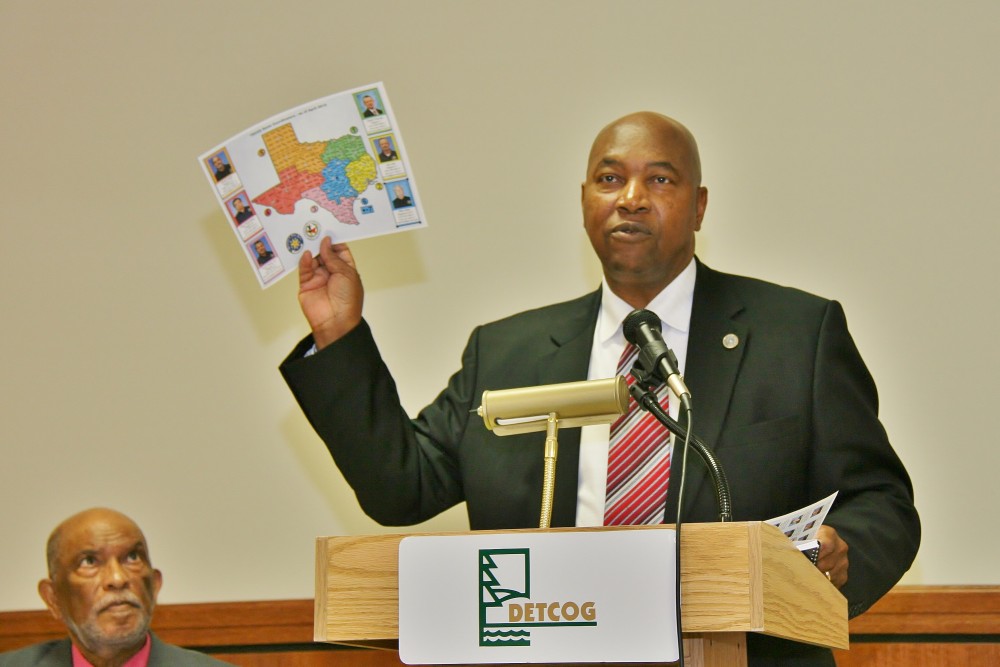
Nacogdoches, Texas – The Deep East Texas Council of Governments (DETCOG) Board wasted no time in getting down to business Thursday.  Two months of committee work, no business meeting in May because of the Annual Membership Meeting, the legislative session, Texas Association of Regional Councils and National Associations of Regional Council meetings created a full agenda.

Chair of the Regional Housing Advisory Committee Daphne Session reported on the public meeting held on the Regional Housing Authority’s 5-Year Plan covering FY 2015 to 2019 and the following committee meeting. The board later acted on her committee’s recommendation and approved the 5-year plan, its annual plan for FYB 2015 and revisions in the Regional Housing Authority’s Section 8 Administrative Plan

Angelina County Emergency Coordinator Don Morris reported on the Regional Emergency Preparedness Taskforce.  They are urging the County Judges in the DETCOG Region to not hesitate and file their flooding damage reports with the state.  Even if they have to amend them later, adding to the state’s total flood damages will help the state receive federal assistance quicker.  In an aside, it was also noted that the state emergency preparedness program was now being ran from the Office of the Governor’s Criminal Justice Division and not the Texas Department of Public Safety.

The Director of the Retired Senior Volunteer Program Pam Dunn presented her advisory council’s report.  She started by remarking on the success of her group’s most recent fundraising travel. While thanking all of the county judges and mayors, Dunn said the DETCOG Region’s RSVP program was a standout for having all of its twelve counties and seventeen cities adopt resolutions recognizing the value of RSVP volunteers.

Jasper County Judge Mark Allen, who chairs DETCOG’s Economic Development Committee, reported his group’s recommendation on the division of over $500,000 in unused Hurricane Ike Recovery de-obligated infrastructure funds.  Those funds were re-allocated to  other qualified cities and counties for infrastructure repairs and improvements within the DETCOG Region.

DETCOG Executive Director Walter Diggles reported on the progress of the Hurricane Ike Housing Recovery program.  It is on schedule to complete over one hundred reconstructions and rehabilitations by the end of 2015.  Diggles also noted that two job-creating Hurricane Ike Forgivable Loan projects have been de-obligated and now the funds will be utilized for other projects within the region.  That will make nearly one-million dollars soon available for “shovel-ready” business start-ups or expansions that create jobs.

The next DETCOG Board Meeting is scheduled for Thursday, July 23, 2015.  It will be held in Hemphill in Sabine County.
Statements from Representative Ashby and Governor Abbott Regarding Today’s Supreme Court Ruling

0

“I am extremely disappointed in the ruling by the U.S. Supreme Court on gay marriage. It is an assault on the institution of marriage, as recognized by civil society for thousands of years, and undermines the 10th Amendment and the rule of law. Seventy Six percent of Texans voted in favor of the Defense of Marriage Act. Five legislators in black robes have just ignored the will of the people of Texas. It is a sad day for our country.”  – Trent Ashby

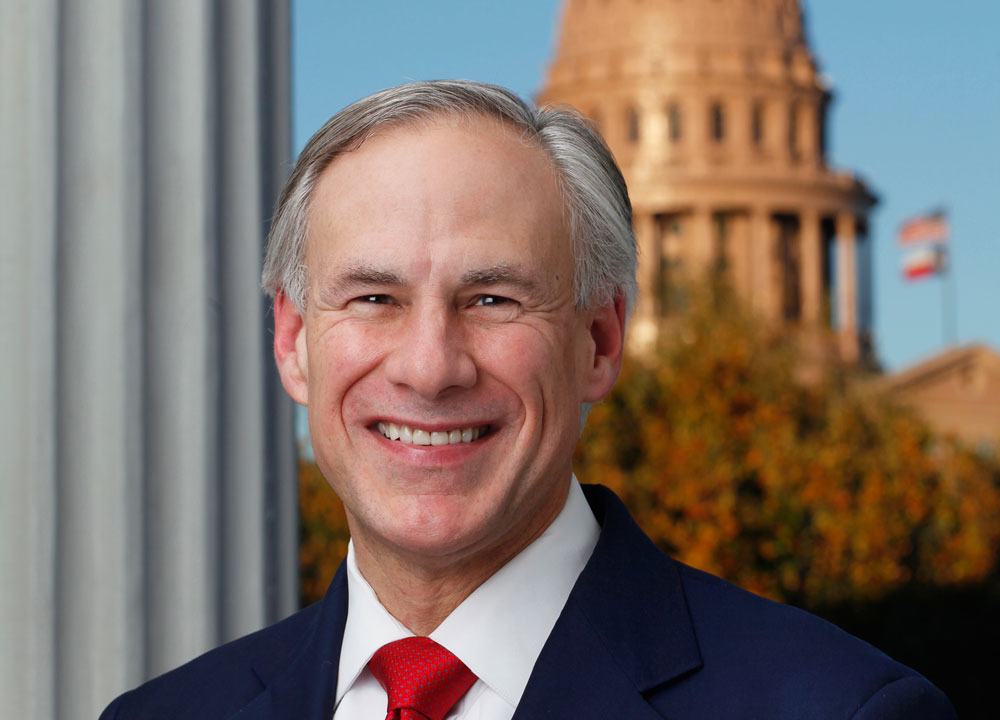
Governor Greg Abbott today released the following statement regarding the Supreme Court’s same-sex marriage ruling:

“The Supreme Court has abandoned its role as an impartial judicial arbiter and has become an unelected nine-member legislature. Five Justices on the Supreme Court have imposed on the entire country their personal views on an issue that the Constitution and the Court’s previous decisions reserve to the people of the States.

“Despite the Supreme Court’s rulings, Texans’ fundamental right to religious liberty remains protected. No Texan is required by the Supreme Court’s decision to act contrary to his or her religious beliefs regarding marriage.

“The Texas Constitution guarantees that ‘[n]o human authority ought, in any case whatsoever, to control or interfere with the rights of conscience in matters of religion.’ The First Amendment of the U.S. Constitution guarantees the free exercise of religion; and the Texas Religious Freedom Restoration Act, combined with the newly enacted Pastor Protection Act, provide robust legal protections to Texans whose faith commands them to adhere to the traditional understanding of marriage.

“As I have done in the past, I will continue to defend the religious liberties of all Texans—including those whose conscience dictates that marriage is only the union of one man and one woman. Later today, I will be issuing a directive to state agencies instructing them to prioritize the protection of Texans’ religious liberties.”

Sit, Stay, Say Cheese: Coach Announces Model for New Ad Campaign

0

Coach, Inc., a leading New York design house of modern luxury accessories and lifestyle collections, just released its new ad campaign, showing off big eyes and a soft, wet nose.

The first series of ads in the campaign, titled COACH PUPS, feature Miss Asia Kinney (seen above), Lady Gaga’s French Bulldog, who put up three tweets about the shoot and garnered over 3,500 followers in the following weeks. Styled with pearls and the gorgeous Coach Edie bag, the candid canine shows off the brand’s classic luxury look.

“I am so proud of Miss Asia! She’s a natural in front of the camera,” said Lady Gaga, a fashion icon herself. “We’re both so excited that the iconic Steven Meisel shot her for Coach’s pup campaign! I really love getting to watch my best friend be a star!”

Stuart Vevers, Creative Director at Coach comments, “’I’ve never had so much fun on a shoot. The combination of Mr. Meisel and the pups was an extraordinary, surreal, special moment. We wanted to create playful images that make you smile. We were inspired by some images from the Coach archive, which featured Eddie—the dog that starred in the TV series Frasier—to create something joyful, with humor and character. That’s a spirit that’s uniquely at the heart of Coach.”

In the statement from Coach, Inc. the new initiative will also introduce the social campaign #coachpups, including a range of online activities for fellow dog fanciers, opportunities for Instameets, special talks and other events hosted by the great and the good of the canine world. This will also mark the debut of the Coach Snapchat account.

Coach has made a donation to Chicago French Bulldog Rescue (frenchieporvous.org) on behalf of Miss Asia Kinney and her devoted owner.

Hunt Your Way to Financial Well-being

0

As dazzling as a high rate of return sounds to every investor, people need to understand what they’re “hunting” with before chasing certain financial goals, says prominent speaker and financial advisor Jeff Brummett.

“A middle-class investor is probably better aiming for a ‘reasonable rate of return,’ which includes consistent, steady growth over a longer period of time,” says Brummett, a former president and founder of a two-time Inc. 500 company who recently started Green Line Financial Services, LLC (www.greenlinefinancialservices.com) to, in part, improve his neighbors’ financial well-being.

“Going for the big-money return almost always means risking resources that most people simply cannot afford. The middle class and the wealthy hunt with different tools for their respective financial ends.”

What are these different tools for the hunt? Brummett breaks down the analogy.

•  People in the upper class hunt money in the same way a person might hunt a deer – with a high-powered rifle. Such a person can be accurate and succeed from long distances because of the rapid speed of the high-powered bullet and the increased accuracy a telescopic sight produces. Also, because of the bullet’s velocity and the ability to quickly re-sight, aim and fire, a wealthy person can afford to miss the target (money) and still catch the prey with a second- or third-round attempt. Even when the wealthy fail, they are not adversely affected by their failure.

•  The middle class hunts money with the likes of a knife, spear, or, at best, a bow and arrow. Consequently, the middle class must sneak up on the prey – methodically, slowly and with great perseverance. In most cases, such hunters must get close to the prey to succeed and have only one shot. If they miss, there isn’t time to reload, re-aim and fire before the prey (money) is long gone and out of range – forever. Simply stated, the middle class doesn’t have the time to recover and is generally afforded not more than a single shot at securing a financial future. Every shot must count.

•  Step one for the middle class: appreciate slow growth and protect your assets. Appreciate a reasonable rate of return, built over time on the principle of safety first. “This is my first, second and third priority for the middle and upper-middle class,” Brummett says. Also, in recent years, the financial markets have experienced extreme swings. This historic volatility combined with the limited availability of traditional retirement income sources, such as defined benefit pension plans, has placed a greater responsibility on Americans saving for their future, he says. Also, Brummett says, people need to be sure to protect their nest eggs from unnecessary fees.

About Jeff Brummett

As an executive management entrepreneurial leader, Jeff Brummett is a prolific financial public seminar speaker and heads Green Line Financial Services, LLC (www.greenlinefinancialservices.com). He hosts more than 54 seminars across the southern half of Indiana each year. As a former president and founder of a two-time Inc. 500 company, Brummett offers extensive expertise in strategic planning for both professional and personal financial matters. He is a member of SOFA (Society for Financial Awareness) a non-profit professional speakers bureau, where he also serves as its Bloomington, Ind., Chapter President. Whether speaking one-on-one or to audiences, Brummett brings real-world answers to complex challenges. With humor and simplicity, he improves an individual’s financial literacy with each discussion.

Parents Play A Big Role In Keeping Teen Drivers Safe

0

For teens, getting behind a wheel can seem like an exciting taste of freedom. But too much leeway too soon can have dangerous results. Car crashes are the number one killer of teens, and half of all teens will be involved in a car crash before graduating high school, reports the National Safety Council (NSC).

Luckily, states with a Teen Safe Driving Coalition are helping change the game. The Coalitions — comprised of state and local government, law enforcement, public health agencies, traffic safety and injury prevention organizations, academia, businesses, teens, parents and crash survivors — were established by NSC and The Allstate Foundation. They have worked at the grassroots level for the last four years to educate parents and teens about the risks of teen driving. Coalitions exist in California, Florida, Maryland, Michigan, New Jersey, New York, Ohio, Pennsylvania, Tennessee and Texas to offer solutions for parents to help teens be safer.

The results have been effective. Crashes involving 15- to 17- year-old drivers in Coalition states have dropped nearly 34 percent since the Coalitions were established four years ago, whereas non-coalition states have experienced just a 19.5 percent drop, according to NSC analysis of federal fatality data.

The Coalitions’ success is in part because they promote a program that indisputably saves lives. Graduated Driver Licensing (GDL), a proven method of reducing teen drivers’ crash risk by 20 to 40 percent, works by maximizing experience while minimizing common driving risks teens face, such as nighttime driving and carrying teen passengers. This allows new drivers to gain experience with less exposure to high-risk scenarios. All 50 states and D.C. have implemented some form of GDL.

“Beyond legislation, parents have a role to play as well,” says Kathy Bernstein, senior manager of teen driving initiatives, NSC. “As the number one resource when it comes to teaching teens to drive, parents should stay involved well after teens get their licenses.”

With that in mind, Bernstein is offering some life-saving tips to families with new drivers:

• Parents should drive with teens regularly even after they receive their license. A minimum of 30 minutes weekly can help ensure that safe driving skills are being employed.

• Talk with teens about managing distractions, such as phones — both handheld and hands-free — the radio, other young passengers, and even beautiful roadside scenery. When teens are driving, they must stay focused on the task at hand.

• Mile for mile, 16 and 17 year-old drivers are about three times as likely​ to be involved in a fatal car crash at night than during the day, according to “Injury Prevention,” a peer review journal. Parents should give teens opportunities to learn nighttime driving skills with an adult supervisor in the car.

• One of the best ways for teens to learn to drive is by example. So practice safe habits always.

“Remember, it’s not whether teens are ‘good kids’ or ‘responsible.’ New drivers share one thing in common — lack of experience,” says Bernstein. “The more practice driving teens get, the better.”

-StatePoint

Hero Highlights and Makerspace at Judy B. McDonald Public Library

0

(Nacogdoches) The Judy B. McDonald Public Library will continue the children’s summer programs with “Hero Highlights” on June 23 at 10:00 am. The speaker will be Petty Officer Chelsea Bostick with the United States Navy. Our theme for the summer reading is superheroes and we want to honor the individuals serving in our armed forces who are definitely heroes. We will follow the presentation with a game called “What lineis it?” and other activities if time permits. “Heroes are often actors in movies and books, but we want to explore what everyday heroes around us do and challenge our youth to follow in their leadership,” says Dawn Radnitzer, children’s librarian. The public is invited to attend this free event.

The Library will also present Makerspace: Wearable Electronics, the next in a series of Maker events on Monday, June 22nd at 5:30 p.m. This free program will teach tweens and teens how to connect circuits in clothes and accessories using conductive thread. “We’ve already had Makerspace programs on soldering and microcontrollers, so we’re taking our know-how to a new level,” says Crystal Hicks, assistant library director. “We have some very talented youth who are eager to learn how to do and make new things, so we’re more than happy to offer them the opportunity to do so.” Registration for this program is required. Please call 559-2970to sign up. More Makerspace programs are planned throughout the summer and beyond, so check out the library’s website, www.ci.nacogdoches.tx.us/library, for more information

Communication Tips to Keep Couples Talking

0

Married couples should have plenty to say to each other, but research says communication is one of the issues they struggle with most.

Part of the problem may be that communication is a two-way street, requiring both partners to do it well. And some subjects are more ticklish than others to bring up.

“Healthy couple communication is not just about expressing your needs, but also about being an active listener and desiring to understand your partner’s perspective,” says Dr. Anne Brennan Malec, clinical psychologist and marriage and family therapist, and author of the book “Marriage in Modern Life: Why It Works, When It Works.” (www.drannemalec.com)

For couples, she says, communication is like oxygen. The relationship needs it to stay alive.

“Couples never come into my office and say, ‘We are talking way too much,’ ” Dr. Malec says. “It is always, ‘We have a problem with communication.’ ”

That rarely means they shut each other out completely, Dr. Malec says. They talk, but often they sidestep what’s really troubling them.

“Couples sometimes avoid difficult conversations and conflict because they fear it will turn ugly,” Dr. Malec says.

She says when it comes to communicating, there are a few traps to watch out for and some effective strategies to employ.

•  Getting passive-aggressive. Some people act out their feelings instead of talking about them. That’s called being passive-aggressive and as a relationship strategy it ranks near the bottom, Dr. Malec says. “You say one thing and do another, or worse, you say nothing but roll your eyes or sigh dramatically,” she says. “This communicates judgment and contempt, which is disrespectful to your partner.”

People usually act passive-aggressively because discussing their thoughts, feelings and opinions makes them uncomfortable or seems too risky. “I see it all the time,” Dr. Malec says. “A partner agrees to do something they have no intention of doing just to get the spouse to stop nagging.” Passive-aggressive habits foster distance between partners so it’s absolutely necessary to replace them with healthier communication strategies to restore the connection.

•  Assuming your partner is psychic. Sometimes spouses don’t communicate their needs or desires because they expect their partner to somehow know. “Expecting your partner to know intuitively what you want without saying it sets your partner up to fail,” Dr. Malec says. “None of us are mind readers.”

It’s far more effective, and people stand a much greater chance of getting their needs met, when they learn to share their thoughts directly.

•  Checking in. Communication often devolves into a heated argument over the family’s latest crisis, or involves the resurrection of old grievances. But communicating should be a way to head off problems instead of causing them, and can be if the right steps are taken, Dr. Malec says. She encourages clients to have at least a 20-minute daily check-in. This is a time to catch up on the day’s events and talk about what’s coming up the next day. “Done right, it can lead to smoother mornings in getting yourselves and the kids out of the house,” Dr. Malec says.

•  Addressing the bigger picture. In addition to short daily check-ins, couples should schedule weekly sessions to discuss bigger-picture items. That might include financial goals, work issues or parenting concerns, Dr. Malec says. Some couples do better if the agenda is set ahead of time. “A spoken agenda works fine for a lot of people,” she says. “But conflict-ridden couples may need a written agenda to stay focused and keep the conversation running smoothly.”

If necessary, use a clock to ensure equal talking time. Partners also can use an object such as a spoon or book that is passed back and forth to indicate whose turn it is to speak. Dr. Malec says that will help keep the couple centered and reduce the likelihood of either partner becoming overheated. Partners are more willing to engage in a conversation if they know they will have a chance to be heard.

“For many of us, our natural instinct is to avoid situations that feel complicated and confrontational,” Dr. Malec says. “But keeping and maintaining a successful marriage depends on learning how to fight the ‘avoidance’ instinct and discuss difficult issues.”

About Dr. Anne Brennan Malec

Dr. Anne Brennan Malec (www.drannemalec.com) is the founder and managing partner of Symmetry Counseling (www.symmetrycounseling.com), a group counseling, coaching and psychotherapy practice in Chicago. She also is author of the book “”Marriage in the Modern Life: Why It Works, When It Works.” Dr. Malec earned her Bachelor’s degree from Villanova University in Accountancy and holds two Master’s degrees: one in Liberal Studies from DePaul University, and one in Marital and Family Therapy from Northwestern University. Dr. Malec earned her Doctoral degree in Clinical Psychology from the Chicago School of Professional Psychology.

Fall Vegetable Garden

0

If you are frustrated with your spring garden and have missed the produce that you’ve come to love and appreciate, we may need to drop back, punt, and plan for a fall garden. It is a commonly overlooked fact by gardeners that there are indeed two times to have a vegetable garden each year: spring and fall.

Yes, the fall vegetable garden is just as much a possibility as a spring one, just different. It will be different in a number of ways.

Establishing a fall garden is different as you have to work in the heat up-front. This will be to your advantage as warm soils help germinate vegetable plants much sooner than cooler spring soil temperatures.

Watering is also approached with a different mind-set. Water will be crucial to establishing the summer growing vegetables. Germinated seeds in July and August will need uniform moisture and plenty of it. Mulching, a practice not often done for spring gardens will really help here. Just a light layer of mulch will greatly aid in keeping moisture in the soil next to the developing roots.

Pest control for fall gardens will be less. Insect problems that are commonly experienced in the spring will be reduced. Disease issues that arise from cool, moist environments when plants are young will also be diminished.

The biggest proponents of fall vegetable gardens will always brag on the harvest. Harvested produce in autumn, in milder weather, are reported to taste better.   The time spent harvesting, choosing which tomato or what size cucumber to pick, is obviously more comfortably done in the cooler fall months as well.

Of great importance is your planning. Most vegetables traditionally grown in the spring/summer have a hard deadline when fall gardening. They must beat the frost. Now the average first frost for this area is mid- November. The key word is average. Sometimes it may be near Christmas, and other times it will be prior to Halloween.

So when choosing what and when to plant, keep in mind how long it takes each vegetable to reach harvest stage. Southern peas (purple hulls, zipper creams, etc.) normally take about 60 days. Counting backwards from a mid-October harvest puts the planting at mid-August at the latest. To get pumpkins for Halloween you need plant 90 to 100 days before you want it on display. 90 days before mid-October is mid-July.

Late fall plantings of most greens will handle frosts just fine, perhaps even benefit. Collards grow best in cool weather and can stand temperatures of 20 degrees or less in some cases. They taste sweeter after a light frost.

If you just can’t wait for fall, then go ahead and plant okra and southern peas. These two vegetables do just fine in our summer conditions.

The bottom line is that here in east Texas our spring and fall gardening seasons are typically sandwiched between a mild winter and hot droughty summer conditions that cause many crops to stop production. Variety selection and proper planting time are critical to success.

Capitol Update: Veto Period and Ballot Propositions

0

These past few weeks have been full of what seems to be non-stop rain and storms across the state. I want to thank our local and community leaders, as well as our first responders, for their work ensuring our safety through these difficult times.

Veto Period

By the time you are reading this, the June 21st deadline for Governor Abbott to act on a bill will nearly have passed. In our legislative process, a bill must be passed by a majority vote in both the House and Senate, then move to the governor’s desk to either be signed into law or vetoed. If the governor does not wish sign or veto a bill, he can allow it to become law without his signature. For bills that pass early in the Legislative Session, the Governor has only 10 days to act on a bill, and if the Governor vetoes the bill, the Legislature still has time to override the veto with a two-thirds vote in each chamber. For bills that pass late in the Legislative Session, the Governor has 20 days after session ends to review and act on bills, and the since the Legislature is out of session, any vetoes in this period cannot be overridden. As of June 17th, the Governor had signed 587 bills into law, and vetoed only 4 bills.

Proposition 6

Proposed constitutional amendments follow a slightly different process than bills. A constitutional amendment changing the Texas Constitution is filed in the House or Senate and must pass both chambers with at least two-thirds of the elected membership. Afterwards, the constitutional amendment does not go to the Governor’s desk. Instead, the measure is placed on the following November ballot for voters to decide. This past week, the Texas Secretary of State conducted a random lottery to assign proposition numbers to the seven proposed constitutional amendments that will be on the ballot. Proposition 6 will be a constitutional amendment I authored guaranteeing Texans the right to hunt, fish, and harvest wildlife, which passed the House and Senate with strong bipartisan support. I was proud to author this legislation, and I look forward to its passage on the ballot this November.

Reminders
For the convenience of constituents not wanting to travel far from home, the mobile office will continue its regular Wednesday travel schedule throughout the District even now that session has concluded. The final stop this month is June 24th at the San Augustine County Courthouse from 8:30 am to 11am.

Please do not hesitate to contact us at (936) 634-2762 or (512) 463-0508 if we can ever be of assistance, and remember that our door is always open

Sausage and Black Olive Pizza Dip

0
Did you see the latest post about healthy snacks for little athletes? If not, swing by here and give it a read through. One part that really caught my attention is using olives to re-hydrate instead of sports drinks. Which got me thinking, because among other things, I love olives! So, when I found this recipe for Sausage and Black Olive Pizza Dip, found on frugalanticsrecipes.com, I couldn’t pass on sharing another way to savor one of my favorite fruits (yes, they are fruits.)
And now, for the good stuff:
Ingredients
  • ½ cup sour cream
  • ¼ tsp garlic powder
  • ½ tsp Italian seasoning
  • ½ cup prepared pizza sauce (I used Classico)
  • 12 oz fresh mozzarella, sliced
  • 12 oz Italian sausage (hot or mild), crumbled, cooked and drained
  • 4 oz sliced black olives, drained
  • 1-2 green onions, sliced
  • 2 Tbsp shredded Parmesan cheese

Instructions

  1. In a bowl, combine the cream cheese, sour cream, garlic powder and Italian seasoning.
  2. Spread it in the bottom of a 7X11 pan.
  3. Top with pizza sauce and then sliced mozzarella.
  4. Sprinkle with cooked sausage, black olives and green onions.
  5. Top with Parmesan cheese.
  6. Bake at 350 degrees for 20 minutes.
  7. Serve hot with chips.