


Home Blog Page 711

In Your State Capitol with Trent Ashby

0

As the lingering summer heat takes what is hopefully its last gasp, early voting is right around the corner, and the first patient with the Ebola virus in the U.S. succumbs in Dallas — here is what else is going on at your State Capitol…
 

Select Committee on Economic Development Incentives
Accountability, transparency, fiscal responsibility– those are some things that Texans should be able to expect when they pay their hard-earned tax dollars to the state. A recent report by the state auditor’s office showed that those principles were sometimes ignored when it came to the past use of the Texas Enterprise Fund. Created to bolster our economy, promote business in our state and create jobs for Texas residents, the TEF is in need of serious reforms. The audit found incomplete and sometimes non-existent record-keeping, as well as some instances where grant money was awarded to companies that didn’t complete the application requirements. One company that received funding from the TEF does not even operate in Texas. With the recent revelations about the misuse of the TEF, the Select Committee on Economic Development Incentives has even more of a responsibility to demand changes in the way our state government operates with taxpayer dollars. As a member of that committee I can tell you that we are working diligently during this interim to study and question the failures and inefficiencies of incentive programs like the TEF, with the ultimate goal of producing a report that will be considered by the Legislature and hopefully spark much-needed reforms next session. Annual audits, increasing checks and balances, and certainly more oversight of these funds are all crucial elements to maintaining effective incentive programs that accomplish what they were created to do. It’s been proven that some of these programs can have a significant impact on communities in our state, but we have to eliminate the incompetency that has existed in the past. Part of that focus includes ensuring that the rural areas of our state are not overlooked when these programs are A) put into place, and B) begin to function. If we want to be a truly great state, we have to energize and promote the economies of hard-working, rural communities.
 

House Interim Charges: Committee on Investment and Financial Services
Continuing our look at interim charges for each of the House Committees, this week we focus on the House Committee on Investment and Financial Services. Members of this committee have been charged with reviewing our state’s home equity laws, and making recommendations that ensure Texas consumers have appropriate access to the equity in their homes. The Committee will also review the state’s regulatory and administrative systems related to public school bond issuances, as well as analyze the costs and benefits of implementing an intrastate equity crowd-funding system. Members will examine programs that have been implemented in other states and determine whether a similar system is appropriate in Texas.
 

As always my staff and I are available during the week at 936-634-2762 and 512-463-0508.

Winter preparation for lawns

0

Care of your lawn in the fall is as important as in spring and summer. Regular care is the key to an attractive and healthy lawn through the fall and winter months. Here are few things you can do to help your lawn survive the upcoming winter and return vigorously in the spring.
 
Early fall fertilization is the key to prolonging fall color and promoting early spring recovery of the lawn. It helps produce a dense turf that resists winter weeds. Fertilizer used in early fall should be higher in nitrogen and potassium and lower in phosphorus. Grasses fertilized this way have shown greater survival during winter months than those fertilized with high phosphorous.
 
The problem is that early September was the time to do it. In early September we would have used a 3-1-2 ratio formula or buy a “winterize” product of your choice, allowing for good coverage.
 
In order to over-winter lawns/grasses, be careful not to give a strong boost to your current growth. Lush, thick growth from excessive watering and nitrogen fertilizer is more susceptible to fungal problems now and frost later.
 
As it is already into October, I suggest that now through early November I would only recommend a fertilizer with a good bit of potassium (K) such as 0-0-60. Research shows that potassium (some call it Potash), and continued regular watering, produce a hardy” root stock to survive the winter.
 
When your lawn goes dormant during winter months, it is important to remember the grass is living and needs moisture for survival. During the winter, if it doesn’t rain for several weeks, then the lawn should be irrigated. Irrigation before a hard freeze is helpful in reducing freeze injury to the grass. It takes much colder air temperatures to lower the temperature of a moist soil than that of a dry soil.
 
Fungal diseases love cool weather and are most prevalent in the fall. Brown Patch and Take-All Root Rot are two fairly common fungal diseases that affect St Augustine grasses. With our recent rains and high humidity, both could become active once the severe, intense stress your lawn has endured due to the terrible summer heat gives way to milder, wetter weather.
 
Monitor the condition of your lawn carefully. If you suspect a problem such as brown patch, gray leaf spot, or take-all, use a quality fungicide labeled for lawns.
 
You can also start combating spring weeds now. Fall and winter weeds such as henbit, chickweed, or bluegrass may best be controlled now with pre-emergent herbicides. Read label directions for weeds controlled and rates.
 
Above all else, spend $10 for a soil test, available from the Texas A&M AgriLife Extension Service in Angelina County, and apply fertilizer and/or lime as indicated by the report.
 
The Angelina County Extension office will be holding a seminar on southern bulbs on Monday, Oct 20 at 6:30 pm. Chris Wiesinger will be speaking on bulbs that have naturalized and thrive in our area. Cost is $10 per person, kids come free.
 
+++++++++++++++++++
Educational programs of the Texas AgriLife Extension Service are open to all people without regard to race, color, sex, disability, religion, age, or national origin. 
Cary Sims is the County Extension Agent for agriculture and natural resources for Angelina County. His email address is cw-sims@tamu.edu.

Fright at the Museum

0

Dr. Naranjo’s experiments have taken over the museum! See if you can make it out ALIVE!

Fright at the Museum is a haunted-house tour through the Naranjo Museum. Dr. Naranjo’s horrifying experiments will be featured in a museum that has been transformed into chaos and madness! Visitors are invited to this creepy tour, but take caution! You just might be trapped and become one of the creatures yourselves!

October 27-October 31
Monday-Thursday 7pm-10pm
Friday 7pm-11pm

Presale Tickets: $6.00 (now available at the museum)
At-the-door: $7.00
(all proceeds support the Naranjo Museum of Natural History)

Note: Fright at the Museum may not be suitable for young children or those easily frightened.

Can I Plant This?

0

There are lots rules out there for one to be successful in gardening. Books and neighborly advice will often say you must do this or you can’t do that if you want a successful yard or garden. And yes, good advice should be well headed.


There are weather patterns, soil types, certain pests and other factors that have a huge effect on what grows well here and what doesn’t. Matching plant varieties to our environment is key to the success of many outstanding gardeners.
 
And yet I get the question, “can I plant this here?” or “will this work at my place?” While I used to be all about saying, “No, you must follow the rules!” I’ve lately started suggesting, “Why not give it a try!”
 
Let’s look at some successful examples first. Vineyards had for ages thought to only able to grown in near idyllic areas such as France or Napa Valley. Our humid East Texas was thought to difficult a climate for the proper grape production.
 
But travel to Tyler, Palestine, and Jasper (to name a few) and you’ll find successful commercial vineyards producing an excellent product. Simply identifying those varieties that do well in our climate has allowed those barriers to be broken.
 
Citrus was forever reserved to the warmer climates of south Texas and Florida. Today, Meyer lemons, Satsuma’s and other can be successfully grown if moved indoors during cold spells or covered and protected when left outdoors. As folks continue to branch out, there are several more citrus varieties are being experimented with successfully.
 
To be clear, experimentation will have its failures. Some of the wonderful plants that are found in other parts just do not perform well in our area. Some arid climate types won’t tolerate our humidity. Many plants adapted to northern climates won’t tolerate our heat.
 
Even some species that are identified as adapted may or may not work well in your specific locale. Pecans and other fruit trees that are very well adapted to our area may not work in some of our shallow soils. Most fruit and nut trees demand a well-drained soil. Much of Angelina County has good sandy-loam top soil that is very shallow. Underneath is probably a red or gray clay soil that holds moisture and does not drain well at all.
 
Even still, with good soil structure, you’ll find that many varieties of the will not work well here due to other factors. Peaches and other fruit trees do well in certain weather conditions and not in others. Peaches that perform well in Houston may bloom too early for Lufkin.   Peach trees that do well in Dallas would certainly wait too long to bloom for our conditions.
 
So can you grow it? I’ll advise you to stay with the tried and true varieties, and follow the sage advice that exists to be successful. But push me a little and I may encourage you to branch out, break a few gardening rules and see if your efforts thrive.
 
The Angelina County Extension office will be holding a seminar on southern bulbs on Monday, Oct 20 at 6:30 pm. Chris Wiesinger will be speaking on bulbs that have naturalized and thrive in our area.   Cost is $10 per person, kids come free.
 
+++++++++++++++++++
 
Educational programs of the Texas AgriLife Extension Service are open to all people without regard to race, color, sex, disability, religion, age, or national origin.
 
Cary Sims is the County Extension Agent for agriculture and natural resources for Angelina County. His email address is cw-sims@tamu.edu.

Cheerleading Competition at the Texas State Forest Festival

0

See photos from the 2014 Texas State Forest Festival Cheerleading Contest. Click here.

Fair Food more than Just Fair

0

Jeff Rike, Proprietor of Sal & Sam’s Mobile Bistro makes a return appearance at the Texas State Forest Festival. Known in town for his Gyros and Bistro Fries, this years Forest Festival fare includes Chicken and Sausage on a Stick grilled in a Sriracha Sauce.

“I wanted to create for this year some unique offerings that are quick and easy for festival goers,” says Rike. “The sriracha chicken fits that bill by delivering a nice favorable kick for food on the go.”

Rike also has standard festival favorites including Watermelon Lemonade and Loaded Nachos. Check out the big Orange trailer in the Food Pavillon.

Hometown Heros Recognized at Forest Festival

0

Duane Freeman, assistant fire chief of the Lufkin Fire Department was just one of the five that Whataburger honored at the Texas State Forest Festival as Hometown Heros of Angelina County. Others included Demetress Curl-Harrell, senior executive director for Hospice in the Pines, Phyllis Grandgeorge, executive director of the Alcohol and Drug Abuse Council, Gary Martel, superintendent at Diboll ISD  and Bobby Young, retired- Texas Forest Service. Honorees were recognized for improving the lives and families of Angelina County residents. Texas State Forest Festival continues through Sunday.

L2:LeadLearn – John Maxwell Speaking at Live Leadership Simulcast in East Texas

0

On Friday, October 10, 2014, a group of businesses in East Texas will be hosting an international leadership simulcast event called L2: Learn Lead. The East Texas site for the half-day event will be the Lottie & Arthur Temple Civic Center in Diboll, TX. Doors will open at 7:30am, with the event starting at Sam and completed by noon.


“We have the incredible opportunity to bring this event to our East Texas leaders,” says Robert Hurst, event director and Founder of Critical Leadership. “Being led by John Maxwell, one of the foremost experts in leadership training and motivation, business and organizations should take advantage of this phenomenal opportunity.”


Speakers will include John C. Maxwell, a leadership expert, coach and author. Maxwell is a #1 New York Times best-selling author, coach and speaker who has sold more than 24 million books in fifty languages. Often called America’s #1 leadership authority, Maxwell was identified as the most popular leadership expert in the world by INC Magazine in 2014. And, he has been voted the top leadership professional six years in a row on LeadershipGurus.net.


Maxwell will be joined by Tim Sanders, a former executive and leadership trainer with the Internet Company, Yahoo, as well as Linda Kaplan Thaler, chairman of Publicis Kaplan Thaler and a bestselling author. It was Thaler’s creative marketing team who gave us the now famous AFLAC duck commercial.

“CEO’s, business owners, leadership teams, organization leaders and anyone who wants to improve in their leadership skills needs to be at this powerful half day event,” Hurst says. “The goal is to help the East Texas business community with stronger leaders in their communities, in their daily jobs and at home.”

L2: LearnLead core leadership team includes Robert Hurst with Critical Leadership, Kent Hutchison with CJ Baxter Co., Lee Miller with MSGPR, Diane Morgan and Al Ross with KSWP/KAVX. Full event information and ticket registration are available by visiting the web site www.L2-LearnLead.com.


Cobbler Gobbler Eating Contest at the Texas State Forest Festival

0

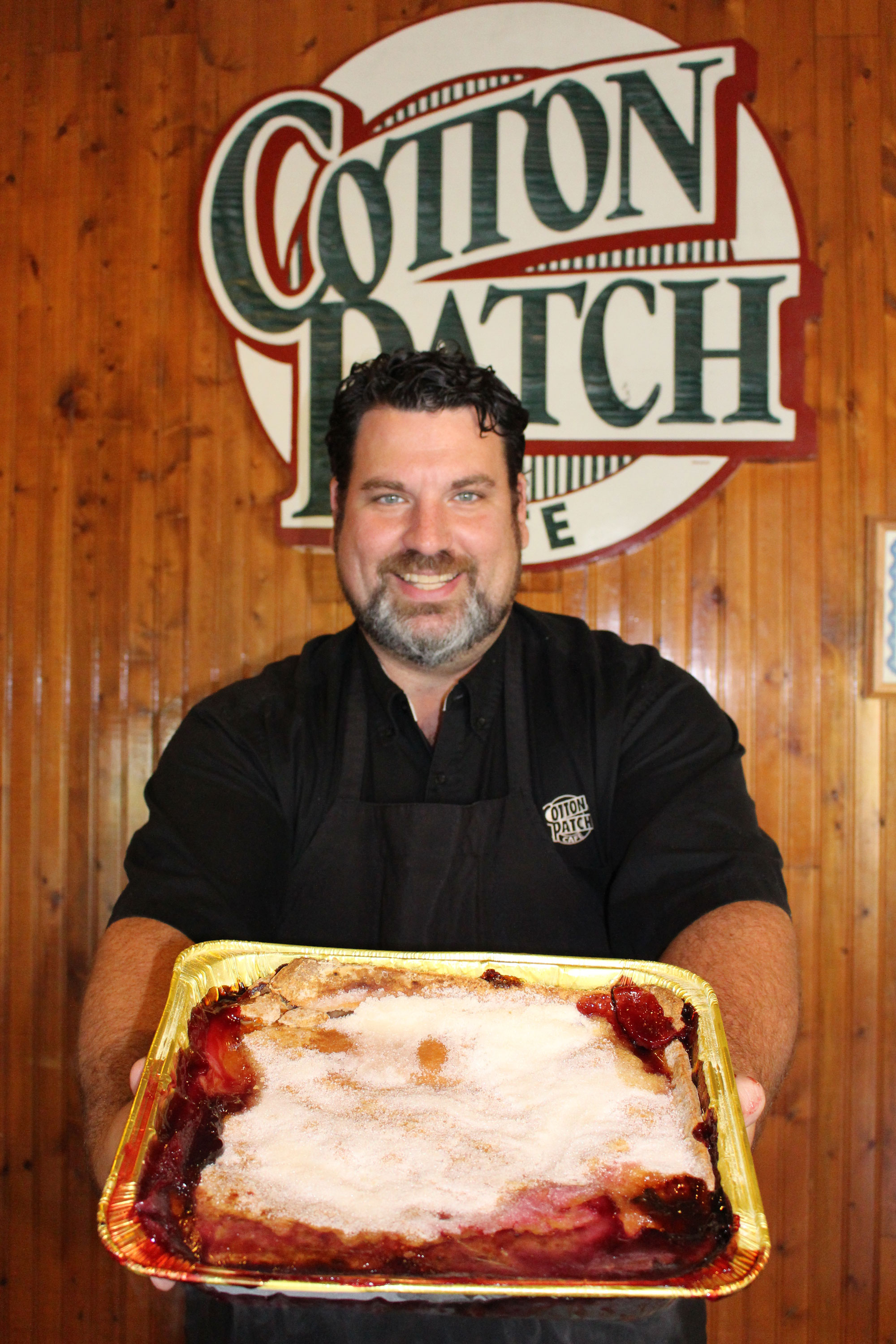
LUFKIN, TEXAS (September 11, 2014) – Cotton Patch Café is looking for Cobbler Gobbler’s with the messiest face and biggest smile as they celebrate 25 years of pride in East Texas.


This year, at the 30th annual Texas State Forest Festival presented by Brookshire Brothers, festival-goers will have the chance to show off their cobbler eating skills. The 1st Cobbler Gobbler Eating Contest sponsored by Cotton Patch Café will be a contest you won’t want to miss.


Clothing will get messy in a matter of seconds as contestants will not be allowed to use their hands. Contestants will have 10 minutes to gobble cobbler. All cobblers will be weighed before the contest and will be weighed again at the end of the 10 minute time limit.


There will be four winners: the Champion Cobbler Gobbler will be the first person to finish his/her cobbler and stand upright in less than 10 minutes; the cleanest plate winner; the sloppiest award winner will be the person with the messiest clothes, face, etc.; the junior division award winner will be someone under the age of 12 to finish his/her cobbler and stand upright in less than 10 minutes


Preliminary Events: Wednesday, September 17th at 6:30 p.m.

Finals: Saturday, September 20th at 12:30 p.m.


All cobbler eating contests will take place at the George H. Henderson, Jr. Expo Center in the Children’s Festival pavilion.


To register, please complete a Cobbler Gobbler Eating Contest waiver at Cotton Patch Café located at 1615 South First in Lufkin, Texas.


Waivers must be signed by contestants prior to the contest. Children under 18 must have a parent or guardian present with a signed permission entry form.


We hope to see you with the messiest face and biggest smile at the 30th annual Texas State Forest Festival.


For more information about these activities contact the Chamber of Commerce at 936-634-6644 or visit www.TexasStateForestFestival.com

Teachers’ Conservation Institute Tours East Texas Timber Industry

0

LUFKIN, TEXAS – Educators came from around Texas to participate in Phase I of the Texas Forestry Association’s Teachers’ Conservation Institute (TCI), August 3-8, 2014 at the Piney Woods Conservation Center near Broaddus, Texas.


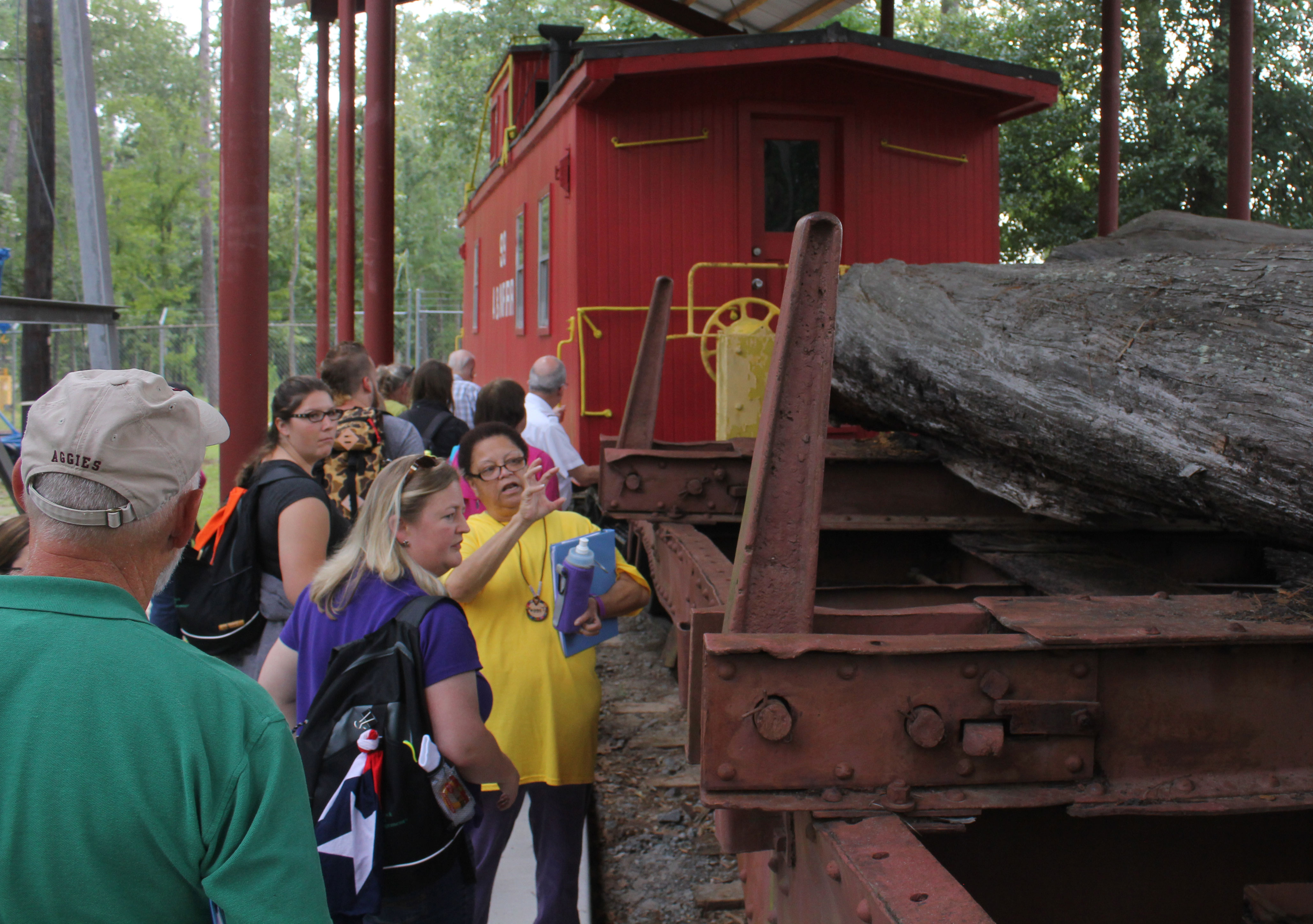
The first of three phases focused primarily on forests in Texas and the timber industry, which provides two thirds of the jobs in the East Texas region alone. The group took several field trips, touring The Forestry Museum in Lufkin, Texas, a logging site and tree farm, as well as mills Norbord Nacogdoches and Cal-Tex Lumber, Inc. in Nacogdoches, Texas. The group also toured the grounds of a seedling nursery, viewing firsthand what it takes to produce the optimal pine trees from parent to seedling.


“Teachers who have attended all three Phases of TCI are some of the best in the state,” said Misty Bowie, TCI Coordinator. “They are committed to bringing quality environmental education into their classroom.”


The three phases of TCI are designed to bring teachers and educators into the forests and nature in Texas while presenting activities and information they can use in their classrooms. The week-long training also provides continuing education credits and lays the groundwork for certification in Project Learning Tree and Project WILD, both nationally recognized programs.


For more information on Teachers’ Conservation Institute, Project Learning Tree or Project WILD, visit www.texasforestry.org or call 936-632-8477.