


Home Blog Page 710

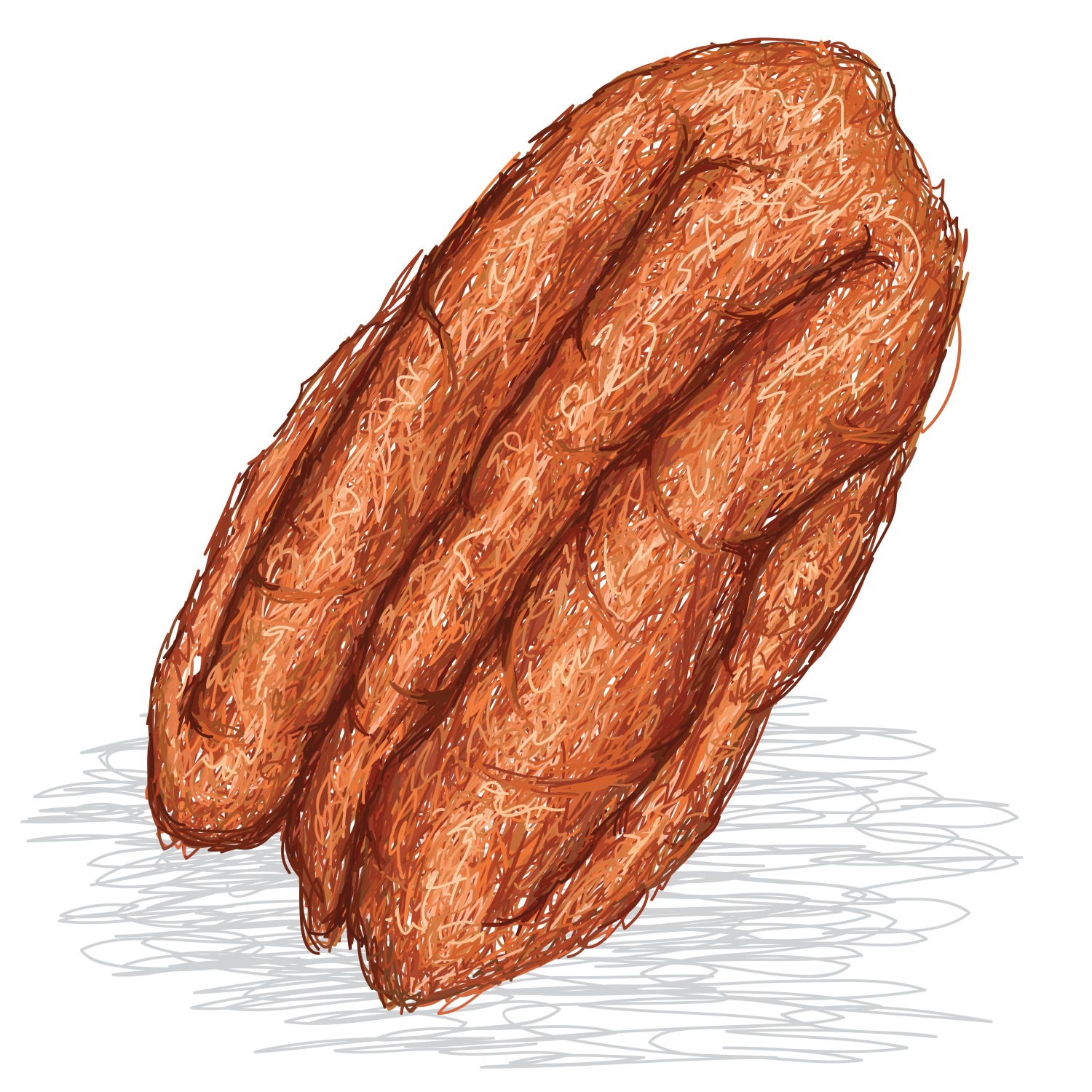
For the Love of Pecans

0

A common treat in the landscape, old parks, and some woods are pecans. There are some trees that seem to bear a great amount of quality nuts every year and then there are some pecan trees that disappoint far too many times.


Pecans grow state-wide and the pecan tree is the state tree of Texas. Many homeowners have planted them but their success in producing a quality crop each year has been far from easy. Though pecan trees are hardy and are nearly always an excellent shade tree, we hardly ever want just shade from them.


For quality and regular nut production, there are number of factors that must be just right. First, pecans should be established on deep and well drained soils that contain proper amounts of air, water and nutrients. Poor soil drainage is one of the most serious limiting factors in pecan orchards.


More pecan trees and their orchards fail in Texas because of they are planted on an undesirable site from any other factor, and unfortunately, management cannot correct or substitute for soil limitation. Pecan trees can grow on very shallow soil, but for quality production the soil should be 32 inches deep or more.


Next, space and ample sunlight are essential for maintaining productivity and profitability. Crowding in pecan orchards is defined as limbs of adjacent trees touching and/or less than 50% of the orchard floor receiving sunlight at mid-day in summertime. Crowding causes nut production to decline, nut size to decrease, and alternate bearing to be more severe.


The initial tree spacing determines how soon crowding will occur in a pecan orchard. Many pecan orchards in Texas are planted at a spacing of 30 to 35 feet between trees. This spacing will require removal of every other tree at a much later time. Where there is a desire for pecan trees to never crowd, they should be planted 75 to 100 feet apart or further.


In home landscapes in our part of the world, we are already blessed with large trees. Incorporating a pecan tree into a site that is full of trees can result in poor performance.


Of the 67,500 acres of planted orchards, many seldom realize a profit because one or several orchard management factors critical to success is deficient. Approximately $2,000 are required to bring one acre of pecans into production, not including the cost of the land, irrigation well, or special needs, such as wildlife-proof fencing.


Once bearing, $600 per acre are required for annual operating costs; therefore, production needs to exceed 600 pounds per acre if the pecan market price is at least $1.00 per pound. This a reasonable target, since orchards can produce from 1,000 to 2,000 pounds per acre per year in well managed orchards on good sites.


The pecan market is currently strong and paying $1.50 to $2.00 per pound wholesale. However this is a market with a history of volatility and new growers should proceed with caution, investigating the market outlook for commercial pecans.


Next week, we will examine much more closely the soil, water, and nutrient requirements as well as study the many pests than can limit pecan production in your landscape.


+++++++++++++++++++++++++++++++++++++++++++++++++++++++++++++++++++++
Cary Sims is the County Extension Agent for agriculture and natural resources for Angelina County. His email address is cw-sims@tamu.edu
Educational programs of the Texas AgriLife Extension Service are open to all people without regard to race, color, sex, disability, religion, age, or national origin.
Fall Vegetable Gardening

0

One of our stalwarts for the summer garden is purple hull peas. A staple for many in this area, would you believe a local grower just finished a major harvest of zipper creams, lady fingers and pinkeye purple hulls?


It is a commonly overlooked fact by gardeners that there are indeed two seasons to have a vegetable garden each year: spring and fall.


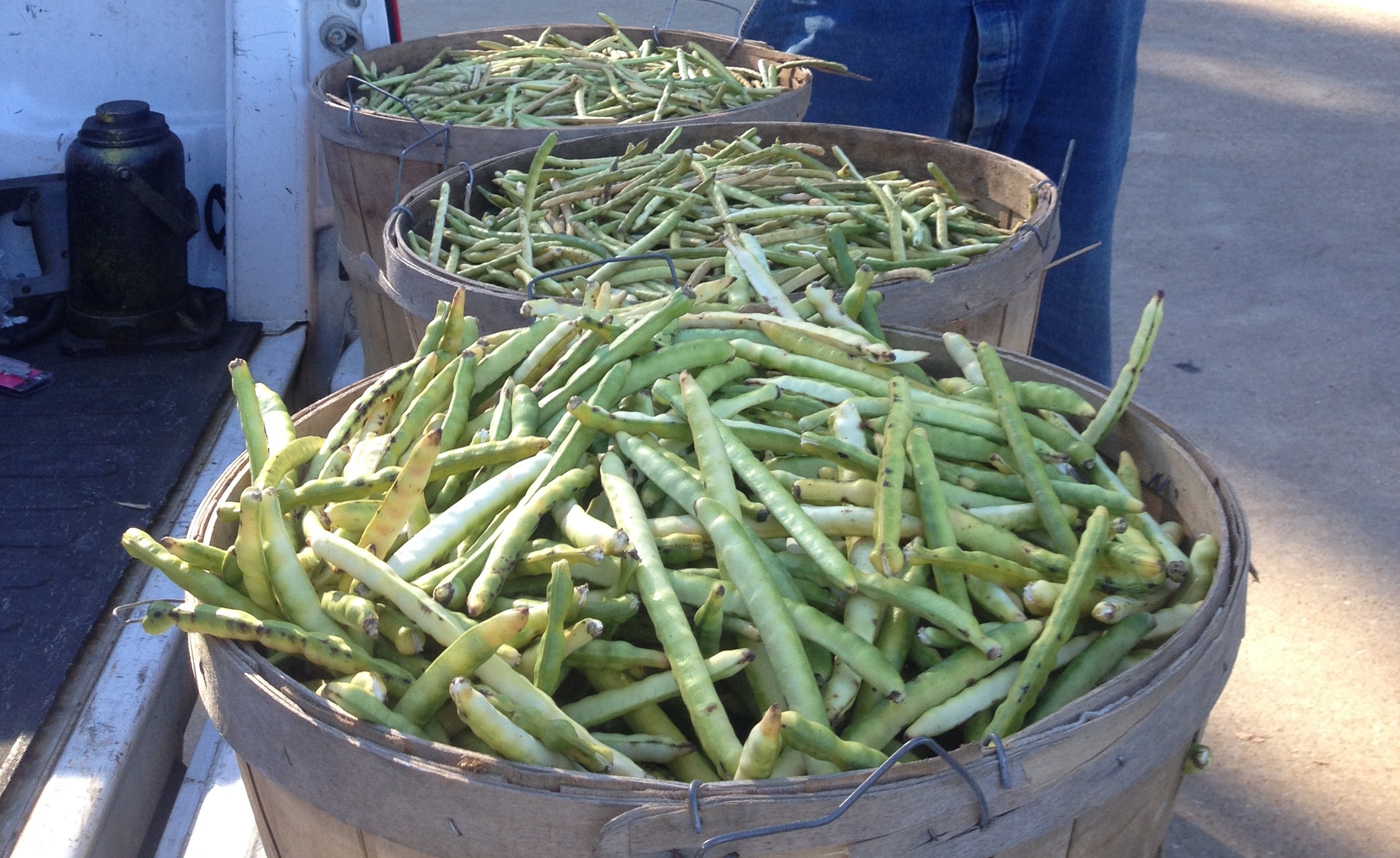
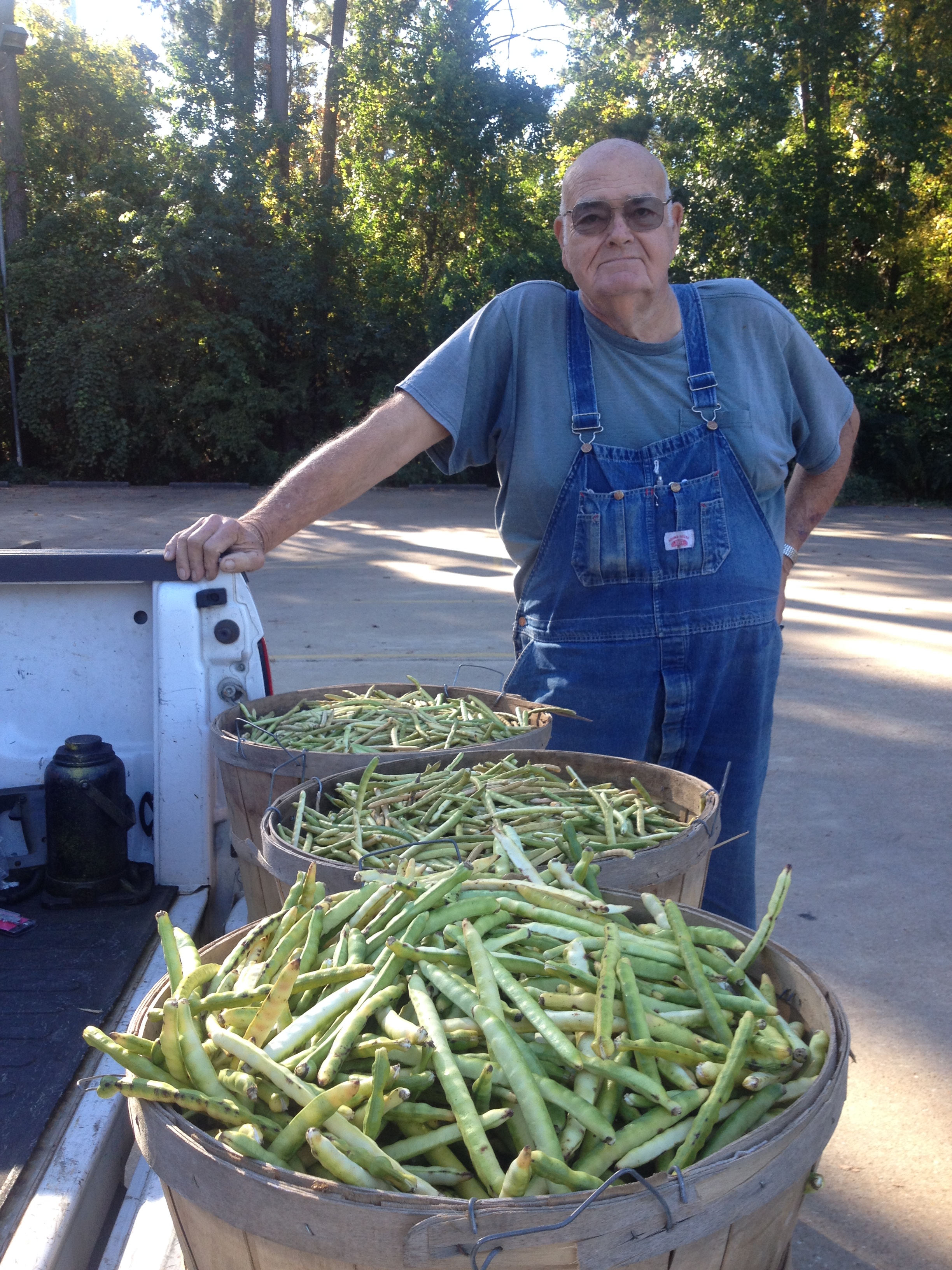
Long time pea grower, Otis Harbuck, just finished up a fall harvest last week from his pea fields just east of Lufkin. His bushels of peas are nearly all sold at a time of year that we traditionally think of pumpkins and mums.

IMG_0780 (2)
Otis Harbuck, with a few of the many bushels of his final crop of southern peas.

The obvious effort was in planning for a fall garden. Harbuck re-worked the soil after his summer harvest of peas wrapped up in July. He then replanted three different varieties of southern peas in the month of August with the intention of harvesting in October.


Looking at the details of his efforts, his last picking of purple hull peas was on Monday, October 27. He planted three different varieties of purplehulls: Mississippi Pinkeye, Texas Pinkeye, and Coronet Pinkeye. It was later in the week on Thursday, October 30 he finished his last harvest of Lady Finger Cream peas and Zipper Cream peas.


While his plantings took place throughout August, wrapping up near the end of that month, Harbuck states, “you got to be ahead of the frost” for harvest.


Our average first frost for this area is mid- November. The key word is average. Sometimes it may be near Christmas, and other times it will be prior to Halloween. So when choosing what to plant, keep in mind how long it takes each vegetable to reach harvest stage


Most warm season vegetables traditionally grown in the spring/summer have a hard deadline. They must beat the frost. Southern peas normally take about 60 days. Counting backwards from a mid-October harvest puts the planting at mid-August. Pumpkins need about 90 days and radish is just over a month.


Establishing a fall garden is different as you have to work in the heat up-front. This warm soil will be to your advantage as it helps germinate vegetable plants much sooner than cooler spring soil temperatures in our spring gardens.


A school garden at Huntington Elementary plants summer squash at the beginning of the school year and have crook neck squash before Thanksgiving. Indeed, this is another summer vegetable planted in a fall garden as late as early September.


The biggest proponents of fall vegetable gardens will always brag on the harvest. Harvested produce at this time of year in milder weather are reported to taste better. The time spent harvesting, choosing which tomato or what size cucumber to pick, is obviously more comfortably done.
The bottom line is that here in east Texas our spring and fall gardening seasons are short, sandwiched between frosts and blistering hot summer conditions that cause many crops to stop production. Variety selection and proper planting time are critical to success.


+++++++++++++++++++++++++++++++++++++++++++++++++++++++++++++++++++++


Cary Sims is the County Extension Agent for agriculture and natural resources for Angelina County. His email address is cw-sims@tamu.edu


Educational programs of the Texas AgriLife Extension Service are open to all people without regard to race, color, sex, disability, religion, age, or national origin.

Ashby on Roads and Border Security

0

The home stretch leading up to the 84th Legislative Session is right around the corner. We will soon find out the new faces that will be joining the Texas House and Senate, bill filing will begin, and as quick as you can say “Merry Christmas” we will be back in Austin to tackle the issues that are important to Texans. In the meantime, here is an update from your State Capitol…


Border Security


It’s been a few months since our state reinforced border security efforts in the Rio Grande Valley and called in the Texas National Guard to help stop the flow of illegal immigrants that had overwhelmed federal law enforcement. As a result, by the end of the fiscal year more than 100,000 undocumented immigrants had been apprehended in the Rio Grande Valley sector. While this is a positive result stemming from the efforts of our state to protect Texans from crime and potential terrorism, it doesn’t represent the entire border picture. The areas in Laredo, Del Rio and west to El Paso were not included in this summer’s surge, and while the Rio Grande Valley will remain a priority, there are close to 1,200 miles of our border to secure. This has led some lawmakers, including Lt. Gov. Dewhurst this month, to begin talks of potentially increasing state efforts in other border sectors. Whether it was unwilling or unable, the federal government did not properly protect Texans at our most vulnerable area– but because our state picked up the slack, we were able to see what worked in terms of border security. The potential to expand efforts that proved productive makes sense for Texas.


No Conversion of Paved-to-Gravel


On the transportation front, a misguided and unpopular plan to convert paved roads to gravel was abandoned by the Texas Department of Transportation. TxDOT, facing budget constrictions, had decided that converting the roads to gravel would be cheaper than fixing them; but opposition from lawmakers and folks around our state were able to convince the agency to pursue alternative solutions that did not consist of taking a step backward in infrastructure development. The population growth of Texas, coupled with the energy boom we have seen in recent years, has more vehicles (including heavy truck traffic) on our roads; but rather than covering the problems with gravel, TxDOT has agreed to better prioritize preventive maintenance on these roads before repairs become cost-prohibitive. One of the things my colleagues and I did last summer during a special legislative session dealing with transportation, was to help lay out this approach, which addresses road maintenance needs in a more constructive manner than paved-to-gravel– prioritizing safety and promoting continued economic growth.


As always my staff and I are available during the week at 512-463-0508 and 936-634-2762.

5 Tips to Prevent Dry Eye This Winter

0

1. Specialized Treatments
LipiFlow® is a revolutionary dry eye treatment that opens up and cleans out the inflamed, clogged oil glands by gently heating the glands in the eyelid then “milking” out the inflammation-causing, clogged oils. The treatment is painless and only takes 12 minutes to perform. Ophthalmologist Dr. Brian Boxer Wachler explains how easy the procedure is and even says, “There is no downtime, just like having your teeth cleaned at the dentist.”


2. Warm Compresses
Dry eye is caused by a lack of natural tears, which are composed of water and a much-needed oily substance. Over time, cells in the glands may harden, keeping the oil from getting into the tear film. Without that oil, the water in tears evaporates too quickly, leaving eyes feeling dry. A warm compress can help liquefy those plugs so the oil can flow into tears.


3. Artificial Tears
Over the counter eye drops like Visine and Clear Eyes are excellent methods for treating dry eye, although short-term. These eye drops are synthetic chemicals that mimic natural tears, providing the eye with the lubrication they need to remain comfortable throughout the day.


4. Keep Distance from Fireplaces and Indoor Heaters
During the winter months, it is normal for fireplaces and indoor heaters to be regularly in use. What many people don’t tend to realize is their effect on the eyes. Standing or sitting too close to indoor heaters and fireplaces can alter the room’s humidity level and dry out the eyes dramatically.


5. Sunglasses
The sun and wind can be harmful throughout the year; during the winter months, the snow on the ground can double as a blinding reflection surface and the harsh wind can lead to intense dry eye. This reflection of the sun directs sunlight right to the eyes, so wearing sunglasses can help protect eyes from harmful UV rays as well as keep cold wind from hitting the eyes.

Understanding Lime

0

Lime now, but only if you need it
Our high rainfall and soil composition in our region typically causes us to have acidic soils. Speaking technically, our soils will typically be below a 7 on the pH scale. And being practical, we add lime (in one of its many forms) to the soil to make it less acidic.


Fall is the ideal time to apply lime to pastures, hay meadow, lawns and landscapes. Different soils will require a different amount of lime to adjust the soil even if it has the same pH value. The texture of the soil, organic matter content and the plants to be grown are all factors to consider in adjusting the pH value. For example, soils low in clay requires less lime than soils high in clay to make the same pH change.


How much lime is needed? I have no idea, but for about $15, you can find the exact amount needed. Both Texas A&M and SFA have a soils lab and charge $10 per sample for the basic test that will tell you how much lime is needed to correct the pH. An additional $5 is required for postage.


Soil samples should be taken now, in the fall, for the succeeding year’s crop. If test results indicate a need for limestone, it can be applied in the fall or winter months. Generally, for best results, limestone should be applied at least two to three months prior to planting to allow time for it to neutralize the acidity.


Ground agricultural limestone is most frequently used. The finer the limestone particles, the more rapidly it becomes effective. Agricultural producers needing large quantities typically have two choices, regular “ag-lime” or super-fine lime. Ag lime is currently just under $60 per ton, spread in the pasture. The super-fine lime, though higher, is a bargain as it does a better job.


Homeowners can choose from four types of ground limestone products: pulverized, granular, pelletized and hydrated. Pulverized lime is finely ground. Granular and pelletized lime is less likely to clog when spread with a fertilizer spreader over turf areas. The finer the grind of the limestone the faster it will change the soil pH value.


Wood ashes can be used to raise the soil pH, but should be used with caution. Unlike lime, wood ashes can raise the pH too high! They are not as effective as limestone but with repeated use, they can drastically raise the pH value of a soil, especially if the soil is sandy in texture.
Wood ashes contain fairly high amounts of potassium & calcium, and small amounts of phosphate, boron and other elements. Ashes should not come in contact with germinating seedlings or plant roots as they may cause damage.


Spread a thin layer during the winter and incorporate into the soil in the spring. Check the soil pH annually especially if you use wood ashes. Avoid using large amounts of wood ashes because excessively high pH values and subsequent nutrient deficiencies may result.


+++++++++++++++++++


Educational programs of the Texas AgriLife Extension Service are open to all people without regard to race, color, sex, disability, religion, age, or national origin.

 

Cary Sims is the County Extension Agent for agriculture and natural resources for Angelina County. His email address is cw-sims@tamu.edu.

Rayonier Outlook Positive at TFA 100th Meeting

0

LUFKIN, TEXASCharlie Pringle, a representative from Rayonier, addressed the future of the forest products industry during the Texas Forestry Association’s 100th annual meeting, Wednesday morning, Oct. 22, 2014.


Pringle shared Rayonier’s business overview and their outlook on the timber industry. As an international real estate investment trust (REIT) committed to creating value through excellence in forest resources and in real estate, Rayonier tries to manage their holdings as responsibly as possible to achieve the highest and best value.


At this time, Pringle noted that Rayonier is the third-largest timber REIT with 2.6 million acres of high-quality timberland and has developed a geographic diversity, holding over 2.5 million acres along the U.S. Southeast and Gulf states, Pacific Northwest, and internationally in New Zealand.

Much closer to home, Rayonier has invested $289 million in Texas since 2006, currently holds 286,000 acres, and has an office in Lufkin.


Pringle continued to share Rayonier’s outlook on the timber industry, showing an improving housing outlook through the next three years will drive a return to the historical fifty/fifty split in the market between pulpwood and sawlog demand. Pringle predicts that the need for sawlogs will rise with the housing market over the next three years.


Looking internationally, as China’s housing demand grows, so will the need for North American timber, with urban households expected to grow by five million per year through the next twenty years. To meet this need, China will most likely turn to foreign imports to help meet this demand, according to Pringle.


Holding over 600,000 acres in the pacific northwest and in New Zealand and access to strong ports in both, Pringle showed that Rayonier is poised to take advantage of the gap between need and source.


Pringle also addressed the Mountain Pine Beetle infestation in the Northwest and British Columbia, Canada, where losses to lodgepole pine is expected rise over 50 per cent. The expected drop in northern timber harvests has led to Canadian investments in southern timber. This also means more sawmill production as the demand for Southern timber products grows.


Pringle addressed an audience gathered to hear about the current outlook on the timber industry, as well as its future from leaders in the industry. The meeting is part of the Texas Forestry Association’s 100th year as the voice of forestry during the anniversary celebration, Oct. 21-23, 2014.


Georgia Pacific Outlines Future at TFA’s 100th Meeting

0
Mark Luetters, Executive Vice President, address those gathered during the general assembly portion of Texas Forestry Association's 100th Anniversary Celebration on Wednesday, Oct. 22, 2014, at the Pitser Garrison Convention Center in Lufkin, Texas.

LUFKIN, TEXASMark Luetters, Executive Vice President of Building Products for Georgia-Pacific LLC, addressed the future of the forest products industry during the Texas Forestry Association’s 100th annual meeting, Wednesday morning, Oct. 22, 2014.


“There are significant housing uncertainties moving forward,” Luetters said. He pointed toward an unclear immigration impact, poor labor force participation and poor quality of new jobs. In the housing sector, home sizes appear stable despite the predictions for smaller homes.


On the supply side of the chain, Luetters indicated uncertainties in this future depends on the availability of land and the willingness of builders to speculate with subdivisions, as well as the availability of skilled laborers that include plumbers, electricians, millwrights, and the logging industry.


The future Luetters projected is a growing demand for wood to meet proposed housing growth and a vacancy left by the devasting effects of the mountain pine beetle infestation in British Columbia, Canada.


“[Our] strategy for the next three to five years is to profitably gain share in our primary products as housing recovers,” Luetters said, adding that the key focus will be on lumber, gypsum, OSB and plywood.


There are five strengths to help achieve this goal that Luetters outlined: capital availability to debottleneck currently operating plants, an emphasis on investing in process and product innovation, the ability to restart idled capacity, the ability and willingness to continue to acquire capacity, and a long term approach that allows action before the need is apparent to the market.


Luetters addressed an audience gathered to hear about the current outlook on the timber industry, as well as its future from leaders in the industry. The meeting is part of the Texas Forestry Association’s 100th year as the voice of forestry during the anniversary celebration, Oct. 21-23, 2014.


Fall Leaf Management

0

It’s at this time of year that we clearly understand why another term for autumn is “fall”! The leaves slightest breeze brings down a shower of leaves from shade and ornamental trees. Now comes the time to decide how to deal with them.


The most fun thing to do is to rake them into big piles for the kids to jump into and scatter around again. At least it’s the most fun for the kids! The least enjoyable is raking and bagging them. What are the options?


While bagging for curbside garbage pickup is an option, it is not the best way to go. The problem is that all those bags of leaves from across the community are sent to the landfill wasting space in it and wasting a landscape asset.


One option some folks take is to do nothing and just let the leaves remain all winter. This is not good for our southern grasses. A dense layer creates a dark, damp, stagnant zone where diseases can proliferate, harming the turf.


Burning is not really the best option either. When younger, I thought it was cool to have a burning leaf pile, but neighbors who suffer from allergies or asthma often find that burning leaves aggravates symptoms and makes breathing difficult.


Mowing the leaves in place is the easiest and most simple means of disposal. Many folks seem hesitant to recycle leaves back into the lawn, fearing they will create thatch or other problems. But research done in many parts of the country has shown that mowing leaves into the lawn does not cause any problems.


The best results are obtained by using a mulching mower which cuts and recuts leaves several times. The smaller the pieces, the quicker the microbes, which are active all year ’round, can attack and break down the leaves into humus.


You may need to make 2 or more passes over larger tree leaves to get a finely shredded product. I often wait until I think all the leaves are on the ground, but that may not be the easiest method. The deeper the layer, the more difficult it is to get them all shredded.


Sheet composting is an option for garden areas where you place a layer of shredded leaves over the surface of the soil and let them decompose in place. A thin layer of cotton seed meal will speed the decomposition. Alternatively, you can also rototill the layer of leaves into the soil.
Mulching is a great way to deal with excess leaves. You can place leaves in the pathways of your garden and flower bed. They will decompose in place, reduce weed problems, and enrich the soil, all at the same time.


Another use for shredded leaves is as a layer of mulch in perennial and shrub beds, and around the base of young trees. Just make sure that larger leaves are shredded first. Large leaves when wet can mat into a nearly impermeable layer, restricting air and water movement.


For those who are blessed with an abundance of pine straw, a truly simple solution exists: rake and use as mulch. While most folks around our part of the world may think it unseemly to use in that manner, the majority of southern states, from Louisiana to the Atlantic, use it all the time.


The Angelina County Extension office will be holding a seminar on southern bulbs on Monday, Oct 20 at 6:30 pm. Chris Wiesinger will be speaking on bulbs that have naturalized and thrive in our area. Cost is $10 per person, kids come free.


+++++++++++++++++++
Educational programs of the Texas AgriLife Extension Service are open to all people without regard to race, color, sex, disability, religion, age, or national origin.
 

Cary Sims is the County Extension Agent for agriculture and natural resources for Angelina County. His email address is cw-sims@tamu.edu.

Texas Forestry Association Plants Commemorative Tree

0
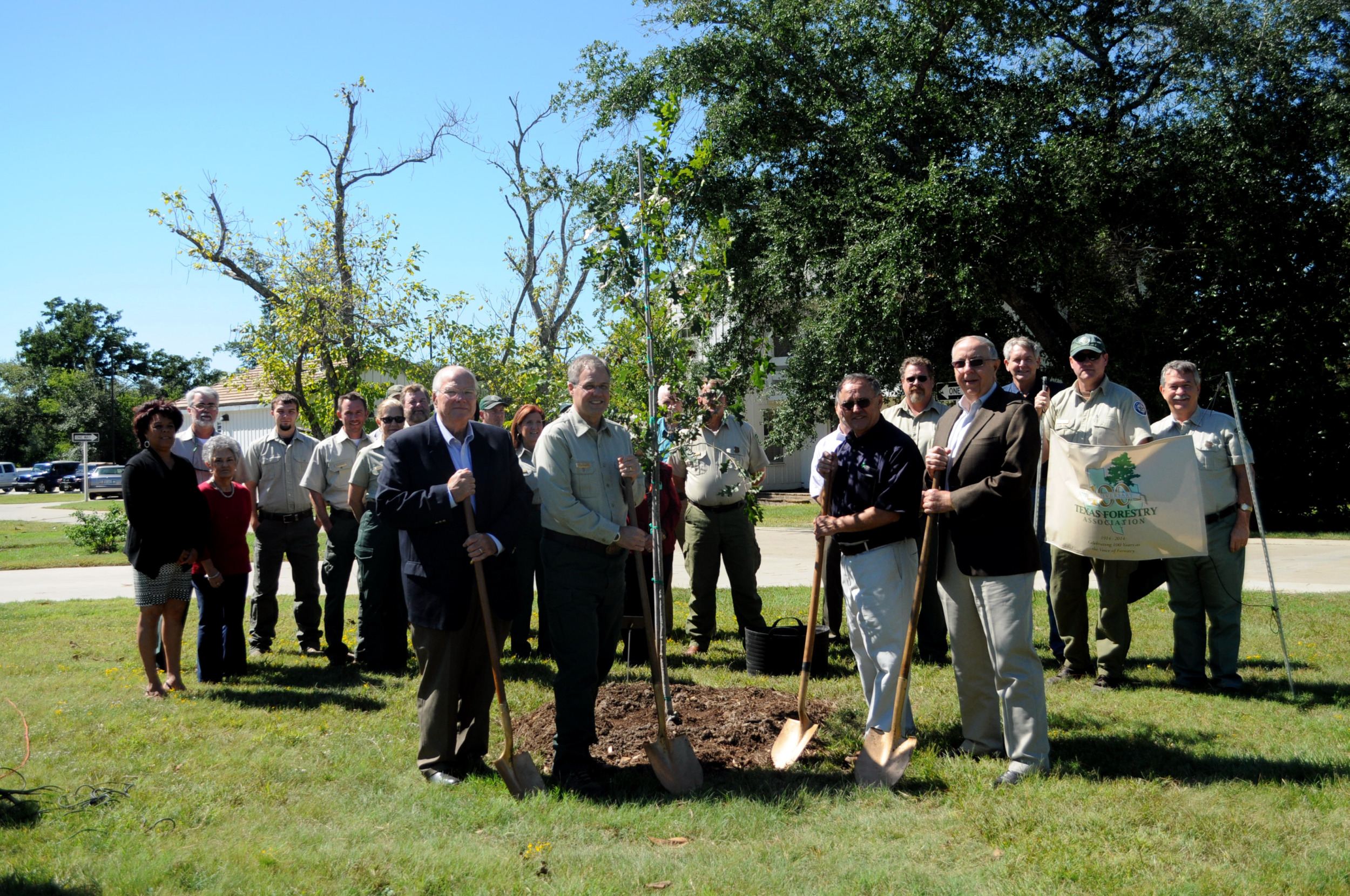
Mayor Bob Brown, TFA President Lee Carroll, Ron Hufford and Mark Van Every stand with guests present to commemorate the TFA’s 100th year. The Shumard Oak, planted in memory of L. L. Bishop, first executive director of TFA, is also a tribute to the continued partnership between the TFA and the Forest Service

A commemorative tree was planted today on the grounds of the United States Department of Agriculture – Forest Service office, Tuesday, October 14, 2014, in Lufkin, Texas.

 
The Shumard Oak, donated by Steely Lumber of Huntsville, Texas, was planted in honor of the Texas Forestry Association’s 100th year and in memory of Loren Leroy Bishop, first Forest Supervisor of the National Forests in Texas and the first Executive Secretary for Texas Forestry Association.

 
“Today we specifically want to honor Loren L. Bishop,” said Lee Carroll, TFA President. “It is in honor and tribute to his early leadership that we plant this tree in his memory; for all to remember his contributions to the forest resource on public and private land. It is through his leadership that we enjoy the beautiful forests that are vitally important to East Texas.”

 
When he came to TFA, Bishop was retired from the U. S. Forest Service, where he had organized the effort to establish four national forests in Texas on more than 600,000 acres of cut-over timber land in the 1930s. By 1950, with full-time staff, TFA was considered “permanently established”, with Bishop, a stenographer and two “field” directors of forestry efforts.

 
The tree also commemorates a long history of cooperation between the U.S. Forest Service and other agencies.

 
“We have a long history of cooperating and working together, and that started with Mr. Bishop,” said Mark Van Every, Supervisor of the National Forests and Grasslands of Texas. “This tree is a good symbol of that interconnection and also, hopefully will serve as a reminder for the next hundred years and more of the cooperation we have between our two organizations.”

 
Also present were Ron Hufford, executive director of TFA, and Lufkin Mayor Bob Brown, who thanked the TFA for their continued efforts and presence in East Texas.

 
The ceremony is part of Texas Forestry Association’s ongoing celebration as the voice of forestry for 100 years, which will culminate during their annual convention, October 21-23, 2014 held at the Pitser Garrison Convention Center in Lufkin, Texas.

 
ABOUT:
Texas Forestry Association, the voice for forestry for 100 years, promotes an economic, social and political climate that will advance forestry in Texas through education, political action and public relations, as well as serving the broad needs of the forest resource of landowners, producers and consumers, and to enhance and perpetuate the Texas forest resource.

Harvesting Persimmons

0

More and more in the fall, questions come in about harvesting persimmons. There are our natives and the commonly planted Oriental persimmons. Oriental persimmons generally start ripening around late October through the early part of December in our area. Much of the process associated in fruit development and ripening is dependent upon climate.
 
Persimmons are simply harvested by clipping and leaving the calyx, the outer set of flower parts. The calyxes sometimes look like leaves, and in some plants look like petals; they sometimes form a tube on a short piece of the stem that is attached to the fruit.
 
Fruit is picked when it has attained the proper color and is still firm to the touch. If persimmons are picked before fully colored, the fruit will not ripen evenly and this will make it harder to eat.
 
Careful handling of the fruit is very important in minimizing potential bruising. Bruising can cause brown spots.
 
Fruit may be ripened in a warm environment (60º to 70º F) for one to three weeks. It can also be stored at 32º to 34º F to extend the shelf life for one to four months. Astringent varieties have a longer shelf life than non-astringent varieties.
 
Oriental persimmons can be divided into two classes, astringent and non-astringent (that’s puckering and non-puckering for us persimmon lovers). Astringent varieties gain their astringency from soluble tannins that disappear as the fruit ripens and softens.
 
Non-astringent persimmons, however, can be eaten when still firm, without any astringency whatsoever. Some varieties are astringent, if the fruit is not pollinated; this is referred as parthenocarpic development which is the production of fruit without fertilization. If varieties are seeded (fertilized) they are non-astringent.
 
Astringent persimmons that lose their astringency as they ripen can sometimes be slow to ripen. The process can be hastened by freezing the fruit for 24 hours. When thawed, they are both soft and free of astringency, and ready to eat. An apple can be placed with the persimmons in a plastic bag or among the ripening fruit. Ethylene gas released by the apple will speed up the ripening process.
 
So long as we don’t let newcomers to this variety of fruit have an unfortunate puckering experience, you should find plenty of admirers. Persimmons are delicious whether eaten fresh, dried, or cooked. As a fresh fruit, they are unsurpassed. The taste of a fully ripe persimmon is superb, and is incomparable to any other fruit.
 
The Angelina County Extension office will be holding a seminar on southern bulbs on Monday, Oct 20 at 6:30 pm. Chris Wiesinger will be speaking on bulbs that have naturalized and thrive in our area.   Cost is $10 per person, kids come free.
 
+++++++++++++++++++
 

Educational programs of the Texas AgriLife Extension Service are open to all people without regard to race, color, sex, disability, religion, age, or national origin.

 
Cary Sims is the County Extension Agent for agriculture and natural resources for Angelina County. His email address is cw-sims@tamu.edu.