The Lufkin/Angelina County Chamber of Commerce is once again partnering with the Nacogdoches County Chamber of Commerce for Chamber Day 2025 as Deep East Texas residents head to Austin, February 11-13, 2025.
Join us Wednesday afternoon for a group photo and the opportunity to meet with agencies and legislators. More details on the full schedule will be available soon at LufkinTexas.org/ChamberDayinAustin.
To RSVP for the Legislative Reception, presented by Commercial Bank of Texas, at the Texas Bankers Association on Wednesday, February 12, visit LufkinTexas.org/ChamberDayinAustin. The RSVP deadline is February 10.
An unspeakable tragedy unfolded in our nation’s capital this week after a mid-air collision between an Army Blackhawk helicopter and American Airlines flight 5342 in what may be one of the worst air disasters in decades. Our hearts and prayers are with the victims, their loved ones, our fearless first responders, and all those affected by this tragedy.
Here are five things happening around your state:
Senate Finance hearings begin
This week the Senate Finance Committee, led by Senator Joan Huffman, began our hearings on the state budget. The budget has 11 articles that cover different agencies within the state government. The head of each agency comes before the committee and testifies on their budget requests for the next biennium. It is important to hear from the agency leadership to ask for status updates on current and past work and hear about goals for the future of the agency. Our funding choices reflect our priorities as a state. As such, I take these proceedings very seriously, especially since we must be responsible stewards of tax-payer funds. This week we heard from agencies related to the judiciary, public safety, and general government. Next week, we will hear from health-related and education-related entities.
Abbott surges state resources to border to help federal enforcement
Governor Greg Abbott issued five border-related Executive Orders this week directing state agencies to coordinate and support the federal government with border and homeland security operations. They include directing state agencies to assist federal immigration officers to investigate, arrest, detain, and deport illegal immigrants in the state, directing the Texas Military Department to assist the US Northern Command; deploying additional border barriers; sharing information and intelligence on foreign terrorist organizations with federal law enforcement; and providing Texas land and facilities available for federal partners to lease and use for these efforts. Securing our southern border is vital to the safety of all Texans. The Governor also directed the Texas Department of Public Safety (DPS) to deploy tactical strike teams to help with immigration enforcement.
Laken Riley Act signed into law
President Trump signed his first bill into law this week. The Laken Riley Act directs immigration enforcement officials to detain and deport people in the US illegally who have committed a crime, including theft, assault, and murder. It passed both chambers with bipartisan support before heading to the president’s desk. The bill was named in memory of a Georgia nursing student who last year went for a run and was murdered by a Venezuelan immigrant in the US illegally. The man had previously been charged with shoplifting in New York. Proponents of the bill argue that had this law been in place, it would have triggered his deportation earlier and prevented the tragedy. This bill is an important step forward in strengthen our border, improving our immigration system, and ensuring that we’re doing everything possible to keep our citizens safe.
Entergy starts $137 million project to strengthen grid
The Texas Public Utility Commission (PUC) gave Entergy permission to move forward with a $137 million grid resiliency project. The project will be implemented over the next three years and includes rebuilding neighborhood-level power lines to storm-resilient standards, replacing long-distance transmission line and poles that are more resilient, and burying overhead power lines in some areas. These projects stem from work done last session. House Bill 2555 from the 88th Regular Session allows transmission and distribution utilities – those in charge of the poles and wires – to file forward-looking resiliency plans to help mitigate the impact of severe weather.
TPWD awards $30.9 million in local park grants
This week the Texas Parks and Wildlife Department (TPWD) announced $30.9 million in local park grants. This award amount surpasses previous records and will help create and enhance outdoor recreational opportunities. The grants are awarded to local government entities as part of a 50/50 match. Once funded, the sites must remain parkland forever, be properly maintained, and open to the public. For more information about the program and how to apply, visit https://tpwd.texas.gov/business/grants/recreation-grants/about-local-parks-grants. In Senate District 3, two awards were made:
The City of Center received a $250,000 grant for American Legion Park and will support a lighted plaza, pickleball courts, yard games, trails, native landscaping, shade installation, site amenities, and program and interpretive signage.
The City of Pineland in Sabine County received a $50,000 grant for sustainable and accessible improvements at Pineland Park and playground equipment, surfacing, lighting, and interpretive signage.
This past week, it was a pleasure to welcome a number of constituents from House District 9 in your Texas State Capitol. Among those who made the long drive from Deep East Texas were elected officials from Tyler County and several residents from Angelina and Polk County. It always brings such joy to my heart to see folks from back home and these visits constantly remind me of why I am here in Austin.
I want to extend a warm welcome to each of you to come visit your Texas Capitol during the current legislative session. Never forget our beautiful Capitol belongs to each of you, and if my office can help facilitate a visit, please don’t hesitate to contact either our Capitol or district office.
With that, here’s an update from your State Capitol…
Capitol Update
With the 89th Legislative Session underway, House members are eagerly awaiting the Speaker’s committee assignments for each member. Members generally serve on two to three committees of varying jurisdictions, often based on their expertise or relevance to their district. To ensure a well-balanced approach to public policy, Speakers have historically worked to include members from diverse backgrounds, encompassing all regions of the state. In the near future, I look forward to sharing my newly appointed committee assignments with the residents of House District 9.
Members of the Legislature are also waiting for the Governor’s top policy priorities, which he will deliver in his upcoming State of the State Address. The Governor’s “emergency items” allow the Legislature to begin conducting public hearings immediately and consider bills on these specific topics. This process, outlined in the Texas Constitution, enables members of the Legislature to focus solely on those most pressing issues at the start of a session. During the first sixty days of a legislative session, members may only act on the Governor’s emergency items.
These past couple weeks, as members continue to stand by for orders, our days have consisted of meetings with constituents, holding stakeholder meetings, and filing legislation. Once legislation begins to make its way through the committee process, I want to encourage all to reach out to my Capitol or district office to let us know your thoughts. It’s important to highlight that I serve as yourvoice in Austin, and input from folks back home is critical to being an effective representative.
The mobile office is on the road again and looks forward to seeing you on the following dates in the following locations: February 5 at the San Augustine County Courthouse from 9:30-11:30am; February 12 at the Polk County Commissioner’s Court Room in Livingston from 9:30-11:30am, or at the Tyler County Courthouse in Woodville from 1:30-3:30 pm; February 15 at the Houston County Courthouse Annex in Crockett from 9:30-11:30am, or at the Trinity County Courthouse in Groveton from 1:30-3:30pm.
As always, please do not hesitate to contact my office if we can help you in any way. My district office may be reached at (936) 634-2762 and our Capitol office at (512) 463-0508. Additionally, I welcome you to follow along on my Official Facebook Page, where I will post regular updates on what’s happening in your State Capitol and share information that could be useful to you and your family: https://www.facebook.com/RepTrentAshby/
Join us for a Fun Ladies Night! Grab your Gal-Pals and Mix, Mingle, and Enjoy our Inspirational Women Guest Speakers, Hilarious Comedian-Funny Amanda, Music Bingo, Door Prizes, Food, and much more! All possible with our event Sponsors; Texas Materials, JEDCO, Sam Rayburn Resorts, Journey Realty, Southern Grace Boutique, and Down Home ROOTS Herbal.
Keynote Speakers: Cindy Perez, Brenda Job, LaShanna Johnson, Soloria Davis, Tressy Morgan, and Angela Carter
Date/Time Information:
March 11, 2025, from 5:30 pm to 8 pm
Location: Rayburn Country Resort
Fee:
$25 (Includes Dinner and Show)
TICKETS ON SALE NOW!! Reserve your tickets today!!
The story of East Texas’ Piney Woods is written in sawdust and steam, in the echoes of crosscut saws and the whistle of timber trains that once pierced the forest quiet. When the first commercial sawmills arrived in the late 1800s, they found a vast ocean of longleaf pines stretching as far as the eye could see – trees that had stood sentinel over these lands for centuries.
The ancient pines stood so tall and straight, they created natural cathedral columns, their branches stretching so high and thick that travelers could walk for days without seeing the sun through the dense canopy above.
Birth of Timber Towns
In towns like Diboll, Lufkin, and Camden, the rhythm of daily life soon came to revolve around the sawmills. What began as temporary logging camps grew into proper towns, complete with company stores, schools, and churches. The Temple family’s Southern Pine Lumber Company in Diboll didn’t just build a mill – they built a community that still stands today.
These company towns were more than just places to work. They were melting pots where old Texas families, newly arrived immigrants, and freed slaves and their descendants all labored side by side in the woods and mills. While segregation was still the law of the land, the shared experience of timber work created bonds that transcended the era’s rigid social lines.
Living History
The heritage of those logging days lives on in ways both visible and subtle. Drive through any Piney Woods town today, and you’ll likely see restored sawmill buildings repurposed as museums or offices. Local festivals still celebrate the region’s timber history with competitions in old logging skills like crosscut sawing and log rolling.
But perhaps the most enduring legacy isn’t in the buildings or celebrations – it’s in the spirit of the people. That same resourcefulness that helped logging families survive the lean years of the Great Depression still shows in the way modern Piney Woods communities face challenges together.
Community Values
The timber industry taught generations of East Texans that success in the woods requires cooperation and mutual support. This lesson extends far beyond logging – it’s become a cornerstone of how these communities face every challenge, from natural disasters to economic hardships. The spirit of neighbors helping neighbors remains as strong today as it was when the first sawmills began operation.
Today, while the ancient longleaf forests are gone, sustainable timber practices have helped maintain the region’s identity as a woodland paradise. Second and third-growth forests still blanket the countryside, and the timber industry remains a vital part of the local economy – though now with modern equipment replacing the old mule teams and steam engines.
Legacy of the Pines
As the sun sets through the pine needles, casting long shadows across the forest floor, it’s easy to imagine the echoes of those early logging days. The story of the Piney Woods is, at its heart, a story of transformation – not just of forests into lumber, but of wilderness into communities, of strangers into neighbors, and of hard work into lasting legacy.
In the end, the true heritage of East Texas logging isn’t just in the buildings we can see or the tools we can touch – it’s in the enduring sense of community that grew up alongside those old sawmills, as sturdy and deep-rooted as the pines themselves.
Stephen F. Austin State University president Dr. Neal Weaver (left) and Angelina College president Dr. Michael Simon shake hands after signing the documents finalizing a collaboration between the two institutions during Tuesday’s “SFA at AC Day” ceremony held on the AC campus. The partnership will allow a smoother pathway for transfer students. (Gary Stallard/AC News Service photo)
Officials from Angelina College and Stephen F. Austin State University on Tuesday met to perform a celebratory signing signaling the beginning of a new partnership designed to pave a clearer pathway for transfer students.
With a crowd consisting of visiting dignitaries – including Lufkin mayor Mark Hicks, who attended both AC and SFA – along with staff and other members from each institution, AC president Dr. Michael Simon and SFA president Dr. Neal Weaver finalized a collaboration designed to benefit current and future students throughout the East Texas region.
Lufkin Mayor Mark Hicks shares with the crowd his experiences as an Angelina College and Stephen F. Austin State University during Tuesday’s “SFA at AC Day” ceremony held on the AC campus. Presidents of both institutions signed a new collaboration designed to create smoother pathways for transfer students. (Gary Stallard/AC News Service photo)
Stephen F. Austin State University president Dr. Neal Weaver (left) and Angelina College president Dr. Michael Simon sign the documents finalizing a collaboration between the two institutions during Tuesday’s “SFA at AC Day” ceremony held on the AC campus. The partnership will allow a smoother pathway for transfer students. (Gary Stallard/AC News Service photo)
“We appreciate the partnership with Angelina College,” Weaver said. “We’re excited about the future. The reality is East Texas doesn’t work if we can’t work together.
“Our partnership is designed to help all the people of East Texas who see a brighter future through education,” Weaver added. “We are designed to work together. We are designed for that purpose, and now we’re in a position to do it together.”
Weaver then added a surprise announcement regarding the “The Purple Promise Program,” which previously allowed students of families earning less than $80,000 per year to attend SFA tuition-free. Later, the threshold was raised to $100,00 per family.
On Tuesday, Weaver announced an addendum:
Stephen F. Austin State University president Dr. Neal Weaver addresses the crowd during Tuesday’s “SFA at AC Day” ceremony held on the AC campus. Weaver and Angelina College president Dr. Michael Simon signed a new collaboration designed to create smoother pathways for transfer students. (Gary Stallard/AC News Service photo)
“Today, I’m proud to announce that no longer are we restricting that Purple Promise Program just to incoming freshmen,” Weaver said. “Today, this promise is available to the graduates of Angelina College.
“The door to an education, the door to a brighter future, is wide open. Through this partnership, we hope the students from this community and the surrounding communities will step through that door to a future they can’t possibly imagine.”
AC president Simon noted that when it comes to the citizens – especially the parents – of the region, the distinction between the two organizations isn’t as important as the opportunities provided.
“You just want to know there’s an educational system in your community so that your students, your young ones, can get a good education, get out into the world and start being productive, raising families and grandbabies and doing all those things folks do,” Simon said.
Angelina College president Dr. Michael Simon addresses the crowd during Tuesday’s “SFA at AC Day” ceremony held on the AC campus. Simon and Stephen F. Austin State University president Dr. Neal Weaver signed a new collaboration designed to create smoother pathways for transfer students. (Gary Stallard/AC News Service photo)
“One of the things I say to my board all the time is, ‘We have our mission statement, but what gets me out of bed every day is changing people’s lives for the better,’” Simon said. “I believe AC and SFA do that in incredibly deep and important ways. I have to say it’s a great day to be a Roadrunner, and it’s a great day to be a Lumberjack.”
Megan Kelley, SFA Academic Partnerships Coordinator, spoke about the process leading to the recent collaboration while listing some of the major benefits to students.
“When I stepped into this role, I took the time to meet with individuals across the SFA campus to discuss goals and expectations,” Kelley said. “A shared priority quickly emerged: the desire to strengthen relationships with community colleges and provide more resources and support for our transfer students. Achieving this goal wouldn’t be possible without the invaluable collaboration of our partners here at Angelina College.
Representatives from Stephen F. Austin State University show off a customized t-shirt during Tuesday’s “SFA at AC Day” Student Fair held at Angelina College. Presidents of both institutions signed a new collaboration designed to create smoother pathways for transfer students. (Contributed photo)
“Today we are here to celebrate new opportunities for Angelina College students, to provide support and resources for them to be successful now and in their futures.”
According to Kelley, some of the new opportunities available for Angelina College students include:
New and updated career pathways that provide a clear and direct map for students transferring from AC to SFA
An increase in transferrable credit hours that allows students to transfer 90 credit hours to complete their degree
The Lumberjack Transfer Alliance, which is a program designed to offer enhanced resources and opportunities for transfer students, ensuring a smoother and more seamless transition from AC to SFA. AC students who join this program will receive the following benefits:
Access to not only AC advisors, but also SFA advisors to help plan their transfer journey
Specialized SFA recruitment events held on both AC and SFA campuses
Opportunities to attend SFA sporting and fine arts events
All students participating in this program will have their $50 application fee waived
Students who complete an associate’s degree from AC will be granted guaranteed admission to SFA
Students who graduate AC with cumulative GPA of 3.0 or higher will receive a one-time $500 stipend in addition to the Lumberjack Transfer Scholarship
“We are thrilled about these new opportunities available to students and optimistic that together with our partnership with Angelina College, we will empower these students and help them achieve their goals,” Kelley said.
Following the momentous partnership signing ceremony, Angelina College students had the opportunity to meet with SFA faculty and staff regarding their own futures. The “SFA at AC Day” Student Transfer Fair included numerous SFA faculty members on-hand to provide input and guidance.
Staff members from Stephen F. Austin State University and Angelina College pose following Tuesday’s “SFA at AC Day” ceremony held on the AC campus. The presidents of the institution (SFA’s D. Neal Weaver, fourth from left and AC’s Dr. Michael Simon, third from right) signed the documents launching a new collaboration designed to create smoother pathways for transfer students. (Gary Stallard/AC News Service photo)
Dr. Kent Willis, SFA Senior Vice President of Enrollment and Student Engagement, reminded all of the commitment the educators from both institutions have made to bettering the lives of others.
“I just want to share that we’re celebrating a brighter future for every student who will have the opportunity to enter your (AC) and our (SFA) doors and collectively graduate with a college degree,” Willis said.
“You make a living by what you get, but you make a life by what you give.”
The pine-scented breezes of late winter signal that it’s time for gardeners to start planning their spring gardens. Our unique climate, with its humid summers and mild winters, creates perfect conditions for a variety of vegetables and flowers that can be planted as early as February. Before you dig in, take some time to sketch out your garden layout, considering how much sunlight different areas of your yard receive throughout the day. Remember that our tall pine trees can create shifting patterns of shade, so what was sunny last summer might be shadier now.
The rich, acidic soil of the Piney Woods region is a blessing for many plants, but it might need some attention after winter. Start by clearing away any pine needles and leaves that have accumulated, and consider getting a soil test through your local extension office. This will help you understand exactly what amendments your soil needs to support a thriving spring garden.
Choosing What to Plant
February and March are exciting months for East Texas gardeners, as we can start planting earlier than many other regions. Cool-season vegetables like sugar snap peas, lettuce, and spinach can go directly into the ground now, while it’s also time to start warm-season favorites like tomatoes and peppers indoors. Our long growing season means you can plan for multiple harvests, but timing is everything.
When selecting plants, look for varieties that have proven successful in our humid climate. Heat-tolerant tomato varieties like ‘Celebrity’ and ‘Better Boy’ are local favorites, while ‘Georgia’ collards and ‘Texas Star’ hibiscus showcase our Southern gardening heritage. Don’t forget to include some native plants in your plans – they’re already adapted to our local conditions and will attract beneficial pollinators to your garden.
Preparing for East Texas Weather Challenges
Spring in East Texas can be a rollercoaster of weather conditions, from late frosts to early heat waves. Keep frost protection materials like old bedsheets or commercial row covers on hand for those surprise cold snaps that can occur well into March. Our region’s famous spring storms can also pose a challenge to tender young plants, so consider creating windbreaks or using sturdy cages for climbing plants.
The abundant rainfall we receive in spring is generally a blessing, but it can also lead to fungal issues if not properly managed. Plan your garden beds with good drainage in mind, and consider raising them slightly to prevent water from pooling around your plants. Mulching will be your best friend – a good layer of pine straw or hardwood mulch helps retain moisture during dry spells while keeping soil-borne diseases from splashing onto your plants during our spring thunderstorms.
Starting Seeds and Making the Most of Our Growing Season
If you’re starting seeds indoors, now is the perfect time to begin. Our last frost date typically falls in mid-March, which means warm-season seedlings started in late January or early February will be ready to transplant when spring arrives in earnest. Set up a simple growing station near a sunny window, or invest in some basic grow lights to give your seedlings the strong start they need.
The key to success with indoor seed starting is maintaining consistent moisture and temperature. Our humid climate actually works in our favor here – seedlings generally thrive in our naturally moist air. Still, using a small fan to circulate air around your seedlings will help prevent damping off, a common problem in our region. Keep detailed records of when you plant each variety, and don’t forget to label everything clearly. Before you know it, you’ll have healthy transplants ready for their new home in your spring garden.
In the heart of Texas Forest Country, local businesses are finding innovative ways to keep their facilities secure in a rapidly changing world. Security is no longer just about locking doors; it’s about leveraging technology to protect assets, employees, and sensitive information. Electronic access control systems are leading the way, providing peace of mind, operational efficiency, and long-term value for businesses of all sizes.
What Are Access Control Systems?
Access control systems are digital solutions designed to regulate and monitor entry to physical spaces. They use advanced technologies such as key cards, biometric scanners, and mobile apps to ensure only authorized individuals can access restricted areas. Unlike traditional locks and keys, these systems offer a level of flexibility, control, and security that modern businesses need to thrive in today’s fast-paced world.
Access control systems are not limited to physical security. They also play a vital role in helping businesses maintain compliance with industry regulations, particularly in sectors like healthcare, finance, and education, where safeguarding sensitive information is paramount.
Why Access Control Systems Are a Game-Changer for Local Businesses
1. Strengthened Security
Traditional keys come with risks: they can be lost, copied, or stolen, leaving businesses vulnerable. Electronic access control systems address these vulnerabilities by enabling businesses to instantly revoke or update access credentials, ensuring that only trusted individuals can enter sensitive areas. This provides a more dynamic and secure solution compared to outdated methods.
2. Comprehensive Monitoring and Insights
Today’s access control systems do more than grant or deny entry. They maintain detailed logs of who enters and exits specific areas, allowing businesses to monitor activity, identify patterns, and respond quickly to unauthorized attempts. For organizations with regulatory requirements, these records are invaluable in demonstrating compliance and improving overall accountability.
3. Room for Growth
As Texas Forest Country businesses grow and expand their operations, their security needs inevitably become more complex. Access control systems are designed to be scalable, allowing businesses to add new access points or adjust existing permissions without overhauling the entire system. This makes them ideal for growing companies and multi-site operations.
4. Seamless Integration
Modern access control systems integrate effortlessly with other security tools, such as surveillance cameras, alarm systems, and even building automation systems. This integration enhances overall safety, allowing real-time responses to potential threats and offering a comprehensive approach to facility management. For example, a triggered alarm can automatically lock down specific areas, protecting employees and assets.
5. Enhanced Workflow Efficiency
Managing physical keys for multiple employees or contractors can be a logistical headache. Access control systems streamline this process by automating access management. Employees can move seamlessly through secure areas with a swipe of a card, a fingerprint scan, or even a mobile app. This not only saves time but also reduces administrative burdens for business owners and managers.
6. Improved Employee and Customer Confidence
A secure business environment fosters trust among employees and customers. Knowing that advanced systems are in place to protect sensitive areas and data reassures everyone who interacts with the business. This confidence translates to improved morale and loyalty, both critical for long-term success.
Making the Right Choice for Your Business
Choosing the right access control system is critical to reaping its full benefits. Businesses should evaluate factors such as facility size, the sensitivity of areas being protected, and the need for integration with existing security systems. Consulting with experienced providers ensures a tailored solution that aligns with current needs while offering flexibility for future growth.
Additionally, training employees on how to use the system effectively is essential for maximizing its impact. A well-designed access control strategy is only as strong as the people using it.
Securing the Future of Texas Forest Country
As security threats evolve, businesses in Texas Forest Country must stay proactive and innovative. Access control systems represent more than just a technological upgrade; they are a commitment to safety, efficiency, and the continued success of our community. By adopting these advanced systems, local businesses not only safeguard their future but also contribute to the growth and resilience of the region.
Whether it’s a small retail shop, a bustling healthcare facility, or a growing corporate office, investing in access control systems is a step toward building a more secure and prosperous Texas Forest Country.
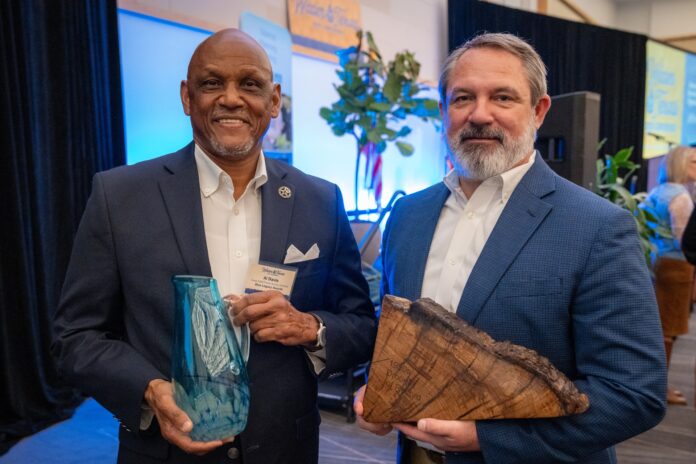
Texas A&M Forest Service and the Texas Forestry Association received the 2024 Blue Legacy Award – Legacy of Commitment at the Water for Texas Conference today. Given by the Water Conservation Advisory Council, the award recognized the Texas Forestry Best Management Practices program which the two organizations jointly administer.
The Blue Legacy Awards were created to identify and showcase responsible stewardship of water resources and honor those whose practices enhance the conservation of water. The Legacy of Commitment Award acknowledges individuals or organizations who have sustained and maintained documentation of the reduction of water consumption.
“Texas is a big state and protecting our resources – especially one as precious as water – is everyone’s responsibility,” said Al Davis, Texas A&M Forest Service Director. “Sustainable water management is especially important in Texas, where decisions about managing property can impact water quality and health of downstream ecosystems, communities, and environments. We are proud to accept this award alongside our oldest partner in conservation, the Texas Forestry Association with dedication to continued efforts in water conservation and protection.”
The Texas Forestry Best Management Practices program was established in 1989. It is a five-star model approach to addressing nonpoint source pollution in Texas. The program relies on a proactive, non-regulatory, market-based approach to protect water resources while promoting sustainable production of forest products.
“It is a tremendous honor for the Texas Forestry Association members to receive the Blue Legacy Award, recognizing decades of commitment to sustainable forestry practices,” said Rob Hughes, Texas Forestry Association Executive Director. “The Texas Forestry Best Management Practices program is vital in protecting our state’s natural resources by providing practical guidelines that ensure clean water, healthy forests, and thriving wildlife habitats. This program has empowered private landowners and loggers across Texas to manage their forests responsibly, creating lasting ecosystem and economic benefits for generations to come.”
East Texas has 13.7 million acres of forestland. The forest sector contributes over $41.6 billion to the state’s economy and is a key provider of jobs and economic activity for rural areas.
The Texas Forestry Best Management Practices program has resulted in the establishment of over 1.4 million acres in forested streamside management zones, areas near water that are managed to protect water quality. Annually, the program prevents 9,685 tons of sediment from reaching streams, lakes, and rivers.
The program provides education and training for loggers, foresters, landowners, and the public. Since its start, 3,700 logging contractors have been trained and 7,250 landowners have attended workshops on best management practices. To demonstrate these practices, commonly implemented best management practices have also been established in State Forests.
To monitor the program, Texas A&M Forest Service foresters randomly select normal forest operations to evaluate the level of BMP implementation in Texas. Approximately 150 sites, across all ownership groups, are monitored, analyzed, and reported every three years. These reports have shown that overall best management practices implementation has increased by over 15% since the development of the program.
This Friday, as part of our 22nd-anniversary commemoration of STS-107, the ‘Remembering Columbia’ Museum is honored to welcome back Herb Baker for ‘A Night At The Museum.’
The public is invited to this casual social gathering to network with neighbors, the Sabine County Chamber of Commerce, and members of VFW Post 10351. Light refreshments will be provided.
Baker will join us for a Q&A about his new memoir, his nearly 50-year career with NASA, and the space agency’s current projects.
Date/Time Information: Friday, January 31, 2025, from 6 pm to 9 pm Location: 375 Sabine Street, Suite B, Hemphill, TX 75948 Anniversary overview:https://tinyurl.com/mwb53ydk Museum info:www.NASAColumbiaMuseum.com Call with questions: (409) 787-4827