


Home Blog Page 156

Angelina College Weekly Update

0

Hey, sports fans,

Our first week of youth sports camps featured plenty of action – and rain. The Roadrunner baseball camp went from the turf on the AC soccer field to the interior of the AC Activity Center just trying to dodge all the recent bad weather – all while keeping the fired-up youngsters ready to play baseball wherever they were.

This coming week will feature youth camps with AC’s Softball, Basketball, and Soccer programs. Yes, we’re still pretty busy around here.

Here’s what’s heading our way:

Focus on FUNdamentals

AC Athletics Programs Hosting Youth Summer Camps

(AC Baseball camp photos by Kory Blandford and Melissa Durham)

Angelina College Athletics programs are hosting a series of youth summer camps in conjunction with the college’s “Camp Roadrunner” recreation camps. The camps focus on building both fundamentals and love of the game; instructors include the AC coaching staff and players/volunteers.

The camps are open to youngsters from kindergarten through 5th grade. Cost for each camp is $110. Attendees can make this a full-day camp by purchasing a Recreation Camp “Add-on” for $75.00.) Sessions run from 9 a.m. until noon each day.

(AC Baseball camp photos by Kory Blandford and Melissa Durham)

For registration and other information, visit https://www.angelina.edu/camproadrunner/ and look under the “Athletic Camps” section for the desired sport.

Following are the dates and locations by sport:

Softball – June 10-13, Lady Roadrunner Field on the AC campus.

Basketball – June 10-13, June 24-27, July 15-18, Shands Gymnasium on the AC campus.

Soccer – June 10-13, July 15-18, AC Soccer Complex on the AC campus.

Baseball Holding Evaluation Camp in June

In an effort to find more future Roadrunners, the AC baseball team will hold another evaluation camp for prospective players ages 16 and older on Wednesday, June 12, 2024. 

The fee for the camp is $40.00.

Here’s the link to registration and other information:

https://angelina.prestosports.com/general/2023-24/releases/acbsbevluationcampsmayjune2024

Changes, Upgrades Coming to AC Athletics Web Site, Social Media

Angelina College Athletics’ official website (www.angelinaathletics.com) and all related social media will be getting a massive, much-needed overhaul over the summer. Joining our staff are some true website and graphics wizards, and they’re going to help with the redesign and upkeep of all our forms of internet and social media presence going forward.

We’ll send out word once we have everything ready to launch.

Guy Davis Golf Tournament Date, Location Set

The 17th Annual Guy Davis Golf Tournament has a date now, along with a temporary change in location.

The tournament, hosted by the Roadrunner Foundation, serves as the biggest fundraiser for all our AC Athletics programs.

This year’s tournament will take place on Saturday, August 17, with the pre-tournament kickoff dinner taking place on Friday, August 16.

Because of the ongoing course renovations at Crown Colony Country Club – the usual site for the tournament – this year’s golf will take place at the Neches Pines Golf Course in Diboll, Texas.

Crown Colony still will serve as the site for the kickoff dinner.

We’ll send out more details as the event draws nearer.

For any other information, contact Gary Stallard at gstallard@angelina.edu.

We’ll see you at the games.

Gary Stallard
Email: gstallard@angelina.edu.
Phone: (936) 465-4614

Capitol Update: Key Initiatives from Texas House Committees on Agriculture, Livestock, and Natural Resources

0

June 6th marked the 80th anniversary of the D-Day landings along the Normandy coast during World War II. On this solemn occasion, Americans, Europeans, and free people across the world pay tribute to the brave men who stormed the beaches of Normandy and made the ultimate sacrifice for the survival of liberty at its moment of maximum peril. This pivotal day in history is a testament to the courage, strength, and resiliency of the American spirit that lived within those who fought to liberate Europe from tyranny. Their valor and sacrifice paved the way for the Allied victory in World War II, a triumph that proved once again that the United States of America is and will remain the greatest force for freedom the world has ever known.

As we remember and honor the legacy of those brave soldiers, I hope we’ll reflect upon the immense cost of freedom for which many of these heroes paid the ultimate price and recommit to upholding the values and ideals in our own lives.

With that, here’s this week’s Capitol Update. . .

House Interim Charge: Agriculture and Livestock

The House Committee on Agriculture and Livestock is up next on our examination of Texas House Committees. This Committee has jurisdiction over several key state agencies, including the Department of Agriculture, the Texas Animal Health Commission, the State Soil and Water Conservation Board, and the Texas A&M Forest Service.

Over the interim, the Committee on Agriculture and Livestock will study the notice procedures and written stop-sale orders by the Department of Agriculture to ensure the state’s public safety interests are upheld without infringing upon private property rights. The Committee has also been tasked with monitoring the implementation of HB 1750 and HB 2308, which seek to strengthen protections for farmers and ranchers in Texas. As the author of HB 2308, I’m pleased that the House Committee on Agriculture and Livestock will be monitoring the implementation of the provisions within the bill to ensure our farmers and ranchers are protected from frivolous lawsuits aiming to stop their operations.  

House Interim Charge: Natural Resources

The House Committee on Natural Resources has jurisdiction over the conservation and development of water resources across our state. The 11-member committee also regulates all local water-related entities, such as groundwater conservation districts, the Texas Commission on Environmental Quality (TCEQ), and the Texas Water Development Board.

The House Committee on Natural Resources has been charged with monitoring the implementation of SB 28, which established a constitutionally dedicated fund to finance new water supply projects and fund much-needed improvements to deteriorating water infrastructure in rural areas. I was proud to help pass this critically important bill during the most recent session, and I look forward to working with my colleagues on the House Natural Resources Committee to prioritize funding for aging water infrastructure improvements in communities across Deep East Texas.

The mobile office is on the road again in June, and our District Director looks forward to seeing you on the following dates at the following times: June 12 at the Polk County Commissioner’s Courtroom in Livingston from 9-11 a.m. and the Tyler County Commissioner’s Courtroom in Woodville from 1:30-3:30 p.m.; and June 19 at the Houston County Courthouse Annex in Crockett from 9-11 a.m. and the Trinity County Courthouse in Groveton from 1:30-3:30 p.m.

As always, please do not hesitate to contact my office if we can help you in any way. My district office may be reached at (936) 634-2762 and my Capitol office may be reached at (512) 463-0508. Additionally, I welcome you to follow along on my Official Facebook Page, where I will be posting regular updates on what’s happening in your State Capitol and sharing information that could be useful to you and your family: https://www.facebook.com/RepTrentAshby/.

A Tale of Two Algae

0

The most frequent question that I’ve received in the past week and a half is about the green color of the water in ponds. Surpassing garden, lawn, and pasture questions, and managing one’s pond has always been a lead inquiry at my office.

The questions have been about the sudden appearance of “algae” and if it needs to be of any concern. There are two kinds of algae: planktonic and filamentous. The filamentous algae is the kind that starts growing on the bottom of a pond, then separates to float up and makes large clumps or rafts of fibrous algae on the surface. This algae is unsightly to many. Often called “pond scum” or “slime”, it always seems to get in the way when fishing. I often have to remove the slime off the hooks of the lure when fishing through this mess.

The other kind of algae is the planktonic type. If you remember any science classes, you will recall that plankton is typically a single-cell organism. Planktonic algae does not get hung up on a fishing lure but is more noticed by the green color that it gives water as it is suspended throughout the water. Where this type of algae is very abundant, your pond water will almost resemble pea soup.

Both are naturally occurring and should not cause any concern by their mere presence. Both provide oxygen and can indicate a healthy pond with nutrients. Yet the stringy, filamentous algae is not the preferred algae as it is often deemed unsightly and can hinder the ability to fish.

The planktonic algae may not give you the color of pond water that you wished for but it can be very beneficial. Think of these single-celled algae as the smallest and first link in the food chain. They convert sunlight and carbon dioxide into oxygen and organic compounds. This plant material is food for the next smallest group of organisms and continues the food chain in a pond that eventually leads to healthy, growing fish.

With their green pigment, we know algae conduct photosynthesis. Remember that photosynthesis is the mechanism for releasing oxygen, which is crucial for the growth and survival of fish and other aquatic life.

Read up on planktonic algae ‘blooms’ enough and you’ll find an abundance of literature explaining how to fertilize your pond to encourage its growth! Indeed, the recent uptick in calls may be from nutrients being washed into ponds from upstream, causing the green bloom without the landowner realizing it.

A very real downside of excessive planktonic algae blooms is that if it all dies suddenly, then your pond will have a crash of oxygen levels that your larger fish may not live through.

Accordingly, if you are looking to reduce the algae in your pond, many copper-based products are an excellent way to do this. When following the label and applying the correct amount, copper is completely safe for your fish, other vegetation, and animals.

You could treat for algae later in the summer months, but you will have more total vegetation to contend with and you could run into a low oxygen problem if you try and treat too much of your pond at once. 

When something is killed and begins to rot, the decomposition process consumes oxygen.  A dead squirrel on the side of the road will not cause any serious lack of oxygen, but the drop in oxygen in a pond full of decomposing algae is not easily replenished.

One may ask how to avoid any fish die-off in the summer months or during any time of the year. The solution is to treat no more than a third of the pond at a time so that fish have oxygen available. 

Let us say it again, herbicides approved for use in ponds will not kill fish. If they did kill fish, then I cannot imagine how they would have ever been approved. 

It is also important to state that there are products commonly used in ponds that have no business being used. If the label does not state that it can be used in a pond with specific instructions on how to apply it, then it is not legal to use in a pond. No, I don’t care what your neighbor said, if it is not labeled, then it is out of bounds.

If you wish to dive deep into farm pond management, go to the website fisheries.tamu.edu/pond-management/. This site has an abundance of pond and sport fish management resources and links. Also, feel free to call your local county Extension agent with the Texas A&M AgriLife Extension Service. To recap, do not fret about the planktonic algae; it is often considered beneficial to a pond’s health. Treat now with a copper-based product if you want to rid your pond of filamentous algae.

Angelina College Fire Academy Graduates Class 24-61

0
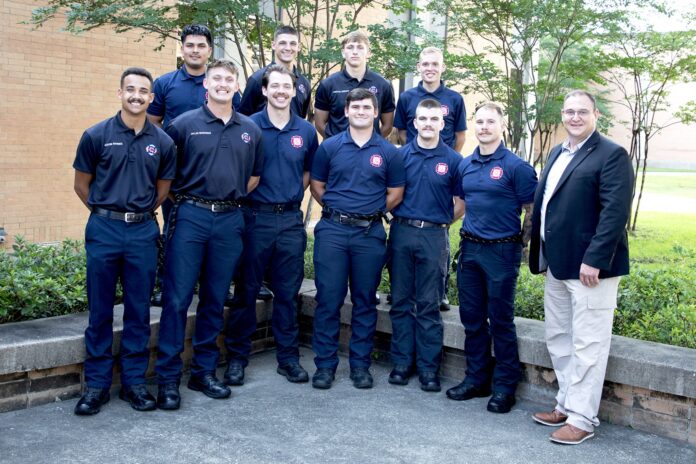
Members of the Angelina College Fire Academy Class 24-61 pose prior to this week’s ceremony held inside AC’s Hudgins Hall Auditorium. The 10 future fire fighters received recognition for having completed the challenging 16-week academy. (Gary Stallard/AC News Service photo)

Ten New Firefighters Exit Stage Ready to Serve

Angelina College’s Fire Academy earlier this week graduated 10 new firefighters in a ceremony held inside AC’s Hudgins Hall, with those cadets wrapping up the grueling 16-week course in style – including a traditional bagpipe escort.  

John Rawls leads the Angelina College Fire Academy cadets’ processional with a traditional bagpipe performance during Monday’s graduation. Ten future fire fighters from Class 24-61 received their recognition in a ceremony held inside Hudgins Hall Auditorium on the AC campus. (Gary Stallard/AC News Service photo)

Micah Snow was named Most Outstanding Cadet in a vote from his peers, and Jeremy Schaeffer earned valedictorian honors, edging classmate Kevin Barnes by one-tenth of a point.

Jeremy Schaeffer, valedictorian for the Angelina College Fire Academy’s Class 24-61, addresses his classmates and the crowd during Monday’s ceremony. Ten future fire fighters received recognition for having completed the challenging 16-week academy. (Gary Stallard/AC News Service photo)

Schaeffer acknowledged the instruction he and his classmates received over their four months of work.

“We’ve had an excellent group of instructors who pushed us mentally and physically to recognize strengths we never knew existed in each of us,” Schaeffer said. “Each one of them brought something different to the field.”

The keynote speaker, Chief Michael Self of the Nacogdoches Fire Department, reminded the new fire fighters they path they’ve chosen is far more than an employment opportunity. It is, he said, a true calling.

Keynote speaker Chief Michael Self of the Nacogdoches Fire Department address the cadets and crowd during Monday’s Angelina College Fire Academy Graduation ceremony inside Hudgins Hall. The 10 future fire fighters received recognition for having completed the challenging 16-week academy. (Gary Stallard/AC News Service photo)

“This is not a small accomplishment,” Self told the cadets. “You’ve made an amazing career choice. Choosing to join the fire service is not something one takes lightly, especially considering what you’ve endured over the 16 weeks of this academy.”

Self went on to state the three keys to a successful career in fire service: First, never stop learning and “educating yourself.”

“Anyone who decides on this career because they think they won’t have to go to school any more is mistaken,” Self said. “Technology and practices change constantly. There are things I learned years ago that are no longer useful. There will always be more opportunities to grow and hone your craft.”

Next, Self said, is “self-care.”

“I encourage you to take care of your mind and body,” Self said. “This career is taxing on both. You’ll see things that are entertaining and interesting, but you’ll also see things that burden you. Take care of yourself mentally, physically and spiritually.”

Most importantly, Self told the cadets, was to remember the “Why?”

“You have to remember why you did this,” Self said. “Learn and take care of yourself, but always remember why you decided to do this. You don’t go into this as a job. It’s a calling, and you need to remember you’re doing this because you care for people. If that’s not your root reason for being here, you’ll burn out quickly and you won’t be successful.”

The new graduates, along with their home towns of record, were as follows:            

Kevin J. Barnes (Nacogdoches, TX), Lucas A. Coker (Nacogdoches, TX), Franklin D. Fogarty (Longview, TX), Gustavo A. Garcia (Lufkin, TX), Christian F. Jernigan (Garrison, TX), Peter D. Maskunas (Diboll, TX), Seth M. Miller (Kennewick, WA), Riley W. Morgan (Broaddus, TX), Jeremy V. Schaeffer (Nacogdoches, TX) and Micah D. Snow (Burnet, TX).

Academy staff members include Doug Conn, Director of Public Safety Training Fire/Law Enforcement; Jason Pope, Coordinator, Fire Academy; Shawn Dillon, Assistant Coordinator, Fire Academy; and Kim Capps, Administrative Assistant.

Academy instructors were Jason Pope, AC Fire Academy; Shawn Dillon, Nacogdoches Fire Dept.; Jody Chandler, Nacogdoches FD.; Jeff Barker, Needham FD; Adam Inman, Porter FD; Robert Ford, Texas Dept. of Emergency Management (TDEM); Larry Tutt, Lufkin FD; Anthony Holcombe, Lufkin FD; Mason King, Nacogdoches FD: Jason Tobias, Nacogdoches FD; and Ashley Jowell, Angelina College Police Department.

For further information regarding the Angelina College Fire Academy, contact Jason Pope at jpope@angelina.edu.  

For information regarding this press release and photos, contact Gary Stallard at gstallard@angelina.edu.

Women’s Networking & Shopping Luncheon (Angelina County)

0

Join us next week, Tuesday, June 11, for our Women’s Networking & Shopping Luncheon, presented by Regions Bank, from 11 AM to 1 PM!

Location:
Crown Colony Country Club

Enjoy lunch and network with fellow women professionals, shop local small businesses, and support other Chamber Investors. Feel free to come and go as you please.

Don’t miss out—see you there!
RSVP today >>> bit.ly/WNL-0624

After the Storm: Recovery and Safety Tips

0

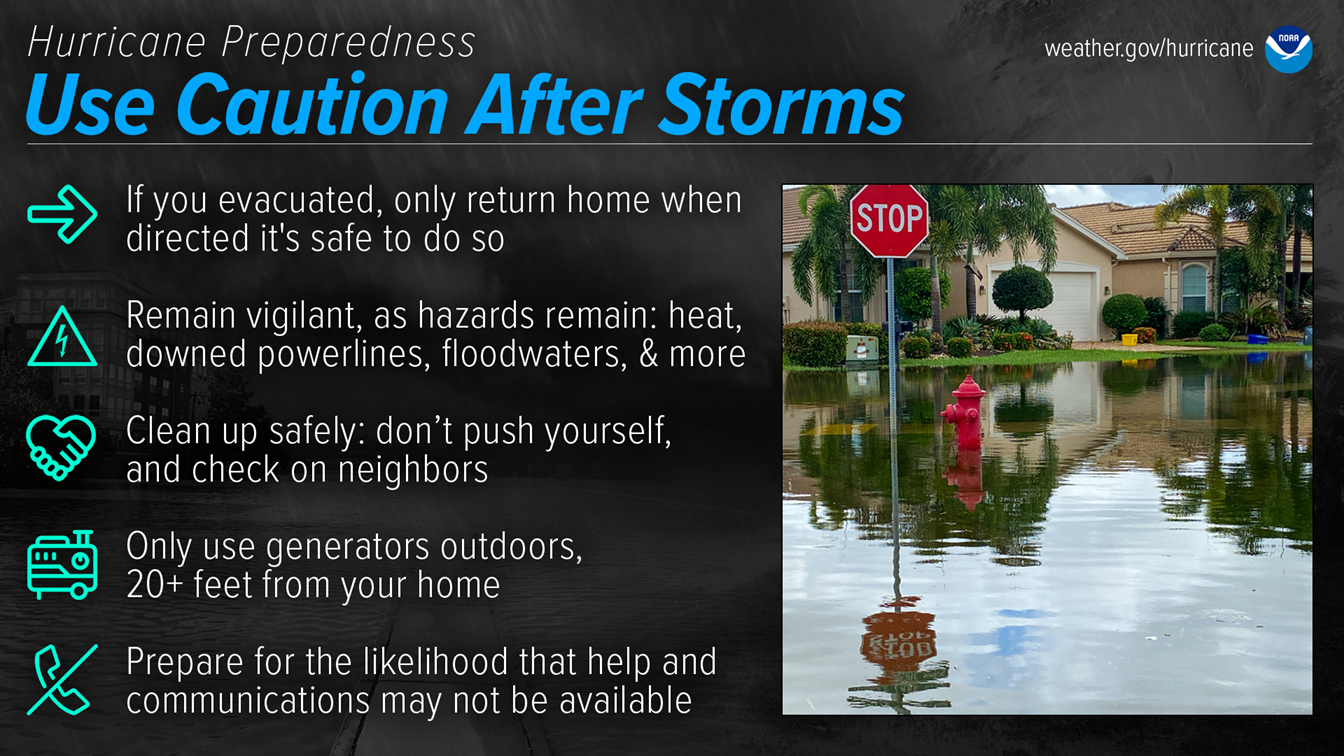
Once the winds have calmed and the rain has subsided, the aftermath of a hurricane can be overwhelming. Returning home safely, dealing with damage, and accessing recovery resources are crucial steps to rebuilding your life after the storm. Here are some essential tips to guide you through the recovery process, based on recommendations from the Red Cross and FEMA.

Returning Home Safely

1. Wait for Official Clearance

  • Tip: Do not return home until local authorities have declared it safe to do so. Pay attention to local news, emergency broadcasts, and official social media channels for updates.
  • How-To: Use apps like FEMA’s mobile app or local government websites to receive real-time information about the safety of your area.

2. Assess Your Home’s Exterior First

  • Tip: Before entering, inspect your home’s exterior for structural damage, downed power lines, gas leaks, and other hazards.
  • How-To: If you see significant damage or suspect a gas leak, contact local utilities or emergency services before entering.

3. Enter with Caution

  • Tip: Wear protective clothing, including long sleeves, gloves, and sturdy boots, when entering your home for the first time.
  • How-To: Bring a flashlight to check for hazards inside the home, and avoid using open flames as there may be gas leaks.

Dealing with Damage

1. Document the Damage

  • Tip: Take photographs and videos of all damage for insurance claims. Document both the exterior and interior of your home.
  • How-To: Make a detailed inventory of damaged items, including descriptions and estimated values.

2. Prevent Further Damage

  • Tip: If possible, make temporary repairs to prevent further damage. Cover broken windows with plywood, and use tarps to cover roof damage.
  • How-To: Save all receipts for materials and labor, as these expenses may be reimbursed by your insurance company.

3. Contact Your Insurance Company

  • Tip: Notify your insurance company as soon as possible to start the claims process. Provide them with the documentation of the damage.
  • How-To: Keep a record of all communications with your insurance company, including dates, times, and the names of representatives you speak with.

Accessing Resources for Recovery

1. Apply for Disaster Assistance

  • Tip: FEMA offers various forms of disaster assistance, including grants for temporary housing, home repairs, and other critical needs.
  • How-To: Visit FEMA’s Disaster Assistance website or call 1-800-621-FEMA to apply for aid. Have your identification, insurance information, and documentation of the damage ready.

2. Utilize Local Resources

  • Tip: Many local organizations and community groups offer support during the recovery phase. This can include food, clothing, and shelter.
  • How-To: Contact your local Red Cross chapter or community centers for information on available resources. Check local news and social media for updates on relief efforts.

3. Seek Emotional Support

  • Tip: The stress and trauma of experiencing a hurricane can take a toll on mental health. Seek support from counselors or support groups if needed.
  • How-To: The Red Cross and other organizations provide crisis counseling and support services. Contact them for more information on available resources.

Health and Safety Precautions

1. Avoid Floodwaters

  • Tip: Floodwaters can contain dangerous contaminants, debris, and hidden hazards. Avoid contact with floodwaters whenever possible.
  • How-To: If you must walk through floodwater, use waterproof boots and clean any exposed skin with soap and clean water as soon as possible.

2. Prevent Mold Growth

  • Tip: Mold can develop within 24 to 48 hours in damp areas. Dry out your home as quickly as possible to prevent mold growth.
  • How-To: Use fans, dehumidifiers, and open windows to increase airflow. Remove wet carpets and furniture to allow the floors to dry.

3. Practice Generator Safety

  • Tip: If using a generator, ensure it is placed outside and away from windows, doors, and vents to prevent carbon monoxide poisoning.
  • How-To: Follow the manufacturer’s instructions and never run a generator inside your home or garage.

Recovering from a hurricane can be a daunting process, but by following these steps, you can ensure a safer and more efficient recovery for you and your family. Stay informed, take necessary precautions, and utilize available resources to rebuild your life after the storm.

For more detailed information and resources, visit the Red Cross and FEMA. Stay safe and stay resilient, Texas Forest Country.

Lufkin District Prepares for Hurricane Season

0
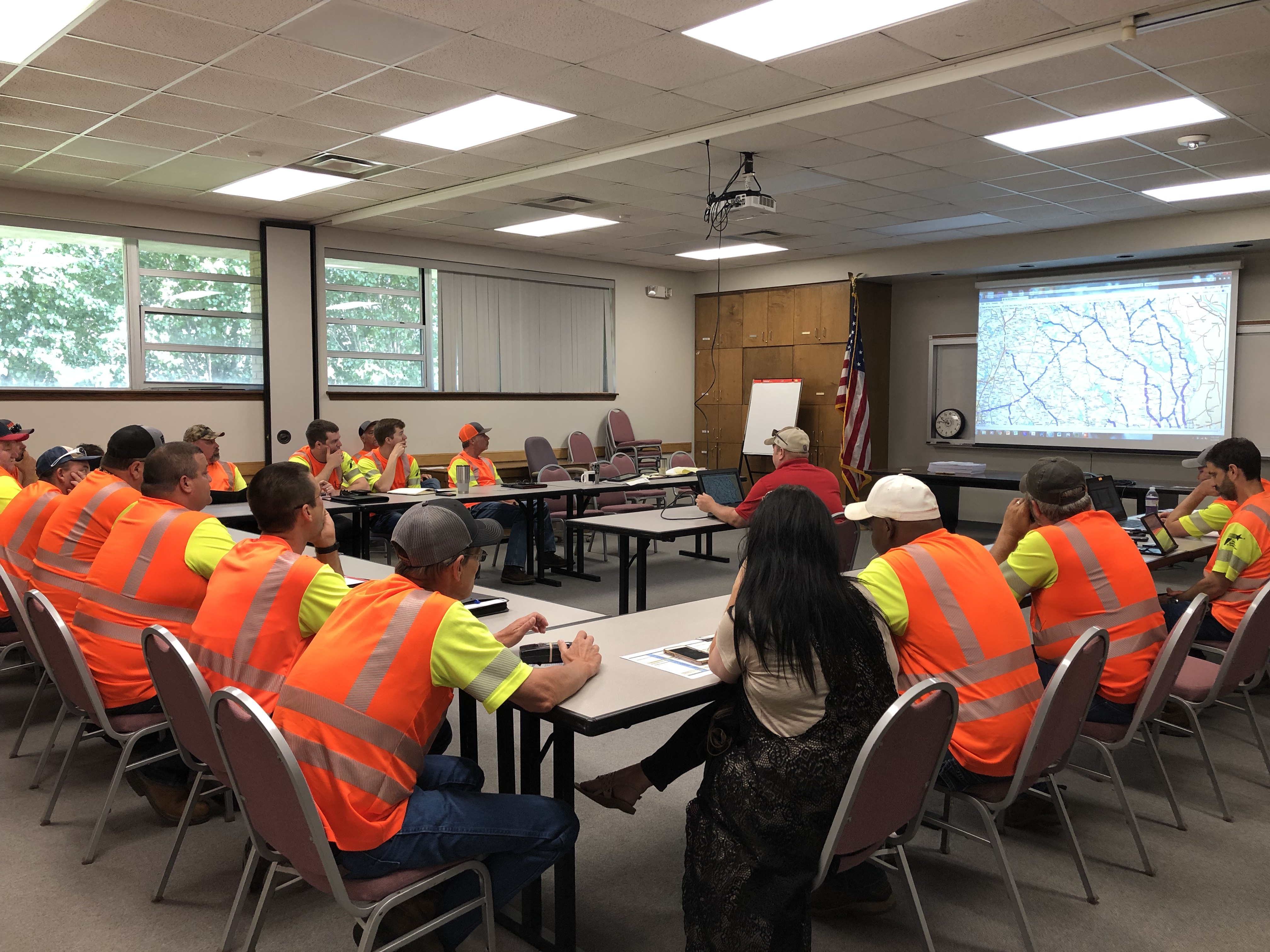
File picture from 2019 - TxDOT Lufkin District leaders met Monday to finalize hurricane preparations for the 2019 hurricane season. The agency is urging the public to also be prepared.

LUFKIN – The Lufkin District met with local leaders last week to discuss the National Oceanic and Atmospheric Administration’s 2024 hurricane predictions and to plan for emergency response should there be a major storm or evacuations in East Texas.

The 2024 hurricane season, June 1 through Nov. 30, is predicted to be above normal with hurricane activity in the Atlantic basin. NOAA has a 70-percent confidence level for 17-25 total named storms for the season. Of those, it is predicted that 8 to 13 will become hurricanes and 4 to 7 will become major hurricanes.

TxDOT is urging the public to make a plan to secure property and prepare emergency supplies, should there be storms or flooding.

District and community leaders discussed contra-flow lanes, evacuation routes, and clean-up response which will include shift work, if necessary. Crews will stand ready should storms or flooding move through East Texas, as well as provide help to other districts, if necessary.

To help prepare your family, visit https://www.txdot.gov/safety/severe-weather/hurricane-preparation.html for a map of evacuation routes from the Gulf Coast. Those routes include US 59, which is designated as a contraflow route, should the decision be made to route evacuation traffic in a contraflow pattern. Also, designated evacuation routes through East Texas are US 69, US 287, US 259, US 96, SH 21, and SH 63.

Making a plan for a hurricane includes knowing your evacuation routes and gathering needed supplies in case of power outages at your home, including batteries, food, water, and fuel. To help prepare your family for a major storm, visit https://www.weather.gov/safety/hurricane-plan for a suggested emergency supply list.

“We encourage the public to make a plan now, whether East Texans are called to evacuate, shelter in place, prepare for the impact of flooding, or for evacuees who could be traveling through our area,” said Rhonda Oaks, public information officer. “The Lufkin District is already planning, and we are ready to respond should we see a major storm this hurricane season.”

The public is urged to visit drivetexas.org for real-time road conditions across the state during any weather event. Follow Lufkin District alerts on Facebook at Texas Department of Transportation (Lufkin) and on Twitter at TxDOTLufkin.

File picture from 2019 – TxDOT Lufkin District leaders met to finalize hurricane preparations for the 2019 hurricane season. The agency is urging the public to also be prepared.

Ribbon Cutting – Bake it Happen “Sweet Stop” (Jasper County)

0

Bake it Happen is a cottage law home bakery that’s designed the easiest way for you to have access to homemade desserts. Items are offered pop-up style on her property. You’ll be able to enjoy a variety of homemade goodies every week.

Join us on June 15th to celebrate Carissa’s journey into full-time baking and the cute new set-up.

Stop by at noon and you’ll have a chance to win a small cake. There will also be samples and lots of great items available for sale.

See you there!

Location:
815 Richardson Drive Jasper Texas

Financial Preparedness: Protecting Your Assets During Hurricane Season

0

Hurricane season brings not only the threat of physical damage to your home but also potential financial challenges. Proper financial preparedness can help protect your assets and provide peace of mind during and after a hurricane. Here are essential steps to ensure you are financially ready, including conducting insurance checks, securing important documents, and understanding disaster assistance.

Conducting Insurance Checks

1. Review Your Insurance Policies

  • Homeowners Insurance: Ensure your homeowners insurance policy covers hurricane-related damages, including wind, water, and flood damage. Many standard policies do not include flood insurance, so it’s crucial to add this coverage if you live in a flood-prone area.
  • Auto Insurance: Verify that your auto insurance policy includes comprehensive coverage, which typically covers flood damage.
  • Health Insurance: Make sure your health insurance coverage is up-to-date, as medical emergencies can arise during disasters.

2. Understand Your Coverage

  • Policy Limits and Deductibles: Know the limits of your coverage and the deductibles you will need to pay. Higher deductibles can lower your premium but will increase out-of-pocket costs in the event of a claim.
  • Additional Living Expenses (ALE): Check if your policy includes ALE, which covers the cost of temporary housing and other living expenses if your home is uninhabitable due to hurricane damage.

3. Document Your Assets

  • Home Inventory: Create a detailed inventory of your home’s contents, including furniture, electronics, appliances, and personal items. Include photos, descriptions, and purchase receipts if available.
  • Proof of Ownership: Keep records of major purchases, such as home renovations or significant investments in property upgrades.

Securing Important Documents

1. Create Copies of Essential Documents

  • Personal Identification: Passports, driver’s licenses, Social Security cards.
  • Property Records: Deeds, titles, mortgage documents.
  • Financial Documents: Bank account information, insurance policies, investment records, tax returns.
  • Medical Records: Health insurance cards, prescriptions, medical history.

2. Store Documents Securely

  • Physical Storage: Keep original documents in a waterproof and fireproof safe. Portable lockboxes are also useful for quick evacuation.
  • Digital Storage: Scan and store copies of important documents on a secure cloud storage service or an encrypted USB drive.

3. Access to Cash and Banking

  • Cash Reserve: Keep a supply of cash in small denominations, as ATMs and credit card systems may be down during a hurricane.
  • Banking Information: Ensure you have access to online banking and mobile apps to manage your finances remotely.

Understanding Disaster Assistance

1. Know the Resources Available

  • FEMA Assistance: The Federal Emergency Management Agency (FEMA) provides various forms of disaster assistance, including grants for temporary housing, home repairs, and other critical needs.
  • SBA Loans: The Small Business Administration (SBA) offers low-interest disaster loans to homeowners, renters, and businesses for repair and replacement of damaged property.

2. Apply for Assistance

  • Documentation: Have all necessary documentation ready when applying for disaster assistance, including identification, insurance information, and records of damage.
  • Timeliness: Apply as soon as possible after a disaster to expedite the assistance process. Visit FEMA’s website for information on how to apply.

3. Community Resources

  • Local Aid: Many local governments and community organizations offer disaster relief and assistance programs. Stay informed about these resources through local news and community bulletins.

Resources

Financial preparedness is a critical component of hurricane readiness. By conducting thorough insurance checks, securing important documents, and understanding available disaster assistance, you can protect your financial assets and ensure a quicker recovery after a hurricane. For more detailed information and resources, visit FEMA and the Insurance Information Institute.

Taking these proactive steps now can make a significant difference in safeguarding your financial future. Stay informed, stay prepared, and protect your assets during hurricane season.

2024 Scholarship Awards Luncheon (Houston County)

0

Join Us for the 2024 Scholarship Awards Luncheon!

The Crockett Area Chamber of Commerce is excited to announce the 2024 Scholarship Awards Luncheon! We are honored to celebrate the remarkable achievements of our scholarship recipients:

 Alexis Bodden, Lovelady High School
 Alexander Burk, Latexo High School
 Asad Mohammed, Latexo High School
 Joseph Tuggle, Crockett High School

 Date: Wednesday, June 12, 2024
 Time: 12:00 p.m.
 Location: Lobby of the Crockett Civic Center, 1100 Edmiston Dr., Crockett, TX
 Tickets: $10 each

Come join us in honoring these exceptional students and their hard work. Your presence and support mean the world to our community!

For tickets and more information, please contact the Crockett Area Chamber of Commerce.

Please let us know if you’re interested in coming by RSVPing to THIS event on Facebook so we can better accommodate!