

Home Blog Page 315

Benefits of Mulch During Summer (and any other time of the year).

0

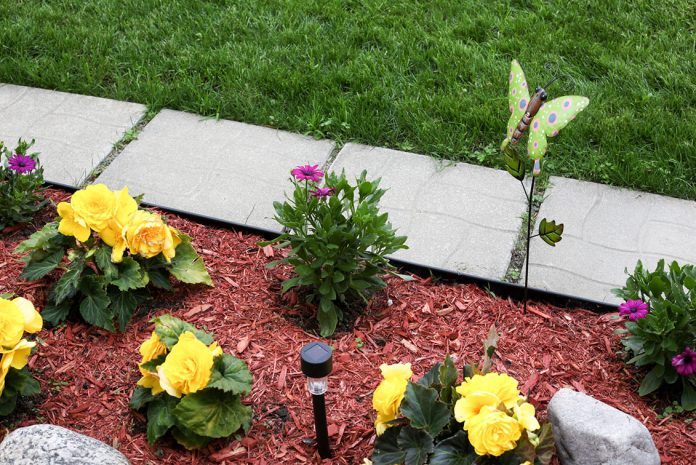
The addition of a layer of three inches of mulch is one of the best additions that you can make to any of your flower beds, shrubs, and trees. Coarse mulches applied at the right depth will conserve soil moisture, keep down weeds, reduce erosion, keep plant roots cool, provide winter protection, and make your yard more attractive.

Think of mulch as a protective covering that keeps soil moisture from evaporating. Watering is not cheap and watering your landscape can be time consuming. According to studies, mulches reduce evaporation loss by up to 30%. Protect what you have put out for your plants.

Mulch also moderates soil temperatures. A simple home experiment with a laser thermometer can shown soil temperatures to be several degrees higher in direct sun during the summer without the addition of mulch. In the winter, mulch serves as a blanket to keep sensitive roots from suffering from severe freezes like we had this past February.

Covering the bare spots under trees and shrubs will make your landscape more attractive to boot. Too many times, folks kick up worlds of dust when they mow under trees that are mostly bare soil. The coverage provided by mulch provides a defined bed and greatly improves aesthetics.

For trees and shrubs, spread a coarse mulch evenly to a depth of three inches. For trees and shrubs in beds, mulch the entire bed. For those in a lawn, mulch a wide ring (extending at least 3 to 6 feet out from the trunk) around each plant.

Never pile mulch against tree trunks. The egregious practice is called a “volcano” and gives insects and disease a chance to harm tree trunks.

For flower beds, mulch can be applied up to 3 inches deep (after settling) but should be kept pulled back slightly from plant stems. Mulches should thoroughly cover an area to a uniform depth to be most effective. Low or bare spots are prone to weed problems.

Can you use “compost” as a mulch? You can but a good layer of compost is just a wonderful seed bed for windblown weed seeds. Every seed that finds its way to exposed compost is sure to germinate and that works against you saving time and reducing weedy competition.

Mulches made from plant material are organic mulches. Over time, organic mulches will decompose and become part of the soil. This is a great advantage, because this decomposition adds organic matter to your soil, helping the soil to better retain water and nutrients- giving you healthier plants. This means, however, that organic mulches will have to be replenished from time to time.

Bark mulches are usually made from the by-products of pine, cypress, or hardwood logs. Bark mulches resist compaction, will not blow away, are very attractive, and are readily available.

Sawdust is often readily available but is a poor choice. It tends to cake, making it harder for water to soak into the ground. Additionally, sawdust is low in nitrogen, so it robs nitrogen from the soil as it decomposes.

Pine needles (also called pine straw) are attractive, decompose slowly, resist compaction, and are easy to work with. They are often available commercially or even free if you have pine trees on your property.

Three layers of newspaper can effectively keep down weeds, especially in the vegetable garden. To keep the paper from blowing away, weight it down using another mulch or other means.

Crushed stone, gravel, volcanic rock mulches are available in a wide variety of textures, colors, and materials and are used in rock gardens, driveways, and walkways. Think carefully and make sure you really want this type of mulch before putting it in place, because these mulches are permanent and will not build up your soil.

Certainly, the addition of an organic mulch will build soil and improve the ground that it covers. Those who practice a yearly addition of mulch will find earthworms and a dark crumbly soil develop beneath.

As we approach the historical hot, dry summer months, consider putting a layer of mulch to save water, reduce your weeding chores, keep soil cool, and build the soil.

Governor Abbott Statement on Vice President Harris’ Upcoming Visit to Texas’ Southern Border

0
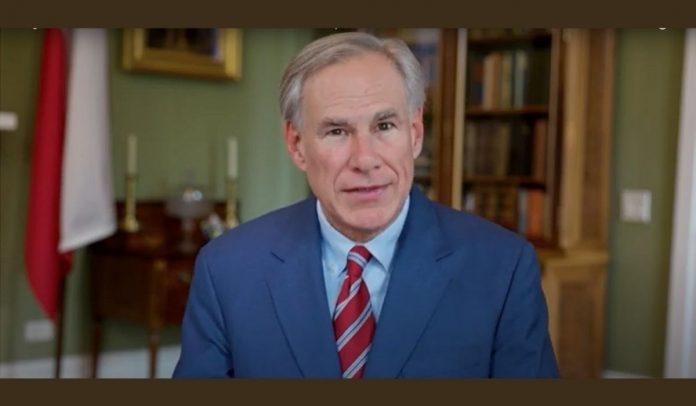
 Governor Greg Abbott today issued a statement on Vice President and Border Czar Kamala Harris announcing her first visit to Texas’ southern border amid the ongoing border crisis: “Vice President Harris is ignoring the real problem areas along our southern border that are not protected by the border wall and are being overrun by the federal government’s ill-thought-out open border policies. She will fail in her mission if she refuses to speak to residents of the Del Rio sector whose homes and ranches are being overrun by gangs and smugglers. “The Vice President was named Border Czar over 90 days ago, and in that time Texans have had their homes broken into, property damaged, and guns pointed at their heads as cartels, smugglers, and human traffickers profit off the Biden Administration’s reckless open-border policies. I launched Operation Lone Star in March to combat this record-high influx of people and crime, and since then DPS has arrested over 1,700 criminals, apprehended over 41,000 migrants, and seized enough fentanyl to kill over 21 million people.

Ladyjack Basketball Welcomes Destini Lombard to the Fold for 2021-22 Campaign

0

The Stephen F. Austin women’s basketball team will add Destini “Dez” Lombard to the program for the upcoming 2021-22 season, the coaching staff announced Thursday morning. Lombard completed her first collegiate campaign at LSU last year, where she made four appearances with one start for the Tigers. 
 
“Dez is a great addition to the Ladyjack family,” said Head Coach Mark Kellogg. “She is an elite athlete and her speed and quickness can change the game. She will be a tremendous defender in our system.”
 
Lombard, a 5’9″ guard, averaged 6.3 minutes per game across four appearances, highlighted by a career-high 14 minutes against West Virginia, chipping in one bucket and one rebound for the Tigers. 
 
Prior to LSU, she scored 1,182 points, 661 rebounds, 478 steals, 315 assists and 215 blocked shots over her four-year span at Fort Bend Hightower High School. She led her team to a semifinal berth during her senior year, as she averaged 13.8 points, 4.7 rebounds, 4.5 steals, 2.9 assists and 1.9 blocks. 
 
“Dez can guard on and off the ball and has an uncanny ability to block shots as a guard” added Kellogg. Offensively, she will thrive in transition and she also has the skill set to score multiple ways in the half court. Ladyjack fans will enjoy watching Dez for many years to come.”

Junior League of Lufkin announces Board of Directors and Executive Management team for the 2021-2022 year

0

The Junior League of Lufkin (JLL) is an organization of women committed to promoting volunteerism and to improving the community through the effective action and leadership of trained volunteers. Its purpose is exclusively educational and charitable. The League’s vision is to enhance the lives of children and women in the community through diverse projects and fundraising efforts.

Research done over the past decade from The Association of Junior Leagues International (AJLI) has uncovered some of the challenges and opportunities facing Junior Leagues across the nation today. During that research it was discovered that the most reported factor in membership satisfaction is League operations. Accordingly, AJLI began to search for ways to help its member Leagues operate more efficiently, and the result was a new and more efficient separated system of governance and management. The Governing Board of Directors oversees management and strategic direction. The Executive Management Team oversees daily operations of the organization. This separation allows the League to function more efficiently, improve member satisfaction, and apply focus for future development of the League’s mission.

The Junior League of Lufkin just completed its first year transition into this format which results in the first ever two-year term for a President. JLL is excited to welcome the Board Of Directors and executive management team for the 2021-2022 year.

Governing Board Of Directors:

  • President – Kimberly Graham
  • President Elect – Alexis Pigg
  • Executive Vice President – Kayla Walker
  • Secretary / Sustainer Liaison – Jaclyn Hults
  • Treasurer – Sarah Alvis
  • President Of Sustainers – Allyson Langston
  • Strategic Development/Advisory Chair – Becca Mcmahon
  • Nominating Chair – Carolina Lopez
  • Member At Large – Becky Cota
  • Member At Large – Jennifer La Corte
  • Member At Large – Stacie Rose

Executive Management Team:

  • Executive Vice President – Kayla Walker
  • Assistant Treasurer – Aimee Meyers
  • Vice President of Communications – Morgan Naranjo
  • Vice President of Fund Development – Robin Alderman
  • Vice President of Membership – Maci Dover
  • Vice President of Community Projects – Sydney White

To learn more about the Junior League of Lufkin, please visit juniorleagueoflufkin.org, email communications@juniorleagueoflufkin.org, or follow on facebook.com/juniorleagueoflufkin/.

Rep. Trent Ashby to Headline DETCOG Annual Meeting

0

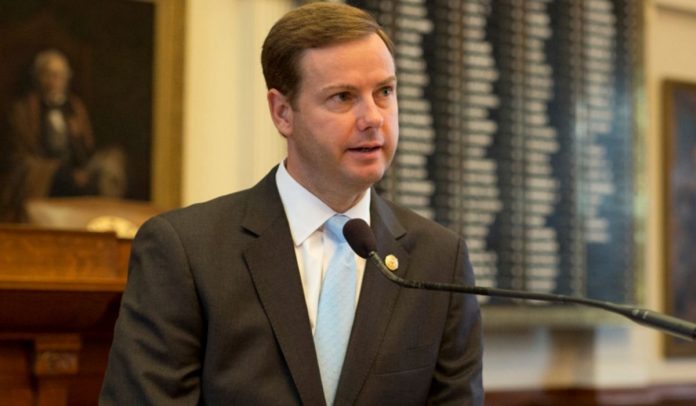
Representative Trent Ashby will be the keynote speaker for Annual Membership and Awards Luncheon of the Deep East Texas Council of Governments and Economic Development District (DETCOG) on Friday June 25 in Lufkin. The event will be held at Noon at the Pitser Garrison Convention Center.

Rep. Ashby has been a member of the Texas Legislature since 2013, representing House District 57. His district includes six East Texas counties, four of which are in the DETCOG region (Angelina, Houston, San Augustine and Trinity).

Another highlight of DETCOG’s annual meeting is the presentation of the prestigious Ralph W. Steen East Texan of the Year Award. The Steen award was named in honor of the beloved past president of Stephen F. Austin State University. It honors an individual who has played a major role in leadership and service to Deep East Texas. The recipient is chosen by those who previously received the recognition. Several other awards will be presented to recognize DETCOG staff, board members and partners.

“After having to cancel last year’s annual meeting due to the pandemic, we are thrilled to be able to gather in person again this year to celebrate Deep East Texas and our regional collaboration through DETCOG,” said Sabine County Judge Daryl Melton who serves as DETCOG President. “We are looking forward to recognizing our award recipients and are especially happy to have Trent Ashby join us as our keynote speaker.”

A former Deep East Texas Legislator of the Year, Rep. Ashby is currently a member of the House Committees on Appropriations and Transportation. This is his fourth term on the Appropriations Committee, having twice served as the Chairman of the Subcommittee that oversees higher and public education funding. In prior sessions, he has served as a member of the House Committees on Administration, Calendars, Defense & Veterans’ Affairs, Natural Resources, and Public Education.

Among his accomplishments in the 87th Legislature was authorship and passage of House Bill 5, also known as the Texas Broadband Bill, one of the few pieces of legislation that passed this session with strong bipartisan support. He is a graduate of Texas A&M University with a bachelor’s degree in Agricultural Economics. While at A&M, he was elected to the Student Senate, Class Treasurer, and Senior Yell Leader.

DETCOG, organized in 1966, is a voluntary association of local governments in the 11-county region encompassing all of Angelina, Houston, Nacogdoches, Newton, Polk, Sabine, San Augustine, San Jacinto, Shelby, Trinity and Tyler counties.

DETCOG was established in November of 1966 as an Economic Development District under the U.S. Department of Commerce Economic Development Administration. In 1968 the organization also became a political subdivision of the State of Texas as a Regional Planning Commission under state law. Current membership includes 11 counties, 34 cities, 36 school districts, four river authorities, the Alabama-Coushatta Tribe of Texas, special purpose districts, and other sustaining members.

“Above all, DETCOG is an organization of, by, and for the local governments of Deep East Texas,” said Executive Director Lonnie Hunt. “We exist to support our member governments and serve their residents.”

Luncheon tickets are $20 and reserved tables are also available. RSVPs are appreciated. Anyone needing information may contact DaVina Morris at the DETCOG office in Lufkin at (936) 634-2247 extension 5254.

Tips to Achieve Beautiful Summer Hair

0

From damage to color fade, to dry-out and breakage caused by styling and seasonal activities like swimming, summer can wreak havoc on your hair — if you let it. Here’s a bit about the science of your hair’s structure, as well as what to know to keep your locks looking their best all season long.

Strengthen Hair

As the experts at L’Oreal Paris explain, many hair care treatments significantly improve the hair’s surface by providing softness and shine. However, with hair’s complex structure primarily made up of proteins, strengthening the core of the hair fiber is much harder to achieve.

Additionally, the architecture of the hair fiber is consolidated by numerous chemical bonds that create bridges between the chains. These bonds can be broken due to heat styling, summer weather conditions and other factors, resulting in dullness, weakness, and breakage. Sticking with products that strengthen hair can go a long way toward reversing course.

Beat Frizz

Summer weather can vary by location, but regardless, a leave-in styler can be helpful in combating frizz amid the heat and humidity of the season. Additionally, ending your shower with a bit of cold water helps seal the cuticles that were just opened by the warm/hot water you used to wash your hair. Sealed cuticles reflect light better (think shiny hair) and the frizz is less noticeable.

Manage Color

“Who doesn’t love getting outside once the weather heats up? As a colorist, it’s my responsibility to make sure my clients know that proactive and reactive care are so vital to keeping color looking its best,” says celebrity hair stylist and colorist, Jonathan Colombini.

Detox

Over time, scalp buildup can cause issues like itching, shedding and clogged follicles. Unfortunately, the summer months can involve chlorine exposure, excess sweat, and more product build-up than usual due to your on-the-go lifestyle. To deeply cleanse, exfoliate and remove excess build-up, all while being gentle on color-treated hair, try EverPure Scalp Care + Detox Shampoo and Scrub.

When it comes to your hair goals, a few simple tweaks to your routine can mean a summer of sun and fun that doesn’t take a toll on your tresses.

SFA SummerStage Festival: ‘Stuart Little’ directed in style of 1940s radio drama

0

It’s a play within a play.

That’s how Kristen Blossom, adjunct instructor in the Stephen F. Austin State University School of Theatre, describes the SummerStage Festival presentation of the children’s favorite “Stuart Little,” a play based on the popular book by E.B. White and adapted by Joseph Robinette about the endearing mouse named Stuart Little who is born into an ordinary New York family.

“Stuart Little” will be presented in the style of a 1940s radio play with student actors not only delivering their characters’ lines but also creating their own sound effects live on stage.

The play is one of two featured in this year’s SummerStage Festival presented June 22 through July 9 in Kennedy Auditorium on the SFA campus. “Men On Boats” by Jaclyn Backhaus is also featured.

According to Blossom, radio plays were popular in the 1920s to 1950s, and the novel “Stuart Little” was written by White in 1940, “so it made perfect sense for me to set our production in the 1940s and deliver it to the audience as an old fashioned radio play.”

Historically, actors in radio plays would speak their lines into a microphone while a person in the foley booth made all of the sound effects. But Blossom directs SFA actors do both of these jobs simultaneously.

“The audience will not only be able to hear the sound effects, but also see live exactly how the sounds are being made by the actors,” she said. “My overall concept for this production is that a group of actors in the 1940s come into a studio space in New York City and start using all the foley objects they can find to tell us – the audience – this story about a mouse named Stuart Little. So, essentially, it’s a play within a play.”

Blossom wanted the students to “think outside the box” and experiment with different objects to create the sound effects.

“We all had so much fun collaborating,” she said. “Because it’s a play within a play, every sound you hear is being made by these 1940s storytellers. For example, we have a record player on stage for times when the script calls for music, and we have instruments that create rain and thunder and other noises.”

Adding to the directing theme, actors will be dressed in 1940s-style clothing with costume pieces that they take on and off while on stage.

Blossom cast only six actors to play the nearly 25 different characters, meaning students will portray between four and five characters each, with the exception of the main character of Stuart. She added that it was “purely coincidental” that it’s an all-male cast.

“That’s just the way things turned out in auditions,” she said. “I think gender rarely has anything to do with the heart of a story, so ‘traditional’ casting didn’t matter to me at all. I’m so proud of my actors for approaching each of their many roles, even the tiny ones, with precision, sensitivity and authenticity.”

Among the biggest challenges in presenting this play is that Blossom conducted rehearsals remotely via zoom.

“Personally, it’s always a challenge for me to verbally articulate what I’m imagining and feeling,” she said. “I tend to get up and walk all over the stage while I’m directing. But I was only able to conduct rehearsals via zoom. It certainly has been a challenge to sit still and give direction only using my words. But, on the bright side, I believe me being remote created more space for the actors and my assistant director, Triston Haq, to assert their own creativity.”

As assistant director, Haq, a Nacogdoches senior, said he’s learned that there aren’t any shortcuts to success when it comes to working with people of different skill sets and experience.

“A standard was established from the outset, and everyone, regardless of experience, has risen to the occasion and grown in their own way,” Haq said. “As for learning the specifics of directing a radio play, I’ve had to hone in on the words and the way that actors say things. Sounding like a real person is something I can direct pretty reasonably after my own training, but when performing a radio drama, I’ve found that there’s more to connecting with the audience than sounding like someone you’d meet in real life. It’s about inviting the audience on the journey with you.”

Because there are so many foley sound effects and costume changes that take place throughout the show, the actors have had their endurance and performance ability tested, Haq said.

“But they’ve come out with a great radio play to show for it,” he added. “The process is extremely intentional and precise, and we’ve been doing our best to hit every beat in the show with honesty and conviction. There’s a musicality to the actors’ performance that we heard in the beginning read-through, and that’s something that we’ve tried to hold on to and highlight as their performances grew. The students responded to the process and the expectations we set with a headstrong initiative, and we’re really proud of their growth and resourcefulness. Theatre is a team effort, and the cast did a great job of relying on each other when they needed.”

Buffalo senior Zach White portrays multiple characters, including Margalo, who is a bird with really high voice; George, who, as the other son in the Little family, has a more shy tone in his voice; along with a few cats, two different doctors and “many others that you’ll be able to see if you come and watch the show,” he said.

“The most fun thing about this show is that there is no limitation to what I am able to do with my characters and discovering how far I can go with them,” White said. “Seeing my colleagues’ reactions to the silliness I can come up with really makes this process fun. The more challenging part of this is mostly trying to keep up with and remember all of the voices that I have for these characters, along with the physicality of the all the characters. The most rewarding part of this process is going to be my part in the escape from reality that we can provide the audience.”

Waxahachie junior Adam Lamb plays Mr. Little, the house cat Snowbell and Narrator #1. Watching and working with talented actors has been a fun part of the rehearsal process, he said.

“The most challenging part was working with a director through zoom and having to be at the whim of our internet connection,” he said. “But the most rewarding part, for me at least, for any show is seeing the audiences’ reactions to what we’ve created.”

“Stuart Little” tells a story about seeing the world differently than most people traditionally imagine.

“There’s a lot of wonder to be found when you look around from a perspective that’s not your own,” Haq said. “I hope the audience takes a little bit of wonder home with them.”

“Stuart Little” will be presented at 10 a.m. June 29 and 30 and July 1 and 6; at 2 p.m. June 22 and 24; and at 7 p.m. July 7 in both in-person and virtual performances. General admission tickets are $8. Virtual access is $15. Pay-what-you-can performances are on July 1. All performances are in Kennedy Auditorium, 1906 Alumni Drive.

For tickets, call the SFA Fine Arts Box Office at (936) 468-6407 or visit boxoffice.sfasu.edu.  For more information, call the School of Theatre at (936) 468-4003 or visit www.theatre.sfasu.edu

Pecans In Your Landscape

0

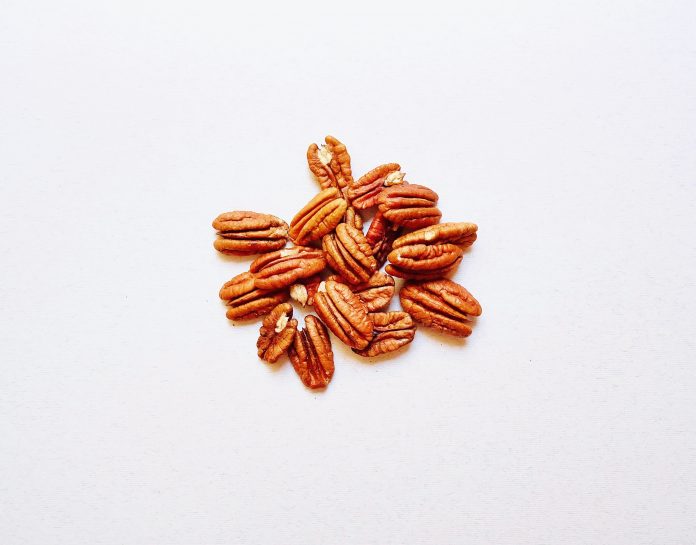
One of the most popular choices of trees to add to the landscape is a pecan. It seems several folks want to have at least one pecan tree around their house but are often frustrated with the lack of results they often get.

Pecans are the state tree of Texas and are said to grow naturally in every county. However, just because they grow naturally some place in our county does not mean that they’ll grow productively in everyone’s landscape.

If you have a pecan tree in your landscape, here are the things that you need to do this year and every year to encourage a healthy tree that produces a pecan crop in the fall. 

First is water. While we have just come out of an incredibly wet spring, it is the summer dry spells that often result in the loss of a pecan crop. Pecans need about an inch of water a week to maintain nut-set. This need for water is most evident in the mid to late portion of the growing season when the pecans are reaching maturity.

Homeowners may notice that pecans will start to drop during a dry summer. It seems that once they have made up their mind to drop their pecans, there’s no amount of water that you can put on them at that time to make them change their mind.

The second most important element is fertilization. The two key nutrients that pecans need that we can supply are nitrogen and zinc. 

Nitrogen (N) can be applied on the ground in a granular form. As a guide, apply 1 lb. of 33-0-0 per inch the trunk is wide each time you fertilize.  For example, a one foot wide trunk needs 12 lbs. of N fertilizer spread evenly under the drip-line.  And do this three times in a year. For your 12 inches wide tree trunk, put out 12 pounds of a 33-0-0 fertilizer in late May. Repeat that with another 12 lbs. of 33-0-0 fertilizer in June. Then give the last fertilizer application of 12 pounds of 33-0-0 in July.

Zinc is the other nutrient that the pecan trees are missing, but zinc has to be applied as a foliar fed fertilizer to do any good. While there are all kinds of zinc fertilizers that you can put on the ground, it is the foliar application of a zinc fertilizer that counts. On smaller trees, homeowners can reach all of the leaves. Zinc is needed for leaf expansion and applications should be made frequently in the early portion of the growing season for maximum growth. 

Lastly, and certainly the most difficult problem, is the control of pests such as disease or insects. Scab is the most common problem affecting all pecan trees in wet, humid areas such as East Texas. Scab is a fungal problem that is the most limiting factor for pecans in our region. However, the real problem is that preventing this fungus requires some expensive equipment that only commercial pecan producers have. 

Adding to this dilemma, simply getting the right fungicide to use on your pecans can also be difficult. The best suggestion for pecan tree owners maybe that they forget about trying to use a fungicide and rely on the fact that they’ve planted the correct type of tree that is already scab resistant. 

How long until you get pecans from a newly planted tree?  The longest estimated time on a variety is 12 years while some are reported to bear in 4-5 years.  

Governor Abbott Signs Second Amendment Legislation Into Law

0

Governor Greg Abbott today signed seven pieces of legislation into law to protect Second Amendment Rights in Texas. The Governor was joined for the bill signing ceremony by Lieutenant Governor Dan Patrick, Speaker Dade Phelan, Senators Donna Campbell, Brandon Creighton, Charles Schwertner, and Drew Springer, Representatives Giovanni Capriglione, Cole Hefner, Tom Oliverson, Matt Shaefer, David Spiller, and other members of the legislature, as well as representatives of the National Rifle Association.

“Politicians from the federal level to the local level have threatened to take guns from law-abiding citizens — but we will not let that happen in Texas,” said Governor Abbott. “Texas will always be the leader in defending the Second Amendment, which is why we built a barrier around gun rights this session. These seven laws will protect the rights of law-abiding citizens and ensure that Texas remains a bastion of freedom. Thank you to the Texas Legislature for getting these bills to my desk.”

Senate Bill 19 (Schwertner/Capriglione) prohibits any governmental entity from contracting with any business that discriminates against firearm and ammunition businesses or organizations. 

Senate Bill 20 (Campbell/Hefner) allows guests to store firearms in their hotel rooms. 

Senate Bill 550 (Springer/Spiller) removes the shoulder or belt holster requirements, allowing Texans to carry firearms in whatever kind of holster they choose. 

House Bill 957 (Oliverson/Springer) repeals the criminal offense of possessing, manufacturing, transporting, or repairing a firearm silencer. It also ensures that any firearm suppressor manufactured in Texas, and that remains in Texas, will not be subject to federal law or federal regulation. 

House Bill 1500 (Hefner/Creighton) prevents any government entity from prohibiting the sale or transportation of firearms or ammunition during a declared disaster or emergency. 

House Bill 1927 (Schaefer/Schwertner) authorizes Constitutional Carry in Texas, meaning law-abiding Texans can legally carry a handgun without a license to carry. 

House Bill 2622 (Holland/Hall) makes Texas a Second Amendment Sanctuary State by protecting Texans from new federal gun control regulations

HOUSE BILL 5, EXPANDING BROADBAND SERVICE, SIGNED BY GOVERNOR ABBOTT

0

Today, Governor Greg Abbott signed House Bill 5 by State Representative Trent Ashby (R-Lufkin) and State Senator Robert Nichols (R-Jacksonville) which will increase access to and adoption of high-speed internet throughout Texas. The measure was deemed by the Governor as one of only eight Emergency Items for the 87th Legislature and received a low bill number, indicating priority status, by both Lieutenant Governor Dan Patrick and Speaker Dade Phelan.

“Thank you to Senator Nichols and Representative Ashby for their leadership on House Bill 5, which will help increase high speed internet access in Texas,” said Governor Abbott. “Broadband is no longer a luxury — it is an essential tool for education, business, and healthcare, which is why I made the expansion of broadband an emergency item this session. HB 5 will help close the digital divide throughout Texas.”

With Governor Abbott’s signature, the provisions in the legislation become effective immediately. The first order of business for the newly created Broadband Development Office will be identifying which areas of Texas have access to broadband and which do not, ultimately defining who will be eligible for state, federal, and philanthropic funding.

“The passage of House Bill 5 requires the state to create and maintain a broadband access map,” said Senator Nichols. “This will identify corners of the state that are lacking broadband. Those areas can receive targeted support and funding to build the infrastructure necessary to deploy broadband. This bill exemplifies Texas’ commitment to developing critical 21st century infrastructure and expanding broadband access.”

One of House Bill 5’s most critical components is the establishment of a state broadband plan to establish long and short term goals that guide the development and investment of broadband infrastructure for all Texans. As one of only six states in the United States without a broadband plan, Texas often finds itself at a disadvantage when applying for federal dollars. 

“Without a state plan for broadband, Texas was leaving precious resources on the table,” said Representative Ashby. “House Bill 5 creates this plan to establish goals and guide our state’s investment in broadband. The more we can do to bring the 21st century to rural and underserved communities, the better chance we have at closing the social and economic gap that has widened due to lack of reliable, high-speed internet.