

Home Blog Page 357

An Update from Trent Ashby

0

With Election Day just around the corner, Texas voters have been taking advantage of the early voting period in record numbers. Though the Lone Star State has historically lagged behind in voter participation, Texas is currently leading the nation in voter turnout with nearly 6 million cast ballots, according to the Secretary of State’s latest data. Regardless of your political affiliation, such a tremendous increase in voter participation is a welcome improvement that promotes and encourages both civic engagement and quality representation. If you haven’t already voted, you can still take advantage of early voting, which will continue until October 30. I want to encourage you to vote early this cycle, if possible, to avoid long lines and enjoy the convenience of voting at any early voting location within your county of registration.

With that, here’s an update from your State Capitol. . .

Capitol Update

Governor Abbott and the Texas Education Agency (TEA) recently announced the establishment of the Supplementary Special Education Services (SSES) program to connect eligible students with severe cognitive disabilities with additional support for critical services. This program is aimed to connect Texas families to high-quality, personalized services through a funding allocation to help offset learning disruptions related to COVID-19. Through this funding source, Texas families can purchase supplemental support such as tutoring, therapy, and digital resources. Should you, or someone you know, have a student that was enrolled in public school during the 2020-2021 and has been identified as having low incidence disability, I would encourage you to visit www.tea.texas.gov for more information about this newly established program.

The Texas Department of State Health Services (DSHS) recently announced the procurement of 2.9 million doses of the flu vaccine for the Texas Vaccines for Children Program and the new Adult Influenza Initiative. These programs will enhance flu vaccine coverage as part of the state’s COVID-19 response by decreasing the number of illnesses and hospitalizations to ensure that health care providers can focus resources on treating COVID-19 patients. The Center for Disease Control has provided one million flu vaccines to DSHS which will distribute the vaccines to adults who are at a higher risk of COVID-19 infection or severe disease, such as health care employees, first responders, long-term care patients and staff, and others with underlying health conditions. For more information on the flu and vaccination locations in your area, please visit www.texasflu.org.

As always, please do not hesitate to contact our office if we can help you in any way. Our District office may be reached at (936) 634-2762.


Tobacco Minor Sting Operation

0

The Coalition, Inc. has partnered with the Polk County Sheriff’s Department in an effort to prevent and reduce the harmful use of tobacco products in rural areas like East Texas, where tobacco-related health problems are more prevalent.

The Polk County Sheriff’s Department targeted area businesses that sell tobacco. The age limit to purchase tobacco products, including e-cigarettes, is now 21, per the new guidelines from the U.S. Food & Drug Administration (FDA). However, all sting operations used a minor under the age of 18 in order to allow retailers time to update current practices and train employees. Out of the 82 attempts done in June, July and August, 12 citations were issued to the following businesses that sold tobacco products,
including e-cigarettes, to minors.

The businesses that sold tobacco products to minors include:
• RB’s Lake Grocery on 2825 FM 2457 in Livingston;
• 2 Food Mart on 2400 N Washington Ave in Livingston;
• Beacon Bay Food Mart on 7384 FM 3126 in Livingston;
• Sun Mart #308 on 4727 US Highway 695 in Livingston;
• Veterans Mart on 1809 N Washington Ave in Livingston;
• Stripes Store 41012H on 2301 US Highway 190 W in Livingston;
• Beacon Bay Food Mart on 7384 FM 3126 in Livingston;
• Goodrich Mart on 7183 US Highway 59 N in Goodrich;
• Shopper Stop on 806 S Home St in Corrigan;
• Big Ben’s on 16281 US Highway 59 N in Moscow;
• On the Road #153 on 4653 US Highway 59 S in Livingston;
• Murphy USA #7547 on 1616 W Church St in Livingston.

We commend those businesses who did not sell tobacco products to minors in our community. The Coalition and the Polk County Sheriff’s Department thank all of these stores for protecting the youth of Angelina County from the dangers of tobacco and nicotine. For a complete list of those businesses that were under compliance, please visit The Coalition’s Facebook page @thecoalition936 or contact The Coalition at (936) 634-9308 for more information.

ANGELINA ARTS BRINGS LIVE MUSIC BACK TO THE TEMPLE THEATER WITH “THE FIRST FAMILY OF AMERICAN MUSIC”

0

Lufkin, TX: After being dark since March as a result of the pandemic, Angelina Arts is thrilled to announce that there will once again be live music coming in the Temple Theater. On Saturday, November 14 at 7:30 PM, the Nashville-raised and New York-trained Annie Moses Band will deliver a spellbinding musical odyssey. Tickets are on sale now and can be purchased at
AngelinaArts.org. Tickets range $30-$40.

Angelina Arts is committed to present live performing arts in a safe environment. All current state mandates for social distance seating and policies set forth by Angelina College are being followed. Masks are required while entering the building, during the performance and while exiting the building. This is a social distancing seated event. If patrons are purchasing more than two tickets
and want to sit together, they must call the box office at 936-633-5454.

About Annie Moses Band:
From the roots of the Grand Ole Opry to the wings of Carnegie Hall, the Annie Moses Band has been taking music to new heights for more than a decade. As the “first family of American music,” this sibling band applies its classically honed, all-American talent to a cornucopia of iconic melodies through innovative arrangements and masterful original songwriting.

The Annie Moses Band has recorded more than a dozen albums, produced Emmy-nominated PBS specials, traveled to Europe and Asia, and performed on stages as diverse as Carnegie Hall and the Grand Ole Opry.

The Angelina Arts Alliance is a 501(c)3 nonprofit organization whose mission is to enrich, entertain
and educate by presenting and promoting the arts in East Texas.

Tips for Fueling up for Outdoor Fall Chores

0

Along with the fall season comes a range of outdoor chores for homeowners nationwide, from clearing trees and branches after wicked weather strikes to gathering autumn leaves. Here are a few things to consider as you go about fueling your chainsaws, leaf blowers and other lawn care equipment:

Proper Fuel Storage

If you have messy or bulky fuel containers, it’s time for an update. Proper fuel storage can make the task of fueling equipment safer, cleaner and ultimately more efficient and affordable. For starters, be sure to purchase only fuel containers approved by federal or state authorities that have a flame mitigation device (FMD) and a child safety feature.

Then, consider ease of use. The best containers not only exceed recognized safety standards, they help you avoid messy, costly spills. To that end, look for a user-controlled flow valve, such as those featured on Scepter SmartControl containers. Available in 1-, 2- and 5-gallon sizes for gasoline, diesel and kerosene, these rugged storage containers which are made of five layers of safe high-density polyethylene for long-time use, feature an innovative, hassle-free spout controlled and operated by squeezing. And, because they are stored with the spout on, hands stay clean. For usage and safety tips, check out the videos and resources available at www.scepter.com.

Proper Fuel

While you’re updating your fuel containers, be sure to restock your fuel too. Keep in mind that fuel sitting unused for many months should be safely discarded, as gas components can deteriorate over time. Changing gasoline out with the seasons keeps it fresh.

Having plenty of fuel on hand is not only a key element to powering through yard work and chores, but an important part of extreme weather preparedness. During power outages and in the aftermath of storms, you’ll be able to fuel generators, chainsaws and other gas-powered equipment without worrying about your supply. So don’t wait until a storm is in the forecast to stock up on this essential.

This fall, equip your shed or garage with the fuel and fuel storage solutions you need for a safe and productive season.

Heart Attacks and Cholesterol: What You Need to Know

0

Sponsored by Amgen. Did you know that 25 percent of the 805,000 heart attacks per year in the U.S. are recurrent heart attacks? The American Heart Association reports that once you’ve experienced a heart attack, your chances of having another one is higher. In fact, nearly one in five patients who’ve had a heart attack will have another cardiovascular event, such as a heart attack or stroke, within one year.

While there are various factors that contribute to a heart attack, cholesterol is one of the most important modifiable risk factors. Over time, high levels of bad cholesterol can build up in your arteries and create clogs, making it difficult for blood to flow to where your body needs it. This can ultimately lead to a devastating heart attack. Here are six tips you can implement to help manage your cholesterol numbers:

  1. Get checked: Stay on top of your numbers by having your cholesterol checked regularly. This is particularly important if you have already experienced a heart attack.
  2. Eat a heart-healthy diet. A heart-healthy diet is low in saturated fat and trans-fat. You can reduce these fats in your diet by limiting your intake of fried food, red meat and dairy products made with whole milk, and by cooking with healthy oils, such as vegetable or olive oil. Emphasize fruits, vegetables, whole grains, poultry, fish and nuts, while curbing sugary foods and beverages. Eating this way increases your fiber intake, which can help lower your cholesterol.
  3. Be physically active. A sedentary lifestyle lowers HDL (good) cholesterol, which is needed to remove LDL (bad) cholesterol from your arteries. Stay physically active to not only improve your cholesterol, but to also manage your blood pressure. The Centers for Disease Control and Prevention (CDC) recommends that adults get 2.5 hours of moderate intensity exercise per week in order to lower high cholesterol.
  4. Quit smoking. According to the CDC, smoking damages your blood vessels, speeds up the hardening of the arteries and greatly increases your risk for heart disease.
  5. Manage weight. Being overweight tends to raise LDL (bad) cholesterol and lower HDL (good) cholesterol. Losing excess weight can improve your cholesterol levels.
  6. Take proper medication. Bad cholesterol can be lowered by lifestyle changes, but diet and exercise alone may not be enough to lower LDL-C. Medications like statins USA-145-82348 are important in lowering LDL-C, but patients who’ve had a heart attack may need to talk to their doctor about additional treatments to lower cholesterol even further.

To learn more about cholesterol and your heart attack, visit www.heartattackfaq.com.

Managing cholesterol requires a multifaceted approach. Understanding the factors involved can help you make lifestyle and treatment tweaks to reduce your risk of another heart attack.

Small Businesses Remain Resilient Amid Pandemic

0

Amid the historic coronavirus pandemic, businesses are adapting by making major changes to their operations, including increased use of technology, according to the latest PNC semi-annual survey of small and mid-size business owners and executives, which concluded Sept. 8.

Eight in 10 business owners reported that they have made adaptations in response to COVID-19, including safety changes in the form of new procedures or physical modifications, while others have adopted work-from-home policies.

“Business owners have learned that the previous status quo won’t work now. The majority of businesses have reconfigured their operations and for many, these changes will be permanent,” says PNC chief economist, Gus Faucher. “Their confidence may be shaken, but we know through the history of this survey that business owners are resilient and they know how to adapt to change.”

According to the survey, half of businesses report increased use of technology since the outbreak began. Nearly three in 10 have added or increased the use of electronic or touchless payment systems, electronic/website-enabled sales or electronic banking/cash flow management services and 19 percent increased use of fraud/identity protection tools.

The pandemic has also forced many businesses to shake up their product lineups to better align with consumers’ new habits. A third of business owners report making changes either to the way they sell or deliver their products and services or to the types of products and services they offer.

Despite these positive signs of transformation and resilience, the drop in business activity over recent months forced many to take drastic measures through workforce reductions; nearly four in 10 businesses have cut workers since the start of the pandemic, although for 87 percent of those, the decrease is considered temporary or a furlough. In fact, 58 percent of the businesses who had temporary layoffs or furloughs have already begun rehiring.

Faucher said that while the worst may be over and economic activity is on the rebound, the “new normal” doesn’t mean a return to robust job and business growth that existed early in 2020.

Angelina Arts and City of Lufkin Announce Partnership to Explore Effort to Designate Downtown Lufkin a State Certified Cultural District

0

The revitalization of Downtown Lufkin continues to be a top priority for the City of Lufkin and community leaders. This week, the community’s arts leader – Angelina Arts Alliance – announces a partnership with the city illustrating this commitment and taking another step forward to further develop the growing downtown area.

Together, the City of Lufkin and Angelina Arts are set to begin a one-year planning initiative to ascertain readiness and ability to achieve a state designated cultural district for Downtown Lufkin. This initial planning period is the first step of what will likely be a three-to-five-year process. The partnership is funded by a generous $33,000 grant from the T.L.L. Temple Foundation and will help the organizations continue working with Social Impact Architects (SIA). SIA has led and advised efforts for Texas cities to achieve cultural district designations including Downtown Denton and Dallas.

T.L.L. Temple Foundation President Wynn Rosser explains, “The foundation is supporting this important initiative because designated cultural districts attract businesses, promote job development, create cultural opportunities and increase tourism. Our support will help the City and Angelina Arts convene stakeholders and leaders to be active participants in making this cultural district designation a reality. It would be a huge win for our community.” Lufkin City Manager Bruce W. Green added, “We believe the future of the City of Lufkin runs through its historic downtown, and we are thrilled the Angelina Arts Alliance is willing to lend its expertise in the arts to help create a thriving cultural district in the heart of the city. We anticipate great things to come for Lufkin from this strategic partnership.”

The partnership follows last month’s announcement that Angelina Arts relocated its administrative and box offices to 108 S. First Street. The new location is more accessible to all parts of the city and will be Lufkin’s one-stop shop for arts and entertainment. Angelina Arts will continue presenting its performance seasons at The Pines Theater downtown and the Temple Theater on the campus of Angelina College.

As authorized by House Bill 2208 of the 79th Legislature, the Texas Commission on the Arts (TCA) can designate cultural
districts in cities across Texas. Cultural districts are special zones that harness the power of cultural resources to stimulate economic development and community revitalization. These districts can become focal points for generating businesses, attracting tourists, stimulating cultural development and fostering civic pride. The goals of cultural districts are attracting artists and cultural enterprises to the community, encouraging business and job development, addressing specific needs of a community, establishing tourism destinations, preserving and reusing historic buildings, enhancing property values and fostering local cultural development.

Input opportunities for citizens, business leaders as well as cultural and tourism attraction representatives will be
available in the coming weeks and months.

LOWER SPEED LIMIT SET THROUGH ZAVALLA WORK ZONE

0

Motorists will see a new speed limit in effect as they travel US 69 South as crews continue to widen the roadway in a major construction project.

Commissioners approved a reduced speed limit from 75 miles per hour to 60 mph on US 69 from FM 1270 in Angelina County to the Jasper County line. The reduction in speed was warranted to enhance the safety of motorists traveling through the work zone. The speed limit will remain in effect until the construction project is substantially completed. Signs indicating the new speed limit are being set and are enforceable.

Motorists should remain alert for all signage and use caution through the work zones. Obey all traffic control devices and watch for trucks entering and exiting the main lanes and workers and equipment working near the lanes of traffic.

This project includes the widening of US 69 in southern Angelina County from a two-lane roadway to a four-lane divided highway. The projects are being completed in three phases.

  • Phase One: From Huntington to FM 844, Pinto Construction, Nacogdoches, TX, contractor for the $10.1 million project, worked to extend the four-lane section of highway just south of Huntington. This phase is now completed.
  • Phase Two: From FM 844 to FM 1270 in Zavalla, Johnson Brothers, Roanoke, TX, contractor for the $72 million construction project has worked to extend the four-lane section of highway and construct several bridges. Crews continue to work through this phase.
  • Phase Three: From FM 1270 to the Jasper County line, crews continue to widen the roadway to a four-lane divided highway. Drewery Construction Co., Nacogdoches TX, contractor for the $37.5 million project is scheduled to complete the final phase in early 2023, weather permitting.

Once completed, the US 69 South Corridor in the Lufkin District will connect to the US 69 widening project being completed by the Beaumont District. The roadway will be known as the Big Thicket Corridor. The finished projects will enhance safety, improve traffic flow, provide better connectivity between Lufkin and Beaumont and serve as an evacuation route from the Gulf Coast.

For more information, contact Rhonda.Oaks@txdot.gov or call (936) 633-4395.

TxDOT URGES DRIVERS TO ‘END THE STREAK’ OF DAILY DEATHS ON TEXAS ROADS AS 20TH ANNIVERSARY APPROACHES

0

The sound of baseball and the smell of barbecue fills a North Austin neighborhood. It’s the start of a new summer and 14-year-old Alexei Bauereis is walking his best friend home through a crosswalk.

Filled with the excitement only a new summer can bring, Alexei likely didn’t see the car speeding toward the crosswalk. The 19-year-old driver didn’t see Alexei either, because he was changing the music on his phone.

Alexei died instantly, along with his dream of becoming a world class ballet dancer.

“It’s a terrible tragedy not just for the person involved and not even just their family, but a much broader community,” said his father, Eric Bauereis.

This November 7, Texas marks 20 years of daily deaths on our roadways with more than 70,000 innocent lives like Alexei’s lost to preventable fatal crashes. Texas Transportation Commissioner Laura Ryan, a champion for road safety and TxDOT’s #EndTheStreakTX campaign, believes ending this streak is attainable, but will require every Texan’s commitment.

“Last year, 20 Texas counties actually had zero deaths on their roadways – that tells me we can end the streak of daily deaths in Texas,” Ryan said. “This is why in 2019 the Texas Transportation Commission adopted a new goal of having zero deaths on our roadways by 2050, and to cut the number of fatalities in half by 2035. We will do our part; and we need drivers to do theirs.”

An average of 10 people die every day in crashes in the state.

“The effort to end the streak of daily deaths in Texas is a shared responsibility and we are committed to including safety enhancements in every project we build or maintain,” said TxDOT Executive Director James Bass. “It’s going to take education, engineering and enforcement to get this done, and that’s why this call to action to every Texan is so imperative.”

What we’re asking is simple: when you get behind the wheel buckle up; pay attention and avoid all distractions like phones; never drive under the influence of alcohol or drugs; watch your speed, and always drive to the conditions around you.

Because #EndTheStreakTX is a social media, grassroots and word-of-mouth effort, Texans are being asked to do any or all the following to raise awareness:   

• Post pictures on social media with this downloadable sign displaying the hashtag #EndTheStreakTX

• Use one of our social media profile filters

• Join the #TexasTagTen challenge on social media and tag ten family members or friends and encourage them to say what they will do differently to avoid a fatal crash on our roads.

Earlier this year, during the height of the COVID-19 pandemic, traffic levels on Texas highways dropped nearly 44 percent in some parts of the state. This decrease in traffic encouraged TxDOT to think the horrific streak might finally come to an end. Instead, the death rate was unchanged, even with fewer drivers on Texas roads.

“We can and we must do better,” said Ryan.  

For more information, contact Rhonda.Oaks@txdot.gov or call (936) 633-4395.

Cover Crops for Home Gardens and Fields

0

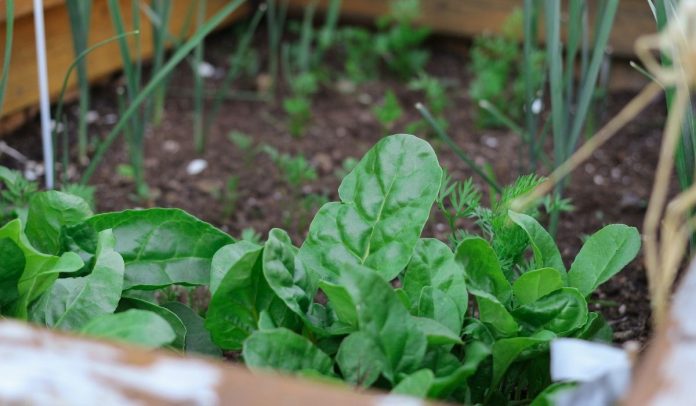
If you have a garden plot that you are ‘done with’ for the year and want to let it rest during the winter, but also want to do something with it that will put it in better shape come next spring, consider planting a “cover crop”.

Cover crops are helpful for various reasons, including building the soil, suppressing weeds, controlling soil erosion, increase organic matter in the soil, and recycle soil nutrients. Cover crops are primarily used to “rest” or leave a garden area open during non-production times.

As such, we most often planted in the fall, however, summer cover crops can be equally effective and can provide the same benefits as a fall cover crop.

Also called “green manure”, these are never planted with any intention of being harvested. Rather, they contribute to soil improvement in the place where they are grown. Most gardens benefit from the use of cover crops when not planted, instead of leaving the garden fallow (unplanted).

Let’s look at a couple of example of what could be planted now to carry your site thru winter and be ready for spring gardening.

Two really simple winter cover crops that I’ll push are rye grain and Crimson clover. These can be used alone or together to get the best out of each.

Rye grain (not to be confused with ryegrass) works in two ways. It works on all the areas mentioned earlier and it serves as a trap-crop for root-knot nematodes. You’ll want to plant 2-4 lbs per 1,000 square feet.

Be sure to ask for Elbon rye at the local feed store for best nematode control. Elbon rye is unique in that it will allow the nematodes into its roots and will be infected. But, it also traps the nematodes so that they cannot escape to infest other plants later in the season. It ‘traps’ them!

The second plant that I’ll push is Crimson clover. Crimson clover is the beautiful, dark red (crimson?) flower that you’ll see on roadsides and in some pastures around this region in the spring. Purchase and plant ½ lb per 1,000 square feet.

Now our intent is to use that clover for its nitrogen-fixing ability that all legumes can do. Incorporating legumes into the soil adds nitrogen much better than any other plant.

Crucial to this cover crop procedure is to kill the plants at least three weeks before you plan on planting in that area of the garden. So, if you are planning on planting potatoes in mid-February, then you’ll mow down and then till in your rye and/or clover about mid-January so that the cover crop will have time to decompose and provide all the benefits to the potato crop that is being planted.

Now for the neighboring row that is planned for tomatoes. You’d be wise to wait until all chance of frost is past before planting tomatoes as well as many other spring garden vegetables. So, you would mow-down and till-in your cover crop in early March.

That last section of your garden, saved for summer heat tolerant purple hull peas and okra, may very well see the clover blooms and grain seed heads before you mow them down, till them in three to four weeks before planting your summer vegetables.

It should be noted that for maximum benefit, a cover crop should be terminated (killed) while in the flowering stage. At this point, the crop will return the greatest amount of biomass and nutrients to the soil. But with onions, potatoes, and many other vegetables that we do not want to wait until June to plant, we terminate them earlier to suit our needs.

Another option is to mow down the cover crop and then leave the material on the surface as a mulch. This works best if you are looking to do a no-till kind of garden program. The root biomass in the soil will still provide a valuable volume of organic matter.

The value of organic matter cannot be understated. Soil building is a continual process in the garden. And it is important to understand that organic matter is continually decomposing and cannot be built up permanently in the soil. Just because you purchased a load of compost years ago and tilled it in, does not mean that you are done. Soil must be replenished with nutrients and organic matter regularly for the best results.

Other suggestions for a winter cover crop are winter wheat, oats, barley, Daikon radish, mustard, annual ryegrass, rapeseed, turnips, and several other clovers.

If you want to try a summer cover crop, consider Sorghum-Sudangrass, Buckwheat, cowpeas (think poor quality Purplehull peas), and others.