
Home Blog Page 388

Living the Fit Life: Cinco de Mayo

0

It’s May, people! 

May is probably the busiest month of the year for me. If not, it’s coming in a close second to December and the Christmas holidays. First comes my Stepmother’s birthday, Mother’s Day for three, then my husband and my brother-in-law’s birthday (they’re twins), then my Mom’s birthday, and finally my 14th wedding anniversary.

Are you as tired as I am after reading that? And, oh yeah, did I mention the Pandemic? 

Do you know what would make my life easier? A theme. Yes, a theme. When time is short and meal prep is key, a theme simplifies matters even further. I had a friend suggest once that, as a busy parent and teacher, she would love to be able to make one trip to the store, buy a slew of similar ingredients and be able to make multiple dishes from those things. I dedicate this one to her.  

In honor of Cinco de Mayo, let’s make our theme Mexican food! Or, arguably, Tex-Mex. This is Texas, after all. 

Mexican food can be one of the hardest things to live without when you’re desperately trying to be a saint. Restaurant Mexican food is loaded with cheese (fat), refried beans (fat, again), rice (alas, simple carbohydrate) and is topped with an incredible amount of sodium. The food is delicious, of course, and I miss it so. 

Here are some of my favorite Mexican food recipes from some amazing bloggers, with a few comments of my own.

crockpot2-683x1024.jpg
  • Slow Cooker Cheesy Enchilada Quinoa Bake by Chelsea’s Messy Apron. Find the recipe here: http://www.chelseasmessyapron.com/slow-cooker-cheesy-enchilada-quinoa/ I can’t get enough of this one! Prep is minimal and is done in three hours on high in your Crock Pot. You could start this up on your lunch break, and it would be ready by the time you got home from work. A plus is that your house will smell freakin’ fantastic. 
taco-soup-with-feta-683x1024.jpg
  • Vegetarian Taco Soup by I Heart Vegetables. Get the recipe here: http://iheartvegetables.com/2016/08/29/vegetarian-taco-soup/. This one comes out looking just as delicious as the picture and tastes incredibly flavorful. Prep is only 10 minutes and cook time only 30. Not only that, the recipe yields six servings. Translation: a lot of soup. It freezes well for later. 
Vegetarian-Black-Bean-Enchiladas-Image-6.jpg
  • Vegetarian Black Bean Enchiladas by A Cedar Spoon. Get the recipe here: https://www.acedarspoon.com/vegetarian-black-bean-enchiladas/. My husband will eat these. Is that convincing enough? At home, I cook almost exclusively for myself. That’s how I know if things freeze well, by the way. These take a little extra prep, but can be made ahead of time and then popped in the oven to heat. 

So here are the ingredients you’ll need for these dishes:

  • Ground turkey
    • Look for the leanest ground meat possible. Also, after cooking, drain to remove the excess. Two out of the three dishes above are vegetarian, but you could easily add ground meat to the dish. 
  • Quinoa
    • Quinoa is super versatile. Use it as a replacement for rice. 
  • Beans
    • Black beans and pinto beans specifically. These recipes call for canned beans, so look for low sodium and rinse before using.  
  • Diced tomatoes
    • Have you tried fire-roasted diced tomatoes? They go perfect with the Mexican food theme. 
  • Corn
    • Not much to say about corn. I tend to skip it in my dishes. I already have starchy beans, so I don’t miss it. 
  • Enchilada sauce
    • Choose according to spiciness to control the heat of your dish. I’m strictly a mild kind of girl. If you have time, you can make your own. 
  • Onion and bell peppers
    • I got a bag of frozen, diced onions and bell peppers from the frozen section a few days ago. It was like a dream come true. I had to do absolutely nothing except measure out what I needed. 
  • Taco seasoning
    • I’ve noticed low-sodium packets of these hitting the shelves. Keep an eye out. 
  • Vegetable broth
    • Swanson is making organic vegetable broth these days for roughly the same price as the regular stuff. 
  • Tortillas
    • Swap flour for corn tortillas. The enchiladas don’t hold up as well, but taste just as good. 
  • Cheese
    • These dishes call for quite a bit of cheese, which adds calories up quickly (except for the feta used in the taco soup). I get around this by adding cheese sparingly to individual servings. Kraft makes a Mexican cheese blend with 2% milk that I use. 
  • Avocado
    • Enjoy your avocado in moderation. It’s deliciously high in calories because of healthy fat.
  • Salsa
    • Enjoy your salsa. It’s incredibly low in calories. For those of you watching your blood pressure, the jarred stuff can be full of sodium. Proceed with caution. 
  • Sour cream 
    • I don’t actually buy sour cream anymore. I swap it for 0% fat plain Greek yogurt instead. They taste amazingly identical, but with less fat, fewer calories, and more protein. 
  • Chili powder, cumin, and minced garlic

Enjoy the Mexican flavors for a fraction of the cost, not to mention the calories. I hope this helps simplify your life as much as it does mine. Enjoy!

Brittany Hall is the owner of Brittany Hall Certified Personal Training and Health Coaching LLC. She is an ACE Certified Personal Trainer (ACE-CPT), ACE Certified Health Coach (ACE-CHC), and ACE Mind Body Specialist, all earned with the American Council on Exercise (ACE). She also holds an advanced certification with the Cancer Exercise Training Institute (CETI) as a Cancer Exercise Specialist (CES). She was an attendee at the Active Lives: Transforming Our Patients and Ourselves conference presented by The Institute of Lifestyle Medicine at Harvard Medical School as well as the IDEA World Fitness Convention presented by the IDEA Health and Fitness Association. Her latest venture is as a POP Pilates instructor.

New SFA graduate program trains educators to be athletic directors

0

NACOGDOCHES, Texas — A new concentration available through Stephen F. Austin State University’s Master of Education in educational leadership prepares students to become leaders in the field of public-school athletic administration.

Beginning this fall, the James I. Perkins College of Education at SFA is offering an athletic director concentration that provides the needed skills and knowledge to effectively supervise both coaches and student-athletes.

“The Master of Education in educational leadership program at SFA has a rich history of preparing effective and capable school leaders who influence the educational setting and focus on instruction for student success, but the addition of a program specifically for future athletic directors is a new one,” said Dr. Barbara Qualls, director of SFA’s educational leadership program.

“Students are already enrolling in a cohort for this new program,” she added.

Through this 30-hour, completely online program, students can earn an educational leadership master’s degree, develop athletic administration skills and meet many of the requirements for eventual principal certification, all while remaining fully employed.

“In each course, a field-based component connects the university coursework with transformative leadership experiences in the school setting,” Qualls said. “The students complete assigned and creative experiences that directly apply to each course and comply with the Texas core competencies for administrators and Educational Leadership Constituent Council standards.”

Scholarships are available for the program.

For more information, email Qualls at quallsba@sfasu.edu.

–Courtesy of Stephen F. Austin News and Media Center

DEBRIS REMOVAL PROJECT BEGINNING IN POLK AND SAN JACINTO COUNTIES

0

A virtual pre-construction meeting was held Monday that included TxDOT employees, contractors, stakeholders, leaders from Polk and San Jacinto counties and emergency management teams that signaled the beginning of an emergency contract for debris removal.

Work is scheduled to begin Tuesday in Polk County within the cities of Onalaska and Seven Oaks as crews begin removing debris through tornado-damaged areas. Work will begin in Texas Acres subdivision in Onalaska Tuesday and progress through other affected areas.

TOM-MAC Inc., Houston TX, will serve as the debris removal contractor and Neel-Schaffer, Jackson MS, will serve as debris monitoring contractor for the $7 million project.

As this work begins, motorists should remain alert and obey all traffic control set through each work zone. Never enter a work zone and stay alert for workers and moving equipment in the area. For more information on statewide closures and conditions, visit drivetexas.org. For more information on this project and others in the Lufkin District, contact Rhonda.Oaks@txdot.gov or call (936) 633-4395.

Texas A&M Forest Service urges citizens to prepare their communities for wildfire season

0

While Texans are doing things differently this spring and summer, the threat of wildfire is constant. Texas A&M Forest Service encourages Texans to take part in National Fire Protection Association’s (NFPA) Wildfire Community Preparedness Day on May 2. By taking a proactive approach to wildfire prevention, homeowners can significantly increase their safety and their home’s likelihood of survival during a catastrophic event.

This was illustrated during the still-smoldering Holcombe Road Fire, a wildfire in Crockett and Val Verde Counties, which started on April 19 and is currently at 25,958 acres.

Rich Gray, Operations Section Chief on the wildfire and Texas A&M Forest Service’s Chief Regional Fire Coordinator, stated that several structures were saved thanks to the mitigation work and defensible space the property owners created, providing the firefighters a safer space to work.

“The actions you take to reduce the risk on your property before a fire occurs can make all the difference,” said Gray. “When a 20,000 plus acre wildfire is raging toward your home, you may feel powerless. But you are not. If you prepare your home now, before smoke is ever in the air, you can help increase its survivability.”

Texas A&M Forest Service works directly with communities across Texas, identifying the communities most vulnerable to wildfires, and helps create Community Wildfire Preparedness Plans.

“This year, our NFPA’s Wildfire Community Preparedness Day celebrations look a little different,” said Texas A&M Forest Service Firewise Coordinator Kari Hines. “But the good news is that we know the biggest changes we can make to protect our neighborhoods are usually directly around our own homes.”

Adapting to the COVID-19 guidelines, the agency turned to social media to help Texans ready their communities for the upcoming wildfire season, posting live videos of employees walking around their homes and demonstrating how to create defensible space.

“With the increase in wildfire activity and warmer weather on the way, now is the perfect time to prepare your home,” said Hines. “These are easy steps that anyone can take around their homes, while at home, to decrease the chance that a wildfire may start, and if it does, to decrease the risk from that fire to your home and family.”

Texas A&M Forest Service created a Wildfire Home Preparation Checklist to help guide Texans at home. Participants that complete the checklist on or before May 2 will receive a prize. Complete the checklist at https://bit.ly/3avN510.

“By protecting your home, you help protect your community and create a safer space for your first responders to work,” said Gray. 

Over the last month, a fifth of Texas A&M Forest Service personnel responded to the Holcombe Road Fire in West Texas. While in East Texas, Texas A&M Forest Service responded to tornadoes in Polk and Newton Counties. In Central Texas, agency personnel worked around the clock alongside Texas Division of Emergency Management to prepare and ship personal protective equipment (PPE) and other COVID-19-related items to first responders on the front lines.

“Even in the midst of a pandemic, natural disasters will continue to happen,” said Gray. “We’re tasked by the State of Texas to respond to them. One way citizens can help our first responders is by preparing their property and to keep wildfires from ever starting.”

For more information about protecting your home, visit tfsweb.tamu.edu/ProtectYourHome/.

Follow Texas A&M Forest Service on Facebook for more mitigation and prevention information at http://bit.ly/2dARmpR.

Chocolate Fruit Dip

0

Fruit Dip: You can buy it, you can share it, and you can make it yourself, which is exactly what I’m going to teach you how to do today!  

I mean, let’s think about this….Chips are great, but chips AND dip make one of the best appetizers for any type of meal and I’ve never met anyone who denied it. Fruit is great, but it’s even better when you have fruit dip to go with it, especially a chocolate fruit dip! 

This particular fruit dip recipe is packed with REAL ingredients, nothing artificial whatsoever, so I guess you could say it’s guilt free. With that being said, let’s get started! 

Ingredients:  

  • 4 ounces of reduced fat or light cream cheese 
  • 2 tablespoons of unsweetened Cocoa Powder 
  • ⅔ of nonfat Vanilla Greek Yogurt 
  • 4 tablespoons of powdered Sugar  
  • 2 tablespoons of mini Chocolate Chips 

Process:  

  1. In a medium-sized bowl, beat the cream cheese to make it smooth. 
  1. Next, add in the yogurt, powdered sugar, and cocoa powder and beat until mixed with the cream cheese.  
  1. Stir in the mini chocolate chips. 
  1. At this point, you can either serve it or stick it in the refrigerator until you are ready to do so. Personally, I do like the taste of the fruit dip if the temperature of it is cooler. 

You can serve with fresh fruit, pretzels, or any kind of cookie that you wish. Yes, it’s called fruit dip, but it does not discriminate, you can use it as a dip for whatever you choose. No matter what you choose, share your fruit dip with family and friends and enjoy! 

Half-off Advertising now Available with Texas Forest Country Living

0

With Texas beginning to take steps towards an economic reboot, Texas Forest Country Living is excited to offer significantly reduced rates for our online advertising package for businesses in our 12-county coverage area looking to grow their promotional footprint! Our followers and reach within the Texas forest country community have been growing at an amazing pace, and we are blessed and excited to be a part of new and future growth as our region continues to grow economically. Let us help promote you and your business as our economy grows!

For more information on pricing/services, please feel free to reach out to Aaron Ferguson either via email (info@texasforestcountryliving.com) or direct line (936-637-2400).

Texas CWD Testing Shows Scale of Effort to Contain Deadly Deer Disease

0

The latest numbers on Chronic Wasting Disease testing in Texas give some hope that efforts to contain the disease are working, according to state wildlife experts. The CWD testing year that ended in February produced just shy of 13,000 CWD samples statewide by the Texas Parks and Wildlife Department with the help of participating landowners and hunters. This number includes all samples collected in Texas CWD Zones and far exceeds the target of 7,039 samples.

During this period, Texas recorded 26 new confirmed CWD positives, with six additional “suspect positives” awaiting confirmation. That includes CWD found in a new area, Val Verde County, in a free-ranging white-tailed deer last December, and a second found in close proximity about a month later. Plans to manage the disease in this area are ongoing. All the remaining new free-ranging positives were within existing containment zones.

“Hunters can still plan for a good fall deer season and we encourage them to continue to have their deer tested to help TPWD biologists with statewide sampling efforts. Early detection is critical to managing and containing CWD to protect Texas deer,” said Clayton Wolf, Texas Parks and Wildlife Department wildlife division director. “It is important for everyone to be aware and informed about this disease, the zones of concern, the regulations and the common-sense precautions we’ve recommended for years.”

CWD was also detected in Kimble County for the first time in a deer breeding facility in early February. That facility and facilities that had supplied deer to or received deer from that facility during the previous five years are under quarantine, and herd plans for those facilities are being developed with the Texas Animal Health Commission as well as plans for increased surveillance in the immediate area.

Four of the five Texas deer breeding facilities that tested positive in 2015-2016 are no longer in operation.

In Texas, CWD was first discovered in 2012 in free-ranging mule deer along a remote area of the Hueco Mountains near the Texas-New Mexico border, and has since been detected in 176 white-tailed deer, red deer and mule deer in Dallam, El Paso, Hartley, Hudspeth, Kimble, Lavaca, Medina, Uvalde and Val Verde counties. Of those, 129 are connected to deer breeding facilities and release sites.

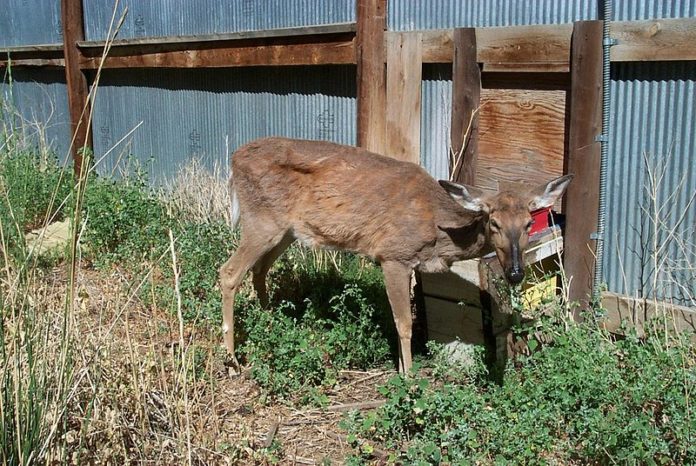
CWD among cervids is a progressive, fatal neurological disease that commonly results in altered behavior as a result of microscopic changes made to the brain of affected animals. An animal may carry the disease for years without outward indication, but in the latter stages, signs may include listlessness, lowering of the head, weight loss, repetitive walking in set patterns, and a lack of responsiveness.

To date there is no evidence that CWD poses a risk to humans or non-cervids. However, as a precaution, the U.S. Centers for Disease Control and the World Health Organization recommend not to consume meat from infected animals. For more information, see the TPWD website.

–Courtesy of Texas Parks and Wildlife

How To Deal With Stress During a Time of Uncertainty

0

* The content provided here is for informational purposes only and is not intended as medical advice, or as a substitute for the medical advice of a physician. 

With everything going on around our counties, state, country and the world, I seem to be more stressed than I was before this change in our lives. Financial statuses have changed, school went online, having to work from home for almost six weeks (something I found out I suck at), and many more changes.  

Despite all the stress and uncertainty, I have learned how to teach myself to relax and know it’s okay to take a moment and breathe.  

Maybe you don’t really get bothered by stress, you can handle it. And if that is you…. PLEASE send me your brain. But for those of you like me, where it seems like worry and uncertainty take over, I have a few tips that may be of help to you.  

Random Acts of Kindness  

It seems to always slip my mind to take a second out of my day to do something nice for others. There is no greater joy than being in public and helping a Senior. First, I love elderly people and just want to snuggle them 24/7. And second, doing something kind makes me think that they look at me as a good “kid” and not just some wild thing. I was raised to always lend a helping hand, especially with someone in older years. When helping I like to think they look at me, or others that do the same and see that the our generation isn’t so far gone. Back to kindness, doing good for others makes you feel good, helping to alleviate some of the stress you may be feeling. Check out Very Well Mind to find out more about how kindness could reduce stress. 

A List to Be Thankful For 

We tend to forget all of the good when we are frustrated, overwhelmed, or uncertain. Next time you just are at your wits end, stop, take a minute and think of all the things you are thankful for. It may be hard, our brains get so bogged down with everything going on. Taking a quick moment out of your day to think on these things will bring you back to a place of gratitude. Remember.. No matter what is going on, there will be a new sunrise, a new day, a fresh start. And that is something to always be thankful for. For ideas on creating a gratitude journal check out SelfMadeLadies. 

Exercise 

“Stress is an inevitable part of life. Seven out of ten adults in the United States say they experience stress or anxiety daily, and most say it interferes at least moderately with their lives, according to the most recent ADAA survey on stress and anxiety disorders.” says the ADAA. To find out more about how exercise can reduce stress visit ADAA.org 

Meditation/Prayer 

You don’t have to spend hours doing this to help . Psalms 94:19 says “When doubts filled my mind, your comfort gave me renewed hope and cheer.” Just a few minutes a day can help to bring your mind back into the right frame and help you push through the day.  

An Old Friend or Relative Could Be Just What You Need 

Sometimes taking a second out of the day to connect with someone that is near and dear to our heart is the best kind of medicine for stress. Having someone that you know, trust and can just release yourself and your stress to. Escaping for a brief second to catch a breath and put stress and worry aside.  

Everyone deals with it differently, I am no expert by any means. These are a few things that have helped me during this crazy time. If none of these fit what you’re looking for, take time to find what reduces your stress and pass it on.  

Like the High School Musical cast sang… “WE’RE ALL IN THIS TOGETHER!!!”. We can do this, we will make it, and will come out of this pandemic. Keep your head high, your stress low and know we are all in this together. 

Coronavirus Quarantine Fights Not A First for U.S.

0

Theodore Roosevelt’s 1904 presidential address to Congress is famous for bringing us the Roosevelt Corollary, which warned European nations from involving themselves in the affairs of Latin America. What is not as well-known is a small paragraph sandwiched between two other issues. In the address Roosevelt said: “It is desirable to enact a proper national quarantine law. It is most undesirable that a state should, on its own initiative, enforce quarantine regulations which are in effect a restriction upon interstate and international commerce. The question should properly be assumed by the government alone. The Surgeon-General of the National Public Health and Marine-Hospital Service has repeatedly and convincingly set forth the need for such legislation.” As early as 1905, years before the now famous Spanish Flu, and over a century before our current crisis, the government and the states already were arguing over jurisdiction and legality for public health.

Before the Spanish Flu or COVID-19, southern Americans feared Yellow Fever epidemics that sprung up every couple of years. States like Louisiana suffered many of the same calamities we have today as people became so sick that businesses began to fail and their lives were turned upside down. It was estimated that the Louisiana economy suffered the loss of hundreds of thousands of dollars in those years.

Believing the fever was spread by germs, the state and towns’ boards of health did all they could to prevent the spread by ordering quarantines of towns and homes where the disease was, making it difficult to conduct business in such towns. As the numbers of dead reached into the thousands, contagious cities could not even hold funerals as the dead were rushed away too quickly for burial before the contagion could spread. Another way to stop the spread was to order every ship entering the state to be checked and cleared by medical personal. Ships suspected of fever were quarantined for 10 days before they could continue upriver.

During this time, the federal government, under the Marine Hospital Service instituted in the John Adams’ administration, tried to coordinate with the Louisiana state health boards. The problem was the national health boards were being blocked by similar state health boards. Not far removed from the Civil War, the gulf coast states did all they could to boost their own quarantine laws so as to reject national help and push out any federal oversight.

The year 1897 was a particularly bad year for Yellow Fever and New Orleans solution was basically a shelter in place order and quarantine for anyone suspected of infection. They even put guards at homes containing Yellow Fever. The city split in two over the decision. Some, including prominent doctors, argued that keeping people in their homes surmounted to imprisonment without trial. They wanted quarantines limited to those who showed symptoms only. The state board disagreed. The board argued Yellow Fever was simply too dangerous to allow people to congregate. The board recognized the injury to workers and business, but insisted credit was made available to assist them.

In 1898, just a year after the deadly epidemic, a French ship, the SS Britannia, carrying mainly Italian passengers arrived in Louisiana. That arrival led to an important legal precedent for quarantines.

All 408 passengers cleared the state-run quarantine center and made their way up river. However, when they reached New Orleans they were informed of a new decree meant to stop the spread of Yellow

Fever. The decree forbade the passengers entry into the city or any other city in the quarantine area. The ship’s owners tried to get a judge to block the decree, but were denied. The ship ended up taking their passengers to Florida. The ship’s owners, trying to sue for redress, took their case to the Supreme Court in what became known as the 1902 Compagnie Francaise de Navigation a Vapeur v. Louisiana Board of Health Case.

The high court sided in favor of the Louisiana Board of Health and ruled quarantines fell under the authority of state’s police power to protect their state. The judges used as part of their argument the 1824 Gibbons v. Ogden Supreme Court case. That case not only helped define quarantine laws in Louisiana, but effects the federal government today when dealing with COVID-19.

This was a commerce case dealing with interstate shipping. Chief Justice John Marshal said that the Commerce Clause in the Constitution gave the federal government power over shipping on rivers that were interstate. However, he also said the 10th Amendment to the U.S. Constitution limited police powers to the states, including quarantine powers. If Congress or the Trump administration attempts a national quarantine, they would run into issues with the courts because of Gibbons v. Ogden. However, the Gibbons ruling, combined with the Louisiana Board of Health decision, gives the states’ power to do so.

What we saw in the beginning of this article was, however, a push for a national quarantine law in 1905. The idea for federal quarantines started becoming popular in the 1880s with the progressive movement and a large influx of immigrants. Knowing the government could not replace state quarantine laws, they focused on quarantine of immigrants. Laws passed in 1891 and several later years even put a 40-day quarantine of ships knowing the price it would cost the shipping companies. Most states supported this decision; one that did not was Louisiana. The Federal government by 1906, using the Commerce Clause, had established a federal quarantine for international and interstate travel. Yet, the role of local quarantines still resided with the states, and the laws differed state by state.

This was the situation in 1918 when the devastating Spanish Flu ravaged the world. The federal government could control entrance into the U.S., but it was up to the states to contain the virus within their borders. The Spanish Flu took the lives of around 675,000 Americans and created a situation not unlike ours today. It was during this time towns and states took unprecedented steps to stop the spread of the flu.

To try to curb the spread, or as we say today flatten the curve, they not only issued quarantine orders, but mandated stay at home orders. In my own state of Oklahoma, local principalities like Sapulpa, OK began to mandate stay at home orders. However, like today, eventually the State got involved with its own orders, to the ire of Sapulpa. On October 18, 1918 Dr. John M. Duke, the state health officer, ordered all schools, theaters, and other places of gathering closed. He went on to say,

“All gatherings of more than 12 persons must be avoided. People do not seem to realize that the influenza is extremely infectious and is an extremely dangerous disease.”

“This is a great mistake and has done much harm to speak of this disease as the “Spanish Flu” because it is not a disease to be taken lightly. The present epidemic is the worst that has been known for a century, with the possible exception of the epidemic of 1889-90, and it must be remembered that the present epidemic is still at its height.”

“It must be borne in mind that in a considerable portion of cases the influenza tends to turn into pneumonia. When pneumonia developed form influenza the death rate is about 45 percent. By comparison with almost any other disease, this death rate is extremely heavy.”

A similar statement was reported in another paper. This time Duke said, “Had not the statewide quarantine been imposed, the epidemic would have been deadlier. This is not theory, but amply proven by comparing the experiences of localities which were quarantined and those which were not”

The Sapulpa Herald called the state action drastic. The town had planned to reopen schools and churches the next day believing the spread of the disease had been curbed. They did not like the fact that the state government overstepped their bounds.

They did not have to wait long for redress. About three weeks after the state quarantine was issued it was retracted on November 9. The Norman Transcript newspaper in Norman, OK opened their story with one that would probably sound familiar today:

“Much to the displeasure of the school children, possibly, but to the extreme satisfaction of almost everyone else in the state, the influenza quarantine order…will be lifted…There has been a great deal of inconvenience caused by this quarantine, at least until we became accustomed to it. We have now been quarantined longer than three weeks, I wonder if any of us feel accustomed yet?”

Now, it’s 2020. Just like in Roosevelt’s day, there are those calling for national quarantine laws to fix our current situation.

I am far from a constitutional lawyer, but from what I can tell any federal national quarantine effort will never get past the courts. There is too much precedent leaving that remedy to state policing power. The federal government can make laws such as they did when banning Chinese travel to the US, which by the way the U.S. has done plenty in past epidemics.

A real question for today, however, is can state governments shut down healthy businesses during a pandemic? Clearly, they can quarantine those sick or suspected of being sick. The Supreme Court has ruled in favor of that.

What is not clear is can they stop all businesses and churches from functioning and force social distancing? It is alluded to in Louisiana and was clearly done for about three weeks in 1918, but there is no evidence of the rule ever being challenged. There is a case in California where the First Church of Christ Scientists sued for the right to practice. Four members of the church board were arrested with hopes of getting a court decision in their favor. It is difficult to find more information on the case, but from newspaper accounts the charges were dropped on the groups because closing their church was unconstitutional. Yet the order to close churches continued to be enforced.

I am not saying there were not more challenges; I just found no evidence of it. There are possible issues with the First Amendment rights of religion and assembling. So, historically speaking, this controversy is, once again, really nothing that we have not seen before. The biggest difference may end up being in scope and, if this goes on much longer, there could possibly be legal challenges to the states’ authority to keep everyone in their homes.

Dr. James Finck is a Professor of History at the University of Science and Arts of Oklahoma and Chair of the Oklahoma Civil War Symposium. Follow Historically Speaking at http://www.Historicallyspeaking.blog or on Facebook.

How Time Flies

0

I am 23. I grew up in a small town called Lampasas; not many people have heard of it and an even fewer know where it is. This little town saw me grow, from my first steps to my last steps across my high school stage. There are few other places that I can call home and I am happy that I got to call this small Central Texas town, home.

When I was in grade school, I would never have imagined school closing down in the middle of March due to a pandemic like it is today. However, I also wouldn’t refuse a “sick day” every once in a while.

Sure, I learned about the diseases and sickness and how the body can fight off infections on its own at a very basic level but as a second grader I didn’t have time to think about that sort of stuff. There were only 3 things I cared about back then: When was recess, lunch and what I was going to have for dinner back home along with not missing my nightly schedule of cartoons before bed. So, the thought of a global pandemic wouldn’t dare to cross my mind. Not yet anyway.

As I moved through the ranks my knowledge and basic understanding of things began to expand. In middle school classes got more in depth and we no longer worried about recess. Instead we worried about making the sports team, struggled to find our social circles and all the while dealt with some degree of teenage angst. And yet, through these struggles we survived, made new friends and lost some too. Outside of school we would gather at the local Taco Bell or McDonalds not worrying about staying six feet apart or wearing face masks because no one had even heard of social distancing. Although in history class I did learn about the bubonic plague and the Spanish flu. It was then that I realized that a pandemic could happen. It was not a question of IF it would happen again but when and as my teacher said if we don’t learn from history, we are bound to repeat it. Still, I didn’t care I had a hangout to go to at Taco Bell and I didn’t want to be late.

When I got to high school that was a whole new can of worms- but a good one. Graduation was on the horizon; college was in the distance, but freedom was here or at least more than I had in middle school but with great power comes great responsibility.

My parents no longer asked if my homework was done or how my classes were going. They believed that by then I should have a pretty good understanding of what is going on in my life, and for the most part I did.

We worried about bigger things now. SATs and ACTs, tuition and which college we wanted to go to and also trying to figure out who we were going to ask out for prom. It was brave new world waiting for us outside; we just had to open the door.

Of course, the one big thing my classmates and I were looking forward to was getting our driver’s license.

When I got my driver’s license, I would throw myself at the first opportunity to get behind the wheel. Back then I drove a 1994 Chevy Geo Metro and I must admit it was a cute little thing. It was nothing fancy, it had hand crank windows, and no A/C. Looking back I feel bad for the little engine that could. It didn’t ask for much and yet gave me so much in return.

I loved going on grocery runs on my own with my windows rolled down enjoying the breeze with not a care in the world or worried that I would walk into the store to find empty shelves of the bare necessities like we do today. Heck, I would even throw in a snack and a drink in the cart, if my mom was paying. It was a brave new world waiting to be explored to me and all I had to do was walk through the door, and in 2015 I did just that.

It is 2020 now and I am 23, I live in a totally different world than what I grew up in and what I thought was normal. Over the past five years, I have gone to SFA, met wonderful people, and had great experiences. But I would have never imagined I would live through a pandemic, however, slowly but surely, we are making it. It’s been hard on all of us. Lives have been changed and the world as we knew it seems like a thing of the past, but the truth is it’s still going to be here when this is all over. The question is, what are we willing to learn from this experience and make a difference moving forward.