


Home Blog Page 427

SEASON TICKETS FOR THE 2019-2020 TEMPLE THEATER SEASON AVAILABLE NOW

0

LUFKIN, TX: SEASON TICKETS for the entire 2019-2020 season are on sale to the general public now through June 28. This includes all eight performances within the Angelina Arts Alliance’s Performing Arts Series at the Temple Theater.

The Angelina Arts Alliance is celebrating 19 years of bringing the very best from the world of performing arts to east Texas and this year’s Season Sponsors for the 2019-2020 Performing Arts Series are Georgia – Pacific and Southside Bank, along with the generous support from the T.L.L. Temple Foundation.

Each new season the Angelina Arts Alliance seems to raise the bar in terms of exceptional programming, and the 2019-2020 season does just that. The season line-up represents the best artists and performances in several genres. Starting in September and running through April patrons will enjoy performances by country music legend Charlie Daniels (Sept 7), Taj Express – A Bollywood Musical Revue (Oct 19), Georgia On My Mind – Celebrating the Music of Ray Charles (Nov 21), the world famous Fort Worth Symphony Orchestra Holiday Concert, featuring Lufkin Native Hannah Roberts (Dec 17), international music sensation Ladysmith Black Mambazo (Jan 21), the ultimate feel good show The Choir of Man (Feb 8), the fabulous touring Broadway musical An American in Paris (March 7), ending the season with the stunning physical feats, dancers and illusionists, MOMIX in “Viva MOXIX.”

“We are very excited to offer eight world-class performances in our new season. The best way to ensure that you have seats to each show is to become a season subscriber! Season subscribers enjoy guaranteed premium seats to each performance. Our shows sell-out frequently, but our season subscribers always know their seat is secure,” said Jennifer Allen, Executive Director.

To purchase season tickets, call Kristie Bailey, the Box Office Manager at (936) 633-5454, or visit the Temple Theater box office in person. Box Office hours are Monday – Friday 11 am to 5 pm. Follow Angelina Arts Alliance on Facebook for late-breaking news and ticket giveaways.


DPS Ramping Up Move Over/Slow Down Enforcement

0

The Texas Department of Public Safety (DPS) is continuing their enforcement efforts across the state focusing specifically on violations of the state’s Move Over/Slow Down law. These periodic enforcement operations by DPS Troopers are planned throughout the year at various locations in Texas, with several operations planned in June. One of those operations will take place in Beaumont District throughout the day on Wednesday, June 19. The Department of Transportation will be participating in a non-enforcement capacity.

The law, originally passed in 2003, requires motorists to move over or slow down when certain vehicles – including police, fire, EMS, Texas Department of Transportation vehicles and tow trucks – are stopped on the side of the road with emergency lights activated.

“Our Highway Patrol Troopers and other offices risk their lives every day for the people of Texas, and their safety is particularly vulnerable while working on the side of the road, where the slightest mistake by a passing motorist can end in tragedy,” said DPS Director Steven McCraw. “While our officers are serving and protecting Texans, we’re asking drivers to do their part by adhering to the law – simply move over or slow down.”

Specifically, Texas law states that a driver must either:

 Vacate the lane closest to the applicable vehicles stopped on the side of the road (if the road has multiple lanes traveling in the same direction) or

 Slow down to 20 mph below the speed limit. (If the speed limit is below 25 mph, the driver must slow down to 5 mph)

Drivers should only move over if they can do so safely and legally; otherwise, they should slow down.

“In light of the numerous vehicle crashes that occur in Texas and across the nation on a daily basis, and the unfortunate fact that many still violate the state law that has been in effect over 15 years, we are increasing our enforcement and education efforts related to this law,” said Director McCraw. “In addition to complying with the law to protect those who work on the side of the road, we encourage motorists to show the same courtesy to fellow drivers stopped along the roadways. Let’s all get home safely.” 2

Violations of the law can result in a fine of up to $200; the fine increases to $500 if there is property damage. If violators cause bodily injury, they can be charged with a Class B misdemeanor, resulting in possible jail time and a maximum fine of $2,000.

Data from 2018 shows that DPS issued more than 41,000 warnings and citations to motorists violating the Move Over/Slow Down law. Preliminary data shows this year approximately 9,800 warnings and citations were issued for violating the law.

Mayhaw disease woes

0

Mayhaws are about as East Texas as I can imagine. It’s a native fruit that produces a wonderful jelly that our friends in the rest of the state just simply do not know about. I’m such a fan of the jelly that I’ve been known to hide the delicious jelly in a back corner of the refrigerator.

The other week, a gentleman that lives off Crippen Road in Huntington was asking what the disease was on his Mayhaws that has left them barren for the past seven years. He too was planning on enjoying the fruit of this tree but they had been afflicted with a disease.

They have a common fungal problem of Mayhaws called “rust”. To be more specific there are two kinds of rust: Quince rust and Cedar Apple rust. Twigs, fruits, leaves and even the thorns of Mayhaws can be infected with this fungal rust. Fungal infection causes the tissue to swell and grow abnormally large.

As the infected site swells the diseased leaves curl and die. Infected fruit appear covered with white, tube-like projections about 2–3 millimeters long. Each white tube splits open lengthwise, revealing orange spores on the fruit surface. Infected tissue typically dies after spore production, resulting in twig dieback.

Rust fungi are fundamentally parasites, and they can only survive on a living plant. The quince rust fungus has a very complicated life cycle and needs to spend part of its life on a juniper or red cedar and part of its life on a plant in the rose family to complete its life cycle.

Some other plants in the rose family (Rosaceae) that are also infected include apples, chokeberry, Mountain ash, Pear, Quince, Serviceberry and, even the landscape favorite, Red Tip Photinia.

During wet or humid weather in midsummer to early fall, spores are released from mayhaws and other susceptible plants in the rose family and are carried by the wind to juniper leaves and green twigs, which may then become infected. In spring of the following year, slightly swollen, spindle-shaped areas called galls form on quince rust-infected juniper twigs and become covered in orange, cushion-like masses of spores.

Galls caused by the cedar apple rust fungus are round with orange spore tendrils poking out of them. Spores produced on the juniper galls are blown to mayhaws and other susceptible hosts in the rose family, where infection may occur during favorable conditions. Galls on junipers are often perennial and produce spores annually for many years, until the branch dies.

Occasionally, the fungus will grow into a year-old branch of mayhaws or rosaceous hosts, and a canker (an area of dead tissue) may form. The fungus can overwinter in cankers and produce spores again the following spring. More typically, the infected tissue on the rosaceous host dies after the first year, resulting in twig dieback.

The potential for rust exists wherever junipers and mayhaws grow near each other. Removing junipers from the area immediately surrounding a mayhaw planting can help reduce disease development.

However, the spores of the fungus can travel many miles on air currents, so attempting to remove the juniper host from the environment is not always a reasonable management strategy.

Unfortunately, there are no rust-proof mayhaws. For growers who wish to protect their mayhaw crop, the best fungicides contain the active ingredient myclobutanil.

I’ve known folks to cut down every juniper on their property to reduce the opportunity for the fungus to complete its cycle, but I wonder at the effectiveness as they can be carried on wind for a great distance. A much more judicious approach that would certainly save junipers would be to prune out any infected limbs or to apply the proper fungicides to protect the junipers.

I suppose enough the mayhaw fruit will develop for East Texans to enjoy. But if you are frustrated with poor production, try some the fungicide listed above. And be sure to give me a holler if you ever have more than enough mayhaw jelly.

An Update From Trent Ashby

0

With the Legislative Session in the rearview mirror, I’ll be returning to a bi-weekly column schedule to provide periodic updates on what’s happening around the state and in the district. Though the heavy legislative lifting behind us, it’s never too early to start preparing for the 87th Legislative Session, which will not begin until January of 2021. With that in mind, I want to encourage you to continue contacting my office with your thoughts on ways that we can work to address issues that matter to you in the future.

With that, here’s this week’s legislative update. . .

Legislative Update

With the Summer Season upon us, I want to highlight a couple of bills Governor Abbott recently signed into law that will have an immediate impact on summer activities.

The first bill, House Bill 234, would prohibit local governments from enacting rules that block or regulate children selling lemonade on private property. Believe it or not, there have been cases in Texas where local officials shut down a lemonade stand for their failure to produce a permit. Unsurprisingly, this bill passed unanimously in both chambers and was recently signed by the Governor to allow our young entrepreneurs to continue the timeless American tradition of selling lemonade without government interference.

With many graduating high school seniors looking toward their first semester of college in the Fall, many will face the unfortunate reality of student loan debt. While many will seek to obtain occupational licenses for jobs that will help pay down this debt, current law allows for the denial or revocation of an occupational license because of a default on student loans. SB 37, which was recently signed by the Governor, would remove these barriers by ensuring that licenses cannot be denied or revoked because of a default on student loans. This is a great piece of legislation that will have an immediate impact on so many of our students who are working to achieve financial independence and job stability.

District Update

It is incredibly rewarding to be back home in the district where I once again have the opportunity to participate in events that I was unable to attend while in Austin. One ceremony I recently attended was a check presentation for a local volunteer fire department. This grant was awarded through the Texas A&M Forest Service’s Rural Volunteer Fire Department Assistance Program, and when combined with the local cost-share match, will enable Kennard VFD to purchase a new tanker truck. Volunteer firefighters make up two-thirds of all firefighters in Texas and this

program is critical to helping our volunteer fire departments procure the trucks, equipment, and essential fire training necessary to keep our communities safe. I’m proud of the work we did this past session to fully fund this important program for the next two years.

Reminders

The mobile office is on the road this month and looks forward to seeing you on the following dates, in the following locations: June 19th at the Houston County Courthouse Annex in Crocket from 9:00am-11:00am, or at the Trinity County Courthouse in Groveton from 1:30pm-3:30pm; and finally on June 26th at the San Augustine County Courthouse in San Augustine from 9:00am-11:00am.

As always, please do not hesitate to contact our office if we can help you in any way. Our district office may be reached at (936) 634-2762, or you can call our Capitol office at (512) 463-0508.

Governor to Extend the Texas State Board of Plumbing Examiners

0

Governor Greg Abbott has announced his plans to extend the life of the Texas State Board of Plumbing Examiners. When the Legislative Session concluded, the Governor had notified all legislators that a special session would not be necessary to extend the board past its set expiration date on September 1st, 2019.

Under Section 418.016 of the Texas Government Code, the Governor is able to suspend provisions of regulatory statutes if strict compliance would in any way prevent, hinder, or delay necessary action in coping with a disaster. Since Hurricane Harvey made landfall and caused widespread destruction, the Governor has issued a disaster declaration each month effective through today. The magnitude of what still must be rebuilt is reflected in the more than $10 billion of federal funds that are newly or nearly available to Texas for areas impacted by Hurricane Harvey. A qualified workforce of plumbers throughout the state, including from areas not directly affected by Hurricane Harvey, will be essential as those funds are being invested in crucial infrastructure, medical facilities, living facilities, and other construction projects.

The Texas State Board of Plumbing Examiners will continue to play an essential role in all these efforts by ensuring that the plumbers who rebuild Texas and prepare for future disasters do so in a manner that will safeguard public health, safety, and property.

To fulfill the demands for rebuilding after Hurricane Harvey and keeping Texas prepared and able to recover from future disasters, it is necessary to continue the Board to perform its indispensable role in protecting Texans.

The Board will continue to operate through May 31, 2021 where the Legislature can reconvene and extend the life of the licensure for Texas plumbers.

“I am incredibly thankful to the Governor for addressing this issue and for avoiding a special session that would have been costly to Texas taxpayers. Plumbers have been truly integral to our rebuilding efforts after Harvey and their continued expertise in the field has been invaluable,” stated State Representative James White.

The Governor’s declaration is available online at: https://gov.texas.gov/news/post/governorabbott-takes-action-to-keep-texas-state-board-of-plumbing-examiners-active.

Please do not hesitate to contact Saul Mendoza, Chief of Staff, with questions regarding this release at 512-463-0490 or 409-283-3700.

AFP East Texas to Feature Paul Vitale

0

The Association of Fundraising Professionals, East Texas Chapter (AFP ETX) will present Paul Vitale during the chapter meeting set for Tuesday, July 2, 2019 from 11:30 a.m. to 1:00 p.m. at Tyler’s Hollytree Country Club. The event is open to the public, and tickets are $10 for AFP members and $30 for non-members.

“We are so excited to bring Mr. Vitale to East Texas, and I want to encourage the community to take advantage of this opportunity to see one of America’s most sought-out speakers right here at home, at such a reasonable cost,” says AFP ETX Chapter President, Mrs. Whitney Patterson. “You are sure to leave feeling a renewed sense of confidence and focus, no matter what type of work you do.”

In his program titled, “It’s Your Life – Dominate it,” Mr. Vitale will utilize an exciting, multimedia presentation to encourage audience members to maximize their own potential by implementing specific, proven techniques, with emphasis on the following points:

· Choose Challenge Over Comfort

· Exemplify Confidence Not Arrogance

· Undoubtedly Be Yourself

· Dwell on What You Have, Not on What You Don’t

· Promote Hope Over Hatred

Well known for his enthusiasm and magnetic personality, Mr. Vitale, president of Matt Birk and Company, LLC, travels worldwide speaking to organizations about the importance of a positive attitude, a strong work ethic, and other vital concepts. His audiences benefit from the many seeds of heroism he has encountered during his travels and experiences with people from the corporate boardroom, to the classroom, and everywhere in between. During his high-energy presentation, Vitale will present ideas to captivate and inspire participants to thrive and excel in this constantly changing world.

Tickets may be purchased through Eventbrite, and more information may be found at https://community.afpnet.org/afptxeastchapter/home.

AFP ETX is committed to supporting development professionals throughout the greater East Texas area. Today, its membership includes nearly 80 active AFP members who serve as development directors, fundraising consultants, grant writers, volunteer fundraisers, nonprofit executives, and other individuals dedicated to fundraising and philanthropy. The chapter consists of professionals from all over East Texas, including Smith, Gregg, Henderson, Rains, Van Zandt, Upshur, Rusk, Nacogdoches, Anderson and Cherokee Counties.

SPEED LIMIT SIGNS BEING MOVED ON SH 21 WEST

0

 Motorists will soon see a repositioning of speed limit signs on SH 21 west of Douglass in Nacogdoches County.

Crews will move the existing speed limit signs after Texas Transportation Commissioners recently approved the repositioning in order to enhance the safety of the roadway.

The existing 70 mph speed limit sign  will be moved 1.1 mile further west in the westbound lane of traffic and the 55 mph speed limit sign will also be moved 1.1 mile further west in the eastbound lane of traffic. The new placement of speed limit signs will be enforceable once signs are placed.

Motorists are urged to stay alert to these changes and obey all signage in the area. For more information regarding roadway projects and closures statewide, visit drivetexas.org.

For more information, contact Rhonda.Oaks@txdot.gov or (936) 633-4395.

Diboll Smoke-Free Day

0

Angelina County Youth Leadership Council members completed their community service project this past weekend. Members include Alex Sanchez, Diboll High School graduate; Riley Latham, Lufkin High School graduate; and Lauren Oliver, Angelina College student. The Youth Leadership Council (YLC) is a youth coalition with the statewide organization, Texans Standing Tall, that are passionate about reducing underage drug use including alcohol, tobacco, and other drugs. Angelina County YLC members chose to host Diboll Smoke-Free Day in Old Orchard Park in order to start the conversation about the benefits of smoke-free parks and the harms that come with tobacco use and second-hand smoke. Throughout the event, there were fun games and prizes for kids to show them the fun that can be had without the need for tobacco products. Thank you to the Alcohol and Drug Abuse Council, Workforce Center, and Angelina County Heart Alliance for participating in the event. Thank you to members of the community for coming out to the event and supporting the students’ initiative to make our community a healthier place.

Since 1988, The Coalition has focused on eliminating the use of harmful substances by affecting public policy, laws, attitudes and behaviors, all in an effort to foster healthy life-long choices for the local community. For more information about Youth Leadership Council contact Abby Baker at The Coalition at 936-634-9308.

Medicare and Health Issues Conference Scheduled in Lufkin

0

“Power in Community”, a conference on Medicare and health issues is scheduled for Tuesday, July 9, 2019 at the Pitser Garrison Convention Center in Lufkin. The program starts at 9 a.m., a lunch will be provided and there is no charge for attending. The event will be hosted by the Area Agency on Aging and the Southeast & Deep East Texas Aging and Disability Resource Center.

There will be presentations on Medicare Basics, Medicare Preventative Services, help in paying for Medicare Costs and preventing Medicare fraud. There will also be presentations on nutrition and diabetes education. The program is designed for the aged and disabled and those interested in becoming volunteer benefits counselors.

Anyone wanting to register, or needing more information, may contact the Southeast & Deep East Texas Aging and Disability Resource Center at the Deep East Texas Council of Governments Office in Jasper at (409) 384-7614.

Spanish Moss

0

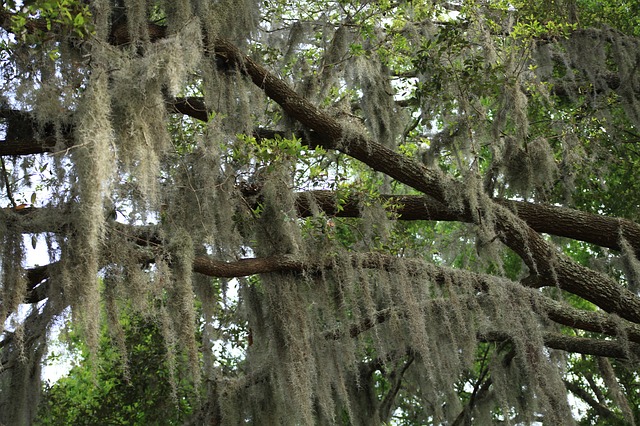
A lady from Huntington called me this week complaining of Spanish moss in her oaks. She’s lived at her residence for over 20 years and this year was the first year that she found Spanish moss in the branches of the trees that she enjoys.

And she’s not a fan of it.

It’s common throughout the south. When I think of the Deep South, in places like Louisiana, Alabama or Florida, it perfectly belongs there. But in Angelina County?

To be clear, it is native to the Mexico, Central America, South America, the U.S., and the Caribbean. In the U.S., it grows from Texas to Virginia. While I have seen it around these parts, it mainly stays in the moist habitat preferring a healthy tree in a wetland site.

Spanish moss (Tillandsia usneoides) is not a moss. It is a bromeliad. The bromeliad family of plants include succulent house plants and even pineapples as a distant cousin.

Additionally, it is an epiphyte. Epiphytes are organisms that grows on the surface of a plant but takes moisture and nutrients from the air and rain water. We would be very wrong to call it a parasite, like Mistletoe. And we would be wrong as well to call it a saprophyte like Resurrection fern that lives on the top of large old oak branches around our Farmers Market.

Very much a plant with leaves and flowers, there are at least five recognized native cultivars and three hybrids.

The most common way Spanish moss is propagated and spread is by fragmented pieces called festoons. If a festoon is broken off and carried off by wind or birds who use it as nest material, it can grow into a full plant. Additionally, the seeds of the moss can float on the wind like dandelion seeds until they land on a favorable limb grow.

Native Americans called it Itla-okla, which meant “tree hair.” It was the early French explorers that called it Barbe Espagnol, or “Spanish Beard”, more or less as an insult to the Spanish conquistadors long beards.

The Spanish, in return called it Cabello Francés, or “French Hair.” Over time the French name won out, and as time went by Spanish Beard was adopted as Spanish moss.

Many kinds of wildlife use of Spanish moss. Birds use it for nesting material. Frogs and spiders live in it. Those who gather Spanish moss are warned against ticks, fleas and chiggers, but experienced collectors know chiggers only invade the moss after it touches the ground.

The major pest of cotton, the boll weevil, is especially drawn to Spanish moss, but moths are not. As such it was used in place of wool (and not cotton) in upholstery before synthetic fibers replaced both.

In the past there were several other uses. Native American women used it for dresses in the past. American colonists mixed Spanish moss with mud to make mortar for their houses—some of which are

still standing strong. Dried moss makes good tinder for fires, and you can make it into blankets, rope, and mattress filling. Mattresses filled with Spanish moss are noted for staying cool on a warm summer night.

In modern gardens it can be used as a mulch. Not only does it cover the soil, but it also can soak up and retain water.

Like it or not, Spanish moss had a rich history here and may very well be a part of your landscape.