


Home Blog Page 553

6 Reasons To Stop Feeding Your Kids “Kid Food”

0

According to the National Institutes of Health, on any given day one-third of children and 41 percent of teens eat from a fast-food restaurant. They also report that the restaurant meals often served to kids contain too many calories. The typical “kid food” being offered tends to usually include chicken nuggets, fries, macaroni and cheese, burgers, and pizza. The problem is that these meals often provide empty calories and don’t provide enough nutrition. They also keep the kids wanting the same types of foods at home, with parents often providing them. One expert, Doctor Yum, says it’s time to ditch the “kid food” and start giving kids better options.

“Most food is kid-friendly. Kids just need to learn how to eat it,” said Dr. Nimali Fernando, a Fredericksburg, Virginia-based pediatrician who founded The Doctor Yum Project. “Kids who are taught healthy eating habits, which include eating a variety of healthy foods, will be far better off now and in the long run. They will be learning healthy habits that will last a lifetime.”

Here are six reasons to ditch the pizza and pouches and get your kids back to real food:

  • Kids can learn to eat real food. Most of us parents overestimate the amount of food children need. Therefore when a toddler takes two bites of their entree, parents may feel defeated instead of realizing they may have eaten enough. Parents then may be more likely to reach for those kid-friendly, addictive snacks (like crackers and gummy snacks) to fill their child’s belly.  It should be no surprise that grazing-style eating, where hunger does not fully develop, leads to a poor appetite at mealtime. Parents should continue to provide opportunities to practice eating healthy foods, and have realistic expectations for what their child should eat. With enough practice kids will get used to a healthy array of fruits, vegetables and whole grains. Check with your pediatrician to see if your child is meeting expectations for growth to ensure his food intake is on track.
  • Restaurant kids meals are a waste of money. When eating out, say no to kid’s meals, which are usually variations on the same “kid-friendly” foods like pizza, chicken nuggets and sweet drinks. Most of these menus have little to no vegetables or fruit. They may be belly fillers and provide calories but little added nutritional value for your dollar. Instead, order a healthy similarly priced appetizer and/or share your entree with your little one (restaurant meals are so oversized that chances are good that the serving is too big for you anyway). Alternatively, order a few entrees “family style” and ask the server to bring extra plates for whole family to sample. This encourages kids to be adventurous and get used to trying new foods.
  • Kid-friendly foods are misleading.  Recent studies of toddler foods show that many actually have more sugar and salt than what is recommended by experts. Food companies know that parents worry about nutrition, and know the buzzwords to attract those worried parents. It’s easy to make food choices based on the promise of “more protein” or “high in calcium.”  But reading the nutrition label (on the back of the box, not the front) will give you the big picture on whether a food is right for your child. Is there an abundance of additives and preservatives? Are the ingredients recognizable and safe? How much sugar is added? Think about the whole foods that might be used to get the same benefit (like a handful of nuts for protein instead of a protein bar).
  • Kids need real food to develop and thrive. While pizza and macaroni and cheese may fill a child’s belly, kids need fruits, vegetables and whole grains to provide the necessary, vitamins, minerals and phytonutrients (plant nutrients) for optimal growth and development.  Furthermore, an important part of a child’s development is their oral motor skills, those functions of the mouth (lips, tongue, teeth and palate) that allow for speech, safe feeding and swallowing. Many kid-friendly foods are soft and easy to eat and don’t encourage development of those skills. Relying too heavily on these foods (like soft chicken nuggets and pouches with soft purées) can allow kids to lag behind in oral motor development and may lead to picky eating.
  • You don’t have time to be a short order cook. Making two or three meals to satisfy everyone’s preferences is exhausting and can lead to cooking burnout. Teach kids to eat what you are eating to save time and money and to encourage the spirit of adventurous eating. This can be done from the earliest bites of solid food. Instead of relying on store-bought baby food exclusively, find ways to make your meals into healthy baby food. Check out the Doctor Yum Project’s kid-tested, pediatrician approved recipes on doctoryum.org. Many of them have a “baby food shortcut” which shows families how to adapt a family meal and make a meal for a baby along the way. Eating in this way from a young age can avoid that picky eater trap and lead to a path to adventurous eating for a lifetime.
  • Nutrition shouldn’t be hidden, so stop hiding the veggies.  Kids that are very hesitant eaters may be benefit from a few hidden vegetables as they gain confidence in food, but in general parents should try to help kids learn to love healthy foods without hiding them. While hidden veggies may help nutritionally, the kids may not gain an understanding that vegetables can be delicious, so they may still try to avoid them when they are visible. Get kids loving their veggies by leading by example, preparing them together, growing a garden, and visiting a farmers market where they can pick out a couple of things to try. The more variety they are exposed to and realize that they enjoy, the better the eating habits will be.

    Kids need fruits, vegetables and whole grains to provide the necessary, vitamins, minerals and phytonutrients (plant nutrients) for optimal growth and development.

“If kids can get involved in the food process, from shopping to preparing it, and they can learn about why eating healthy is so important to them, they are more likely to do so,” adds Heidi DiEugenio, a director at the Doctor Yum Project. “This will help them avoid the obesity problems, chronic health issues, and they will have a better opportunity to live a healthier life throughout their adulthood.”

According to the Centers for Disease Control and Prevention, healthy eating habits can help children maintain a healthy weight, as well as reduce their risks of such conditions as heart disease, cancer, diabetes, iron deficiency, dental cavities, osteoporosis and high blood pressure. An unhealthy diet, on the other hand, can lead to being overweight or obese, increase risks for certain types of cancer, and negatively affect overall health, cognitive development, and a child’s school performance.

Dr. Fernando and Heidi DiEugenio are two of the original founders of  The Doctor Yum Project, an organization with the mission of transforming the lives of families and communities by providing an understanding of the connection between food and overall health, as well as empowering them with the tools to live a healthy life. The project offers free online tools to help families make healthier meals, healthy cooking classes, child nutrition classes, cooking camps for kids, hands-on cooking instruction for families, first foods classes, and a teaching garden, They also offer a preschool nutrition curriculum, with 40 classrooms and almost 600 participating preschoolers. They are the go-to resource for families looking for answers on how make healthy, achievable dietary changes for a lifetime of good health.

Dr. Fernando, otherwise known as Dr. Yum, is a board-certified pediatrician. She is also the co-author of the book “Raising a Healthy, Happy Eater: A Parent’s Handbook” (The Experiment, October 2015). To learn more, visit the site at: doctoryum.org.

Buying a Home? What to Know about Down Payments

0

If you’re in the market to buy a home, your down payment is probably top of mind.

However, it’s important to understand all your options, particularly if you’ve heard the rule of thumb that you shouldn’t pursue homeownership unless you can put 20 percent down.

“In today’s market, misconceptions about down payments are some of the most common, unfortunately” said Danny Gardner, Freddie Mac vice president of Affordable Lending. “And this discourages many prospective buyers from even leaving the starting gate.”

Gardner points out that a growing number of homebuyers are putting down between five and 10 percent, and even as little as three percent through products like Freddie Mac’s Home Possible Advantage. This is important to keep in mind when determining how much home you can afford.

Prospective homebuyers concerned about down payments should also be aware that there are nearly 2,500 homeownership programs across the country that can help with down payment and closing costs, and an estimated 87 percent of U.S. homes are eligible for one or more of these programs, according to research by DownPayment Resource. The down payment program benefit most frequently found is about $10,000, making researching these options and discussing them with your lender and real estate agent a worthwhile step. To determine your eligibility and learn more about down payment assistance, visit downpaymentresource.com/are-you-eligible.

Of course, home buyers should not forget that there are benefits to putting more down initially – this will lower your monthly mortgage payment and reduce the amount you will owe the bank. Additionally, those who put down at least 20 percent don’t have to pay Primary Mortgage Insurance (PMI), an added insurance policy that protects the lender if you are unable to pay your mortgage. However, if putting 20 percent down will deplete all of your savings and leave you with no financial reserves, it’s probably not in your best interest. What’s more, you can cancel your PMI once you’ve built equity of 20 percent in your home.

Don’t assume the dream of homeownership is beyond your reach. Get savvy! There are numerous programs and products available that can help you afford your down payment and beyond.

(StatePoint)

Jennifer La Corte Named Angelina Beautiful/Clean New Executive Director

0

Jennifer La Corte has been named the new Executive Director for Angelina Beautiful/Clean (AB/C).

In making the announcement, Brenda Newton, Angelina Beautiful/Clean Board Chairman, said, “Angelina Beautiful/Clean is delighted that Jennifer has accepted this new opportunity and new challenge.”

“I am excited about this opportunity and look forward to getting involved with my new duties with AB/C,” La Corte said.

A photo of Jennifer La Corte.

La Corte is coming into the organization at the peak of the year where she will organize and oversee eleven events within her first 60 days.  “There is nothing like taking on a new job and having major fundraising and community events to carry out in the first few months,” La Corte said, “but we have great volunteers and wonderful community support.”

Her past experiences include working in the finance industry, a Silicon Valley start-up, event and service arena and being an Executive at Target. She is active in volunteering in the community with Mothers of Preschoolers (MOPs), the Pregnancy Help Center of Lufkin, Junior Achievement and the Junior League of Lufkin.

“Jennifer’s experiences along with her outgoing personality are a great fit for the future of the organization because of her passion for the environment, management experience and heart for service,” Newton said.

Jennifer has been married to her husband, Phillip La Corte, for 6 years and has two daughters, age 3 and 22 months. She is proud to call the Piney Woods home since moving from California and having her youngest daughter born in Lufkin. She will make every effort to help make Angelina County a clean, green and great place to live, work and play.

For more information about Angelina Beautiful/Clean events or how to become involved with Angelina Beautiful/Clean please visit our website at angelinabeautifulclean.org or call 936-63CLEAN (936-632-5326).

Spring Cleaning Cyber Clutter

0

Springtime is here, and we all know what that means: spring cleaning. This month may be a good time to clean out your closet, around the house or have a yard sale—but what about cleaning up your digital life?

Most of us have an online presence, own a mobile device or use a computer daily. Whether it’s a status update or photos shared on social media, financial records or personal contacts stored on our digital devices, all of that data could potentially fall into the wrong hands.

According to a recent study, more than 68 percent of Americans store 25 percent or more of their photos digitally. For most, losing these memories to computer malfunctions, viruses or theft can be devastating.

Better Business Bureau serving the Heart of Texas recommends backing up all of your important files. If you’re not sure where to begin, start by going through your device and deleting files you don’t need, uninstall programs you don’t use and clear out your deleted files. But remember, before you start wiping clean your devices, make sure you back up important pictures, music and files to your cloud, computer or external hard drive.

To ensure you’re safely managing and tidying up your digital life, BBB offers the following advice:

  • Keep software updated. Make sure all devices have the most recent software updates installed. This includes security software, web browsers, document readers, operating systems and any other software you use regularly. Install anti-virus software on your devices and keep them up-to-date.
  • Clean up your mobile device. Delete unused apps and keep others updated. Not only will you reduce clutter, you’ll have more storage space for data and a longer battery life on your device.
  • Create better passwords. Passwords like “123456” or “qwerty” are among some of the most common passwords used by the general population. Longer passwords and those that combine capital and lowercase letters with numbers and symbols provide better protection.
  • Declutter your email inbox. Delete emails older than a year, and create and label folders for emails to stay organized. Delete messages in your spam folder and unsubscribe from emails you don’t open. Move important messages to an archive.
  • Check your privacy settings on your social media sites. Review the privacy and security settings on websites you use to be sure that they remain set to your comfort level for sharing to your friends or the public.

For the latest news and information, follow us on watchyourbuck.com, Facebook and Twitter. To check out a company and find trustworthy businesses, visit bbb.org. Find other news story topics by visiting our Press Release News Center.

Texas State Government Faces Significant, Long-Term Financial Challenges

0

Texas Comptroller Glenn Hegar today released a special edition of Fiscal Notes highlighting long-term financial obligations facing Texas state government. Prior to the 2017 legislative session, Hegar sent a letter to lawmakers outlining some of these obligations which, if left unaddressed, could negatively impact the state’s credit rating and limit the amount of revenue available for general spending.

The report examines four of these obligations:

  • state employee pension funding;
  • the TRS-Care program, which provides health care coverage for retired public school employees and their dependents;
  • the Texas Guaranteed Tuition Plan; and
  • deferred maintenance projects for state buildings.

“As a former legislator, I know too well the difficulties associated with the budgeting process, as lawmakers attempt to reconcile thousands of competing needs,” Hegar said. “Hopefully this report will be helpful as the Legislature works to put the finishing touches on the 2018-19 biennial budget. Although all of the issues discussed in this report cannot be addressed this session, it is important that Texas continues to take positive steps in each legislative session to address our long-term obligations.”

Fiscal Notes is available online and also can be received by subscribing via the Comptroller’s website.

CHI St. Luke’s Health-Memorial Lufkin Lab Receives Prestigious Accreditation

0
Pictured in the front row from left to right: Elizabeth Stanley, Phlebotomy; Wendy Tylich, Operations Manager; Lesia Jones, Team Lead Phlebotomy/POCT. Back row: Janice Ghant, Laboratory Clerk; Dr. David Todd, Medical Director; James Nelson, Lead Chemistry; Edna Almirol, System Director of Laboratory Services; Christy Westbrook, Lead Histology; Sylvia Garofolo, Lead Hematology; Cherelle Liddle, Blood Bank; Rebecca Owens, Chemistry; Sharon Shaw, Microbiology; Danielle Bradberry, Phlebotomy.

Clinical laboratory tests guide more than 70 percent of medical decisions made by health care providers, according to the American Clinical Laboratory Association.

Timely collection, accurate testing and on-time reporting are key to positive patient outcomes. Based on the results of a recent on-site inspection for quality, the Accreditation Committee of the College of American Pathologists (CAP) has awarded accreditation to CHI St. Luke’s Health-Memorial Laboratory in Lufkin.

The facility’s director, David L. Todd, M.D., was advised of this national recognition and congratulated for the excellence of the services being provided. CHI St. Luke’s Health-Memorial Laboratory is one of more than 7,700 CAP-accredited facilities worldwide.

The hospital laboratory has been CAP Accredited since 2008.

“We pride ourselves in upholding the highest possible standards and our continuous accreditation in the CAP program proves our commitment to excellence,” Dr. Todd said. “The Laboratory staff goes beyond standard quality practices and performs at the same level as some of the greatest institutions worldwide.”

During the CAP accreditation process, designed to ensure the highest standard of care for all laboratory patients, inspectors examine the lab’s records and quality control of procedures for the preceding two years. CAP inspectors also examine lab staff qualification, equipment, facilities, safety program and record and overall management.

The Laboratory Accreditation Program is an internationally recognized program which includes complex university medical centers to physician office laboratories. It is designed to go well beyond regulatory compliance, and the program provides a solid foundation for excellence and quality practices in medical laboratories. The U.S. federal government recognizes the CAP Laboratory Accreditation Program, begun in the early 1960s, as being equal-to or more-stringent-than the government’s own inspection program.

“Receiving this accreditation is true honor, but it is also a testament to the outstanding effort and focus on safety that our staff believes our patients deserve every day,” Dr. Todd said.


Techcycle Saturday Returns this Weekend

0

Keep Nacogdoches Beautiful (KNB), in conjunction with the City of Nacogdoches, will host Techcycle Saturday, a free technology recycling event on March 25, 2017, from 9 a.m. – 12 p.m. The collection location is at 220 W. Hospital St. across Pearl Street from the Farmer’s Market.

Keep Nacogdoches Beautiful has restructured its technology recycling program to streamline the collection process and to continue offering Nacogdoches residents a sustainable, volunteer-based technology recycling option. Three Techcycle Saturdays will be conducted this year. Those are from 9 a.m. to noon on March 25, June 24 and Sept. 23.

“Our collection schedule has changed over the past year, going from weekly to monthly, and now quarterly,” said Katie Blevins, KNB executive coordinator. “It’s a volunteer based program; we want to utilize volunteer time in the most efficient way while still offering a technology recycling option for the Nacogdoches community.”

Keep Nacogdoches Beautiful volunteers collected 300 lbs. of recycled electronics at the monthly collection events. After an initial influx on the first monthly collection day, the amount of recycled electronics collected at the monthly events equaled the amount collected during the previous weekly program offered in past years. Blevins expects a similar collection rate from the 2017 quarterly collection events.

Items accepted are computers, including towers, monitors and laptops, hard drives, printers, cables, mice, keyboards, DVD/VCR players, projectors, radios, telephones, cell phones, networking equipment/routers, copiers, fax machines and cords/wires.

Items not accepted include TVs, major appliances, such as washers, dryers and refrigerators, cameras, small household appliances, such as blenders, toasters, coffee makers and vacuum cleaners, ink and toner cartridges. Best Buy in Lufkin will accept TVs for recycling for a fee.

Electronics recycling is also accepted at Staples, 4608 North St. Acceptable items include computers, monitors, laptops, printers and other items. Items larger than a printer or computer monitor will not be accepted.

Keep Nacogdoches Beautiful is a 501(c)3 nonprofit organization that promotes waste reduction, litter management and beautification throughout Nacogdoches County. If you or your organization would like to partner with KNB, email info@keepnacbeautiful.org or visit keepnacbeautiful.org.

Living the Fit Life: Lionheart Krav Maga and Fitness

0

I’ll start this article with a disclaimer. Lionheart rocks. Period. The end.

I must confess, I own a small portion of this gym, but love it like it’s 100 percent all mine. It’s my home away from home. I’ve fallen in love with its atmosphere of grit and dedication, empowerment and self-knowledge.

I began my official martial arts practice in 2011. I say “official” because this was not my husband’s first attempt to recruit me. He had been practicing since 2001, a full 10 years before the thought even crossed my consciousness. He was an established Black Belt. As far as I can remember, this was the only blip on my radar. Karate was apart of him, but not an ounce me. I was totally a supporter.

A few years into our marriage, he tried to teach me H-Form, the very first kata (Japanese for “form”) that a white belt learns, on the football field of the high school we graduated from. I am completely uncoordinated, so I’ll admit I did not catch on easily. When I attended my first class, I shyly took my spot in the back row, feeling my stomach roiling with butterflies. I was wearing a borrowed gi that was too large, and the white belt cinched around my waist was uncomfortably tight.

I wasn’t ready.

I thought maybe I’d barf. I had to sit myself out after almost crying in anger and frustration when the class practiced H-Form that day and I couldn’t keep up.

Note to reader: Please recall that I am Type A and one of my character flaws involves a complete intolerance to not knowing anything and everything about anything and everything from the very first moment I try something new. It is what it is. I own it.

Lionheart Krav Maga and Fitness  located at 922 South John Redditt Drive in Lufkin.

Then, one day like any other, I decided to go back to class. My husband had already left. He taught a kid’s class prior to the adult class, so he didn’t even know that I planned on being there. By this point, I was exercising regularly, but I was bored. I needed a change of pace. I was ready to step outside my (new-ish) comfort zone, so I gave it a shot. It stuck.


One of my very first classes, I had to spar. I was given children’s gloves and foot gear to put on. After being strapped into a helmet with a face shield, I had what I assume is the same sensation a goldfish in a bowl would have. I felt as if I was breathing under water and the world was distorted. These people were encouraging me to hit others! It was ok if I kicked this person in the groin or smacked them on the nose? I had to reassure myself that I wouldn’t get in trouble. Yes, even as an adult, I anticipated blowback from such rash behavior.

This was completely outside of any experience I had before. Growing up, it was “Don’t hit,” or “Don’t be rude,” or “Mind your manners.” You could argue with my mom and dad, but I was a very well-behaved child. No playground brawls for me.

Then, I had an epiphany. I was a wild beast. Completely savage. You know, just stuck in a five foot tall feminine frame. Of course it was acceptable for me to hit people! There was no shaking me now. Aggression was my new stress-relief. People pissing you off at work? Hit someone (in class)! Husband driving you up the wall? Hit him (in class)!

I earned my Black Belt in 2015. By this time, I was known for my katas and kidney shots. I yelled, kicked, punched…and was once again bored. I longed for more self-defense, aggression and mental challenges. I wanted to expand my horizons, but my practice was stagnant. I had mastered all there was to master, so each class was repetition of the class before with no opportunity to grow. What once freed me now felt like a cage.

So, I broke free. Clay and I left our school. We were not the only ones, including my brother-in-law and our close friends, Angela and Richard Russell, and their son, Nathan Grace. Several of us began training in Krav Maga, a contemporary Israeli martial art. What started out as rough-and-tumble fun in a garage sparked an idea that soon burned bright like a wildfire. Mark Slane, the founder and chief instructor for the United States Krav Maga Association, was brought in (on several occasions actually) to bring us up to speed. The training was grueling, but worth it on so many levels.

One word to describe Krav Maga: brutal.

Krav Maga was like nothing I had ever experienced. I was used to the “dojo mentality.” I would go to class, find my position according to belt rank in line, and begin moving from one perfectly-executed technique to the next like checkmarks on a checklist. Class was predictable. Krav Maga was the opposite. There was no gi, no uniform, no belt, because all street fighting requires is a body and the grit to do whatever is necessary to survive.

Techniques were simple and easy to learn, nothing flashy like much of my karate training. Not only that, it could answer a question, karate never could: What then? Yes, I can do this elaborate self-defense joint lock, but what then? So much of the self-defense I learned were taught from a male perspective with the technique being based on a male-on-male fight. So, although I don’t necessarily identify as a delicate feminine flower, last time I checked, I wasn’t a boy, so this just wasn’t a satisfactory explanation.

Krav Maga took my training to the next level. The mental challenge was intense. Before beginning training, I had to decide to do whatever it took to save myself or others. There was no shame in running, but if I had to fight, I had to be confident that I could deliver considerable damage to another human being. Despite my petite frame, I learned that I could take down a man twice my size with relatively little effort. I just had to fight like a lioness.

In January of 2016, Angela and Richard Russell’s brainchild, Lionheart, opened its doors in a tiny space in Diboll. Before long, we outgrew our space and Angela and Richard outgrew their original partner, prompting Clay and I to step up as business partners. We brought Krav Maga to Lufkin in October 2016. The new space is roughly three times bigger than the original facility and it feels magically like home.

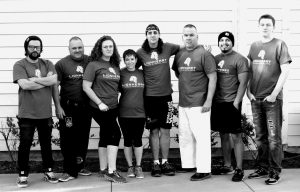
The team behind Lionheart Krav Maga and Fitness.

So, if you’re looking to fall in love and step outside your comfort zone, here’s what you need to know about Lionheart.

What is Krav Maga?
Krav Maga means “contact combat” in Hebrew. It was founded in the 1930s by a Czechoslovakian Jew named Imi Lichtenfeld. He found out quickly that his traditional martial arts background did little to protect his neighborhood from the rising tide of anti-Semitism. Lichtenfeld moved to Palestine in the early 1940s. Over time, Lichtenfeld used his martial arts knowledge to develop a brutal, street-fighting system that was designed to neutralize threats quickly. Krav Maga is the official combative of the Israel Defense Forces (IDF) today. This is a very brief breakdown of Krav Maga’s history. If you are interested in learning more, visit the United States Krav Maga Association web page by clicking here.

Who can do Krav Maga?
Anyone can do Krav Maga. After retiring from IDF, Lichtenfeld began teaching the masses by opening two studios. Krav Maga teaches simple techniques that can be used in countless situations. Classes are a fantastic workout. In addition to learning killer self-defense, it’s not uncommon to see cardiorespiratory fitness and endurance improve. Muscles are toned, fat is lost.

If you’re worried that you can’t cut it, put your mind at ease. Everyone is required to take an Intro to Krav Maga class where you learn the history and basic moves of the practice before joining your first Level 1 class. You aren’t thrown in with the lions, yet.

What classes are offered?

Lionheart offers a variety of classes for all ages.

The youngest are the Cubs, ages 4-7. These are the cutest little bugs you will ever see, punching and kicking in their tiny uniforms. These little ones focus on safety and discipline with a sense of fun.

Kids are up next. They’re our 7-12-year-olds. These guys learn the basics of Krav Maga in a safe, controlled environment where they come to understand the difference between being the good or bad guy, a very anti-bully message. Kids are encouraged to be disciplined outside class, including at home and at school.

Teenagers are welcome, too. Teenagers are considered 13 or older, but we also train very large kids in the teen class. The teen class is often a great gateway into Krav for those the same size as adults, but are unwilling to hang with the grown-ups just yet. Don’t think that means it’s easy.

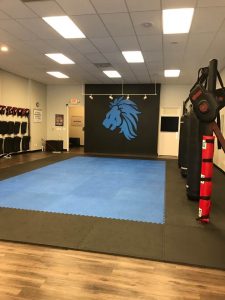
Inside Lionheart Krav Maga and Fitness.

Women have a class all to themselves, if they want it. Although all teenage and adult females are welcome to any Krav class, sometimes girl time is just what we need. This class is perfect for women who are feeling their way onto the Krav scene. It’s intense, it’s Krav, it’s all WOMAN.

Adults, adults, adults. Males and females of all ages team up for co-ed classes of epic proportions. Classes are a whirlwind of music-driven, aggressive, sweaty fun. Learn to defend yourself, boost your confidence, get an awesome workout, and feel like an all-around bad you-know-what.

Personal Training

Yep, we do that, too. One-on-one training is the private way to get fighting fit in the gym.

What about special events?

Birthdays Parties among the little Cubs are very popular these days. Kids gather for food and a martial-arts themed party, fully equipped with a mini-class.

Self-Defense Parties are super fun! Gather a group of friends and host a party. Set to a make-you-wanna-dance-or-kick-butt soundtrack, attendees learn to defend themselves on the street.

Seminars of all kinds are offered monthly at Lionheart: Women’s Self-Defense, Weapons, Active Shooter – you name it, we’re teaching it. Follow our Facebook page, where we post regularly about event details.

The Lionheart Travel Team is the newest addition to our services. Want to experience Krav Maga, but don’t live near by? Book us to come to you! We do out-of-town self-defense parties, but also hold seminars of varying levels for schools, like Active Shooter Seminars, and other similar cool educational events.

How can Lionheart be contacted?

Facebook: Facebook.com/Lionheartlufkin
Phone: 936-465-9601
Email: info@lionheartlufkin.com
Address: 922 South John Redditt Drive in Lufkin, 75901
My Facebook page: Facebook.com/BrittanyHallCPT/

Feel free to stop by one day for a tour on shoot me a message on Facebook. I would love to connect with my readers, so send me your email for updates. I would be a sight to see my readers in the gym, learning to take care of themselves inside and out. Krav Maga is deeply embedded in my Fit Life. There’s something to be said about finding meaning in life outside of your comfort zone. You don’t have to be reckless to be fearless. As we say in Krav, “Get comfortable with being uncomfortable.”

AC Visual Arts Exhibition Opening March 28

0

Angelina College’s visual arts students will present their work in an exhibition running from March 28 through April 11 in the Angelina Center for the Arts gallery. An opening reception is planned for March 28 from 6 to 7:30 p.m. Admission is free.

Students exhibiting works are: Jordan Abbott, Lance Cates, Jennifer Dearing, Elisa Garcia, Dona Gibbs, Velvet Guidry, Alisia Lozano, Eddie Martin, Laurel Melton, Chelsey Brown, Emily Escobedo, Julia Lane, Cameron Tumslison, Michael Valerio, Moises Vazquez and Hunter Willis.

Le’Anne Alexander’s Basic Drawing students have focused on developing basic drawing and composition skills. Alexander is an award-winning artist and has taught at Angelina College for three years.

Robbie Lacomb Roach’s Basic Design students have focused on composition and the elements and principles of design. Roach has taught at AC for nearly 25 years and she exhibits her prints and photographs internationally.

For more information about Angelina College’s visual arts program, call (936) 633-5233.

Go Wild at a Texas State Park

0

Embrace your wild side! Your Texas State Parks have some of the best activities and programs for springtime fun.

The wildflowers are blooming early this year and are expected to last through April, giving you plenty of time to enjoy the colorful Texas landscapes!

Nature Walks
Get outside and enjoy the flowers with a guided nature walk. Or brush up on your blooms with this guide to common Texas wildflowers and see what you can find at apark near you!

Art in the Park
Capture the beauty of springtime with Arts and Crafts or Photography in the parks.

Wildflower Report
Find out what’s blooming in Texas State Parks or discover and share wildflower sightings in your area.

Spring has sprung and the local wildlife is out and about. Remember to keep a respectful distance, and check out these tips for wildlife watching.

Best State Parks for Watching Wildlife
Texas State Parks are some of the best places to easily view wildlife. Here are nine of the top state parks for viewing the flora and fauna of Texas!

Great Texas Wildlife Trails
Whether you are a birder, a wildlife enthusiast, or just want to see the wild side of Texas, these nine regional driving trail maps will lead you to the best spots to see birds, butterflies, bats, pronghorns and more.

Junior Rangers
Research shows that kids (and adults!) who play outside are healthier, happier, and smarter. Check out a Junior Ranger Explorer Pack or Journal and explore the wildlife around you!

Texas State Parks boast some legendary stories and wonderful historical features.Travel back in time for a new perspective on state parks.

Best Parks for Texas History
Walk in the footsteps of Davy Crockett, enjoy a historical reenactment, or view ancient pictographs and petroglyphs! Here are ten parks that bring history to life.

View CCC Work
During the 1930s, the Civilian Conservation Corps (CCC) designed and built dozens of state parks. Check out these nine parks with incredible CCC handiwork.

Buffalo Soldiers
Texas Buffalo Soldiers bring history to life with stories, costumes and tools. Learn how to track an animal, fish with a cane pole or cook over a campfire at a living history event.