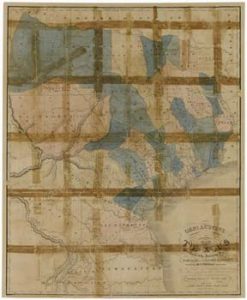
Texas Land Commissioner George P. Bush is proud to announce an exceptionally rare Stephen F. Austin map of Texas has been donated to the Texas General Land Office by Thomas B. and Marsha Brown Taylor from Seabrook, Texas.
The Taylors donated Genl. Austin’s Map of Texas with Parts of Adjoining States Compiled by Stephen F. Austin, published by H.S. Tanner, printed in 1848, in memory of Mrs. Taylor’s parents, Harrison K. and Margaret C. Brown, who lived in Leon County.
No other copy of this map is known to exist, despite several scholarly articles being written on the subject, the most recent study coming from the Library of Congress in 2015 as part of the Philip Lee Phillips Map Society. Prior to this donation, Austin’s map was believed to have last been printed in 1846. The discovery of this map changes what we know about the cartography of Stephen F. Austin.
Genl Austin’s Map of Texas with parts of the adjoining States.
“This rare map, donated in memory of Harrison and Margaret Brown, will be viewed by generations to come, thanks to the generosity of their loving family,” said Commissioner Bush. “This map augments our collection of 45,000 maps and documents, and enhances the GLO Archives − one of the premier cartographic collections in Texas and the Southwest. The Taylors’ generous donation is a great example of how Texans can help support our efforts to Save Texas History.”
Marsha Taylor describes her earliest memories of Austin’s map: “I remember seeing the map for the first time when I was about eight years old. My father took it out of a small metal lock box he kept in the top of his closet. The pastel colors were bright and I was fascinated with the age of the document and the notations about wild horses, herds of buffalo, and Indian camps. My dad told me about the Native American burial grounds and the remains of an old fort just outside our little town and my imagination ran wild as I thought about our little piece of land in 1848. My father explained that our land was part of a large grant from the Mexican government, long before Texas was a state. That day, Daddy gave me my first lesson in Texas history.”
Later, she recalls inquiring about the map’s future: “One day, I asked my father what he planned to do with the map and he replied that someday he hoped to find a museum in Texas that would want to have it and would keep it safe.” After having the map framed in Taylor’s home for over 26 years, it was decided to donate the map to the Texas General Land Office, where it will be held in perpetuity under archival conditions, and conserved for future generations, with access being granted to the public to see it.
When asked why she decided to donate the map to the GLO, Taylor said, “The only honest way to answer that question was to try to explain that I simply felt like it was the right thing to do. My dad had always wanted the map to go somewhere that it would be taken care of properly, appreciated and available for the people of Texas who were interested in the information it held. If I sold the map to a private collector or institution, it might not be available to others and I couldn’t be certain how it would be stored, viewed, preserved (or not), or handled. At the General Land Office, the map was certain to be well cared for and very likely to be seen and studied again in the future.”
“This map represents new scholarship in the cartographic history of Texas,” said Commissioner Bush. “It is exciting to learn that this map is re-writing the history of Texas cartography, and it’s happening here at the General Land Office. It goes to show that history is being updated every day, and in need of constant study. On behalf of our agency, and the people of Texas, we thank Mr. and Mrs. Taylor for this generous donation.”
The Texas General Land Office is seeking to build the most comprehensive historic Texas map collection in the state, and provide high resolution digital access to every item online. The GLO encourages the public to get involved by donating historic maps and other archival documents, or making donations to the Save Texas History program in order to conserve the historic maps and documents housed at the GLO. Donations made to the GLO for public purposes are tax deductible pursuant to Internal Revenue Code §170(c)(1).
March is a busy month in the Capitol as many families, students and teachers make their way to Austin for spring break. We enjoy seeing everyone, but there is, of course, no spring break for legislators as final bills are filed and committee agendas are full of potential legislation.
Here are five things happening at your Capitol this week:
Law Enforcement Day
On Monday, the Senate held its first Law Enforcement Day to recognize the officers who protect our state. It also marked the end of the 60 day constitutional prohibition on considering non-emergency legislation. To honor these brave men and women, the first bills heard were all law enforcement related. Lt. Governor Patrick said it well when he hoped they “hear loud and clear that the Texas Senate put them first when this session began, because they deserve to be first.”
As law enforcement officers watched from the gallery, legislation was passed declaring July 7th as “Fallen Law Enforcement Officer Day” in Texas. This date marks the day Dallas police officers were killed during a peaceful march. Legislation was also passed to create a ‘Blue Alert’ System, which sends out an alert when someone who has injured a police office. The Senate also provided a property tax exemption for the spouse of an officer killed in the line of duty and established a $25 million grant program to buy bullet-proof vests for all Texas officers.
Bills Filed
Last Friday was the Legislatures bill filing deadline for all legislation and joint resolutions except for local bills, emergency appropriations and emergency items determined by the Governor. Over 5,300 bills were filed in the House and approximately 2,700 were filed in the Senate. Many of the bills filed will not receive a committee hearing or make it to the House and Senate floors. We have a lot of work ahead of us as we continue through the legislative process.
School Accountability System
Last session, legislation was passed creating an A-F accountability system in an effort to provide a transparent and comprehensive way of evaluating how a school district or campus is performing. After the preliminary ratings were released, it became apparent there needed to be some changes made. Rep. Dan Huberty, Chair of the House Education Committee, has filed HB 22 which would reduce the number of categories in which each campus and school district would be graded. It would also eliminate an overall letter grade, instead giving a letter grade for each category. The implementation of this system would also be pushed to 2019 to allow for more time for development. I will continue to keep you updated as this bill moves through the legislative process.
Made in Texas
House Bill 1514 has been filed to require wines with a Texas label to be made 100 percent with Texas grown grapes. Current law only requires 75 percent of the grapes must be grown in the state for it to be labeled a Texas wine. Advocates for this bill believe products which are advertised as being made in the state should be fully Texas made. There is also a belief this bill would help to encourage more grape production and improve the authenticity of the state’s wines.
Opponents of the bill fear it could limit options for winemakers if there are unexpected events such as a strong storm which could ruin a grape crop. There is a provision in the bill which would allow the Texas Department of Agriculture to allow exceptions to the 100 percent threshold if drought or severe weather were to damage the states grape crops.
Voter ID
Senate State Affairs Committee has approved a bill to overhaul Texas’s current Voter ID Law in response to a recent ruling by the U.S. 5th Circuit Court of Appeals which declared the current law discriminatory against minorities who may have not access to the acceptable types of identification. Senate Bill 5, filed by Senator Joan Huffman, allows voters to present alternate forms of ID without being questioned, as well as permits voters ages 70+ to use photo IDs that are expired but otherwise allowed. While making the ballot more accessible, the bill also cracks down on those who lie about not having photo ID. Such perpetrators could be charged with a third degree felony and earn up to ten years in prison if found guilty.
Motorists will see delays for the next two to three weeks as contractors prepare to place the final hot mix surface on US 59 at SL 224 in Nacogdoches. Both northbound and southbound traffic will be affected and intermittent lane closures can be expected. Once the final surface is placed and stripe applied, major construction on this project will be complete.
Southbound lanes of US 59 have also seen final traffic pattern changes as the inside lane of BU 59 now merges with outbound traffic just south of SL 224. Motorists exiting SL 224 onto US 59 SB no longer have a yield sign. The US 59 SB ramp now has a dedicated lane of travel that requires no yield. Directional signage is in place making motorists aware of the changes. Motorists are urged to stay alert until this final traffic pattern becomes familiar.
Northbound lanes of US 59 are being milled for the final surface and motorists are experiencing delays and lane closures traveling into Nacogdoches. Following the milling process, contractors will apply a sealcoat and then the final layer of hot mix to complete the new surface on both north and southbound lanes.
Motorists are urged to plan for delays or take alternate routes around the construction. Recommended routes include FM 2782 or SH 7. Old Lufkin Road is not a recommended route of travel.
Webber, contractor for the $14 million construction project, will complete the road work in two to three weeks, weather permitting. They will then be working on minor items and clean up throughout the project. All work is subject to change in inclement weather. Visit drivetexas.org for a complete list of closures and projects throughout the state.
For more information, contact Rhonda.Oaks@txdot.gov or (936) 633-4395.
Texas bluebonnets are starting to bloom, and springtime is just around the corner. Whether your lawn needs a little touch-up or complete makeover, it’s important to find the right helping hands.
Better Business Bureau serving the Heart of Texas advises people not to rush into hiring lawn help. It’s important to get clear, written expectations for what services the company or contractor will provide and agree on a fee before work begins.
Last year, BBB received more than 7,200 complaints against landscape and lawn maintenance businesses and contractors nationwide. More than 100 of those complaints were processed by your BBB.
Lawn care businesses provide many services, so it’s important to decide what services and products are appropriate for your needs and budget.
Many complaints claimed dissatisfaction with the services provided and performance of the business. Other complaints reported problems with contracts and delivery.
To find a lawn care business you can trust, BBB offers the following advice:
Know what you want from a lawn service. Lawn care businesses provide many services, so it’s important to decide what services and products are appropriate for your needs and budget.
Find a trustworthy business. Go to bbb.org to check the company’s BBB Business Profile. Here you can find information on the business, such as how long they’ve been in business, contact information, complaint history and customer reviews.
Check references. Ask the business for references and photos of previously completed projects. Contact references, and ask about their experience working with the business and if they were satisfied with the services provided.
Don’t sign up for services on the spot. If a sales representative comes to your door, get their information or business card. Call the business directly or perform the transaction through the company’s website, and provide the name of the sales representative if you’re concerned about them getting credit for the sale. If you insist on signing up on the spot, carefully read all the documents you are signing, particularly if they are electronic. On tablets or laptops, scroll up and down to see the entire document you are signing.
Ask for a lawn inspection and free estimate. Lawn care businesses that quote a price without seeing your lawn may not give you an accurate estimate. A business should be willing to visit your home to provide you with an agreed upon fee.
Get a written agreement. A contract should clearly state the services you will receive, guarantees and refund policies, as well as how and when payment will be handled. If you are using a recurring service, the contract should also include how often the company will come out to work on your lawn, how to cancel the service and a schedule for when payments are due.
As experts in food and nutrition, Registered Dietitians are committed to improving the health of their patients, clients and communities.
CHI St. Luke’s Health-Memorial Lufkin recently recognized its team on National Registered Dietitian Nutritionist Day for the important role they play in helping patients. Those recognized include: Tanya Lindsey, RD; Marie Custad, RD; LeAnne Anderson, RD, CDE; Katia McLellan, PhD; Kristin Pennington, RD and Genesis Valdes, RD. These registered dietitians educate patients on the importance of healthy food choices and physical activity. They are highly trained and help patients learn how to get their daily vitamins, minerals and nutrients without consuming too many calories.
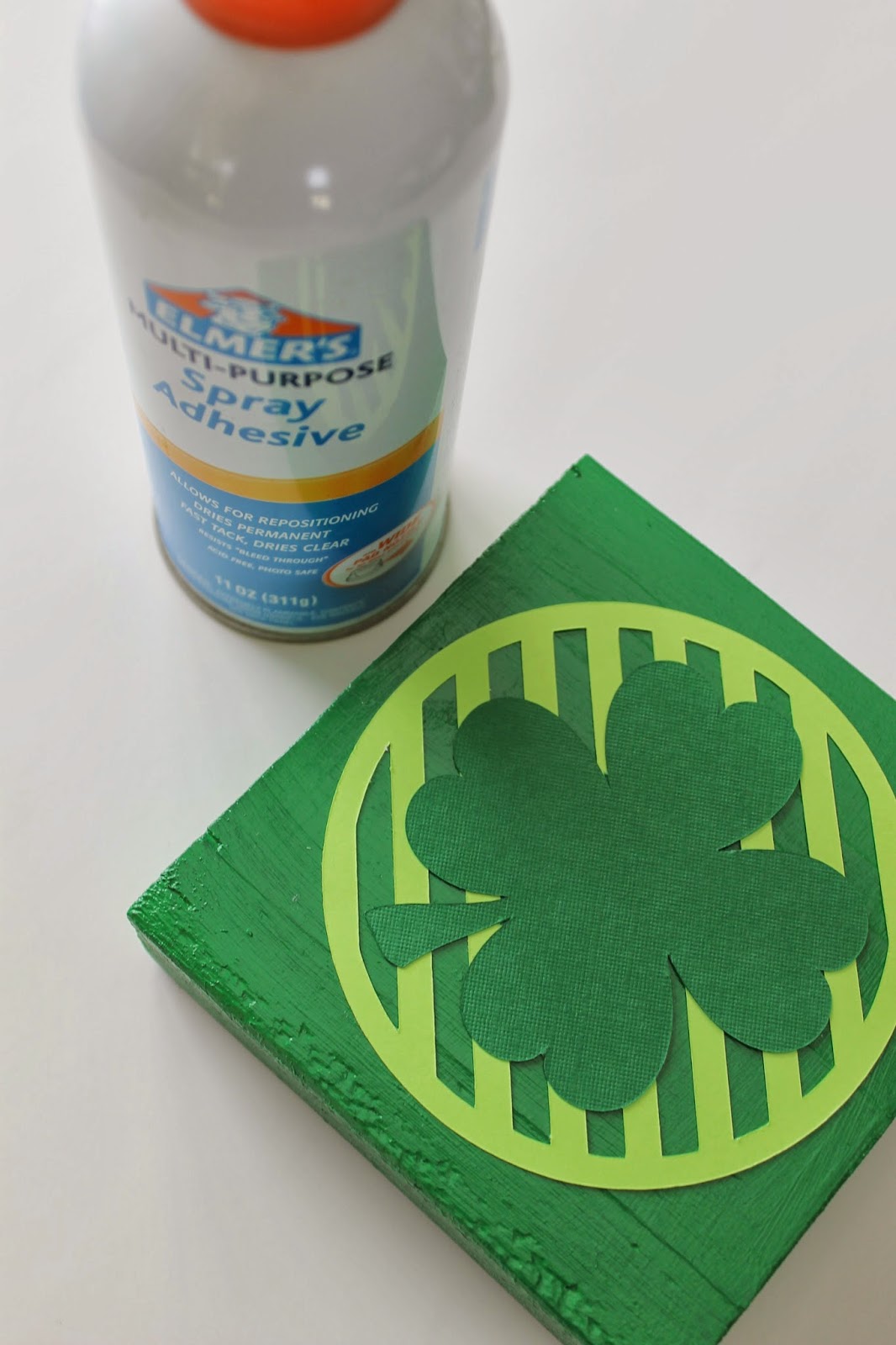
I’d love to show you how I made this easy and quick shamrock block for St. Patrick’s Day! It literally took me under 10 minutes to put it all together, not counting waiting on the paint to dry!
First I painted my wood block and let it dry. My block measured a little bigger than 5 inches by 5 inches. While my paint was drying I cut out a shamrock and patterned background using my Silhouette. (You can find tons of my Silhouette projects here.)
If you do not own a Silhouette you could easily find a shamrock image online, size it to fit your block, and then trace and cut it out using the green card stock.
After my wood block was dry I used some Elmer’s Spray Adhesive to attach my patterned background and shamrock to my block of wood. I love this stuff! It works perfectly for projects like these.
Then I wrapped a green ribbon around my block of wood and tied it in a knot. I’m all done!
Now wasn’t that so easy? Now I have a little something to decorate for St. Patrick’s Day with!
Did you know that advanced digital technologies can help grade school and high school students become better prepared for college and careers?
From interactive platforms and applications to high-tech hardware, digital learning is empowering educators and helping prepare students for their futures. Here are a few new learning tools that are transforming education today.
Do the Math
Graphing calculators are getting an enhanced look and feel, enabling students to solve the most challenging equations and enhance their understanding of math. For example, cutting edge calculators, such as fx-CG50, the newest model in Casio’s calculator portfolio, offer a three-dimensional graphing function that allows students to view their graph from various angles to better analyze their shape. Other new capabilities include cross-section and zoom functions for greater analysis. Students can also plot graphs over pictures of real-life scenes on a full color textbook-style display, making math education a more visual experience.
Go the Distance
These days, classroom style learning doesn’t always have to take place within the four walls of a physical classroom. Distance learning offers a greater number of people access to the same educational opportunities, and is made possible by new technologies.
Educators and schools are embracing platforms like Blackboard and Schoology to help connect students with educational content 24 hours a day. These platforms also enhance traditional classroom learning. Known as blended learning, students still attend class, but can hone their skills and knowledge during off-hours at a personalized pace with technology-mediated instruction.
Music to One’s Ears
Music education isn’t what it used to be, thanks to new technology and gear. For example, Chordana Play, a new app, can be linked with several Casio electronic keyboards as a learning tool for beginners and advanced musicians. The app displays notes graphically in real time, along with the correct keyboard positions for both hands. Users are welcome to import song data into the app and expand their repertoire over time. To learn more, visit CasioMusicGear.com.
As technology evolves, enhanced tools and processes are changing the way educators teach and students absorb content. And these changes also are making teachers more efficient, enabling greater freedom for students to benefit from a more personalized approach to learning.
The impulsive act of checking Facebook while driving, in a work meeting, or at other times that could lead to negative consequences has been linked to a deficiency in the balance between two systems in the brain, find researchers in a recent study published in the Journal of Management Information Systems.
Hamed Qahri-Saremi, an assistant professor of information systems at DePaul University’s College of Computing and Digital Media, co-authored the study with Ofir Turel, a professor of information systems and decision sciences at California State University, Fullerton, and scholar-in-residence at the University of Southern California, Los Angeles.
The study, “Problematic Use of Social Networking Sites: Antecedents and Consequence from a Dual System Theory Perspective,” is available online at http://bit.ly/2ll6xnz.
The pair applied the dual system perspective, an established theory in cognitive psychology and neuroscience, which holds that humans have two different mechanisms in their brain that influence their decision-making, explained Qahri-Saremi.
A new study published in the Journal of Management Information Systems finds that when there is an imbalance between two cognitive-behavioral systems in the human brain, there is a higher rate of problematic use of social networking sites (SNS). This image illustrates the findings of co-authors Hamed Qahri-Saremi, DePaul University, and Ofir Turel, California State University, Fullerton. Credit: (Image by Hamed Qahri-Saremi and Ofir Turel)
System 1 is automatic and reactive, quickly triggered, often subconsciously, in reaction to stimulus such as a sight of or notifications from social media. System 2 is a reflective, reasoning system that moves more slowly, regulates cognitions, including the ones generated by system 1, and controls behaviors, according to Qahari-Saremi. The second system can help individuals control impulses and behaviors that are not in their best interest, he said.
Using a validated problematic use measurement questionnaire, researchers obtained responses from 341 undergraduate college students from a large North American university who use Facebook.
The researchers collected and analyzed problematic Facebook use data during one semester and then followed up with each student the next year to track their academic performance — in this case using grade point average — for both semesters and cumulatively.
Individuals who were found to display higher levels of problematic use of Facebook had a strong cognitive-emotional preoccupation (system 1) and a weak cognitive-behavioral control (system 2), creating an imbalance, found researchers. In fact, the greater the imbalance between the two systems, the more likely individuals were to engage in problematic social media use behaviors.
Among their findings:
• 76 percent of respondents reported using Facebook in class.
• 40 percent reported using Facebook while driving.
• 63 percent reported using Facebook while talking face-to-face with others.
• 65 percent reported using Facebook at work instead of working.
“The clear and strong effect of problematic social media use on an academic performance was astounding,” said Turel. “A slight increase in problematic social media use translates into significant grade loss, and this declined performance is persistent — it remained one year after our initial study,” he added.
Qahri-Saremi and Turel found that problematic use of Facebook negatively affected students’ academic performance, with the higher the problematic use, the lower the GPA. In fact, more than 7 percent of students’ differences in their GPAs was attributed to their degree of problematic use of social media.
The authors defined a problematic behavior as “a typically impulsive, often short-lived behavior that is considered inappropriate, prohibited, or even dangerous in a given environment and context, or for a given state and goal of the individual.” These problematic behaviors can result in negative consequences like, in the case of this study, an adverse effect in students’ academic performance.
“The most exciting thing about this study for me is that our dual-system research model could very well explain why such problematic behaviors are formed and how they can be controlled,” said Qahri-Saremi.
“Unfortunately, these problematic behaviors in using entertaining IT systems, such as social media and video games, are very common nowadays with an increasing pattern. In some cases, these behaviors have resulted in grave consequences for the users, for instance the news that came out last year regarding the problematic uses of the Pokemon GO game where players were involved in accidents or being mugged, because they were carried away by the game. Therefore, there was a need for a research model that can explain why these behaviors emerge and how they can be mitigated, which is portrayed by our work quite well,” said Qahri-Saremi.
The study suggested that individuals could begin to limit their problematic social media use by, for example, turning off social media notifications on their phone. They also suggested IT designers take into considerations adding features to systems that better enable the users to control their problematic behavior.
While the dual system theory is an established and well-researched theory in cognitive psychology, Qahri-Saremi and Turel are believed to be the first researchers to use this theory to explain the etiology of problematic use of social networking sites.
Next steps in the field include additional research into problematic use of social networking sites and the consequences by expanding the study into other contexts, such as video games, texting and other social media, the study says. Future research might also want to investigate if the same information is found in different cultural settings and educational institutions, the authors wrote. Brain imaging neuroscience studies could further supplement these results and point to the neural underpinnings of the above-mentioned brain systems, in the context of problematic social media use, they added.
The cost of health care in Texas is rising faster than both the general inflation rate and the growth of the state’s population. In fiscal 2015, Texas state government spent $42.9 billion on health care services, or 43.1 percent of all its appropriations from state, federal and other sources.
The March issue of Fiscal Notes looks at a recent report issued by the Texas Comptroller’s office, Texas Health Care Spending Report: Fiscal 2015, which examines and quantifies health care spending by 68 state agencies and higher education institutions in a recent five-year period.
“Emerging technologies, demographics and the growth of our great state will ensure the demand for health care services continues to increase even while the cost of these services is on the rise,” Texas Comptroller Glenn Hegar said. “The question for policymakers is how to contain these costs.”
In this issue, the Comptroller’s office also examines the potential for greater trade with Cuba, the communist nation that has been subject to a U.S. trade embargo since 1962. Relaxing or even removing the embargo could open new markets for Texas, especially for our agricultural producers. Yet significant statutory and political obstacles remain in place.
A larger-than-life ego will be a liability in the upcoming Smart Machine Age, said Professor Ed Hess, coauthor of Humility Is the New Smart. The jobs that will still be “safe” in the future involve higher-order cognitive and emotional skills that technology can’t replicate, like critical thinking, innovation, creativity and emotionally engaging with other humans.
All of those skills have one thing in common — they are enabled by “humility.” Below, Hess shares seven suggestions to help you hone yours:
Have the courage to get people who know you well at work and in your personal life to fill out a 360-degree review about you — one that focuses on your emotional intelligence and your behaviors concerning open-mindedness, listening, empathy, humility, etc.
First, know that you’ll have to work against your brain’s natural inclinations.
According to Hess, quieting our egos actually goes against our very natures! Cognitively, we humans are wired to selectively process only information that is confirmatory — and to selectively filter out information that contradicts what we “know” to be “right.” In addition, we’re lazy, self-serving and emotionally defensive thinkers who are driven to protect our egos.
“However, the science is quite clear that high-level and innovative thinking is a team sport,” he comments. “In order to learn, adapt and succeed, we have to be willing to look closely at our mistakes and failures, to really listen to people who disagree with us, and to allow the best thinking and best ideas to rise to the top — which requires humility! The good news is, when it comes to resisting your thinking’s natural defenses, forewarned is forearmed.”
Seek objective feedback about your ego.
You can’t troubleshoot your ego if you don’t have an accurate picture of what it looks like. Since this isn’t an area in which you can trust your own judgment, have the courage to get people who know you well at work and in your personal life to fill out a 360-degree review about you — one that focuses on your emotional intelligence and your behaviors concerning open-mindedness, listening, empathy, humility, etc.
“Explain why you need honest answers,” instructs Hess. “Emphasize how appreciative you will be if they are honest and that candor will not diminish the relationship. After receiving the data, evaluate it with a trusted other. Thank everyone who had the courage to give you honest feedback. Reflect on the picture you received and decide what you want to do with that data.”
Change your mental model of what “smart” looks like.
In the past, “smartness” has been determined by the size of one’s body of knowledge. Not knowing the “right” answer was — and often still is — a big blow to the ego. But today we already have instant access to all the knowledge we want, thanks to “companions” like Google and Siri. The “new smart” means knowing what you don’t know and knowing how to learn it, being able to ask the right questions and being able to examine the answers critically.
“We are all suboptimal thinkers,” comments Hess. “Only those of us who can graciously and humbly admit that we don’t know it all will succeed in this new world. So change how you keep score. Engage in collaboration, seek out feedback, and ask for help daily. That will push you toward developing the humility and empathy you’ll need to ‘win’ in the new game.”
Thinking of how others helped you and saying “thank you” on a daily basis is a positive way to begin the process to put yourself in others’ shoes.
Learn to put yourself in others’ shoes.
Research says one way to become less self-absorbed and more open to the experiences of others is to actively work on being more empathetic and compassionate. Thinking of how others helped you and saying “thank you” on a daily basis is a positive way to begin the process. Reflecting on the people who add joy to your life helps too.
“Suspending judgment so that I can put myself in another person’s shoes has always been a particular challenge for me,” Hess admits. “My mind always wants to jump to a conclusion instead of really considering what the other person is experiencing, thinking or feeling. Active listening has been an important tool in helping me learn to set my ego aside. When I remind myself to focus all of my attention on what someone else is saying instead of on formulating my own response, I find that my understanding of the situation grows — and often, so does the amount of empathy I feel.
“Remember, you don’t have to fully agree with someone’s opinion or actions to still treat them with compassion,” he adds. “Disagreeing with humility still leaves the lines of communication open and allows teamwork to happen in the future.”
Quiet your mind to stay in the moment.
Hess points to attention-focused meditation as a time-honored method of calming one’s inner self-intensity. Fully engaging with your current experience (as opposed to ruminating on the past or worrying about the future) enables you to maintain a balanced, healthy perspective. Staying in and responding to the present moment is also a powerful safeguard against ego-driven misunderstandings and misinterpretations.
“Personally, I have found that meditation makes me more aware of my physical reactions — breathing and heart rate,” he shares. “I now know that when my internal motor gets running really fast, I tend to revert to a ‘me’ syndrome, and that I need to deliberately slow myself down so that I can exhibit more calmness and openness to others. I have come to understand that as a teammate and as a leader I don’t have to be right all the time or the center of attention all the time — but I do have to work with others to arrive at the best answer.”
The journey to becoming a more humble person will not be short. It will take persistent hard work, and it will be a lifelong endeavor.
Stop letting fear drive your decisions.
We often play it safe because we don’t want to look dumb, be wrong, or fail spectacularly in front of our friends and colleagues. In other words, we’re afraid of making mistakes and bruising our egos. Hess says being okay with being wrong is a necessary and important part of developing humility.
“Fear of failure, fear of looking bad, fear of embarrassment, fear of a loss of status, fear of not being liked, and fear of losing one’s job all inhibit the kind of learning, innovation, and collaboration that are essential for your long-term job security,” Hess asserts. “To proceed more fearlessly into the future, you need to understand that learning is not an efficient, 99-percent-defect-free process — so mistakes have to be valued as learning opportunities.
“The faster and better you are at turning mistakes into learning opportunities, the less likely it is that you will be replaced by some machine,” he adds. “Having an ego that’s not afraid to acknowledge mistakes, confront weaknesses and test assumptions is a reliable strategy for long-term success.”
Grade yourself daily.
There’s a reason why to-do lists are so popular: They work!
Create a checklist of reminders about the need to be humble, open-minded, empathetic, a good listener or any other ego-mitigating quality you wish to work on. Make the list as detailed as possible. Review it before every meeting and grade yourself at the end of each meeting. For example, if you want to work on being a better listener, your list might include the following tasks:
· Do not interrupt others.
· Really focus on understanding the other person.
· Suspend judgment.
· Do not think about your response while the other person is still talking.
· Do not automatically advocate your views in your first response.
· Ask questions to make sure you understand the other person.
· Ask if you can paraphrase what the other person said to make sure you heard them correctly.
· Really try to understand the reasons the other person believes what they believe.
“If you reflect and work on managing yourself every day, you will notice a difference in your humility-to-ego ratio,” Hess promises. “To start, I advise picking two behaviors you want to change. Seek the help of trusted others in creating your checklist and ask for their help in holding you accountable. Give them permission to call you out when they see you acting in opposition to your desired new behaviors.”
The journey to becoming a more humble person will not be short. It will take persistent hard work, and it will be a lifelong endeavor. But Hess firmly believes that you will find the journey to be liberating and fruitful.
“With humility comes more meaningful relationships, better opportunities, and, of course, an increased chance of staying relevant and competitive in the Smart Machine Age,” he said. “In that age, individualism and internal competition will be out, and teamwork will be in. Self-promotion will be out, and self-reflection will be in. Knowing it all will be out, and being good at not knowing will be in.
“In short, humility will be needed to maximize one’s effectiveness at thinking, listening, relating, and collaborating,” concludes Hess. “You will need others to help you out-think a smart machine. Work on yourself starting now, so they’ll want to engage with you tomorrow.”