


Home Blog Page 556

Driving Around Big Rigs

0

My dad drove a big truck for several years, “cross country” as he referred to it. I was young and I don’t remember much about it, but mom told the story for years how my sister and I would giggle and run for the door when we heard that big diesel turn toward home. He hauled pipe and today when I see a truck loaded with pipe I think about how difficult those years must have been with a young family.

As a girl, I didn’t care about job security or how much knowledge it took to operate a big rig. I stood by the road or peered out the back windshield of a car many times, pumping my arm up and down in the air, signaling the approaching big rig driver to honk the air horn. The noise of the tires and roar of the engine as the truck passed was exciting.

It wasn’t until I was a young adult that I actually took my first ride in a big truck. It gave me a new perspective at the great responsibility the driver of that truck feels as he travels the road with smaller vehicles, motorcycles and even cyclists.

It was a little scary for me, not because the truck was dangerous, but because the motorists darting in and out of traffic didn’t know how quickly things could change because of a bad driving decision. One driver who pulled out in front of us on US 59 at the Angelina River Bridge came dangerously close to finding out.

We forget that it takes much longer (in time and distance) to stop a truck. A loaded truck will weigh up to or in excess of 80,000 pounds and requires a longer acceleration and deceleration time than a vehicle.

A 3,500-pound vehicle doesn’t stand a chance up against an 80,000-pound truck/trailer. If you aren’t convinced, look at a few pictures or watch a video of a big truck accident, because you sure don’t want to look at one up close. They are truly unforgettable and not in a good way.

Trucking is big business in Texas. On Interstate highways, trucking is the predominant way to move freight across the state. In East Texas, loaded trucks travel our roads each day. Safety is a primary concern for TxDOT with regard to commercial truck traffic on Texas roadways.

With that in mind, there are a few safety tips that might raise the odds for your survival as you share the road with big rigs. Sit down with your teen driver and go over them because it could raise their odds also.

You should know how and when to pass a truck safely. Make sure that the entire truck appears in your rearview mirror before returning to the lane. It is common for a car to be “clipped” when a driver cuts too closely in front of a truck, thus sending it across the roadway. It’s not the truck’s fault.

If you brake suddenly in front of a truck, it is likely the truck can’t stop before hitting you, thus rolling up onto your vehicle. It’s not the truck’s fault. Always leave approximately four car lengths between the back of your vehicle and the front of any large truck.

Trucks have what is known as “no zones.” No zones are dangerous areas for vehicles to travel because they are not in view of the truck driver. The four blind spots where vehicles will disappear from a truck driver’s view are just behind the truck cab on both sides, directly behind the truck and directly in front of the front bumper.

Remember, if you are behind a truck and you can’t see a truck driver’s side mirror, he can’t see you. A truck turning right will take up more than one lane to make the turn. You must look for that right turn signal before pulling up beside the truck. As he turns right, he will hit your vehicle because he can’t see you. It is not the truck’s fault. Stay out of those no zone areas, if possible.

Tailgating is another invitation to a severe collision. If a truck stops in front of you, it is likely that you will run up under a trailer when following too closely. Trailer bumpers are not impact absorbing like small vehicles, and they can come right up over the hood and into the front seat. It’s not the truck’s fault.

Having spent many years as a newspaper reporter, I saw my share of crashes. Many of them involved big trucks and more times than not, ended in fatalities. With more than 6,500 lane miles in the Lufkin District and 8.8 million daily vehicle miles traveled in the district, it is important that you and your loved ones remember to be safe around the hundreds of trucks you will see each day.

We expect those numbers to grow in coming years as Interstate 69 and Interstate 14 expand through the Lufkin District, creating additional lane miles to transport freight across the state and “cross country.” Be safe. Drive smart.


Surprising Factors Impacting Car Buyers’ Decisions

0

While make and model are still dominant factors on car lots, today’s consumers have a new set of priorities, thanks to increasingly sophisticated in-vehicle technologies being offered in new cars.

From connectivity systems that include voice command controls to technologies that make parking a cinch, today’s consumers want more from their rides.

In fact, nearly half of consumers – 48 percent – prioritize in-vehicle technology over brand or body style, according to the 2017 Autotrader Car Tech Impact Study. And they know what they want, too. The study found that consumers these days are researching the exact features they’d like to purchase before visiting the dealership.

“What once seemed like something only for ‘The Jetsons’ is quickly becoming everyday reality in the automotive landscape,” said Brian Moody, executive editor for Autotrader. “And it’s not just vehicles with a high price-point. Many mainstream family cars are now equipped with technology features only seen on top-of-the-line luxury vehicles just a few short years ago.”

Experts say that while consumers should embrace the convenience and enhanced safety offered by new-car technology, they also need to educate themselves so they fully understand what these features can – and just as importantly, what they cannot – do.

“Understanding your car can help you become a better, safer driver,” Moody said.

However, the future may also involve less driving. Self-driving technologies are become more sophisticated, affordable and normalized. To that end, a growing number of consumers say they are willing to take a hands-off approach to their cars in the future. Indeed, 49 percent of respondents indicated they’d give up control of their car in exchange for some free time, up from 35 percent in 2016.

To learn more about today’s must-have technology, visit autotrader.com/MustHaveTech.

Whether you are a parent concerned with the latest safety features, or a Millennial expecting your vehicle’s technology to be every bit as robust as your smartphone, get educated about the features that matter to you, before heading to the dealership.

(StatePoint)

Number of Texas Students Taking Advanced Placement Increases for Class of 2016

0

Commissioner of Education Mike Morath announced today that, according to the College Board’s AP Cohort Data Report for the Class of 2016, more than 122,000 Texas graduates took at least one Advanced Placement Program® (AP®) exam during their high school careers. In addition, the percentage of Texas students taking at least one AP exam in high school continues to stay ahead of the national average.

Number/Percentage of Graduates
Who Took an AP Exam During High School 

YEAR 

TEXAS 

NATION

2016

122,606

38.7%

36.2%

According to Class of 2016 figures from the College Board, Texas was again the closest state to achieving equitable participation for low-income students. Half (50.3 percent) of the AP examinees in the Class of 2016 were eligible for free or reduced-price lunch. Of those students, 45.1 percent achieved a score of 3 or higher – much higher than the national average (24.9 percent) and higher than any other state.

The College Board states that a score of 3 or higher on an AP Exam demonstrates that a student is capable of doing the work of an introductory-level course in a particular subject in college. Just over 20 percent of Texas students (20.2 percent) in the Class of 2016 scored a 3 or higher on an AP exam during high school, which was below the national average (21.9 percent).

Research shows that students who succeed in rigorous course work, such as that offered by AP, are developing college-level knowledge and skills while still in high school. These students are more likely than their peers to earn college degrees on time, which gives them an opportunity to save significant amounts of money.

The ten most popular AP exams among Texas students for the Class of 2016 were: English Language and Composition; United States History; World History; English Literature and Composition; United States Government and Politics; Physics 1; Macroeconomics; Calculus AB; Spanish Language and Culture; and Biology.

Some additional Texas highlights from the College Board’s AP Cohort Data Report for the Class of 2016 include:

  • 38.7 percent of graduates in the Class of 2016 took an AP exam during high school.
  • 20.2 percent of students in the Class of 2016 scored 3 or higher on an AP exam.
  • By May 2016, more than a quarter million (259,081) exams earned scores of 3 or higher, representing a potential cost savings for credit-hour tuition of $239 million for Texas families.
  • Three of the ten most popular AP courses in Texas are in Science, Technology, Engineering and Mathematics (STEM) courses.

Twenty-two Texas school districts were recognized for efforts to increase access to AP coursework while simultaneously maintaining or increasing the percentage of students earning scores of 3 or higher on AP exams. Those districts recognized on the 7th Annual AP Honor Roll included: Allen ISD; Austin ISD; Burnet CISD; College Station ISD; Coppell ISD; Dallas ISD; Hutto ISD; Katy ISD; Leander ISD; McGregor ISD; McKinney ISD; Pflugerville ISD; Pleasant Grove ISD; Princeton ISD; Sabine Pass ISD; Sanger ISD; Santa Fe ISD; Santa Gertrudis ISD; Santa Rosa ISD; Springtown ISD; Texarkana ISD; and Tomball ISD.

To review the entire College Board AP Cohort Data Report for the Class of 2016, visit www.collegeboard.org.

Living the Fit Life: Eating Well on a Budget

0

My husband and I got married at a very young age. I was 19-going-on-30 and he had just turned 20. He worked full-time, me part-time. We were also in college. Most of our food choices revolved around the fact that neither one of us could cook. We ate out most nights. If we didn’t, Patio frozen bean and cheese burritos were, like, 30 cents apiece. Do I need to tell you that we were broke?

Fast forward over 10 years and we’re still together, and healthier than ever. Over time, our jobs changed or evolved and eventually we were making enough between us that the quality of our food was allowed to improve. The fitter we became, the better we ate, the more healthy we became, which is a truly beautiful cycle. Despite this, quality foods take a huge chunk of our budget and we find ourselves doing just that: budgeting.

Here are some tips and tricks to make your Fit Life food budget just as trim as you’d love to be!

Make a shopping list always. The more organized you are in your trip to the store, the less likely you are to fill your cart with foods you don’t need (or need to eat). My previous article, Meal Prep 101, addressed this point as well. Make that meal plan, then jot down the ingredients you need. The fewer trips to the store the better!

My husband and I tend to grocery shop on Fridays because we get off work at noon. We treat ourselves to lunch out and then hit the store. I always spend less when I’m full.

Don’t go to the store hungry. People tend to shop more impulsively while hungry according to research published in JAMA Internal Medicine. Not only do we buy more, we tend towards higher-calorie options, our body’s way of saying something’s missing. Consider a trip to the store after a meal. My husband and I tend to grocery shop on Fridays because we get off work at noon. We treat ourselves to lunch out and then hit the store. I always spend less when I’m full.

Buy in bulk. Sometimes that Sam’s Club membership is worth having. Consider items that you might buy frequently or that might have a long shelf life: think dried pasta or canned items. Meat can be cheaper buying in bulk. Stock your freezer and thaw out only what you need for a particular dish. I don’t recommend buying fresh items like vegetables or fruit unless you intend to use them quickly. Waste not, want not.

Buy canned items. Canned items have a bad reputation these days because of BPA, but many companies are being consumer-conscious of how they package their products. Also, always take into consideration the sources of the information being splashed across headlines. There is often not enough scientific evidence to actually condemn foods, especially not for small studies that have not be replicated, but they often make their way into the media regardless. Personally, I used canned beans frequently. I rinse them to remove excess sodium before use.

Buy in season. One of the best ways to do this is to hit up your local farmer’s market. Not only are you buying the freshest of foods, you are supporting your local economy and you’re reducing your carbon footprint. The less distance your food has to travel, the better! In season foods tend to have more flavor and better texture than foods grown in synthetic conditions and transported from foreign countries.

Although you don’t necessarily have to be a strict vegetarian, opting for plant-based meals is a sure way to better health and a Fit Life.

Buy plant-based foods, since we’ve just covered of buying in season. Although you don’t necessarily have to be a strict vegetarian, opting for plant-based meals is a sure way to better health and a Fit Life. Budget-wise, check your local sales papers. What costs more? A pound of meat or a pound of vegetables? Taking a look at my local Brookshire Brother’s sales ad, you could buy fresh ground beef chuck for $2.99/lb (although I hope you’re steering clear of red meat as much as possible). For this price (and from the same sales ad), you could also get sweet yellow onions (.98/lb), green cabbage (.44/lb), and large navel oranges (.98/lb). That’s $2.40 for 3 lbs of food and you’ve got change left over! Consider dried beans. OMG, a 1 lb bag of lentils is $1! Beans are an excellent source of plant-based protein and fiber. They pack a powerhouse punch in nutrition and value. Some dried beans need to be soaked and cooked for long periods of time (which is a struggle for me, so thank goodness for Crock Pots), but I often buy lentils, which are quick-cooking. A cup of lentils cooks in a speedy 20 minutes.

Buy items that can be used in multiple dishes. When you plan your meals, a fun money-saving trick is to decide on a theme for the week. For example, if I had a craving for Mexican food, I might decide to make Mexican quinoa casserole, taco soup and black bean enchiladas. Every dish has avocado, black beans, fire-roasted tomatoes and a hint of cheese. I use lots of quinoa in place of rice, like in Mexican dishes, so I keep that regularly on hand. Be on the lookout for further articles on fun themed dishes!

Cook at home. Cooking at home is a fantastic way to charge of your budget and your health. When you create a dish at home from scratch, you are controlling the ingredients that go into your food from beginning to finish. You could name precisely each element of your food, right down to seasoning measurements. Take a moment to imagine how much you spend on a plate of mediocre pasta at a chain restaurant, then imagine how much it would cost you to replicate the same dish at home. The difference is astounding when you consider a 1 lb box of whole grain pasta costs $1, and you probably forked over at least $10 plus a tip at the restaurant.

For all those who make a daily Starbucks run, no wonder you’re broke. That’s an even bigger $5 wallop in the wallet. I love them as much as the next person, but save them as a treat and you will and your waistline will appreciate them even more!

Cut back on sugary drinks. Here’s an example of how this can work out well for your wallet. Years ago, I worked retail in the mall. I worked 40 hours a week, meaning that I was in the mall five days a week. When life punched me in the face and took my money, I had to figure out how to make ends meet and cut corners. I took a hard look into where my money was going and my daily drinks were the first thing to go. At the time, I loved sweet tea from Chick-Fil-A. Everyday at the beginning of my shift, I would get a medium drink for about $1.50. I calculated $1.50 five times a week, 52 weeks a year and found I was spending almost $400 on water, tea bags and sugar! That was a huge eye-opener for me. For all those who make a daily Starbucks run, no wonder you’re broke. That’s an even bigger $5 wallop in the wallet. I love them as much as the next person, but save them as a treat and you will and your waistline will appreciate them even more!

Wealth is universally sought by everyone in America. Very few of us can say that money is no object, so keep up the hard work until you achieve that dream. Make wise investments in the foods you eat with the money you do actually have to improve your quality of life. Looking down the road, you will save money on healthcare as well. Health is a wealth all of its own.

Shopping Local Can Benefit You and Your Community

0

If you have home improvement plans this spring, it’s important to consider where you will be doing your shopping. For many people, the first stores to come to mind are big box retailers because of the widespread assumption that chains can offer better selection and better prices.

Keep in mind, though, that when it comes to items needed for your home projects – whether it be new flooring, paint or a kitchen renovation – more often than not, experts say that your local independent retailer can offer as good or better selection, be competitive with pricing, and provide a superior customer service experience.

What’s more, shopping at local businesses can benefit your household and the community. At a locally owned store, you will be more likely to find interesting items and products that set your home apart. And more of your dollars will stay put when you give them to business owners who pay taxes locally, hire locally and may be more inclined to support community charities and organizations.

You may also find independent retailers that can offer some of the same benefits as a large chain. For example, when small business owners belong to a cooperative, they come together to scale buying power, access goods and services at a lower cost, and create opportunities not available to them as individual businesses. For you, this can mean more and better choices of products and affordability.

In the case of Flooring America for example, this means being able to offer a wide selection of products, including hard surfaces like hardwood, laminate and tile, and soft surface flooring, paint, cabinets for kitchen renovations and even closet organization solutions. Their retailers can be found in local communities throughout the country, with a varying product selection depending on location.

So, if you are looking to make home improvements this spring, check out your local retailers that not only offer great product selection, but also contribute to your community in a positive way.

(StatePoint)

85th Legislature Meets Bill Filing Deadline

0

The State Legislature saw an increase in activity this week as Members rushed to meet the bill filing deadline. I am proud to have filed various bills addressing reforms to our adult and juvenile criminal justice systems, strengthening our child protective services, increasing access to mental health services, championing families, growing our local prosperity, and protecting Second Amendment rights.

During the previous week, I met with the leadership of the Alcohol & Drug Abuse Council (ADAC) of Deep East Texas. Methamphetamine, heroin, and cocaine addictions are having a devastating effect on rural East Texas communities. Drug addiction is destroying too many young lives and families. This epidemic is sapping the economic vitality and quality of life from our communities. ADAC is working on the front lines in the fight against addiction. They have a strong set of legislative proposals and I am supportive of the passage of these recommendations.

Faith and family are two institutions that Southeast Texans champion. Many pastors came to their Texas Capitol last week to promote pro-family and pro-faith public policy. From Southeast Texas, pastors from Polk, Jasper, and Hardin counties attended pastor oriented briefings on legislation that protects our 1st Amendment religious freedoms and fosters strong families. I had the opportunity to visit with these pastors and I expressed my support in protecting our constitutional religious freedoms and promoting commonsense decency in our communities.

In Hardin, Jefferson, and Orange counties, the Spindletop Center does a fabulous job in assisting our fellow citizens with mental health and intellectual disabilities. The dedicated servants of the Spindletop Center also do a great job advocating for effective policies on mental health and intellectual development. A delegation from Spindletop came to Austin and provided me an in depth briefing on the needs in Southeast Texas. I am appalled that federal and state laws allow employers to pay our fellow citizens, who have intellectual development challenges, $0 .01/hour (one cent). I immediately marched to the Texas House chamber and signed on as a coauthor to House Bill (HB) 2409. If it becomes law, HB 2409 will require employers to compensate our fellow citizens with intellectual development disabilities in a dignified and respectful manner.

Moreover, I told this delegation of Spindletop advocates that the Legislature has budget limits just like our households in Southeast Texas. However, the State of Texas has the resources and wealth to do the things we need to do. I will not support a defective interpretation of fiscal conservatism that supports leaving the disabled and children in the lurch so that politicians can campaign on growing the rainy day fund to $12 billion in two years. In fact, spending on developmental and preventive therapies on the front end is immensely more cost effective than the costly results due to poor outcomes in health, education, and the criminal justice system. I salute the work that Spindletop performs for those in our community with mental health and intellectual and developmental disabilities in Southeast Texas.

In addition, I was delighted to have Jayden Caruthers and his grandparents come to their Capitol for a Texas Home School Coalition conference. I am always thankful that they make the trip to Austin and make time to come visit me. Jayden is a smart young man and I look forward to many more visits from him.

Along with my committee assignment as Chairman of the House Committee on Corrections, I sit on the House Committee on International Trade and Intergovernmental Affairs. This committee met for the first time last week. This is my first time to serve on the committee and I look forward to working with Chairman Rafael Anchia in growing our local prosperity with international trade and building our interstate relationships. During the hearing, we heard updates from Secretary of State Rolando Pablos, the Mexican Consulate, the Canadian Consulate, the Texas Office of State-Federal Relations, and the Governor’s Economic Development Office.

Furthermore, I was able to present two of my bills before the Corrections committee. House Bill (HB) 104 will provide notification and protection to victims that have experienced traumatic events at the hand of violent offenders if the victim or family members of deceased victims choose to opt into the program. The other one is HB 553, which will establish a task force to strengthen existing programs and create new opportunities to provide education and technical skills training to people confined in Texas prisons. HB 553 will enhance the rehabilitative mission of the criminal justice system and heighten the importance of making our incarcerated inmates perform work tasks.

School finance is one of my top priorities this session. This week the House Committee on Public Education heard testimony on Chairman Dan Huberty’s HB 21. Although I do not sit on the committee, I am carefully watching this legislation and have reached out to the superintendents and educators in House District 19 seeking their input. Though I am encouraging him to proceed on a bolder path, I am supporting Chairman Huberty’s reform efforts and hope to see reforms come out of committee that House Members can consider on the floor soon.

The Capitol of Texas belongs to you and visiting the Capitol during the biennial legislative session is a great experience. To assist in arranging your visit please call Saul Mendoza, my Chief of Staff, at (512) 463-0490 or at saul.mendoza@house.texas.gov.

Do you know how to handle common dental emergencies?

0

Dental emergencies are something that many of us experience, yet few of us know how to handle.

In fact, according to The Pew Charitable Trust, emergency room visits for dental emergencies have been rising, with it costing the health care system in the country around $1.6 billion per year. Problem is, a good portion of those going to the emergency room for what they see as a dental emergency actually have problems that can be taken care of at home or simply by waiting until the dentist’s office opens.

“Many people are not sure what is a dental emergency and what is something that can wait until morning, so some people will go straight to the emergency room,” explained Dr. Karson Kupiec, a second-generation orthodontist at Kupiec Orthodontics & Pediatric Dentistry. “If it’s a true emergency, people shouldn’t hesitate to get to the hospital, but they will probably find it comforting to know that there are some common issues they can handle right from home.”

Being able to handle some common dental emergencies without going to the emergency room can help save money, as well as time. Some of the more common dental emergencies that people experience and what they can do about them include:

  • Loose bracket or band – The bracket or band on your braces may need to be re-fitted. You may have a situation that requires cutting a wire or sliding a bracket off a wire at night or over the weekend. If you need to cut a wire in case of emergency, you may use fingernail clippers that have been washed and sterilized in alcohol.
  • Wire irritation – Sometimes discomfort caused by a wire on your braces can be resolved by moving the wire away from the irritated area with a cotton swab or eraser. If the wire will not move, try covering the end of it with a small piece of cotton or a small amount of wax. If the wire is painful, you can cut it with nail clippers or scissors that have been washed and sterilized in alcohol. If you cannot resolve the wire irritation, call your dental office for an appointment.
  • Lost separator – Most patients lose a brace separator during their treatment. Do not worry about losing a separator. Just call the orthodontist to have it replaced.
  • Discomfort with orthodontic treatment – During the first week, after your braces are in place and routine adjustments are complete, you will likely feel some pain, soreness, or discomfort. You may take acetaminophen or other non-aspirin pain relievers while you adjust to your new braces. A warm wash cloth or heating pad may reduce the soreness in your jaws.
  • Loose appliance – If an expander or banded appliance dislodges, push it back into place and eat soft food until it is repaired. Do not activate the appliance. If it comes out completely, place it in a bag and bring it to your appointment. Expanders and appliances should remain intact for the duration of treatment. If they become loose, it is usually caused by eating hard or sticky foods. Please refrain from eating these types of food.
  • Broken or knocked-out tooth. Only adult teeth that get knocked out have a chance at being replanted, according to the National Institutes of Health. They recommend getting the knocked-out tooth to the dentist as soon as possible, and only hold the tooth by the crown, which is the part you chew with. To transport it to the dentist, you can keep it in the mouth where it fell out of, put it in a container with saliva or cow’s milk, and apply a cold compress to the outside of the mouth to help ease pain.

“When in doubt, speak to a health professional so you can get relief as quickly as possible,” added Dr. Kupiec. “But knowing how to handle some of these common emergencies may help you get through the day or the weekend, with more comfort and confidence.”

Blueberry Bluegrass Concert to Kick Off Texas Blueberry Festival

0

The Texas Blueberry Festival kicks off Friday night with the Blueberry Bluegrass Concert in the Park, from 6 to 10 p.m. June 9 at Festival Plaza in downtown Nacogdoches.

Rex Perry Autoplex is sponsoring the family-friendly event that will feature four musical acts: The Purple Hulls, The Baker Family, The Blake Brothers and The Sabine River Bend Band.

The concert starts at 6 p.m. and features The Purple Hulls, identical twin sisters from Kilgore; The Baker Family, an award-winning band from Birch Tree, Missouri; The Blake Brothers, a high-energy bluegrass group from Shreveport; and The Sabine River Bend Band, a group of long-time Southeast Texas musicians who have been playing together since 2008.

The concert will also feature food vendors, including some local farmer’s market favorites selling homemade items, as well as catfish, barbecue, snowcones, blueberry lemonade and lots of water. Organizers encourage attendees to bring blankets and lawn chairs. The event is family-friendly, so no coolers or alcohol will be allowed.

Parking will be available downtown. However, some downtown streets will be closed due to the Blueberry Festival, so concert-goers are urged to visit Facebook.com/bluegrassnac or tbf.nacogdoches.org/page.php?id=60 for parking instructions. Parking with free shuttle service to the concert venue will be available at First Baptist Church, 411 North St.  Handicapped parking will be available behind Regions Bank, accessed via S. Mound St. to E. Pilar St.Van and RV parking will be at the Nacogdoches City Garage location at 114 W. Cox St.

Organizers are grateful for the enthusiastic partners that make the concert possible, especially Rex Perry Autoplex and the City of Nacogdoches.

The Texas Blueberry Festival presented by Tipton Ford continues Saturday with a full day of activities in downtown Nacogdoches, including a Blueberry pancake breakfast, competitions and more live entertainment. For more information, visit tbf.nacogdoches.org/ or call (936) 560-5533.

8 Things to Consider When Choosing a Trash Can

0

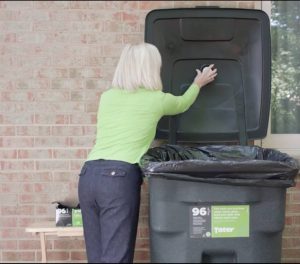
While nearly all municipalities or waste haulers provide trash carts and cans, most let residents and businesses use more as needed.

“It can be tempting to select an additional trash can based on cost, but looking at other factors can make your life easier,” said Andy Bardsley, Vice President of Retail and Pro Sales at Toter, a leading manufacturer of trash cans and carts.

Carts stored indoors or in areas prone to heat can pose an odor problem. Select brands offering accessories like cart liners or odor eliminators to keep your cart clean and aid in deterring animals.

Bardsley advises consumers to take the following factors into consideration:

• Animal-Proofing: While this is a major consideration in high bear population areas, it’s extremely common for small animals like opossums, raccoons and rats to get into trash, leaving a mess and hazard in their wake. Choosing a certified animal-proof cart with a locking lid can eliminate this problem. Many products claim to be animal-proof, so look for a rating by an outside group, such as the Interagency Grizzly Bear Committee (IGBC), which performs exhaustive testing to determine which products are strong enough to withstand repeated clawing, toppling and chewing.

• Odor control: Carts stored indoors or in areas prone to heat can pose an odor problem. Select brands offering accessories like cart liners or odor eliminators to keep your cart clean and aid in deterring animals.

• Design: Hoisting heavy carts can pose an injury risk, so look for lighter containers with a higher strength-to-weight ratio to ensure safety and ease. Wheels are critical, but be sure to “test-drive” the cart first to see how it maneuvers. This will tell you how much force is needed to tip roll the cart, and how stable it is when loaded.

• Durability: Waste haulers and consumers alike are tough on cans and carts, so choose one designed for industrial use. Plastic cans are lighter and more portable than metal ones, but avoid lightweight plastics that wear quickly. Drilled areas create weak spots, so look for solid-molded plastic carts that are reinforced in key areas, such as along the rim, handles and bottom. Remember, a well-made cart from can last 10 to 15 years under normal use, and will likely come with a warranty.

• Local Regulations: It’s becoming increasingly common for municipalities or haulers to regulate cart size and weight, so check for any suggestions or restrictions first. The number to call for this information is usually stamped on the can provided.

• Capacity: While 96-gallons is generally the hauler standard, carts are available in 32-, 48-, 64- and 96-gallon capacities. Seniors and individuals with physical impairments often prefer to use a 48-gallon “half cart” to keep weight to a minimum.

• Sustainability: If you’re concerned about your carbon footprint, select products made with a higher percentage of recycled plastic, which are easily recyclable when they reach the end of their service life. A higher-quality can will last longer and prevent being landfilled.

• Alternative Uses: Trash cans and carts can be used for more than refuse collection. Popular alternative uses include storing sports equipment, organizing lawn tools and providing a pest-proof container for dog food, bird seed, rock salt or mulch.

For more information on choosing the right can for your needs, visit toter.com/consumers.

Dealing with trash is never fun, but making informed choices can help make the chore hassle-free.

(StatePoint)

Angelina Beautiful/Clean Hosts “Shred Day”

0

Angelina Beautiful/Clean will be helping the community go green for St. Patrick’s Day by recycling unwanted documents at the Lufkin/Angelina County Chamber of Commerce (1615 S. Chestnut) on Friday, March 17th from 9:00 a.m. to noon.

Security Shredding will shred documents on-site and recycle them so that Angelina County residents can feel secure about items they are dropping off. Even businesses can participate but are limited to five boxes. Tax-deductible donations can be made to Angelina Beautiful/Clean.

According to Jennifer La Corte, AB/C Executive Director, “This is a wonderful way to start Spring cleaning and celebrate The Great American Cleanup campaign through Keep America Beautiful. It helps create an avenue for secure destruction of personal documents at no cost to the citizens of Angelina County.”

Angelina Beautiful/Clean wants to give East Texans the chance to easily and safely recycle paper that would otherwise end up in a landfill. Make plans to attend The Great American Cleanup “Shred Day” to receive this free service!

For more information on this or any other Angelina Beautiful/Clean program, please contact La Corte at 936-63CLEAN (936-632-5326) or visit angelinabeautifulclean.org.