The 23rd Leadership Tomorrow class met on December 10th to complete one of its three volunteer projects for the 2014-2015 program year. Each year one session is dedicated to a full day of volunteer work at a non-profit in our community. This year all 30 class members spent the day assisting with various painting projects to help maintain the cheerful environment of several buildings on campus of the Lufkin State Supported Living Center.
The day was coordinated by Lynn Hopper, Community Relations Director, of the Lufkin State Supported Living Center and Bonnie Dowdy, Leadership Tomorrow Chairman. The Leadership Tomorrow program is made possible through student sponsorships by businesses and parents. A special thank you extended to CMC Recycling, the Presenting Sponsor for 2014-2015, to Hudson ISD for providing transportation for the session, and to the Lufkin State Supported Living Center for providing lunch.
Leadership Tomorrow consists of 30 high school juniors from all of the Angelina County school districts. The program was designed for high school and home school juniors in Angelina County and mirrors the Leadership Lufkin program. Students in the program have the opportunity to learn about Angelina County first hand, to explore possible career opportunities that exist in this area, and give back to the community through three volunteer service projects. For more information on Leadership Tomorrow, contact Susie Cardwell at scardwell@lufkintexas.org.
PICTURE CAPTION: Leadership Tomorrow Class #23 volunteering at the Lufkin State Supported Living Center.
Class members are: Elisabeth Alvis (Lufkin High School), Emma Cherry (Huntington High School), BriAnn Criswel (Lufkin High School), Diana Dunman (Lufkin High School), Allie East (Lufkin High School), Hanna Eddings (Zavalla High School), Kristen Evans (Zavalla High School), Whitney Flournoy (Huntington High School), Josiah Garges (Hudson High School), Emma Godfrey (Hudson High School), Katelyn Hanks (Hudson High School), Hayden Havard (Lufkin High School), Ivan Hernandez (Lufkin High School), Matt Jungmann (Lufkin High School), Erin LaRoe (Home School), Matt Lindsey (Huntington High School), Brooke Loggins (Huntington High School), Hannah Matteson (Huntington High School), Heather McDaniel (Lufkin High School),Samantha Montoya (Diboll High School), Scott Morgan (Lufkin High School), Bryndan Nerren (Huntington High School), Chloe Presnall (Diboll High School), Holly Ratcliff (Hudson High School), Dondrick Sanders (Lufkin High School), Tristan Sims (Diboll High School), Jackson Vier (Lufkin High School), Noah Vier (Lufkin High School), Richard Wilroy (Huntington High School), and Mikayla Young (Hudson High School).
Some homeowners may be seeing numerous lady bugs invading their homes this fall and winter. Lady beetles are insects that are considered beneficial and are not invading your home to cause problems, only to stay warm. The lady beetle does not chew or bore holes in walls nor do they eat carpet.
While they cause no harm, their overwintering inside people’s homes causes them to be somewhat of a nuisance.
Lady beetles are non-native insects that are considered one of our most beloved insect. The multi-colored Asian lady beetle is native to Asia but occurs in many areas of the United States. This beneficial insect was released in the United States as early as 1916. More lady bugs were released in the late 1970’s and early 1980’s. It has taken years for the populations to spread, but now large populations are found in many areas of the south, northeast, Midwest, and as far north as Oregon and Washington.
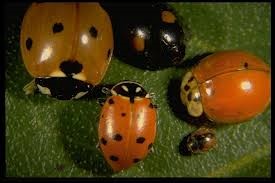
Lady bugs are also referred to as “lady beetles” or “lady bird beetles”. Adult beetles are orange with six small dark spots on each wing cover. The segment behind the head is black with a white margin and two convergent white dashes. The larvae are soft-bodied, gray and orange, and covered with rows of raised black spots.
The lady beetle is an effective and natural control for harmful plant pests such as aphids, scale, and other soft-bodied arthropods. One adult lady beetle may eat over 5,000 aphids during its lifetime.
Different types of ladybugs. Contributed photo.
The lady beetle also has a defense mechanism. If agitated or disturbed, the beetle’s reaction is to “reflex” bleed in which a yellow fluid with an unpleasant odor is released from the leg joints. This reaction helps prevent predators, such as birds, from eating the lady beetle.
This fluid can sometimes stain walls and fabrics.
The lady beetle is attracted to lighter colors such as whites, grays, and yellows. They enter homes through cracks and crevices. During warm winter days and early spring, the lady beetle may become more active searching for an exit.
No “control” of these beneficial insects is warranted. Prevent them from entering the home by caulking exterior cracks and crevices. Sweeping and vacuuming are effective means of removing these insects from the living area.
+++++++++++++++++++++++++++++++++++++++++++++++++++++++++++++++++++++
Cary Sims is the County Extension Agent for agriculture and natural resources for Angelina County. His email address is cw-sims@tamu.edu
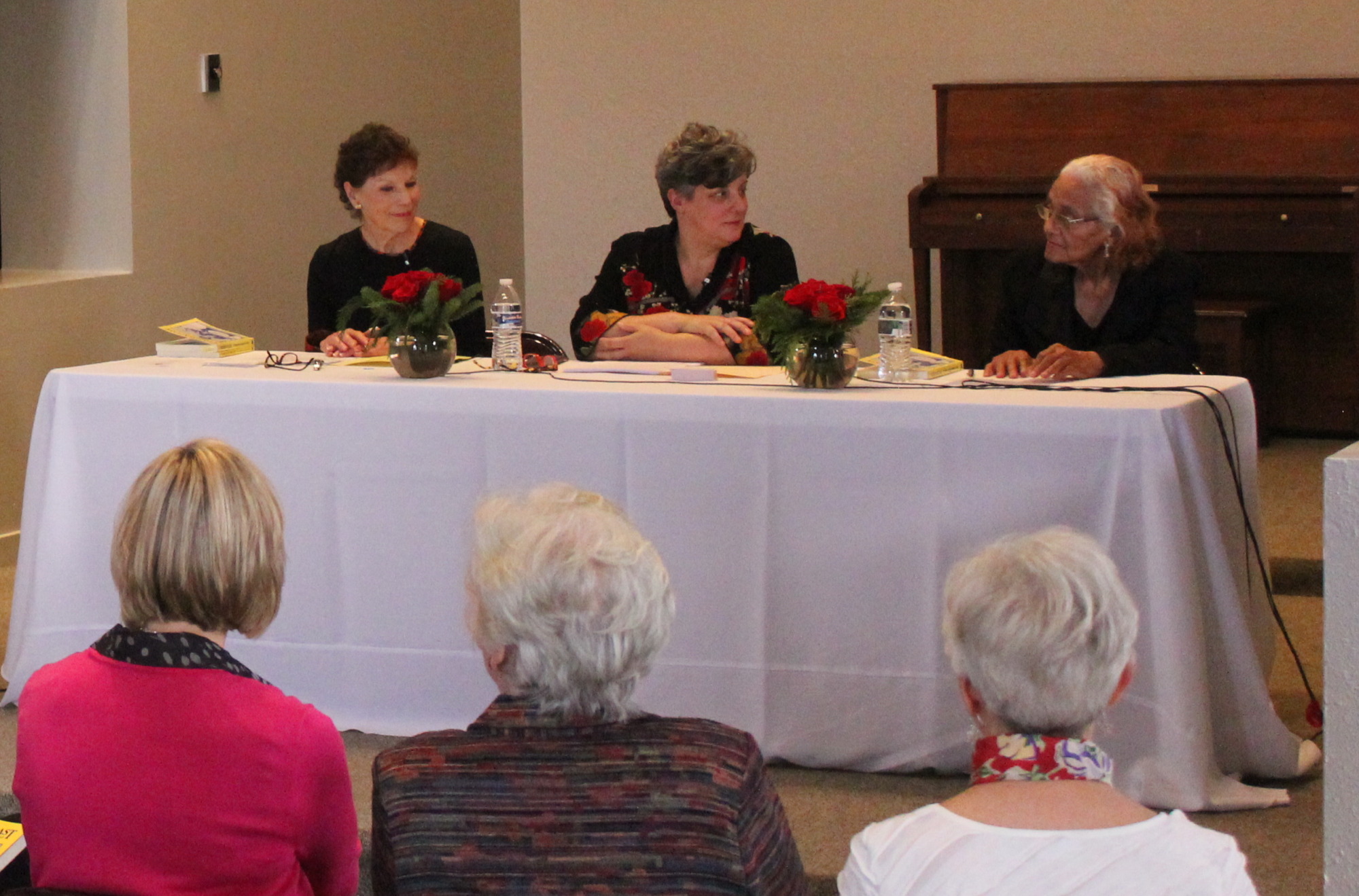
A panel of three remarkable women, Reverend Bettie Kennedy, Ellen Temple and Kay Arnold, shared in a discussion. Texas Women Win the Vote in the Mrs. E. W. Leach Performing Arts Center of the Museum in conjunction with the exhibition, Citizens at Last: The Woman Suffrage Movement in Texas today Bettie Kennedy has throughout her life had an abundant love and compassion for all people and she continues to feed their bodies and nurture their spirits. Through her portrayals of renowned women in Black History (Harriet Tubman, Sojourner Truth, Rosa Parks and others), she teaches acceptance of cultural diversity. Ellen Temple is a conservationist, a historian/educator, and publisher. In the 1980s, she published the first two books in print about the Woman Suffrage movement in Texas: Citizens at Last, edited by Judith McArthur and Ruthe Winegarten, and ATexas Suffragist: Diaries and Writings of Jane Y. McCallum by Janet G. Humphrey. Ellen is fascinated with the history of the long, successful struggle for women’s right to vote. A sixth generation Texan, Kay Arnold grew up fascinated by stories of her ancestors. She received her bachelor’s degree in American History, Political Science and Economics and her master’s in Texas history and cultural anthropology, both from St. Edward’s University, where she then taught Texas history to adult students. Combining her passion for history, social justice and women’s rights, Kay is working on a few projects, most notably her upcoming book titled “Woman’s Work: Texas Women United for Equal Suffrage.” Be sure and check the City of Lufkin TV schedule (KLUF 15) to see this discussion!
Family Day was held on Sunday, December 14th from 2-4 p.m. Activities at this festive event included creating Christmas cards, gifts tags, and reindeer and candy cane ornaments. Participants checked out an “Ice by Number” workshop with April Didrikson. Ice by Number is the world’s first edible pattern for decorating baked goods. Santa Claus will arrived at 3 p.m. for photos and an opportunity for children to share their Christmas wishes. This event was made possible by the I.D. and Marguerite Fairchild Foundation, the Simon and Louise Henderson Foundation, the Ernest L. Kurth, Jr. Charitable Trust, and Museum Guild.
At my recent Thanksgiving meal at my folks place in Burleson, Texas, we got into a discussion on the difference between yams and sweet potatoes.
Is there a difference? Indeed there is! Our confusion between the two is because of labeling.
Sweet potato skin is beige, orange and sometimes purple in color, and has light yellow to orange to purple colored flesh. Sweet potatoes can be found in many local grocery stores.
First cultivated by Native Americans, sweet potatoes are part of the Morning Glory family. Sweet potatoes are more nutritious than yams and contain fewer calories. Sweet potatoes contain beta-carotene, calcium, potassium and vitamins A and C.
Yams are part of the Lily family. Lily family means they are actually a perennial plant that dies in the fall and winter and then comes back in the spring. Yams are native to Africa and Asia. Yams are not as nutritious as sweet potatoes. They can weigh up to 100 pounds and are very starchy.
Yams have very dark skin and the flesh of a yam can range from white, to red, to purple colored flesh. If you are looking for a yam you may have to go to an international grocery store to purchase it.
The versatile sweet potato is ideal fare for the health – conscious food consumer. With the ever-growing interest in health and natural foods, the sweet potato is quickly finding its place in the family weekly diet the year around. The sweet potato blends with herbs, spices and flavorings producing delicious dishes of all types. From processed baby foods to the main dishes, casseroles, salads, breads and desserts, sweet potatoes add valuable, appetizing nutrients and color to any meal.
As a main dish or prepared as a dessert, the sweet potato is a nutritious and economical food. One baked sweet potato (3 1/2 ounce serving) provides over 8,800 IU of vitamin A or about twice the recommended daily allowance, yet it contains only 141 calories making it valuable for the weight watcher. This nutritious vegetable provides 42 percent of the Recommended Daily Allowance for vitamin C, 6 percent for calcium, 10 percent for iron, and 8 percent for thiamine for healthy adults.
It is low in sodium and is a good source of fiber and other important vitamins and minerals. A complex carbohydrate food source, it provides beta carotene which may be a factor in reducing the risk of certain cancers.
For the most food value, choose sweet potatoes of a deep orange color.
When buying sweet potatoes, select sound, firm roots. Handle them carefully to prevent bruising. Storage in a dry, unrefrigerated bin kept at 55-60 degrees F. is best. DO NOT REFRIGERATE, because temperatures below 55 degrees F. will chill this tropical vegetable giving it a hard core and an undesirable taste when cooked.
The sweet potato (Ipomoea batatas) is one of the classic Southern vegetables that can be grown in the home garden with ease. Even George Washington grew them! They do prefer good sandy soil but are able to adapt to many different soil types in the garden. There are many varieties to choose from.
When it is time to harvest, do so before the soil temperature drops to less than 50°F to prevent frost blackening. The vines may be frosted partially with the first few cold snaps. At this time, cut these back and dig the sweet potatoes, preferably while soil is dry. Take care not to bruise or cut the tubers.
Cary Sims is the County Extension Agent for agriculture and natural resources for Angelina County. His email address is cw-sims@tamu.edu
Educational programs of the Texas AgriLife Extension Service are open to all people without regard to race, color, sex, disability, religion, age, or national origin.
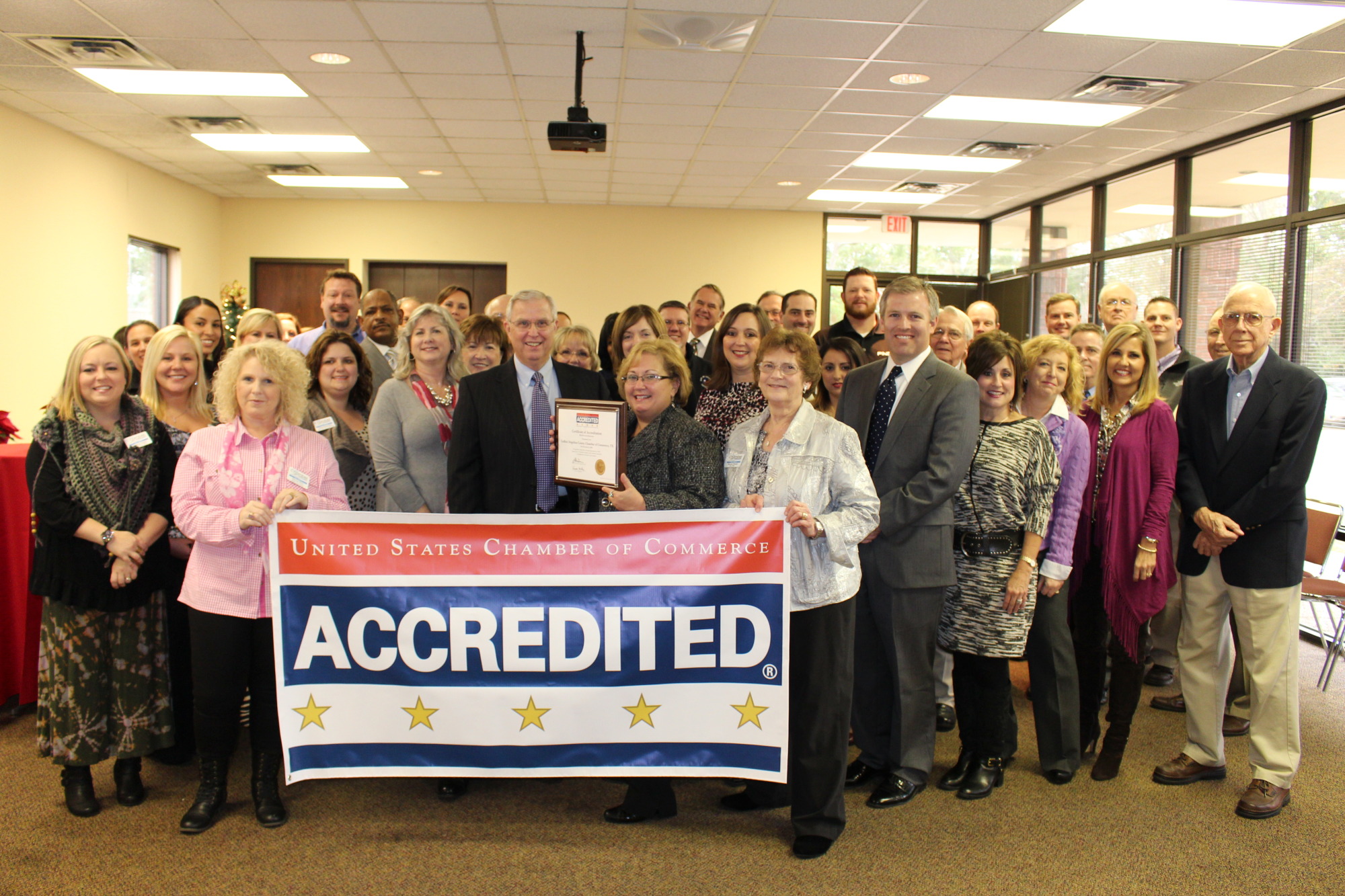
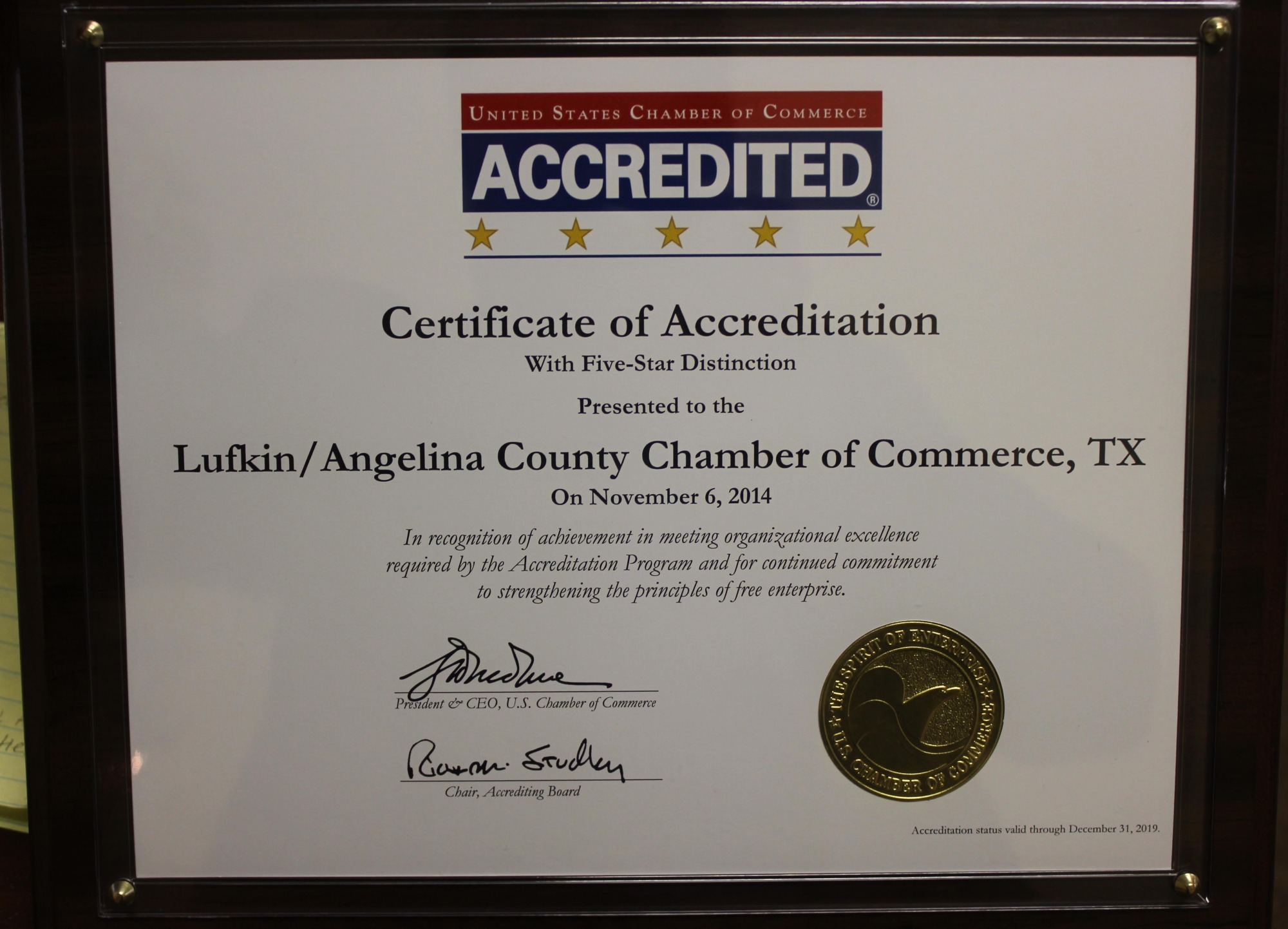
Lufkin, Texas – The United States Chamber of Commerce has awarded the Lufkin/Angelina County Chamber of Commerce with 5-Star Accreditation for its sound policies, effective organizational procedures, and positive impact on the community. The 5-Star Accreditation designation is the highest level that can be awarded to a Chamber and has been awarded to only 89 chambers in the nation – less than 1% of all Chambers nationwide.
“This designation signifies what so many of us already knew – that Lufkin/Angelina County has great community support and this Chamber has great volunteers and staff,” commented Casey Robertson, Chamber Board Chairman, “It is an incredible level of achievement for our Chamber, our leadership and our community to be recognized at the highest level possible”.
“Accreditation validates a chamber as having programs that benefit their local economy and for positively influencing action in their community,” said Raymond P. Towle, IOM, CAE, U.S. Chamber Executive Director of Political Affairs and Federation Relations. “We applaud these organizations for advancing the principles of free enterprise.”
Accreditation is the only national program that recognizes chambers for their effective organizational procedures and community involvement. In order to receive Accreditation, a chamber must meet minimum standards in their operations and programs, including areas of governance, government affairs, and technology. This extensive self-review takes 6-9 months to complete.
“It signifies a tremendous amount of work and a commitment from leadership, management and volunteers and it is an honor to achieve such a high standard of service and to be recognized nationally for it”, added Jerry Huffman Chamber President/CEO. “We have worked hard to be the best Chamber possible and this designation validates a lot of hard work and effort.”
Local chambers are rated Accredited, 3-Stars, 4-Stars, or 5-Stars. With the final determination made by the Accrediting Board, a committee of U.S. Chamber board members.
“The mission of the Lufkin/Angelina County Chamber is to continuously improve the economic prosperity, the business environment and the quality of life in Angelina County and we will continue to work hard to fulfill that mission,” Huffman said.
Other Chambers in Texas with 5-Star designation include: Fort Bend Chamber of Commerce, Greater Beaumont Chamber of Commerce, Greater Irving Las Colinas Chamber of Commerce, Longview Chamber of Commerce, Lubbock Chamber of Commerce, McAllen Chamber of Commerce, Richardson Chamber of Commerce
Rockport-Fulton Area Chamber of Commerce and the San Antonio Hispanic Chamber of Commerce.
2015 Distinguished Honorees Selected, Program Named for Noted Conservationist Terry Hershey
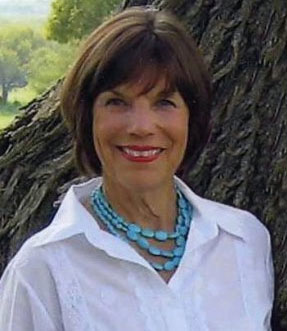
Ellen Temple
HOUSTON, Texas (December 3, 2014) – Audubon’s Texas Women in Conservation Program will debut in 2015 to honor the role that women play in the conservation field in the Lone Star State. A key highlight of the new program is the Terry Hershey Award which recognizes outstanding women leaders. In addition to the award, the new program supports opportunities in Texas for girls and women to become more involved in conservation and environmental sciences and engages women on important issues related to conservation in Texas.
The award is named for conservation icon Terry Hershey, who has devoted substantial passion, time, energy and resources to significant conservation projects in Houston, throughout Texas and nationally for more than 50 years. Mrs. Hershey is a former member of the Texas Parks and Wildlife Commission and a founding board member of Bayou Preservation Association, Houston Audubon Society, Lady Bird Johnson Wildflower Research Center, The Park People, and Urban Harvest. She is a past board member for Audubon Texas, National Audubon Society, National Recreation and Park Association and The Trust for Public Land.
“The history of the conservation movement in Texas is replete with the leadership, passion and dedication of extraordinary women and surely among the most extraordinary of those is Terry Hershey, for whom this award is named,” said Andrew Sansom, who is a member of the board of Audubon Texas and Chair of the Terry Hershey Women in Conservation Awards Steering Committee. “It is a privilege to be associated with Terry and the splendid group of honorees who, in 2015, will be the first to be honored for their good works.”
The inaugural group of honorees are: Carol Dinkins, Environmental Practice Group Leader, Vinson &Elkins LLP (Houston), Susan Rieff, Executive Director, Lady Bird Johnson Wildflower Center (Austin), Ellen Temple, Conservationist, book publisher and education advocate (Lufkin) and Mary Anne Piacentini, Executive Director, Katy Prairie Conservancy (Houston).
Audubon Texas and the Houston Audubon Society will co-host the first Terry Hershey Texas Women in Conservation Awards luncheon in Houston on February 5, 2015 at the River Oaks Country Club in Houston, Texas. The guest speaker will be Allison Whipple Rockefeller, a keen supporter of the National Audubon’s Women in Conservation Program, after which the Texas program is modeled. She chairs the Rachel Carson Awards Council, which selects the honorees for the national program.
Carol Dinkins is an inaugural recipient of the Terry Hershey Award in Audubon’s Texas Women in Conservation orogram because of the landmarks in her exceptional career and her focus on conservation priorities while serving in positions of public trust. In 1979, Governor Bill Clements appointed Dinkins chair of the Governor’s Task Force on Coastal Zone Management, and in 1981, President Ronald Reagan appointed her assistant attorney general of the Environmental and Natural Resources Division of the U.S. Department of Justice. She was the first woman to hold that post. President Reagan later appointed her Deputy Attorney General of the United States, which made her the highest-ranking woman ever to serve in law enforcement at that time. In 1997, Governor George W. Bush appointed her to the Texas Parks and Wildlife Commission and in 2000 to chair the Governor’s Task Force on Conservation. She was the first Texas Parks and Wildlife Commissioner to visit every state park in Texas. She was inducted to the Texas Women’s Hall of Fame in 2000. She was a member of the American Bar Association board of governors from 2005-2008. She held various officer positions, including chair, on the board of directors of The Nature Conservancy, an international conservation organization. Previously, she chaired the Texas Chapter’s Board of Trustees for three years, for which she remains trustee emeritus.
Susan Rieff has been chosen to receive a Terry Hershey award from Audubon’s Texas Women in Conservation program this first year because of the leadership highlights in her distinguished career and her advocacy of conservation best practices that is helping to transform how we think about native and sustainable landscaping in Texas and throughout the country. Rieff began the latest phase of her career as executive director of the Lady Bird Johnson Wildflower Center in 2004, but that is only the most recent chapter of her notable conservation career. She served as the first Director of the Resource Protection Division at Texas Parks and Wildlife Department, as Assistant Commissioner under Texas Agricultural Commissioner Jim Hightower, as Director of Environmental Policy for Texas Governor Ann Richards, and as Policy Director for Land Stewardship at the National Wildlife Federation. From 1995 to 1998, Rieff served as Deputy Chief of Staff for the U.S. Department of the Interior in Washington, D.C. In her tenure at the Wildflower Center, she has transformed the nation’s thinking and best practices of integrating native flora into public and private landscapes throughout the country. She has tirelessly advanced the reach of the Wildflower Center and it is now a department at the University of Texas at Austin.
Ellen Clarke Temple is among the group of inaugural recipients of the Terry Hershey Award in Audubon’s Texas Women in Conservation program because of her untiring advocacy, personal commitment and leadership of conservation initiatives throughout Texas for decades. She is passionate about conserving the Neches River and its designation as a Wild and Scenic River. Ellen has worked for many years to raise awareness of the value and beauty of the plants of the East Texas forests and the need to conserve them. Besides her work in conservation, Ellen is a book publisher who has worked on behalf of public education at all levels and for libraries in Texas. She served as a member of The University of Texas System Board of Regents from 1991-1997, serving as vice chair from 1995-1997, and is currently a past president and member of the board of trustees of Angelina College. She served as president of the board of the Lady Bird Johnson Wildflower Center in Austin from 1997-1999 and is a past member of the board of the Nature Conservancy of Texas. She currently serves on the Advisory Board for South Texas Natives, a program of the Kleberg Wildlife Institute at A&M Kingsville, and on the Stephen F. Austin State University Pineywoods Native Plant Center Advisory Board. She was honored as East Texan of the Year in 2009 by the Deep East Texas Council of Governments. Ellen and her husband Buddy Temple have won numerous awards together for their conservation work in Texas, including the 2011 Aldo Leopold Conservation Award for Temple Ranch; the Lifetime of Conservation Achievement Award given by the Texas Conservation Alliance, 2012; and the R.E. Jackson Conservation Award given Big Thicket Association in 2014.
Mary Anne Piacentini is an inaugural recipient of the Terry Hershey Award and Audubon’s Texas Women in Conservation Program because of her tireless dedication in the trenches to making conservation a priority in the community she calls home. Piacentini became Executive Director of the Katy Prairie Conservancy (KPC) in 1999. At that time, the Katy Prairie Conservancy had just acquired its first 1,300 acres of preserve, rescued from rapid development plans that seriously threatened the integrity of the much larger coastal prairie landscape of the region. Since 1999, Piacentini and KPC’s Board of Directors have grown the Katy Prairie Conservancy from 1,300 acres to over 20,000 acres within the boundaries of one of the nation’s largest and fastest growing metropolitan areas. She has demonstrated unprecedented creativity in community-building around a conservation cause, innovative fundraising and partnership development strategies, and telling the conservation story in terms that are relevant to all. Piacentini has purposefully chosen to not make the Katy Prairie Conservancy just about landscapes and wildlife, but also about people – a strategy that Terry Hershey herself employed throughout her storied career. She is a past president of the Texas Land Trust Council and in 2005, received the Army and Sarah Emmot Conservation award for environmental excellence from the Citizen’s Environmental Coalition.
“Audubon Texas is pleased to partner with the Houston Audubon Society for the first annual Terry Hershey Award luncheon on February 5, 2015,”said Brian Trusty, executive director of Audubon Texas. “It is our hope that these awards will serve as inspiration to other women and will encourage young girls to get involved and stay involved in conservation.”
There is cause for concern about the involvement of women in science, technology, engineering and math (STEM) fields. According to an American Survey Report (2013) published by the US Census Bureau, twice as many men are employed in these fields as women, and in recent decades, growth in STEM employment among younger women has fallen.
“We want to do all we can to encourage young girls and women that an interest in nature and the outdoors can lead to satisfying and worthwhile careers in conservation and science,” said Helen Drummond, executive director of the Houston Audubon Society. “The inaugural honorees of the Terry Hershey Award are wonderful role models and demonstrate that their commitment to conservation is leaving a legacy for us all.”
Fundraising continues to support Audubon’s Texas Women in Conservation program. All gifts in support of this award and all proceeds from Audubon’s annual luncheon will support the enhancement of citizen science, conservation, and educational activities in Texas that focus on engaging women and girls in stewardship and conservation of the natural world. For more information, contact Brian Trusty at 214-370-9735 or visit http://www.texaswomeninconservation.org/
About Audubon in Texas: For more than 100 years, Audubon has established itself as a leader in protecting and conserving wildlife and habitat and inspiring people to take action on behalf of the environment. Audubon’s success is based on a foundation of science, education, and policy. Established in 2001 as the state program of the National Audubon Society, Audubon Texas’s conservation work includes 70% of the Gulf Coast, 3 million acres of statewide grasslands, and 19 Important Bird Areas. Audubon Texas also engages communities in civic action, outdoor education initiatives, and citizen science at its Audubon Centers in Cedar Hill, Dallas, and San Antonio and its Audubon Sanctuary in Brownsville.
Established in 1969 as a chapter of the National Audubon Society, Houston Audubon Society’s mission is to advance the conservation of birds and positively impact their supporting environments which it accomplishes through acquiring and maintaining critical habitat as bird sanctuaries, providing education programs and nature experiences for children and adults, and advocating policy and management actions in support of the mission. Houston Audubon owns and manages 17 nature sanctuaries encompassing 3,400 acres across the Greater Houston and Galveston regions, and every year they reach over 35,000 adults and children through their education and nature-based programs.
For more than 150 years, many Americans have enjoyed the tradition of a fresh, fragrant evergreen tree as part of their Christmas celebrations. Today 30–35 million real trees are sold each holiday season, and there have never been more sources from which to select.
As the holiday season approaches each year, many consumers ask the same question. Real, or artificial? Although there are pros and cons to both sides of this argument, one need not feel guilty for environmental reasons about buying a real Christmas tree. Unlike their artificial counterparts, real trees are biodegradable, and they’re a renewable resource, planted, grown on farms, harvested, and then replanted.
The best way to ensure a fresh Christmas tree is to cut it yourself. Christmas trees have been grown commercially in Texas since 1977. Most Christmas trees are still purchased locally, at retail lots set up at shopping centers, discount stores, supermarkets, and other visible locations. Tree lots and local nurseries provide convenience to consumers who have limited time for tree shopping and usually offer a wide variety of tree species from which to choose.
When choosing a tree from a retail lot, the first concern should be the freshness of the tree because the length of time since cutting can greatly affect how well it will hold its needles and fragrance. In general, a fresh tree will have a healthy, green appearance without a large number of dead or browning needles.
Break a few needles; they should be flexible and feel slightly moist. Needles should not come off in your hand if you gently stroke a branch. A useful trick is to bump the trunk on the ground. It’s normal for some needles to fall but if they’re still dropping heavily after two or three bumps, the tree is too dry.
After arriving home, remove one or two inches from the base of the trunk to encourage better water absorption. Place the trunk in a bucket of water for a day or two and keep the tree in a cool, shaded area before bringing it indoors. Depending on size and other factors, a tree may absorb as much as a gallon of water the first day.
When setting up your tree, locate it away from any heat source that can accelerate drying. Christmas trees can absorb a lot of water, so place the tree in a stand with a generous capacity, at least one quart or larger. Check the water level each day and add water as needed.
Since real Christmas trees are biodegradable, after the holidays they can be converted into landscaping mulch or put to other organic uses. Each year the City of Lufkin offers a Christmas tree recycling service. Around the farm, trees can be cleaned of all decorations can be sunk in a pond to provide structure and habitat for fish.
+++++++++++++++++++++++++++++++++++++++++++++++++++++++++++++++++++++
Cary Sims is the County Extension Agent for agriculture and natural resources for Angelina County. His email address is cw-sims@tamu.edu
Educational programs of the Texas AgriLife Extension Service are open to all people without regard to race, color, sex, disability, religion, age, or national origin.
I hope everyone had a wonderful Thanksgiving holiday and were able to spend time with family and loved ones. The Christmas season is now upon us, and on its heels is the 84th Legislative Session. The legislative world is buzzing with anticipation of what I believe will be a productive session for our great state. Until then, here’s what else is happening at your State Capitol…
Water Plans Get Underway
The Texas Water Development Board voted in November to approve rules for the State Water Implementation Fund for Texas (SWIFT), opening the gates for communities that want to apply for funding. Now entities such as cities, counties and water districts can apply through the TWDB to fund water infrastructure projects with the help of low-interest loans that will be subsidized by the $2 billion voters approved last November. That money is the amount officials believe is needed to fund the State Water Plan for the next 50 years. More than 560 unique water supply projects (including pipelines, desalination plants, etc.) will be ranked at the local and regional levels, and then eventually ranked by the TWDB according to each project’s priority status. The deadline for applications is next February, and the board will spend this Spring prioritizing the projects based on certain criteria. The board will use a point system that allows projects to earn points based on the size of the population it would serve, the amount of help it would provide to rural and urban populations, the level of need (including emergency projects), and the amount of local contribution. The carve out for rural Texas was especially important. Voters made the right decision when they chose to invest in our state’s water future; but now is the time for myself and my colleagues to ensure that the implementation of this plan is fair, transparent and makes the best use of state dollars.
House Interim Charges: Committee on Public Education
As we continue our look at House interim charges, we focus this week of the House Committee on Public Education. Committee members have been tasked with exploring research-based options for improving student achievement beyond standardized test scores. The committee will also evaluate standards for effective campus management, and will review the current teacher evaluation tools and instructional methods. In an effort to help students in low performing schools, members will review successful strategies and methods on how to turn these schools around, while identifying alternatives that could be offered to current students who are attending these schools. And finally, the committee will also review the broad scope and breadth of the current standardize testing, including the format, testing calendar, and the limitation on instructional days available. From that review, members will recommend options to streamline these assessments and focus on core concepts. This includes review current federal testing requirements in grades 3-8 to determine if testing relief is possible.