


Home Blog Page 708

Excellent Soil vs Wet Soil

0

After days of rain and dark clouds, like many East Texans, you probably stepped outside and enjoyed the recent sunshine. Be it your yard, landscape, or vegetable garden, you couldn’t wait for the sun to shine and your ground to dry out.

Yet recent rainfall has left many of our soils far too soggy to work. The simple advice is that you work with your soil when it’s moist, but not wet.

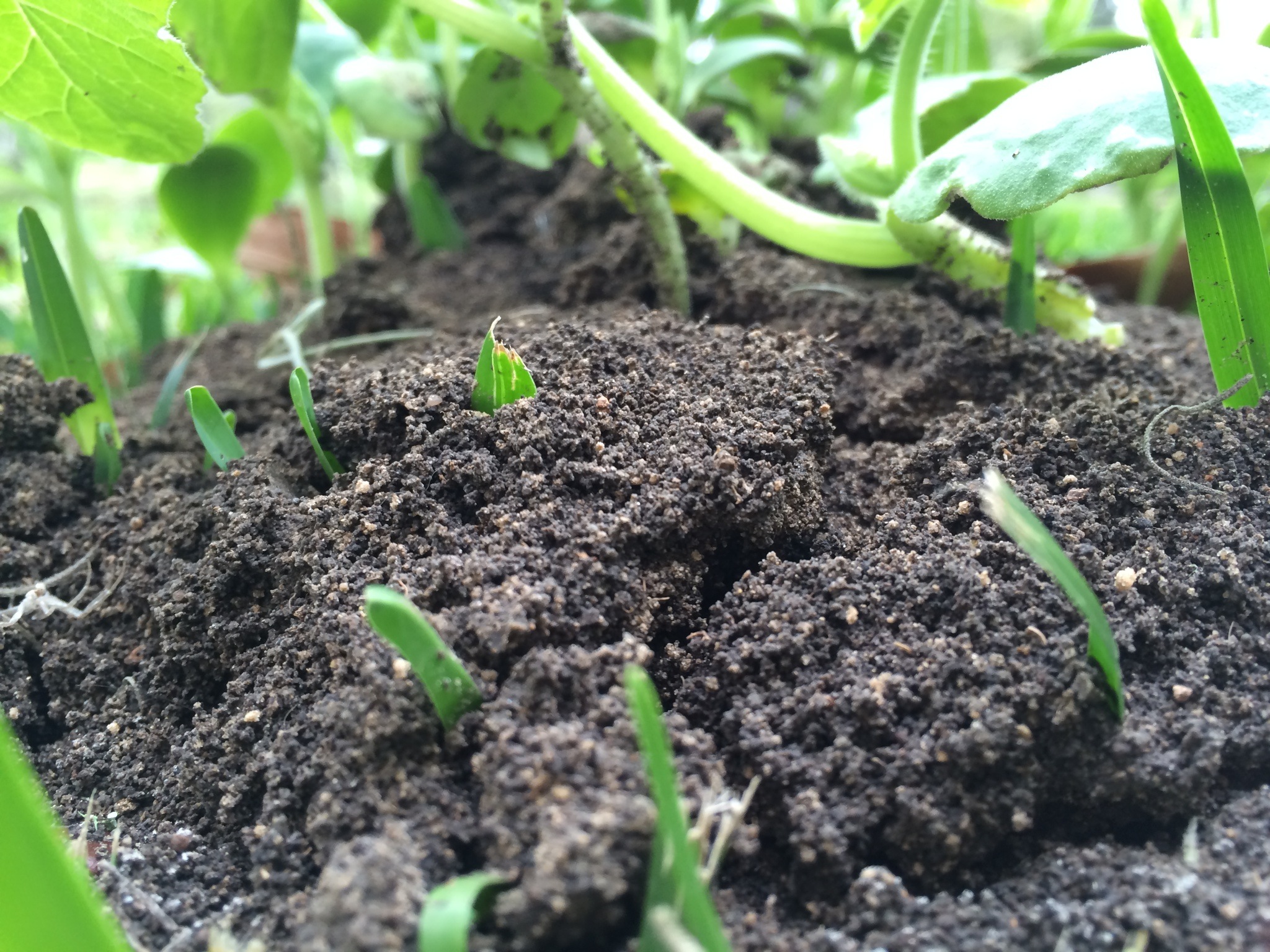
Working soil when it is too wet can cause it to become rough. Ideally we want to till or spade the soil in the winter to prepare for spring planting. The extra time and cool temperatures help mellow soil. This is especially important if the soil is being worked for the first time.

If you have a tighter, clayey soil the foolproof addition is organic matter. At this late time, your added organic matter should already be composted.

Organic matter really is the miracle cure for bad soils. Is your soil too sandy? Add organic matter. Is it nothing but clay? Add organic matter. The benefits of organic matter to soil are too numerous to extol here. Suffice it to say, composted organic matter adds nutrients, increases water holding capacity, improves soil structure, has numerous beneficial microbes, and prevents erosion.

Compost can be from manures, lawn clippings, leaves or anything natural you can find.   Many seasoned gardeners will till in leaves, pine straw, or other raw material into the soil months before it is to be used. This allows the soil to create its own compost.

If you are unsure that your garden site is poorly drained, there is a simple test to see how well drained it is. Well-drained soil has everything to do with how quickly water will percolate through the soil. Many homeowners think that a sloping ground area that sheds water is “well drained”. Not so. Water must be allowed to move into the soil and then move thru out below it.

A very simplified drainage (or percolation) test taught to me by a retired county agent is to dig a hole about three foot deep and about a foot wide. Post-hole diggers work very well for this.

Add water until the water level doesn’t immediately drop. After 24 hours, check to see if the soil at the bottom is visible. Though it may be muddy, if you can see the soil at the bottom then you have very well drained soil. A deep sandy soil, by nature, is very well drained. Shallow topsoil over clay subsoil will often hold water.

If it takes 48 hours until you see the bottom, then your soil is fairly well drained. But if it takes 72 hours (three days) or more before you can see the bottom, then you know that you have poorly drained soil and measures must be taken to compensate.

The solution is a raised bed. Whether in rows down your garden or landscape beds edged with timber, stone, or other items, raising the level of the soil, in which the desired plants will grow, should aid greatly.

The question is often asked, “Can I just dig out a deep hole, fill it full of good soil and create a well-drained soil that way?” Digging a hole like that will only create a big clay bowl that will still hold water quite well.

To overcome uncertainty in selecting what fertilizer or lime and how much of each, you must take a soil test. Soil testing costs $10 per sample, plus $6-7 for postage if you mail it. SFA has a laboratory that tests soil for liming and fertilization. You can pick up a form at our office next to the Farmers Market on the south loop in Lufkin or print one off the internet yourself. Google “SFA soil test” and select the first pdf option on the screen.

Cary Sims is the County Extension Agent for agriculture and natural resources for Angelina County. His email address is cw-sims@tamu.edu.

Border Security, Texas Water Development Board Top Issues This Week At Capitol

0

Austin was more crowded than usual this past week, as folks from across the state poured into the city to celebrate Texas Independence Day. While committee meetings and legislative hearings took place inside, the outside of your State Capitol was a festive mix of Lone Star customs and culture, including a giant Texas flag on the Capitol steps comprised of 1,836 donuts donated by Krispy Kreme to honor of our state’s birth year. Here is what else is happening at your State Capitol…

Appropriations Subcommittee
As we wrap up our appropriations subcommittee meetings, we have made strides on major issues such as addressing ways to create meaningful pre-kindergarten programs, increasing education funding, ensuring our institutions of higher education are able to adequately educate our future workforce, and making certain that our universities set the pace for cutting edge research in the future.

Natural Resources
In our first full meeting of the House Natural Resources Committee, my colleagues and I heard testimony from the Texas Water Development Board related to the rollout of the State Water Implementation Fund. The TWDB announced that 48 applications for water project funding had been received by the February deadline. With oversight from an advisory committee, the TWDB will do a comprehensive scoring in order to rank the projects by priority using criteria developed through public input last year. While this year’s wave of funding will total $800 million in water infrastructure projects, that number will eventually reach the $2 billion mark that was approved by voters in November of 2013.

Border Security
I co-authored legislation this past week to help bolster our state’s continued border security effort. House Bill 11 authorizes the Texas Department of Public Safety to hire additional troopers and re-establish state police checkpoints, while also creating a “DPS Officer Reserve Corps” to handle background investigations and sex-offender compliance. This proposal provides a much-needed long-term solution that would bring an end to law enforcement surges, and instead provide a stable law enforcement presence along the border. The measures proposed in HB 11 will work to enhance the security of all Texans, but will not interfere with our lawful trade with Mexico.

Mobile Office
District Director Linda Parker will continue hosting our mobile office throughout the month of March. This is an excellent opportunity for anyone to come speak to her in-person regarding any issues or concerns we may be able to assist with. She will be available on March 18th at the Houston County Courthouse Annex from 8:30 am to 11am, and at the Trinity County Courthouse from 1:30 to 4. She will conclude her month on March 25th at the San Augustine County Courthouse from 8:30 am to 11am.

As always, my staff and I are available during the week at (936) 634-2762 or (512) 463-0508. Please do not hesitate to call if we can ever be of assistance, and remember that our door is always open.

Raising Herbs

0

Growing herbs isn’t just for the salad lover. Herbs are fantastic in meats & sausages, fritters, beer & wine, beans, dips, stews, pastries, sauces, butter, omelets, candy, beverages, and more.

Herbs used in cooking are simply plants that are used as flavoring agents. The common herbs used in the kitchen are referred to as culinary herbs. Mild or savory herbs impart a delicate flavor to foods, and the pungent herbs add zest.
For most herbs, the part of the plant that is used is the leaves. The seeds or roots of some herbs can also be used. Because herbs are used in small amounts, only a few plants are usually needed to provide enough fresh and dried herbs for an entire season.

How to grow and use culinary herbs will be covered at the next Homegrown to Homemade DIY seminar hosted by the Angelina County Extension Office on Monday, March 16 at 6:30 pm.

Herb gardening is popular throughout Texas. New enthusiasm for “natural” foods has heightened this interest. In addition, most food recipes can be accentuated with the proper use of culinary herbs.

Herbs may be grown in flower beds, in rock gardens as borders, or as container plantings. Some herbs are annuals, meaning that they grow from seeds and complete their life cycle in 1 year; others are perennials that return year after year.
Many gardeners establish a small herb garden near the home. Generally, a 6- to 10-foot square or rectangular area is sufficient.

For annual and biennial herbs, plant the seeds directly in the garden or start them indoors for later transplanting to the garden. Obtain seeds from your local garden center or seed catalog, or save the seeds produced by the herb plants for next year’s crop.

Care for your herb garden as you would a vegetable or flower garden. Choose a sunny, well-drained location. Apply a balanced fertilizer but do not use too much nitrogen fertilizer. Most organically derived fertilizers should work very well.
Water the plants as necessary during dry periods. Generally, about 1 inch of water should be added per week if it is not supplied by rainfall. Mulch helps conserve soil moisture and reduces weed growth as well.

In general, most herbs have few insect or disease problems. Although most herbs tolerate minor infestations of feeding and chewing insects, do not allow the insect populations to explode.

Plants outgrow insect feeding or damage if they are growing vigorously and are fertilized and watered properly. Harvest the herbs regularly to help keep insect pressure at a minimum.

Diseases are a more serious problem on herbs because the damage is already at a serious stage once it becomes visible. To reduce disease pressure, plant the herbs in suitable areas with proper air circulation and water drainage.

The DIY educational program on Monday, March 16 is $10 and starts at 6:30 pm at the Angelina County Extension office.

Cary Sims is the County Extension Agent for agriculture and natural resources for Angelina County. His email address is cw-sims@tamu.edu. To receive a monthly newsletter about local Extension educational events and other offerings, e-mail Angelina-TX@tamu.edu.

TFA and Richard Saunders’ to Host 2015 Texas Outstanding Tree Farm Tour

0
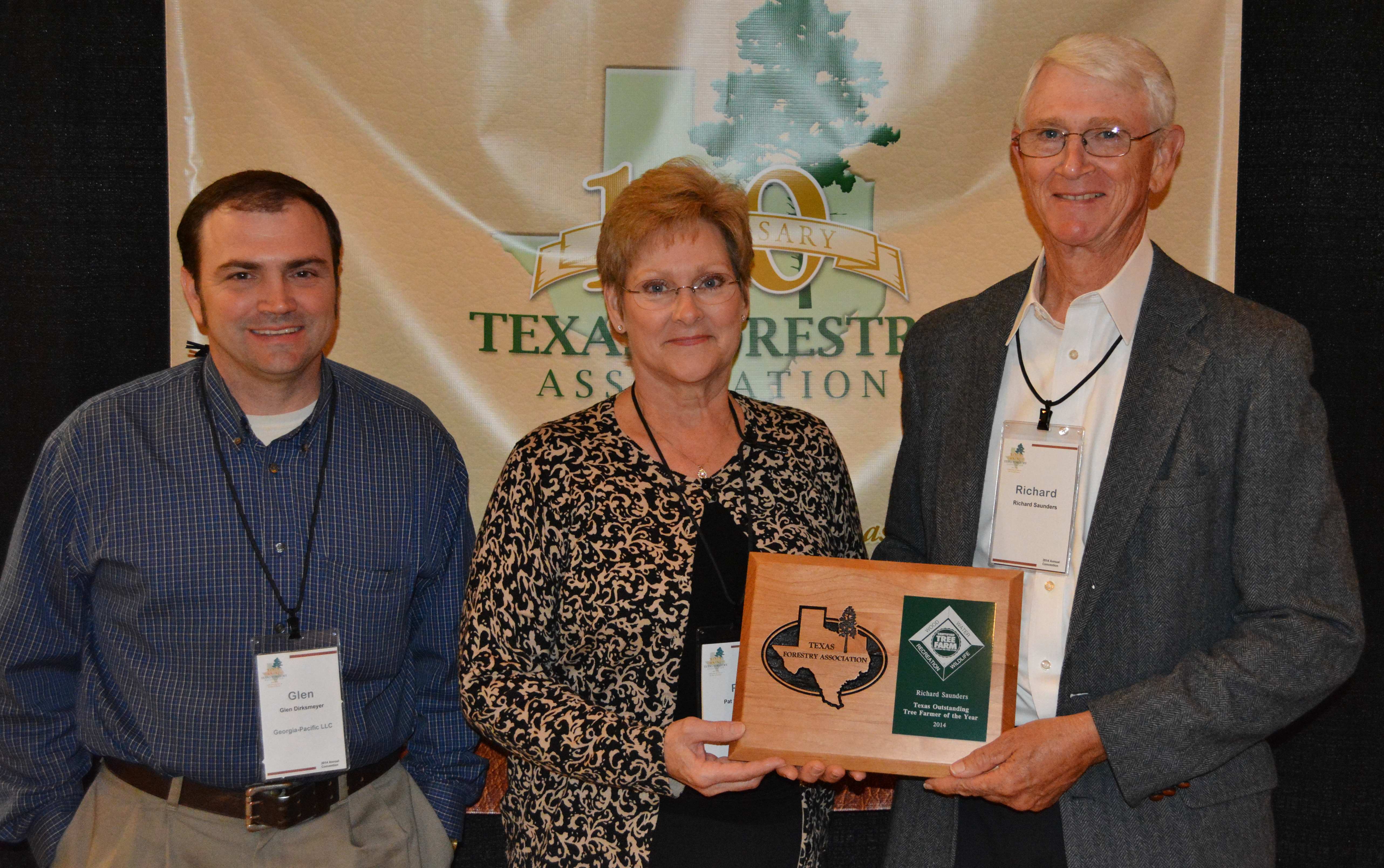
Richard and Pat Saunders accept the award for TFA 2015 Texas Outstanding Tree Farm of the Year at the 100th Annual Meeting of TFA held in Lufkin, Texas, at the Pitser Garrison Convention Center.
Richard and Pat Saunders accept the award for TFA 2015 Texas Outstanding Tree Farm of the Year.
Richard and Pat Saunders accept the award for TFA 2015 Texas Outstanding Tree Farm of the Year at the 100th Annual Meeting of TFA held October 21-23, 2014, in Lufkin, Texas, at the Pitser Garrison Convention Center.

LUFKIN, TEXAS – The Texas Forestry Association will host a tour to highlight the selection of Richard and Pat Saunders’ 716 acre tree farm as the 2015 Texas Outstanding Tree Farm of the Year, on Saturday, April 25, 2015 from 9 a.m. to 1:30 p.m.

The Saunders manage the tree farm, located near Frankston, Texas, for timber income, wildlife habitat and hunting, recreation, and as a legacy for their children. The tour will include a history of this generational tree farm, owned by the Saunders family since 1870, as well as information regarding invasive species, the future of a thinning operation, chestnuts and wildlife food plots, and the effectiveness of prescribed burns. There will also be a guest speaker.

The event is free and lunch will be provided. To reserve your spot by April17, please call 1-866-TXTREES, 936-632-8733 or email tfa@texasforestry.org. with your name, mailing address and the number attending.

Ashby Announces Support of Fully Funded Healthcare for Retired Teachers

0

(Austin)– State Representative Trent Ashby (R-Lufkin) today announced his support for a fully-funded healthcare program for retired teachers. Rep. Ashby, who is Chairman of the House Appropriations Subcommittee dealing with education funding and related agencies, said he is ready to back legislation that funds the Teacher Retirement System (TRS) healthcare program known as TRS-Care.

Over the past two weeks, Chairman Ashby’s subcommittee has heard testimony from groups and individuals regarding the impending crisis with TRS-Care. The consensus of that testimony is that without this additional funding the program will become insolvent, and the funding for healthcare for our retired teachers would be exhausted. Earlier today, Rep. Ashby joined Appropriations Chairman John Otto (R-Dayton) to announce their intention to propose a budget that fully-funds TRS-Care.

“I am extremely supportive of the announcement this morning and I will continue to work with my colleagues in the Texas House to secure the funding necessary for our retired teachers’ healthcare costs,” Rep. Ashby said. “There are thousands of former educators in our district, and even more across Texas– all who have dedicated their careers to teaching young people, improving our communities and serving our great state. As a member of the Legislature, it is my duty to ensure that we keep our commitment to these public servants, especially in providing affordable and accessible health services through TRS-Care.”

The Teacher Retirement System of Texas is the largest public retirement system in Texas with TRS-Care providing healthcare to more than 240,000 retired teachers and their dependents.

Texas Pro Logger Training Begins April 9

0

The Texas Pro Logger Training, hosted by the Texas Forestry Association (TFA) will begin April 9, 2015, at the Texas Forestry Service Cudlipp Training Center and Angelina College Community Services Center in Lufkin, Texas.

The workshops are designed to promote sustainable forestry among those in the logging industry, including logging contractors as well as foremen and foresters. Sessions will begin Thursday, April 9, 2015 at 1 p.m. and will last through the afternoon on Saturday, April 11, 2015.

Topics include Best Management Practices, Business Management, Wildlife, Special Sites, Endangered Species, and ends with a safety training session, allowing those who hold the Pro Logger status to maintain safety recertification.

Cost for the training is $40 per person per workshop, or a total of $160 for the entire weekend. Seating is limited and early registration is required. To find out how to register, please visit the TFA website at texasforestry.org or call 936-632-8733.

In order to receive designation as a Texas Pro Logger, all four courses must be attended and continuing education must be taken yearly to maintain that status.

The training is sponsored by the State Implementation Committee, the TFA, Texas A&M Forest Service and the Texas Logging Council, and exists to promote forest stewardship through logger training, landowner outreach and public awareness.

An Update from the Capitol

0

Here’s an update from your State Capitol…

With committee assignments finalized, the real work of this 84th Legislative Session is now beginning in earnest. From our first look at appropriation requests to our mission to help active and retired educators, here’s an update from your State Capitol…

First Appropriations Meetings

The House Appropriations Committee is wasting no time in getting to work on our state budget. This week the committee met for three days and received a general overview of the finance request from various state agencies. Budget-writing is a unique process, and the experience I gained on this committee during the last legislative session will go a long way in enabling me to best serve the needs of rural Texas. The Appropriations Committee is known for its early morning meetings and heartfelt debates, and I am looking forward to rolling up my sleeves and working with fellow committee members to ensure we are spending our tax dollars in a manner that is both efficient and effective.

Teacher Retirement System

Over the past few weeks, I have been contacted by many active and retired teachers throughout our district who have shared their concern about finding a long-term solution for stabilizing the Teacher Retirement System. Protecting and improving the retirement and benefits of both our active and retired teachers continues to be a top priority for me. During the last legislative session, we worked to pass a major bill that shored up TRS retirement benefits for future generations and provided a cost-of-living adjustment for those retirees who needed it the most. While the TRS fund is now actuarially sound, there is still much work to be done, including thoughtful and intentional action by the Legislature to make sure that our retired teachers have access to quality and affordable healthcare.

Lufkin/Angelina County Day

On February 11th we celebrated Lufkin/Angelina County Day at our State Capitol. Many of you made the long trip to Austin to be with us, and I can’t thank you enough for helping make the day a huge success. We were able to hear from some great guest speakers including: Colonel Steve McCraw, Director of the Texas Department of Public Safety; Luis Saenz, Director of Governor Abbott’s Appointments Office; and Dan Finch, Legislative Affairs Director for the Texas Medical Association. These folks helped lead discussions on rural healthcare, border security and several other issues that deeply affect our district.

Mobile Office

Our District Director, Linda Parker, will be at the Houston County Courthouse on February 18th from 8:30 a.m. to 11 a.m. and that afternoon at the Trinity County Courthouse from 1:30 p.m. to 4:30 p.m. She will end the month at the San Augustine County Courthouse on February 25th from 8:30 a.m. to 11 a.m.

As always, my staff and I are available during the week at (936) 634-2762 or (512) 463-0508. Please do not hesitate to call if we can ever be of assistance, and remember that our door is always open.

Representative Trent Ashby

The Market Steer Show at the Angelina County Fair

0

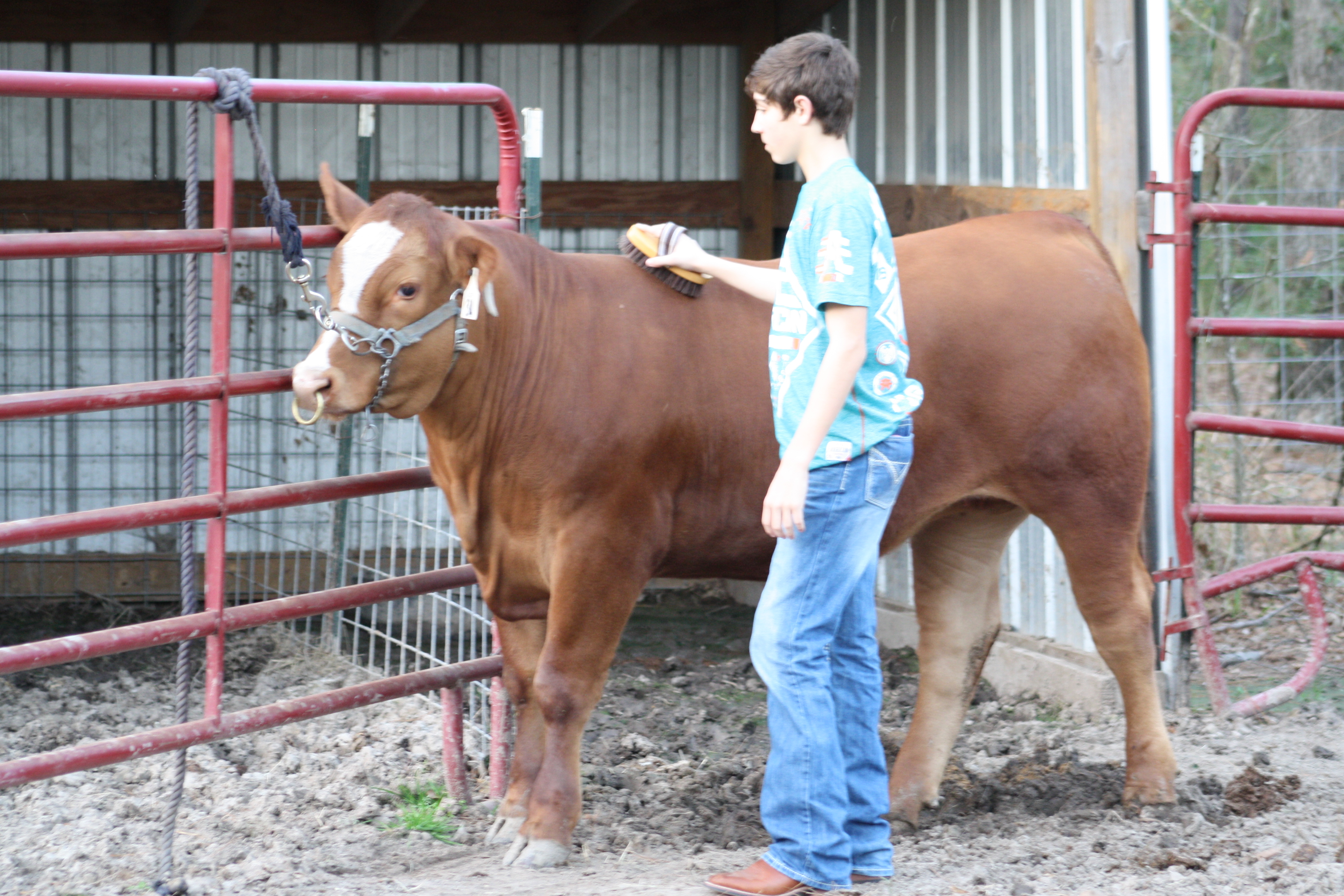
Friday evening at the Angelina County Fair is the market steer show. Perhaps one of the most top events that is attended by the public, kids from 9 to 18 years old will lead steers by halter onto the floor of the Expo Center starting at 5 pm.

Three brothers from Hudson will be entering the area that night carrying on a family tradition. Cason (14 years old), Eli (12), and Riley (10) are the sons of Codie and Kody Jenkins of Hudson. Like their parents, these boys are raising and showing livestock at their local county fair as a part of their developing years.

Sponsored by First Bank and Trust, the Market Steer division has 41 steers entered. After all the steers are weighed in on Thursday evening, the superintendent will break the steers into 5 classes based upon weight.

Steers at our County fair are judged solely on their carcass merit. Breeds and/ or hair color is not considered in the division of classes. Taken even further, all hair must be trimmed to no more than ¼ inch.

Cason Jenkins, age 14, has participated in Angelina County Fair for 6 years. He is showing a predominantly Maine-Anjou steer and a Brahman heifer this year. The Maine-Anjou breed originated in France over a century ago and is known as a large framed beef breed.

The Brahman breed is a cross of tropical bred cattle that was officially developed in the US. Brahman cattle are known, among other things, for being well adapted to hot, humid environments. Folks unfamiliar with cattle breeds will easily recognize this breed with their grey hair, long ears, and prominent hump.

Eli Jenkins, age 12, has participated in the Fair for 4 years. He is showing an AOB heifer this year. AOB is shorthand for All Other Breeds. A combination of several breeds, this category of cattle doesn’t fit into any standard breed designation but have desirable traits.

Riley Jenkins, age 10, has participated in the Fair for 2 years. He is showing a Charolais cross steer and a Boer goat this year. The Charolais is also originated from continental Europe, again the country of France. This large framed, meaty breed is easily recognized by its white hair.

Judging of steers and other market animals focuses on the market readiness of the entry. Judges will place a tremendous emphasis on two main areas: muscling and condition.

Looking at the rear quarters, properly call the “round”, the judge will look for a muscularity that is wide and extends down towards the hocks. He will also look down the top of the steer, looking for a thickness across the loin.

Indeed, from the loin back are the primal cuts. The most tender and sought after steaks come from that area. These include the tenderloin, filet mignon, strip, porterhouse, T-bone, and the sirloin steak.

Next you’ll see the judge feel over the ribs and down the back for the proper amount of fat or “condition”. There needs to be a proper amount of fat covering these areas. Too little or too much and the exhibit will place lower in the class.

Cason, Eli, Riley, and the other exhibitors in the market steer division will compete on Friday, Feb 27 at 5 pm on the floor of the Exposition Center.

For more information about this year’s Fair, go to www.angelinacountyfair.com

Distinguished women honored with first Texas Women in Conservation awards

0

Audubon Texas unveils new award named for Houston conservation icon Terry Hershey

Four Texas women were honored this month as the inaugural recipients of the Terry Hershey award for their contributions to conservation in the Lone Star State. The award is a key component of Audubon’s Texas Women in Conservation Program, a new effort to honor the leadership role that women play in natural resource conservation.

The inaugural group of honorees are: Carol Dinkins, Environmental Practice Group Leader, Vinson & Elkins LLP (Houston), Susan Rieff, Executive Director, Lady Bird Johnson Wildflower Center (Austin), Ellen Temple, Conservationist, book publisher and education advocate (Lufkin) and Mary Anne Piacentini, Executive Director, Katy Prairie Conservancy (Houston).

The award is named for conservation icon Terry Hershey, who has devoted substantial passion, time, energy and resources to significant conservation projects in Houston, throughout Texas and nationally for more than 50 years.

About Audubon in Texas: For more than 100 years, Audubon has established itself as a leader in protecting and conserving wildlife and habitat and inspiring people to take action on behalf of the environment. Audubon’s success is based on a foundation of science, education, and policy. Established in 2001 as the state program of the National Audubon Society, Audubon Texas’s conservation work includes 70% of the Gulf Coast, 3 million acres of statewide grasslands, and 19 Important Bird Areas. Audubon Texas also engages communities in civic action, outdoor education initiatives, and citizen science at its Audubon Centers in Cedar Hill, Dallas, and San Antonio and its Audubon Sanctuary in Brownsville. 

Ashby Tapped as Chair of Education Funding Sub Committee

0

TFCL met with Representative Trent Ashby in Austin on the session now getting underway. He is excited with the opportunity that this legislative session gives him to make a difference.

The Honorable John Otto (R-Dayton), Chairman of the House Appropriations Committee, announced the subcommittee assignments for the 84th Legislative Session. Rep. Trent Ashby (R-Lufkin) has been selected to serve as the Chairman for the Appropriations Subcommittee on Article III (Education).

“It is an honor to have been chosen to serve as the Chairman for this important subcommittee,” Rep. Ashby said. “Education is an essential part of the development of our state and I am grateful to have the opportunity to serve our great state in this capacity.”

The Appropriations Subcommittee on Article III has jurisdiction over funding for public schools, higher education institutions and a variety of related agencies.