




Join us THIS Friday, April 25 for Power Networking Breakfast, presented by Angelina College SBDC, and this year’s Chamber 360 at 8 AM in the Chamber Community Room.
Chamber 360 is designed for new, current, and prospective Investors, offering a comprehensive guide to maximizing your membership benefits. Discover how to maximize the benefits of your membership by leveraging the tools, resources, and relationships available to you. This event also provides a great opportunity to connect with other Investors, give brief remarks, meet the Chamber team, and explore the valuable support you can access.
Attendance is free! While registration is not required, it is strongly encouraged to help us plan accordingly. Register today at bit.ly/PNB-0425.
Power Networking Breakfast (Angelina County)

Why Video Marketing is No Longer Optional for Your Business

The Power of Video in Today’s Digital Landscape
Video marketing isn’t a trend—it’s the present and future of digital engagement. With platforms like YouTube, TikTok, Instagram Reels, and Facebook Video dominating online spaces, businesses that ignore video marketing are missing out on a massive opportunity to connect with their audience.
Why Video Content is Essential
1. Increases Engagement
Consumers are far more likely to interact with video content than with static images or text.
Fix It: Incorporate videos in your social media, website, and email campaigns to boost engagement rates.
2. Improves Conversion Rates
Video content is proven to increase conversions by helping potential customers understand your product or service better.
Fix It: Add explainer videos, testimonials, or product demonstrations to your website to encourage conversions.
3. Enhances SEO Rankings
Google prioritizes video content, making it easier for businesses to rank higher in search results.
Fix It: Optimize videos with SEO-friendly titles, descriptions, and tags to increase visibility.
4. Builds Trust and Credibility
A well-produced video allows you to showcase your brand personality and expertise in a way that static content cannot.
Fix It: Use videos to tell your brand story, introduce your team, and share customer success stories.
5. Adaptable to Any Marketing Strategy
From social media clips to long-form educational content, video can fit into any marketing strategy.
Fix It: Develop a video marketing strategy that includes various formats like live streams, tutorials, and promotional videos.
How MSGPR Can Help You Leverage Video Marketing
At MSGPR, we create compelling video content tailored to your brand’s needs. Whether you need short-form social media clips, professional commercials, or engaging explainer videos, we bring your brand to life through high-quality production and strategy. Ready to harness the power of video marketing? Contact MSGPR today to create video content that converts and captivates!
Capitol Update: Easter Reflections and Renewed Hope for Education
As we celebrate the Easter Holiday, we reflect on the sacrifice of Jesus Christ, who endured unimaginable agony and suffered death on the cross so that we might be saved. As we remember that darkest of days, we also find hope and celebrate in knowing His sacrifice would be the beginning of an ever-lasting light that would shine upon the Earth as a pathway to eternal salvation. He has Risen!
“But the angel said to the women, ‘Do not be afraid, for I know that you seek Jesus who was crucified. He is not here, for He has risen, as He said. Come, see the place where He lay.’” – Matthew 28:5-6
With that, here’s an update from your State Capitol…
Capitol Update
This past week, the House passed House Bill 2, which provides the largest investment of new funding in our state’s history into our public schools. With no new investments in public education formula funding since 2019, and with the impact of inflation and rising costs on our over 1,100 school districts across the state, this measure was desperately needed to support our students and teachers.
Among the money appropriated for public education, HB 2 dedicates over $3 billion to increase per-student funding and teacher pay, nearly $1 billion to increase funding for rural and mid-sized schools, $1.5 billion in new funding for special education services, $1.5 billion in additional funding for pre-K and reducing achievement gaps, and $750 million in incentive pay for high-performing teachers.
Additionally, HB 2 ties per-student funding directly to the growth of local property values, which will yield automatic increases in state public education funding and, importantly, reduce the pressure on local school boards to raise property taxes.
The bill also contains a financial safety net for school districts, which ensures they receive 95% of their funding from the prior school year should they experience a decline in enrollment. Due to the complexity of our school finance system and the inability to predict with 100% certainty the bill’s impact on every school district, a floor has been established so that no district unintentionally loses funding under HB 2’s proposed finance reforms.
HB 2 also requires a minimum of 40% of a district’s per-student funding increase to go towards teacher pay raises, and provides scheduled increases for teachers who have been in the classroom for five years or more.
Finally, HB 2 provides long sought after funding for full day Pre-K programs, invests dollars in schools that extend instruction through after school or summer learning programs, and includes monies to assist our growing number of uncertified teachers with administrative expenses to become certified classroom teachers.
I am immensely grateful to my fellow colleagues on the House Public Education Committee for their tireless work on this measure. With a 144-4 vote by the House, HB 2 now heads to the Texas Senate for their consideration in the coming weeks.
As always, please do not hesitate to contact my office if we can help you in any way. My district office may be reached at (936) 634-2762. Additionally, I welcome you to follow along on my Official Facebook Page, where I will post regular updates on what’s happening in your State Capitol and share information that could be useful to you and your family: https://www.facebook.com/RepTrentAshby/.
The Tomato

Tomatoes are widely considered the most popular vegetable grown in home gardens today. I’m not sure who did the research, but I’ve seen it enough places to believe it. You can be that even though I don’t have much of a vegetable garden this spring, I’ve still made sure to plant six tomato plants! They’ve gained popularity largely because they are nutritious and relatively easy to grow.
Tomatoes originated from the Americas and were take back to Europe by the Spanish. Eventually, this fruit made its way around the world. Early on in Europe they were grown as an ornamental plant. Adoption of tomatoes as a food you could eat came about slowly as some had tried cooking the leaves in stews only to get quite ill. It is a fact that the entire tomato plant (except the fruit) contains high levels of alkaloids.
Historians say the first known reference to the tomato in the British North American Colonies was in 1710 somewhere in the Carolinas. Herbalist William Salmon’s plant history book Botanologia is credited with the first mention in north America. The tomato had to overcome a number of myths and false information, but has undoubtedly developed a strong following.
Tomatoes grow best in soils that have lots of organic matter. If possible, spread 2 to 3 inches of organic material such as compost, leaves, or rotted hay over the planting area. Mix this organic material into the top 4 to 6 inches of soil. They need at least 6 hours of sunlight each day.
Most families need only a few plants, so it is best to buy plants and not grow them from seed. If you haven’t planted any tomatoes at this time, buy the healthy but larger, green plants. Do not set out tomato plants until all danger of frost has passed.
If you feel like you are too late for a spring garden, plan on raising tomatoes Transplant fall tomatoes in the garden about 100 days before the first expected frost.
If possible set you plants on raised beds of soil that are about 6 inches high. Make the transplant holes 3 to 4 inches deep and 2 to 4 feet apart in the row. For staked or caged plants, space the rows at least 3 feet apart. For unsupported plants, leave 4 to 5 feet between the rows.
Unlike other transplants, plant each tomato transplant slightly deeper than it had been growing. If your transplants are leggy, set the root ball and stem on their side in an elongated planting hole. Pack the soil loosely around the plant and leave a slightly sunken area around each plant to hold water.
Water transplants slow and deep. Never allow them to get severely wilted.
You will hear gardeners talk about bush and vining varieties. The technical term for this is determinate and indeterminate. Bush (determinate) varieties will grow to a certain size and then bear fruit. Vining (indeterminate) varieties will continue to grow and bear fruit, if cared for, until frost.
While is possible to grow tomatoes without any support, most gardeners choose to support the tomato on a stake or in a cage. Stakes should about six feet long with one foot of it in the soil. When staking tomatoes, you’ll want to pinch out the suckers to maintain a manageable vine. With caging, you can still pinch prune, but it is not as necessary.
For consistent and quality fruits, fertilize and water regularly. Fertilize the plants every 3 to 4 weeks with 1 to 2 level tablespoons of fertilizer.
Determining what kind of tomato to plant may be the hardest part. Suffice it to say that there are several varieties available. I have an entire catalog of tomato varieties in my office and books have been written about the tomato. If you are new to growing tomatoes, simply ask around and try a few out. You’ll want to experiment and enjoy the variety.
If you want to take a deep dive and learn more about the history of the tomato worldwide, I highly recommend the documentary on Amazon Prime “Triumph of the Tomato”.
SB 2 Passes the Texas House
AUSTIN – State Representative Trent Ashby (R – Lufkin) issued the following statement regarding the passage of Senate Bill 2 on the floor of the House of Representatives.
“Today, the House of Representatives closed the book on a multi-session struggle over school choice in Texas. Since first taking office, my top priority has been supporting public education, and my commitment to supporting public schools, teachers, and students will never change.
After a disappointing session in 2023, I was more determined than ever to deliver the long-overdue funding to our public schools. However, after a primary election cycle in which school choice candidates prevailed across the state, the political reality was that the House would convene this session with more than enough votes to pass school choice. And, failing to do so would jeopardize critical funding for our public schools.
Instead of sitting idly by and allowing flawed legislation to pass through the legislative process, I felt compelled to do everything in my power to improve the bill.
As a member of the House Committee on Public Education, I worked tirelessly with my colleagues to negotiate important, meaningful safeguards for the ESA program that would protect taxpayer dollars, enhance accountability, and improve transparency.
I’m proud of the work we did to ensure common-sense changes were included in the final version of SB 2. Some of those changes include:
- Requiring accredited private schools to be operational for two years before receiving ESA funding
- Establishing a cap on the percentage of funds that will be available to higher-income households
- Requiring an annual audit of the program to ensure state funding is being used appropriately
- Expanding reporting requirements for ESA participants to measure learning outcomes
- Clarifying residency requirements to ensure only Texas students may participate in the ESA program
Please know that my vote to support SB 2 was not taken lightly. However, I knew that sitting on the sidelines and not engaging in the process would only be detrimental to House District 9 and all of rural Texas. And while not everyone may agree with my vote, rest assured that my support for public education will never waiver, and I will continue to prioritize the success of Texas public schools.
Trent Ashby is in his seventh term as a member of the Texas House of Representatives. He currently represents a six-county region that includes Angelina, Houston, Polk, San Augustine, Trinity, and Tyler Counties.
My Five Cents: A Weekly Column by Sen. Robert Nichols

This week we observed Holy Week and remember the sacrifice Christ made for us. We look forward to celebrating the resurrection this Easter Sunday. I hope you enjoy time with your families this Easter weekend.
Here are five things happening around your state:
1. House, Senate name conferees on budget
The budget has passed both chambers of the Texas Legislature. However, since each chamber passed their own version of the budget, there will be a conference committee to reconcile the differences. I am once again honored to serve as one of five Senate conferees on the budget. In the coming weeks, I will work with my House counterpart, Representative Armando Walle, to delve into articles of the budget we work on and produce a conservative, fiscally responsible budget. We will work on three budget articles: Article 6 on Natural Resources, Article 7 on Business and Economic Development, and Article 8 on Regulatory agencies. Together 36 agencies and almost $60 billion in all funds are covered in that part of the budget. We continue to work hard on crafting a budget to best serve Texas.
2. ERCOT releases updated load forecast
Last week, ERCOT presented an updated long-term load forecast to the Senate Committee on Business and Commerce. As a member of the committee, I heard from the CEO of ERCOT Pablo Vegas about the continued increase in demand the state will experience over the next six years. According to ERCOT’s projections, the state could see demand surge up to 148 gigawatts. Existing load currently sits under 95 GW. That is a massive increase in demand and thus requires a massive increase in generation. Most of the new generation demand is driven by the increase in data centers coming to the state. It is the largest growth by type. Data centers require massive amounts of electricity to power since they play a critical role as the backbone of digital infrastructure. The Legislature is actively planning how best to accommodate large loads that want to connect to the ERCOT grid and incentivizing generation to meet that demand.
3. Bill to ban cell phone use in schools passes Senate
The Senate passed Senate Bill 2365 by Sen. Brandon Creighton unanimously this week. The bill would require local school boards to adopt a policy prohibiting students from using cell phones during instructional time. The bill does require school boards to make exceptions for students who have special needs and require the use of a cell phone and for any health and safety requirements. Cell phones have been shown to be disruptive to classrooms, lead to adverse mental health outcomes, and affect students’ attention spans. While many districts statewide have already banned cell phone use at school, it’s critical that all students are focused on learning in the classroom – not their phones. I was proud to support this legislation in the Senate.
4. Sales tax holiday for emergency supplies approaching
Summer means severe weather for much of Texas. It is important to stock up on emergency supplies before the next fire, flood, tornado, or hurricane hits. Texans have the opportunity to do that tax free beginning April 26 and ending April 28. There is no limit to the number of qualifying items you can purchase, which include: household batteries, fuel containers, and flashlights priced under $75; hurricane shutters and emergency ladders priced under $300; and portable generators priced less than $3,000. The Comptroller estimates Texans will save about $2.3 million in state and local sales taxes during the tax holiday. For a list of all qualified purchases, visit the Comptroller’s website at www.comptroller.texas.gov.
5. Governor announces 2025 Star of Texas nominations
Governor Greg Abbott announced the 2025 Star of Texas nominations are now open. Each year, the governor honors peace officers, firefighters, and emergency first responders who are killed or suffer serious injury in the line of duty. Private citizens who are seriously injured or killed while aiding or attempting to aid a peace officer, firefighter, or emergency first responder are also eligible to receive the award. The awards began in 2003 when the Legislature passed House Bill 1937. The bill also recognizes September 11th as Texas First Responder Day. Since then, 734 Texans have been honored. To be eligible for consideration, the incident must have occurred between September 1, 2003 and June 13th the year of the awards ceremony. A person may receive more than one Star of Texas Award. To nominate a brave Texan in your community, visit https://gov.texas.gov/apps/staroftexas. Nominations close on June 13, 2025.
Jesus, the Ultimate Leader: An Easter Reflection on Leadership, Sacrifice, and Redemption

Leadership books fill the shelves. We’ve got frameworks, formulas, and TED Talks telling us what it takes to lead. But no leadership model—no business guru, battlefield general, or best-selling author—has ever matched the example set by Jesus Christ.
And it’s at Easter that His leadership shines the brightest.
He Led by Laying Down His Life
In a world obsessed with power, Jesus knelt and washed feet.
He didn’t demand a throne. He carried a cross.
As leaders today—whether in business, ministry, or the marketplace—we often equate success with visibility, authority, or influence. But Jesus shows us that true leadership is measured in self-sacrifice, not status.
He knew what was coming: the betrayal, the mockery, the lashes, the nails. And still, He walked into Jerusalem not with an army—but on a donkey.
Real leaders don’t run from the hard road. They walk it—for the sake of others.
He Stayed Mission-Focused Through the Pain
In the garden of Gethsemane, Jesus wrestled with the weight of the mission. “Father, if You are willing, take this cup from me. Yet not My will, but Yours be done.”
That is the heart of leadership. It’s not about the absence of struggle. It’s about obedience in the face of it.
When the mission costs more than you expected, when critics are loud and allies are few—lead anyway. Jesus did. And because He did, everything changed.
He Built a Kingdom, Not an Empire
Empires rise through dominance. Kingdoms are birthed in surrender.
Jesus didn’t overthrow Caesar. He didn’t build a palace. He built people.
Twelve disciples. A handful of outcasts. And through them, He launched a movement that is still alive today.
True leadership multiplies itself in others. It empowers, equips, and releases.
So What Does This Mean for Us?
Easter reminds us that the path to resurrection always passes through the cross.
If you’re feeling crushed in your calling or weary in your leadership, let Easter renew your vision. Jesus didn’t just die—He rose. And that same resurrection power lives in you.
Lead like Jesus.
Lead with humility, with courage, with purpose—and when necessary, with scars.
Because the world doesn’t need more flashy leaders. It needs more faithful ones.
And if you’ve never accepted Jesus Christ as your Lord and Savior, there’s no better time than now. The same love that led Him to the cross is reaching out to you today.
Lee Miller is the author of Entrepreneurship God’s Way: Building Faith-Driven Success in Business, available now on Amazon.
He speaks on leadership, faith, and business across the country and helps entrepreneurs lead with Kingdom impact.
Learn more at msgresources.com
Invite Lee to speak to your group or leadership conference.
The Humble Leader: Leading with Confidence and Grace

Humility isn’t weakness—it’s wisdom. In a world that rewards boldness, confidence, and self-promotion, the most effective leaders are often the ones who walk in quiet strength, grounded in humility and powered by purpose.
In Entrepreneurship God’s Way, I talk about how faith-driven leadership requires humility—not just in how we view others, but in how we view ourselves in light of God’s greater plan. Humility allows us to lead boldly without letting ego get in the way.
The Biblical Case for Humility in Leadership
Throughout Scripture, God honors the humble and opposes the proud:
“God opposes the proud but shows favor to the humble.” – James 4:6
Think about Moses, who led millions yet was described as “very humble, more than any man on the face of the earth” (Numbers 12:3). Or Jesus, the King of Kings, who humbled Himself to wash His disciples’ feet.
Why Humility Matters in Leadership
- Humility Builds Trust
People follow leaders they trust. Humble leaders listen well, admit mistakes, and make space for others to shine. - Humility Enhances Growth
When you’re humble, you stay teachable. You seek wisdom, invite feedback, and never believe you’ve “arrived.” - Humility Fosters Unity
Teams thrive under leaders who uplift others rather than compete with them. Humility replaces rivalry with collaboration. - Humility Honors God
Ultimately, humility acknowledges that leadership is not about us—it’s about God working through us. We’re stewards, not owners, of our influence.
Practicing Humility as a Leader
- Give Credit Freely – Recognize your team’s wins and celebrate others without needing the spotlight.
- Admit When You’re Wrong – Vulnerability breeds respect. It shows strength, not weakness.
- Serve Consistently – Don’t just lead from the top. Roll up your sleeves, serve where needed, and lead by example.
- Stay Rooted in God’s Word – Let Scripture be your daily reminder that your calling is about glorifying God, not elevating yourself.
Final Thoughts: Humility Doesn’t Shrink You, It Grounds You
The world tells us to hustle harder and climb higher. Faith tells us to kneel lower and trust deeper. When we lead with humility, we don’t diminish our impact—we increase it, because we reflect the heart of Christ.
So, as you step into your next leadership challenge, ask yourself:
Am I leading to be seen, or am I leading to serve?
About Lee Allen Miller
Lee Miller is a faith-driven entrepreneur, speaker, and author of Entrepreneurship God’s Way: Building Faith-Driven Success in Business. Through his writing and coaching, Lee equips leaders to rise above adversity and build businesses that reflect God’s character.
Get your copy on Amazon: https://msgresources.com/books-resources/
Follow Lee for weekly inspiration, blog updates, and leadership tools that help you bounce back stronger and lead with faith.
Are Your IT Contracts Helping or Hurting Your Business?

For many businesses, IT contracts feel more like a burden than a benefit. Long-term agreements, hidden fees, and rigid service structures often leave companies stuck paying for services they no longer need or can’t adjust as their business evolves. In a fast-changing world, flexibility matters.
Why Traditional IT Contracts Fall Short
Many companies sign multi-year contracts with IT providers, thinking they’re securing stability. Instead, they often find themselves:
- Paying for unused services – Businesses change, but locked-in contracts don’t.
- Struggling to adapt – As needs shift, outdated agreements make it hard to pivot.
- Trapped by fine print – Hidden fees and cancellation penalties make leaving costly.
The Case for Flexible IT Agreements
Rather than locking businesses into rigid, one-size-fits-all contracts, modern IT agreements should be built for adaptability. Here’s how a flexible approach benefits businesses:
✔ Scalability – Adjust IT services as your business grows or changes.
✔ Cost Control – Pay only for what you use, avoiding unnecessary expenses.
✔ Freedom to Choose – No long-term commitments that don’t serve your business.
✔ Customized Support – Get IT solutions that actually fit your unique needs.
A Smarter Way Forward
In an era where agility is a competitive advantage, businesses need IT contracts that support, not hinder, their growth. By choosing flexibility, companies can stay ahead of technology trends, protect their bottom line, and ensure they always have the support they need—without the unnecessary baggage.
Angelina College Site of 2025 Congressional Art Competition
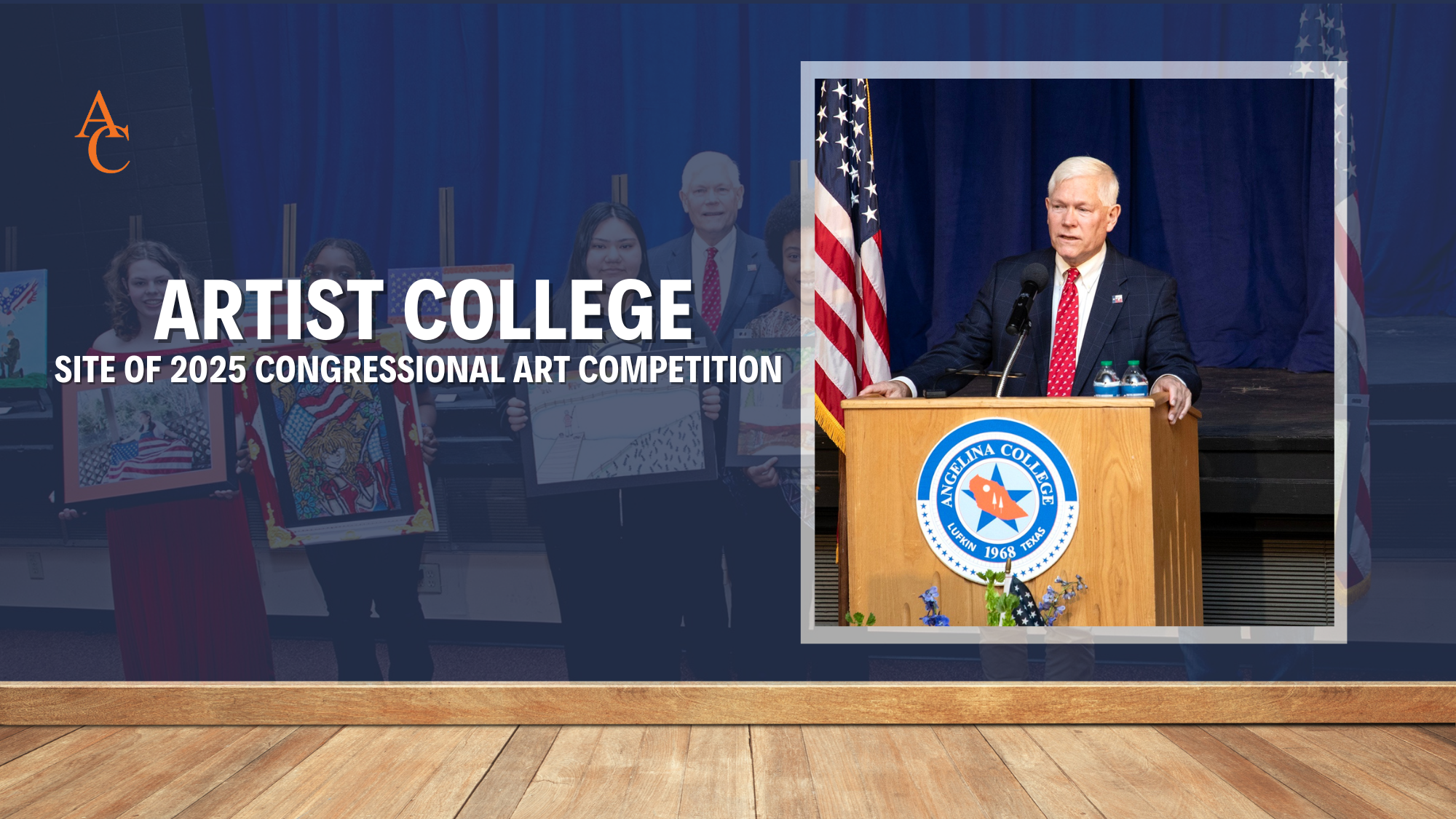
Congressman Sessions Speaks, Presents Awards
Hudgins Hall on the Angelina College Campus on Saturday served as one of four state-wide sites for the 2025 Congressional Art Competition, with Congressman Pete Sessions (TX-17) serving as host and awards presenter.
Young artists from high schools throughout the Deep East Texas region participated in the contest’s “America the Beautiful” theme, with six of those students receiving awards on Saturday.
First-place artist was Alicia Dowell of Nacogdoches High School, whose work “Shooting Star” will be one of four works judged for a shot at a national competition. In addition, Angelina College president Dr. Michael Simon and AC Gallery Director/Instructor Le’Anne Alexander presented Dowell with a scholarship check.

Other award recipients included the following: 2nd place, “Daughter of Betsy” by Kathryn Willis (Lufkin High School); 3rd place, “The Intrepid Passage” by Bryan Campbell (Pineywoods Community Academy); 4th place, “Evening Reflections by Jacqueline Martinez (Cushing High School); 5th place, “Celebrate Freedom” by Elsi Garcia (Martinsville High School); and 6th place, “American Dream” by Kodi Cole (Cushing High School).

According to Sessions, the four winners – Dowell, along with winning artists from Waco, Round Rock and Huntsville – will have their works travel with Sessions back to his office in Waco, where judges will select a first-place winner. Sessions then will transport the winning work to his office in the United States Capitol, and in June, the winning artist will fly to Washington for a presentation. The artwork will remain on display inside the Capitol for a full year.
Sessions praised the artists, but made sure to mention the teachers and the programs helping develop creativity and talent.
“This is a day I get to reflect upon not just our young people,” Sessions said, “but really the advantages we have of knowing that they come from programs that place high value on not just the arts, but upon teaching our children the things that will be lifelong lessons, and that is part of a balance.”
Sessions mentioned his own sister Sara, a former ballerina, as an example of the importance of artistic development.
“I had an opportunity to see her develop herself not only in the skill sets she achieved, but also in the arts as part of the arts magnet schools she attended,” Sessions said. “They gave her, because she was a young woman with creativity, an extreme balance that we as her three brothers lacked.
“She went on to become a lead ballerina in San Francisco. She developed herself not only in competition, but in grace and charm, and I’ve been so proud of her.”
As Sessions presented each recipient his or her award, he remarked on some of the specific artistic details in the works.

“Today, as I’ve looked at all this artwork,” Sessions noted, “you can really see the subject matter, which is ‘America the Beautiful.’ Our country has so many things about it that make it unique and great.
“If you look at this artwork, you can see a lot of creativity in what that person’s idea of what America is about.”
For further information regarding this press release, contact Krista Brown (kbrown@angelina.edu), Le’Anne Alexander (lalexander@angelina.edu) or Gary Stallard (gstallard@angelina.edu).