Home Blog Page 109

Angelina College Law Enforcement Academy Celebrates Class 117 Graduation

Eleven New Peace Officers Enter the Profession

Angelina College’s Law Enforcement Academy on Thursday graduated the 11 members of Class 117, sending those men and women into their new careers as peace officers. 

AC’s Chief of Police Doug Conn addresses the cadets and crowd, sharing the storied history of the academy. 

“We’ve come a long way with this academy, reaching this Class 117, and we’ve made history along the way,” Conn said. “We’ve placed law enforcement officers out on the streets all over the United States, from Washington all the way down to Zavalla, Texas, and we’re very proud of that record.”
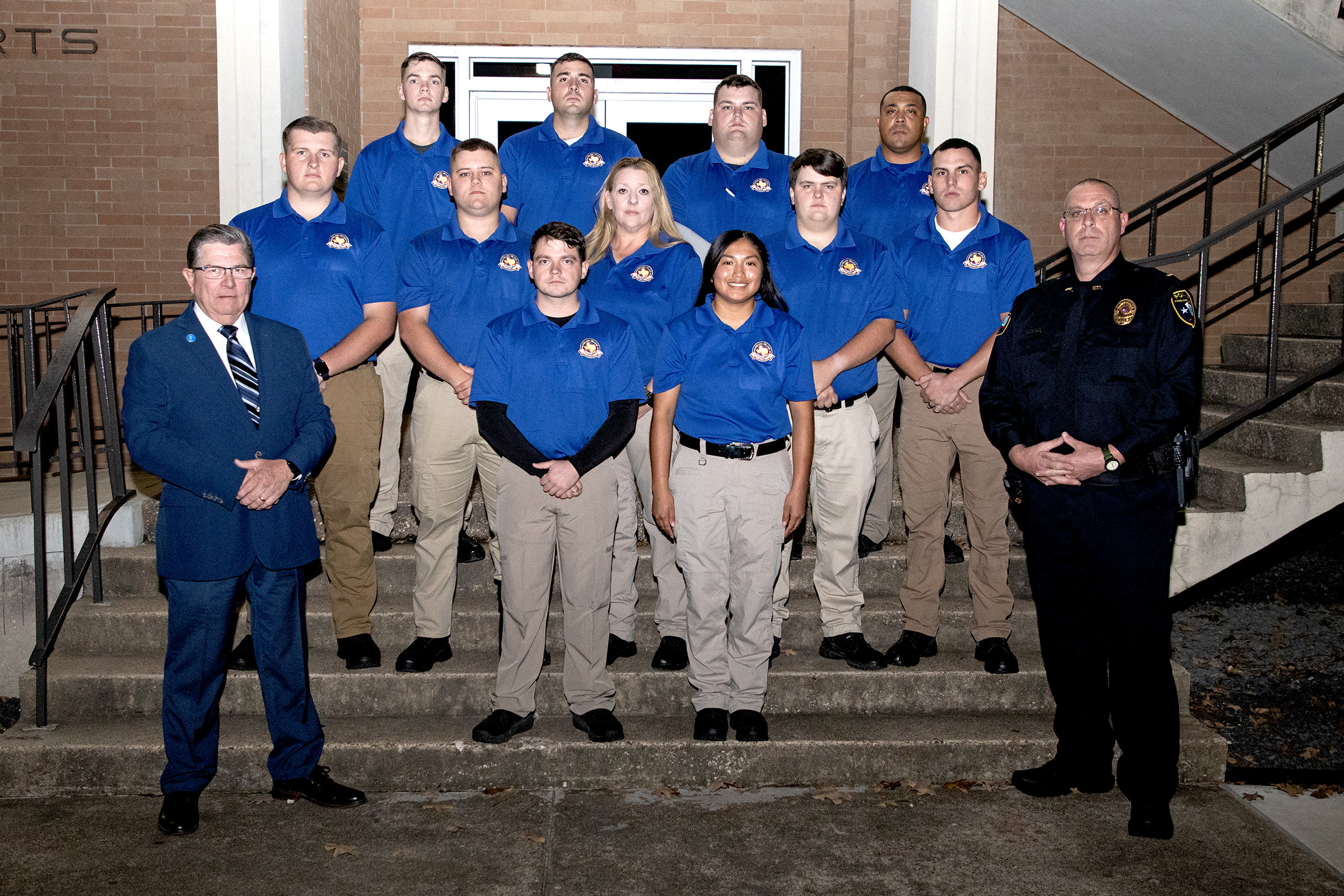
Members of Angelina College’s Law Enforcement Academy Class 117 pose before Thursday’s ceremony inside AC’s Hudgins Hall. A total of 11 cadets graduated and will begin their careers as peace officers. (Gary Stallard photo/AC News Service photo)

Conn said the recent crop of graduates endured more than 700 hours of instruction covering 43 different topics, all of which ended in a big payoff: The class finished with a 100 percent pass rate on the TCOLE (Texas Commission on Law Enforcement) exam.

Keynote speaker Chuck Havard, a former AC academy graduate and a member of the second class, served under Conn back in 1994. Havard’s career includes time as a Texas State Trooper; recently, Havard was elected the new sheriff of the Jasper County Sheriff’s Office.

Jasper County Sheriff-Elect Chuck Havard, keynote speaker for Thursday’s Angelina College Law Enforcement Academy graduation, addresses the crowd and cadets inside AC’s Hudgins Hall. A total of 11 women and men walked the stage and will begin their careers as peace officers. (Gary Stallard/AC News Service photo)

“I want to thank each and every one of you in Class 117 for the sacrifices you’ve made over the past several months,” Havard told the cadets. “You’ve answered the call from your communities, and you will now undertake one of the most strenuous – but most noble – professions on the face of the planet. 

“The perseverance you’ve shown speak volumes about your dedication and your work ethic. This is just the beginning for you, and I’d ask you to serve as peace officers with the same dedication and tenacity that has led you to where you are tonight.”

Valedictorian Christopher Dame cited Theodore Roosevelt’s “Man in the Arena” speech to inspire his classmates.

“In moments of self-doubt, remember why you chose this profession and take pride in the fact that you’re the one in the arena,” Dame said. “You’re willing to take on a profession the majority of the population can’t or won’t do.

“While the exact reasons we chose to join this profession may differ, they all come down to a desire to protect and serve our communities. It’s our turn to step into the arena.”

Lt. Logan Finch, Academy instructor, closed with his own words of wisdom. 

“You’re about to go on an adventure,” Finch said. “This is not a job. You’ll have ups and downs, you’re going to meet new people, and you’re going to feel a rush of emotions. You’ll have a whole new family: those behind and beside you wearing the uniform.

“But there are people you do not leave behind, and those are your immediate family. Put them first. Include them, and let them join your new family as well. Do good work, and come home safe.”

Graduating cadets and their hometowns were as follows:

Jennefer Cruz (Crockett), Christopher Dame (Lufkin), Sarah D. Early (Early), Devon B. Franz (Lufkin), Brody M. Fulcher (Splendora), Rafael Herrera, Jr. (Cleveland), Austin B. Jenkins (Chester), Brayden K. McDaniel (Lufkin), Ryan A. McNabb (Nacogdoches), Trinity W. Mitchell (Huntington) and Robert G. Turpin III (Kirbyville). 

Individual student awards included Christopher Dame, Valedictorian; Jennefer Cruz, Physical Fitness Award; Trinity W. Mitchell, Top Gun; Ryan A. McNabb, Best Driver; and Robert G. Turpin III, Perseverance Award. 

Academy Staff includes Doug Conn, Chief of Police; Lt. Logan Finch, Training Manager; Sgt. Ashley Jowell, Training Specialist; and Kim Capps, Administrative Assistant. 

For further information on Angelina College’s Law Enforcement Academy, email policeacademy@angelina.edu

How to Choose the Right Electricity Provider for Your Home

Choosing an electricity provider in Texas’s deregulated ERCOT market is an important decision that can impact your budget, comfort, and peace of mind. With so many providers offering a wide range of plans, knowing how to make the best choice for your home can feel overwhelming. At Amerigy Energy, we simplify the process and help you find the plan that fits your needs.

Here are the key factors to consider when choosing the right electricity provider for your home.

1. Price: Get the Best Rate for Your Energy Usage

Price is often the first thing homeowners consider when comparing electricity providers—and for good reason. Electricity rates can vary significantly depending on the provider, the type of plan, and your usage patterns. It’s important to look beyond the advertised rate and consider how it aligns with your household’s energy consumption.

Tips for Evaluating Price:

  • Understand Your Usage: Review your past bills to see how much energy you typically use in a month. This will help you choose a plan with the best rate structure for your needs.
  • Beware of Hidden Fees & Gimmicks: Look out for additional fees like early termination charges, base fees, or minimum usage requirements that could impact your overall cost.
  • Shop Around: That’s what we do for you! With over 50 providers in the market, Amerigy Energy can compare rates for you and ensure you’re getting the most competitive pricing.

Example: By locking in a fixed-rate plan at a competitive rate, many Amerigy customers save hundreds of dollars annually.

2. Contract Terms: Fixed vs. Variable Rates

Electricity plans come with varying contract lengths and rate structures. Understanding these terms is crucial to choosing the plan that works best for your lifestyle and budget.

  • Fixed-Rate Plans: These plans offer a stable rate for the duration of the contract, usually ranging from 6 to 36 months. Fixed-rate plans are ideal for homeowners who want predictable bills and protection from market volatility.
  • Variable-Rate Plans: These plans fluctuate with the market, meaning your rate can change month-to-month based on energy demand. While they offer flexibility, they can also lead to higher bills during peak demand periods, especially in the ERCOT market.

Why Contract Terms Matter:
Think about how long you plan to stay in your home. If you’re in it for the long haul, a fixed-rate plan offers stability and savings. If you’re planning a move soon, a shorter-term contract or a month-to-month plan may be more suitable.

3. Reliability: Choose a Provider You Can Count On

Reliability is about more than just keeping the lights on—it’s about having a provider who communicates clearly, offers excellent customer service, and ensures no surprises when your bill arrives.

What to Look For:

  • Provider Reputation: Research the provider’s track record for reliability and customer satisfaction. Look for reviews or ask for recommendations from friends and neighbors.
  • Service Availability: Make sure the provider services your area and offers plans tailored to your local needs.
  • Support When You Need It: A reliable provider should have excellent customer service that’s easy to reach when you have questions or concerns.

Amerigy Energy Difference: As a customer-first company, we prioritize transparency, reliability, and service. With Amerigy, you can trust that your energy needs are always our top priority.

How Amerigy Energy Makes Choosing Simple

At Amerigy Energy, we take the guesswork out of choosing the right electricity provider. As representatives of over 50 energy companies, we compare plans, rates, and terms to find the best fit for your home. Our relationship-focused approach ensures you get personalized advice and a plan tailored to your unique energy usage.

Why Choose Amerigy?

  • Competitive rates that fit your budget
  • Transparent terms with no gimmicks
  • Expert guidance to simplify the decision-making process

Take Action: Let Amerigy Energy Help You Choose Today

Your electricity plan should fit your home, your budget, and your lifestyle. If you’re unsure where to start, let Amerigy Energy do the hard work for you. Contact us today for a personalized consultation, and we’ll help you find the perfect electricity provider with a plan that delivers both savings and peace of mind. Call us at 877-631-8875

This article is part of a regular weekly column provided by Amerigy Energy, your trusted partner for residential and commercial energy solutions across Texas.

Angelina College Vocational Nursing Program Holds Pinning Ceremony

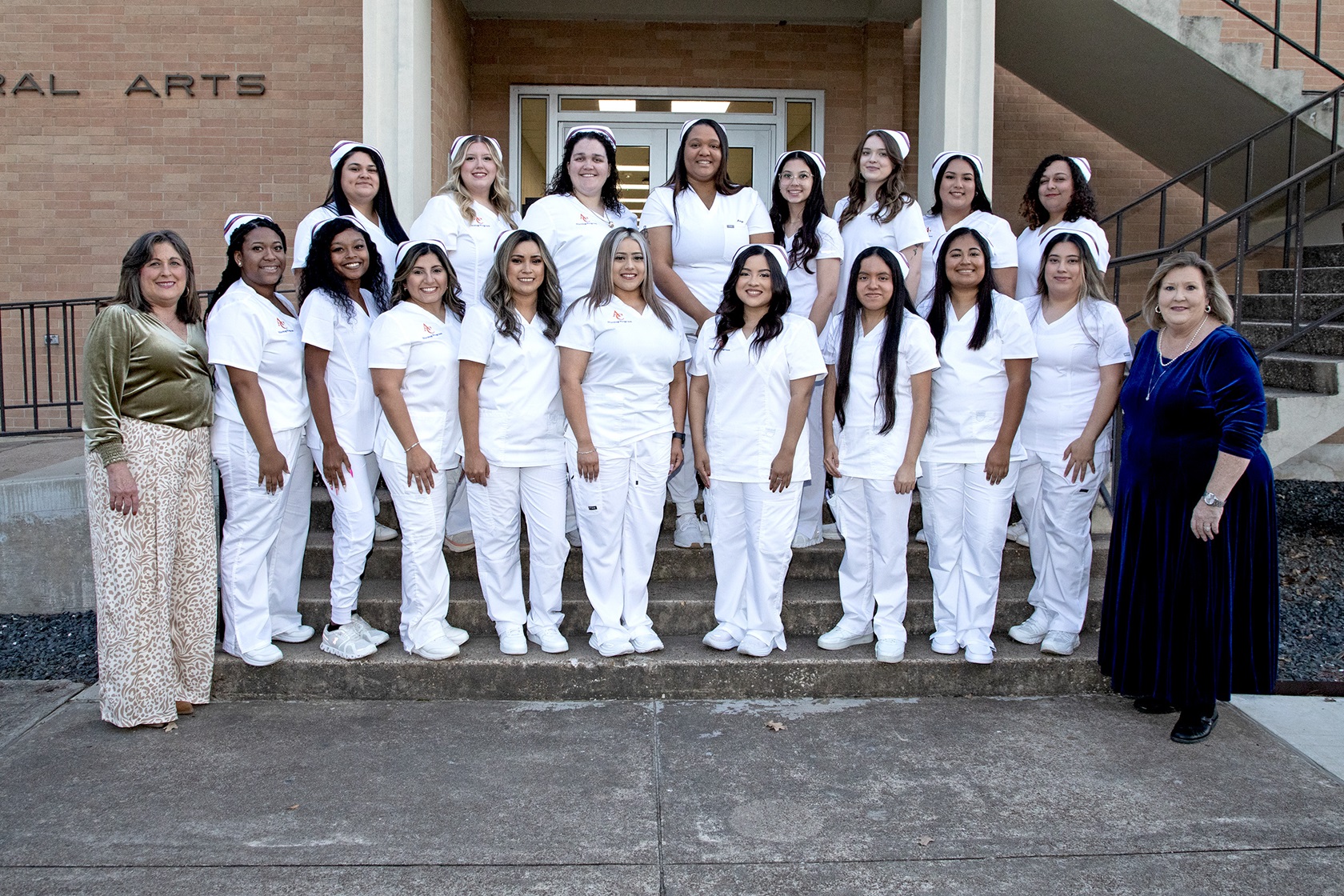
Angelina College’s Vocational Nursing program recently launched a new group graduates into the nursing profession with a traditional pinning ceremony held inside Hudgins Hall on the AC campus. 

A total of 17 new nurses walked the stage to receive their awards from friends, family members or faculty.

Nursing graduate Keshawna Taylor offered the invocation, AC Nursing instructor Mary Hastings conducted the presentation of the graduates, Dr. Charlet Blades led the Nightingale Pledge and graduate Amia Williams closed with the benediction. 

Dr. Winifred Ferguson-Adams, Dean of Angelina College’s School of Health Careers, shared the range of emotions and experiences the new nurses can expect – experiences fluctuating between both the beginning and the end of life. In her comments, Ferguson-Adams quoted a popular social media post geared toward new nurses. 

“’You might have the book smart’” Adams quoted. “’You might have some critical thinking skills. However, if you don’t have the heart, the compassion, the will to fight each and every one of your patients battles as your own, please choose something else [for a career].’

“What we tell you tonight is that we’re very proud of the fact you’ve reached this point, and we expect you to be that nurse with the compassion and the fight, because above all, you are an Angelina College Nursing graduate. Live up to those expectations. God bless you.”

The list of new nurses and their listed home towns were as follows:

Erika Alvarez (Corrigan), Yesica Angeles Bailon (Nacogdoches), Jazmin Balderas (Nacogdoches), Christian Bosquez (Hudson), Yessica Damian (Livingston), Lexis Evans (Wells), Janet Landeros (Lufkin), A’Neka McKind (Lufkin), Jessica Moreno (San Augustine), Jayme Pittman (Huntington), Margarita Ramos (Lufkin), Lynette Salto (Nacogdoches), Keshawna Taylor (Woodville), JoAnna Thigpen (Burke), Jennifer Whitaker (Nacogdoches), Callie Whitworth (Lufkin) and Amia Williams (Huntsville). 

Angelina College Nursing Program faculty include, Dr. Winifred Ferguson-Adams, Dean of School of Health Careers; Dr. Sandra Brannan, Director, Nursing programs; Dr. Charlet Blades, Faculty VN Instructor; Mary Hastings, Faculty VN Instructor; Dr. Susan Adams, Faculty VN Instructor; Patricia Hooks, Faculty VN Instructor; and Anna McReynolds, Faculty SIMS Coordinator.

For further information, contact AC’s School of Health Careers at healthcareers@angelina.edu.

Advancing Texas Highways and Ports

As we move past Thanksgiving and approach Christmas, I want to encourage you and your loved ones to embrace the spirit of giving during this season. It’s a wonderful time to find ways to lend a hand to those in need within our communities. While many of us are fortunate to have a warm meal and a safe place to sleep, it’s important to remember that many are not as fortunate. 

Over the next few weeks, I hope you’ll consider contributing to your local food pantry, dropping some spare change in the Salvation Army’s red kettle, or volunteering your time at a nearby church. What better way to show our gratitude than by supporting one another?

With that, we’ll dive back into our examination of House interim charges. . .

House Interim Charge: Transportation

The House Committee on Transportation has jurisdiction over all matters related to commercial and passenger vehicle operations and licensing, the Texas highway system, airports and air traffic in  Texas, water transportation in Texas, and many other issues. The Committee also has jurisdiction over the Texas Department of Motor Vehicles, the Texas Department of Transportation, and the Texas Transportation Commission. 

During the interim, the Committee will study the long-term needs of the maritime industry in Texas, evaluate the implementation status of the Maritime Port Mission Plan, and make recommendations to improve port planning, safety measures, and project completion. 

Additionally, the Committee will evaluate state-maintained bridges’ current status, existing bridge safety standards, and long-term financial needs for bridge planning, construction, maintenance, and inspection. They will also examine ways to improve bridge project completion. 

Finally, the Committee will identify Texas’s most congested roadways and review state forecasts for future congestion and the expected impact on economic development. The Committee will evaluate TxDOT plans for alleviating congestion and consider the necessity of additional options to ensure economic development, congestion, and safety goals are achieved in a timely manner with reduced cost to public tax dollars. 

The mobile office is taking a break from the road in December but will be back after the Christmas holiday. In the meantime, please do not hesitate to contact my office if we can help you in any way. My District Office may be reached at (936) 634-2762 and my Capitol Office may be reached at (512) 463-0508. Additionally, I welcome you to follow along on my Official Facebook Page, where I will be posting regular updates on what’s happening in your State Capitol and sharing information that could be useful to you and your family: https://www.facebook.com/RepTrentAshby/.

Have You Had Your First Frost?

Folks like us who garden or are in agriculture can get obsessed by frost.  We know that the first frost is an important date. We understand that this first frost of a winter season heralds the end of the current growing season.  

I called around the county to speak with a few gardeners and cattlemen. From Ann in Huntington, Stott in Hudson, Ian in Zavalla, and Jesse in Pollock, all reported that they’ve had some frost that has set back gardens and pastures alike. 

I’ll never forget how some of our local gardeners that brag on getting fresh tomatoes into the onset of winter due to a late frost.  They had to protect the tender plants from cold weather with a simple row cover, bed sheet, or other method.  

Where did you notice your first frost?  Was it isolated in the low lying areas of your field?  Was it located down the hill in the lower part of the neighborhood? Frost will do that. It will find low-lying pockets where cold air settles and the temperature there can be a couple degrees cooler.  

Urban areas have their own “heat island”.  Brick and concrete and asphalt can absorb and hold heat, slowly releasing it as the evening progresses.  

According to National Oceanic and Atmospheric Administration (NOAA) data, temperatures can range as much as three degrees warmer in the middle of an urban area where brick, concrete, and asphalt are found abundantly to the country where field and forest are going to dominate the landscape.  

Look at any weather data site or grower’s data on weather patterns for this area and you’ll find our average first frost for Lufkin is mid-November. From a quick internet search for Angelina County, the internet will say anything from November 12 to November 20.  I always hedge myself and tell folks ‘mid-November’ for this very reason.  

Keep in mind that this is the average and recognizing it as an average is important.  According to data kept by the National Gardening Association, we have a 10% chance of getting frost by Oct 29.  On the other end, there is a 10% chance that we won’t get a frost until after Dec 2.  

So, what really happens when we get a “frost”? When water gets below 32, ice crystals that form inside tender plants will rupture the cells and, effectively, kill it. Anything from 32 down to 29 degrees is generally considered a light freeze (or frost). Temperatures that dwindle down to the 28 to 25 range is expected to be widely limiting to most vegetation.  Only a few native or well adapted plants will continue to grow with temperatures below 25. In years past, we have truly learned what were the toughest plants in our area as temperature went far into the single digits. 

Just to be clear, there technically is a difference between a freeze at, say, 28 F and a frost at the same temperature. Water obviously freezes at and below 32 degrees F. But 28 F is the threshold for a hard freeze. “Frost” is officially when ice crystals form when moisture in the air is converted to ice without first becoming dew. Informally, a “frost” is any time the temperature drops to that 32-degree range, whether or not we see the ice crystals. 

So, what garden vegetables can tolerate a light frost?  The Michigan State Extension Service lists these as able to withstand a light frost: Beets, Broccoli, Cabbage, Carrot, Cauliflower, Celeriac, Celery, Chard, Onion (plants), Parsnip, and Radish.

Really cold tolerant plants that can sustain hard frosts below 28 F include: Collards, Endive/escarole, Kale, Kohlrabi, Lettuce, Mustard, Onion (sets and seeds), Potato, Rhubarb, Rutabaga, Spinach, and Turnip.

Pearl Harbor Day: A Time to Reflect and Remember

0

Today, December 7th, marks Pearl Harbor Remembrance Day—a moment etched into the soul of our nation. Eighty-three years ago, on a quiet Sunday morning in Hawaii, the course of history was violently altered. The attack on Pearl Harbor claimed more than 2,400 American lives, drew the United States into World War II, and awakened a generation to the reality of sacrifice, resilience, and duty.

For many of our parents and grandparents, December 7, 1941, is not just a page in the history books; it is a memory seared into their consciousness. They recall where they were when they heard the news, just as many of us vividly remember where we stood on September 11, 2001. Both were moments of profound loss and national awakening, and they remain defining chapters in the story of America.

Fewer Voices to Tell the Story

The voices of Pearl Harbor survivors are growing quieter with each passing year. Once numbering in the tens of thousands, only a handful remain to bear witness to that day of infamy. These men, now in their late nineties and beyond, carry with them the weight of history. They are living reminders of what it means to endure, to fight for freedom, and to come together as a nation.

Their numbers may dwindle, but their stories must not fade. As stewards of this history, it is our responsibility to ensure that future generations know the names of the battleships, like the USS Arizona and the USS Oklahoma, that became tombs for so many. It is our duty to teach our children that the freedoms we enjoy were hard-won by those who answered the call to serve.

A Generation of Heroes

We often call them “The Greatest Generation,” and rightly so. The men and women who lived through World War II gave everything to defend liberty. They fought on foreign soil, labored in factories, rationed goods, and bought war bonds. They understood that America’s strength lies not in avoiding hardship but in rising to meet it.

Pearl Harbor wasn’t just an attack on a naval base; it was an attack on who we are as a people. In response, this generation banded together in a way that feels almost foreign in our divided modern world. They didn’t wait for someone else to fix the problem. They got to work, united in purpose, determined to build a better future.

Remembering Through a Modern Lens

For those of us who were shaped by 9/11, there is a poignant connection to Pearl Harbor. The disbelief, the grief, the resolve—it’s all too familiar. Both days remind us of the fragility of peace and the cost of defending it. They challenge us to consider what kind of nation we want to be in the face of adversity.

But there’s an even deeper lesson: the importance of remembering. Just as our parents and grandparents passed down their stories of Pearl Harbor, we must share the memory of 9/11 with our children. These moments, separated by six decades, are threads in the same fabric of resilience and resolve that defines America.

A number of years ago, I was able to visit the Pearl Harbor Memorial. Be sure and include a visit anytime you are on the island of Oahu.

The Legacy We Carry

Today, let’s pause to honor those who perished on December 7, 1941, and the generations who fought to secure the freedoms we so often take for granted. Let’s remember the sacrifices of ordinary men and women who were called to do extraordinary things. And let’s pledge to keep their stories alive—not as relics of the past but as beacons for the future.

Pearl Harbor is not just a history lesson; it’s a legacy. It reminds us that the values we hold dear—freedom, democracy, and unity—are worth defending. And it challenges us to live up to the example set by those who came before us.

As we remember Pearl Harbor Day, let’s honor the past, reflect on the present, and recommit to building a nation worthy of their sacrifice.

“December 7, 1941—a date which will live in infamy.” Let it live, indeed, in the hearts of every American.

Lufkin Christmas Parade Cancelled Due to Inclement Weather

Other Parades Postponed

This year’s Lufkin Christmas Parade, a cherished local tradition, has been canceled due to cold, rainy weather, leaving many in the community disappointed but understanding of the circumstances. Organizers said the decision, made after extensive evaluation, was driven by safety concerns for participants and attendees.

“With the forecast showing rain and temperatures near 40 degrees, it simply wasn’t safe or practical for families to spend hours outdoors,” said an event spokesperson. “Our primary concern is always the well-being of our community.”

Why the Parade Was Canceled

Organizers shared several key reasons for canceling the event, emphasizing that it wasn’t a decision made lightly:

  • Safety of Participants: Over half of the registered participants, many representing local schools and churches, expressed concerns about exposing children to cold and wet conditions for several hours.
  • Weather Impact on Floats: Most floats featured intricate designs made of materials like paper mâché, cardboard, and butcher paper, which would have been severely damaged by rain.
  • Permitting Challenges: The parade’s downtown route includes state-managed roads, which require permits issued at least 30 days in advance. This made rescheduling particularly difficult.

Event organizers delayed making the decision for as long as possible in hopes the forecast would improve. Ultimately, the conditions remained unfavorable.

Community Reaction

The cancellation has sparked widespread discussion among Lufkin residents, with many taking to social media to share their thoughts.

Jennifer Coogler, a local resident and parade participant, voiced her understanding. “If you’ve ever decorated a parade float, you know how rain can ruin everything,” she said. “It’s disappointing, but I understand why the city made this decision.”

Others, like Stephen Hammond, called for more flexibility in planning. “This is one of the few big events we have each year,” Hammond said. “It’s hard to accept that it couldn’t just be moved to next week. I’d love to see a backup plan for future years.”

Neighboring Communities Extend Invitations

While Lufkin’s parade won’t take place this year, neighboring towns have extended open arms to participants and spectators:

  • Nacogdoches Nine Flags Christmas Parade: Originally scheduled for the same evening, this parade was rescheduled for Sunday, Dec. 15, at 6:30 p.m. Parade organizer Maury Littleton encouraged Lufkin groups to join. “We’d love to have Lufkin entries and attendees be a part of this year’s event,” Littleton said.
  • Huntington Christmas Parade: Huntington organizers are also regrouping after weather delays and are working to reschedule for next weekend.

Looking Ahead to Next Year

Although the cancellation has disappointed many, there’s hope for the future. Organizers announced that this year’s theme will carry over to the 2024 parade, ensuring that the hard work and creativity of participants won’t go to waste.

“I know people are upset, but this is about safety,” said a city official. “We look forward to coming back even stronger next year.”

A Time for Celebration

Despite the parade’s cancellation, there are still plenty of ways to celebrate the season in Lufkin and surrounding communities. Local merchants, churches, and organizations are hosting events throughout December, and details can be found at www.visitlufkin.com.

“While we’re all disappointed about the parade, this season is about more than one event,” said a downtown business owner. “It’s about coming together, celebrating the joy of the holidays, and finding ways to make the season magical no matter what.”

From all of us at Texas Forest Country Living Magazine, we wish you a warm, safe, and joyful holiday season.

Upcoming East Texas Christmas Parades: Updates and Reminders

As the holiday season approaches, several East Texas communities are gearing up for their annual Christmas parades. Below are the latest updates and important information for participants and attendees:

Livingston Hometown Christmas Parade

  • Date: Saturday, December 14, 2024
  • Time: Festivities from 12:00 p.m. to 8:00 p.m.; Parade begins at dusk
  • Location: Downtown Livingston on Jackson Avenue
  • Registration: Participation is free, but registration is required by Wednesday, December 11, 2024. Contact persons will receive lineup details via email by Friday, December 13. Jotform

The event will feature a variety of activities, culminating in the lighted parade at dusk. Participants are encouraged to decorate floats with festive lights and themes.

Coldspring Lighted Parade

  • Date: Saturday, December 14, 2024 6pm

Please contact the Coldspring Chamber of Commerce for parade forms and more information! (936)653-2184 or email ChamberColdspringTexas@gmail.com Judging Times: 4 PM (Golf Carts/ATVs, Firetrucks, Businesses) 4:30 PM (Churches, Schools, Organizations, Family/Individuals) Location: Through Downtown Historic Coldspring TX

Newton Festival of Lights and Parade

  • Original Date: Saturday, December 7, 2024
  • Status: Canceled due to inclement weather; rescheduling under consideration

Organizers are exploring the possibility of rescheduling the parade for the following weekend. Updates will be provided as more information becomes available.

Jasper Christmas Parade Successfully held as scheduled

San Augustine Christmas Parade -San Augustine hosted its parade last night, adding to the region’s festive spirit.

Editor’s Note:
As East Texans, our resilience shines brightest in the face of challenges. The cancellation of the Lufkin Christmas Parade is a reminder of the unpredictability of life but also of the enduring strength and spirit of our community. See you all next year!

Chamber’s Favorite Things (Angelina County)

0

It’s the most wonderful time of the year! Join us for Chamber’s Favorite Things, a part of our Women’s Networking Series presented by Regions Bank. It’s just around the corner on Tuesday, December 10, 11:30 AM to 1 PM and the best part, over 20 lucky attendees will walk away with a prize!

Don’t miss out—secure your spot by registering today! Capture the Christmas spirit with a snapshot with The Big Picture Events; rumor has it, a special guest might make an appearance!

Register today >>> bit.ly/WNL-1224

Lighted Christmas Parade (Coldspring County)

0

Many have been asking.
The Lighted Christmas Parade will take place on Dec. 14th at 6 pm. Please contact the Coldspring Chamber of Commerce for parade forms and more information! 
(936)653-2184 or email ChamberColdspringTexas@gmail.com

Judging Times:
4 PM (Golf Carts/ATVs, Firetrucks, Businesses)
4:30 PM (Churches, Schools, Organizations, Family/Individuals)

Location:
Through Downtown Historic Coldspring TX

Governor Abbott Announces Over $15 Million In Career Training Grants Across Texas including Angelina College

AUSTIN – Governor Greg Abbott today announced 60 career training grants totaling over $15 million have been awarded to Texas higher education institutions and independent school districts (ISD) to train students for high-demand, good-paying jobs after graduation. These Jobs and Education for Texans (JET) grants awarded through the the Texas Workforce Commission (TWC) will help public junior, state, and technical colleges; school districts; and open-enrollment charter schools buy equipment for career and technical education (CTE) programs that help students across the state go into high-demand industries. 

“As Texas’ economy continues to grow, it is critical that we invest in our future workforce,” said Governor Abbott. “This $15 million in career training grants will support career and technical training programs for thousands of Texas students across our great state. I thank the Texas Workforce Commission for their continued partnership with Texas’ high schools, colleges, and universities to help students achieve high-demand, good-paying jobs after graduation. The work being done at the Texas Workforce Commission and in our educational institutions across Texas ensures Texans have opportunities that lead to a better job and a bigger paycheck.”

This $15 million in career training grants will give Texas students the chance to earn licenses, certificates, or college degrees that lead to good-paying jobs in high-demand industries. In the first year alone, the new equipment will help train more than 6,900 students.

“As the Texas economy grows, so does the demand for a skilled workforce,” said TWC Chairman Bryan Daniel. “The JET grant program helps meet that demand by providing opportunities for Texans to gain valuable, hands-on experience that will prepare them to step into those high-demand careers.”

TWC is now accepting applications for the 2025 JET grant program. Texas public junior, state, and technical colleges; school districts; and open-enrollment charter schools may apply.

The complete JET application packet can be downloaded from the TWC Procurement Portal website. For questions or more information about this opportunity, e-mail RFAGrants@twc.texas.gov.

The 2024 JET grants will be used to purchase and install equipment at the following public junior, technical, and state colleges: 

  • Alamo Colleges District-San Antonio College: a $332,507 grant to train 250 students as software developers and software quality assurance analysts and testers.
  • Alvin Community College: a $349,980 grant to train 165 students as petroleum pump system operators, refinery operators, and gaugers.
  • Amarillo College: a $311,476 grant to train 120 students as emergency medical technicians and paramedics.
  • Angelina College: a $337,026 grant to train 90 students as welders.
  • Austin Community College District: a $64,774 grant to train 120 students as HVAC and refrigeration mechanics and installers.
  • Clarendon College: a $97,025 grant to train 11 students as nursing assistants.
  • College of the Mainland: a $324,916 grant to train 85 students as registered nurses.
  • Collin County Community College District: a $144,827 grant to train 101 students as medical assistants.
  • Dallas College: a $164,293 grant to train 108 students as heavy and tractor-trailer truck drivers.
  • Del Mar College: a $313,833 grant to train 85 students as automotive service technicians and mechanics.
  • Frank Phillips College: a $331,298 grant to train 100 students as licensed practical and licensed vocational nurses.
  • Grayson County College Junior College District: a $350,000 grant to train 24 students as semiconductor processing technicians.
  • Hill College: a $260,870 grant to train 96 students as heavy and tractor-trailer truck drivers.
  • Lamar State College Orange: a $98,799 grant to train 94 students as licensed practical and licensed vocational nurses.
  • Lamar State College Port Arthur: a $142,500 grant to train 12 students as heavy and tractor-trailer truck drivers.
  • Lee College: a $94,227 grant to train 60 students as HVAC and refrigeration mechanics and installers.
  • Lone Star College: a $245,317 grant to train 90 students as automotive service technicians and mechanics.
  • Navarro College: a $349,009 grant to train 100 students as industrial machinery mechanics and technicians.
  • North Central Texas College: a $331,656 grant to train 130 students as registered nurses.
  • Paris Junior College: a $332,450 grant to train 60 students as industrial machinery mechanics and technicians.
  • San Jacinto Community College: a $109,020 grant to train 20 students as radiologic technologists and technicians.
  • Temple College: a $224,136 grant to train 20 students as industrial machinery mechanics and technicians.
  • Texas Southmost College: a $84,614 grant to train 30 students as welders.
  • Victoria County Junior College: a $227,050 grant to train 75 students as chemical plant and systems operators.
  • Wharton County Junior College: a $316,189 grant to train 35 students as automotive service technicians and mechanics.

JET grants awarded in 2024 will be used to purchase and install equipment at the following Texas ISDs and open-enrollment charter schools: 

  • Academy ISD: a $330,535 grant to train 218 students as licensed practical and licensed vocational nurses.
  • Banquete ISD: a $350,000 grant to train 35 students as licensed practical and licensed vocational nurses.
  • Blooming Grove ISD: a $314,047 grant to train 16 students as licensed practical and licensed vocational nurses.
  • Boerne ISD: a $319,709 grant to train 200 students as registered nurses.
  • Bullard ISD: a $ 89,480 grant to train 266 students as registered nurses.
  • Calhoun County ISD: a $ 79,277 grant to train 150 students as registered nurses.
  • Carthage ISD: a $135,027 grant to train 50 students as welders.
  • Corpus Christi ISD: a $ 57,312 grant to train 30 students as electrical and electronic engineering technologists and technicians.
  • Cotulla ISD: a $350,000 grant to train 25 students as licensed practical and licensed vocational nurses.
  • Culberson County Allamoore ISD: a $265,620 grant to train 50 students as registered nurses.
  • Cumby ISD: a $181,574 grant to train 31 students as licensed practical and licensed vocational nurses.
  • Denton ISD: a $271,638 grant to train 72 students as heavy and tractor-trailer truck drivers.
  • Denver City ISD: a $319,520 grant to train 141 students as registered nurses.
  • Dilley ISD: a $179,403 grant to train 76 students as welders.
  • Edinburg CISD: a $350,000 grant to train 505 students as licensed practical and licensed vocational nurses.
  • Forestburg ISD: a $131,838 grant to train 33 students as welders.
  • George West ISD: a $314,945 grant to train 20 students as licensed practical and licensed vocational nurses.
  • Granger ISD: a $341,180 grant to train 75 students as welders.
  • Harmony Schools Houston North: a $233,225 grant to train 125 students as civil engineers.
  • Harmony Schools South Texas: a $350,000 grant to train 100 students as licensed practical and licensed vocational nurses.
  • Iraan-Sheffield CISD: a $277,101 grant to train 40 students as welders.
  • Palacios ISD: a $105,970 grant to train 21 students as medical dosimetrists, medical records specialists, and health technologists and technicians.
  • Paris ISD: a $328,894 grant to train 175 students as licensed practical and licensed vocational nurses.
  • Queen City ISD: a $277,590 grant to train 70 students as welders.
  • Quitman ISD: a $350,000 grant to train 70 students as mechanical engineers.
  • Rice ISD: a $134,671 grant to train 90 students as registered nurses.
  • Roma ISD: a $216,226 grant to train 100 students as licensed practical and licensed vocational nurses.
  • San Diego ISD: a $350,000 grant to train 87 students as licensed practical and licensed vocational nurses.
  • Seagraves ISD: a $340,145 grant to train 100 students as industrial engineering technologists and technicians.
  • Shepherd ISD: a $350,000 grant to train 130 students as licensed practical and licensed vocational nurses.
  • South Texas ISD: a $215,184 grant to train 50 students as medical assistants.
  • Vidor ISD: a $254,777 grant to train 100 students as welders.
  • Warren ISD: a $298,470 grant to train 60 students as welders.
  • Weslaco ISD: a $308,490 grant to train 1455 students as nursing assistants.
  • Windham School District: a $295,742 grant to train 77 students as welders.

Through funding provided by the Texas Legislature each biennium, TWC uses JET grants to defray start-up costs to develop career and technical education programs for public community, state, and technical colleges; school districts; and open-enrollment charter schools. Equipment funded through JET grants must be used to train students for jobs in high-demand occupations.  

Learn more about TWC’s JET grant program.