



Join us for the very first Historic Downtown Lufkin Art Walk! Support the arts and shop unique handmade artwork from local talent from deep east Texas hosted by the charming local businesses downtown. Enjoy live music and be a inspired by all of the creative energy at this wonderful event. Don’t miss out on all the fun!
Four Ways to Spice Up Your Room with Décor

I have struggled to decorate my room exactly how I want for a long time, and I finally have it how I want. Adding little details with décor makes your room a whole. Here are some inexpensive ways to make your room pop!
Corkboards
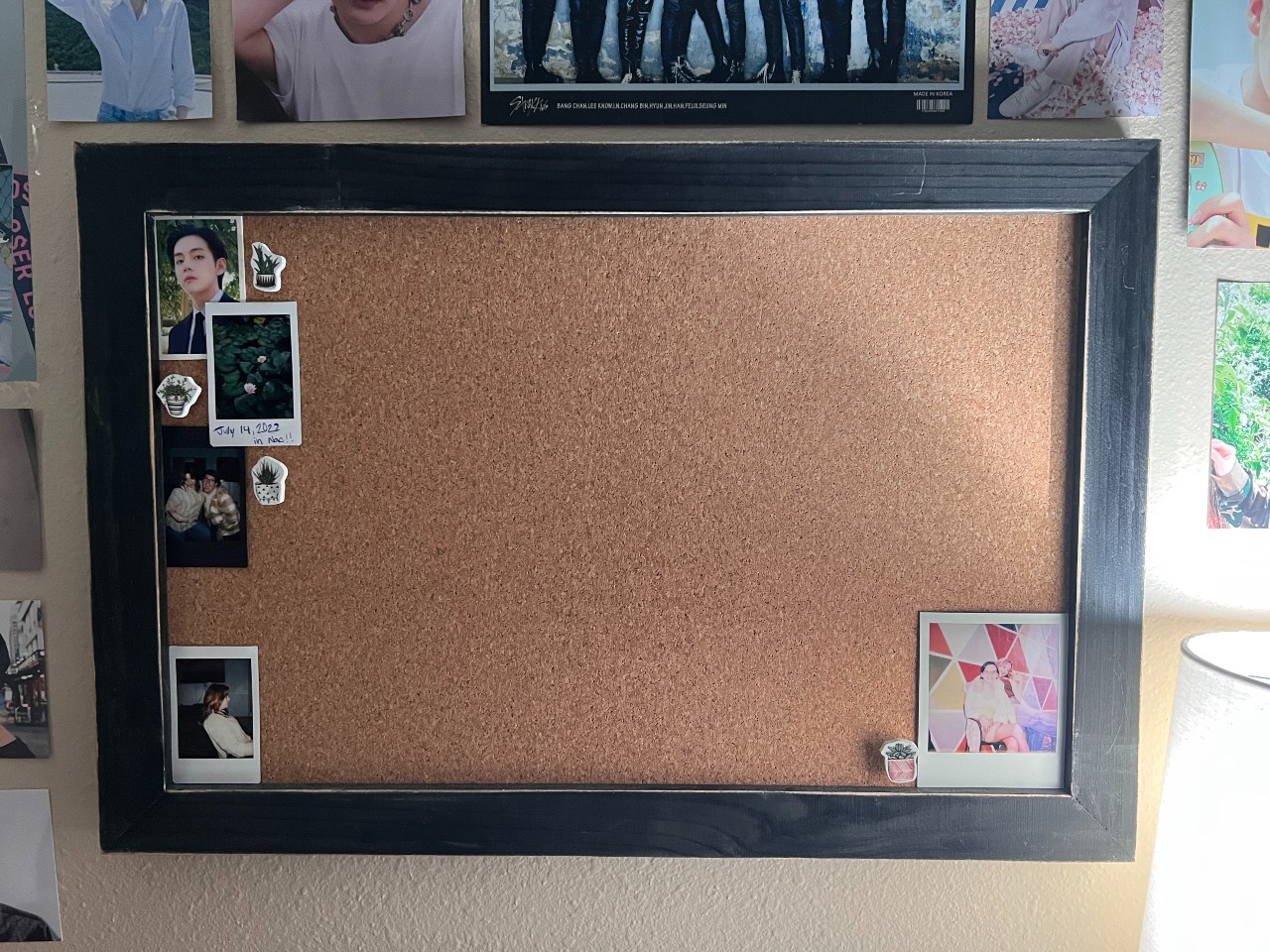
Cork boards are an amazing way to display your best polaroid’s, photos, and memories. If you have trouble remembering little things, try getting some sticky notes and jot down those ideas and put them on your board. There are a ton of different shapes and sizes to choose from.
Floating Shelves
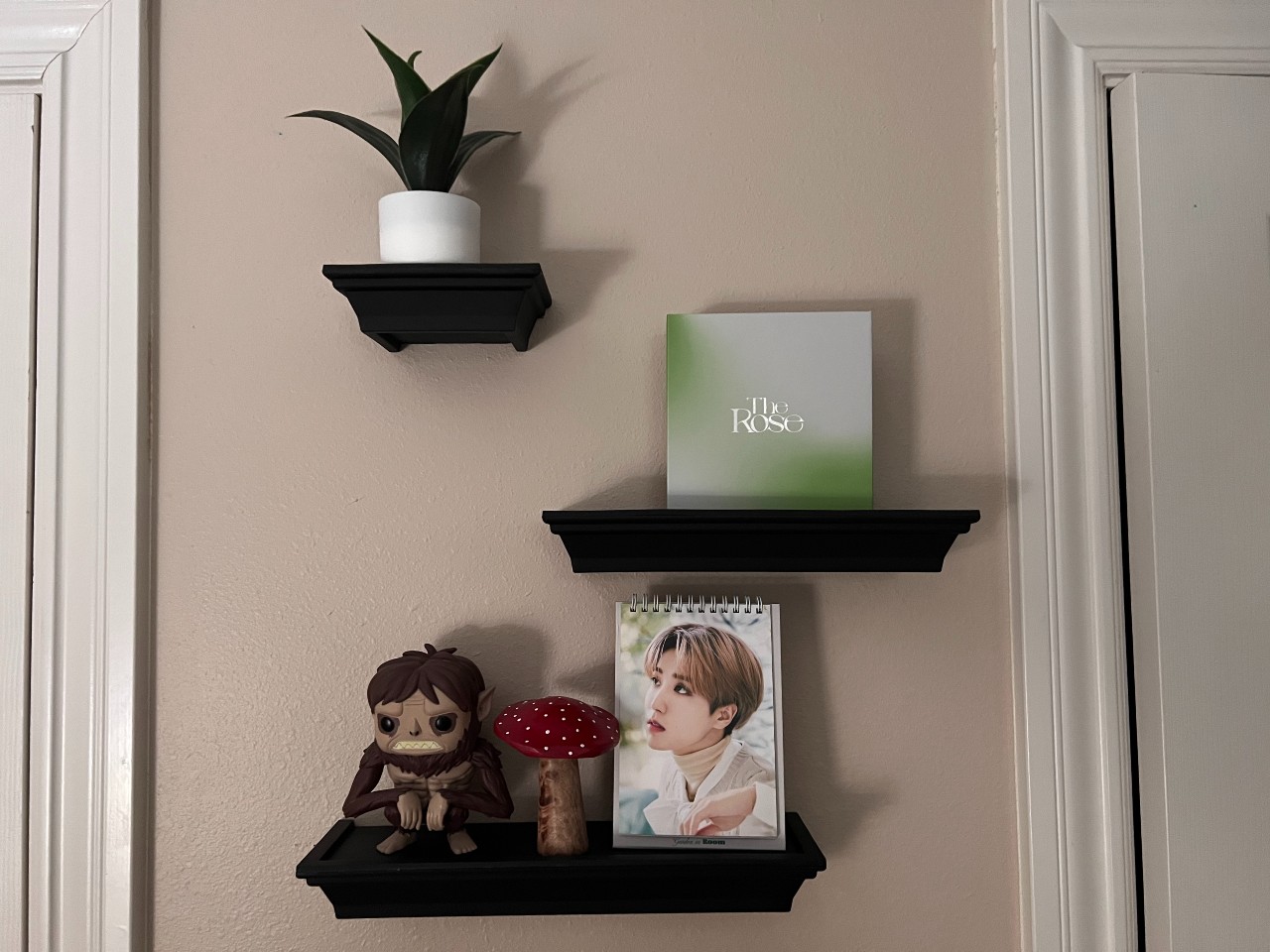
Floating shelves come in an array of shapes and colors that can perfectly match your rooms vibe. In the photo are my shelves that I decorated with things that are green and plant based. My room’s accents are black so I decided on black shelves to match, and I love the outcome so much! Floating shelves can bring dimension and color into your space.
Fairy Lights And Leaves

Putting leaves in your room can bring movement and creativity in your room, and paired with fairy lights, they give off a really pretty vibe. Fairy lights are really nice to have in your room for people who don’t like bright lights. This type of light gives off a candle lit feeling and its super nice to read and hang out in.
Posters

I really love posters (obviously). They show off your favorite bands and more; its super fun to arrange them on your wall! I went for a collage wall, but some people don’t really like that type of style, so you can arrange them however you want. Go wild!
Angelina College Athletics Weekly Update

January 22-29
This past week featured our basketball teams on the road on Wednesday before returning home for a Shands Gymnasium doubleheader on Saturday.
Oh, and brace yourselves: Baseball and softball are heading our way very, very quickly.
Here’s a re-cap and a heads-up on our Lady Roadrunners and Roadrunners.
Roadrunner Basketball:

The Roadrunner basketball team traveled on Wednesday to face Coastal Bend Community College, falling to the Cougars 69-49 to the Cougars in Beeville. However, the ‘Runners bounced back quickly, beating Victoria College 79-69 Saturday at Shands Gymnasium – keeping AC’s men a perfect 10-0 at home.
Patrick Johnson and Cade Holzman each scored 19 points in Saturday’s win, with adding five assists and Holzman grabbing nine rebounds. Braiden Wagner added 11 points, and Kanaan Holder pitched in with an 11-point, 10-rebound double-double.
The Roadrunners (10-9, 4-5) travel south on Wednesday to face Lamar State College-Port Arthur starting at 7 p.m.
AC’s men then will host conference-leading and 10th-ranked Lee College on Saturday as part of a women’s/men’s doubleheader. The Roadrunners are scheduled to tip off at 4 p.m.
Lady Roadrunner Basketball:

Lady ‘Runner head coach Byron Coleman’s quest for his 300th win ran into a temporary roadblock this past week, as AC’s ladies took on the two best teams in the conference and came up short in both contests.
On Wednesday, the Lady Roadrunners took on No. 2 Trinity Valley Community College in a game televised on ESPN+. AC fell 83-61 despite a 21-point, 11-rebound effort from Marie Kenembeni. Taylor Jarrels added 15 points and Shanbriah Rule 10 in the loss.
Then, on Saturday, the Lady ‘Runners faced defending national champion Tyler Junior College. After falling behind big in the first half, AC’s ladies battled back over the final two quarters before dropping a 73-63 decision at Shands Gymnasium. Makenzie Paul sliced her way to a 15-point effort, Shanbriah Rule finished with 10 points and Jakayla Parks and Taylor Jarrels each added nine points.
Coleman will get another shot this week at No. 300: The Lady ‘Runners play at Blinn College on Wednesday starting at 7:30 p.m. and will host Coastal Bend Community College on Saturday at 2 p.m.
Roadrunner Baseball:

Angelina College’s baseball team is about to kick off its 2023 season in mere days. The Roadrunners host their season opener on Saturday, Jan. 28 with a home doubleheader against Temple College. First pitch at Poland Field is 1 p.m.
In addition, the ‘Runners are hosting their annual Media Day starting at 1 p.m. Monday, Jan. 23, also at Poland Field. The team roster and player bios should be available for viewing online this week, and we’ll be sending out team photos as well.
One note: There were a couple of minor schedule changes made earlier this week, so I’m attaching the updated schedule. In addition, any other schedule changes because of inclement weather or other reasons will be announced on Twitter (@ACAthletics) or on the AC Athletics Facebook page.
One more note: Roadrunner head coach will open this season just 16 games away from his 800th career win – a testament to his consistency over the years. Check back here each week to monitor his progress.
Lady Roadrunner Softball:

The baseball team isn’t the only group ready to hit the diamond. The Angelina College softball team also is about to start its season under first-year head coach Brette Kohring. The Lady Roadrunners now will host Howard College in the season/home opener on Friday, Feb. 3 starting at 1 p.m. Those games will serve as the appetizers for the Angelina Invite taking place at AC on Saturday and Sunday, Feb. 4th and 5th ad Lady Roadrunner Field.
As with baseball, the softball team announced a couple of minor schedule changes. I’m attaching the updated schedule to this email.
If there’s anything else I can do for you, please let me know.
I’ll see you at the games.
Gary
Alice Walker’s “Everyday Use”: How Change Can Affect Generations

In the recent years, most particularly the last three decades, mankind has seen the entire planet imminently launch into the future right before its eyes. Many argue about whether this has benefited the well-being of humans or depleted it, and alongside huge technological advancements have come movements looking to drive so-called “ancient” philosophies and ideologies into extinction. One side views the other as arrogant, entitled, smart-alecs who shame them for their beliefs while the other looks at them as old, oppressive, ignoramuses who refuse to accept “progress”.
In Alice Walker’s Everyday Use, the simplest version between the clash of two generations can be seen between the mother and her daughter Dee (the young lady who wants to be called Wangero as a way to represent her “heritage”), who both vie for Maggie to accept their viewpoints on life. No man can tell another man how to live, and one is not fit to be human when he/she imposes their beliefs on another; though change can be effective, it can also be detrimental to society.
The quilt in Everyday Use can be seen as the main identifying mark of culture in the passage, and many have differing views on it. Some say that the quilt is a symbol of family values, but others, like Sam Whitsitt, author of “In Spite of it All: A Reading of Alice Walker’s ‘Everyday Use’”, says that the quilt is representation of an old societal construct, the belief that men are better than women. In his analysis of Everyday Use, Whitsitt makes the definitive statement, “The quilt ‘represents’ herstory, history, and tradition, binding women , and men, to the past…” (455). After giving the backstory on the mother’s conflict with Dee and Maggie being in the middle of the dispute, Whitsitt comes to a conclusion that the quilt is there to inform readers of ancient philosophies and beliefs. While this may seem far-fetched, considering the fact that the matter that Dee and her mother are disputing over is what should be done with quilts, there is a growing population today that wants to believe in the so-called oppression of women in society. This is a popular belief in the modern-age and not only in America, but it has spread throughout the entire globe. But Whitsitt is not done and he goes to explain his point, stating, “Men wanted women literally to sew only figures, and many critics today, both male and female, literally want women to sew figuratively” (455). This statement is factually true, particularly historically in British societies where only males got to be in positions of power while their wives were relegated to being second-class citizens just tagging along.
Other instances can be seen in shows like The Waltons or Little House on the Prairie, in which the men aren’t oppressing women, but there are roles that are imposed on both males and females, and if one does not take the role on, he/she is ostracized and isolated from society as a result of beliefs being imposed.
Change is sometimes good, but most tend to overlook the negative aspects of change. The negative side of it is perfectly represented in Everyday Use concerning Dee’s character, and the relation of it to the African-American community. David Cowart elaborates on this in his analysis of the same story in “Heritage and Deracination in Walker’s ‘Everyday Use’”, in which he explicates Dee’s character by saying, “Thus Wangero thinks she is Signifyin(g) on white culture when she revises her name, but inadvertently she plays false with her own familial culture”(181). This is a profound revelation on what Dee (Wangero) is doing; Dee has taken pride in changing the “slavemaster’s” name to a supposedly African name, but she does not realize the history that is behind her original name, a name her mother gave her in honor of her aunt. This is a breaking point and it is one of the first instances in which the reader sees the ridiculousness of Dee’s way of going about her appreciation for her heritage. She changes her name oblivious to the familial value, and thinks she is justified in her ignorance.
Dee comes off as snobbish and her absence of knowledge in this case puts the spotlight on her arrogance. Cowart, after addressing this moment of shame, asks the reader, “Wangero has realized the dream of the oppressed: she has escaped the ghetto. Why, then, is she accorded so little maternal and authorial respect?” (172). Dee seems to have the same problem most successful people have, and that is ungratefulness. Most, in particular minorities, escape obscurity placed on them by the majority and break into prosperity. But when one starts off in humble beginnings and suddenly, his life changes for the better, he quickly forgets the important things in life like family, humility, and hard work. It is easy to become snobbish and arrogant once one has made it to the top, parents work to provide their children with a dream they can attain, then they attain it, then they spit on every ounce of sweat and tears that the parents have put in to make it possible.
Progress sounds like a good thing, right? Everyone seems to want to change for the better, to revolutionize the world and make an impact for generations to come. But the minds of many have become corrupted with the desire to change everything and the never-ending quest for a utopia has put everyone in a craze, disrupting peace. Most modern movements have shamed people for having ancient beliefs and condemned them for being quote-on-quote “oppressive”. Others have spent their lives resenting those who want to make improvements or change the way cultures are defined, instead of trying to understand the reasons for such. The solution is simple: all have to find common ground, men must not continue to war against each other. If there must be such a thing as progress, it has to benefit all people, it has to fight for the rights of everyone, it must refrain from the constant condemnation and villainization of other groups, and appreciate and respect the beliefs of others.
How to Rid Yourself of Boredum
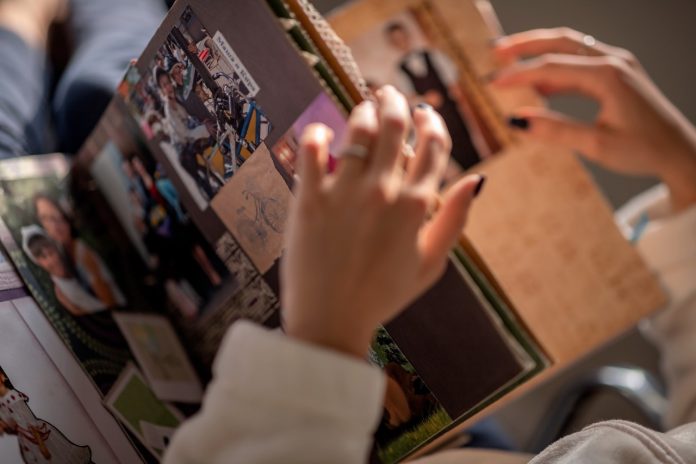
Boredom comes and goes, but it can be helped. I’ve gathered things to do from three different resources so you don’t have to dig deeper than you need to!
Goodhousekeeping.com has a lot of ideas to choose from! From cleaning to wasting time, they all seem like fun options. Here are some things they recommend:
- Write a story
- Get those creative juices flowing and make a fictional story. You could even write a story about yourself!
- Try origami
- Sometimes trying something that makes you think is a good thing! Especially when it’s something as complex as origami.
- Sing along to your favorite songs
- Singing is a fun way to let loose and learn the lyrics of your favorite songs.
- Try new outfits
- Thinking of new outfits for the next day is productive and fun! It is also very beneficial to you.
- Call a friend
- Giving someone a call could be fun! You never know what you might talk about.
Parade.com has 100 activities for you to do so go check out their post! For now, take a look at the things I think are the most fun from the list.
- Make your own movie
- Whether it be a funny, scary, sad, or happy movie, it could be fun acting as if you were the main character.
- Make mixed playlists
- Making a mixed playlist means having a bunch of different genres of songs all in one playlist or having a mix of different types of moods the songs give off.
- Write a letter
- Writing a letter to yourself or maybe even that one crush you have at work or school could be relieving. Think of it like this, if you don’t give it to anyone, it’s free range to write about anything!
- Start a blog
- Document everything that goes on. Who knows, maybe you’ll become famous.
- Shop online
- Shopping online can be a good way to get things that might not be in stores. Just be careful not to spend too much.
Purewow.com has 50 suggestions and their recommendations are good. I put together five suggestions that I think you will like!
- Read a book
- Reading can broaden your vocabulary and some books are just so interesting that you’ll get sucked in.
- Create a scrapbook
- A scrapbook is something to place memories in! Putting pictures and letters in a scrapbook is a great way to keep those precious memories with you at all times.
- Clean out your closet
- Taking the time to clean out your closet can be tricky but is a must-do!
- Create a shopping list
- While you’re in the store, do you ever find yourself wondering what you’re forgetting? Write a shopping list! Then you’ll be good to go and won’t forget what you’re missing.
- Have a dance party
- Show off your moves to a stuffed animal and have fun with it! Being goofy is really fun when you’re alone!
There are definitely more ways to have fun when you’re bored, although keep in mind how much time you’re spending doing these things because time flies by when you’re having fun. These suggestions helped me a lot whenever I had time to spare!
Georgia-Pacific’s Diboll Particleboard Names New Plant Manager

Lufkin native Andrew Dover has been named plant manager for Georgia-Pacific’s Diboll Particleboard plant. In this role, Dover oversees daily plant operations, including safety, environmental excellence, and stewardship. Additionally, he is responsible for creating long-term sustainability for the facility, its employees and the community.
A graduate of Texas A & M University with a degree in environmental geo-science, Andrew joined Georgia-Pacific’s Diboll Particleboard Plant in 2015 as a shift supervisor. Most recently he held the position of production superintendent where he was responsible for overseeing the plant’s day-to-day operations.
Dover resides in Lufkin with his wife Maci and their son Garrett.
Diboll Particleboard began operations in 1997 and employs more than 100 people. The plant produces product that is used to make furniture, cabinets, shelving and vanities.

Gearing Up for Potatoes

What I often consider a homely vegetable actually has its roots in South America. The potato was discovered at the same time the Spanish Conquistadors discovered gold. The potato later built a nation and then caused a tremendous disruption to that same country with the arrival of a single fungus disease. The result of its dramatic loss had an enormous impact on global migration and, ultimately, crop protection advances.
It is true that what we call an Irish potato is originally from the highlands of Bolivia and Peru in South America. So far as historians can determine, Incans grew potatoes as far back as 8,000 B.C. Spaniards brought it back to the European continent in the 1500’s where it soon spread across Europe. The French went so far as to call them “Apples of the Earth”. But no country adapted and benefited from growing potatoes as much as Ireland. Their cool moist, highland climates closely mimicked their origins in South America.
Ireland was heavily producing potatoes in the 1700’s. They provided vastly more nutrition per acre than the grains they had been growing. In just 60 years, from 1780 to 1840, the Irish population doubled, reaching 8 million people due in large part to this wonderfully, nutritious crop.
But in 1845 a fungal disease affecting potatoes, devastated the crop resulting in what we know call the Irish famine. Just three years later, over 1 million were dead from famine and over 1.5 million left the country, mostly immigrating into Canada and the United States.
In our part of the world, most folks around here swear that you must plant potatoes on February 14. So, you have about a few weeks to prepare the ground.
If you want to grow this wonderful crop, here are some growing tips. Plant them in a garden in a location that has not had tomatoes, peppers or eggplant for a couple of years. Those vegetables mentioned are all in the same family and share pest problems.
Be sure to provide 8 hours of direct sunlight for maximum production in loose, well drained, slightly acidic soil. Work beds 12 inches high and 36 inches apart. Good, high beds will be critical to growth and harvest.
Purchase quality seed potatoes from our local garden centers and feed stores. With the seed potatoes, cut them into pieces weighing about 1.2 to 2 oz. or about the size of a good hen egg, making sure that each seed piece you use has at least one good eye.
Give these pieces 5-6 days for the cut seed potatoes to “cure” or dry over so that they will not rot in the soil. In your prepared row, plant seed pieces about 1 foot apart and 3 inches deep.
When plants are 4 inches tall, add a cup of complete fertilizer for a 30 ft. row and maintain adequate soil moisture so that moisture stress issues (from too wet or too dry conditions) do not occur.
In the ground, your crop of potatoes will grow above the seed piece. Knowing this, gardeners will need to hoe or otherwise bring the soil up to the stem to provide more room for tuber growth. Many gardeners use a heavy mulch for same purpose. Do not allow sunlight to reach your potato tubers as those areas will turn green.
Larger potatoes are ready to harvest about 3, no later than 4 months when the tops begin to die back, and the skin becomes firm. You can harvest smaller “new” potatoes during the growing season digging back carefully with your fingers and harvesting them.
Several varieties grow well in Texas. While there are thousands of potato varieties found in South America, the following list would serve you well in our part of the world: Red flesh (Dark Red Norland, Norland, Red La Soda, and Viking), White flesh (Atlantic, Gemchip, Kennebec, and Superior), Yellowflesh (Yukon Gold) and Russet types (Century Russet, Norgold M, and Russet Norkatah).
Don’t be surprised if your potato flowers or even bears fruit. Though not very common, remember that we are just after the wonderful tubers, which provide a nearly nutritiously complete meal all by themselves.
Cary Sims is the County Extension Agent for agriculture and natural resources for Angelina County. His email address is cw-sims@tamu.edu.
Educational programs of the Texas A&M AgriLife Extension Service are open to all people without regard to race, color, sex, disability, religion, age, national origin, genetic information or veteran status. The Texas A&M University System, U.S. Department of Agriculture, and the County Commissioners Courts of Texas Cooperating.
Pandemic put more parenting stress on mothers

A first-of-its-kind study of parents’ work arrangements during the pandemic shows that mothers working from home increased their supervisory parenting fully two hours more than fathers did, and women were also more likely to adapt their work schedules to new parenting demands.
The study used time diaries to examine how working parents managed school closures and childcare disruptions during the COVID-19 pandemic – thought to be the first such use of that data.
“We found that women working from home shouldered more of the parenting burden during the pandemic,” said researcher Kelly Musick, professor of public policy and sociology and senior associate dean of research in the Cornell Jeb E. Brooks School of Public Policy. “While the shift to work from home offered more flexibility, the lack of separation between work and family contributed to more challenging work environments, especially among mothers.”
An article detailing their findings, “Parents’ Work Arrangements and Gendered Time Use During the COVID-19 Pandemic,” published Dec. 9 in the Journal of Marriage and Family. Thomas Lyttelton of the Copenhagen Business School in Denmark was the lead author and Yale University sociologist Emma Zang and Musick were co-authors.
The researchers delved into data from the 2017–20 American Time Use Survey. A representative sample of Americans recorded their daily activities in detail, noting how long they spent on each task, where they were and who was present. Those records were then compared with how parents allotted their time prior to the pandemic, resulting in these key findings:
- There was no increase among parents working from home or on site in total childcare time as a primary focus, such as when feeding or bathing, playing, or reading to the kids. The added hours were in supervisory tasks – monitoring activities and making sure young ones were safe, while also doing other activities, often paid work – and that’s where the two-hour gap between women and men emerged. “The much larger increase among mothers relative to fathers in supervisory care points to mothers’ disproportionate responsibility for children,” Musick said.
- When activities did not involve multitasking or affect work duties, there was a more even divide between mothers and fathers. Moms disproportionately increased their time playing with children during the pandemic, and dads took on more household chores. That’s a reverse from what evidence suggests about home lives prior to the pandemic.
- While the pandemic afforded parents more time at home with children, the majority of that time was spent juggling paid work. Parents working on site experienced no such changes. All mothers – both working on site and at home – also altered their work schedules during the pandemic, increasing nonstandard hours and spells of work throughout the day, presumably to better accommodate increased parenting demands.
While the study focused on the pandemic, the findings have important implications for work and family in a post-pandemic world characterized by more remote work.
“The pandemic highlights a work culture unaccommodating of care demands and a policy infrastructure ill-equipped to support working parents,” Musick said. “Change is needed at both the public and private levels to better accommodate the health, productivity, and well-being of working families.”
For more information, visit newswise.com.
GET HEALTHIER DURING AMERICAN HEART MONTH WITH WOODLAND HEIGHTS MEDICAL CENTER’S 28-DAY HEALTHY HEART CHALLENGE

Heart disease is a leading cause of death in the United States, claiming the lives of more than 650,000 people each year. Here are some other facts everyone should know about heart disease:
● In the U.S., one person dies every 34 seconds from cardiovascular disease.
● Every year, about 800,000 Americans suffer a heart attack.
● Nearly half of American adults (47%) suffer from high blood pressure, or hypertension, which increases the risk of a heart attack and stroke. However, only about 1 in 4 people with high blood pressure have their condition under control.
Another important fact is that most people can take steps right now to reduce the risks related to heart disease.
In most cases, heart disease is preventable. Vivek Mangla, MD, local cardiologist tells us, “By adopting a healthy lifestyle, including not smoking, exercising regularly, maintaining a healthy weight, getting cardiovascular check-ups, controlling blood sugar and cholesterol and treating high blood pressure, we can all reduce our risk for heart disease.”
Since 1964, February has been recognized as American Heart Month – a time of year dedicated to increasing awareness about heart health and highlighting steps we can take to create a heart healthy lifestyle..
This year, Woodland Heights is taking the entire month of February to help people in the community learn ways to reduce their risks with the 28-Day Healthy Heart Challenge. Participants will receive a daily email with short, informative articles, quick tips, and a daily challenge to promote heart health.
“At Woodland Heights, we are committed to helping people live healthier and, for most of us, there’s no better place to start than taking better care of our hearts,” says Drew Emery, CEO. “People who join us for this challenge will find the content takes only a couple of minutes to read each day. It is fun, sometimes surprising, always informative, and it can be life-saving. I hope everyone will sign up for the challenge and join us on a 28 day journey to a healthier heart.”
The 28-Day Healthy Heart Challenge includes 28 challenges that can help participants eat healthier, get up from a sedentary lifestyle, relieve stress and lower blood pressure. To sign-up for the 28-Day Healthy Heart Challenge, visit WoodlandHeights.net/Heart-Challenge.
About Woodland Heights Medical Center
Established in 1919, Woodland Heights Medical Center was Lufkin’s first hospital. Now, more than a century later, Woodland Heights is recognized throughout Deep East Texas as the leading provider of high quality, innovative health care services. Accommodating a wide range of clinical specialties, Woodland Heights has achieved excellence in key medical and surgical areas including cardiology, pulmonology, neurology, orthopedic surgery, physical medicine/rehabilitation, vascular surgery and obstetrics and gynecology. Woodland Heights also offers a full range of outpatient diagnostic services including advanced imaging, laboratory, outpatient surgery and emergency services. Through its Rehabilitation Center, Woodland Heights offers cardiac rehabilitation, stroke recovery and physical, occupational, speech and pelvic floor rehabilitation. The facility also houses the first Level 2 Neonatal Intensive Care Unit in the deep East Texas area. Woodland Heights is directly or indirectly owned by a partnership that proudly includes physician owners, including certain members of the hospital’s medical staff. Woodland Heights offers a free e-newsletter with a monthly dose of health and wellness inspiration sent directly to your inbox from a trusted medical source. Sign up at WoodlandHeights.net/enewsletter-sign-up. Combining modern facilities, leading technology, an exceptional staff and a commitment to the communities it serves, Woodland Heights Medical Center remains at the forefront of quality health care in Deep East Texas.
Texas Forestry Museum’s Adult Lecture

The Texas Forestry Museum will hold its Adult Lecture: Beekeeping on Monday,
February 6th at 6 pm. Pineywoods Beekeeping Association’s President, Steven
Josephsen, will discuss how to start keeping bees. Also, guests will get to see all
the tools needed to begin beekeeping and have a chance to win a door prize. If you
would like to attend make sure to RSVP by Friday, February 3 rd to save your spot.
For more information or any questions about the event please call 936-632-9535
and a special thank you goes out to our adult lecture sponsor HomeLand
Properties. Photos will be taken at the event for promotional materials.