April 14 @ 6:00 pm – 8:30 pm
Weekly on Tuesdays from 6 PM-8:30 PM
Free
(936) 327-4929
info@polkchamber.com

April 14 @ 6:00 pm – 8:30 pm
Weekly on Tuesdays from 6 PM-8:30 PM
(936) 327-4929
info@polkchamber.com

Some mornings, this place just shows off.
There’s a window of about twenty minutes on a spring morning in East Texas — right after sunrise, before the fog burns off — when everything looks like a painting.
The pines are still. The river is glass. The light comes through low and gold, and it catches the mist hanging over the water like it’s showing you something on purpose.
You can’t schedule it. You can’t plan for it. You just have to be up early enough to see it.
If you were out on the Neches this morning — or standing on your porch with a cup of coffee, watching the fog roll through your back pasture — you know exactly what we’re talking about.
This is the part of East Texas that doesn’t make the brochures. It’s not a destination. It’s just home, doing what it does best.
Take a breath. Slow down. Happy Sunday, East Texas.
Got a spring morning photo that takes your breath away? Send it to us or tag @TFCLiving on Facebook — we’d love to share it.

Storm season is coming, the humidity is rising, and the fire ants are already here. Here’s how to get ahead of it all.
Spring in East Texas is beautiful — the dogwoods are blooming, the evenings are getting longer, and everything is turning green. But it’s also the time when our houses, yards, and budgets take a beating if we’re not ready. Here are six things worth doing before May rolls in.
1. Check Your A/C Before You Need It
Don’t wait until the first 95-degree day to find out your unit is struggling. Change your air filter now, clear any debris around the outdoor unit, and run the system for a test cycle. If it’s been more than a year since your last professional tune-up, schedule one while the HVAC companies still have openings. A well-maintained system runs more efficiently — and that shows up on your electric bill all summer long.
2. Clean Your Gutters and Check Your Drainage
East Texas storms don’t play around. Clogged gutters mean water backs up against your fascia and foundation. Walk the perimeter of your house after the next rain and watch where the water goes. If it’s pooling near the foundation, you may need to extend a downspout or regrade a trouble spot. Twenty minutes of prevention now can save thousands later.
3. Treat for Fire Ants Early
If you live in East Texas, you have fire ants. The question is whether you’re managing them or they’re managing you. Spring is the best time to broadcast a bait treatment across your yard — before the colonies explode in the heat. Look for mounds in the morning when the soil is still cool and the ants are active near the surface. Treat individual mounds with a contact killer and broadcast bait for the ones you can’t see yet.
4. Inspect Your Roof and Trim Your Trees
Storm season in our area typically runs from April through June, and high winds are the biggest threat to our homes. Look for missing or curling shingles from the ground with binoculars. Trim any branches that overhang your roof or hang near power lines. Dead limbs on pine trees are especially dangerous — they’re heavy, brittle, and they come down fast when the wind picks up.
5. Refresh Your Emergency Kit
If the last time you checked your emergency kit was during last year’s storm warnings, it’s time. Replace expired batteries, check your flashlight, update your medication supply, and make sure you have at least three days of water on hand. If you have a generator, run it now to make sure it starts. The worst time to find out it doesn’t work is when the power’s already out.
6. Review Your Electric Plan
Summer electricity usage in East Texas can double or even triple compared to spring. If you’re on a variable rate plan, now is the time to review what you’re paying per kilowatt-hour and see if a fixed-rate option makes more sense before the summer peak. A few minutes comparing plans today could save you hundreds over the next four months.
None of these take more than a weekend to knock out, and most of them cost little to nothing. The key is doing them before you need to — because in East Texas, the heat and the storms don’t wait for anyone.
What’s on your spring to-do list? Drop your best tip in the comments — we’ll share the best ones next week.

How Lumber, Railroads, and Grit Shaped the Communities We Call Home
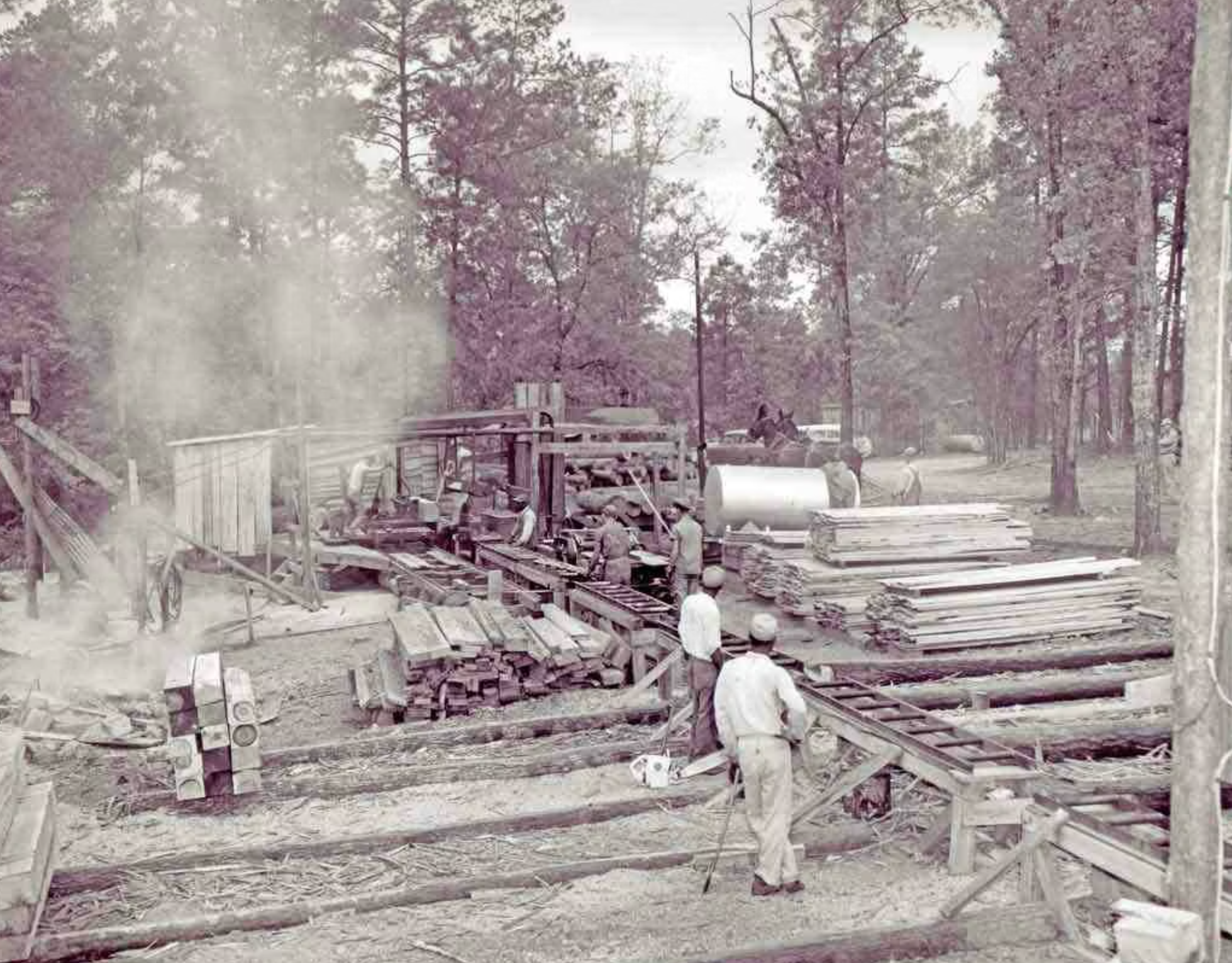
The transportation of logs and lumber was an issue until the train came through East Texas in the 1880s. This made it possible to transport lumber faster and further than ever before and helped to begin the sawmill boom in Texas which lasted from the 1880s to the 1930s.
Towns grew up around sawmills, and everyone who lived in the town worked for the mill company. Homes were on a graded scale so the better the job, the better quality the home you lived in. Men went to work for the company while women worked at home cleaning, washing clothes, mending, raising kids, and making all of the food from ingredients. Kids went to school but often the girls were the only ones to graduate because if the family needed the money, the sons would begin working in the mill at about 11 or 12 years old.
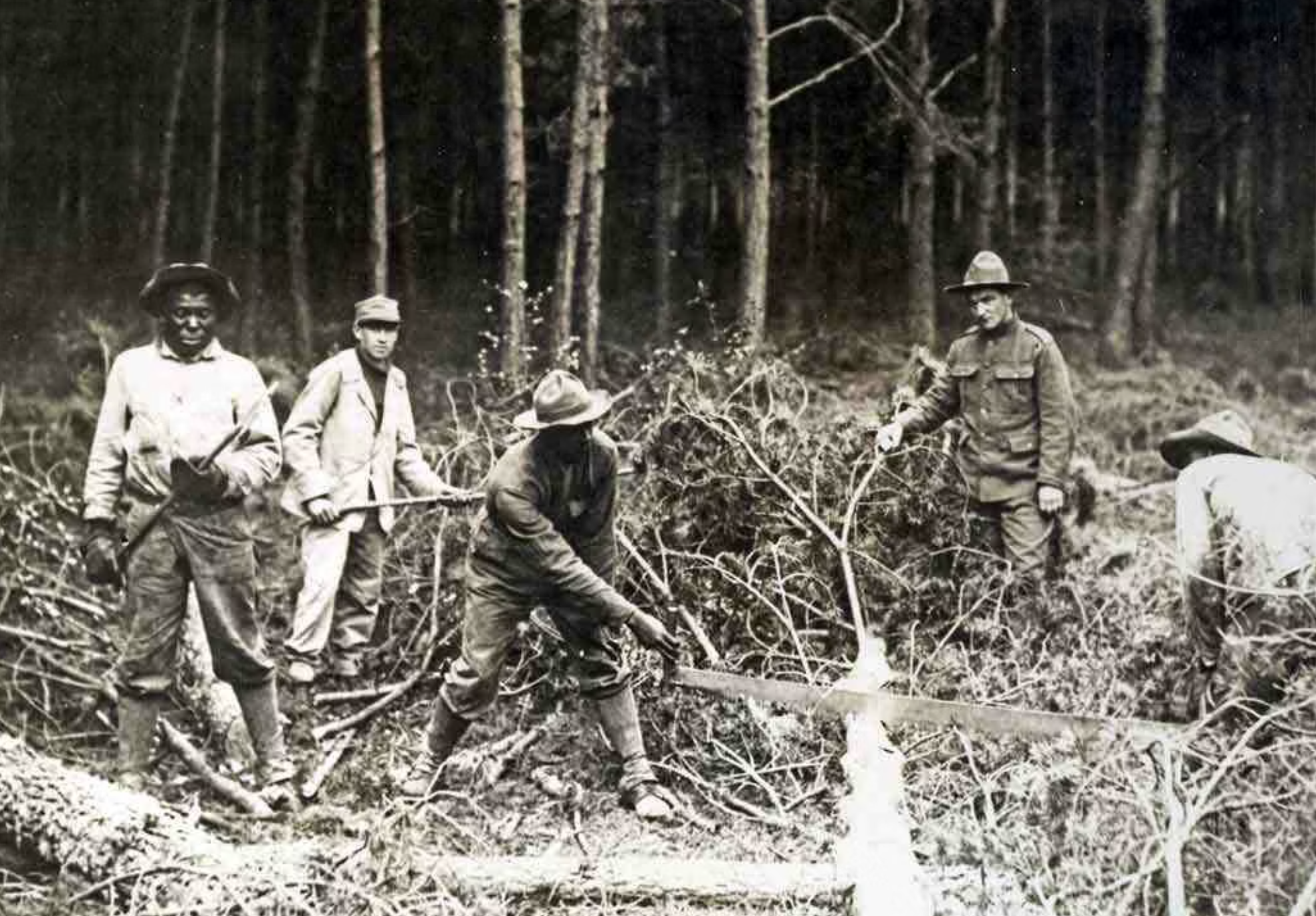
If the men worked in the woods cutting down trees, the family often lived in front camps and did not travel back and forth to town. These were temporary houses like tents or boxcars that could be packed up and moved to a new site to cut down more trees.
Exploring the History
The list of Angelina County historical markers is a great resource to learn about the local sites of sawmill history. There are free scavenger hunts at the Texas Forestry Museum where you can work your way through the locations. It’s not all sawmill history but many of the dozens of markers are. It’s interesting to see how the town has changed and yet you can still see glimmers of the history that built this area.
The Decline — and What Rose from the Ashes
The decline of the sawmill boom in Texas happened for several reasons including mill fires, the cut-and-get method, and the Great Depression. In some cases, no new companies replaced the lost jobs when the mill closed and the towns became ghost towns. When the whole town is employed by one company and that company closes, there are no local income sources for the residents, and they’re forced to move.
However, in other cases, new industries were brought in like Lufkin’s Southland Paper Co. The paper mill opened in the late 1930s and created hundreds of jobs and was a vital part of Lufkin’s economy until it closed in 2003.
Why This Matters Today
This history is important because all history is important. We do not live in a 2026 time bubble. We are affected by the lived experiences of our parents and grandparents. When we understand more completely what their lives were like and why they are the way they are, we can better understand ourselves and our lives today. The sawmill boom’s effects are a large part of who East Texans are today whether we’re aware of it or not.
Dig Deeper
The Texas Forestry Museum protects 35,000+ artifacts (including 6,000+ photographs) of Texas forest history, and they are open to researchers — from those who are mildly curious to those working on in-depth academic research. To explore their archives, you can make an appointment by contacting them at 936-632-9535.
Local archives like The History Center in Diboll and the East Texas Research Center in Nacogdoches are also great resources for those wanting to learn more about East Texas history.
Recommended Reading
Sawdust Empire by Maxwell and Baker
Axes, Oxen, & Men by Walker
East Texas Mill Towns & Ghost Towns: Vol 1–3 by Block
Nameless Towns by Sitton and Conrad
All of these titles are available in the Texas Forestry Museum’s archival library for public access.
TEXAS FORESTRY MUSEUM
1905 Atkinson Drive, Lufkin, TX 75901
936-632-9535
Kendall Gay, Director
Author:
Bobbie Langston
With contributions from Kendall Gay, Director, Texas Forestry Museum

A 45-acre lake, trails through towering pines, and a history that goes back to the sawmill days — all just 30 minutes west of Lufkin.
If you’ve lived in East Texas for any amount of time, you’ve probably heard someone mention Ratcliff Lake. But if you haven’t actually made the drive out there, this is your sign. Tucked inside the Davy Crockett National Forest in Houston County, Ratcliff Lake Recreation Area is one of the best-kept outdoor escapes in our region — and it’s closer than you think.
Here are five reasons to load up the truck this weekend and head that way.
1. The History Alone Is Worth the Trip
Ratcliff Lake wasn’t always a recreation area. That 45-acre lake started life as a log pond for the Central Coal and Coke Company sawmill, which operated from 1902 to 1920. When the mill shut down, the Civilian Conservation Corps came in during 1936 and built an earthen dam, turning the old pond into the lake we know today. They also built roads, a bathhouse, and planted an estimated three million trees to bring the forest back to life. When you walk those trails, you’re walking through a place that was literally rebuilt from the ground up.
2. Three Trails for Every Skill Level
Whether you want a quick walk or a serious hike, Ratcliff has you covered. The Trail Tamers loop is just three-quarters of a mile — perfect for families with little ones. The Tall Pines Trail stretches a mile and a half through towering loblolly pines and hardwoods. And for the adventurous, the Four C National Recreation Trail runs 20 miles through the heart of the national forest all the way to the Neches Bluff Overlook. You don’t have to do all 20 — even the first few miles are beautiful.
3. The Fishing Is Quiet and the Water Is Calm
Only electric motors are allowed on Ratcliff Lake, which means no jet skis, no wake boats, and no noise. Just you, the water, and whatever’s biting. Two fishing piers make it easy to cast for largemouth bass, bream, and channel catfish without even needing a boat. Bring a kayak or canoe if you want to get out on the water — it’s the kind of lake where you can hear yourself think.
4. It’s Built for Families
There’s a designated swimming area with a playground right next to it, 17 picnic areas spread throughout the park, and clean restrooms with showers. The campground has 56 sites — some with electrical hookups for RVs, others perfect for tent camping under the pines. You can make it a day trip or turn it into a full weekend. Either way, the kids will sleep well on the drive home.
5. It’s Only 30 Minutes from Lufkin
From Lufkin, take Highway 103 west for 16 miles where it merges with Highway 7, then continue west for another 12 miles. From Crockett, it’s Highway 7 east for 15 miles. The entrance is between the towns of Ratcliff and Kennard. Day use is five dollars per vehicle. The park is open year-round, with day-use hours from 6 a.m. to 10 p.m.
Before You Go
Pack sunscreen, bug spray, and water — it’s East Texas, so all three are non-negotiable. If you’re planning to camp, some sites can be reserved at Recreation.gov or by calling 877-444-6777. And check the U.S. Forest Service website before you head out for any alerts on trail conditions or burn bans.
Ratcliff Lake is the kind of place that reminds you why living in East Texas is special. No crowds, no rush, just pines and water and a whole lot of quiet. We’ll see you out there.
Have a favorite spot at Ratcliff Lake? Tag us on Facebook and share your photos — we’d love to feature them.

Texas Court of Criminal Appeals Judge Offers Experiences, Insight
Angelina College’s Psychology Club on Thursday hosted a presentation featuring a very distinguished guest who emphasized the importance of their chosen field of study.
Judge Kevin Yeary of the Texas Court of Criminal Appeals offered insight from his years of experience – he once served as a law clerk for the late Honorable Bill White – while also fielding questions from students and faculty inside Hudgins Hall Auditorium on the AC campus.

“I’m so proud of the students here at Angelina College,” Yeary said. “One of the things in life that is the hardest to learn is to have initiative, and to have dreams, and to pursue ideas in order to make things happen.
“When I was younger, I’m not sure I would have had the same initiative the students in this club have.”
Yeary explained how he works in a field in which “we wrestle with ideas that are at least tangentially – and sometimes directly – related to areas of psychology.”
“We address issues related to the mind and psychology almost every day where I work,” Yeary said. “Criminal law has a tremendous focus on people’s mental states. We’re constantly considering whether a person committing an act acted voluntarily, of their own volition, to consider whether it becomes a criminal act.
“But we also have to consider whether someone possessed the required mental state to commit the crime. We have a hierarchy of mental states to determine the crime and the requisite punishment.”
Yeary offered several examples of “mitigating circumstances” when determining one’s actions, whether involving alcohol, narcotics and other issues influencing human behavior. Included in the factors affecting one’s action, Yeary said, is “mental competence.”
“Many times we see those who are not necessarily as attached to reality as the rest of us in the room,” Yeary said. “When that happens, we have to determine whether a person is competent to stand trial, and those are cases in which the court immediately turns to psychologists and psychiatrists to help us resolve whether a person should stand trial or whether they need help in regaining their faculties.”
Finally, Yeary reminded that the entire court system depends on “humans” working together, including “fixing mistakes” based on human error – thus the need for Court of Appeals. “What I really want to convey is there’s a myriad of ways mental states and psychology play into criminal law and our criminal justice system,” Yeary said. “I’m not an expert in psychology, but I rely on those who are and the testimony they might give to help me reach the right conclusions.”
Yeary was elected to the Texas Court of Criminal Appeals in 2014. In addition, Yeary, a graduate of St. Mary’s University School of Law, serves as the Court’s liaison to the State Bar of Texas Criminal Pattern Jury Charge Committee, and he serves on the board of the Texas State Law Library.
Angelina College’s Lead Psychology instructor Benetha Jackson serves as the Psychology Club sponsor, and student Tommy Cole serves as club president.

For further information regarding AC’s Psychology Club and other programs, contact Benetha Jackson at bjackson@angelina.edu.
For information related to this release, contact Gary Stallard at gstallard@angelina.edu.

Tax Day is right around the corner, with April 15 quickly approaching. For some, it’s already checked off the list; for others, it may still be waiting for a final review. It’s one of those annual deadlines that seems to arrive faster each year, but a little preparation can make the process far more manageable. Here’s hoping it is smooth, straightforward, and perhaps even comes with a refund.
With that, here’s an update from your State Capitol…
Capitol Update
This week, we’re taking a closer look at another key House committee—the House Committee on Appropriations, which is responsible for writing and overseeing the state budget. Arguably one of the most important committees in the Texas House, its decisions impact nearly every area of state government and the day-to-day lives of Texans.
A large part of the committee’s work right now is making sure the funding decisions passed during the 89th Legislative Session are actually being carried out the way they were intended. That means keeping a close eye on how taxpayer dollars are being spent and making sure those investments are delivering real results for Texans.
One of the top priorities continues to be property tax relief—both maintaining what we’ve already passed and looking at ways to build on it. During the 89th Legislative Session alone, Texas delivered approximately $18 billion in property tax relief. For families and small businesses across East Texas, that’s about real, meaningful relief and keeping more money in your pocket.
A major focus this interim is making sure rural Texas is not overlooked when it comes to state investment. In many parts of East Texas, access to basic services looks very different than it does in larger cities, and that reality has to be reflected in how we allocate resources.
Public safety is a large part of that effort. The Legislature directed hundreds of millions of dollars toward public safety efforts last session, including funding for additional state troopers, improvements to driver license services, and support for rural law enforcement and prosecutors. These investments help ensure our communities remain safe while also supporting those who serve on the front lines.
Access to health care is another area where rural communities face unique challenges. During the 89th Legislative Session, more than $1 billion was directed toward strengthening health care access, including support for rural hospitals and providers. In many East Texas communities, that kind of investment makes a real difference in ensuring families can receive care closer to home.
Infrastructure is also front and center. Lawmakers committed $1 billion last session to jumpstart long-term investments in water infrastructure and supply. Alongside that, the state continues to monitor funding for flood mitigation and rail grade crossing improvements—projects that are critical not only for safety, but for supporting long-term growth in rural communities.
Beyond these immediate priorities, the Appropriations Committee is also looking ahead at opportunities to invest in infrastructure, technology, and workforce development. These discussions will help shape how Texas continues to grow while staying competitive and supporting communities across the state.
At the end of the day, this work is about making sure state government is focused on the right priorities—supporting working families, strengthening our communities, and making smart, responsible investments with taxpayer dollars.
As we continue through the interim, I’ll be working to ensure the voices of East Texans are heard and that our communities remain front and center as we prepare for the next legislative session.
The mobile office is on the road again in April, and our District Director looks forward to seeing you on the following dates, in the following locations: April 15 at the Houston County Courthouse Annex in Crockett from 9:30-11:30am, or at the Trinity County Courthouse in Groveton from 1:30-3:30pm.
As always, please do not hesitate to contact my office if we can help you in any way. My district office may be reached at (936) 634-2762 and my Capitol office may be reached at (512) 463-0508. Additionally, I welcome you to follow along on my Official Facebook Page, where I will be posting regular updates on what’s happening in your State Capitol and sharing information that could be useful to you and your family: https://www.facebook.com/RepTrentAshby/.

NACOGDOCHES – The County and City of Nacogdoches are updating the Nacogdoches County and City of Nacogdoches Hazard Mitigation Action Plan (HMAP). The Plan will address natural hazards that affect the area. The goal of the Plan is to minimize or eliminate the long-term risk to human life and property from known hazards through effective mitigation.
The County and City will hold a series of public meetings throughout the planning area to gather public input for their Hazard Mitigation Action Plan. The purpose of each public meeting is to provide a project overview from H2O Partners, Inc., consultant to the project, and solicit information from the community. Public input will help the project team analyze potential hazards affecting residents and recommend possible actions to reduce their impact. We wanted to invite you to this meeting and spread the word to other residents within the community.
The County and City of Nacogdoches will hold the first public meeting on April 16, 2026. Additional information regarding this public meeting can be viewed below and within the attached public flyer.
5:30 p.m. at the Nacogdoches Civic Center located at – 3805 NW Stallings Drive Nacogdoches, TX 75964
In addition, the County and City of Nacogdoches have a public participation survey available at: https://tinyurl.com/NacogdochesHMAP (language adjustment toggle located on the top right of survey)

Why Did Jesus Tell Peter to Put Away His Sword?
“Because Jesus didn’t want Peter to turn the garden into a pirate movie scene!” says Noah, 8. “And Peter was probably better at catching fish than fighting soldiers.”
When the soldiers came to arrest Jesus, Peter grabbed his sword and cut off the ear of Malchus, the high priest’s servant. But Jesus told him, “Put your sword into the sheath. Shall I not drink the cup which my Father has given me?” (John 18:11). Jesus showed Peter and us that God’s plan was not about violence and revenge, but about love and sacrifice.
This “cup” was God’s plan for Jesus to bear the punishment of sin, so that eternal life could be offered freely by grace through faith in Jesus (Ephesians 2:8-9).
“Jesus wanted to show forgiveness,” says Mia, 9. “He didn’t come to fight back but to save us.”
Some people thought the Messiah would be a superhero, fighting bad guys and setting everyone free. But Jesus came to fight a different battle, the battle against sin and death. He came to lay down his life willingly. That’s why he stopped Peter from fighting.
“Jesus knew that if he didn’t let himself be arrested, he couldn’t die for our sins,” says Ethan, 10.
In that moment, Jesus showed mercy. He healed Malchus’s ear (Luke 22:51), showing love even to someone who was there to arrest him. Jesus taught that real strength is trusting God, even when it’s hard.
Sometimes we want to fight back when someone hurts us. Maybe we use our words like swords when we are angry. But Jesus calls us to put away our ‘swords’ and show love instead.
“Jesus was showing us that God’s kingdom is built on love, not fighting,” says Ava, 11.
Jesus could have called down angels to protect him. But he chose to obey God’s plan and go to the cross so that everyone could be saved from sin and death. Jesus wanted Peter (and us) to trust God’s plan, even when it looked scary.
Peter thought he was protecting Jesus by fighting, but Jesus had a bigger plan. As Charlie Bing often points out in his Grace Notes at gracelife.org, Jesus was committed to fulfilling the Father’s will, not Peter’s idea of victory. Jesus came to offer himself as the Lamb of God, a sacrifice for the sins of the world (John 1:29). Using the sword would have undermined the path of grace God laid out from the beginning.
We can also remember that Peter probably felt brave in the moment, but later he would deny Jesus three times before dawn. Jesus knew Peter’s heart and wanted to teach him a deeper lesson: the path to true victory is surrender to God’s will, not fighting.
Peter would later become a leader in spreading the gospel by preaching. This story shows us that God’s grace works through weakness and love, not through force.
When we face trouble, we might feel like grabbing a sword, but Jesus calls us to put it away, trust him, and remember that his grace is enough. Even when life feels chaotic, God’s plan is always best. Like Jesus, we can pray and abide in God’s peace by trusting that God in his grace will win our battles.
Think About This: Jesus trusted God’s plan, even when it meant suffering. He chose peace under extreme stress over revenge and violence.
Memorize This Truth: John 18:11 previously quoted.
Ask This Question: Have you chosen to abide in God’s love and peace instead of fighting back?
____________________________________________________________________________________
Kids Talk About God is designed for families to study the Bible together. Research shows that parents who study the Bible with their children give their character, faith and spiritual life a powerful boost. To receive Kids Talk About God twice a week in a free, email subscription, visit www.KidsTalkAboutGod.org/email.

April 28 @ 6:00 am – 11:59 pm
Online Giving is now open!
Support the Angelina County Chamber Foundation ahead of East Texas Giving Day on April 28. Early giving is open now, and every gift helps fund leadership programs that invest in the future of Angelina County.
Give today and make an impact early >>> EastTexasGivingDay.org/ChamberFoundation

Texas Forest Country Living is a digital online magazine featuring the lifestyle and community of the Texas Forest Country region. The Counties include Angelina County, Nacogdoches County, Sabine County, Tyler County, Newton County, San Jacinto County, San Augustine County, Jasper County, Houston County, Shelby County, Trinity County and Polk County
Disclaimer: In compliance with FTC guidelines, we at Texas Forest Country Living want to disclose that some of the links and mentions on our website may be part of an influencer marketing campaign. This means that we may receive compensation, such as commissions or free products, when you make a purchase or engage with the linked content through those specific links or mentions. Please note that we only promote products or services that we genuinely believe in and that align with the values and interests of our audience. Our primary goal is to provide valuable and relevant information to our readers. However, it's important to understand that any purchasing decision you make after clicking on these links is entirely at your own discretion. We always strive to maintain transparency and integrity in our content. Rest assured that our opinions and reviews are based on our own experiences and thorough research, regardless of any potential compensation received. We prioritize delivering accurate and unbiased information to our readers, and any influence marketing partnerships will not compromise the quality or objectivity of our content. It is crucial to remember that individual results may vary, and we encourage you to conduct your own research and consider personal preferences and circumstances before making any purchasing decisions based on the information provided on our website. If you have any questions or concerns regarding our disclosure policy or our affiliation with any brand or product, please feel free to contact us. We are committed to maintaining open communication and ensuring our readers have a positive experience while engaging with our content. © 2026 TFCLiving/MSGPR. All Rights Reserved.