You’re Invited! The Alcohol and Drug Awareness Council of Deep East Texas (ADAC) and The Coalition, Inc. invite those who live, work, and play in the Deep East Texas area to come together to address youth substance use and create positive community change.
At the Regional Town Hall on April 30 (12-2 p.m.; lunch provided) in Lufkin, you can expect to learn from expert speakers and hear thoughtful panel discussions about preventing harmful substance use.
Who should attend? Parents, school personnel, public health and safety advocates, community leaders and any others interested in protecting our community from substance use issues.
Space is limited – register to reserve your spot and join us to explore ways to create healthy, safe communities that are free from harmful substances. See attached flyer with additional details.
Drug Take Back Day at Angelina County Sheriff’s Office! Bring your old, expired, unused, and surplus prescription, OTC, and pet meds to the ACSO for disposal. This event is free, anonymous and a drive-thru!
Call The Coalition at (936) 634-9308 with any questions.
Angelina College Visual and Performing Arts students pose with staff and faculty members following Thursday’s scholarship signing ceremony held inside Temple Theater. A total of 20 new and returning students signed scholarships in one of the four Arts disciplines offered at AC. (Gary Stallard photo for AC News Service)
Arts Programs Celebrate New and Returning Students
Angelina College’s School of Visual and Performing Arts honored both incoming and returning students in a scholarship ceremony held Thursday inside the Angelina Center for the Arts building on the AC campus.
Twenty students were on-hand for the ceremony, with this particular group signing to participate in Choir, Visual Arts and Graphic Arts.
Because the programs have experienced such growth in recent years, the School will host another ceremony in August.
VPA Chair Beckie Compton addressed the
“Today is all about our students who have worked so hard in both academics and in their particular skills as artists,” Compton said. “This is a fun event, but we’re really just so excited to see you getting started in the fall.
“We also want to thank all the families and support systems for their encouragement, and we can’t wait to work together in the coming school year.”
AC president Dr. Michael Simon mentioned the institution’s overall mission of “helping students, individuals and the community reach their full potential.”
“One of the things I think is critical for any community to thrive is having a thriving arts community within it,” Simon said. “Not only is it our goal to help you develop your artistic expression in whatever form that takes, but also for you to think about how you can take those talents back to your community once you leave here.”
Following is the list of signees, with home towns and chosen disciplines listed as well:
Tatum Smith (Nacogdoches), Theater; Julian Chavez (Lufkin), Theater; Sam McMullen (Kennard), Theater; Naomi Hawkins (Lufkin), Choir; Rachel Couch (Zavalla), Visual Arts; Brynn Jones (Lufkin), Visual Arts; Morgan Peterson (Lufkin), Visual Arts; Amy Masi (Lufkin), Visual Arts; Alexia Roman (Lufkin), Graphic Arts; Yolanda Crain (Zavalla), Graphic and Visual Arts; Amber Kennerly (Woodville), Graphic and Visual Arts; Kelrick Thomas (Lufkin), Graphic and Visual Arts; Matthew Rivere (Lufkin), Graphic and Visual Arts; Dedric Smiley (Lufkin), Graphic and Visual Arts; Isaac Flores-Gonzalez (Lufkin), Graphic and Visual Arts; Noemi Muniz Ramirez (Lufkin), Graphic and Visual Arts; Kattie Randles (Lufkin), Graphic Arts; Emily Miller (Lufkin), Graphic Arts; Allie Armstrong (Lufkin), Graphic Arts; and Bethany Reeves (Lufkin), Graphic Arts.
Midweek boost, anyone? Join us for Food Truck Wednesday with a twist as Caffeine Clinic rolls in for a mid-morning pick-me-up!
Swing by from 9:30–11:30 AM and grab your favorite coffee, fuel your day, and connect with fellow Chamber Investors. Sometimes all it takes is a good cup of coffee to keep things moving.
Planning for the future starts now. Join us Thursday, April 16, at 11:30 AM for a Lunch & Learn focused on protecting your legacy through wills and probate, featuring attorneys from Skelton Slusher Barnhill Watkins Wells PLLC.
Hear practical guidance from Becca McMahon, Aimee Slusher, and Krystal Riley while connecting with fellow Investors over lunch.
Presented by Moore Accounting Services, LLC Lunch provided by Skelton Slusher Barnhill Watkins Wells PLLC
Register today and take a step toward securing what matters most >>> bit.ly/LL-0426
Join us in TWO WEEKS, on April 21, for our next Women’s Networking Luncheon, presented by Southside Bank.
This month’s conversation, “Know Your Power Within,” features speaker Allesa Peitersen-Stewart, whose story is one of resilience, redemption, and purpose. From addiction and incarceration to leading ADAC’s Youth Recovery Program, Allesa now helps adolescents find a path forward while reminding others of the strength they carry inside.
We will also celebrate the presentation of the ATHENA Leadership Award, recognizing a woman who leads, inspires, and makes a lasting impact in our community.
Vendor applications are available for the 36th Annual Texas Blueberry Festival presented by Tipton Ford (June 13, 2026), with spots filling quickly for the event in Nacogdoches. Vendors can apply online.
Deadline to apply for vendor space: Friday, May 1, 2026.
Requirements: The festival seeks unique crafts, quality items, and delicious treats.
Contact Info: Call the Chamber at 936-560-5533 for questions.
The festival features over 100 vendors, a pie-eating contest, live entertainment, a blueberry festival of quilts, sweet shoppe, farm-fresh blueberries for sale, entry to a pick-you-own blueberries farm, kids bounce park, a pancake breakfast, cooking demonstrations, cupcake contest, washer board pitching contest, 42 tourney, cool zones, downtown merchant shopping and other activities that attract approximately 20,000 attendees to downtown Nacogdoches.
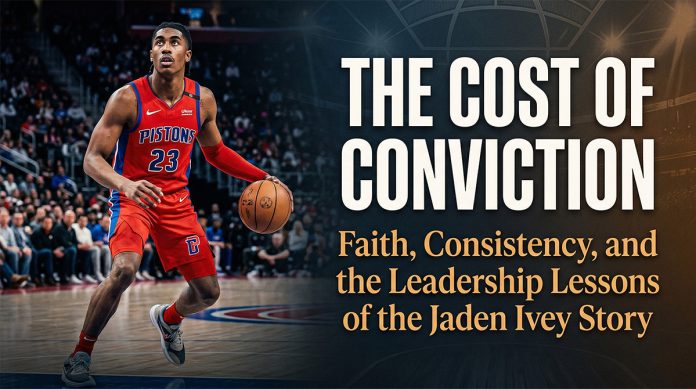
Faith, Consistency, and the Leadership Lessonsof the Jaden Ivey Story
Matthew 5:10: “Blessed are those who are persecuted for righteousness’ sake, for theirs is the kingdom of heaven.” New York Jets cornerback Azareye’h Thomas wrote that the world will try to make sin look normal and righteousness look strange. Miami Dolphins player Blake Ferguson quoted John 15. Lakers forward Jake LaRavia posted John 14:6 on his Instagram story. And in a move that generated its own wave of attention, Bulls teammate Patrick Williams said publicly that he stood with Ivey on everything he said-and that if they cut Ivey, they might as well cut him too.
Unverified social media claims circulated that Ivey’s jersey had sold out overnight-though the timing, which coincided with April Fools’ Day, and the absence of confirmation from any credible outlet, means those claims should be taken with caution. What is not in question is the broader groundswell: pastors and public commentators praised Ivey for standing firm under pressure, and the framing in many of these spaces was clear. This was persecution for faith, and Ivey was counting the cost.
On the other side, sports analysts and cultural commentators raised concerns about the nature and intensity of Ivey’s behavior. ESPN reported that his religious intensity had “ratcheted up” during his brief time in Chicago, that he had become “preachy” in the locker room in ways that agitated teammates and staff, and that his hour-long livestreams covered not only faith but also depression, anti-Catholicism, abortion, critiques of specific NBA players-including Stephen Curry-and personal asides about his love for apple pie. He had reportedly turned post-game interviews into sermons and asked colleagues whether they were “saved” and whether they had “fornicated before marriage.” Stephen A. Smith questioned Ivey’s judgment, asking whether forty-two minutes on Instagram Live was worth a career.
Then the personal dimension surfaced. On a podcast the day after his release, Ivey revealed that he had nearly attempted suicide multiple times, describing a moment when he held oxycodone pills in his hand while his wife begged him not to take them. In subsequent livestreams, he said his family members were “betraying” him and calling him crazy, that his wife had stopped communicating with him, and that he was facing isolation from those closest to him. In one livestream, he panned the camera to his wife Caitlyn, who said “Please stop” before gathering her things and walking out of the room as Ivey told viewers she was “obeying God.” Caitlyn later posted on Instagram that she had never abandoned him and asked people to stop speculating.
Days after his release, viral video showed Ivey preaching on a Chicago street corner with a microphone, quoting from the Sermon on the Mount to a small gathered crowd, a man behind him holding a sign that read “JESUS DIED FOR YOU.” He had not backed down. He had not apologized. And he had not gone quiet.
◆ Leadership Reflection: The Courage Paradox • When does standing firm cross the line from conviction into self-destruction? What signals differentiate the two? • Have you ever watched someone you respect lose the ability to distinguish between the importance of their message and the damage of their method? • What responsibility does a leader have to listen to the people closest to them-even when those people are saying things the leader doesn’t want to hear?
The Institutional Question: Consistency as Credibility
If this story were only about one man’s conviction, it would be powerful but limited. What makes it a leadership case study is the institutional dimension-specifically, the question of whether the NBA and the Chicago Bulls applied their values consistently.
The record is uncomfortable. Karl Malone’s history-impregnating a thirteen-year-old girl when he was twenty, initially denying paternity until testing confirmed it, and never publicly addressing the conduct itself-is one of the most disturbing stories tied to a major NBA figure, yet Malone remained celebrated, honored, and fully embraced by the league for decades. Miles Bridges pleaded no contest to serious domestic violence charges involving the mother of his children and eventually returned to the NBA. Kevin Porter Jr. was arrested and charged in connection with a domestic violence incident, received a four-game suspension after charges were reduced, and continued his career. Anthony Edwards used a homophobic slur on social media in 2022; the Timberwolves fined him. They did not cut him.
Jaden Ivey did not harm anyone physically. He did not commit a violent act. He did not break the law. He spoke, intensely and publicly, from a place of faith. And he lost his job within hours.
This is not an argument that the Bulls had no right to act. Every organization sets its own standards, and “conduct detrimental to the team” is a recognized contractual provision. The issue is not the right to enforce standards. The issue is credibility-and credibility depends entirely on consistency. When an organization comes down swiftly on speech it finds objectionable while historically showing patience, forgiveness, or outright accommodation in cases involving violence or deeply troubling personal conduct, stakeholders notice the gap. Fans notice. Players notice. The public notices.
“At some point, the standard has to be the standard.”
The dominos fell quickly. One week after waiving Ivey, the Bulls fired executive vice president of basketball operations Artūras Karnišovas and general manager Marc Eversley. The official framing pointed to six years of underperformance-a 224-254 record, four consecutive missed playoffs, and a series of widely criticized roster decisions. But multiple reports, including from ESPN and the Chicago Sun-Times, identified the Ivey situation as “the last straw.” Team sources told ESPN that ownership had been mulling the change for weeks, “especially in the aftermath of the team’s dismissal of Jaden Ivey and questions about whether the Bulls did enough homework before acquiring him.” One source described the Bulls as having a “credibility problem” around the league and with their own fans.
The organizational lesson here is significant. The Ivey controversy did not create the Bulls’ dysfunction-it revealed it. A single mishandled crisis became the visible crystallization of years of accumulated frustration, poor judgment, and eroded trust. That is how institutional failures often work: slowly, invisibly, and then all at once when a triggering event forces the accumulated evidence into public view.
◆ Leadership Reflection: The Consistency Audit • If you applied your organization’s stated values to every situation over the past two years, would the pattern hold-or would you find exceptions that undermine the rule? • When your team enforces a standard against one person, can they point to consistent application across the board? Or are they enforcing selectively based on which violations are culturally convenient to punish? • What is the relationship between due diligence and crisis management? Could the Bulls have avoided this entirely with better homework before the trade deadline?
The Harder Question: Conviction, Crisis, or Both?
There is a version of this story that is clean and inspiring: a young man speaks truth, absorbs the cost, and walks out of the building with his integrity intact while the institution that punished him collapses under the weight of its own hypocrisy. That version is satisfying. It is also incomplete.
The fuller picture-the one a leader has a responsibility to see-includes dimensions that are less comfortable. Ivey’s livestreams were not brief, measured statements of theological conviction. They were long, emotional, and at times erratic. They ranged from scripture to critiques of Catholicism as a “false religion” to personal attacks on specific athletes to revelations about childhood sexual abuse to declarations about music lyrics to his love of apple pie. He described himself as having experienced a “rebirth” and told reporters that “the old J.I. is dead.” His intensity in the locker room had been building for weeks before the public controversy, with reports of teammates “shaking their heads.”
The people who know Ivey best-his wife, his family-were not celebrating. His wife asked him to stop on camera. She walked out. He described his own family members as betraying him. He disclosed a history of suicidal ideation and near-attempts. And he continued streaming, day after day, from what appeared to be an increasingly isolated position.
None of this negates the sincerity of his faith. None of it erases the legitimate questions about institutional consistency. But a leader who cannot hold both realities simultaneously-the possibility that someone is both sincere and in crisis-is a leader whose analysis will always be dangerously incomplete.
There is a clinical pattern that mental health professionals recognize: a sudden, dramatic intensification of religious focus, accompanied by grandiosity, reduced sleep, pressured speech, deteriorating relationships, and alienation from close family-these can be markers of a manic episode or other psychological crisis that co-opts genuine faith as its vehicle. This does not mean Ivey’s beliefs are not real. It means that the manner, frequency, and escalation of their expression may reflect something additional to belief-something that calls for care, not just applause.
The institutional failure here may be larger than the inconsistency of the punishment. The deeper failure may be that no one-not the Pistons, not the Bulls, not the league-intervened with the kind of care that a twenty-four-year-old man with a disclosed history of suicidal behavior, a deteriorating marriage, and increasingly erratic public behavior warranted. Coach Donovan’s quiet remark-“I hope for him he’s OK”-may have been the most important sentence anyone in the organization uttered. And it may have been the only one that pointed toward the right response.
◆ Leadership Reflection: Holding Both Realities • When someone on your team is expressing genuine conviction but showing signs of personal crisis, what is your responsibility? To affirm the conviction? To address the crisis? Can you do both without dismissing either? • How do you distinguish between a colleague who is courageously countercultural and one who is spiraling? What markers do you look for? • Who in your organization is positioned to have the kind of conversation Ivey needed-one that honors his faith while expressing genuine concern for his wellbeing?
The Bobby Orr Principle: Redefining the Role Without Abandoning It
Bobby Orr’s revolution worked because he mastered the fundamentals of his position before he transcended them. He was an extraordinary defenseman who also happened to score. The offense flowed from the defense. The expansion was grounded in excellence at the original role. And critically, Orr understood context. He knew when to press and when to pull back. He led by example, demanded high standards, and showed restraint when dominance had already been established.
This is the leadership principle that the Ivey situation illuminates most starkly. Conviction without strategic self-awareness can undermine the very message a leader wants to deliver. The substance of what Ivey said-that a person should be free to articulate the beliefs of their faith without losing their livelihood-resonated with millions of people. The manner in which he delivered it-hour-long, wide-ranging livestreams that mixed theology with personal attacks, cultural commentary with intimate disclosure-diluted the message and gave his opponents the ammunition to reframe conviction as instability.
A leader who wants to speak into a hostile environment has to be twice as disciplined, not half. The message must be clear, the delivery must be measured, and the messenger must be in a position of strength-personally, relationally, and professionally-before stepping into the arena. Orr could redefine the defenseman position because he was already the best defenseman in the league. His credibility preceded his revolution.
This is not a call for silence. It is a call for strategy. The athletes who stood behind Ivey-Henderson, Thomas, Ferguson, LaRavia, Williams-demonstrated exactly this. They posted scripture. They spoke clearly. They did not ramble for an hour. They did not attack specific colleagues. They did not disclose personal crises in the same breath as theological arguments. Their solidarity was effective precisely because it was disciplined.
“A leader who wants to speak into a hostile environment has to be twice as disciplined, not half.”
Five Leadership Lessons from the Ivey Fallout
1. Conviction Without Strategy Is a Liability
Ivey’s core message had enormous resonance-evidenced by widespread public support, athlete solidarity, and sustained national attention. But the vehicle of delivery undermined the content. Leaders who feel called to speak countercultural truth must pair courage with craft. What is the clearest, most concise, most unassailable way to say what needs to be said? Anything beyond that hands your critics a weapon.
2. Institutional Credibility Lives or Dies on Consistency
The Bulls’ swift action against Ivey, set against the league’s historical patience with domestic violence and other serious offenses, created a credibility gap that ultimately contributed to the firing of two top executives. Organizations that apply values selectively-punishing the convenient offense while accommodating the inconvenient one-erode trust with every inconsistency.
3. Due Diligence Prevents Crisis
Multiple reports suggested that the Bulls did not adequately vet Ivey before acquiring him. The signs of his intensifying behavior were reportedly visible in Detroit. A front office that does its homework can prepare, accommodate, or-if necessary-decide not to take on the risk. A front office that skips that step is managing reactively, and reactive management in a crisis almost always produces worse outcomes than proactive preparation.
4. Care and Accountability Are Not Mutually Exclusive
The false binary in this story-either Ivey is a hero or he’s unstable-obscures the most important leadership insight: a person can be both sincere and in need of help. The most sophisticated response would have been to honor the man’s faith while also recognizing the pattern of escalation, family strain, and disclosed mental health history as signals that warranted private, compassionate intervention. Cutting him within hours of a social media post was not that response.
5. A Single Crisis Reveals Years of Accumulated Failure
The Ivey situation did not destroy the Bulls’ front office. It exposed what was already broken. Six years of losing records, baffling trades, and fan frustration had built to a pressure that needed only one triggering event to release. Leaders who ignore slow-building organizational dysfunction should understand that the crisis that eventually forces action will rarely be the one they predicted-and it will always arrive at the worst possible time.
◆ Leadership Reflection: Your Organization’s Ivey Moment • What slow-building frustration in your organization is one triggering event away from becoming a full-blown crisis? • If a team member publicly expressed a deeply held belief that conflicted with your organization’s stated values, what would your process look like? Is it written down? Has it been tested? • When was the last time your leadership team discussed the difference between disciplining someone and caring for them-and what it looks like to do both simultaneously?
Conclusion: The Cost and the Compass
Jaden Ivey walked out of the United Center and started preaching on a street corner. His front office was fired. His family is hurting. His NBA future is uncertain. His faith, by all visible measures, is intact.
Whether you view him as a prophet or a cautionary tale depends largely on which part of the story you weight most heavily. The honest answer is that he is both. He is a twenty-four-year-old man who refused to be silent about something he believes with his whole heart, and he is a twenty-four-year-old man whose delivery, timing, and personal circumstances raised serious questions about whether courage alone is sufficient for effective leadership.
Bobby Orr showed that redefining a position requires mastering it first. The athletes who stood behind Ivey showed that solidarity is most powerful when it is disciplined. The Chicago Bulls showed that organizations cannot survive the gap between their stated values and their actual practices. And Ivey himself showed that conviction, unmoored from community, strategy, and self-awareness, can become its own kind of isolation.
The leadership question is not whether Ivey should have spoken. It is how leaders speak, when they speak, what support they have when they speak, and whether the institutions around them are capable of responding with both principle and compassion.
Those are not easy questions. But they are the ones that matter.
“Blessed are those who are persecuted for righteousness’ sake, for theirs is the kingdom of heaven.”– Matthew 5:10
Lufkin’s Missi Perkins Is Proving That Belief Can Change Everything
When Missi Perkins was in second grade, she was separated from her identical twin sister and moved to a different school campus in Des Moines, Iowa. She needed more intensive help with learning disabilities that had made school a daily struggle. It was a hard road—years of tutoring, extra hours after school, and the quiet fear that she simply could not keep up.
Today, Perkins teaches second grade at Lead Academy in Lufkin, Texas—and she is currently ranked No. 1 in her group in the national America’s Favorite Teacher competition. The contest, which features educators from across the country, offers a $25,000 grand prize, a trip to Hawaii, and a feature in Reader’s Digest. Voting for the Top 10 closes Thursday, April 9.
For Perkins, the honor is not about the prizes. It is about proof—proof that a child who once could not see potential in herself can grow into the kind of teacher who helps other children see it in themselves.
“I struggled through school, but would not change my experience for anything. It’s proven that you truly can learn, grow, and be what you have been called to be when you have others pushing you and believing in you.”
A LONG ROAD TO THE CLASSROOM
Perkins’ path to teaching was anything but traditional. After high school, she enrolled at TCJC in Grapevine, Texas, attended for a year and a half, and then stepped away with no plans to return. It was her husband, Stacy, who changed the trajectory. One day he picked her up at home around lunchtime. She assumed they were headed to lunch.
“I was wrong,” Perkins said with a laugh. “He took me to Tyler Junior College and said, ‘I don’t care how long it takes you to get a degree, but I will help you all the way.’ He did help me, and I’m eternally grateful for him. It took me ten years to get my degree.”
She earned her education degree from the University of Texas at Tyler, certified for Early Childhood through sixth grade. She always knew she wanted to work with younger students—to be for them what her best teachers had been for her.
Two educators in particular left a lasting mark. Her Algebra I teacher, Mr. Plemons, and her fifth-grade literature teacher, Mr. Andres, made accommodations so she could succeed. More importantly, they valued her, believed in her, and saw potential in her when she could not see it in herself.
A CALLING THAT COULD NOT BE IGNORED
Before the classroom, Perkins was working at a local tea room. Then came the moment that changed everything.
“As clear as day, I heard God say, ‘This is not what I have called you to do,’” she recalled. “I knew exactly what it was I was called to do. I just had to be obedient.”
The process of testing and certification was a challenge, particularly given her own learning history. But she pushed through—and receiving those certifications remains one of the proudest moments of her life.
FROM FIRST-YEAR TEARS TO TEACHER OF THE YEAR
Perkins’ first teaching job came without a gentle onboarding. She was hired as a kindergarten teacher at Central Elementary in Lufkin on a Wednesday, had the weekend to set up her classroom, and started on Monday.
“Not to mention, I had no idea what I was doing,” she said. “I literally think I cried every day. The only way I made it through was with the Lord, a wonderful husband who was with me all the way, Dawn Bailey—the lead kindergarten teacher at the time—and four great kiddos.”
She spent nine years at Central Elementary, teaching two years in kindergarten and seven in second grade. In 2016, after just four years in the profession, she was named Teacher of the Year for the district.
“It was one of the greatest days of my life. I literally still cry when I think about it,” Perkins said. “To come from where I started to receiving that honor meant the world to me. Just proof that God can use anybody when they are willing to be obedient to the calling God has given them.”
A NEW CHAPTER AT LEAD ACADEMY
Today Perkins teaches second grade at Lead Academy, a Christian university-style academy in Lufkin that emphasizes small class sizes and faith-based education. Her classroom typically has eight to twelve students, compared to the nineteen to twenty-three she managed in the public school system.
“A smaller class size makes such a difference,” she said. “I’m able to more quickly identify areas that a student is struggling in and provide the help they need.”
Her daily schedule runs from 8:00 a.m. to 4:00 p.m. and covers reading, grammar, the Institute for Excellence in Writing program, math, science, and STEM. Core subjects come first thing in the morning, and hands-on learning is woven throughout the day.
Each morning at Lead Academy, Perkins starts with four things: students fill each other’s buckets by giving and receiving compliments, a Bible story, prayer requests and prayer, and pledges to the American flag and the Bible.
“My greatest desire is that these kids grow spiritually and know Jesus a little bit better by being in my classroom each day,” she said.
THE PERKINS PHILOSOPHY: LOVE FIRST, TEACH ALWAYS
Ask Perkins about her teaching philosophy and the answer comes without hesitation. She wants every child who walks into her room to feel like they are at home—to know they are loved like her own children, that mistakes are safe to make, and that she believes in them even when they cannot believe in themselves.
“A child cannot learn effectively if they first don’t have a trust in you,” she explained. “When they know you love them and you care about them, they want to please you and do well. We must praise them continually. When you’re excited about their progress, they get excited about their progress.”
For students who struggle quietly, Perkins has a simple approach: you notice them. You point out their progress in front of the class. You offer high fives and hugs. You make sure they know it is safe to tell you how they are feeling.
“I don’t ever want to hear a student say that Mrs. Perkins was so mean and that they did not like my class,” she said. “I work too hard as a teacher to hear that. I want to hear from my students that Mrs. Perkins was my favorite teacher.”
Parents at Lead Academy have taken notice. One family shared that their son’s reading fluency and comprehension improved dramatically between first and second grade, crediting Mrs. Perkins for making reading fun. They called her a blessing to every student she has taught, their families, and the schools she has served in.
AMERICA’S FAVORITE TEACHER
Perkins discovered the America’s Favorite Teacher competition on Facebook. When she mentioned it to one of her current parents, the response was immediate: you must enter. So she did.
The response from family, friends, and coworkers has been strong, and Perkins works at getting the word out every day. One of her student’s parents has been especially active, voluntarily encouraging others to vote. As of press time, Perkins is ranked first in her group.
As for the $25,000 prize, Perkins initially said she would use it toward playground equipment at Lead Academy. If the prize can be used personally, she plans to put it toward new windows for her family’s home. Either way, the real prize for her goes deeper.
“I can’t imagine what a blessing it would be,” she said. “I have always wanted to go to Hawaii, and I do love the Reader’s Digest. But for me, it’s just the acknowledgment of receiving it, considering the struggles I had growing up. That’s the best gift.”
FAMILY, FAITH, AND A FEW BIG FISH
Perkins and her husband Stacy have been married for 36 years. They have four children and seven grandchildren. The move to Lead Academy was partly motivated by a desire to slow down and spend more time with those grandchildren.
Outside the classroom, Perkins enjoys fishing, camping, and traveling with her family. Her students get to see the evidence—she loves showing them pictures of big fish she has caught and photos from family vacations, especially anything involving nature.
A MESSAGE FOR EVERY STRUGGLING STUDENT
Before every test, Perkins leads her students in a chant that has become a classroom tradition:
“Mrs. Perkins believes in me, I believe in me, God believes in me! I’ve got this!”
If she could speak to any young person struggling in school right now, she said, she would share her own story. She would tell them they absolutely can do it. And she would remind them of a truth she has lived out every step of the way: when you have people who believe in you, anything is possible.
As for the competition, Perkins has one final message for East Texas:
“This is an American competition. Let’s get Lufkin, Texas noticed!”












 Join us for Food Truck Wednesday with a twist as