Home Blog Page 447

Angelina College Fire Academy Earn State Recognition

0
From left: TAFE Treasurer, Rick Trevino, Corpus Christi Fire Department; TAFE Director, Steve Keller, Tarrant County College; TAFE Secretary, Mike Free, Port Arthur Fire Department; TAFE Vice President, Jason Jackson, Pearland Fire Department; George Hughes Fire Instructor of the Year Award Recipient Steven Arreguin, Angelina College Fire Academy and Nacogdoches Fire & Rescue; TAFE President, Chuck French, Angelina College Fire Academy and Nacogdoches Fire & Rescue; TAFE Director, Michael Simmons, Kilgore College Fire Academy; TAFE Director, Greg Obert, College of the Mainland and Houston Fire Department

Angelina College Fire Academy Assistant Coordinator, Steven Arreguin, recently received the Texas Association of Fire Educators (TAFE) 2019 George Hughes Fire Instructor of the Year Award. This award recognizes instructors who have demonstrated or exemplified TAFE goals, objectives and ethics; who have demonstrated the ability to plan, develop and deliver training and education that changes behaviors; who have been deemed as outstanding in their field through a variety of activities; and who have participated in innovative programs, technology or equipment for the fire service.

Arreguin is a graduate of the Angelina College Fire Academy and began his career in the fire service with Nacogdoches Fire & Rescue as a firefighter. He was quickly promoted to driver and then to Captain/Step-Up Battalion Chief. He serves as Station Captain for the Station #5.

Arreguin also serves as the communications officer and is responsible for programming, installing, and maintaining all mobile and handheld devices for fire apparatus and county units when requested. He provides training and serves on the communications committee, which consists of Nacogdoches Police Department, County Volunteer Fire Department, County Emergency Management staff, and dispatch.

As AC Fire Academy Assistant Coordinator, Arreguin coordinates all instructor scheduling, resolves instructor and student issues, instructs various courses in the academy, and serves as the lead instructor for live fire training. He also coordinates the Fire Instructor I and Fire Officer I courses.

Arreguin spends many hours training the Emergency Service District #2 (ESD #2) volunteer firefighters. ESD #2 consist of four volunteer fire departments. Cushing Volunteer Fire Department responds to medical assist calls and fires in ESD #2 until the arrival of city units. For four years Arreguin served as the ESD #2 board president and was in charge of department contracts and distribution of funds to each department.

According to Chuck French, AC Fire Academy Coordinator, Arreguin is an outstanding fire instructor. “Each of his training session is conducted with safety being of utmost importance, with crew integrity in mind, and shaping the minds of individuals seeking the firefighter profession, or firefighters bettering themselves for promotion or serving as a fire officer,” French said.

For more information about the Fire Academy at Angelina College, call (936) 633-5206.

Angelina College Presenting “Dial ‘M’ for Murder”

0

Angelina College will present the classic thriller, “Dial ‘M’ for Murder,” Feb. 28, March 1, and March 2. All performances will be at 7:30 p.m. in Temple Theater in the Angelina Center for the Arts on the AC campus. Tickets are $6 for adults and $5 for seniors, students and children.

Cody Carter of Lufkin plays Tony Wendice, a man who married his wife for her money and plans to murder her for it. Carter’s previous AC stage credits include “Frog and Toad,” “You Know I Can’t Hear You When the Water’s Running,” “Bell, Book and Candle,” and “Guys and Dolls.”

Raquel Rothschild of Lufkin will portray Margot Wendice, the would-be murder victim. Rothschild previously performed in “The Jungle Book” in Nashville.

Alex Mize of Lufkin will play Max Halliday, an American murder mystery writer, who’s in love with Margot and comes to visit the Wendices in their London home. This is Mize’s first AC performance.

Dylan Holland of Lufkin will portray Captain Lesgate, an old school chum of Tony’s and a convicted criminal. This is Holland’s first AC performance.

Lindsey Dobbins of Colmesneil will play Inspector Hubbard, a British police inspector. Dobbins previously performed in AC’s production of “Bell, Book and Candle.”

Nicholos Trusclair of Lufkin will play Thompson, a police officer. Trusclair’s AC stage credits include “Album,” “Guys and Dolls,” “Library,” and “’Night Mother.”

AC Theater Instructor Kary Raine is directing the production. “We are excited to perform this murder mystery. This play was written by Frederick Knott, the same playwright who wrote ‘Wait Until Dark’’” Raine said.

The cast includes Meredith Taylor, production manager, lighting designer, sound engineer; Sarah Flowers of Diboll, stage manager; Blaze Steptoe of Lufkin, and Alyssa Moss of Nacogdoches share the role of assistant stage manager; AC Theater Instructor Andrew Reed, scenic designer; Cassidy Kelly of Nacogdoches, costume designer; Retha Powers and Natalie (Kai) Martin of Nacogdoches, properties; Alyssa Moss, run crew chief; Karlee Cline and Donna Martin, backstage crew.

For more information about this production, call (936) 633-5233 Monday through Friday, 8 a.m. until 4 p.m. or email kraine@angelina.edu.

Planning for a Successful 2019 Hay Harvest

0

Most stockmen are close to being able to graze on cool season grasses that were either planted in the fall or have volunteered on their own.

Have you been able to make the transition yet? Even for folks who didn’t plant ryegrass last fall there is a good chance that you may be transitioning into grazing early spring grasses and stop feeding hay. Coming into the home stretch of February means that spring is almost fully upon us and hay requirements should be ending soon.

If you find yourself still needing to feed hay, it may be time to look at your stocking rate. Proper stocking rates will allow for cool season grasses to get a foot-hold and sustain your herd. Overstocked pastures never do see grasses, of any kind, really perform well and adequately sustain livestock.

Last week we discussed how weeds are thieves of water and nutrients. Controlling them is the first step we ought to take.

A close second is timing of your hay harvest. Capturing the forages while they still have an effective level of nutrients is crucial. Waiting too long between cuttings to increase the number of hay bales at the expense of hay quality will certainly cost stockmen. Most who do this end up purchasing way too many supplements or reducing calf weights.

Though expensive, a commonly considered option is adding lime or fertilizer. Fertilizer should only be applied when weeds are controlled and when hay will be harvested in a timely manner. We can add nitrogen, phosphorous and potassium to boost growth, and probably should. But boosting the growth of weeds would be wasted money and letting grass get old, rank and overly mature would be folly.

Nitrogen, to be sure, is such a key component of vegetative quality that it is the metric used by laboratories to determine protein content. Protein is the first and obvious choice for determining hay quality. In the testing laboratory, the technicians used nitrogen content to extrapolate protein content. Low nitrogen means low protein.

Lastly, take a hard look at incorporating some type of annual winter pasture into your forage plans. This would spread the risk of relying solely upon hay to carry livestock thru the winter. Yes, there is risk in planting clovers, grains, ryegrass and many other crops, but we know that hay isn’t guaranteed either.

Just a portion of pasture can be set aside for a winter annual that could tremendously supplement stored hay. Often these crops are of exceptional quality and will greatly aid any low-quality hay.

To learn more, be sure to attend the upcoming seminar Getting Ready for a Successful 2019 Hay Harvest on Monday, Feb 18 at 6:30 pm. It will be at the at the Angelina County Extension Office located next to the Farmers Market at 2201 S. Medford Drive in Lufkin. 1 CEU towards pesticide licenses will be given. Cost is $10.

Chairman White Attends State of the State and State of the Judiciary; House Corrections Conducts Organizational Meeting

0
State Representative James White was presented with the artwork from children at Goodrich Elementary. Principal Kathryn Washington and her teachers helped our most vulnerable children, who were impacted by Hurricane Harvey, have an outlet to express their emotions and thoughts on the traumatic events that unfolded in the area. "Dr. Washington is a high-energy, high-powered Texas educator and strong campus leader."

This week both Governor Greg Abbott and Chief Justice Nathan Hecht addressed the Legislature during the State of the State and State of the Judiciary, respectively.

Governor Abbott delivered his biennial State of the State address in the Texas House Chamber to members of the Texas House and Senate, along with officials from the state executive and judiciary branches. Flanked by Lieutenant Governor Dan Patrick and Speaker Dennis Bonnen, Governor Abbott outlined emergency legislative priorities such as reforming the byzantine and dysfunctional school finance system, boosting teacher pay raises, and providing meaningful property tax relief for Texas homeowners and small business owners.

Also included at the top of the governor’s priority list are partnering with our local school districts and law enforcement agencies to ensure that our students and teachers are safe, assisting our cities, councils, and tribal communities restore from the devastation of Hurricane Harvey, and helping our fellow citizens heal from behavioral and mental health challenges. By designating these and the aforementioned policy areas as emergency items, the Texas Constitution allows lawmakers to tackle these pressing issues sooner than the mandated constitutional limit that prevents the Legislature from passing bills within the first 60 days of the session.

I wholeheartedly agree with Governor Abbott in his mission to target education funding. We must do better. According to the Governor, “only 40 percent of third-graders are reading at grade level by the end of their third-grade year…and less than 40 percent of students who take the ACT or SAT are prepared for college.” “[F]or where your treasure is, there your heart will be also” (Matthew 6:21). Academic achievement is like any other human endeavor. You value what you prioritize. The greatness and prosperity of Texas depends on how we develop and nurture our children intellectually, physically, and spiritually, and at least intellectual development requires a first class education.

On the property tax reform front, leaders from both the Texas House and Senate laid out identical property tax reform bills that would help lift the burden of skyrocketing property taxes. I previously explained these proposals in my weekly legislative update.

In terms of school safety, Governor Abbott praised a bill filed by Senator Jane Nelson that would create a broad-based mental health consortium. By supporting improved mental health services for students, as well as rewarding the best teachers and hardening our schools against mass shootings, Governor Abbott has set the tone for the coming session. Chief Justice Hecht of the Texas Supreme Court also addressed the Legislature. On Wednesday, he delivered his State of the Judiciary address highlighting the major issues facing Texas’ courts.

Chief Justice Hecht called on the Legislature to reform a system he called “among the very worst methods of judicial selection.” In our state, judicial seats are determined by partisan elections. In a political atmosphere as harsh and partisan as ours, judicial elections result in more political judges. Judicial independence weakens in the process. Simply put, straight-ticket voting fuels a system wherein inexperienced judges ride the coattails of candidates higher up on the ballot.

The Chief Justice also brought up Texas’ bail system. He claims that our bail system encourages the wrongful detainment of the justice-involved simply because they are too poor to pay bond amounts for their release from jail before trial. I look forward to seeing the reform that Senator John Whitmire and Representative Andrew Murr will introduce to address this issue. Obviously, jailing the accused who pose no risk to the public because they are indigent is already unconstitutional and very costly for city and county property taxpayers, who provide the revenue for their local jails.

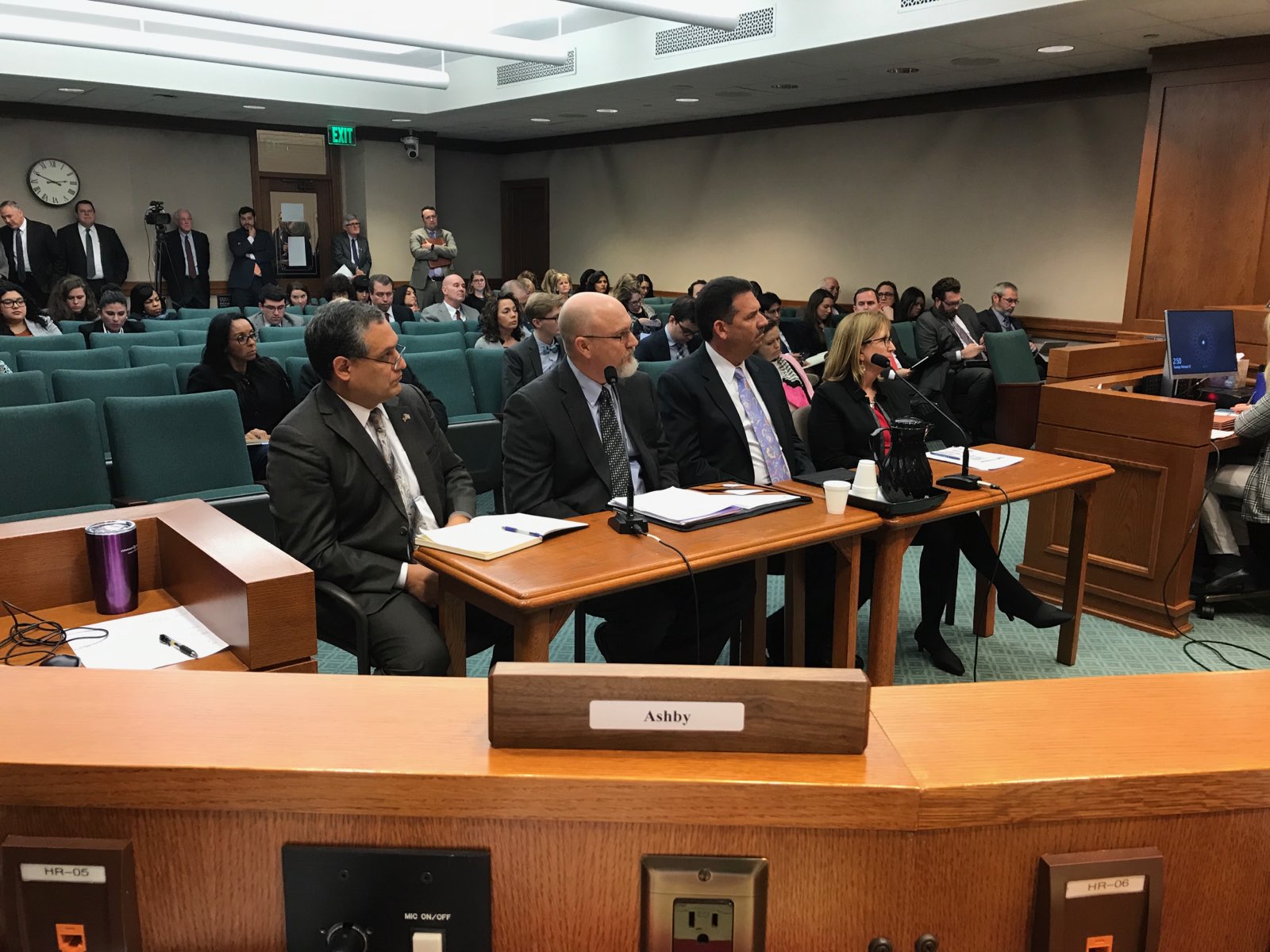
This week I had the opportunity to preside over the Correction Committee’s first organizational hearing for the session. The committee heard testimony from criminal justice agencies responsible for ensuring community safety.

I am incredibly thankful for Texas Board of Criminal Justice (TBCJ) Chairman Dale Wainwright for attending our hearing and providing us with the knowledge of his authority over our state’s criminal justice system. The board has direct and independent oversight over the Texas Department of Criminal Justice (TDCJ), which provides confinement, supervision, rehabilitation, and reintegration of the state’s justice-involved population. Additionally, the board has general oversight over the hiring of the superintendent of the Windham School District (WSD). During his testimony, Chairman Wainwright did a remarkable introduction of our agency directors and staff.

Bryan Collier, the Executive Director of TDCJ, provided an extensive and thorough update on the operations, facilities, and programs of the state’s corrections system. Another critical aspect of TDCJ is community supervision or probation. One goal of our criminal justice system is to punish the wrongdoer that threatens our life, liberty, and property. We also focus on restoring the victim. However, we must also ensure that we effectively rehabilitate the justice-involved individual, because one day in the future, a vast majority of the incarcerated justice-involved population will return to free society.

Former Corrections Chairman, Jerry Madden, also testified and gave the members his perspective not only on the work that will need to get done now but the impact many of the items that went through the committee in past have had in our state’s current criminal justice system. I am honored to have served as a member of the Corrections committee under the outstanding leadership of Chairman Madden. His advice is valued always and I consider him to be a remarkable friend.

In addition, the Legislative Budget Board (LBB) provided an overview of the fiscal state of our corrections system. Texas Board of Pardons and Paroles (BPP) Chairman David Gutierrez, testified on the current state of the agencies operations. I was very pleased that Chairman Gutierrez is focused on the concerns of victims and victims’ families, along with the concerns of our local officials in the criminal justice system. Dr. Clint Carpenter, the superintendent of WSD, gave the Committee an overview of the educational curriculum and programing the district provides at TDCJ facilities. Marsha McLane with the Texas Civil Commitment Office (TCCO) provided insight into their current charges and upcoming programming for civilly committed sex offenders. Due to overreaching interference by federal courts, Texas is required to release certain sex offenders into our communities. Despite this, the Legislature created the TCCO in order to provide optimum supervision and rehabilitation. Lastly, Jack Choate provided insight into the workings of the Special Prosecution Unit. The hearing was a very productive conversation with these outstanding agencies and I look forward to continuing to review and improve our criminal justice system.

I was thrilled to see many school teachers in our State Capitol over the week. Silsbee Independent School District Board Member Jim de Garavilla came to my office to discuss the importance of our state’s public education system and the critical needs it faces both in terms of funding and providing teachers the necessary tools to address the needs our children need to prosper. Dr. Kathryn Washington, Goodrich Elementary principal, came by along with a few other teachers from the Texas Elementary Principals and Supervisors Association. Dr. Washington is a high-energy, high-powered Texas educator and strong campus leader. I enjoyed listening to her insight on student-focused school safety. I am extremely honored to listen to these women and the challenges and expectations they have of our Texas public education system. She also gifted me a remarkable piece of art that students at Goodrich ISD put together that showcased their emotional state when Hurricane Harvey devastated their community. These young students experienced unparalleled trauma. I would like to thank Dr. Washington for allowing the students to have an outlet for their emotions and thoughts.

We had three outstanding public servants in town representing the people of Southeast Texas. Tyler County Judge Jacques Blanchette, Tyler County Commissioner Stevan Sturrock, and Polk County Tax Assessor-Collector Leslie Burks. I always enjoy meeting with them to address the needs of our local constituents and it was truly a pleasure to have them visit me during the legislative session.

Members of the Sam Houston Electric Cooperative, Jasper-Newton Electric Cooperative, and the Deep East Texas Electric Cooperative also came to my office to discuss the services they provide to residents in our districts. My staff and I always enjoy working with these folks and appreciate working with them to ensure that they provide the best service at a reasonable cost.

CASA of the Pines and CASA of the Sabine Neches brought by some of our strongest advocates for Texas children. I am proud to have earned the prestigious CASA “Big Voice for Little Texans” award and am always eager to work with CASA advocates in Southeast Texas. I have worked with Vicki Spriggs, CEO of CASA, for many years and am looking forward to passing meaningful reform that addresses the most critical needs of our most vulnerable children.

The Capitol of Texas belongs to you and visiting the Capitol during the biennial legislative session is a great experience. To assist in arranging your visit please call Saul Mendoza, my Chief of Staff, at (512) 463-0490. Or, you can email him at saul.mendoza@house.texas.gov.

An Update from Trent Ashby

0

With only 140 days in a regular legislative session in Texas, time is precious. This week, we pass the 40-day mark leaving less than 100 days to complete our business for the 28 million plus citizens who are blessed to call themselves Texans. Though each session is always a marathon, the first few weeks seem like a sprint, as lawmakers familiarize themselves with new committees, members, and issues. That said, with the amount of work we have ahead of us, the adjustment period is over and it’s full steam ahead.

With that, here’s an update from your State Capitol. . .

Meetings, hearings, and East Texans at the Capitol: This week, I met with Governor Abbott for an in-depth discussion about reforming our broken school finance system and providing much needed relief to skyrocketing property taxes across the state. We had a very productive discussion, and both agreed that these issues should be at the forefront of the work we do this session. While the devil is always in the details, I’m encouraged by the conversations that are taking place. It’s refreshing to hear the bipartisan support for improving our public schools and enacting reforms to our existing property tax system.

The House Committee on Public Education was hard at work this week, spending more time in the hearing room than any other committee in the Legislature. We heard testimony from various experts and superintendents from across the state about the distinct challenges that face the 1,000+ different school districts across Texas. I was delighted to have one of the Superintendents from House District 57 – Lacy Freeman of Buffalo ISD – come before the committee to share his unique perspective on what the state can do to promote greater equity in funding and academic success statewide.

The highlight of my week though was getting to see so many constituents make their way to our State Capitol. I had the pleasure of meeting with teachers, students, nurses, business owners, ranchers, and industry representatives from every corner of House District 57. It always warms my heart to see folks from back home come to Austin to advocate for the issues they’re passionate about. As I’ve always said, the best way for me to know that I’m representing my district is to have constituents call or come by my office to voice their opinion. I’m hopeful that I will get to see many more familiar faces over the coming weeks and months.

Reminders: The mobile office is on the road this month and looks forward to seeing you on the following dates, in the following locations: February 20th at the Houston County Courthouse Annex in Crockett from 9:00-11:00am, or at the Trinity County Courthouse in Groveton from 1:30-3:30pm; and finally, on February 27th, at the San Augustine County Courthouse in San Augustine from 9:00- 11:00am.

As always, please do not hesitate to contact our office if we can help you in any way. Our district office may be reached at (936) 634-2762, or you can call my Capitol office at (512) 463-0508.

SLIDING HOME Lady Roadrunner Softball Hosts Home Opener AC Facing San Jacinto on Friday

0
Emilee Cernosek: Angelina College’s Emilee Cernosek slides home safely during a 2018 game. The Lady Roadrunners host their home opener against San Jacinto at 2 p.m. on Friday. (Gary Stallard photo)

The Angelina College Lady Roadrunners have gone 5-1 to open the 2019 season. They still have yet to play a single game at home.

That situation will change on Friday when the Lady ‘Runners host their home opener in a doubleheader against San Jacinto College. AC has played in a pair of road tournaments, including last weekend’s jaunt to the Permian Basin Invitational. There, the Lady Roadrunners dropped a 4-3 decision to Odessa on the first day but bounced back to take a 7-6 win over Lamar Community College and a 9-3 win over Snow College the next day.

Head coach Mark Mattson said he saw plenty of what he wanted to see in his team’s performances.

“Our kids showed tremendous fight,” Mattson said. “We had to deal with a lot of things outside the game. The weather was unbelievably cold, and that made it tough to grip the ball and bat. We’ve had some players dealing with illness as well.

“We did a good job. We’re still in the early phases of the season, and we’re still adjusting to seeing players in different spots to see how they perform. We’re looking at our pitching, piecing things together to see who follows whom well. The tournament helped us quite a bit.”

The first home stand will have a slight wrinkle: AC will play a very familiar San Jacinto College team on Friday in Lufkin – and then head to Houston on Saturday to face the very same Lady Coyotes on their home field.

Those four games will carry a conference-game level of intensity, and Mattson said he’s hoping the four combined games will offer a little of everything.

“The players on both teams will be ready to battle,” Mattson said. “Their coach (Kelly Saenz) and I both love to win, and she’ll have her team ready to go. There should be some exciting games.

“I hope we see some good, tough games, some situations where we really have to battle. We want to see a bunch of different scenarios to give us an idea of how we’ll cover those situations as the season goes along.”

Friday’s doubleheader is scheduled for a 2 p.m. start at the Larry Phillips Family Sports Complex on the Angelina College campus.

The email address for AC’s Sports Information Director is gstallard@angelina.edu.

My five cents…

0

A weekly column from Sen. Robert Nichols

After four weeks of hearing from every agency in the State, the Senate Finance Committee has finished the first step towards finalizing the state’s budget. We will now move into workgroups to work out the details.

Here are five things happening at your Capitol this week:

1. Rural Broadband: Beyond using it to shop online or watch Netflix, high speed internet has become an essential for everyday life and for businesses; from sales and ordering supplies, to logistics, medical recording, training and educational materials. There are large areas of rural Texas that do not have access to high speed internet or even cell phone coverage, many of them within Senate District 3. I have filed SB 14, which would help increase access to broadband internet for rural areas in Texas. This would be done through the help of Texas Electric Cooperatives (Co-Ops). These CoOps are member-owned non-profits, which have over 300,000 miles of distribution lines throughout rural Texas. By utilizing their existing electricity infrastructure, they would be able to deploy broadband to the members they serve and meet their need for high speed internet.

2. Sunset Bills: I wanted to update you on the continuation of the Sunset process. After about a year of review and hearings, the Sunset Advisory Commission makes recommendations which are incorporated into legislation for each agency. These pieces of legislation will continue through the Senate and House, like all other bills. As a member of the Sunset Advisory Commission, I will be filing bills for several agencies including the Texas Medical Board, Texas Real Estate Commission, Texas Finance Commission, and the Behavioral Health Executive Commission, which includes Psychologists, Marriage and Family Therapists, Professional Counselors and Social Workers. As these bills continue through the legislative process, I encourage you to take part and come to the Capitol to testify on these or any other bills when they are heard in committee. My five cents… A weekly column from Sen. Robert Nichols by Sen. Robert Nichols, Senate District 3

3. Property Tax Relief: Last week, I told you about the Senate Property Tax Committee hearing SB 2. This week it was passed out of committee on a 4-0 vote. This bill would prevent local entities, such as cities and counties from raising their property taxes more than 2.5 percent, without voter approval. Cities and counties can currently collect an additional eight percent in revenues without an election. With the provisions of this bill, if voters do not approve an increase, the entity would be forced to set a tax rate that only allows it to collect revenues from existing properties which are less than 2.5 percent over the previous year. This bill will now head to the Senate floor in the coming weeks. A similar bill has also been filed in the House.

4. Parents and Vaccinations: Texas is one of 18 states which allows parents to opt out of vaccinating their children because of philosophical or religious beliefs. There has long been many discussions and debates on both sides of this issue. Currently law requires a parent, who wants to find out how many students are vaccinated in their child’s school, to file an open records request. Senator Kel Seliger has filed SB 329, which would give parents the ability to obtain information on the immunization rate from their school districts, without an open records request. School districts would have to identify, by vaccine type, the number of students who do not have up-todate vaccinations, the number with medical and nonmedical exemptions, and those who have been admitted with pending immunization documents. The state health department would also have to produce a biennial report on the number of outbreaks in the State of vaccine-preventable diseases and immunization rates. In addition, the Texas Education Agency would be required to produce an annual report on the immunization status of students for each school district and campus.

5. Nobel Prize Winner: This week, the Senate recognized Dr. James Allison, a world-renowned pioneer of cancer immunotherapy, on winning the 2018 Nobel Prize in Medicine. Dr. Allison is the Chair of the Department of Immunology, and the executive director of the Immunotherapy Platform at The University of Texas MD Anderson Cancer Center in Houston. He was honored for his discovery of cancer therapies that stimulate the immune system to attack tumor cells. These treatments have extended the lives of thousands of people with advanced disease. The drugs he has helped to develop have been approved to treat melanoma, lung cancer, Hodgkin’s lymphoma and cancers of the kidney, bladder, liver and stomach.

Angelina College Coaches Against Cancer Parade Set for Feb. 22

0

UPDATE: The Angelina College Coaches Against Cancer Parade has been canceled due to the likelihood of inclement weather. Organizers are planning to reschedule the parade later this semester.

Angelina College student organization, AC SPEAKS will host the Coaches Against Cancer Parade Feb. 22 at 5 p.m. beginning at the Health Careers I Building. The parade will proceed down Daniel McCall Drive and on to Whitehouse Drive and back. This event is part of the celebration of Angelina College’s 50th anniversary.

Club sponsor Sabrina Collins said that the parade has a superhero theme. “We consider cancer survivors and fighters the greatest heroes of all. We want to honor those battling this terrible disease,” Collins said. There will be a float on which survivors will ride and as well as an “In Memoriam” float.

Deez Wingz and Holy Smokes will be parked next to the AC Activity Center so paradegoers can enjoy some fine food truck fare.

Those scheduled to participate in the parade are AC Athletics, AC SPEAKS members, Bikers Against Child Abuse, Identity Bible Study, the Hudson High School Drum Line, the Huntington High School Band, Jeepin’ For Jesus, Lufkin Fire Department, Lufkin Police Department, Buckner Family Pathways and Relay for Life.

AC SPEAKS stands for Students Preparing and Executing Acts of Kindness and Service. The club’s goal is to promote service to those in need and to bring awareness to AC students of the various non-profit organizations in our community, the needs these organizations help to meet, and how one can get involved.

For more information about this event, contact Sabrina Collins at scollins@angelina.edu.

Roadrunners Hold off Blinn College Quick Start Holds up for AC

0

Whew.

The Angelina College Roadrunners could breathe a collective sigh of relief following Wednesday’s win over Blinn College. AC raced out to a 24-point lead in the game’s first 13 minutes, then had to hold on late to hold off the Buccaneers 69-62 at Shands Gymnasium.

The Roadrunners could do little wrong in the opening minutes, winning seemingly every 50/50 ball and out-rebounding the bigger Bucs front line. The lead grew to 26 points at 52-26 with 17 minutes to play in the game.

Then the Bucs got hot and the Roadrunners cooled off. With 51 seconds to play, Binn’s A.J. Rainey converted a bucket to cut the AC lead to 64-62. The ‘Runners held fast, however, with Chris Simmons and Hunter Janacek teaming up for five consecutive free throws to close out the big conference victory.

Kevin Norman led AC with 24 points, nine rebounds and three steals. Janack finished with 13 points, and the Roadrunner bench outscored the Bucs 23-13. Rainey led Blinn (19-7, 6-7) with 17 points, followed by Tristan Ipke with 14 points. The Roadrunners (12-13, 5-8) play at Coastal Bend Community College on Saturday. Game time is 4 p.m.

The e-mail address for AC’s Sports Information Director is gstallard@angelina.edu.

Gearing Up for a Successful Hay Harvest

0

This past year was certainly a tough one for stockmen producing hay. We were either too dry, too wet, or were getting the entire field eaten up by reoccurring waves of armyworms.

When baling hay, producers are always working to balance top hay quality against top hay yields. They can’t have it both ways. The best quality hay comes from young tender growth. The most volume comes from older, more fibrous grasses that will be lower in quality. When you hear a hay baler brag about a tremendous number of bales, you got to wonder how much quality they were sacrificing.

High quality hay has more nutritional value and that increased value translates into better livestock performance. The hard fact is that regardless of the quality of hay baled, there are fixed costs of equipment, diesel, twine/wrap and labor. The equipment, diesel, wrap and labor all costs the same regardless of what quality hay you are putting up.

Harvesting hay with a short time frame between each cutting will certainly lead to higher quality hay, whereas waiting longer between cuttings will increase the yield. But this increased yield will have a much higher fiber content. This increased fiber is less digestible.

Deciding how often to cut and bale hay will always be a compromise between quality or quantity. Waiting longer between cuttings will certainly increase the volume of hay and that may give folks bragging rights. But bragging about volume, at the expense of quality, doesn’t put weight on calves.

An often quoted bit of advice comes from some old research conducted on Coastal Bermuda hay. The advice, and research, is that 28 days between cuttings was the ideal compromise for balancing quantity and quality. That seems straightforward enough. It is. But that only applies to Coastal Bermuda.

While we can assume that the research would be very similar for other varieties of Bermuda hay, the fact is that a significant portion of the hay baled in this area is Bahia. And Bahia matures much quicker than Bermuda. Everyone who gets frustrated from mowing their lawn and then see the Bahia seed heads quickly reappear, knows this all too well.

Yet, I’ve not found the research that demonstrates what the “ideal” time frame for Bahia.

Looking ahead to this season’s production, producers need to get back to the fundamentals and be very conservative in estimating production.

First, if we don’t control weeds, we don’t maximize hay production. It’s been repeated numerous times that for every pound of weeds you control, you gain a pound of hay. As good as that sounds, I’ve seen research that would estimate that you’ll get more than just one pound of extra hay for each pound of weeds.

Knowing which the names and habits of weeds is also crucial. Goatweed, for example, is one of our most common and notorious problems. In other parts of the state, it is called Doveweed. However the common name listed on many herbicide labels is Wooly Croton. Yes, we are spraying for Wooly Croton or perhaps another Croton such as tropical Croton.

Goatweed will typically start to grow in early June. Treating for it late April or early May is wasting time because the weeds haven’t germinated typically until early June. Treating it in late summer when it is a couple feet high is also wasting time because they have done the damage and have most likely set seed for the next year.

Bottom line, controlling weeds should be of primary importance for improving your hay production. Weeds are thieves in your hay meadow and you should have the tools to stop them. First calibrate your sprayer so you know how much you are putting out on each acre. Secondly, be prepared with an herbicide plan.

There are more factors to consider. More will be shared next week as well as at an upcoming seminar. On Monday, Feb 18 a seminar to start gearing up for this year’s hay crop is set at the Angelina County Extension Office starting at 6:30 pm. 1 CEU towards pesticide licenses will be given. Cost is $10.