

Home Blog Page 472

Double Play Former Roadrunner Baker Climbing Texas Music Charts

0

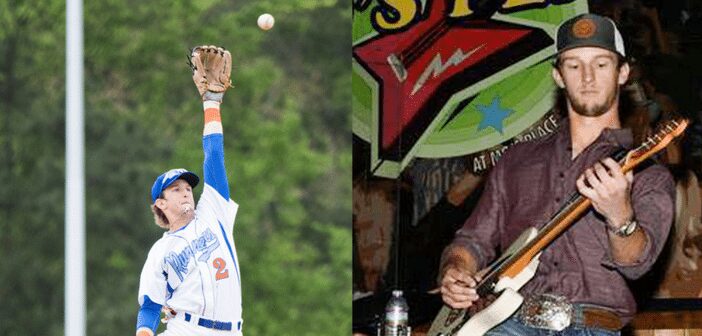
So, which came first? The baseball glove or the guitar?

“Definitely the baseball glove. I got my first one when I was three years old. The guitar didn’t come until I was 15.”

Hayden Baker’s love for baseball started early and never waned, taking him through a high school career at Katy High School before landing an offer with the Angelina College Roadrunners and, later, with Houston Baptist University. He experienced a slight setback his freshman season at AC: The dreaded Tommy John surgery on his throwing arm, leaving him watching from the dugout for the first time in his life.

The time away turned out to be a blessing. Not only did his arm heal, but the restrictions on playing baseball allowed him to turn his attention toward his second love: Music.

Baker said he picked up the guitar when he was 15 years old. At the time, it was more about “impressing the girls” than any thought of a career. He kept messing around with it, trying different things – and then came a night he credits with smacking a grand slam of an epiphany.

“Two years into learning guitar, I felt I was getting a little better,” Baker says. “Then I saw Brad Paisley in concert and saw what he was doing, playing lead guitar and singing while running around in the dirt. I thought, ‘That’s the kind of thing I want to do.’ I went home and bought all his albums, and that’s the style I wanted to learn. He can flat play.”

So can Baker, apparently. The Texas Country Music Association has him listed among its Top Five Emerging Artists. In fact, the voting – fueled by fans – is ongoing, and will end on August 5. (Fans can vote by visiting www.texascountrymusicassociation.org and clicking on the “Texas Country Music Awards” link until they find “Emerging Artist.”)

Baker’s first single, “How It Used to Be” was a hit on both iTunes and Spotify. East Texas music fans heard the song frequently on local radio stations. The song even played over the loudspeakers at Roadrunner Field, often leaving teammates pointing at him while Baker shook his head and grinned from his shortstop position.

For a short while in his young life, Baker says he juggled the two activities relatively easily, never considering a point at which he’d have to choose one or the other. Not until last year, when he was scheduled to return from the surgery, was he forced to think about a choice.

“The thought came last baseball season in the fall,” Baker says. “I wasn’t slated as a starter and wasn’t seeing much playing time, so I was actually thinking my baseball career was coming to an end and I’d have to make my decision quicker.
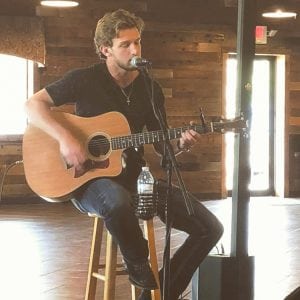
“Then we (the Roadrunners) had a good spring, and I got an offer from HBU,” Baker says. “I was pretty pumped to learn I’d still get to play baseball and graduate from college.”

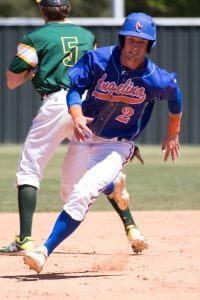
Baker earned Second-Team All-Conference honors for AC in 2018, batting .323 while knocking three homers and driving in 21 runs. He helped the Roadrunners to a post-season run in his one and only year wearing the orange and blue.

The time away with the injury didn’t squelch his drive. If anything, the surgery helped boost his resolve in both areas of his life.

“I knew I wasn’t going to quit baseball,” Baker says. “I was committed to the rehab. The doc said I had to have the surgery if I wanted to play, and I told him to put me down for the next week. That’s weird for me because I’m not a surgery guy. I went in full-force. The part that helped me pull through was my teammate Sean Bergeron. We went through surgery at the same time, and I’m glad we had each other to pull us through the rehab process. It’s slow and it’s boring.

“But that’s when I also started to improve as a musician. That was when I took the step from playing for fun to trying to do music for a living. I had nothing else to do while I was rehabbing. I’m telling you, I have to thank the Restoration Wine Bar in Lufkin. They welcomed me in and gave me a place to play, and it helped me build a lot of confidence.”

Currently, Baker is still playing live shows in the Houston area. He and his band are in the studio preparing to release a six-song EP, and his hit “How It Used to Be” will get some refining for inclusion on the album. The way the song came about is yet another story for Baker to tell later.

“It really is a funny story,” Baker laughs. “That’s the first song I ever attempted to write in full. I ended up co-writing with a guy I still have yet to meet. He plays baseball for Florida State, and his name is Carter Smith. He found me on YouTube, saw my guitar videos, and he shot me a message saying we should get together some time. In the spring of my freshman year of college, we got together on Face Time and wrote ‘How It Used to Be’ in two hours.

“Now that we’re in the studio, I’m learning not all songs get written as fast as that first one. Some take months, some take weeks. It threw me off since the first one was so easy to write. You write another one and think it’s not good at all, so you keep going back and forth on it. I learned fast that getting that first song together in two hours isn’t the norm.”

Trying to juggle two time-consuming activities – along with keeping up with his college course load (Baker notched a 3.9 GPA while at AC) – presents unique challenges. Baker says it’s a matter of focusing on one thing at a time.

“It all comes down to time management,” Baker says. “I’m the kind of person who wakes up in the morning trying to find a way to make myself better, whether it’s music or baseball. I guess my philosophy is with baseball, especially at this level, there’s stuff you absolutely have to do, and you can’t skip out on any of it. You have to make sure you do those things first. When it’s time for baseball, it’s time for baseball, and you have to forget the music. Then when it’s time to get up on a stage, you have to forget the baseball. I’m still trying to find my way, but I’ll tell you what, it sure is fun.”

Going back and forth also guarantees potential conflicts. The possibility of playing a gig on the same day as a game has already presented itself, according to Baker.

“I got an offer to open for Mark Chesnutt at the Houston Rodeo Cookoff for a decent amount of money on a big stage,” Baker says. “I turned it down because it’s smack-dab in the middle of baseball season and on a Saturday.

“When I told my coach (HBU assistant coach Russell Stockton) about it – he actually came to one of my shows last week – he told me to let him know any time I had something like that come up. It’s really, really cool that I have the same support here that I had at Angelina College. (AC head coach) Jeff Livin came out to see me play in Lufkin a few times, and he’s a good, good man. He was so encouraging about everything.”

Inevitably, Baker is asked to compare his two activities. Which is harder? Trying to come up with a clutch hit, or trying to please an audience?

“Man, that’s hard to say,” Baker muses. “Baseball’s a different animal. You’re naturally going to fail at the plate at least 70 percent of the time. Pleasing an audience is no easy task, but I’ve learned that a little bit of a crazy guitar solo usually catches their attention. I’d say the music part is a little easier. Baseball’s so much of a challenge all the way around.”

The time for choosing can wait. Right now, a hard-working young man is living two dreams at once.

“My philosophy is that I’m going to do both until somebody tells me to stop,” Baker laughs. “Then I’ll probably keep trying with at least one of them.”

The e-mail address for AC’s Sports Information Director is gstallard@angelina.edu.

Eleventh Annual Guy Davis Golf Tournament Scheduled for August 18 at Crown Colony Calcutta Set for August 17; Proceeds to Benefit Angelina College Athletics

0

The 11th annual Guy Davis Golf Tournament will take place on Saturday, August 18 at Crown Colony Country Club in Lufkin – and the goal is to surpass the highly successful 2017 tournament.

Last year’s event featured 45 teams composed of 225 golfers, with the help of nearly 70 volunteers. The Lone Star Motors team of Len Phillips, Rock Lamb, Michael Phillips, John Portwood and Marco Maldonado won the overall championship.

Hosted by the Roadrunner Foundation, the golf tournament generates funds for Angelina College Athletics programs along with scholarship donations to area students.

Tournament organizers are currently seeking teams and hole sponsors for the five-man scramble format, scheduled for shotgun starts of 8 a.m. and 2 p.m. Hole games and prizes include Hole in One (for a 2018 Toyota Tundra, a $10,000 prize from Moore Bros. Construction/Contractor Supply and a big prize from Ross Motorsports), long-drive and closest-to-the-pin contests, with prizes for those events as well.

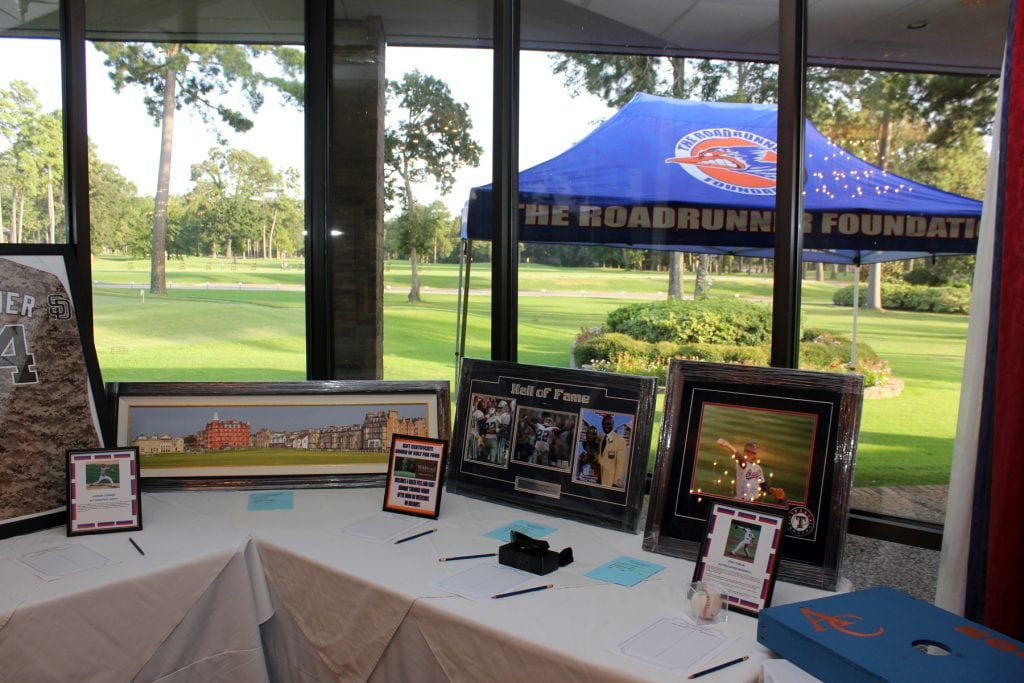
A Calcutta for the tournament is set for 6 p.m. on Friday, August 17, also at Crown Colony, with a silent auction featuring various sports collectibles and other valuable items.

Proceeds from the tournament go to the Angelina Roadrunner Foundation in support of Angelina College athletics, in addition to providing scholarships to area students. Donations are tax deductible.

Sponsorship opportunities are still available. Current sponsors for this year’s event include presenting sponsor Brookshire Brothers, Strata Roofing (Calcutta/Dinner sponsor), Renfro’s Sausage (Saturday lunch sponsor), Loving Auto Group (Calcutta/Auction, Hole-in-One sponsor), Ross Motorsports (Hole-in-One sponsor), Bancorp South (beverage sponsor), Lufkin Coca Cola (beverage sponsor), Goodwin Lasiter Strong (Long Drive sponsor), Security & Guaranty Abstract (Closest to the Pin sponsor), Etech (Closest to the Pin sponsor), Southside Bank (Longest Putt Sponsor), Angelina Excavating – Joe McCleskey (Flag sponsor), Carroway Funeral Home (Flag Sponsor) and Moore Brothers Construction/Contractor Supply (Hole in One sponsor).

A registration form and information flier is located on Angelina College Athletics web site at http://angelina.prestosports.com/information/directory/guydavistourney. For more information, contact Steve Hall at 936-635-2126 or email at steve@jrdmail.com

or Dennis McCullough at 936-414-1114.

The e-mail address for Angelina College’s Sports Information Director is gstallard@angelina.edu

Sen. Nichols ‘My Five Cents…’

0

Did you know in July of 1832, a band of settlers in Nacogdoches attacked the town’s Mexican garrison and took back the town in answer to an order requiring Texans to surrender their weapons? While not well known, the Battle of Nacogdoches, not only freed East Texas from Mexican military rule, but also served as the starting point of the Texas Revolution and led to our state becoming what it is today.

Here are five things happening around your state this month:

1. Texas Top State for Business

Earlier this month, CNBC announced that Texas had been named America’s top state to do business in 2018. Texas was given top scores for quality of life, cost of living, technology and innovation. In addition, our great state’s access to capital, a business friendly environment, the cost of doing business, as well as opportunities to receive a top grade education helped achieve this high ranking. In the last decade, Texas has added over 1.7 million jobs, with almost 350,000 of those in the last year. Texas is home to some of the nation’s largest privately-held companies, including supermarket H-E-B and the Neiman Marcus group.

2. New Revenue for Texas

In July, Comptroller Glen Hegar told state lawmakers that due to the rise of oil prices and production, as well as an unexpected increase in sales tax dollars due to spending by Texans, the estimated revenue for the state is expected to increase by approximately $2.8 billion. Comptroller Hegar has also predicted there will be almost $12 billion in the Economic Stabilization Fund (also known as the Rainy Day fund) at the end of fiscal year 2019. This would be the largest ending balance in the Rainy Day fund’s history. This is all good news as the Legislature begins its planning for the upcoming legislative session. While determining the state’s budget for the next biennium, we must consider our priorities and covering the cost of damage caused by Hurricane Harvey.

3. Funding for Hurricane Relief

It has been almost a year since Hurricane Harvey made landfall with its historic rain falls and caused extensive damage across much of Texas. The federal government recently announced that Texas will receive more than $5 billion from the federal government for flood control projects, repairs and studies. Almost $4 billion of this will go towards constructing almost 27 miles of coastal levees in southern Orange County and to shore up existing coastal levees in Port Arthur and Freeport. The rest of the funding will be spent on various studies and flood control projects around the Houston area. The Federal government has also allocated $1.9 million to the Army Corps-General Land office to be used for a study to determine which projects will best protect the Texas coast from future hurricane storm surges.

4. Election Maps

In June, the U.S. Supreme Court ruled in favor of allowing Texas to keep its congressional and state district maps. However, there was one exception, as they believed racial discrimination was used when drawing one House district in North Texas. The case was then sent back to a lower court for final decisions. That court, a three-judge federal panel in San Antonio, recently ruled that all of the state’s district maps should stay in place for the 2018 elections, despite the issues with the one House district. The state, and those who oppose how the maps were drawn have until August 6 to share with the court what changes, if any, should be made to the house district in question. If not before, the maps will be reconsidered and redrawn in the 2020 census.

5. Tax Free Holiday

As the beginning of the school year draws near, it’s time to start thinking about back to school shopping. Timed to help families during back-to-school shopping, the annual sales tax holiday will provide customers the ability to buy clothing and school supplies priced under $100 without paying state or local taxes.

This year it will be held on August 10-12th. The law exempts most clothing, footwear, school supplies and backpacks priced under $100 from sales and use taxes, which could save shoppers about $8 on every $100 they spend. The law also allows layaway purchases of these items to qualify for the sales tax exemption. All sellers in the state are required to honor the sales tax holiday, so it’s a great time to get prepared for the upcoming school year while saving some money in the process.

5 Ways to Blow Your Next Job Interview

0

The unemployment rate in the U.S. is at an all-time low, according to Bureau of Labor Statistics, and many employers are struggling to find skilled workers. To overcome the challenge, companies are connecting with job candidates using emerging technologies, like video interviewing.

Video interviewing can be daunting, and it’s easy to make crucial mistakes that will ensure you don’t get that next job — but it doesn’t have to be!

To prepare, keep in mind these five “don’ts,” from the experts at Randstad US, one of the largest HR services and staffing companies in the country.

1. Don’t forget to wear a shirt. Rather than sitting across from the person conducting your interview, you can sit in whatever quiet place you choose. However, it’s still important to dress the part. Your appearance should be similar to how you would look for an in-person interview.

“Under no circumstances should you complete a video interview in a t-shirt — or worse, without a shirt at all. Yes, we have actually seen this,” says Greg Dyer, president of Randstad Commercial Staffing.

2. Don’t choose the wrong location. Coffee shops can be a great place to catch up on work, but they’re not so great for video interviews due to background noise and other distractions. Opt for a quieter location, like your own home. If you live somewhere close to construction or noisy sirens, look into reserving a room at your local library. And, if all else fails, consider investing in a noise-cancelling headset. Don’t let a jackhammer upstage you!

3. Don’t forget to tidy up. Before you settle into your interview, take stock of what’s going on behind you. It may be time to take down that psychedelic band poster or toss those empty soda cans sitting around. You should be the star of your interview — not your clutter.

4. Don’t pick your nose. Don’t do anything during your video interview that you wouldn’t do during an in-person interview. This means picking your nose, responding to text messages, and yes, going to the restroom. Approach your video interview with the same level of professionalism that you’d approach an in-person interview. And if you live in a busy household, don’t forget to lock the door. You don’t want your family members barging in mid-interview.

5. Don’t let your battery die. You really only need two things to successfully complete a video interview: a phone or computer with a camera and a reliable internet connection. Avoid sabotaging yourself, and make sure your device is fully charged and your internet is running without disruption prior to the start of your interview.

“The growing use of video interviews is a no-brainer in today’s always-connected world,” says Dyer. “Once you get past the learning curve, it’s a win-win for both job seekers and employers. Video interviewing is convenient and, best of all, fast. Most video interviewing technologies work on smartphones, which makes an interview on your 30-minute break much more feasible.”

For more tips and tricks to help you land your dream job, visit randstadusa.com.

Job searching? Be prepared for the possibility of a video interview and get a leg up by learning to avoid the most common mistakes.

-Statepoint

$21,000 Given in Scholarships by CHI St. Luke’s Health-Memorial Volunteer Auxiliary

0

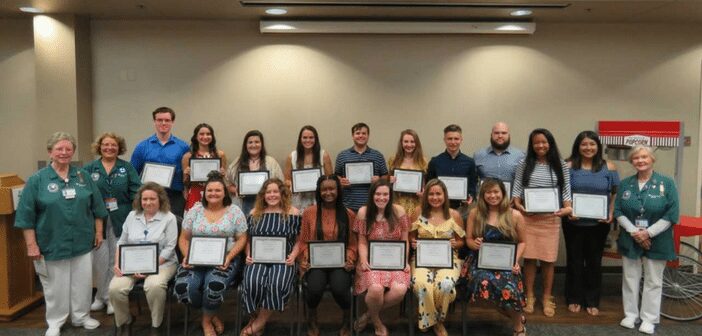
LUFKIN, TEXAS … Twenty-one scholarships were presented at the CHI St. Luke’s Health-Memorial Volunteer Auxiliary’s annual Daisy Wadsworth Memorial Scholarship Awards Dinner on Wednesday, July 18. The $1,000 scholarships are provided through the Volunteer Auxiliary’s popcorn sales and tips from the hospital’s valet parkers. This is the largest group of recipients since the scholarship program’s inception in 1986.

The scholarship program is named for Daisy Wadsworth, a longtime volunteer who served as the Auxiliary’s president nine times and who had a passion for those who wanted to work in the medical field. For that reason, all scholarship recipients must pursue a degree in the medical field in order to qualify.

Pictured from left to right, seated: Carissa Poe, Skyelar Warden, Lyndsey Griffith, Ashanti Handy, Katelyn Frankens, Mariel Garza, and Danielle Gumapac. Standing: Gloria Gregory, Volunteer past-President; Debbie Perkins, Selection Committee Chairperson; Tristan Simms, Brianna Johnson, Sarah Phillips, Whitney Flournoy, Josef Harris, Stephanie McClain, Christopher Schmidt, Cody Eastepp, Danielle Maiquez, Linda Ramirez, and Jean Mizell, Volunteer Auxiliary President.

Olives

0

There are fruit trees that simply won’t grow here due to our climate. That is an easy fact to acknowledge.

Several decades ago, everyone knew that olives wouldn’t grow in Texas. Today, there are commercial olive groves in the southern part of the state.

And then well-knowing folks said that olives could never grow in eastern Texas. To date, I have it on good authority that there is now an olive grove being grown in southeast Texas. I don’t know how they made it through the cold spell from last winter but I’m anxious to find out.

Let’s be clear from the get-go, olives may certainly be a stretch due to our occasional freezes in a typical winter.

Winter climate is the most important limiting factor in the distribution of the olive in Texas. Temperature controls growth, reproduction, and survival of the olive.

Gradual temperature change is a friend of the olives.

Sudden swings in temperatures in our winter months is a harsh enemy.

The olive that I speak of should not be confused with the Russian-olive (Elaeagnus angustifolia) or the Anacahuita (Cordia boissieri), which is sometimes called the Texas or Mexican Olive. Both of these plants belong to different botanical families. The olive, however, is related to the Desert Olive (Forestiera sp.) and the American Wild-Olive (Osmanthus sp.). The fruits of these other two “olives” are not edible.

Olives begin growth after mean temperatures warm to 70 degrees F in the spring and continues until temperatures drop below this point in the fall.

Unlike the fruit trees that we are familiar with, such as the peach, the olive does not set fruiting buds in the fall. Instead, the olive will only set flower buds after being exposed to cool night (35-50 F) and mildly warm day temperatures (<80 F) during the winter. This unique warm day/cool night weather pattern is called “vernalization” and is essential for fruit bud development with the olive. And olive varieties differ in the range of tolerable temperature that will satisfy this requirement.

No problem yet for our part of the world, right? We can have cooler nights and warmer days.

Olive trees must experience vernalization to produce fruit. Different from chilling hours for most fruit trees and different from the USDA Zone 8b that Lufkin is in for the expected minimum winter temperatures, “vernalization” is a cold period where specific plants not only go dormant but must be exposed to a certain number of days with minimum temperatures or they will not flower.

Think of cold hardiness in olives as similar to citrus, improving with tree age and increased trunk size. It will sustain damage to leaves and small stems at 17º F and more severe damage at 12º F. The tree can be killed to the ground with temperatures below 10º F, but mature trees can re-grow from the underground crown following a severe freeze.

Survival and freeze damage of olives depends on how long the temperature stays low as well as how well the trees are hardened off. Hardening off is a term that describes how plants slowly adapt to cooler, then colder weather. A sudden drop in temperature could from 95 F to 25 F may be enough to kill olive trees.

According to studies conducted over the years, there are very few sites that meet the climactic requirements of the olive in Texas. Studies from Texas A&M University indicated that the olive could be grown as a fruit tree in large parts of East, Central, and South Texas.

Great news, but the same studies determined that the trees would freeze to the ground every three of ten years.

Once established for 3 to 5 years, olive trees gain more cold hardiness, however Texas climatic conditions are very erratic particularly in the middle of the winter. It is not uncommon for warm spells that plummet to freezes. Such events lead to the loss of cold hardiness or acclimation of the olive trees.

So if you are still interested in experimenting with olives in your landscape, consider this: the general rule of thumb is that young trees will be killed in the winter when the temperature drops below 25º F, small branches on mature trees will die when the temperatures drop below 22º F, mature trees can be killed to the ground in the winter when the temperature drops below 15º F.

The top variety to try is ‘Arberquina’. It has very good cold hardiness, grows 12-15 ft. tall, is self pollinated and is the one that has seen the most success in Texas. The oil from it is very sweet and the fruit can be brined.

For table olives, try ‘Arbosana’. It is rated moderate for cold hardiness and needs ‘Arberquina’ for pollination.

How to Create and Spread Hope in Your Daily Life

0

With seemingly constant negative news reports telling of school shootings, suicides and more, you may feel like there is little to feel hopeful about these days, but experts say that having hope can be a powerful tool in good times and bad.

“Whether you’ve lost a job or a loved one, or you’re experiencing general feelings of despair, hope can give you strength and renew your potential and purpose,” says Dr. Rosalind Tompkins, founder of the National Month of Hope. “Finding hope in everyday challenges is the first step to creating a solution.”

To help you find hope in your life, as well as spread hope to others, Dr. Tompkins, a recognized “Hopeologist” and life coach offers the following advice.

• Take a Hope Break. Schedule five minute “hope breaks” into your normal routine. Find a quiet place, take five to 10 deep breaths and think about good things happening, instead of the worst-case scenario. Make an affirmation and speak it out loud. Repeat as often as needed.

• Take Action. Set goals and move forward, focusing on results. Surround yourself with people who believe in you and your progress.

• Volunteer. Spread hope to your community by giving time, food and money to those in need. Whether you clean up a local park, read to children in schools or volunteer in a food pantry, you’ll be spreading hope to those who need it, which can help you feel more hopeful too.

• Have a Chat. Is there someone in your life who needs hope? Prepare yourself for a conversation with that person by turning on your own belief that things can get better. Start the conversation with something like, “I care about you and wanted to check in with you to see how things are going.” Ask them to share what they are going through and be prepared to listen. Let them know that you are there for them and reinforce feelings of hope.

• Get Involved. In the spirit of spreading positivity, Dr. Tompkins has a goal of seeing 10,000 “Hope Connections” take place throughout 2018. After talking about hope with a loved one, you can share your story by joining the conversation online using #HopeChallenge. To learn more about the movement to make 2018 the Year of Hope, visit makeahopeconnection.com.

While despairing often comes naturally in times of personal and public crisis, consider empowering yourself to move forward by adopting a hopeful attitude.

-Statepoint

Junior League of Lufkin’s Camp Get Fit & Kids in the Kitchen, Cooking up a Fun and Healthy Summer

0

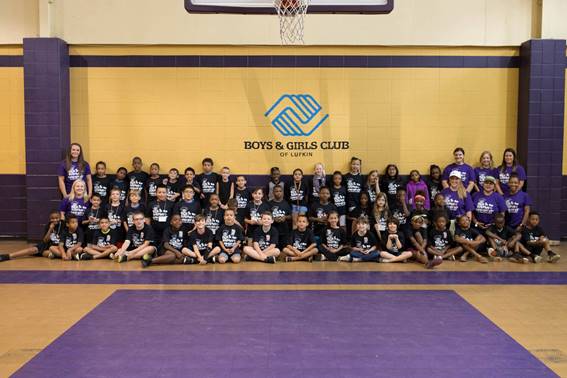
Childhood obesity is a growing problem nationwide, especially in Texas. The National Survey of Children’s Health says 21.3 percent of Texas children are overweight or obese, compared to the national average 16.1 percent. Children’s health and wellness has been a key issue for Junior Leagues across the nation since their founding in 1901. The Junior League of Lufkin is combating the rise of childhood obesity and health issues with programs, Camp Get Fit and Kids in the Kitchen, aimed to help children make healthier choices. Camp Get Fit and Kids in the Kitchen is held during the summer for kids entering 3rd-5th grades. The camp wrapped up last week at the Boys and Girls Club of Deep East Texas – Lufkin. Campers participate in cooking, exercise, and health awareness with a focus on the importance of making lifelong healthy choices.
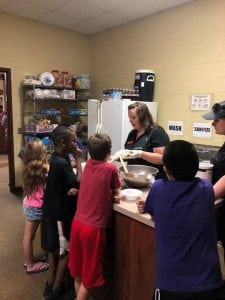
According to Texas Health and Human Services, being overweight increases a person’s risk of heart disease, stroke, high blood pressure, Type 2 diabetes, certain cancers, and other serious medical conditions that impact quality of life and have substantial economic consequences for our healthcare system. The increasing prevalence of overweight and obese children and adults is a serious concern for Texas. Angelina County ranks 193 out of 243 counties in Texas for overall health outcomes, and 243 out of 243 in health behaviors. The Camp Get Fit and Kids in the Kitchen programs are not just about learning tips for nutrition; they also emphasize healthier habits and encourage participants to have fun and stay active. The weeklong camp also provides an interactive week of fun for an underserved population that may not be able to experience these type of summer activities otherwise.


Camp Get Fit/Kids in the Kitchen incorporates life skills like reading a food label and preparing healthy snacks into a fun environment. Time is spent on integrating food and fitness into this week-long summer camp to emphasize the importance of healthy choices. This program is made possible with the support of the following partners: Changing Lives Dance Center, Brookshire Brothers, Tomé Catering, Alcohol and Drug Abuse Council of Deep East Texas, The Coalition, Dollstar Dance & Fitness/Parks and Recreation with City of Lufkin, FITT LIFE, Dr. Crowley D.D.S., and Burke.

“It was a wonderful week at the Boys and Girls Club all made possible by the dedication of the Junior League of Lufkin committee members and our wonderful partners,” said Maci Herrington Dover, Junior League of Lufkin program chair for Camp Get Fit/Kids in the Kitchen.

The Junior League of Lufkin is an organization of women committed to promoting volunteerism and to improving the community through the effective action and leadership of trained volunteers. Its purpose is exclusively educational and charitable. The League’s vision is to enhance the lives of children and women in the community through diverse projects and fundraising efforts.

Kids in the Kitchen is part of a national campaign of the Association of Junior Leagues International. Find our more here: http://kidsinthekitchen.ajli.org/ . To learn more about the Junior League of Lufkin, please email juniorleagueoflufkin@hotmail.com, visit juniorleagueoflufkin.org or follow on facebook.com/juniorleagueoflufkin/.

Tips to Have a Summer Adventure Without Leaving Your Backyard

0

With a few supplies and some inspiration, your backyard can be the site of a summer adventure. Here are a few ways to slip into vacation mode without even leaving home.

Take a Camping Trip

Whether all the campsites at your favorite park are booked solid or you just want to skip the traffic jam heading out of town, you can recreate the fun of a camping trip in the convenience of your backyard. Invite friends to pitch tents and then spend the evening grilling, having sing-a-longs, making smores, playing games, telling ghost stories and stargazing.

With the security of electricity and the convenience of indoor plumbing just a hop, skip and a jump away, this is a great idea for families with young kids who have never camped before or anybody who prefers the luxuries of “glamping.”

Go for a Dip

Love swimming but want to dodge crowds and avoid locker room hassles? Turn your backyard into your own swim club. Nearly any backyard can accommodate an easy-to-setup Intex pool. Available nationwide at a variety of big box, club, sporting goods and specialty stores as well as numerous online retailers, Intex offers both smaller options that are great for kids, such as a unicorn-themed spray pool with a 40-gallon capacity, as well as larger options. Prism Frame pools available in three shapes and sizes to accommodate people of all ages, feature filtration systems with Hydro Aeration Technology to remove sediment and keep pool water crisp and free of debris. Pull out some deck chairs, grab some towels, pool toys and some shades and you’ll be all set.

Movie Night

Enjoy your favorite stars under the stars. With a simple projector set-up, you can be the host with the most by turning your backyard into a movie theater. Pick a crowd-pleasing summer classic and get the neighbors involved. If you’re short on seating, consider inviting guests to set up their own blankets and lawn chairs and make it a potluck picnic.

If you want something exciting to do but are not in the mood to travel, just remember to look no farther than the backyard. With a little imagination, there are plenty of adventures to be had on any budget and in any sized space.

-Statepoint

How Many Americans are Finding Affordable Housing

0

With the cost of housing continuing to rise faster than wages, it’s no wonder that many Americans nationwide are struggling to make ends meet. Luckily, solutions already exist to address the affordable housing shortage, say experts.

For example, more than 22 million people in the U.S. now live in manufactured housing — homes built to a federal standard in factories and placed on a homeowner’s land or on rented lots in manufactured home communities, according to the Manufactured Housing Institute (MHI). In many parts of the country, homes like these are the least expensive kind of housing available without a government subsidy. The cost to buy a manufactured home averages about $70,600, compared with $286,000 for a single-family site-built home, not including land costs.

In response to growing market demand, almost 93,000 new manufactured homes were built in the U.S. in 2017, an approximate 15 percent increase over 2016, according to MHI, but this is still not nearly enough to meet the nation’s affordable housing needs, according to experts. Advocates say that zoning restrictions and other rules and regulations in many areas are preventing manufactured housing from closing the gap — as certain jurisdictions only allow manufactured housing in locations far from town centers and other jurisdictions have considered banning them altogether.

“Part of this bias may be based on the negative stereotype of earlier generations of manufactured housing, however, today, our homes are built with quality construction materials to meet rigorous federal standards for safety, installation and construction,” says Richard Jennison, president and CEO of MHI.

What’s more, today’s manufactured housing includes features that today’s homebuyers want, such as luxury bathrooms, vaulted ceilings and state-of-the-art kitchens with energy-efficient appliances. Often situated in communities with swimming pools, playgrounds and clubhouses, they can be a very attractive option for families and retirees seeking affordability. To learn more visit, manufacturedhousing.org.

“At a time when there is a great need for high-quality, affordable housing, today’s manufactured homes are an effective solution for many American families and communities,” says Jennison.

-Statepoint