


Home Blog Page 684

Raising Turkeys

0

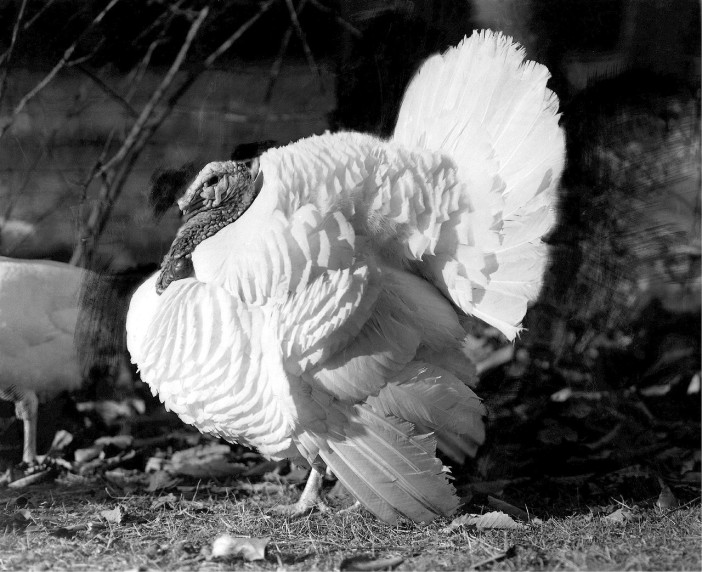
It’s a safe bet you probably had turkey for Thanksgiving and have been having some leftover turkey since then. While we all enjoy a turkey sandwich throughout the year, the turkey industry certainly enjoys the holidays. It is estimated that we eat just over 16 lbs. of turkey each year and the US produces about 6 billion lbs. each year.

Turkeys are native to North America. They are a type of poultry that belong to the order Galliformes, along with chickens. There are two species of wild turkey: the North American Wild Turkey (Meleagris gallopavo) and the Central American Ocellated Turkey (M. ocellata).

Although domesticated over 500 years ago, it was only in the 20th century that turkeys were fully utilized for their meat. Prior to this, turkeys were selected for their plumage and exhibited in poultry shows. Turkeys were taken to Europe by the Spanish, who had found them as a favorite domesticated animal among the Aztecs. The Aztecs used turkeys as a source of protein (meat and eggs) and used the feathers for decoration.

The most common variety grown commercially is the Large White, but there are many other breeds of turkeys to choose from.

Turkeys used in breeding are raised to 28 weeks of age under environmentally controlled conditions. Controlling the length of daylight is extremely important. Breeder turkeys are never allowed more than 10 hours of light daily as they are growing so they are not prematurely stimulated to lay eggs. During the 28 weeks of grow-out, hens will grow to 24-30 lbs and eat about 102 pounds of feed. Males will grow to 50-70 pounds and eat over 200 pounds of feed.

Since natural mating puts the female at risk of injury commercial meat turkeys are all bred artificially. This is unique in the poultry industry. Toms are raised separate from the hens, semen is collected from the toms, and hens are artificially inseminated once every seven days depending on fertility rates. Females begin producing eggs around 28 weeks of age and will lay efficiently for 26 weeks. An average turkey breeder female will lay 100-130 eggs per laying cycle.

Poults (day old chicks) are placed in a rearing house where they are raised under environmentally controlled conditions. Ventilation of the turkey house is critical for controlling temperature and humidity in the grow-out house. Birds used solely for meat production are grown to different sizes depending on the market that they are meant to fill. On average, a hen turkey will consume around 35 pounds of feed and reach 14-20 pounds in 12-14 weeks. Toms will consume about 90 pounds of feed and reach 35-42 pounds in 16-19 weeks.

According to the most recent numbers I could find, US growers raise 248.5 million birds each year. And unless you had ham or some other fare, one of those birds was served at your Thanksgiving table.

Nutritionally, one serving of turkey has 291 calories, 13.6 g fat, 0 carbs, and just over 39 g protein. This makes turkey a relatively inexpensive source of protein, with more protein per gram than both chicken and beef, while remaining lower in fat and cholesterol than other meats. It also delivers vitamins and minerals, especially niacin, which facilitates the conversion of food into available energy, and Vitamin B6, which is important for the health of the nervous system. Turkey also has selenium, which is essential for proper thyroid and immune function.

Refrigerating and freezing the turkey from a few days ago is your choice – but it is recommended to refrigerate within 2 hours – use within 4 days – or freeze for up to 4 months. With store bought fresh turkey, you have 2 days to cook. And if you never got around to thawing and cooking your frozen turkey, you can keep it for 12 months in the freezer.

As for me, I’m headed back to the fridge and wondering what I can put in my turkey sandwich this time. Pickles and mustard?
Bruce Miles Receives Texas Forestry Association’s Ed Wagoner Leadership Award

0
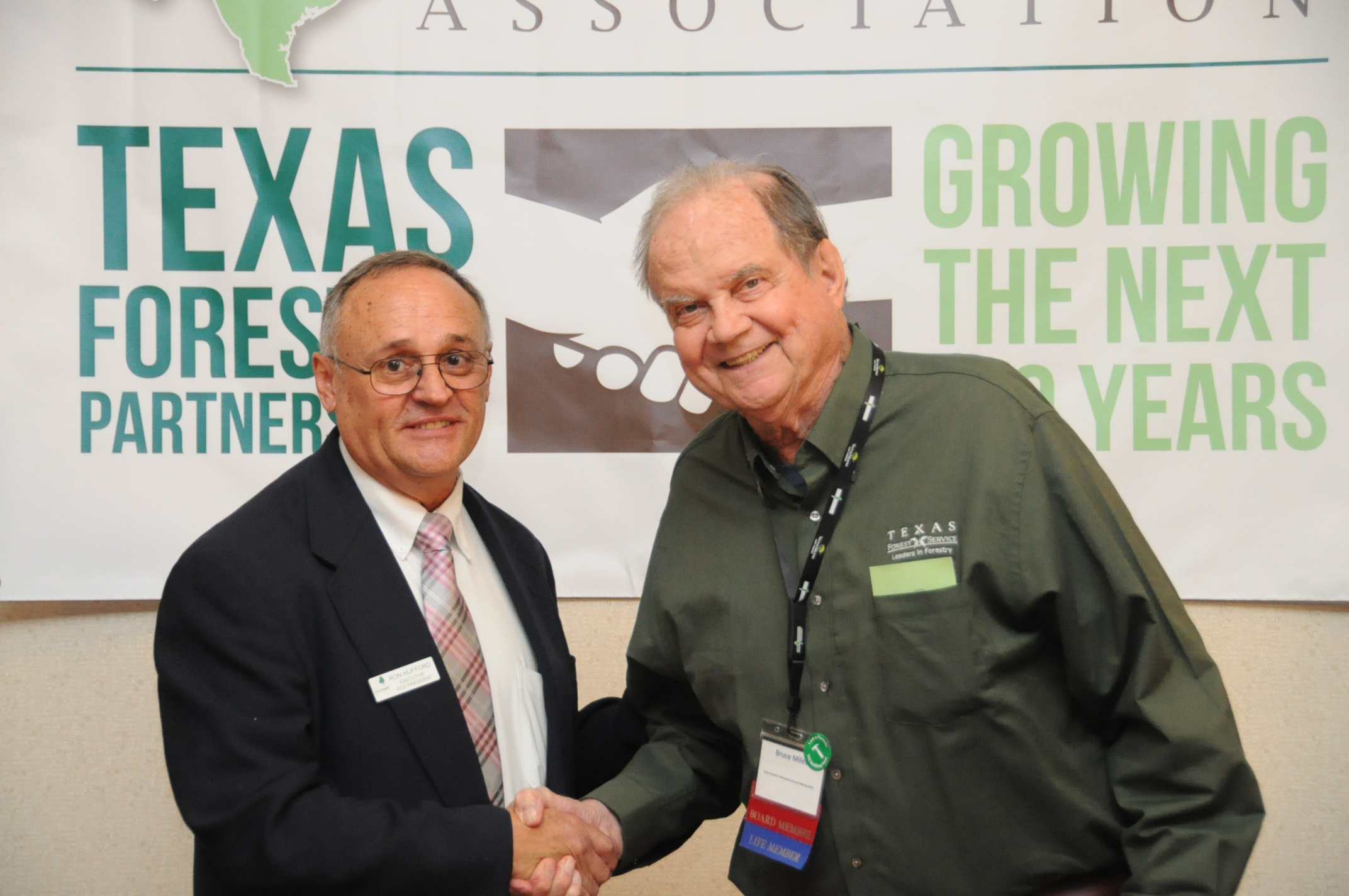
Ron Hufford, TFA Executive Director, presents Bruce Miles, right, with the Ed Wagoner Leadership Award at the 2016 TFA Annual Convention on Oct. 22 at the Hilton College Station. Photo: Misty Boggs | MSGPR

LUFKIN, TEXAS – Bruce Miles was named Texas Forestry Association’s Leadership Award winner at the Association’s 101st Annual Convention held at the Hilton in College Station, Texas, on October 22, 2015.

Miles received the award in honor and recognition of his dedication to the profession of forestry, for his leadership as the sixth Director of the Texas Forest Service, and for his dedication, leadership, and support of Texas Forestry Association (TFA) programs.

As a member of the TFA since 1959, Miles has been a leader in the forestry industry for many years. He became the 6th director of the Texas Forest Service in 1981. He served as the Director for 15 years and retired in 1996 with 37 years of service.

Miles is credited with providing the leadership and support for the private land reforestation in East Texas, which reached record heights during his era. He also battled against environmentalist groups bent on eliminating forest management on the National Forests of Texas. He was elected into the Texas Forestry Hall of Fame in 2008 and is a TFA Life Member.

“During his tenure as State Forester, he took the Agency beyond the ‘pine curtain,’ said Bill Oates, past president of TFA. “The urban forestry program grew to include all of the major metropolitan areas of the state; the Cooperative Oak Wilt Suppression program was established in Central Texas, and the Agency began responding to large wild land fires in Central and West Texas; beginning with (at the time) the largest wildfire event in Texas history; the “Big Country” Fire at Albany. He also expanded our support of volunteer fire departments across the state.

The Ed Wagoner Leadership Award recognizes a TFA member, a community leader or public official who has contributed to the success of the association’s programs and the advancement of the forestry community.  The award recognizes the high standards of leadership of Ed Wagoner, who served as the Executive Vice President of TFA beginning in July of 1955 until his retirement in December 1983.  Chosen by the TFA President, the award is given to an individual who has continued a high level of involvement and leadership in TFA for many years.

“He is an honest, dedicated, selfless, loyal, and compassionate leader,” said Oates. “Those who know him and who have worked with him simply know him as ‘Bruce.’”

Texas Forestry Association Launches Accredited Forester Program

0

LUFKIN, TEXAS – Texas Forestry Association (TFA) has launched a new program, aimed at providing accreditation for foresters while simultaneously creating a network for landowners to call upon when looking for natural resource professionals.

The Texas Accredited Forester Council has been established to provide accreditation on the state level. The credentials obtained by becoming a Texas Accredited Forester are backed by TFA’s hundred years of experience and partnerships.

“The Texas Accredited Foresters credentials are an asset for both landowners and foresters,” said Ron Hufford, Executive Director of TFA. “By obtaining these credentials, foresters are able to clearly show they have the educational background, knowledge and experience in land management, as well as the integrity, to help landowners make informed decisions about their resources.”

The accreditation requires a Bachelor’s of Science degree or higher in Forestry from a school with a professional curriculum approved by the Society of American Foresters or approved by the Texas Accredited Foresters Board, have five or more years of professional forestry experience, maintain good standing in accordance to the Texas Accredited Foresters Code of Ethics, apply Best Management Practices, and meet continuing education requirements.

“In Texas, Forestry is a powerful legacy and we want landowners to know they have a credible asset in the Texas Accredited Forester,” said Hufford. “The Accredited Forester upholds a responsibility to manage natural resources sustainably for current and future generations.”

For landowners, good forest management can revolve around different objectives. Whether it’s for a source of income or an inheritance, having an accredited natural resource professional with experience, scientifically proven methods, and a deep-rooted code of ethics can make all the difference.

To find out more about Texas Accredited Foresters, or to become an Accredited Forester, please call 936-632-8733 or visit TexasForestry.org.

Advice From A Turkey Dog

0

As we approach my favorite holiday of the year, I am reflecting on why I love Thanksgiving. Yes, the actual day is much less commercialized than it’s counterparts, my family gathers together in spot, lots of really good food, and the time to rest as the earth prepares for winter. However, like Douglas Green, author of the below article, I’m coming to the conclusion there is more I can do to enjoy this season of gratitude and rest. He’s got some great tips on how to do just that.


By Douglas Green

The word is out.  There’s something wrong with Thanksgiving.

As with so many other holidays, we have ruined its original concept with enforced “traditions:” Macy’s parade, turkey, stuffing and pumpkin pie, televised football. Don’t get me wrong, I like all of these traditions, I just don’t know what they have to do with gratitude, or with immigrants thanking locals for helping them survive.

The secret to re-legitimizing the day isn’t the food, or even family. It’s the name. Can we return to actually giving thanks?

To find a way, I turn to the greatest teachers on gratitude I’ve ever known: dogs. Never unselfish, but habitually giving credit whenever they see it due.

So, from their pure integrity, here are some canine keys to a true Thanksgiving:

1. Sit in your front doorway and look around.  A clever pooch knows this is the best place to relax. He can watch everything going on outside, while poised to jump if any food should drop. And it’s a perfect first stop on the gratitude trail.

What sort of home do you have? Do you rent or own? Does the doorway reveal a Downton Abbey landscape or a parking lot? Whichever, sit on that threshold and find twenty things you appreciate about your shelter and the astounding world outside it. If you can’t, you’re not looking hard enough.

2. Pretend that everyone in your life didn’t have to be there, or do what they’ve done for you. Then realize that’s the truth. We laugh at the enthusiasm pups show over the simplest things – their human, a treat or leash. But only because we take those sights for granted. What if you never assumed the one who’d cared for you would come home? What if you harbored doubts about ever tasting another cookie?

Then look at your present relationships. Your parents, your spouse, your friends, and even your dog. Take a moment to ask what your life would be like with any of them not there, or not caring about you.

Scary? Then take it further; focus on your love for them. Feel it till your heart could burst. That appreciation, that pain, is what dogs feel for us all the time. When they’re staring up from the floor, unable to intellectualize their feelings as we do. That’s being alive.

3. Whatever your religious beliefs, pretend you’re wrong. Dogs lack dogma. Their brains aren’t big enough to perceive a rationale for the universe. Dogs are neither theist nor atheist, sectarian nor agnostic.

Instead, they just appreciate. Do any of us honor the sun like a pup who shifts her sleeping to follow the rays? Do we run out after rains to absorb every enhanced scent?

Take a breath, close your eyes, and forget all that you believe about why the world is. And when you free your brain from the “why,” let it all roll over you: The enormity of outer space, the miracle of an ant, the luck of our proximity to the sun, the breathtaking complexity of your own body. And just try not to feel grateful.

4. Even if you absolutely, 100%, know it’s completely and totally wrong, pretend for just a wee moment that things are actually better today than they were a year ago. And see how many of them you can count. Have we ever been told as often that our world, our leaders, our lives are horrible? News channels screaming, rants on Facebook, forcing us to focus on lousiness. And then all the great people who’ve died, all the pollution, and get a load of what the kids listen to – it’s just garbage!

But if we put aside that all these worst-politicians-ever just lie and cheat, maybe we could remember that most of them, most of the time, are trying to do their best, and often get things right.

And are you happy about anyone who was born this last year? And how many new inventions reduce pollution? And have you noticed that all the music you like is still around, and maybe you’ve actually enjoyed one new song? So then, things are better, right?

Okay, maybe that argument doesn’t hold, but just give a moment to thanking the few things that you can agree have improved. If you can’t think of any, then admit that you have less brain than any dumb mutt, who has no trouble saying, “Right now, at this moment, that mushroom gravy I smell from two houses down is the most glorious creation ever!”

5. Embrace everyone, in the way they can accept. True gratitude should glow, not just in feeling thanks, but in expressing it, as dogs do every waking moment.

Now that doesn’t mean jumping onto the white dresses of frightened strangers. Own your social intelligence, like an obedience-school graduate, and treat people as you believe they would wish. Greet that work colleague with a warm handshake and smile. Embrace that chic friend with a peck-almost-on-the-cheek, that child with a warm hug, and your significant other with the passion you’ve stifled since Labor Day.

And who knows?  Maybe these actions will give you more to be thankful for next year.

Now these canine behaviors create their own rewards, but there’s a higher goal here, too.  And again, I learned it from a dog.

My pooch, Shirelle, had a fatal cancer, and was supposed to have died already; I lived in fear every time I left her for even a few hours. So this Thanksgiving, I gently took her with me to the home of some neighbors for their family celebration.

This couple had lost their own dog a couple of years before, and had embraced mine with an openness like grandparents. And Shirelle adored them, always lunging toward their door on our walks. I’d wondered why.

After chatting with some of their relatives, I realized the dog was missing. I checked room after room, until finally looking across at the open doorway to the kitchen.

There stood “Grandpa,” carving the turkey, with my big mutt sitting oh-so-politely at attention next to him. He carved slowly, methodically, putting one slice onto a platter for the family, handing the next slice to her, the next slice to the family, the next slice to her…spoiling the being I loved most just rotten.

Months of emotion welled up in my eyes. It was too goofy, too beautiful. He was thankful for her and she was thankful for him and I was thankful for both and for their gratitude to each other.

That should be our goal for the day. For thanks to go all the way around – everyone beholden to everyone – and the emotion overwhelming with its simplicity to where you realize that this is really the way the whole world should be, the way all of life should be.

About Douglas Green
Douglas Green is a psychotherapist, specializing in helping kids and teens build lives they can be proud of. He is also the creator and writer for AskShirelle.com, which helps kids, teens, parents, and others around the world with advice from the point of view of a friendly dog, and is the author of the new book, The Teachings of Shirelle – Life Lessons from a Divine Knucklehead. Learn more about Green at www.CavalleriaPress.com, and connect on Facebook and Twitter.

5 Things to Put on Your Year-End Financial Checklist

0

(StatePoint) The end of the year is a good time to wrap up financial loose ends and set priorities for the year ahead.

Here’s a checklist of timely financial to-dos.

Get Budget Savvy

Over three-fifths of Americans identify staying within budget as a “take charge priority” in a recent Lincoln Financial Group Measuring Optimism, Outlook and Direction (M.O.O.D.) of America study. (Lincoln Financial Group is the marketing name for Lincoln National Corporation and its affiliates, which are separately responsible for their own contractual obligations.)

An online tracking tool tied to your bank account is an easy way to monitor spending habits and identify where to make necessary tweaks to redirect money toward important financial goals. Many financial institutions offer these for free.

Boost Retirement Savings

For 59 percent of Americans, saving for retirement is a financial priority, according to the same Lincoln study. Take their cue. You can lower your tax burden by increasing your retirement plan contribution, since deposits are made pre-tax.

Unfortunately, you can’t just write a check to your 401(k) if you want to contribute more. The money must come out of your paycheck, and you must ask your human resources department at work to increase your withholding. Some companies even allow you to allocate a portion of your year-end bonus to your 401(k) pre-tax.

Empty Flexible Spending

A flexible spending account (FSA) is a great tool for saving on healthcare. You decide during open enrollment how much you’d like to have taken out for healthcare-related expenses throughout the year, and the money is deposited in the account pre-tax.

But there’s a catch: You must spend it all before year-end or lose it, although some companies allow you to carry over up to $500 into the next year. If there’s still money in your FSA, push up scheduled healthcare purchases, like new eyeglasses or planned dental work, into the current year.

Portfolio Rebalancing

Rebalancing is a necessary but often overlooked portfolio task. Financial advisors recommend reviewing your portfolio at least once annually to decide whether rebalancing is warranted, typically if your positions have strayed five to 10 percent from where you originally set them.

For example, if you allocated 60 percent of your portfolio to stocks, but it has now moved to a 70 percent allocation due to strong market performance, it might be time to rebalance. Rebalancing helps you restore your allocation back to your intended risk profile.

Charitable Contributions

The holidays are a good time to remember the causes you care about. In fact, you’ll be in good company, as December is the most popular month for charitable giving, with 18 percent of annual donations happening this month alone. If you itemize your deductions, you can take a deduction against donations to 501(c)(3) organizations. Your donations can take many forms: cash, appreciated stocks, or even the cost of ingredients for a big pot of chili for a homeless shelter.

More financial tips can be found at www.lincolnfinancial.com/holidays.

A little attention paid to year-end financial tasks can go a long way toward making 2016 — and many years to come — more financially secure.

Pre-Travel Advice Does Not Reduce the Risk of Falling Ill While Travelling

0

Travelling abroad involves risk of illnesses and carriage of antibiotic resistant bacteria, especially among students. Illnesses such as travellers’ diarrhoea and respiratory tract infections are most common. Even if travellers follow the travel medicine clinics’ advice on how to reduce risks during travel, the risk of falling ill is not reduced. This according to a dissertation at Umeå University in Sweden.

“The reasons why following the pre-travel advice do not reduce the risk of falling ill can be many, for instance, poor hygiene in restaurants lies behind great parts of the problem concerning travellers’ diarrhoea. Every other student who travelled abroad on a student exchange fell ill. We found that younger travellers take greater risks in comparison to older travellers, and hence also fall ill more often,” says Martin Angelin, physician and PhD student at the Department of Clinical Microbiology at Umeå University, author of the dissertation.

Martin Angelin has conducted a survey study on travellers who visited the Travel Medicine Clinic at the University Hospital of Umeå before travelling as well as a second study investigating Swedish university students from Umeå, Stockholm and Gothenburg who undertook parts of their studies abroad.

Healthcare students turned out to have higher illness rates and risk exposure when abroad compared to students from other disciplines. The healthcare students were given more advice before travelling but still exposed themselves to higher risks, in traffic for instance. Other than that, one in three healthcare students became carriers of antibiotic resistant gut microbiota, so-called ESBL-PE bacteria, after travel. Beside ESBL bacteria, healthcare student also became carriers of many other types of antibiotic resistant bacteria; many of which have previously not been found in travellers.

The risk for carriage of ESBL bacteria was increased depending on destination and potential antibiotic treatment during travel. Those who travelled to India had the highest risk of carriage. The consequences of carrying antibiotic resistance are often minimal for the healthy individual, but they contribute to an increase in antibiotic resistance in Sweden and more susceptible individuals risk infectious diseases caused by these resistant bacteria.

Umea University

Nacogdoches Observes Thanksgiving Holiday

0
NACOGDOCHES, TEXAS– The City of Nacogdoches municipal offices will be closed in honor of the Thanksgiving Holiday on Thursday, November 26th and Friday, November 27th.

“We have so much to be thankful for, including our 300+ employees,” Human Resource Director, Stephen Pearl said. “We are ecstatic that we are able to give our employees time off to spend with their families.”

City Hall, Police Administration, Fire Administration, Recreation Center, Public Library and Public Works offices will all be closed. Commercial and residential trash service will not take place on Thanksgiving Day, but will resume on Friday, November 27th.

Guy Davis/Coca Cola Thanksgiving Classic Opens Friday at AC

0
Angelina College guard Corinthian Ramsey leads the Roadrunners into this weekend’s Guy Davis/Coca Cola Thanksgiving Classic at Shands Gymnasium. The tournament, featuring four teams and four games, tips off at 5 p.m. on Friday. (AC Press photo by DeShun Pham-Adams)

Roadrunners Looking to Bounce Back after Loss in Conference Opener

On Saturday, Panola College faces LSC-Tomball at 2 p.m., and the Roadrunners will take on Cedar Valley at 4 p.m.

The ‘Runners (5-3, 0-1) will use the weekend’s games to regroup following the team’s conference-opening, 100-82 loss at Trinity Valley this past Saturday. AC led early in the game, but the combination of a hostile environment and the Roadrunners’ youth led to struggles in the second half. The loss snapped a four-game win streak for the high-flying AC squad averaging more than 90 points per game.

“We got up 11-0 to start the game, and (the Cardinals) didn’t take the lead until just before the end of the half,” head coach Todd Neighbors said. “The crowd was super-intense, and we just came out flat in the second half. We’re just so young, and we didn’t handle the adversity as well as I’d hoped, even though we kept the game close until the end. Losses early in conference can either help you learn or hurt you down the stretch.

“Our guys have to learn no lead is safe, whether we’re down 20 or up 20.”

Following the weekend’s tournament, the Roadrunners resume conference play with a road trip to Paris on Wednesday.

The e-mail address for AC’s Sports Information Director is gstallard@angelina.edu.

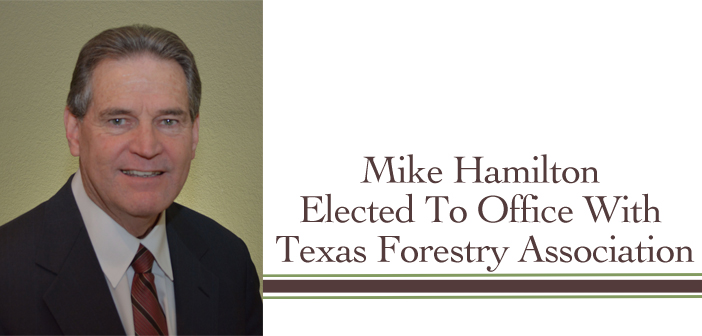
Hamilton Will Serve As President Of 100-Year-Old Organization

0

LUFKIN, TEXAS –  Mike Hamilton of Spring, Texas has been elected President of Texas Forestry Association (TFA).  Hamilton was recommended by TFA’s Nominating Committee and approved by the Executive Committee during TFA’s annual convention to fill the position in 2016. Hamilton will serve as President as the trade association focuses on growing the next hundred years and celebrating partnerships made during that tenure.

“Mike Hamilton has been actively involved in Texas Forestry Association for many years,” said Ron Hufford, Executive Director of TFA.  “He served on the Annual Meeting Committee to help prepare our 100th anniversary celebration and served as Chairman of the committee this past year. Mike and his wife, Kim, are life members of the Texas Forestry Association. He is highly respected by his peers, and his experience as in the forestry industry is an asset as TFA continues to strengthen the forestry community.”

Hamilton started his forestry career with a Bachelor of Science from Stephen F. Austin State University, majoring in both forestry and wildlife sciences. He graduated in December of 1975 and began with Champion International in 1976 as a Woods Technician in Conroe, Texas. Hamilton continued to move up the ladder with Champion, finally serving as Forest Manager in the Livingston area before joining Resource Management Services, LLC as Texas Region Manager.

Mike and his wife, Kim, have been married 35 years. They have one daughter, Mandie who is married to Travis Dixon. The Hamiltons enjoy snow skiing, home remodeling projects, working in the yard, shooting sports, and golf.

City Board Appointments Available in Nacogdoches

0

NACOGDOCHES, TEXAS– In January the Nacogdoches City Council will appoint members to serve on the following city boards:

  • Building Standards Commission
  • Airport Advisory Board
  • Industrial Development Authority
  • Main Street Advisory Committee
  • Health Code Advisory Committee
  • Pine Grove Cemetery Board

“The boards and committees provide diverse input to the City Council and administrative staff, as well as a grass-roots view of municipal regulations and the regulatory process,” Nacogdoches Mayor Roger Van Horn said. “The application process allows us to fit the individual’s personal and professional interests with the board or commission that will benefit the most from their service. We need hard-working and enthusiastic volunteers to serve on the various boards.”

The deadline to submit a notice of interest form for service on any of these boards is December 18. For more information, or to obtain an interest form, please contact the City Secretary at 936-559-2506 or visit the city’s website at www.ci.nacogdoches.tx.us.