Here in the Texas Forest Country, small businesses are finding out something that big companies have known for a while — video marketing isn’t just a nice extra. It’s becoming the heartbeat of how we engage with customers. If you’re still treating video like an afterthought, it might be time for a fresh look. Trends are changing fast, and staying ahead means being ready to adapt.
What’s Shaping the Future of Video Marketing
1. Short and Sweet
In a world of short attention spans, quick, high-energy videos are winning the race. Platforms like TikTok, Instagram Reels, and YouTube Shorts are where the action is.
Local Tip: Think “snackable” content — quick videos under a minute long, packed with energy and a clear message.
2. Authenticity Matters
Forget polished corporate videos. People want real. They want to see behind the curtain.
Local Tip: Showcase your team, your work, or your community involvement with genuine, relatable clips.
3. Shopping While Watching
Interactive videos that let viewers click, vote, or buy without leaving the video are growing fast.
Local Tip: If you sell products, imagine letting your audience shop directly from your video posts!
4. Going Live
Live streams aren’t just for big brands. Here in Texas Forest Country, live videos of product launches, Q&As, and special events keep your audience feeling connected.
Local Tip: Try a Facebook or Instagram Live to announce a sale or show off new arrivals.
5. Personalization Through AI
Artificial intelligence is making it easier to create videos that feel tailor-made for different customers.
Local Tip: You don’t have to be a tech giant. Even small adjustments to personalize video content can make a big difference.
Bringing Big Ideas to Small Towns
In East Texas, we believe in doing things with heart. Video marketing done right captures that spirit—and puts it right in front of your future customers. Whether you’re a boutique, a café, or a local service provider, standing out today means getting comfortable in front of the camera.
Need help telling your story through video? Texas Forest Country Living partners with the experts who know how to make it happen. Let’s put your business in the spotlight!
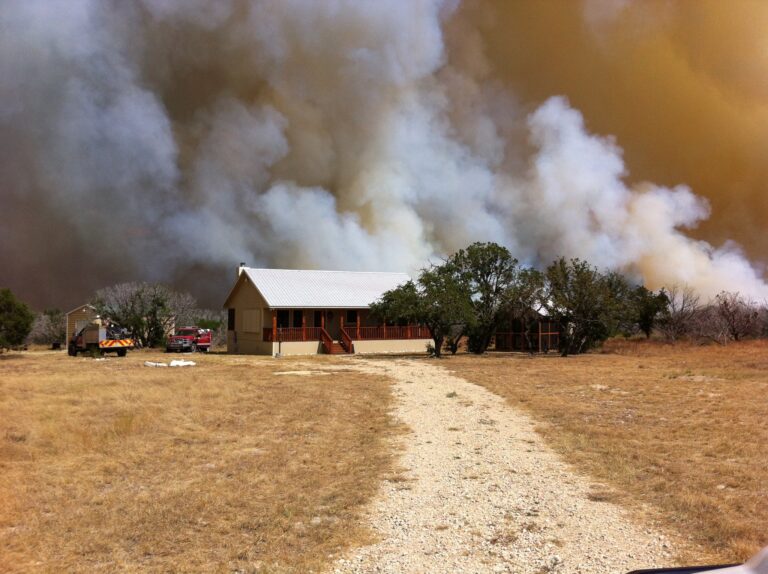
COLLEGE STATION, Texas – In 2024, 5,187 wildfires burned over 1.3 million acres in Texas, and since wildfires have no boundaries, Texans should always be prepared for wildfires.
During Wildfire Awareness Month, Texas A&M Forest Service is highlighting the ways that Texans can not only prevent wildfires but how they can prepare for when they occur.
“Preparation for wildfires is key to protecting both lives and property,” said Erin O’Connor, Texas A&M Forest Service Public Information Officer. “During an emergency, you may only have minutes to act or evacuate. Having a plan and a go-kit can make all the difference. The better prepared Texans are, the safer they will be.”
Prepare a go-kit
A critical component to ensuring safety and preparedness for wildfires is the preparation of a go-kit that can be easily carried and include supplies for several days. A go-kit should include:
Supplies for both people and pets.
Prescription medications or other necessary medical equipment.
Papers and important documents such as phone numbers and insurance and identification documents.
Personal needs including food, water, clothes, money, chargers and a first aid kit.
Priceless items such as photos, family heirlooms and any other irreplaceable or valuable items.
Evacuation plans
“It is important to have at least two evacuation routes planned out of your neighborhood in case the first route is blocked by heavy smoke or traffic,” said O’Connor.
Evacuation routes and shelter locations will be influenced by wildfire activity. It is critical to know how and where local emergency officials will communicate information, such as updates and instructions, to the public.
Preparing homes and land
“There are many practical steps that residents and landowners can take to reduce their risk from wildfire,” said O’Connor.
Residents can prepare around their homes using fire resistant landscaping and ensuring defensible spaces are maintained. Embers—small pieces of burning material easily carried by the wind—are the leading cause of home loss during wildfires. They can collect in small crevices around a home and enter through vents.
Simple, low-cost actions like cleaning out gutters, clearing leaves from garden beds and around wooden structures, removing leaf piles, and relocating firewood stacks at least 30 feet away from buildings can significantly reduce the risk of ember ignition.
Farm and ranch owners can prepare for wildfires by assessing the property for potential hazards, establishing contingency plans for feeding and relocating livestock if a fire is imminent and informing fire departments about access roads, water sources, fence lines and preferred wildfire suppression tactics.
Preparing communities
“The wildland urban interface is where humans and their structures meet or mix with undeveloped wildland,” said O’Connor. “Communities in the WUI are at the greatest risk for wildfire damage or loss. As Texas’ population grows and urban areas expand into more rural landscapes, the number of people that may be impacted by wildfires will increase.”
Communities and municipalities can create community wildfire protection plans to identify high-risk areas of the wildland urban interface and target potential fuels reduction projects, training needs and prevention strategies.
Texas A&M Forest Service works with communities to create community wildfire protection plans, assists neighborhoods with the management of the Firewise USA® program and provides risk assessment tools to ensure communities have the resources to be prepared for wildfire.
Ever open your electric bill and wonder, “Why is this so high?” or “What am I actually paying for?” You’re not alone.
Understanding your power bill can help you spot unnecessary charges, track your usage, and even find ways to lower your costs. We’re here to help you make sense of it all, without needing a degree in accounting.
The Key Parts of Your Bill (And What They Mean)
Every provider’s bill looks a little different, but most include these basics:
Billing Period
This shows the start and end dates for the billing cycle. Check your usage compared to last month—or the same month last year.
Usage (kWh)
This is the total electricity you used in kilowatt-hours (kWh). Think of it like miles on a car—more kWh means more you’re charged.
Energy Charge
This is the base rate you pay per kWh. If you’re on a fixed-rate plan, this should stay the same. If you’re on a variable plan, it can change monthly.
Delivery Fees
Charged by your utility company (not your electricity provider). These fees help maintain power lines, poles, and other infrastructure.
Other Fees and Taxes
This may include:
Base or service fees
Minimum usage charges
State taxes
Energy efficiency charges
Look closely—some of these may be avoidable depending on your plan.
How to Tell If You’re Overpaying
Are you paying more than 10¢–14¢ per kWh all-in? You might be on a bad plan.
Are you seeing a minimum usage fee every month, even with low power use? That could be costing you.
Do you notice unexpected spikes in usage? Could be inefficient appliances or HVAC issues.
What You Can Do
The best thing you can do is get a free energy bill review. Companies like Amerigy Energy can help you:
Understand your current plan
Compare rates from over 100 providers
Lock in a fixed rate to protect yourself from future price hikes
A regular phone call or walk in question in my office is ‘what do I need to start an income-generating farm or other agricultural venture?” This question has been common over the years, but it seemed to have been picking up in the last few weeks.
When considering a new agricultural enterprise, and certainly one that you hope to generate a profit, there are several considerations to keep in mind. First, you need to take a hard look at the land and water you have on your property. Not all soils are suited for crop production. Certainly not all soil is suited for fruit production. Much of Angelina County has a clay subsoil that limits what grows well enough to be a viable, financial endeavor.
Available water sources would also be an important question. Wells and ponds need to be evaluated. Ponds are fantastic for livestock, but will it be large enough to serve all your livestock, especially during times of drought? Regarding wells, not every water well provides quality water and several more don’t provide the volume of water needed to cover acres at a time. There are several water wells in the county, including mine, that aren’t suitable for very sensitive crops. While my well does make enough volume to provide several acres of irrigation, I could never raise blueberries with the lower quality of water that I have.
The next big question that you need to address is “where is there a market?” My favorite example of this is okra. At farmers’ markets and grocery stores you’ll always find a demand for fresh cut, locally sourced okra. But the question is just how many acres of okra would it take to satisfy that demand? One can grow a lot of okra on a quarter acre but what volume will be needed to satisfy the market demand. And how profitable would okra be considering all the labor that it requires to have it harvested? If you were just going to run with a cattle operation, it is true that you could always find a market for that at the local auction barn. Yet the question is whether or not you have the knowledge and expertise to provide calves of the right weight, breed, and condition to earn top dollar at that market.
Infrastructure comes to mind next as we discuss what is needed for a profitable agricultural business. Is fencing adequate for livestock? Are barns and shelters needed for your livestock that you’re considering? What about working pens or other handling facilities? Those must all be present and in good working order. Tractors and in the implements that you’ll need for any orchard, truck crop, or livestock operation can be costly and may take some time to get organized.
Financing the expected operation certainly brings some challenges. It is true that there are opportunities at both the federal and the state level for some cost-share programs, or matching grants. You’ll need to have an honest visit with the banker and with others already involved in similar ventures to understand what the total costs could be.
I know nearly every person I speak with has the intention of working this themselves, of being independent, and certainly of doing their endeavor on their own. But the truth remains that you will probably need assistance and labor to help work livestock, or to help harvest a fruit crop. This was a struggle that I had with my own venture in watermelons. I could grow watermelons, but finding help to harvest them was much more difficult that I imagined.
Lastly, one needs to be incredibly aware of all the networking resources that are needed as you start this venture. You’ll want technical guidance on crop management or livestock management, someone very experienced with maintaining tractors and machinery, someone who knows the markets and how to access them, and others to help you with the financial hurdles that you will invariably come upon. Finding these valuable resources, or should we say teammates, will tremendously aid in navigating the challenges that are certain to come your way.
The above discussion is in no way a complete list of concerns one must consider. To help those who are interested in starting the process of having their own agricultural business, the Texas A&M AgriLife Extension Service in Angelina County will be hosting a two-hour seminar on Tuesday, May 6th at their office at 2201 S Medford in Lufkin. The class starts at 6 pm and there is no fee for the class. Participants should expect to receive a tremendous amount of resources, in-depth information for numerous adventures, and details on both the federal and state available cost-share funding opportunities.
For more information call the Angelina County extension office at 936-634-6414 extension 2.
On May 1st, 1718, San Antonio de Valero Misson was founded by Franciscan Antonio de San Buenaventura y Olivares near present-day San Antonio. It was one of the early efforts by Spanish missionaries to convert American tribes to Christianity. This mission would later become the Alamo.
Here are five things happening around your state:
1. Texas Parks and Wildlife acquires a Wildlife Management Area in East Texas
For the first time in nearly two decades, Texas Parks and Wildlife acquired land in East Texas to establish the Trinity River Wildlife Management Area (WMA). The WMA is a 6,900-acre tract of land in Anderson County. This new addition is a part of the Middle Trinity River Ecosystem Project. The project protects more than 38,000 acres of land for conservation initiatives. The addition of 11.3 miles of the Trinity River gives TPWD 25 miles of riverbank to protect a significant migratory corridor for birds. Many species will benefit from the restoration project,s including waterfowl, shorebirds, neotropical migratory birds, and butterflies.
2. Texas named best state for business
For the 21st year in a row, Chief Executive Magazine has named Texas the best state for Business. This ranking is determined by an annual survey of CEOs across the nation. Texas has outpaced the nation in job growth over the past several months. According to data from the U.S. Bureau of Labor Statistics and the Texas Workforce Commission, in March, the state reached the largest workforce in state history at 15,778,500. The state’s gross domestic product (GDP) grew at a rate of 3.5 percent in the last quarter of 2024, while the U.S. average was only 2.4 percent growth. If Texas were a country, it would have the eighth-largest economy in the world.
3. HHSC says Texas hospitals spend $122 million per month on healthcare for illegal immigrants
On August 8th, 2024 Governor Abbott issued Executive Order 46, which directed the Texas Health and Human Services Commission (HHSC) to collect reports from hospitals across the state for the cost of treating patients not lawfully present in the United States. Hospitals were directed to start collecting data on November 1, 2024, and were required to submit the first month of data on March 1, 2025. This week, HHSC released a letter to the Governor containing the results of the first month of data. In November 2024, individuals who are not lawfully present in the United States visited Texas hospitals more than 31,000 times, with health care costs exceeding $121 million. A breakdown of these costs is available on the HHSC website. The next submission of data to HHSC will contain data from December 2024 through February 2025 and will be submitted on June 1st, 2025.
4. Jacksonville’s Tomato Bowl voted #1 Texas High School Stadium
The 2025 winner of Dave Campbell’s Texas Football (DCTF) stadium bracket is the Jacksonville Tomato Bowl. Dave Campbell’s Texas Football is a biannual magazine that covers all things Texas football from the Dallas Cowboys to the roughly 1,400 high school teams. This year over 130,000 votes were cast to determine the best stadium. The Tomato Bowl is a cultural staple of Jacksonville. First built in the 1930’s, the stadium features an impressive wall around it made of rocks and stones from the area. Despite renovations in the last few years, the original wall still stands. The Jacksonville Tomato Bowl is one of the last downtown stadiums in the state. The stadium boasts unique traditions including lighting a flaming letter ‘J’ to start home games. I am a proud alum of Jacksonville High School and played many football games in the Tomato Bowl. Congratulations to Jacksonville High School on their well-deserved win!
5. Five East Texans sign deals following NFL draft
East Texas makes an impressive footprint on the National Football League this year following the 3-day NFL draft. Five East Texans signed deals in the draft and one player from Stephen F. Austin signed a deal following the draft. Kevin Rose of Henderson signed with the Jacksonville Jaguars following his time playing football at the University of Arkansas. Nash Jones, from Nacogdoches, signed with the Los Angeles Chargers, following his play at Texas State University. Moochie Dixon, from Carthage, and Elliot Davison, from Tyler Legacy, signed with the New Orleans Saints. Dixon played at Southern Methodist University and Davison played for the University of Texas- San Antonio. Jerrin Thompson, from Lufkin, signed with the Tennessee Titans, after finishing his college play at Auburn University. Bruce Harmon, a former SFA Lumberjack, signed a contract with the Dallas Cowboys.
LUFKIN, TEXAS – Get ready, Lufkin — the countdown to Summer in the City has officially begun! Presented by Brookshire Brothers, this brand-new event series will launch on May 31, 2025, with an epic night at The Pines Theater, featuring the unforgettable energy of The Spazmatics — the ultimate 80s tribute band.
It’s not too late to join the fun!
Tickets for The Spazmatics are going fast — and this is one party you won’t want to miss. Not only will you dance the night away inside the historic Pines Theater, but First Street will also be closed an hour before showtime for a lively pre-party!
Guests can enjoy:
A 360 Selfie Booth to capture the night’s best memories
Beach balls bouncing through the crowd during the show
A cash bar available inside the theater
Susu’s Popcorn will be onsite selling delicious treats for concertgoers
High-energy performances guaranteed to get everyone dancing — inside and outside!
Tickets are $40 per person and can be purchased at Visit Lufkin Tickets.
Don’t wait — tickets are nearly sold out!
About Summer in the City
Running from May 31 through August 9, 2025, Summer in the City will bring free concerts, movie nights, and family events every Saturday evening to Downtown Lufkin’s Cotton Square and The Pines Theater. The lineup includes exciting performances like Dale Watson, Los Texmaniacs, The Peterson Brothers, Silent Disco nights, and even a free movie night featuring Monsters, Inc..
Summer in the City 2025 Sponsors
Presented by Brookshire Brothers and made possible thanks to the support of:
SERVPRO of Lufkin/S. Nacogdoches County
A-1 Party Rentals
City of Lufkin Parks and Recreation
Sound Techs
Sleep by Choice Hotels
Best Western Plus
Kimberly Eakin Kia
Coca-Cola Bottling Company
Ferrara’s Heating & Air Conditioning
Angelina Arts Alliance
Lufkin Creative
Lufkin Limners
Angelina Community Theatre
Visit Lufkin
Mark your calendars and get ready to experience a summer full of music, memories, and community fun!
For more information and the full event schedule, visit VisitLufkin.com.
One team ended its season last week, while another will wrap up its 2025 campaign this week.
All of which will mean the end of an eventful 2024-2025 year at Angelina College Athletics.
One of our basketball guys (Kanaan Holder) received another big honor, and we’ve got a soccer Prospect ID camp set for this Saturday.
Angelina College will hold its graduation ceremonies on May 9, and while it will signal a wrap to the year for all six of our Lady Roadrunner and Roadrunner teams, it won’t mean things will come to a complete stop. We still have some upcoming summer camps, and we’ll be sending plenty of superlatives lists – both academic and athletic – once Commencement ceremonies are over.
Here’s a quick rundown of the past week’s events, along with what’s coming up next:
AC Baseball Gets One of Three from NTCC
The past week got off to a promising start at home on Wednesday, with the Roadrunners getting a beauty of a pitching performance from starter Ethan Jezierski to take a 4-2 win over the Northeast Texas Community College Eagles. Jezierski struck out five while allowing just two earned runs, and Cole Standley blasted a solo homer. Ashton Wagner also picked up an RBI in the win.
Photos by Clara Sonet for AC Athletics
The Eagles, however, managed a Saturday sweep in Mount Pleasant, topping the Roadrunners 8-2 and 6-3 to end AC’s chances at a postseason berth. Those wins gave the Eagles a four-game cushion in the standings with just three conference games remaining, leaving the ‘Runners out of the upcoming regional tournament.
The Roadrunners (20-27, 9-18) will play two more games at home as they close out the season this week. AC faces Dallas College-Brookhaven in a single, nine-inning game starting at 3 p.m. on Monday at Poland Stadium, and on Wednesday, the ‘Runners open a three-game series with Bossier Parish CC. Wednesday’s single, nine-inning game at Poland Stadium starts at 2 p.m., and the team will hold its Sophomore Day ceremony immediately following the game.
The ‘Runners’ season finale takes place with Saturday’s doubleheader in Bossier City. First pitch for the opener is set for 1 p.m.
Lady Roadrunner Softball Ends Season Just Short of Postseason Berth
The Lady Roadrunner softball team wrapped up its 2025 season this past week, and the team missed out on a postseason invitation by the slimmest of margins in the conference standings.
AC suffered a sweep at Galveston College on Wednesday, falling 3-2 in the opener despite Lady ‘Runner Madison Johnson’s solid pitching performance. Johnson held the high-powered Whitecaps to just three earned runs over seven innings, but a fielder’s choice in the bottom of the seventh inning allowed Galveston to take the walk-off win. The ‘Caps then won 8-0 in the nightcap for the doubleheader sweep.
On Friday, the Lady ‘Runners beat San Jacinto College 6-4 in Houston, with AC pitcher Jessi Sumpter earning the win in the circle. The Ravens then ended AC’s season with an 8-0 win in the nightcap.
The Lady Roadrunners finish their season with a record of 16-36, 9-15 – just a game behind fourth-place Alvin College in the final standings.
Holder Invited to NJCAA All-Star Game
Angelina College’s Kanaan Holder has received an invitation to participate in the upcoming 2025 NJCAA Men’s Basketball Coaches Association All-Star game presented by the National Association of Basketball Coaches (NABC).
The game takes place on Saturday, May 17 in Las Vegas.
This will make Holder’s second appearance in a JUCO All-Star game: In the summer of 2024, Holder was selected to participate in the All-American JUCO Showcase in Atlanta, Georgia. The event featured the nation’s Top 100 junior college basketball players.
A Hudson High School alumnus, Holder finished his JUCO career as a member of the Roadrunners’ Elite Eight squad – a group that advanced to the final eight of the NJCAA Division I Men’s Basketball Championship held in Hutchinson, Kansas this past March.
Following the season, Holder was named to the All-Conference (Honorable Mention) team for Region XIV.
He is the son of Tammy and Tony Holder of Hudson, TX.
Roadrunner Soccer Holding Prospect ID Camp
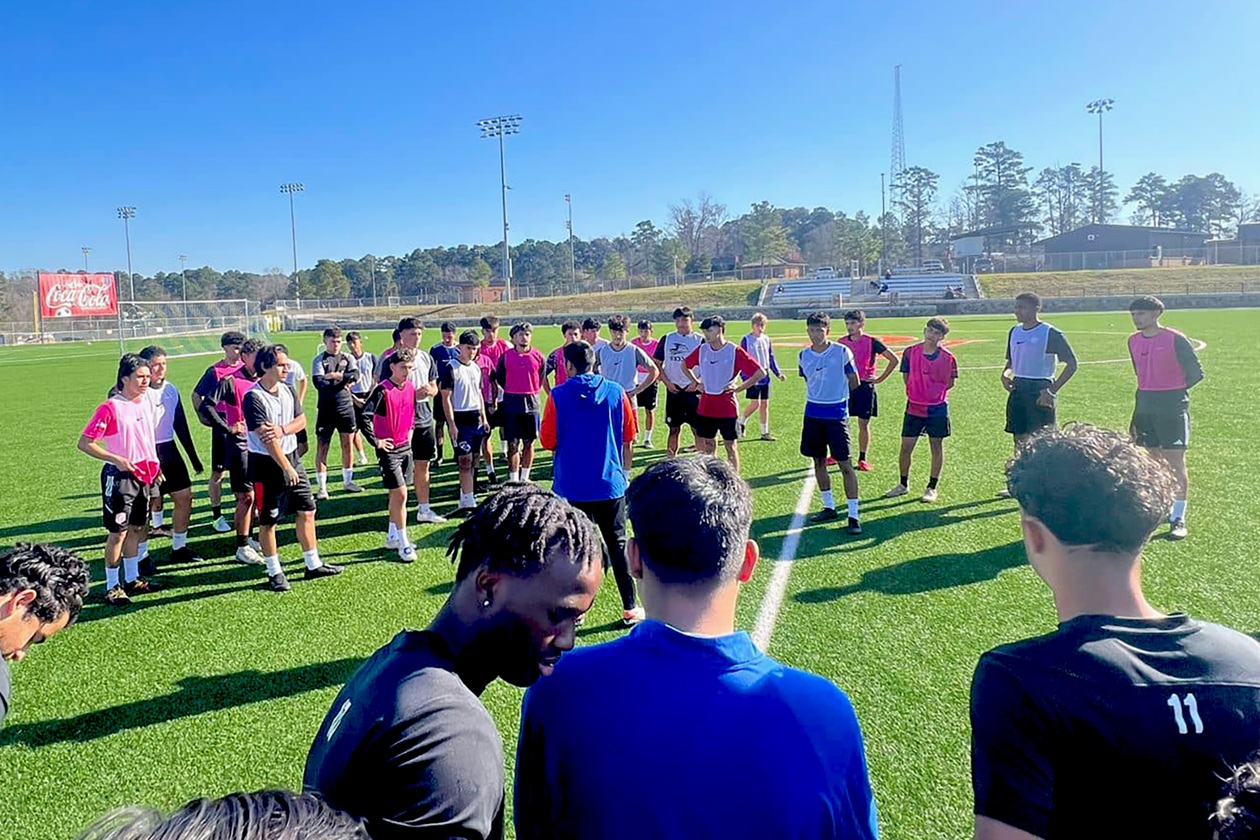
The Roadrunner men’s soccer program will host its final Prospect ID camp of the spring on Saturday, May 3 at the Soccer Complex on the AC campus. The camp, which runs from 9 a.m. until 12 p.m., is for players in the 9th grade and above; the cost is $60 per player.
For camp information, contact AC head coach Martin Melchor at mmelchor@angelina.edu.
For registration and other information, click the link below:
Over the past few years, Camp Roadrunner has become a “gotta do” event for youngsters throughout East Texas, with the recreational and youth sports camps drawing bigger crowds every summer.
Following are the dates for each Youth Sports Camp:
Baseball: June 2-5
Soccer: June 9-12; July 7-10
Basketball: June 9-12
Softball: June 9-12
Live Streaming Reminder:
All AC Athletics regular-season home games will be live streamed on TSBN Sports (a free streaming service for fans), with most of the conference road games also available for streaming. (This does not include baseball and softball fall games, as those are not considered official games.)
Once TSBN posts its schedules, AC fans simply need to visit the AC Athletics web site, look at the scrolling schedule in the middle of the page and click the blue “Video” link.
TSBN also offers an app great for smart phones, devices and smart TVs. (You’ve GOT to see those matches and games on the big screen.)
Reminder II: Admission to ALL Angelina College Athletics sporting events is free, as is the TSBN live streaming. Any other links offering streaming are scams.
Reminder III: For the most current schedule updates (especially for potential weather issues) visit the official Angelina College Athletics website (angelinaathletics.com). Fans can also receive updates on the AC Athletics Facebook, X (formerly known as Twitter), and Instagram pages.
Upcoming schedules:
Monday, April 28, 2025:
Roadrunner Baseball vs. Dallas College Brookhaven, single nine-inning game starting at 3 p.m. at Poland Stadium on the AC campus.
Wednesday, April 30, 2025:
Roadrunner Baseball vs. Northeast Texas Bossier Parish Community College, single, nine-inning game starting at 2 p.m. at Poland Stadium on the AC campus. (Sophomore Day)
Saturday, May 3, 2025:
Roadrunner Baseball at Bossier Parish Community College, doubleheader starting at 1 p.m. in Bossier City, LA. (Season finale)
For any other information, contact Sports Information Director Gary Stallard at gstallard@angelina.edu.
The Texas House is firing on all cylinders. As we approach the last five weeks of the 89th Legislative Session, the House is considering bills Monday through Friday, with workdays on Saturdays and Sundays on the horizon. This week alone, the House took up over 200 bills for consideration. With crunch time upon us and the end of session sight, I’m laser-focused on delivering the results you sent me to Austin to accomplish, and I’ll work tirelessly from now until June 2nd to do just that.
With that, here’s an update from your State Capitol…
Capitol Update
This past week, the House passed a package of bills that focus on helping rural Texas.
HB 18 identifies, develops, and implements program and services to help rural counties retain their hospitals by establishing the State Office of Rural Hospital Finance, the Texas Rural Hospital Officers Academy, the Financial Stabilization Grant Program, the Emergency Hardship Grant Program, the Innovation Grant Program, and the Rural Hospital Support Grant Program.
Additionally, HB 18 dedicates over $90 million in state and federal funds to implement the provisions of the bill and provide much-needed relief to our rural healthcare systems. I am very grateful for Chairman Gary VanDeaver’s leadership on this bill and am proud to serve as a joint author of this critically important piece of legislation that will improve access to healthcare throughout rural Texas.
The House also passed House Bill 43, which delivers critical updates to the Texas Agricultural Finance Authority (TAFA), offering much-needed relief to farmers and ranchers facing persistent economic and environmental challenges. The bill removes outdated age restrictions for key financial programs, allowing all producers – not just those under 46 – to access interest rate reductions and grant support. HB 43 also boosts the Young Farmer Grant Program by increasing the maximum amount of the grant from $20,000 to $500,000 and slashing the matching requirement from 100% to 10%.
These changes come at a time when Texas agriculture is reeling from consecutive years of natural disasters and soaring input costs. With over $14 billion in losses since 2022 alone, HB 43 will modernize the financial tools available to our ag community and ensure production agriculture remains viable. I was proud to co-author this consequential piece of legislation that will bring much-needed relief to the hardworking farmers and ranchers across Texas.
Finally, I had the opportunity to present one of my own bills, House Bill 1507, before the House this week. House Bill 1507 seeks to provide an educational incentive for volunteer firefighters to help our rural volunteers recruit and retain more firefighters by providing a tuition exemption for active volunteer firefighters who are enrolled in fire science courses at any of our colleges and universities. I’m pleased to report this bill passed out of the House without a single no vote and is on its way to the Senate for consideration.
The mobile office is on the road again in May and looks forward to seeing you on the following dates, in the following locations: May 7 at the San Augustine County Courthouse from 9:30-11:30 am, May 14 at the Polk County Commissioner’s Court Room in Livingston from 9:30-11:30 am, or at the Tyler County Courthouse in Woodville from 1:30-3:30 pm; May 21 at the Houston County Courthouse Annex in Crockett from 9:30-11:30 am, or at the Trinity County Courthouse in Groveton from 1:30-3:30 pm.
As always, please do not hesitate to contact my office if we can help you in any way. My district office may be reached at (936) 634-2762. Additionally, I welcome you to follow along on my Official Facebook Page, where I will post regular updates on what’s happening in your State Capitol and share information that could be useful to you and your family: https://www.facebook.com/RepTrentAshby/.
Last week, I received a call from a lady in Lufkin asking what termites looked like. She had found lots of “small flying insects” around her front door and didn’t know what they were. They were identified as termites.
Later that same week, as I was leaving work and heading home, I noticed several small winged insects piled up on my windshield wipers on the front window of my truck. They were also termites.
Each spring, termite colonies can swarm. ‘Swarming’ usually occurs in the daytime and is the strategy used by these insects (as well as honey bees) to disperse and form new separate colonies.
Adult reproductive termites are dark-brown to blackish insects, about 3/8 inch-long. Commonly referred to as swarmers, the job of reproductive termites is to mate and start new colonies. Termite swarmers may or may not have wings, as their wings often are shed shortly after flight.
Swarming termites are often confused with ants but can be distinguished by two simple characteristics. Termites lack the “pinched” or narrow waist seen on ants. A termite’s body profile is shaped like a grain of rice. Ants always have some sort of pinched, narrow waist.
Also, termite wings are equal in length, compared to ants that have distinctly longer front wings. With an infested home, it is not uncommon to find insect wings inside on a window sill. Look carefully thru them to see if you can see a size difference. If they are all the same size, they belonged to termites who have likely found a place to move in and cause damage.
Although termite swarmers can, occasionally, enter homes through open doors or windows, finding termite swarmers indoors is a reliable signal of infestation. Termite swarms can occur throughout the year, but are most commonly seen between the months of February and May in Texas.
But what about the termites you find outside in your mulch or in an old stump? In Texas, termites abound in the soil wherever wood is to be found. Most yards, especially those in older, established neighborhoods, support termites. While termites are more abundant in some locations, chances are good that your yard does in fact have termites. Finding termites in a fence or woodpile, or in landscape timbers, does not necessarily mean that your home needs to be treated, but it should alert you to the presence of termites close to your home.
Should you find termites in your yard, a few simple steps can help reduce your risk of becoming infested. First, familiarize yourself with what termites look like so that if you notice swarms of any unusual indoor insects. Doing so will let you know whether your house should be inspected.
Second, examine the foundation of your home to see whether mud shelter tubes are present that might indicate termite activity. Termite shelter tubes are hollow soil tunnels extending from the soil up past the foundation to your house and provide a conduit for termites to travel between their underground nest and their food supply (your home). If you do find any suspicious mud structures, leave at least part of the material in place for a professional termite inspector to examine.
Finally, keep soil and debris, such as wood mulch or stacked firewood, away from the foundation of your home. This reduces the chance of termite entry and makes it easier to inspect your home for termite signs.
If you do suspect termites, it’s a good idea to have a professional examine your home. Because of the specialized equipment and chemicals needed to effectively and safely treat your home, it’s nearly always best to hire a professional.
These DIY treatments, commonly sold through home and garden stores, should only be considered for spot treatments on wooden structures of low value in a very limited area well away from your home. At their best, these products might be as effective as some of the professional’s weakest products.
Bottom line, if you are not at least an armature entomologist, ask for an inspection by a trained exterminator. It takes a professional to thoroughly treat a home.
This year, we commemorate the 189th anniversary of the Battle of San Jacinto. On April 21, 1836, General Sam Houston led the Texan Army against General Santa Anna and the Mexican army in a fight that lasted just 18 minutes. The Texans’ victory paved the way for Texas independence from Mexico and the birth of the Republic of Texas.
Here are five things happening around your state:
1. Senate passes additional property tax relief for seniors
This week, the Senate passed Senate Bill 23 and Senate Joint Resolution 85 by Senator Paul Bettencourt. The bill and its accompanying joint resolution would increase homestead exemptions for Texans over 65 and disabled Texans to $200,000. Together the package offers additional meaningful property tax relief for Texas seniors, many of whom live on a fixed income. It offers, on average, almost $500 in annual savings if passed by the Legislature and approved by voters. Over the past ten years, the Legislature has continued to increase homestead exemptions for all homeowners, but most significantly for seniors. In 2015, the senior exemption was at $25,000. The passage of this bill would be the fourth exemption increase over the past decade. Property tax relief for Texas seniors is one of our most important priorities this session.
2. House passes massive school funding bill
Last week the Texas House passed House Bill 2, a public school finance bill that would invest almost $8 billion in local schools. While the bill has a number of provisions, some major highlights include a $340 increase per student to the basic allotment and tying the basic allotment growth to property values, which would provide over $3 billion in increased per-student spending. The bill also increases a variety of other allotments, including the small and mid-sized district allotment, which would provide almost $1 billion for rural schools. Special education also would receive a funding increase by about $1.5 billion. While this bill provides a needed investment for public schools, it still must make its way through the Senate. I have been, and will always be, a strong supporter of public schools and look forward to seeing this bill move through the process.
3. Bill regulating autonomous vehicles passes Senate
Several years ago, the Legislature passed legislation giving primary regulatory control over autonomous vehicles to the state. The bill was designed to preempt superfluous local regulation that stymied the autonomous vehicle industry from developing in Texas. Now those vehicles are driving on the streets and a more robust regulatory framework is required. That’s why I filed Senate Bill 2425, which creates more structure around the commercial autonomous vehicle industry. This bill only effects vehicles that carry passengers or goods without a driver. It would require the Department of Motor Vehicles to license operators in the state and suspend or revoke the operator as necessary. It also requires operators to submit information to the Texas Department of Public Safety for enforcement measures. This bill passed this Senate last week and now heads to the House for consideration.
4. Texas leads nation in job creation over past year
Texas is well known as a business-friendly state and this year has been no different. Over the past 12 months, Texas led the nation in total job creation and hit new highs for the number of Texans working and the size of our labor force. In March alone, Texas added 26,500 positions. That outpaces national growth trends. With a plethora of job openings in Texas, our economy continues to grow and unemployment remains low. I will continue to support pro-business policies to ensure that Texas is the best place to start or grow a business.
5. Bill to rein in squatters passes Senate
This week, the Senate passed Senate Bill 38 by Sen. Paul Bettencourt. This bill seeks to curtail squatting in Texas. As a member of the Local Government Committee, we heard harrowing tales from Texans detailing how bad actors illegitimately moved into homes they owned without the owners consent and refused to leave. In some cases, the squatters caused excessive amounts of damage to the home and in many cases stole property belonging to the owner. Owners were required to use the eviction process for these illegitimate squatters. The civil eviction process can take months to resolve. This bill expedites timelines for removal of squatters if there is no genuine dispute over the owner’s right to possession.