Earlier this week while assisting a resident just south of Lufkin, I noticed a wild grapevine with numerous clusters of small green grapes. Two weeks ago, while visiting my son and daughter-in-law in Waco, I noticed they had some grapevines on their old fence that bore smaller clusters with much larger native green grapes.
As a kid growing up in Johnson County, Texas, I remember my mom used to go down the country roads and pick wild grapes for jelly making. I believe she called them Mustang grapes, but it has been too long for me to be certain.
Throughout our state, we have a variety of wild/ Muscadine-type grapes. In our office, we have an excellent book, Trees, Shrubs and Woody Vines of East Texas. The author is Elray S. Nixon. I’ve met the illustrator, Bruce Lyndon Cunningham who had a studio in Nacogdoches. If you are ever at all interested in our native woody plants, this is an excellent book.
In this book, the author lists seven different grape-type (Vitis) plants in east Texas. These are the Mustang grape, Sweet winter grape, Summer grape, Muscadine grape, Fox grape, Riverbank grape, and the Catbird grape.
Another good reference book we have is Native Texas Plants by Sally and Andy Wasowski. Now their book covers all of Texas and this book lists 22 locally named native grapes! I really have a hard time believing there are 22 separate varieties and they do allude to that, but the fact remains, there are several variants of wild grapes that occur naturally.
For folks wanting a native grape arbor, Muscadines (Vitis rotundifolia) are the largest bearing native grape of which there are many developed varieties. Muscadines work very well in our climate and are incredibly disease resistant (something that their European relatives have great difficulty with.)
Deep, sandy, and slightly acidic soils are best, although they are quite tolerant of other soil types. Lime is not needed, and light fertilization will supply all they need.
If shade is an issue, realize that Muscadines can do fairly well in a dappled shade environment. In fact, much of their habitat is under the shade of our large pines. However, for maximum production, plant them in a location that will receive a full eight hours of sun.
What is definitely needed is a sturdy fence, arbor or other structure on which the vines will grow. Over time the vines will become quite strong and if you are a successful grower, you’ll have plenty of weight to support. In fact, think a couple years down the road to make sure that you can prune the vines so that they will not cover the house or otherwise get unruly.
If planting just one vine, you’ll want to be sure to choose wisely, as some need a pollinator and others are self-fertile.
Varieties to consider for self-fertile varieties include: Carlos (a bronze-colored grape), Cowart (black), Ison (black), Janebell (bronze), Magnolia (bronze), Noble (red), and Triumph (bronze).
Female blooming varieties that do need a pollinator include: Darlene (bronze), Fry (bronze), Higgins (black-bronze), Hunt (black), Jumbo (black), Pam (bronze), Scuppernong (bronze), Summit (bronze), and Sweet Jenny (bronze).
Most bronze varieties are commonly referred to as Scuppernongs and are favored by many. All types will be enjoyed by any and all wildlife you have in the area, so be prepared to share.
Depending on variety and climate, Muscadines ripen in late summer to early fall. Pick when soft and with a dull bloom on the fruit.
Stay safe from mosquito-borne disease by preventing bites
With West Nile virus present in Texas, mosquito bites escalate beyond an itchy annoyance to a potentially deadly threat.
In response to the virus’s continued presence throughout the state and U.S., Texas A&M AgriLife Extension Service experts advise residents to be mindful of areas with reported cases in humans, birds, horses and mosquitoes.
“Staying informed about local mosquito activity and taking preventive measures can help keep you and your family safe from the potential dangers of West Nile virus,” said Sonja Swiger, Ph.D., AgriLife Extension entomologist and professor in the Texas A&M College of Agriculture and Life SciencesDepartment of Entomology.
West Nile cases have been reported in the 48 contiguous U.S. states. Last year, more than 1,400 cases were reported in 43 states.
What are the symptoms of West Nile virus?
Most people infected with West Nile virus do not experience symptoms. However, about one out of five infected people experience flu-like symptoms, and about one out of 150 infected people develop a serious and potentially fatal illness from the virus.
Symptoms of West Nile virus disease in humans include:
High fever.
Skin rash.
Fatigue.
Headache.
Neck stiffness.
Disorientation.
Muscle weakness.
Convulsions, numbness, paralysis and coma — in extreme cases.
Mild symptoms of West Nile virus disease typically last a few weeks, but fatigue, muscle weakness and joint pain can linger for months.
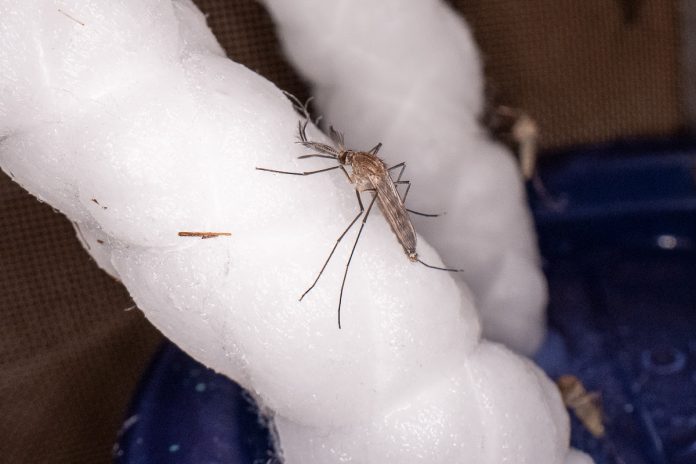
The Culex quinquefasciatus, or Southern house mosquito, can transmit West Nile virus. Some simple precautions around the home can reduce the risk of their bite. (Courtney Sacco/Texas A&M AgriLife)
How does West Nile virus spread?
Swiger said West Nile virus is circulated in the environment between birds and mosquitoes in the Culex genus.
Infected mosquitoes can spread the virus to humans, horses and some birds, leading to a range of disease symptoms and adverse health effects. The virus cannot spread from person to person or between animals, except in rare cases of direct bodily fluid transmission, such as blood transfusions.
Vaccines are available to prevent illness in horses, but the only protection for humans is to prevent mosquito bites.
How to protect yourself and your family
Swiger recommends people stay vigilant of their surroundings to reduce the risk of transmission.
While mosquito populations generally boom following heavy rainfall, those that carry West Nile virus reach higher populations during dry conditions. Swiger said pooled water becomes stagnant and an ideal environment for virus carriers to lay their eggs thus increasing their population.
She recommends removing water from any items near households, such as flowerpots, buckets and wheelbarrows. You should also drain or cover backyard pools that are not in use as a precaution.
Culex mosquitoes that transmit West Nile virus feed at dusk and throughout the night, with peak activity from 9 p.m. to 2 a.m., Swiger said. She recommends limiting your time outside during those hours and watching for mosquitoes as you leave and enter your home. While this mosquito is active outdoors at night, it will come inside the home in search of a blood meal.
Light-colored, long-sleeved shirts and full-length pants also help protect against mosquito bites, along with repellents like DEET, picaridin, oil of lemon eucalyptus, IR3535 or 2-undecanone, which are registered with the Environmental Protection Agency and approved by the CDC to protect against biting mosquitoes.
“The number of West Nile virus cases varies from year to year, but it’s something we always want people to stay mindful of,” Swiger said. “Taking preventive steps to reduce the risk of bites is the best way to protect yourself and others.”
On an unseasonably cool Thursday, July 4, 1776, the Second Continental Congress declared total independence from King George III and Great Britain. In doing so, the founding fathers threw off the yoke of tyranny, creating a new form of government whose power was to be derived only from the consent of the people they governed. Radical at the time, the actions of men such as John Adams, Benjamin Franklin, and Thomas Jefferson paved the way for the United States Constitution just 13 years later, and what we know today as the longest-standing constitutional republic in the world.
While we celebrate our great nation with an afternoon cookout with family and friends, attending a patriotic parade, or celebrating with fireworks, let us remember that we, as citizens of the greatest country on God’s Earth, must continue to strive to create a more perfect Union and make good on the promise of our Declaration of Independence:
“We hold these truths to be self-evident, that all men are created equal, that they are endowed by their Creator with certain unalienable Rights, that among these are Life, Liberty, and the pursuit of Happiness.”
With that, here’s an update from your State Capitol…
Capitol Update
As I’ve noted in previous columns, bolstering our state’s workforce has been a top priority of mine. With our state population on pace to double by 2050, there’s no time to waste in proactively planning to meet the workforce needs of a growing state. Fortunately, the Legislature made measurable progress this session to address Texas’s needs for a strong and sophisticated workforce.
House Bill 20 creates an applied sciences pathways program for our high school students to go into high-demand technical jobs. House Bill 120 expands access and funding for Career and Technical Education (CTE) programs to ensure high school students are career-ready. Both HB 20 and HB 120 passed through the Subcommittee on Academic and Career Oriented Education, the subcommittee I’m honored to chair, and I was glad to see both make it through the legislative process and on to the Governor’s desk.
Additionally, Senate Bill 2448, which I was proud to author, establishes the Rural Workforce Development Grant Program to encourage non-profits in rural communities like ours to improve workforce training and address critical skills gaps to help reduce our rural workforce shortage.
As a result of these bills, and similar legislation from previous sessions, I was delighted to see that Governor Abbott announced two Jobs and Education for Texans (JET) Grants to both Angelina College and Warren ISD. Angelina College received a grant of nearly $340,000 to train 90 students to be welders, and Warren ISD received a grant of nearly $300,000 to train 60 students in partnership with Lamar State College – Orange, also as welders.
I am proud to have supported and authored large initiatives during this past session and previous sessions, which will help meet the workforce demands of Deep East Texas. I am equally grateful to Governor Abbott and the Texas Workforce Commission for committing funds back to Deep East Texas to continue our endeavor to train and build up our workforce.
As a reminder, the mobile office is taking a break from the road in July, but will be back in August. In the meantime, please do not hesitate to contact my office if we can help you in any way. My district office may be reached at (936) 634-2762 and my Capitol office may be reached at (512) 463-0508. Additionally, I welcome you to follow along on my Official Facebook Page, where I will post regular updates on what’s happening in your State Capitol and share information that could be useful to you and your family: https://www.facebook.com/RepTrentAshby/.
When John Hart signed the Declaration of Independence in 1776, he wasn’t just making a political statement – he was igniting a legacy. That signature wasn’t written in ink alone; it was written in sacrifice, conviction, and courage. And while history books remember him as one of the 56 Founders who dared to defy a king, our family remembers him as something more: a starting point.
That single act – of putting pen to parchment knowing the cost – set into motion a legacy that wouldn’t end with his death just three years later. It was carried forward by his children, and their children, through generations of Harts who served, settled, prayed, and persevered.
Liberty didn’t end at Philadelphia. It moved west. It grew through the hearts and hands of sons who traded powdered wigs for plows, battlefields for barns, and pulpits for pews. It moved through the hills of Missouri and across the plains of Texas. It was carried in worn Bibles, family prayers, and strong backs.
For my family, that signature echoed through time – showing up in the war records of soldiers, in the quiet strength of pioneers, in the kind eyes of teachers and pastors, and in the steady hands of farmers. And yes, it shows up today, even here in East Texas, in the way I raise my family and lead my work – with that same call to conviction.
John Hart lit a torch. My family has carried it for over 240 years. This is the story of how.
The Flushing Remonstrance of 1657: Liberty Signed in Chains
Long before John Hart signed the Declaration of Independence, the flame of American liberty had already been lit in our family—by a man who would risk not only his reputation, but his very freedom to defend it.
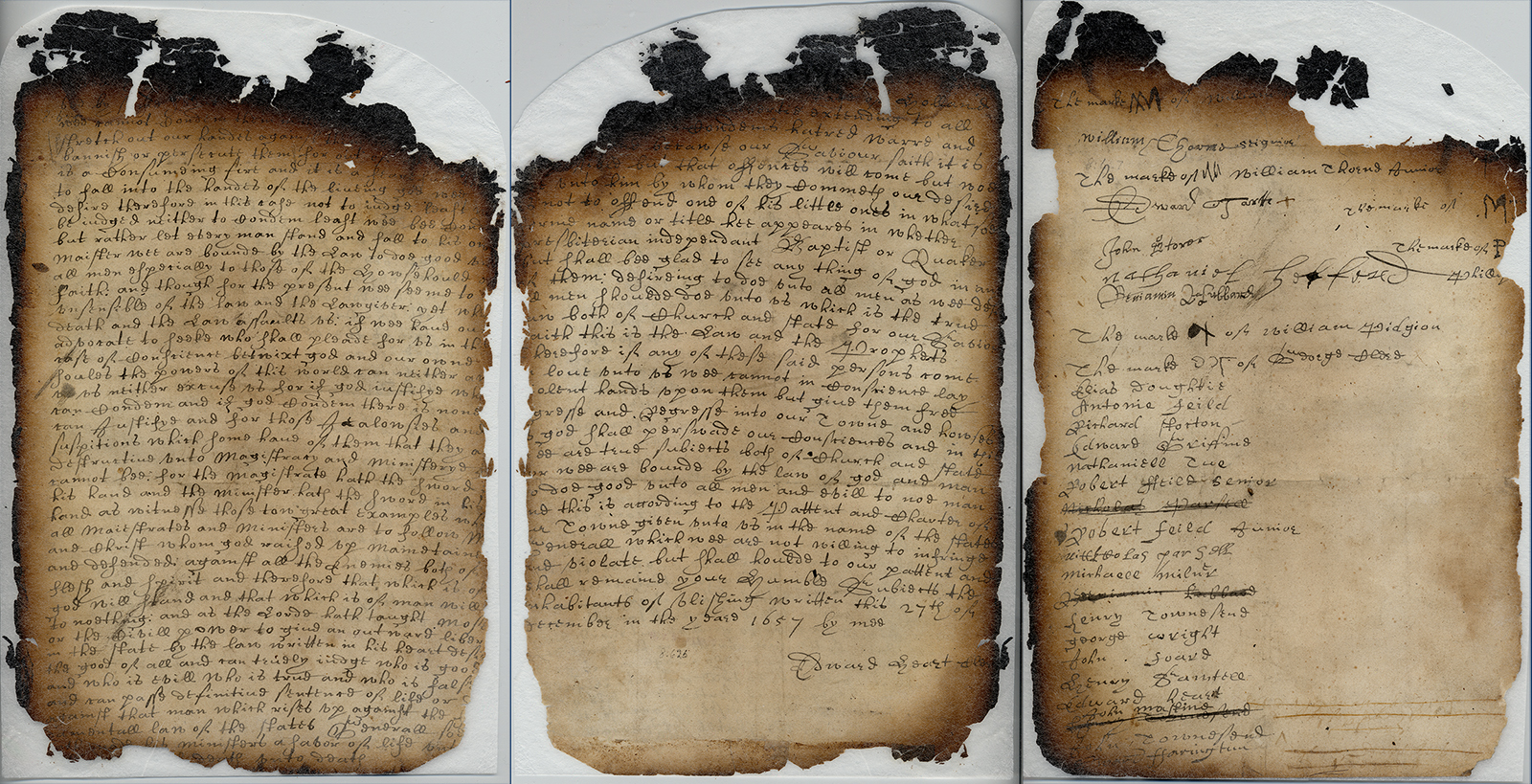
That man was Captain Edward Hart, my sixth great-grandfather and father of John Hart. In 1657, as town clerk of Flushing, a small village in the Dutch colony of New Netherland, he authored what many historians consider one of the earliest and most powerful declarations of religious liberty in American history: The Flushing Remonstrance.
The Flushing Remonstrance
At the time, Dutch Governor Peter Stuyvesant had issued harsh orders forbidding public religious gatherings by anyone outside the Dutch Reformed Church. Quakers, Baptists, and other dissenters were being fined, imprisoned, exiled, or worse. This was in stark contrast to the Dutch Republic’s own legacy of religious tolerance.
But Edward Hart and 29 other brave signers knew this policy was wrong. In language that still resonates today, the Remonstrance proclaimed:
“The law of love, peace and liberty in the states extending to Jews, Turks and Egyptians… for the law of conscience is God’s law.”
Though none of the signers were Quakers themselves, they defended their neighbors’ right to believe and worship as their consciences dictated. For them, religious liberty wasn’t just a Quaker issue—it was a human issue, one that transcended denomination and demanded moral clarity.
The result?
Governor Stuyvesant responded with fury. He dissolved the Flushing town government, arrested several signers, and imprisoned Edward Hart—who was already an older man—on rations of bread and water. Alongside Sheriff Tobias Feake, Hart endured over a month in jail for refusing to recant his principles. Ultimately, friends and family petitioned for his release, and Hart was freed—but banished from public office for his defiance.
That’s what religious liberty cost in 1657.
And yet, Hart never backed down. His act of conscience—quiet, reasoned, but unyielding—laid a spiritual foundation that would one day be echoed by his son John in the halls of Independence.
The Flushing Remonstrance predates the First Amendment by over a century, but it set a tone that would shape the American conscience: that liberty is not a privilege granted by rulers, but a right granted by God.
From a jail cell in Flushing to a parchment signed in Philadelphia, the Hart legacy is one of leadership with conviction. And for me, knowing that my family’s fight for liberty began not on a battlefield, but in a courtroom—and yes, in a prison cell—grounds my sense of calling today.
It reminds me that freedom isn’t free—and never has been.
From Father to Son to Grandson: The Legacy Carried Forward
Captain Edward Hart sowed the seeds of liberty by defending the right to worship freely. His son, John Hart, watered those seeds with bold action – signing the Declaration of Independence, hosting General Washington’s troops, and enduring personal loss for the sake of freedom.
But the story didn’t end there.
John’s own son, Edward Hart, inherited not just land and a family name – but the full weight of this heritage. And like those before him, he chose not to rest in comfort, but to stand in service.
Born in 1755 in Hopewell, New Jersey, Edward Hart came of age during the American Revolution. While his father debated and signed founding documents, Edward picked up a musket. He fought as a private in the New Jersey militia, defending the very liberties his father helped to proclaim.
Edward’s courage wasn’t as public as John’s, but it was no less real. He marched under Washington’s command, endured the brutal winters of the war, and returned home to rebuild a fledgling nation from the ashes of conflict.
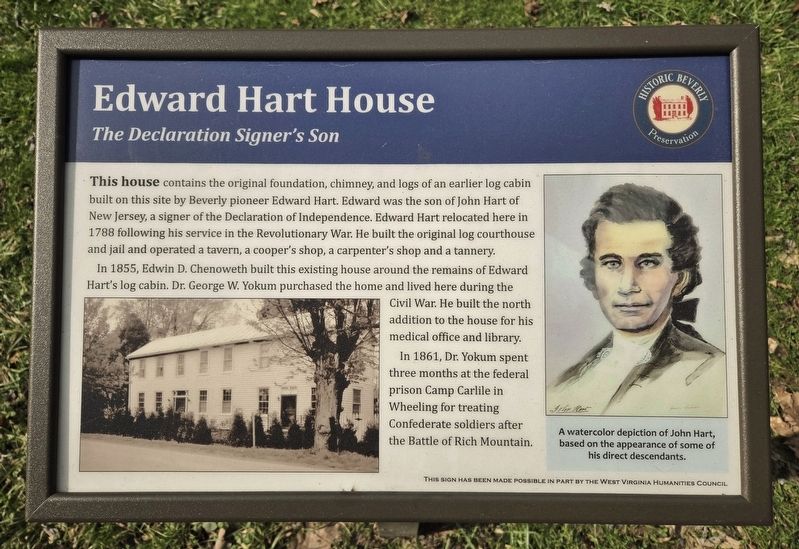
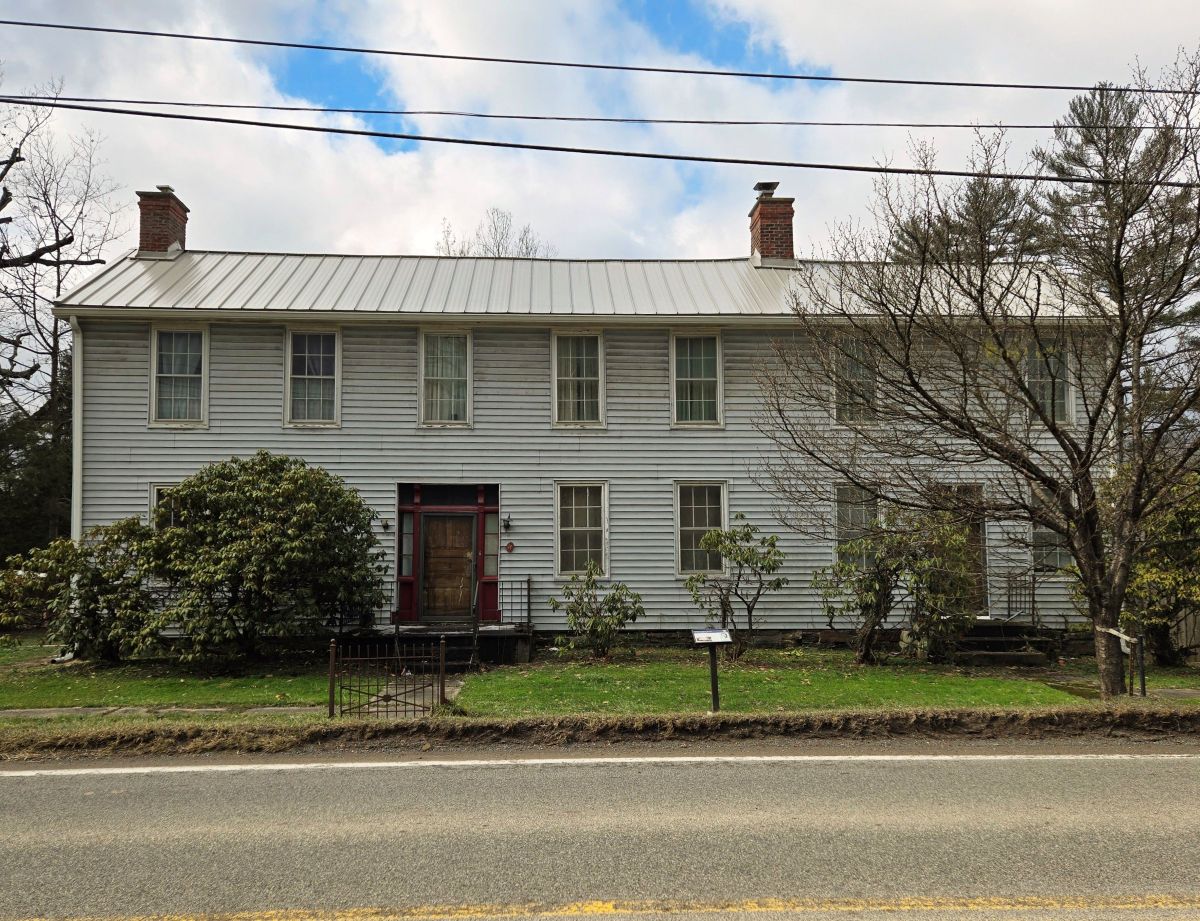
Edward Hart House Marker
When war came to the colonies, Edward was just twenty years old. While his father pledged his life, fortune, and sacred honor in Philadelphia, Edward picked up a musket and joined the New Jersey militia. He served during some of the hardest days of the Revolutionary War under the leadership of General George Washington, facing British forces who had occupied much of his home state. The war wasn’t fought in faraway fields – it was fought in his backyard, along roads he’d ridden as a boy, in towns his father had represented.
It’s possible that Edward was present for, or near, critical moments in New Jersey’s wartime story: the retreats, the bitter cold, the small victories that eventually turned the tide. He likely felt the weight of both duty and expectation – not only as a soldier of the cause, but as the son of a man marked for death by the British Crown.
Edward Hart House today
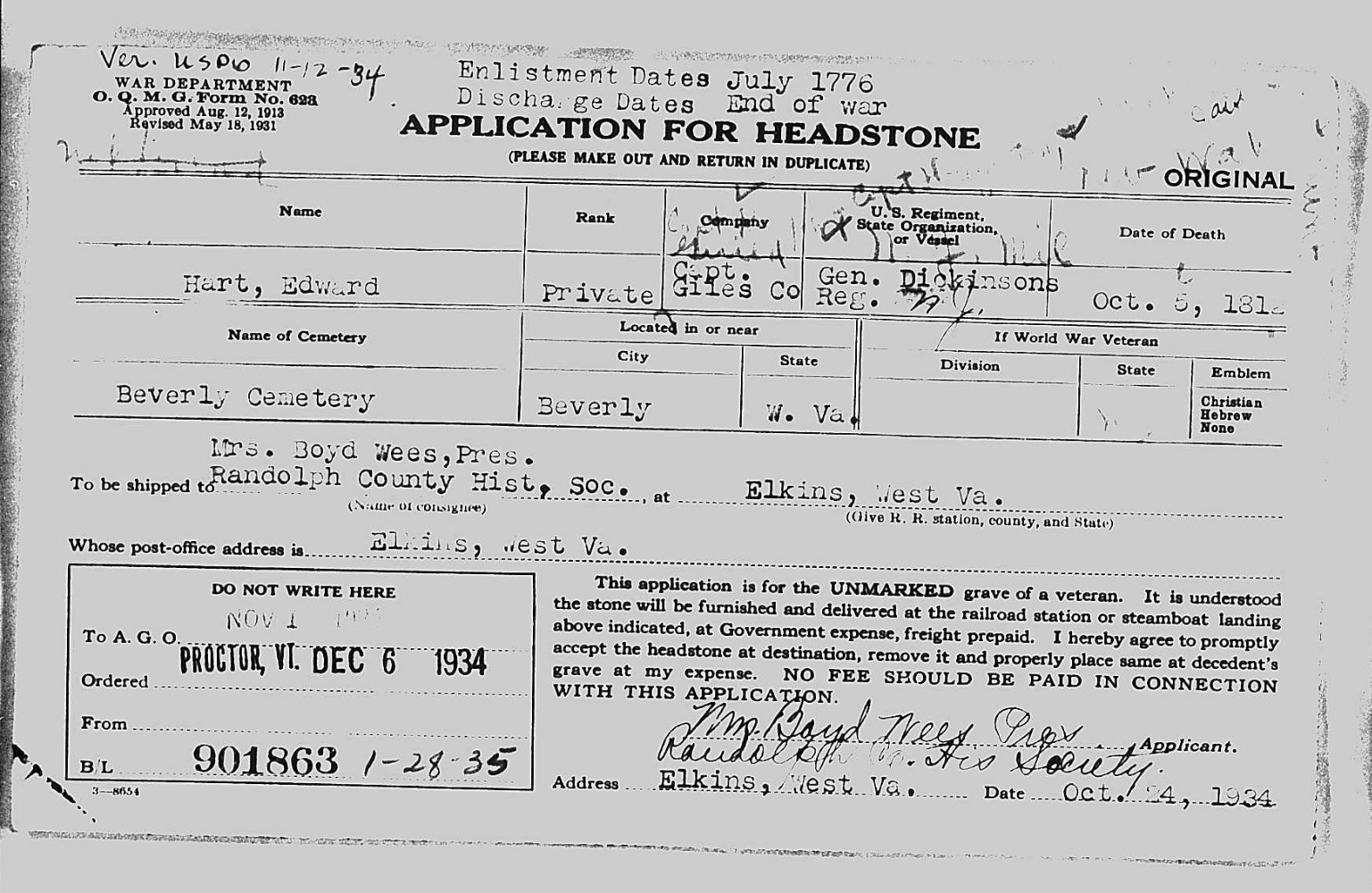
He married Nancy Ann Stout – a union some say was witnessed by Washington himself – and eventually moved his family to Randolph County, Virginia (now West Virginia), where he continued a life of civic responsibility and humble strength. He was buried there in Beverly Cemetery, but his legacy stretched much farther.
In Edward Hart, we see the through-line of American freedom – not in headlines, but in generational faithfulness. The kind of leadership that moves quietly through time, from battlegrounds to church pews, from father to son, from ancestor to descendant.
From Edward’s generation sprang a westward wave of Harts – into Kentucky, Missouri, Texas, and beyond. They took with them the memory of battle and the discipline of purpose. And through the generations, they continued to serve – as soldiers, farmers, preachers, and patriots.
In Edward Hart, I see the blueprint of my own life – a man shaped by history but grounded in humility. He didn’t need a title or a monument. His legacy is found in the hands he held, the land he tilled, and the children he raised.
Freedom isn’t just declared. It’s defended, lived, and passed on.
And Edward Hart – quiet, courageous, and faithful – passed it on.
Pleasant Albert Hart: The Civil War Son of Liberty
By the mid-1800s, the American experiment that John Hart helped birth was being tested by fire again – this time, not from a foreign king, but from within. The Civil War tore through the heart of a divided nation, and once again, the Harts were there to stand for what was right.
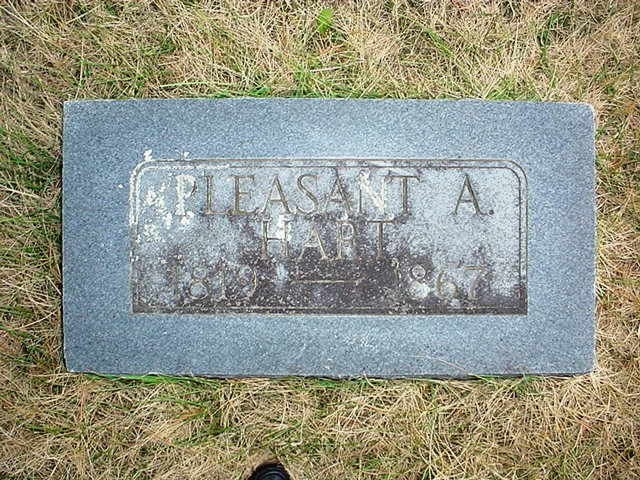
Pleasant Albert Hart, grandson of John Hart and son of Edward Hart, was born into a world shaped by independence, but marred by conflict. Raised on the stories of revolution and guided by the hard-earned values of honor, faith, and service, Pleasant didn’t hesitate when the call came. He stood with the Union Army, defending the fragile unity of the country his grandfather had helped to create.
Records show that Pleasant served with distinction, likely in a Missouri regiment – a state split between North and South, where loyalties often divided families and communities. Fighting in border states was brutal and deeply personal. These weren’t just battles of strategy – they were fights for the soul of the nation. Pleasant’s service demonstrated not only loyalty to the Union but a continuation of the Hart family’s unwavering commitment to justice and country.
He was not a politician, nor a wealthy landowner. Like John and Edward before him, Pleasant was a man of the people – a farmer, a father, a believer in the American promise. His courage wasn’t forged in high chambers of power, but in the muddy fields and torn hearts of a nation at war with itself.
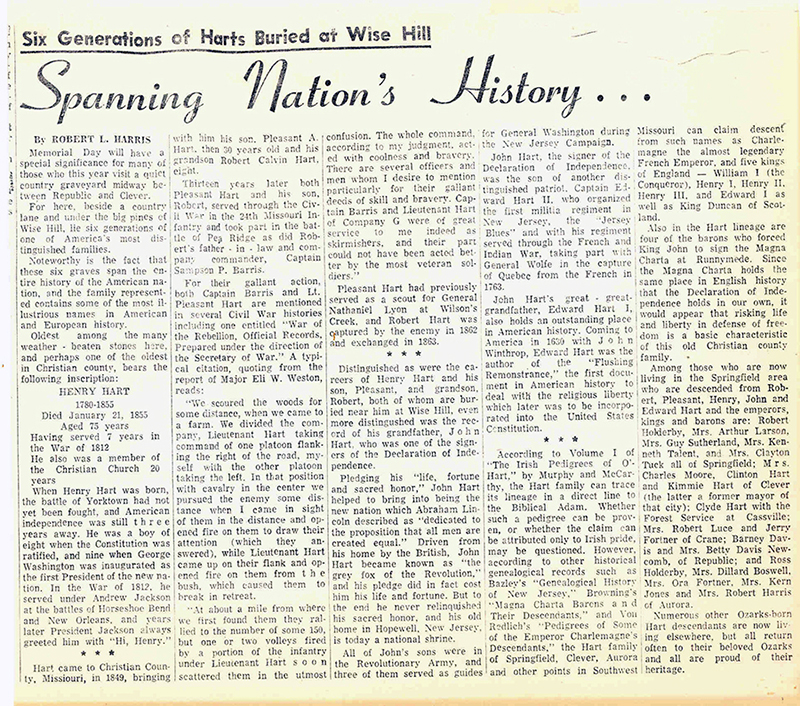
Article published in the early 70’s that began the author’s journey to find out more.
After the war, Pleasant settled his family in Missouri, one of the western frontiers of the postwar United States. Like his father before him, he worked the land, built his home, and instilled in his children the values of personal sacrifice, integrity, and faith in something greater than themselves.
Pleasant’s legacy may not be etched on monuments, but it lives on in something far more enduring: the stories passed down through generations of Harts who believed that America was always worth fighting for. His life bridged yet another era – from the founding of the nation, to its greatest trial – and he stood faithful to both.
His name, “Pleasant,” may sound gentle, but make no mistake: his life was anything but easy. He carried on the family tradition not through ease or acclaim, but through sacrifice and grit. He honored the Hart legacy not just by remembering it, but by living it – day by day, battlefield by battlefield, generation by generation.
From Frontier Roads to East Texas Roots – The Westward Journey of the Harts
After the Civil War, a new frontier beckoned. The war was over, the Union preserved – but the land itself still called. For the Hart family, the promise of a fresh start wasn’t in the halls of Congress or among city streets. It was out west, where faith, freedom, and family could grow tall like East Texas pines.
Pleasant Albert Hart, like many veterans and frontier men of his time, moved his family westward through Missouri, then further into Texas, seeking land, opportunity, and peace. His son, Robert Calvin Hart, was born into this pioneering era – a time when wagons carried hopes, and men still carried rifles to protect their families and principles.
Robert Calvin, my great-great-grandfather, was a man shaped by transition – by the stories of war, and the quiet strength it takes to raise crops, raise children, and raise a community in unsettled land. He lived through the final days of Reconstruction and the start of a new American century, and passed down the values that had traveled from New Jersey through generations of faithful men.
Mary Lea Hart Smith & Tommie Lee Smith
Robert’s son, Elcany Hart, inherited more than a name. He carried the torch of the Hart legacy into Denison, Texas, where his daughter – Mary Lea Hart Smith, my grandmother – would be born.
I was only five years old when my grandmother Mary Lea Smith passed away. She suffered from Melaney’s necrotizing fasciitis and rheumatoid arthritis, two devastating conditions that cut her life short. Because of this, I didn’t grow up with her stories spoken directly into my ear. But even in her absence, her spirit was never absent from our family.
Her daughter – my mother – Mary Lea Miller, carried her name and carried her light. To the Hart family, she was affectionately called “Chick,” a nickname given because she was her mother’s namesake and, as the family put it, “as small and joyful as a little chickadee.” That simple nickname held the essence of legacy – both lineage and love.
My mother, Chick, was the storyteller. The preserver. The one who reminded us where we came from even if we hadn’t seen it for ourselves. Through her, the legacy of the Harts didn’t just live – it sang. In lullabies. In Sunday hymns. In the lessons she handed down to me like heirlooms.
She married my father, Truitt, in Denison, Texas. At the time, my dad wasn’t a churchgoer – he wasn’t even a Christian, though his own mother was. But my mother’s faith never wavered. When we later moved to Palestine, Texas, she made sure my brother and I were in Sunday School and Vacation Bible School. She believed church was essential for raising boys of character.
One Sunday morning, when I was just six years old, I watched my dad walk the aisle at First Baptist Church. With tears in his eyes and conviction in his heart, he gave his life to Christ and followed in believer’s baptism. I’ll never forget that moment – it etched itself into my soul. And just one summer later, during VBS, I made the same life-changing decision.
That’s my mother’s legacy. Quiet, steady, spirit-led. The faith of a woman who lived like John Hart signed – boldly and for generations to come.
Today, as I live, work, and serve in the Pineywoods of East Texas, I carry with me more than a surname – I carry a storyline. A family that rose from colonial fields to revolution, marched through war and westward expansion, and settled in a land as bold and rooted as the Harts themselves.
From Captain Edward Hart’s plea for religious liberty, to John Hart’s signature on the Declaration, from Edward’s march under Washington, to Pleasant’s Civil War sacrifice, and down through the dusty roads of Missouri to the red soil of Texas, our family has shown that leadership isn’t found on the battlefield or the ballot – it’s found at home.
And for me, home is a name. A memory. A little chickadee named Chick. And a legacy worth living for.
Come back tomorrow for Part 3: “Freedom Fought, Faith Kept: How Legacy Led Me to Purpose”
Criminal in hoodie and gloves typing on laptop keyboard in dark room
Most people think of hackers in hoodies behind screens. But what if the real threat is the person on the other end of the help desk line?
A disturbing new trend is sweeping the tech world—and it’s one that every business owner in East Texas should know about. Cybercriminals aren’t just breaking in through firewalls anymore. They’re walking in the front door—through tech support.
The Risk You Didn’t See Coming
Big companies like Coinbase and major retailers have been targeted not by high-tech hacking, but by manipulating or bribing tech-support workers—often in outsourced call centers.
Here’s how it works:
A criminal calls pretending to be a legitimate employee.
A support worker is tricked into disabling security features like multi-factor authentication.
Suddenly, the attacker has full access to sensitive systems or customer data.
It’s social engineering at its most dangerous—and it’s already causing real financial losses across the country.
Why Local Businesses Aren’t Immune
If it can happen to a Fortune 500 company, it can happen here in East Texas, too. Small and mid-sized businesses often:
Use third-party or remote IT support without strict controls.
Skip regular staff training on fraud and cyber scams.
Assume internal systems are secure when they aren’t being actively monitored.
That’s a costly assumption in 2025.
What Castleberry Services Is Doing About It
Castleberry Services, based right here in Lufkin, is taking action to help protect local businesses.
Here’s how they do it differently:
Local, fully trained support teams—no outsourcing.
Tight access controls that limit what tech support can change or access.
Real-time monitoring of IT systems and support activity.
Employee security awareness training to spot scams before they happen.
Don’t Wait for a Crisis to Lock the Door
Your business may be running smoothly today—but it only takes one mistake to let a criminal into your systems. Castleberry Services can help you lock down your IT support process before it’s too late.
Call (936) 237-3030 or visit castleberryinc.com to schedule a free security consultation.
This article is part of a regular business technology column brought to you by Castleberry Services—helping local businesses grow smarter and more secure across Texas Forest Country and beyond.
Lufkin, TX — Out here in Texas Forest Country, we know that keeping our communities beautiful takes more than just a few good intentions—it takes people who show up, roll up their sleeves, and get involved. That’s exactly the spirit behind the 11th Annual Clay Shoot Fundraiser, hosted by Angelina Beautiful/Clean, happening Saturday, August 9, 2025, at The Pines Sporting Clays in Lufkin.
From the crack of the first shotgun blast to the final round of prize giveaways, this isn’t just another East Texas event—it’s a celebration of everything that makes our region strong: good people, great food, healthy competition, and a shared commitment to keeping Angelina County beautiful.
Participants can expect a full day of fun beginning at 8:00 AM, including:
Live music and games that bring out the smiles
Tasty bites and cold drinks to fuel the fun
Prize drawings and raffles worth showing up for
And most importantly—100 targets to test your aim
Whether you’re a seasoned shooter or just coming out to cheer on a team, this event welcomes everyone with open arms. And every dollar raised goes straight back into the community, funding litter prevention, environmental education, and beautification projects in the schools, parks, and neighborhoods we call home.
“We love this event because it blends two of our favorite things: the outdoors and community pride,” said Heather Eoff, Executive Director of Angelina Beautiful/Clean. “When folks come out to shoot, they’re also helping teach our kids to care for the Earth and keeping our streets, rivers, and forests clean.”
From sponsors and volunteers to friends just stopping by for the barbecue, the clay shoot has become a summer staple. If you’ve never been, now’s the year to join in.
Event Details:
What: 11th Annual Clay Shoot Fundraiser
When: Saturday, August 9, 2025 | 8:00 AM – 5:00 PM
Where: The Pines Sporting Clays, 311 Spring Lake Dr, Lufkin, TX
Hosted by: Angelina Beautiful/Clean
Why: To support local beautification and environmental efforts
It reads like a script for a satirical political drama — except it really happened, right here in Texas.
Taral Patel, a once-rising figure in Fort Bend County politics, was caught running a digital smear campaign… against himself.
Yes, you read that right.
According to a recent Texas Ethics Commission order, Patel created fake Facebook accounts with names like “Antonio Scalywag,” “Paul Rosenstein,” “Jennifer Tremaine,” and “Jane Donnie.” He used these accounts to post racist and xenophobic attacks — not on others, but aimed at himself — only to then share those same posts publicly as “evidence” of the hate he was facing during his campaign.
If it sounds absurd, it is.
Unfortunately for Patel, the paper trail wasn’t just sloppy — it was practically neon-lit. Meta, Google, T-Mobile, Chase Bank, and even IP address logs all pointed right back to him. One fake account even used a stranger’s photo without consent.
What started as a misguided attempt to sway public sympathy turned into a series of criminal charges. Patel ultimately pleaded guilty to multiple misdemeanor violations of Texas Election Code §255.005 — which prohibits misrepresenting one’s identity to influence an election. He was sentenced to 24 months probation, 200 hours of community service, and found himself publicly reprimanded by the Texas Ethics Commission.
Here’s the Sad — and Funny — Lesson:
Trying to “catfish” your way into elected office using racist sock-puppet accounts isn’t just unethical… it’s criminal.
And in today’s world of IP tracing, digital forensics, and AI-based monitoring — you will get caught.
What Can We Learn?
Whether you’re running for office, managing a business, or just posting in your local Facebook group:
Be authentic.
Don’t manufacture drama for attention.
And above all, don’t break the law trying to manipulate others online.
In East Texas, we pride ourselves on real values: hard work, honesty, and community integrity. Let this bizarre story be a warning — and a reminder — to keep our politics (and social media) clean.
Part 1: The Signer in My Blood – Discovering John Hart’s Brave Stand for Liberty
By Lee Allen Miller, TFCL Publisher
Growing up in East Texas, I always knew my roots ran deep. But I didn’t fully appreciate just how far back my family’s story reached – until I traced it to the very founding of our nation.
I am the five-times great-grandson of John Hart, one of the 56 signers of the Declaration of Independence.
That fact humbles me. It also challenges me.
John Hart was not a famous man in his time. He wasn’t a general or a lawyer or a wealthy planter. He was a farmer, a husband, a father of thirteen, and a devout Christian. He was a man who lived simply but believed deeply in liberty, faith, and the dignity of every individual. And when the time came to choose between comfort and conviction, he chose conviction.
He signed the Declaration of Independence in 1776 at the age of 65, knowing full well it could cost him everything. And in many ways, it did.
Who Was John Hart?
John Hart was born around 1711 in Hopewell Township, New Jersey. He lived a quiet life for much of his early years, working as a farmer and miller. He was not a man of privilege or position. He didn’t write books or seek the spotlight. But in the eyes of his community, he was known as “Honest John Hart” – a man of integrity, deeply respected by his neighbors for his sound judgment and unshakable faith.
He entered public service slowly, first as a justice of the peace, then in the colonial legislature of New Jersey. But as tensions with Great Britain grew in the 1770s, Hart’s convictions pushed him forward. He aligned with the growing Patriot cause, even as it became clear that opposing the Crown would cost many their livelihoods – or worse.
In 1776, at the age of 65, John Hart was selected to represent New Jersey in the Second Continental Congress, replacing a delegate who opposed independence. That July, he joined 55 other men in signing one of the most revolutionary documents in history: the Declaration of Independence.
It was a bold move, especially for a man in the later years of life. Unlike some of the younger signers, Hart wasn’t chasing glory. He was sacrificing everything he had – his property, his reputation, even his life – for a future he might never see. And indeed, he didn’t.
That same year, British and Hessian forces invaded New Jersey. John Hart was forced to flee his home. His property was raided. His farm was looted. He hid in the woods and slept in caves, while his family scattered. During his time in hiding, one of his daughters died, and he was unable to return to bury her.
After months of evasion, Hart returned to public life in 1777 and was elected Speaker of the New Jersey General Assembly, where he continued serving until his health gave out. He passed away on May 11, 1779, just three years after signing the Declaration.
He never saw the full fruits of the liberty he helped secure. But he never wavered.
And yet, because of him – and men like him – we stand today in the shadow of that liberty. Free to worship. Free to work. Free to lead. Free to build something that will outlive us.
John Hart’s courage didn’t end with him. It passed down through generations.
My Lineage from Liberty
John Hart’s courage didn’t end with him. It passed down through generations – etched into the backbone of my family and stitched into the values we still live by today.
His son, Edward Hart, took up arms under the command of General George Washington in the New Jersey Campaign, fighting not for glory but for the idea that freedom was worth defending. From him, the spirit of sacrifice and service traveled westward, as the Hart family helped shape the young frontier of a growing nation.
One of Edward’s descendants, Pleasant Hart, became a respected figure in Missouri, serving in the 22nd Missouri Infantry during the Civil War. He stood alongside his son, Robert Calvin Hart, who joined him in uniform and fought to preserve the Union. Their bravery was so distinguished that they were mentioned in official military citations, noted not only for their courage but for their calm leadership in the face of enemy fire.
From war-torn fields to dusty farmlands, the Harts built lives rooted in faith, hard work, and perseverance. They weren’t aristocrats or politicians. They were farmers, teachers, soldiers, and servants – quiet leaders whose lives told a story of resilience.
Eventually, our family’s journey led to Christian County, Missouri, where six generations of Harts are now buried under the oaks of Wise Hill Cemetery. It was there that my great-great-grandfather Elcany Hart, son of Robert Calvin Hart, raised his family. He was a man of character, shaped by a lineage of men who stood firm when others folded. His daughter – my grandmother, Mary Lea Hart Smith – grew up immersed in these stories. She didn’t just inherit their name; she inherited their spirit.
She passed that legacy on to my mother, and my mother passed it on to me.
What It Means Today
As I write this on the eve of Independence Day, I feel both the weight and the wonder of that legacy. Not with pride—but with purpose.
It’s easy to celebrate the Fourth of July with fireworks and flags. But for me, it’s something deeper. It’s personal. Because I carry the blood of a man who signed his name on a piece of parchment that put a target on his back. A man who lost his home, lived in hiding, and buried a child he couldn’t mourn in public—all because he believed that ordinary people should be free.
That’s not just history to me. That’s inheritance. And that inheritance doesn’t come with entitlement. It comes with responsibility.
Leadership isn’t just about ambition. It’s about sacrifice. It’s about showing up when it matters, speaking truth when it’s hard, and doing what’s right even when it costs you. It’s about planting trees you may never sit under—like John Hart did when he signed a declaration he didn’t live to see fulfilled.
In today’s world of instant gratification and shallow popularity, that kind of leadership is rare. But it’s still needed. Desperately.
And that’s the kind of leadership I aspire to bring to my work, my businesses, my relationships, and my walk with God. Whether it’s helping a family navigate legal challenges, guiding East Texans toward energy independence, mentoring young entrepreneurs, or simply being the kind of husband, father, and grandfather who leads with consistency—I want to be the kind of leader who builds lasting impact, not just short-term influence.
That’s what John Hart did. That’s what every generation of my family tried to do in their time. And that’s what I’m committed to doing here and now, in the Pineywoods of East Texas—where faith is still strong, freedom still matters, and families still believe in something bigger than themselves.
Over the next few days, I’ll be sharing more of this story—about the Hart family, their trials and triumphs, and how their leadership still shapes mine today. I hope it inspires you to reflect on your own legacy, and the kind of freedom worth passing on.
Because leadership doesn’t start in Washington. It starts at home. In the soil. In the church pew. At the kitchen table. In how we raise our children and how we honor our elders.
And for me, it started in the heart of a man named Hart.
Please save the date for our annual civic auction. “Lights, Camera, Auction. July 26, 2025. Doors open at 6:30 pm and start at 7:00 pm. It’s the best night of the year for the San Augustine County Chamber of Commerce. We will be selling tickets the first week of June. Pick of the litter, early bird special and other. Tables are $200.00 and admission is $25.00. We are taking donations for our auction now. If you want to be a sponsor or give a gift for the event, give me a call at 936-275-3610 or email saccc611@gmail.com
Texas A&M AgriLife experts share guidance on fireworks, heat, food safety and mosquitoes
The Fourth of July is synonymous with fireworks, grilling and outdoor fun, but it’s also a holiday that tops the charts for preventable injuries and accidents. Nationwide, Independence Day celebrations lead to thousands of fireworks-related burns, foodborne illness, heatstroke and even wildfires each year.
Texas A&M AgriLife experts recommend planning ahead and keeping in mind these four key tips to ensure the only surprises this Fourth of July are the fireworks’ dazzling displays.
Texas A&M AgriLife experts provide tips to stay safe on the Fourth of July by celebrating responsibly. (Michael Miller, Laura McKenzie/Texas A&M AgriLife)
Practice firework safety
Texas A&M Forest Service reports that about 90% of wildfires are caused by human activities, and Independence Day is one of the top days for reported wildfires.
The safest way to enjoy fireworks is to attend a professional display instead of lighting your own. However, if you’ll be handling fireworks yourself, Texas A&M Forest Service experts recommend:
High temperatures and outdoor activities also mean a greater chance for heat-related illness.
“Heat exhaustion can occur when the body heats up faster than it can cool down,” said Michael Lopez, DrPH, Texas A&M AgriLife Extension Service health specialist and assistant professor in the Family and Community Health Unit, Bryan-College Station. “It is the body’s response to excessive loss of water and salt, which can cause symptoms like heavy sweating, faintness, dizziness, fatigue, rapid pulse, headache and nausea.”
He encourages you to stay safe in the heat by protecting your skin and staying hydrated:
Hydrate before going outside and bring plenty of water and hydrating snacks like watermelon, cucumbers and oranges.
Take breaks in shaded or air-conditioned areas.
Wear protective clothing or apply broad-spectrum protection with at least SPF 30 and reapply every few hours — more often if swimming or sweating.
Water-rich snacks like watermelon and berries can help guests stay cool and comfortable throughout Fourth of July festivities. (Laura McKenzie/Texas A&M AgriLife)
Prepare food properly
The most common food safety-related issue when grilling is foodborne illness from inadequately stored or undercooked foods, said Jenna Anding, Ph.D., AgriLife Extension nutrition specialist and professor in the Texas A&M Department of Nutrition.
Bacteria that cause foodborne illnesses grow rapidly in the “danger zone” between 40 degrees and 140 degrees. Cold foods should be kept chilled until served, and hot foods should be kept above 140 degrees.
To prevent foodborne illness:
Watch the clock. Don’t leave perishable items like meats, salads or dairy-based dishes out for more than two hours.
Cold stays cold. Use coolers with ice packs for cold dishes.
Hot stays hot. Keep cooked food in insulated containers.
Prevent cross-contamination. Wash hands frequently, especially after handling raw meat, and use clean utensils and cutting boards.
Stay safe all season
Find more science-backed tips from AgriLife Extension to keep you and your loved ones healthy and protected — wherever the summer takes you.
Mosquito activity peaks in the early evening, just when many are celebrating with fireworks, noted Sonja Swiger, Ph.D., AgriLife Extension entomologist and professor in the Texas A&M Department of Entomology, Stephenville.
Swiger recommends taking a few simple precautions to stay protected:
Wear light-colored, long-sleeve shirts and full-length pants.