Home Blog Page 90

The Story Behind Our Changing Clocks: A History of Daylight Saving Time

As residents across our region set their clocks forward this morning, few may know the fascinating history behind this twice-yearly time adjustment. Daylight Saving Time has a complex past that stretches back further than many might expect.

Early Origins

Though often attributed to Benjamin Franklin, who humorously suggested Parisians could save candles by rising earlier, the concept of Daylight Saving Time wasn’t formally proposed until the late 1800s. In 1895, New Zealand entomologist George Hudson presented the first detailed proposal, hoping to gain more evening daylight hours for his insect collecting.

While Hudson worked on his proposal in New Zealand, British builder William Willett was developing similar ideas on the other side of the world. In 1905, during his pre-dawn horseback rides through London, Willett took note of drawn curtains and darkened windows. Troubled by what he saw as wasted sunshine, and personally motivated by his love of golf, he launched a passionate campaign to shift clocks forward in summer months to better align daylight hours with people’s waking lives.

Wartime Implementation

Despite these early proposals, it took a global conflict to put the concept into widespread practice. Germany was the first country to implement Daylight Saving Time in 1916 during World War I, as a way to conserve coal during wartime. The United Kingdom followed shortly after, and the United States adopted the practice in 1918.

After the war ended, many countries abandoned the time change. However, the energy benefits had made an impression that would later resurface.

The Standardization Period

For decades, Daylight Saving Time implementation remained inconsistent across the United States. This created what many called “clock chaos,” particularly for transportation systems and broadcasters. Bus drivers sometimes had to reset their watches seven times during a 100-mile trip.

To address this confusion, Congress passed the Uniform Time Act in 1966. This law established a system of uniform Daylight Saving Time across the country, though states could exempt themselves by passing state law.

Energy Crises and Extensions

The energy crisis of the 1970s brought renewed interest in Daylight Saving Time’s potential conservation benefits. In 1974, President Nixon signed the Emergency Daylight Saving Time Energy Conservation Act, implementing year-round Daylight Saving Time for two years.

Over subsequent decades, the period of Daylight Saving Time gradually extended. The current schedule—beginning on the second Sunday in March and ending on the first Sunday in November—was established by the Energy Policy Act of 2005 and took effect in 2007.

Ongoing Debates and Research

While proponents highlight extended evening daylight and potential energy savings, critics point to disruptions in sleep patterns and questionable energy benefits in our modern world. Recent studies suggest the time change may be associated with temporary increases in traffic accidents, workplace injuries, and even heart attacks.

These concerns have prompted several states to pass legislation to remain on either Standard Time or Daylight Saving Time year-round, though changing to permanent Daylight Saving Time would require federal approval.

Local Impacts Through History

Our region has experienced the evolution of time-keeping practices alongside the rest of the nation. From the days when town clocks were the primary timekeepers to today’s automatically updating digital devices, the way we track time has transformed dramatically.

As we adjust to the time change today, we’re participating in a practice with a rich historical backdrop—one that continues to evolve as research, policy, and public opinion develop in the ongoing conversation about how we should structure our days.

Nonprofit Leadership Center at Angelina College Awards Simmons

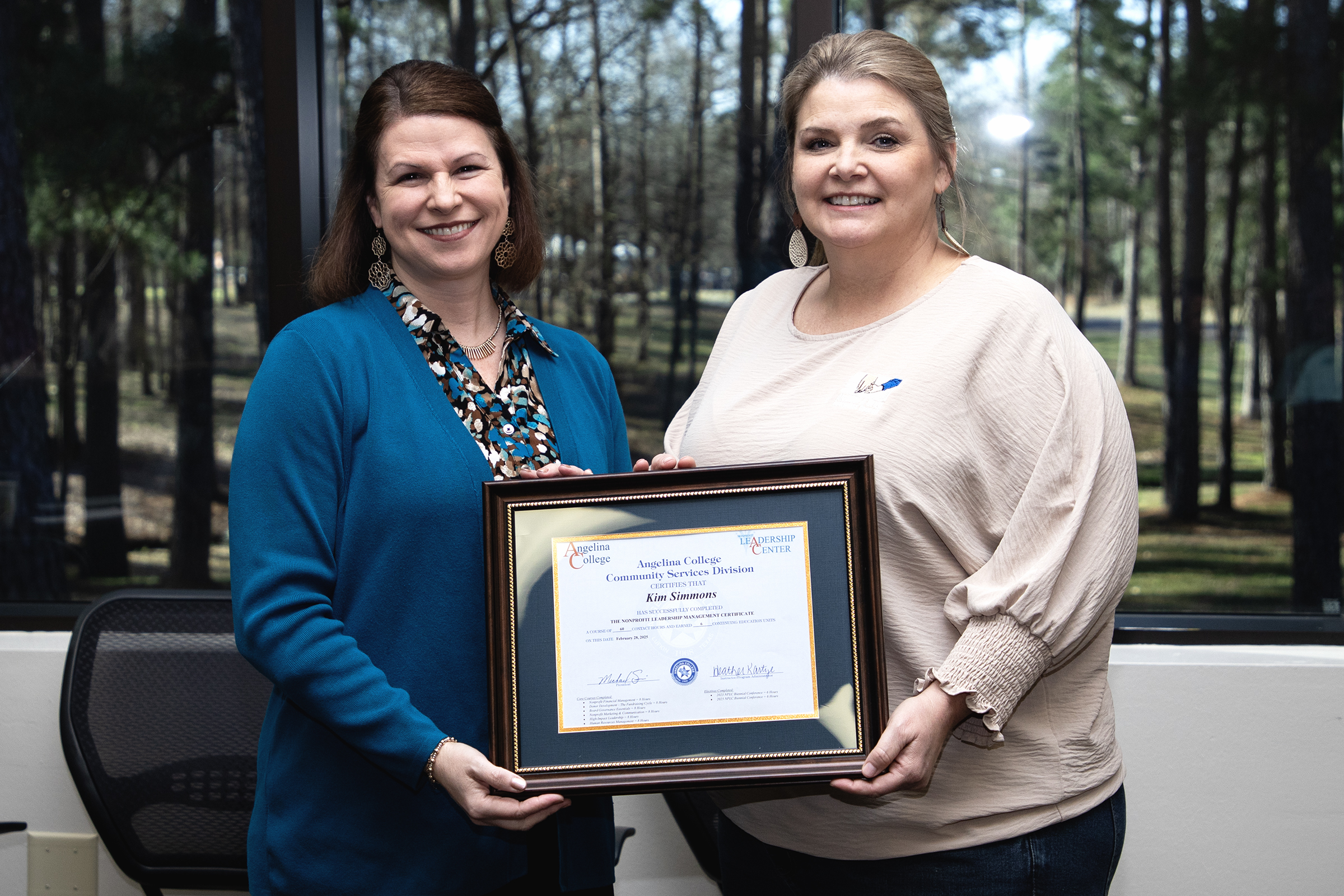
Heather Kartye and Kim Simmons:

Program director Heather Kartye (right) presents Kim Simmons a certification for completing the Nonprofit Leadership Center Management course at Angelina College. The NLC, in collaboration with the Lufkin Chamber of Commerce, offers training for both emerging and existing nonprofit professionals and organizations.

Chamber of Commerce and Kim Simmons:

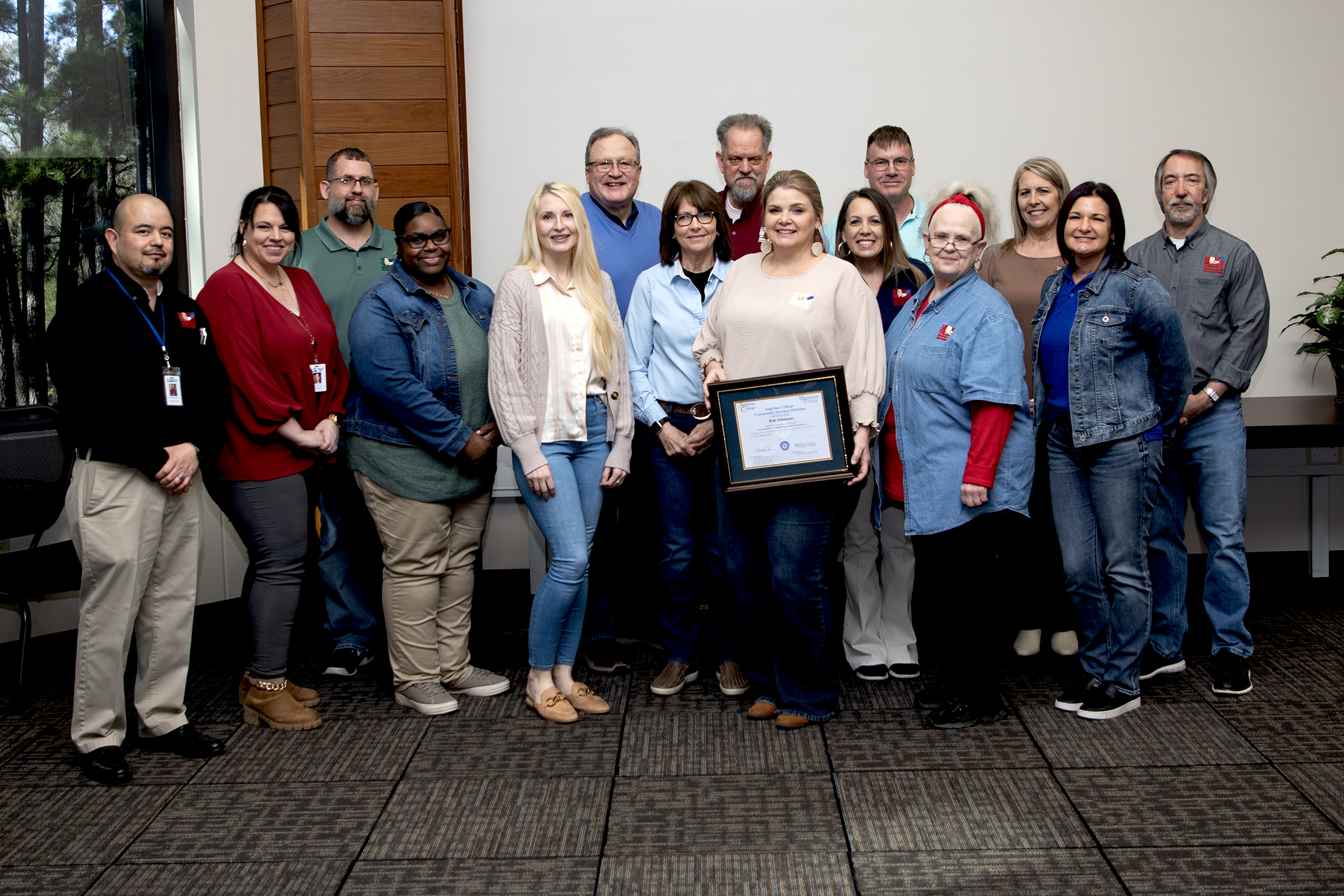
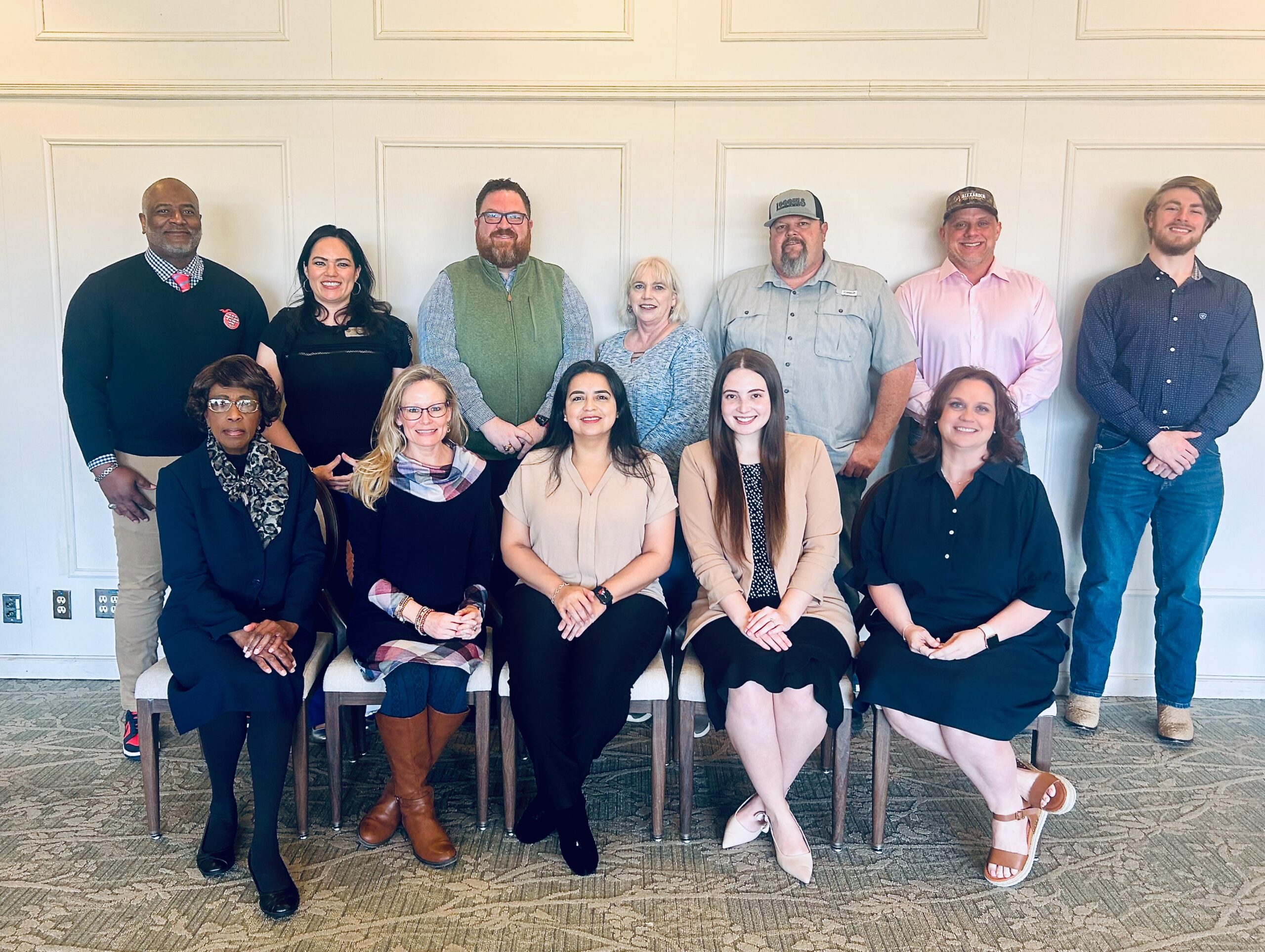
Kim Simmons (center, holding award) poses with members of the Lufkin Chamber of Commerce during a ceremony held on Friday. Simmons received her certification for completing the Nonprofit Leadership Center Management course at Angelina College. The NLC, in collaboration with the Chamber, offers training for both emerging and existing nonprofit professionals and organizations.

Gary L. Stallard
Angelina College
Liberal Arts Instructor/Sports Information Director
Cell: (936) 465-4614
E-mail:  gstallard@angelina.edu

Addyson Arnold to compete at Angelina County Fair

Addyson Arnold in showing her top broiler at a previous Angelina County Fair. This year’s Broiler show is on Tuesday March 25 at 6pm in the George H. Henderson Expo in Lufkin

Addyson Arnold waiting to show her top three broilers to show last year at the Angelina County Fair. This year’s Broiler show is on Tuesday March 25 at 6pm in the George H. Henderson Expo in Lufkin.

Addyson Arnold starting with 1-day old chicks to raise in six weeks for the broiler competition at the Angelina County Fair. This year’s Broiler show is on Tuesday, March 25 at 6pm in the George H. Henderson Expo in Lufkin.

Addyson Arnold raising broilers and competing at the Angelina County Fair

Addyson Arnold is an 11th grade student at Lufkin High School and the daughter of Glen and JonAnna Arnold. 

She says she became involved in 4-H because her older sister and brother both showed animals and she couldn’t wait until she was old enough to join them.  “I come from a long line of agriculture genes because one of my grandfathers was the county extension agent for Angelina County and my other grandfather was an agriculture teacher for Diboll High School.  I also wanted to get into 4-H because I love animals and knew that if I did well at the county show that I could make money to help my parents pay for my college education,” she said. The grandfather who was an Extension Agent is the late Charlie Arnold and the other grandfather who was an agricultural science instructor is Jesse Bradford. 

While this article highlights the Addyson in the broiler show where she has made the sale all 7 years, she has been quite successful in several other areas. States Addyson, “I have competed in the Family & Consumer Science division where I have been best in show for 6 out of last 8 years, photography where I have won best in show 3 times, rabbits where I made the sale 2 of the last 3 years and arts and crafts where I have submitted a painting for judging for the last 5 years.”

A “broiler” is a chicken bred specifically to grow muscle efficiently and to be eaten. Their genetics are very different from the egg producing breeds we have in the back-yard egg-laying flock. Raising broiler chickens is an excellent youth project for beginners to livestock exhibiting. Chickens are considerably easier to handle, require less space, and are less expensive than other species.

Addyson explains, “The most rewarding part of the fair besides making the sale with my projects is getting to share my project experiences with the elementary school kids that come to tour the fair each year.  I love to interact with kids and see their eyes light up when they interact with an animal for the first time. Hopefully, some of these kids will return to the fair one day with a project of their own.” 

“I participate in not only 4-H fair activities but also am heavily involved with my church and my school activities where I play volleyball and compete in track field events.  It is sometimes overwhelming and hard to prioritize my daily schedule to make sure everything gets done while at the same time keeping my grades up. Animals are equivalent to babies and need to be taken care of constantly to ensure their growth and survival. It is my responsible to keep these animals alive and thriving and that is a big responsibility to undertake.” 

This is a short-term livestock project lasting only six weeks.  The quick time frame of only 6 weeks is very typical of market conditions.  On a commercial scale, it typically takes only 6-7 weeks to raise a broiler to market weight. At the county fair, only the best 3 broilers from the original pen are shown in competition by a student.  

Her mom JonAnna says, “I hope for them to gain responsibility and time management skills through taking care of animals.  They have to prioritize their day around feeding, grooming and keeping their animal projects healthy. They also develop leadership skills by speaking to and demonstrating how to care for your projects to younger exhibitors. They also learn to be a gracious competitor no matter if you win or lose.”

JonAnna continues, “The most rewarding experience as a parent is watching your child reap the benefits of the time and energy that they have put into a project. It is also rewarding to have other parents come up to you and let you know how your child has inspired or helped a younger team member gain confidence or knowledge through their words or deeds. The hardest part as a parent is to step back and allow your child to succeed or fail without you stepping in to do it for them. Always offer help and advice but allow the project to be the child’s. They will learn and grow so much more by allowing this.”

Addyson adds, “Being a part of the 4-H Horse Club and participating in the County Fair is a very rewarding experience.  Not only do you meet new friends but you also get to experience the success of raising and showing your projects. when they do well in the show, you are recognized in the sale and can use the money to help pay for college or to help purchase show projects for the next year. The fair also offers opportunities for scholarships to help offset the financial burden of college.”

Her mom, JonAnna, wrapped it up saying, “There is something for everyone.  You do not have to live on a farm or be a cowboy or cowgirl to compete at the fair.  There are so many diverse competitions offered for everyone whether you are in elementary, junior high or high school. Yes, there are the animal projects, but there is FCS, arts and crafts, forestry, shotgun, archery, public speaking.  There is something for everyone and it is a great opportunity to get your child involved with a great group of individuals 

As parents, we learned so much being active in the county fair projects that there was no hesitation in getting our own children involved.  The fair helped to pay for not only my college education but also my kids through money made from the selling of projects and scholarships offered by being an active member of a 4-H or FFA group and the county fair.”

This year’s broiler show at the Angelina County Fair is sponsored by Pilgrim’s Pride and will be held on Tuesday, March 25 starting at 6 pm in the main arena at the George H. Henderson Expo. The entire County Fair is from Monday, March 24 thru Saturday, March 29 concluding with the sale on Saturday afternoon. The auction will be Saturday evening in the main arena starting at 4 pm. For more information about the Angelina County Fair, go to angelinacountyfair.com.  

Capitol Update: Supporting Our Youth, Strengthening Education, and Investing in Texas Schools

Deep East Texas is finally warming up, and that means Spring is upon us! The return of warm weather also signals that county fair season is back in many of our communities. As a proud supporter of our youth involved in FFA, 4-H, and FCCLA, I hope you all will make an effort to get out and support these students who will showcase their projects in the coming weeks. Always remember that investing in our youth is investing in the future of our community’s prosperity. I hope to see you at the fair!

With that, here’s an update from your State Capitol…

Capitol Update

The work at the Capitol has started to get truly busy. This past week, the House Committees on Public Education and Natural Resources, on which I serve, and the Subcommittee on Academic and Career-Oriented Education, on which I serve as Chair, all met.

The Committee on Natural Resources heard testimony from several state agencies under its jurisdiction, including the Texas Water Development Board, the Texas Commission on Environmental Quality, and the Texas State Soil and Water Conservation. I was grateful for the opportunity to learn more about these agencies and their vital work to protect our precious natural resources. 

The Subcommittee on Academic and Career Oriented Education met to consider House Bill 120, by Rep. Keith Bell, a comprehensive piece of legislation that will enhance Texas students’ career and technology education (CTE) opportunities. The bill builds upon existing programs, such as the Rural Pathway Excellence Partnership (R-PEP), while introducing new initiatives to ensure students statewide—especially in rural and underserved communities—have access to high-quality career training and advising.

Some highlights of HB 120 include adding the JROTC as a qualifying CTE program, requiring R-PEP programs to offer at least one high-demand career pathway, and increasing funding for Pathways in Technology Early College High School (P-TECH) programs from $50 per student to $150. I applaud Rep. Bell on this landmark bill and look forward to supporting it when the Public Education Committee takes it up.  

Finally, the Committee on Public Education heard invited and public testimony on House Bill 2, the House’s comprehensive plan to reform the public school and public school finance system. HB 2 is a historic piece of legislation that includes nearly $8 billion in total funding for our public schools. That funding represents the single largest state investment in public schools in Texas’s history. 

Some highlights of HB 2 include expanding the Teacher Incentive Allotment to strengthen our teacher workforce and encourage professional development for all educators, providing full-day funding for students in Pre-K partnerships, and introducing a prep allotment to invest state resources in teacher training and certification.

While this is an important step to provide vital support for our public schools, the filed version of HB 2 is not final, and the Committee left the bill pending after hearing all testimony. I appreciate Chairman Brad Buckley’s leadership on HB 2 and look forward to working with him and the rest of my colleagues on the Committee to deliver much-needed relief and support to our public school teachers and students.

The mobile office is on the road again and looks forward to seeing you on the following dates, in the following locations: March 12 at the Polk County Commissioner’s Court Room in Livingston from 9:30-11:30 am, or at the Tyler County Courthouse in Woodville from 1:30-3:30 pm; March 19 at the Houston County Courthouse Annex in Crockett from 9:30-11:30 am, or at the Trinity County Courthouse in Groveton from 1:30-3:30 pm.

As always, please do not hesitate to contact my office if we can help you in any way. My district office may be reached at (936) 634-2762. Additionally, I welcome you to follow along on my Official Facebook Page, where I will post regular updates on what’s happening in your State Capitol and share information that could be useful to you and your family: https://www.facebook.com/RepTrentAshby/.

Panola County Timber Theft Case Resolved, Recovered $50,240

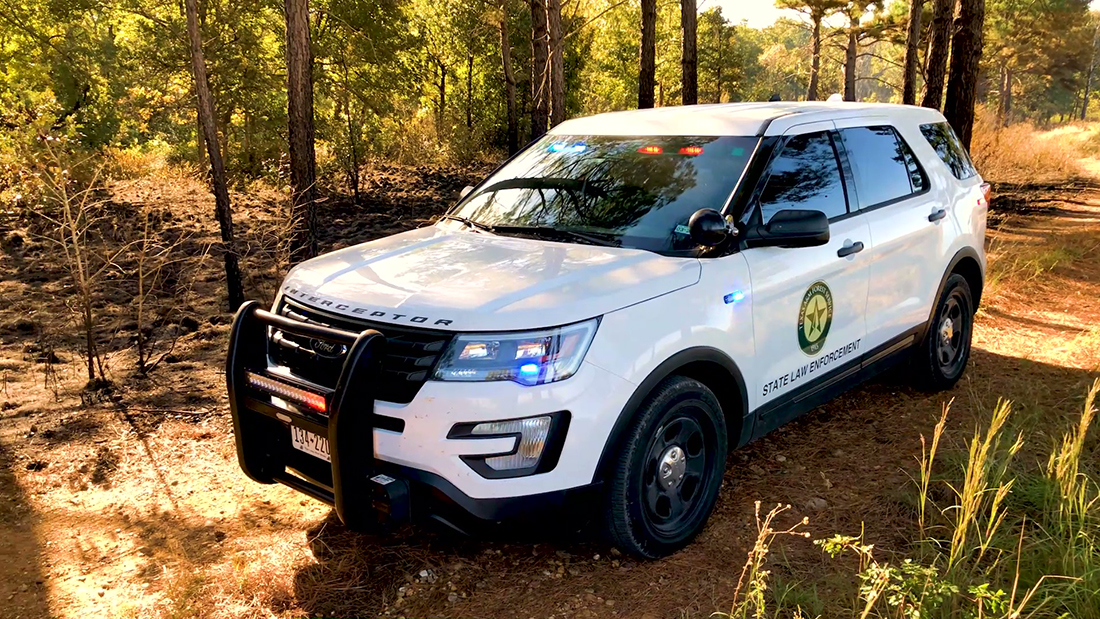
PANOLA COUNTY, Texas—Following a Texas A&M Forest Service timber theft investigation, $50,240 has been recovered to a group of Panola County landowners for unpaid timber sales.

The Panola County landowners entered a timber sale agreement with a timber harvesting company and were paid $21,167 for their timber, which they felt was a significantly low price based on the terms in the harvesting contract compared to the volume of timber harvested and hauled from the tract. The landowners filed a timber theft complaint with the Texas A&M Forest Service Law Enforcement Department.

Texas A&M Forest Service Law Enforcement investigators initiated an investigation on Jan. 12, 2025, reviewing all documents generated during the timber harvest including scale tickets, loader sheets and financial statements.

The investigation found that the timber harvesting company still owed the landowners $41,655. The investigation also found that $8,585 worth of timber had been severed but had not been hauled to a mill.

On Feb. 21, 2025, the timber harvesting company remitted the full payment of timber trust funds to the landowners, valuing $50,240.

“Our Law Enforcement investigators were very diligent during this investigation in meeting with the landowner and harvester and assessing documents related to the sale to determine the value of timber the landowners were owed,” said Jarred Lemmon, Texas A&M Forest Service Assistant Chief Law Enforcement Officer. “Through timber theft investigations, leading to resolutions, we’re able to protect Texas lands and landowners as well as the integrity of the timber sale process.”

In 2025, including this most recent investigation, Texas A&M Forest Service Law Enforcement Officers have recovered over $79,000 for landowners who were victims of timber theft, surpassing the $53,000 recovered in 2024.

Lemmon expressed that landowners are the first line of defense against timber theft, and their vigilance during the timber sale process is vital.

“Landowners can be taken advantage of in several ways during a timber sale, including skimming and diversion,” said Lemmon . “Often times, landowners aren’t aware of the crime until after it occurs. So, landowners should use resources like a consultant forester to ensure the timber is sold for a fair price and the harvesters are held to the terms of the contract.”

To prevent timber theft, landowners should:

  • Visit their property frequently.
  • Have someone they know and trust report any cutting on their land immediately.
  • Never sign a contract without checking several references of the buyer.
  • Insist on getting bids for their timber.
  • Mark all property lines to assure cutting on adjacent property does not encroach on theirs.
  • Utilize trail/deer cameras on their property that can record suspicious activity or individuals.
  • Always hold their timber contractor to the agreed upon term.

Landowners who are unfamiliar with selling their timber are urged to contact their local Texas A&M Forest Service office. Texas A&M Forest Service field staff assists landowners with the process of securing the services of a professional resources manager to help select trees for harvest, estimate values and find potential buyers.

To report suspected timber theft or suspicious activity, call the Texas A&M Forest Service Law Enforcement Timber Theft Hotline at 1-800-364-3470. The Texas A&M Forest Service Law Enforcement Department works with local officials to help bring those responsible for timber theft and other violations of the natural resources code to justice.

To contact a Texas A&M Forest Service Law Enforcement Investigator your area, please visit https://ticc.tamu.edu/Documents/Home/LE_Map.pdf.


Color Me Drug-Free: An Obstacle Challenge Course

On Saturday, March 29, from 9:00AM – 11:00AM, the Angelina County Drug-Free All Stars and local Youth Ambassadors for the Texas State SayWhat! program will host Color Me Drug-Free: An Obstacle Challenge Course, to celebrate and encourage students to live a healthy and substance-free life. Participants will make their way through an obstacle course filled with fun challenges, but watch out! Color will be flying to mark students drug-free!

The first 50 participants will receive a FREE t-shirt (white) that can be worn during the event, and free swag will be awarded, while supplies last! Join us at the Boys & Girls Club of Lufkin field on Saturday, March 29.

Since 1988, The Coalition has focused on eliminating the use of harmful substances by affecting public policy, laws, attitudes and behaviors, in an effort to foster healthy life-long choices for the local community. For more information about this free event or how to register, contact The Coalition at 936-634-9308 or visit @TheCoalition936 on social media.

Celebrating Drug-Free Businesses

The Coalition recently held its annual Drug-Free Business Partnership luncheon to recognize businesses in the community that value drug, alcohol, and tobacco-free workplaces. The luncheon featured Dr. Lindy McGee, a general pediatrician and assistant professor at Baylor College of Medicine. Dr. McGee shared about intoxicating cannabis products and the dangers these products pose in our community. The Coalition also recognized several businesses in attendance for their continued commitment to drug-free workplaces. Special recognition was given to the Drug-Free Business Partnership’s new and upgraded members. 

Since 1988, The Coalition has focused on eliminating the use of harmful substances by affecting public policy, laws, attitudes, and behaviors, all in an effort to foster healthy life-long choices for the local community. The Coalition is one of the oldest substance abuse prevention community coalitions in the United States.  For information about participating in the Drug-Free Business Partnership, contact The Coalition at 936-634-9308.

DFBP new businesses

Four businesses were honored as new members of The Coalition’s Drug-Free Business Partnership. Pictured from left: Dr. Patricia McKenzie, Impact Lufkin; Nolan Sparks & Kurt Keller, Sparks Pressure Washing; Kenneth Clark, BCFS Health & Human Services-Lufkin; and Madilyn Williams, Superior Cleaning & Restoration, LLC.

DFBP upgraded members

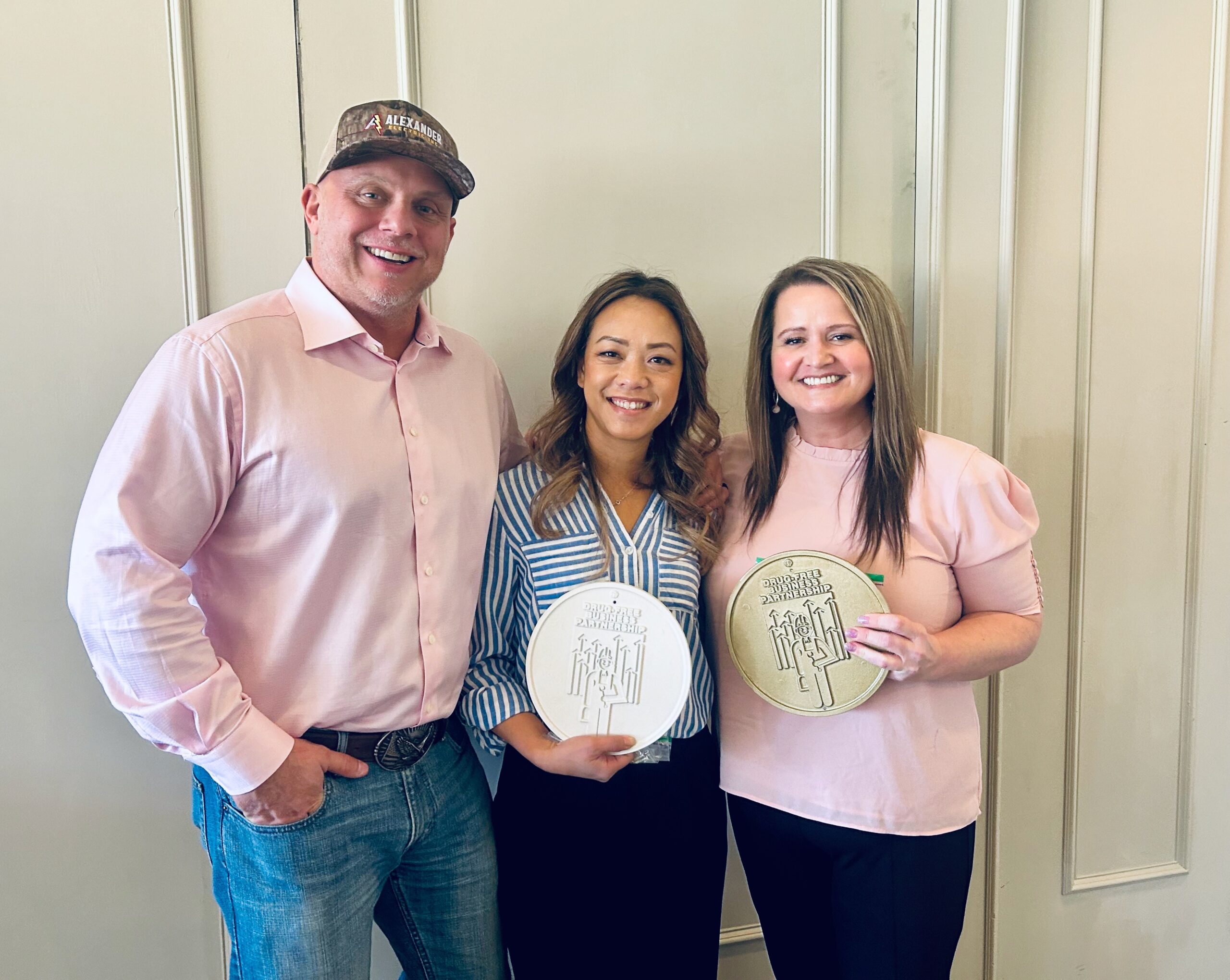
In appreciation of their dedication to a drug-free community, The Coalition recognized three businesses as upgraded members of the Drug-Free Business Partnership. Pictured is Hannah & Kurt Keller, Alexander Electric; and Melanie Shirley, Austin Bank. Not pictured: Higginbotham Insurance.

DFBP students

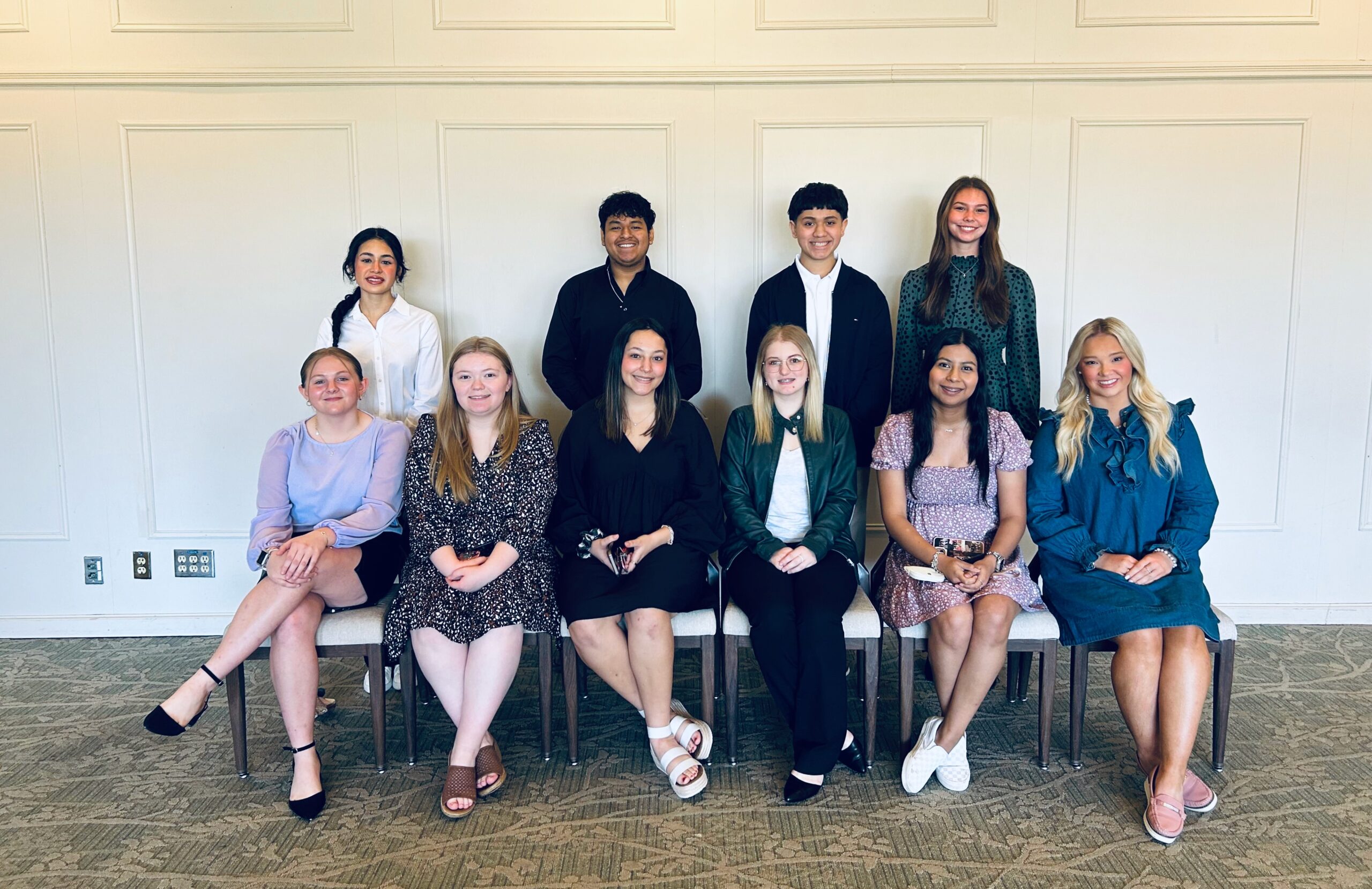
Angelina County Drug-Free All Stars and Drug-Free Council Members represented The Coalition at the annual Drug-Free Business Partnership luncheon. Pictured back row, from left:  Karisma Herrera, Lufkin ISD Drug-Free All Star; Oscar Barboza, Central ISD Drug-Free All Stars; Braydon Nava, Lufkin ISD Drug-Free Council; and Natalie Murray, Hudson ISD Drug-Free All Star.

Front row, from left:  McKenna Hooks, Pineywoods Community Academy Drug-Free Council; Lynzie Thompson, Pineywoods Community Academy Drug-Free All Star; Kyna Rios, Diboll ISD Drug-Free All Star; Riley Brown, Diboll ISD Drug-Free Council; Alexandra Molina, Huntington ISD Drug-Free All Star; and Alexis Pelletier, Lufkin ISD Drug-Free All Star. Not Pictured Marlanea Jackson, Diboll ISD Drug-Free Council. 

DFBP Platinum members

Drug-Free Business Partnership Sustaining members at the Platinum level were honored at the annual Drug-Free Business Partnership luncheon. Pictured, back row from L to R: Josh Havard, Lufkin Daily News; Kim Simmons, Alcohol & Drug Awareness Council; Kim Garcia, Burke; Dr. Damon Adams, Pineywoods Community Academy; Kurt Keller, Alexander Electric; Justin Risner, Central ISD; Courtney Davis, Diboll ISD; Melissa Crager, Brookshire Brothers; Donny Webb, Hudson ISD; Napoleon Shaw, Hospice in the Pines; April Soderquist, Lufkin ISD; and Martha Hernandez, Angelina County & Cities Health District. 

Front from left: Kelly Carver, Family Crisis Center of East Texas; Hannah Keller, Alexander Electric; Maci Dover, Whataburger/GVCS; Michelle Ross, KSWP/KAVX Radio; Carol Mettlen, Diboll ISD; Conssandra Williams, Angelina College.

DFBP Gold members

Gold level Sustaining members of the Drug-Free Business Partnership include back row from left: Yana Ogletree, Georgia-Pacific; Josh Carriere, Abeldt’s Pharmacy; Dr. Carolyn Fiaschetti, Huntington ISD; Shanie Sanford, Pregnancy Help Center.

Front row from left: Kristina Guardado, Commercial Bank of Texas; MacKenzie Herring Lufkin/Angelina County Chamber of Commerce; Evelyn Turcios, Harold’s House.

DFBP Bronze & Silver members

Silver and Bronze Sustaining members of the Drug-Free Business Partnership include back row from left: Kenneth Clark, BCFS Health & Human Services; Kendall Beattie, Elite Medical Home Care; Justin Barkley, TLL Temple Library; Joanie Taylor, Loggins Plumbing; Travis Barnes, Loggins Plumbing; Kurt Keller and Nolan Sparks; Sparks Pressure Washing.

Front row, from left: Dr. Patricia McKenzie, Impact Lufkin; Kelly Shrout, Angelina Beautiful/Clean; Viry Cruz, 6 Degrees Wealth and JC’s Party Rentals; Madilyn Williams, Superior Cleaning & Restoration; Melissa Roberts, Integra Insurance Services.

Magic of Ireland St. Patrick’s Dinner & Concert Fundraiser (Jasper County)

0

I know quite a few of you are big Danny O’Flaherty fans and it’s time to mark your calendars for March 8th, 2025! Come celebrate St. Patrick’s with us and enjoy a traditional Irish dinner, drinks and the music stylings of our very own local celebrity Mr. Danny O’Flaherty!

Location:
Pavilion in the Pines
290 County Road 252, Jasper, TX

Date and Time:
March 8, 2025
From 5:00PM to 10:00PM

My Five Cents: A Weekly Column from Sen. Robert Nichols

On March 6, 1836, the Alamo fell to the Mexican army after thirteen days under siege. General Santa Anna launched an early morning assault on the mission; the battle lasted 90 minutes. All defenders of the Alamo were killed in the battle. The slogan “Remember the Alamo!” became a rallying cry for the Texas Revolution, which successfully defeated the Mexican army at the Battle of San Jacinto weeks later. 

Here are five things happening around your state:  

  1. Golden Triangle Day at the Capitol

This week I was thrilled to welcome a large contingent of constituents from Southeast Texas for Golden Triangle Day at the Texas Capitol. The Golden Triangle refers to the region comprising Beaumont, Orange, Port Arthur, and the counties of Jefferson and Orange. The event was organized by the Beaumont Orange, and Port Arthur Chambers of Commerce. Industry and community leaders came to Austin to showcase the importance of Southeast Texas to the state and explain the legislative agenda for the area.  

  1. Bill to ban sale of THC products heard in Senate committee

The Senate State Affairs Committee heard testimony on Senate Bill 3 by Senator Charles Perry this week. The bill would outlaw products containing any THC, which is the psychoactive element in marijuana. A few sessions ago, a bill passed to help support the emerging hemp industry by authorizing the sale of consumable hemp, which has trace amounts of non-intoxicating delta-9 THC. However, that bill limited the amount of THC products could have to not more than 0.3% concentration – anything higher is considered marijuana. While both marijuana and hemp are cannabis plants, hemp has lower THC levels than marijuana, which is the distinction between the two. Since 2019 when the law approving consumable hemp sales passed, the state has seen a proliferation of businesses that claim to sell hemp-derived products. However, these products often have effects more similar to marijuana products and have THC concentrations well above the legal limit. This bill is an attempt to rein in an industry that has exploded across the state and many are operating illegally. The hearing extended for many hours and ultimately left the bill pending in committee. 

  1. Increase for judicial pay, accountability pass Senate Finance 

Senate Bill 293 by Senator Joan Huffman passed Senate Finance this week. The bill serves two purposes – providing a pay raise for judges across the state and strengthening judicial accountability and transparency. The bill provides a 15 percent salary increase in base pay for judges, including district judges, appellate and high-court judges, elected prosecutors, and judges with more experience in the higher salary tiers. A few weeks ago, the newly appointed Chief Justice of the Texas Supreme Court Jimmy Blacklock delivered the State of the Judiciary Address. One of the key points of his speech was addressing judicial pay. He pointed out that Texas ranks 48th out of 50 states in judicial pay. This bill would address those concerns and help attract more high-quality candidates to the job. 

The second part of the bill provides more accountability and transparency over judges by expanding the definition of judicial misconduct, enhancing the complaint process against judges, requiring quarterly reporting of district judges’ duties, and modifying eligibility requirements for retired judges to serve in temporary assignments. 

  1. Battleship Texas one step closer to a new home

The Battleship Texas Foundation announced this week the dreadnought has found a new home at Pier 15 in Galveston. The Galveston Wharves Board unanimously approved the recommendation to make the pier the iconic ship’s new home. The contracts, environmental permitting, and marine and traffic analysis are ongoing, but Board approval was an important step. The Battleship is currently undergoing extensive renovations funded by the state to ensure future generations can enjoy and learn about her incredible legacy. 

  1. TPWD predicts excellent spring turkey season 

The Texas Parks and Wildlife Department is predicting a strong spring turkey season due to an abundance of two-year-old turkeys. During 2023 and 2024, most of Texas saw a bump in production and recruitment which will ultimately temporarily expand the footprint of where the birds are found. The East Turkey Zone is comprised of 12 counties including Bowie, Cass, Fannin, Grayson, Jasper, Lamar, Marion, Nacogdoches, Newton, Polk, Red River, and Sabine. There is a one turkey bag limit for the zone and mandatory reporting is required within 24 hours of harvest. The East Zone season is from April 22 to May 14. Other zones in the state open as early as March 15. Happy Hunting! 

The Power of Proactive IT Management: Preventing Problems Before They Start

Technology has become the backbone of modern businesses, from small local shops to large corporations. Yet, many companies don’t realize the true cost of waiting for IT problems to arise. Instead of waiting for things to break, smart business owners are turning to proactive IT management to keep operations running smoothly and securely.

Why Waiting for IT Issues is Costly

For many businesses, IT issues aren’t just an inconvenience—they’re a financial risk. A network outage or security breach can mean lost revenue, damaged reputation, and hours of unproductive downtime.

A reactive approach—only addressing IT issues after they cause disruption—is outdated and expensive. The smarter alternative? Preventing problems before they start.

The Benefits of Proactive IT Management

  1. Less Downtime, More Productivity With 24/7 monitoring and maintenance, potential IT failures are identified and resolved before they affect day-to-day operations.
  2. Stronger Cybersecurity Protection Cyberattacks are a constant threat. Proactive IT management includes real-time security monitoring, vulnerability assessments, and updates to keep business data safe.
  3. Cost Savings Over Time Emergency IT repairs and ransomware attacks can cost thousands. Regular system maintenance and preventative updates reduce these risks, saving businesses money in the long run.
  4. A Future-Ready Business As technology evolves, so should your business. With proactive IT solutions, companies can stay ahead of trends, ensuring they are always prepared for the next big change.

How Castleberry Services Keeps Businesses Running

At Castleberry Services, we believe in preventative IT solutions that help businesses thrive. Our multi-layered approach includes:

  • 24/7 System Monitoring to detect and address issues before they cause downtime.
  • Routine Security & Compliance Checks to keep data safe and meet industry standards.
  • Strategic IT Planning to help businesses scale effectively without technological roadblocks.
  • Data Backup & Recovery Solutions that ensure critical information is never lost.

Final Thoughts

Whether you’re running a family-owned business or a fast-growing company, one thing is certain—proactive IT management is an investment in your business’s future. Avoid costly disruptions, protect your digital assets, and ensure seamless operations by taking a preventative approach to IT.

If your business is ready to ditch the break-fix model and embrace a proactive IT strategy, Castleberry Services is here to help.